How non-invasive vagus nerve stimulation works

The vagus nerve is the main pathway of the parasympathetic branch of the autonomic nervous system, the side associated with rest and recovery. Non-invasive devices reach accessible branches of it through the skin, with no implant and no procedure. The field is reviewed in the transcutaneous stimulation literature [1], and this explainer on how non-invasive vagus nerve stimulation works is a plain-language primer.
Neck access versus ear access
Cervical devices work at the neck, where a branch of the vagus nerve runs close to the surface. Auricular devices, abbreviated tVNS or taVNS, work at the outer ear, where the auricular branch supplies the concha and tragus.
Neither route is automatically better. Ear devices dominate the published research partly because a sham ear placement is easy to blind, which is why most studies below are taVNS studies. Neck devices tend to be faster in daily use and leave your hands free, and bilateral designs cover both sides at once rather than asking you to swap partway through.
A vagus nerve stimulation device is not a TENS unit
A TENS unit is general-purpose electrotherapy aimed at nerves under an area of skin, with parameters you set. A vagus nerve stimulation device targets one nerve, with waveform and placement fixed by the manufacturer. TENS pads on your own neck are not a substitute.
Heart rate variability as the common proxy
Because you cannot watch the vagus nerve working, the field uses heart rate variability as an indirect readout of autonomic balance. The standard metrics and norms appear in the overview most researchers cite [2], and a meta-analysis found lower HRV associated with higher reported stress [3], which is why so many devices ship HRV features. New to the term? Start with this guide on why heart rate variability matters.
HRV is a trend metric, not a daily scoreboard, so read weeks rather than mornings.
On tolerability, a systematic review of transcutaneous vagus nerve stimulation in humans found the approach generally well tolerated, with side effects typically mild and local, such as tingling or redness at the contact site [4].
The best vagus nerve stimulation devices in the US
Pulsetto leads on the criteria most buyers weigh: session length, hands-free wear, app depth and total cost. Each entry below carries its strength and trade-off.
Pulsetto

Pulsetto is a bilateral cervical device that rests on the neck like an open collar, so both sides are covered at once and your hands stay free. Most guided programs run about 4 minutes and the sleep program about 10. The free companion app carries the programs plus HRV and sleep tracking, and the device is a one-time purchase with no mandatory subscription, with an optional Premium tier. The Pulsetto FIT and Pulsetto FIT X neck devices are around $296 and around $368, with FIT X the newer flagship and currently sold as a pre-order. It is CE certified and FCC certified, made in Lithuania, and intended for adults as a general wellness device.
Separately from that pilot, in-app check-ins describe day-to-day experience. Users report lower stress in 73% of cases after starting Pulsetto (self-reported in-app check-ins; individual results vary), and 56% report fewer sleep problems. Based on self-reported, in-app wellbeing check-ins from Pulsetto users who completed them, comparing each user to their own onboarding rating. Not a clinical measurement and not a controlled study.
May be a good fit for: short hands-free sessions with HRV tracking included.
Nurosym

Nurosym is a single-ear auricular clip from a European brand at around EUR 699. It runs app-free with controls on the unit, and sessions take about 30 minutes. Among consumer ear devices it carries the strongest published evidence base. The trade-offs are the price, the half-hour commitment and no app for trend data. This Nurosym and Pulsetto comparison sets them side by side.
May be a good fit for: buyers who put published research ahead of convenience.
Truvaga

Truvaga is a US brand making handheld cervical wands from around $199 to around $499 depending on the model. You hold it against one side of the neck, then repeat on the other. The trade-off is that it occupies a hand and treats one side at a time. If you want a Truvaga alternative with hands-free bilateral wear, this Pulsetto and Truvaga comparison covers the differences.
May be a good fit for: buyers who want a US brand in a handheld format.
Hoolest
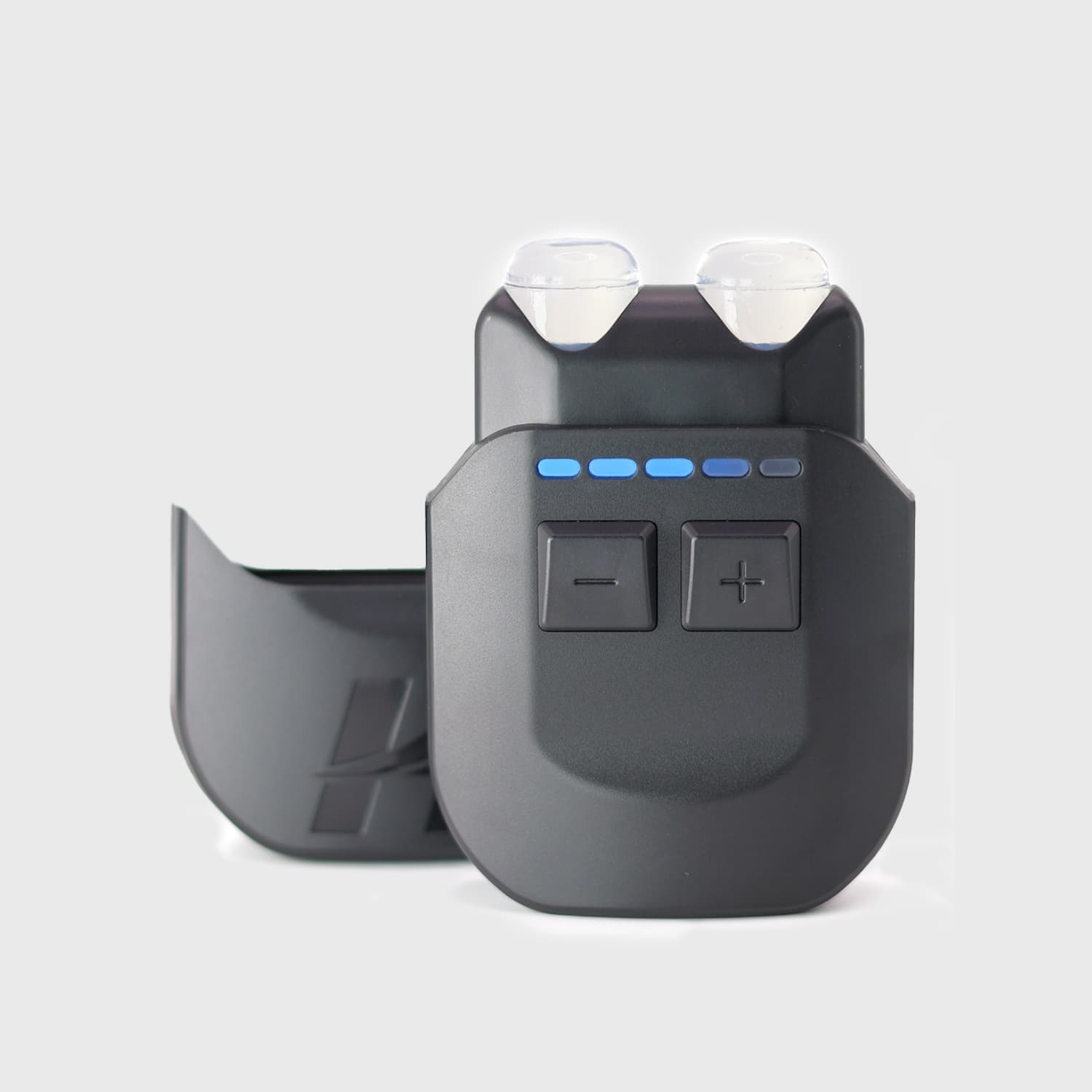
Hoolest is another US handheld cervical option, positioned as a lower-cost, no-frills choice. The trade-off is no trend tracking and no guided program library. This Pulsetto and Hoolest comparison compares the formats.
May be a good fit for: a minimal-spend first try without software.
Neuvana Xen

Neuvana Xen is a US earbud device that synchronises auricular stimulation to music through an app, at around $449. The music pairing is the most distinctive idea in the category. The trade-offs are the price, wearing earbuds, and session length set by your playlist. See this Pulsetto and Neuvana Xen comparison for detail.
May be a good fit for: people who already wind down with music.
Vagustim

Vagustim is a bilateral auricular device covering both ears at around $390, with an app that lets you tune parameters. Covering both ears is a real advantage over single-ear clips. The trade-offs are that two attachments are fiddlier to fit than a neck collar, and that tuning puts more decisions on you.
May be a good fit for: hands-on users wanting both ears covered and adjustable settings.
gammaCore

gammaCore is a handheld cervical device obtained through a clinician and used under medical supervision. It sits in a different category: you do not buy it directly, there is no public consumer price, and its use is directed by the clinician who provides it. That supervision is a strength if you are already under care and a barrier if you want to start at home this week. This Pulsetto and gammaCore comparison explains the practical differences.
May be a good fit for: people whose clinician has raised it.
Adjacent non-electrical options: Apollo Neuro and Sensate
Two popular devices turn up in the same searches but do not stimulate the vagus nerve electrically. Apollo Neuro is a wrist or ankle band at around $349 delivering patterned haptic vibration, designed for all-day wear rather than a session. Sensate is a chest-resting unit at around $300 combining infrasonic vibration with audio, in sessions of about 10 minutes lying down. Neither is a like-for-like substitute. If you are weighing Apollo Neuro alternatives because you want nerve stimulation rather than vibration, this Pulsetto and Apollo Neuro comparison explains what changes.
May be a good fit for: all-day passive wear (Apollo Neuro) or a lie-down ritual (Sensate).
Best device by use case
Feeling calmer before sleep
Sleep is the most common reason people buy. A randomized clinical trial in adults with chronic insomnia disorder reported improved sleep outcomes with taVNS [5], and a double-blind, sham-controlled trial in the same population reported improved sleep quality [6]. Those findings belong to adults diagnosed with chronic insomnia disorder and do not automatically transfer to a general audience. Practically, you want something usable in bed without a screen or an occupied hand, which favours a hands-free neck device with a 10-minute sleep program over a 30-minute ear clip.
Everyday stress
For in-the-moment stress, a double-blind, randomized, sham-controlled trial of transcutaneous cervical vagal nerve stimulation in people with posttraumatic stress disorder reported reduced sympathetic responses to stress [7]. Separately, a study found that taVNS and median nerve stimulation reduced acute stress in young healthy adults [8]. Those are two distinct populations and should be read as such. Here the deciding factor is friction: a 4-minute session at your desk gets used, while a half-hour routine gets postponed.
HRV awareness and parasympathetic response
If you want the best device to improve parasympathetic response as something you can observe over time, the honest picture is that measured effects on HRV are real but modest and variable. A study of taVNS in healthy young participants measured HRV changes during stimulation [9], a systematic review examined effects on baroreflex sensitivity and HRV in healthy subjects [10], and a living Bayesian meta-analysis evaluated whether taVNS affects vagally mediated HRV across the literature [11].
Device-measured HRV also sits next to a practice with its own evidence: a meta-analysis of HRV biofeedback training reported reductions in stress and anxiety [12]. Built-in tracking plus a paced breathing habit gives you more signal than either alone, which is why an included app matters more here than anywhere else.
Buying in the US
Dollar pricing is straightforward: around $199 to $499 for cervical handhelds, around $296 to $368 for the two Pulsetto models, around $349 to $449 for the ear and haptic options, and around EUR 699 for Nurosym. The bigger question is what happens after checkout, since some devices tie key features to a subscription. Pulsetto is a one-time purchase with an optional Premium tier rather than a mandatory one, set out in its answer on additional costs and subscription fees. Check whether HRV tracking and the program library are included or rented.
Pulsetto ships from Lithuania. Its delivery FAQ states free delivery to nearly all corners of the world, with orders taking 1 to 3 business days to process and shipping usually taking 7 to 21 business days after that; details are on the Pulsetto delivery and shipping page. Check returns and warranty before you pay, since terms differ by brand: current Pulsetto terms are on its device return policy page and its vagus nerve stimulator warranty page.
Prescription devices are obtained through a clinician and used under medical supervision, while general wellness devices are bought directly. That is why gammaCore carries no public price while the rest of this list does, and it is the biggest fork in the road when shortlisting the best non-invasive vagus nerve stimulators for home use.
Safety and contraindications
Non-invasive stimulation is generally well tolerated in the published literature [4], but the exclusions below are not optional.
Do not use a vagus nerve stimulation device if you have a pacemaker or any implanted electrical medical device. Do not use one if you have epilepsy or a seizure disorder. Do not use one if you are pregnant. If you have a cardiac arrhythmia or a serious cardiovascular condition, consult a doctor first. If you have had recent neck or throat surgery, consult a doctor first. Do not use a cervical device if you have a carotid artery condition.
Keep to the recommended session length rather than assuming longer is better, and leave the gaps the program suggests. These devices are intended for adults. If you take medication or are under care, raise it with your clinician first. The full list is on the Pulsetto contraindications page.
Frequently asked questions
What is the best vagus nerve stimulation device in the US?
For most people starting out, a bilateral cervical device with short sessions and an included app covers the widest range of needs. Pulsetto fits that at around $296 to $368, with most programs about 4 minutes and a sleep program about 10. If published research depth is your deciding criterion, an ear device such as Nurosym may be a good fit instead, at a higher price and with a 30-minute session.
What is the best at-home vagus nerve stimulation device?
The practical filters for home use are session length, hands-free wear and whether tracking is included. An at home vagus nerve stimulation device you can use on the sofa or in bed, without holding it, is the one that becomes a habit. Hands-free neck devices and ear clips both qualify; handheld wands ask more of you.
What is a good alternative to Truvaga?
If you like the cervical approach but want both sides covered at once and your hands free, Pulsetto is the closest direct Truvaga alternative, with an app covering guided programs plus HRV and sleep tracking. If you would rather move to the ear, Nurosym and Vagustim are the main auricular options, at longer sessions and different price points.
What is a good alternative to Apollo Neuro?
Apollo Neuro uses haptic vibration rather than electrical nerve stimulation, so the real question is which effect you are after. If you want nerve stimulation, the Apollo Neuro alternatives to consider are cervical devices such as Pulsetto or Truvaga, or ear devices such as Nurosym or Vagustim. If you liked the passive all-day sensation, Sensate is closer in spirit.
How much do vagus nerve stimulators cost in the US?
Expect roughly $199 to $499 for cervical handhelds, around $296 for Pulsetto FIT and around $368 for Pulsetto FIT X, around $390 for Vagustim, around $449 for Neuvana Xen, and around EUR 699 for Nurosym. Non-electrical options sit nearby at around $349 for Apollo Neuro and around $300 for Sensate. Add any subscription before comparing, since a recurring fee can outweigh a lower sticker price within a year.
Do vagus nerve stimulation devices work?
The research is real and still developing. Trials in adults with chronic insomnia disorder reported improved sleep outcomes with taVNS [5][6], and studies in other populations reported reduced stress responses [7][8]. Effects on HRV in healthy participants are measurable but modest and variable [9][10][11]. The sensible expectation is a supportive daily practice that helps you feel calmer, used alongside sleep, movement and breathing habits.
Scientific research
Pulsetto is a general wellness product and is not intended to diagnose, treat, cure, or prevent any disease or medical condition. The studies below were identified via the Consensus and PubMed databases and are indexed in PubMed.
[1] Critical Review of Transcutaneous Vagus Nerve Stimulation: Challenges for Translation to Clinical Practice (Yap et al., 2020, Frontiers in Neuroscience. PMID: 32410932)
[2] An Overview of Heart Rate Variability Metrics and Norms (Shaffer et al., 2017, Frontiers in Public Health. PMID: 29034226)
[3] Stress and Heart Rate Variability: A Meta-Analysis and Review of the Literature (Kim et al., 2018, Psychiatry Investigation. PMID: 29486547)
[4] Safety and tolerability of Transcutaneous Vagus Nerve stimulation in humans; a systematic review (Redgrave et al., 2018, Brain Stimulation. PMID: 30217648)
[5] Transcutaneous Auricular Vagus Nerve Stimulation for Chronic Insomnia Disorder: A Randomized Clinical Trial (Zhang et al., 2024, JAMA Network Open. PMID: 39680406)
[6] Transcutaneous auricular vagus nerve stimulation (taVNS) improves sleep quality in chronic insomnia disorder: A double-blind, randomized, sham-controlled trial (Yeom et al., 2025, Sleep Medicine. PMID: 40398066)
[7] Transcutaneous cervical vagal nerve stimulation reduces sympathetic responses to stress in posttraumatic stress disorder: A double-blind, randomized, sham-controlled trial (Gurel et al., 2020, Neurobiology of Stress. PMID: 33344717)
[8] Transcutaneous auricular Vagus Nerve Stimulation and Median Nerve Stimulation reduce acute stress in young healthy adults: a single-blind sham-controlled crossover study (Sanchez-Perez et al., 2023, Frontiers in Neuroscience. PMID: 37746156)
[9] Ear your heart: transcutaneous auricular vagus nerve stimulation on heart rate variability in healthy young participants (Forte et al., 2022, PeerJ. PMID: 36438582)
[10] A systematic review of the effects of transcutaneous auricular vagus nerve stimulation on baroreflex sensitivity and heart rate variability in healthy subjects (Soltani et al., 2023, Clinical Autonomic Research. PMID: 37119426)
[11] Does transcutaneous auricular vagus nerve stimulation affect vagally mediated heart rate variability? A living and interactive Bayesian meta-analysis (Wolf et al., 2021, Psychophysiology. PMID: 34473846)
[12] The effect of heart rate variability biofeedback training on stress and anxiety: a meta-analysis (Goessl et al., 2017, Psychological Medicine. PMID: 28478782)