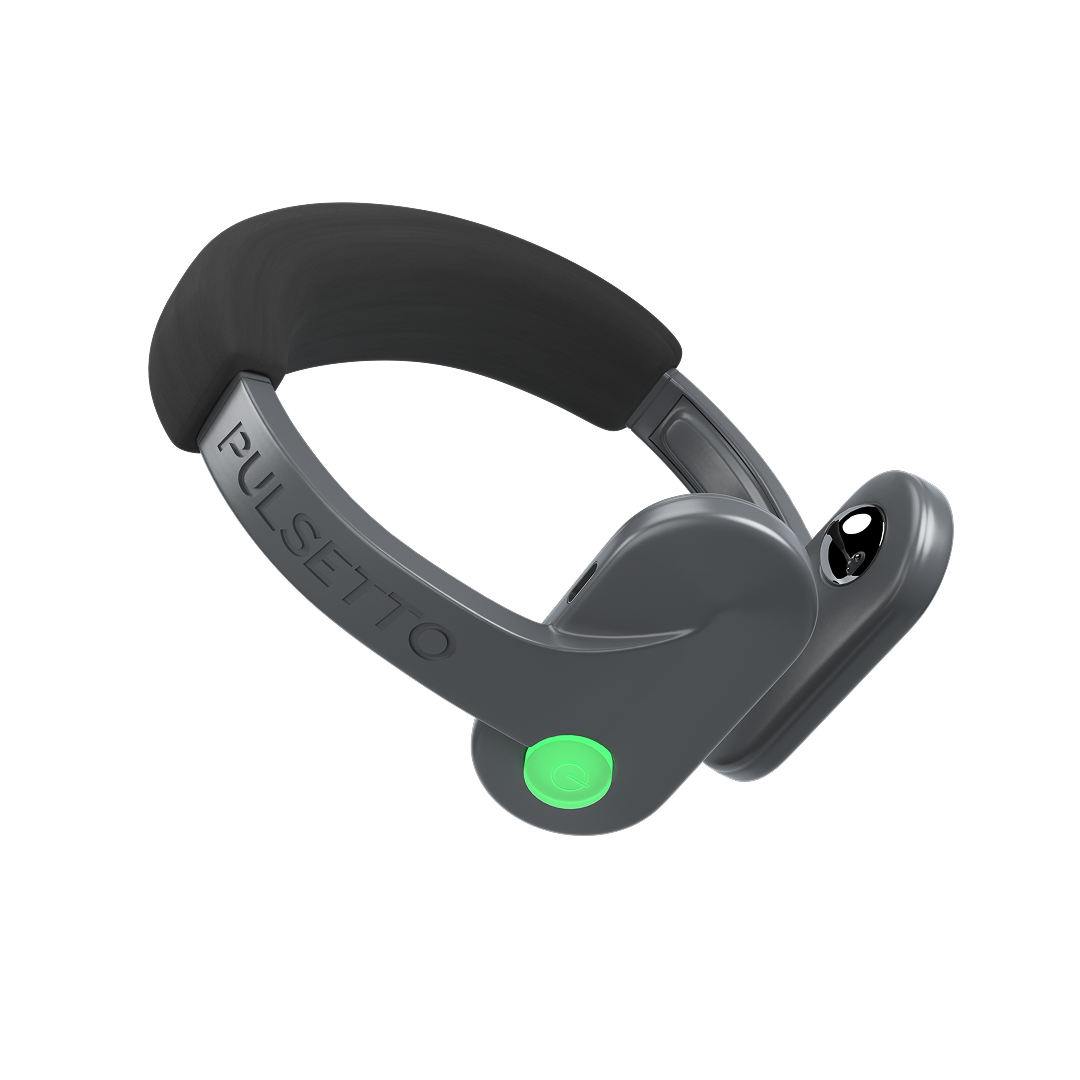
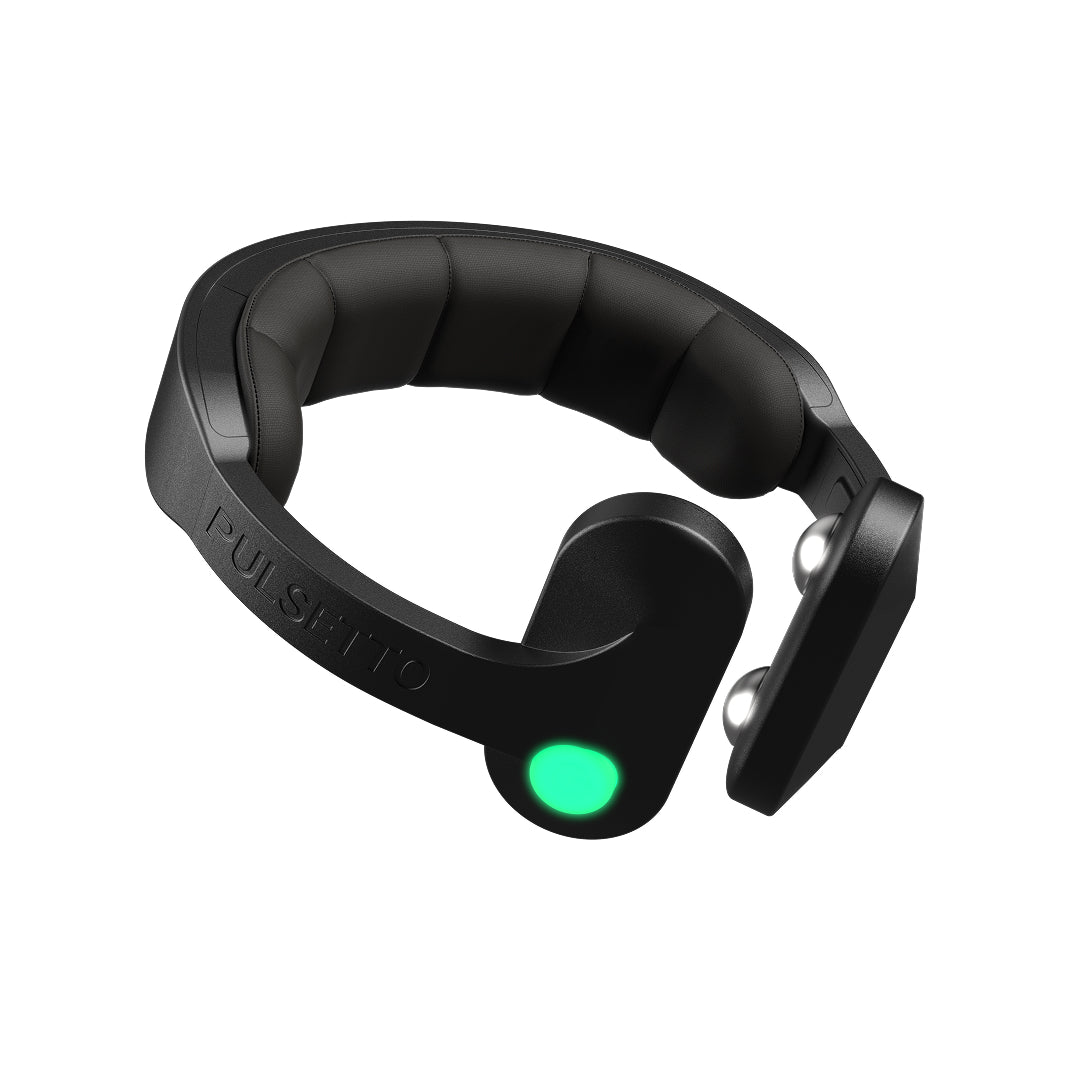
Pulsetto Safety
These contraindications are included to help reduce risk and support safe, informed use. Pulsetto is not a medical treatment and is not intended to diagnose, treat, cure, or prevent any disease.
Contraindications of Using Pulsetto
Contraindications include but are not limited to:
- Users with an active implantable medical device, such as a pacemaker, hearing aid implant, or any implanted electronic device;
- Users with a metallic device such as a stent, bone plate, or bone screw implanted at or near their neck;
- Users who are using another device at the same time (e.g., TENS Unit, muscle stimulator) or any portable electronic device (e.g., mobile phone);
The safety and efficacy of Pulsetto have not been evaluated in the following users or situations:
- Users with uncontrolled hypertension, hypotension, bradycardia, or tachycardia;
- Users with a history of baseline cardiac disease or atherosclerotic cardiovascular disease, including congestive heart failure, known severe coronary artery disease, or recent myocardial infarction (within 5 years);
- Users with a history of abnormal baseline ECG, prolonged QT interval, or arrhythmia;
- Users who have had surgery to cut the vagus nerve in the neck (cervical vagotomy);
- Pediatric users;
- Pregnant women;
- Users with active cancer or cancer in remission;
- Users with an abnormal cervical anatomy;
- Users with a history of brain tumor, aneurysm, bleed or head trauma;
- Users with a history of syncope or seizures;
- Individuals allergic to nickel or with nickel sensitivity.
Pulsetto Side Effects: What You May (and May Not) Experience
Pulsetto is a consumer wellness device, and many users describe mild physical sensations during a session—such as gentle pulsing, tingling, or a pins-and-needles feeling at the application area. If you feel discomfort, reduce intensity or stop the session.
Potential undesirable effects associated with the use of this device include but are not limited to the following:
- Application site discomfort;
- Application site irritation/redness (particularly at the site of electrode placement);
- Local pain, face/head/neck area (including toothache);
- Muscle twitching and/or contractions, face/head/neck area (including facial droop and/or lip pull);
- Headache, dizziness;
- Tingling, pricking, or a feeling of “pins and needles" on the skin where the device is applied;
These side effects typically resolve immediately after the stimulation is complete. Stop use and reassess if anything feels painful, alarming, or persists after the session. If you’re unsure whether what you’re feeling is normal for you, consider checking with a qualified clinician—especially if you have any relevant history listed in the contraindications.
However, if you are experiencing an injury or skin issue from the device, or if you need to officially report an adverse event, you can contact us at [email protected]
Is Pulsetto Safe? A Clear Explanation of Safety for a Consumer Wellness Device
Pulsetto is developed as a non-invasive consumer wellness device intended for general well-being, with user-controlled intensity and session duration. To ensure safe use, always operate Pulsetto according to the provided instructions, keep it clean, and store it properly and not use it if any contraindications apply.
General safe-use guidance:
- Use only on the neck session location as instructed and avoid sensitive areas (do not apply across/through the head, on the eyes, covering the mouth, chest, upper back, or heart).
- Don’t use it on irritated or damaged skin (open wound, rash, infection, swelling, cut, sore, drug patch, or surgical scars at the session location).
- Don’t use it in water / on wet skin, or immediately after shower/bath/pool.
- Avoid risky situations (e.g., while driving, operating machinery).
- If you feel light-headedness, dizziness, chest pain, or excessive skin irritation, discontinue the session.
Evidence, Research & Medical Sources on Vagus Nerve Stimulation Safety
While Pulsetto is a consumer wellness device and not intended for medical treatment, the concept of vagus nerve stimulation (VNS) has been widely studied in clinical settings for various applications. We encourage users to explore reputable external sources for general information on VNS safety and research.
Cleveland Clinic: A leading academic medical center, offering comprehensive information on VNS.
Mayo Clinic: Renowned for patient care and research, providing insights into various medical therapies including VNS.
Peer-reviewed VNS safety studies:
Peer-reviewed research has consistently found cervical non-invasive vagus nerve stimulation (nVNS) to be safe and well tolerated when studied in controlled clinical settings. Large reviews of randomized clinical trials report that serious safety concerns are rare, and most users experienced no lasting adverse effects (Yuan et al., 2023).
When side effects were reported, they were typically mild and temporary. The most common effects included brief discomfort at the application site, skin redness, tingling or prickling sensations, and short-lasting local pain, usually occurring during or shortly after stimulation (Tassorelli et al., 2018; Silberstein et al., 2016). Some studies also noted temporary dizziness or light-headedness, which resolved on its own without medical intervention (Yuan et al., 2023).
Overall, the scientific literature describes cervical nVNS as having a favorable safety profile, with side effects that are generally minor, short-lived, and localized, when devices are used according to study protocols and safety guidance.
References:
- Tassorelli, C., et al. (2018). Noninvasive vagus nerve stimulation as acute therapy for migraine: The randomized PRESTO study. Neurology, 91(4), e364–e373.
https://www.neurology.org/doi/10.1212/WNL.0000000000005857 - Silberstein, S. D., et al. (2016). Safety and tolerability of non-invasive vagus nerve stimulation for the acute treatment of migraine. Cephalalgia, 36(14), 1275–1284.
https://journals.sagepub.com/doi/10.1177/0333102416655091 - Yuan, H., et al. (2023). Non-invasive vagus nerve stimulation for migraine: A systematic review and meta-analysis of randomized controlled trials. Frontiers in Neurology, 14, 1190062. https://www.frontiersin.org/articles/10.3389/fneur.2023.1190062/full
Please find the Pulsetto White paper to read: here

pulsetto.tech
37.4K Followers

Pulsetto
16K Followers

Pulsetto
5K Followers