Vagus Nerve Stimulation for Migraine: Understanding the Science, the Devices, and the Evidence
Vagus Nerve Stimulation for Migraine: Understanding the Science, the Devices, and the Evidence
Vagus nerve stimulation for migraine is one of the most searched topics in the wider conversation about the vagus nerve, and for good reason. Migraine is complex, often debilitating, and many people who live with it look beyond standard medication for additional support. Over the past decade, researchers have studied whether stimulating the vagus nerve can influence the pain pathways involved in migraine and other headache conditions, and a small category of prescription neuromodulation devices has emerged in that clinical space. This article explains the biology, walks through the peer-reviewed evidence honestly, and draws a clear line between clinical migraine therapies and general wellness tools.
Pulsetto is a general wellness product and is not intended to diagnose, treat, cure, or prevent any disease or medical condition. If you experience migraine or recurrent headaches, please consult a qualified healthcare provider for diagnosis and treatment.
To be direct from the outset: Pulsetto is a general wellness device designed to support relaxation, stress management, and sleep. It is not a migraine treatment, it is not a medical device, and nothing in this article should be read as a suggestion that it treats, prevents, or relieves migraine or headache. What follows is educational context about the broader science of vagal modulation, alongside a practical look at general-wellness habits that many people find supportive when stress runs high.
Try Pulsetto for everyday stress and sleep support
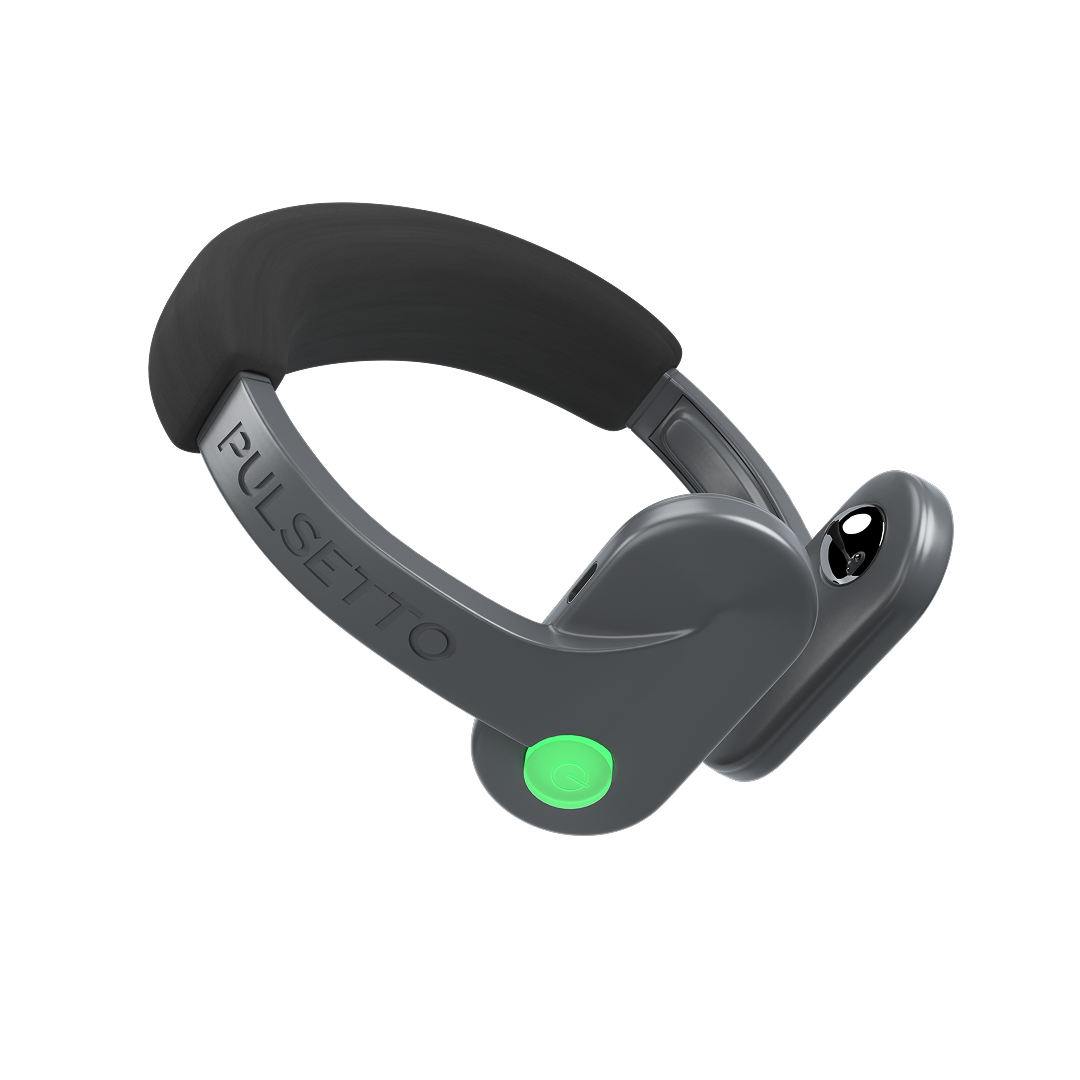
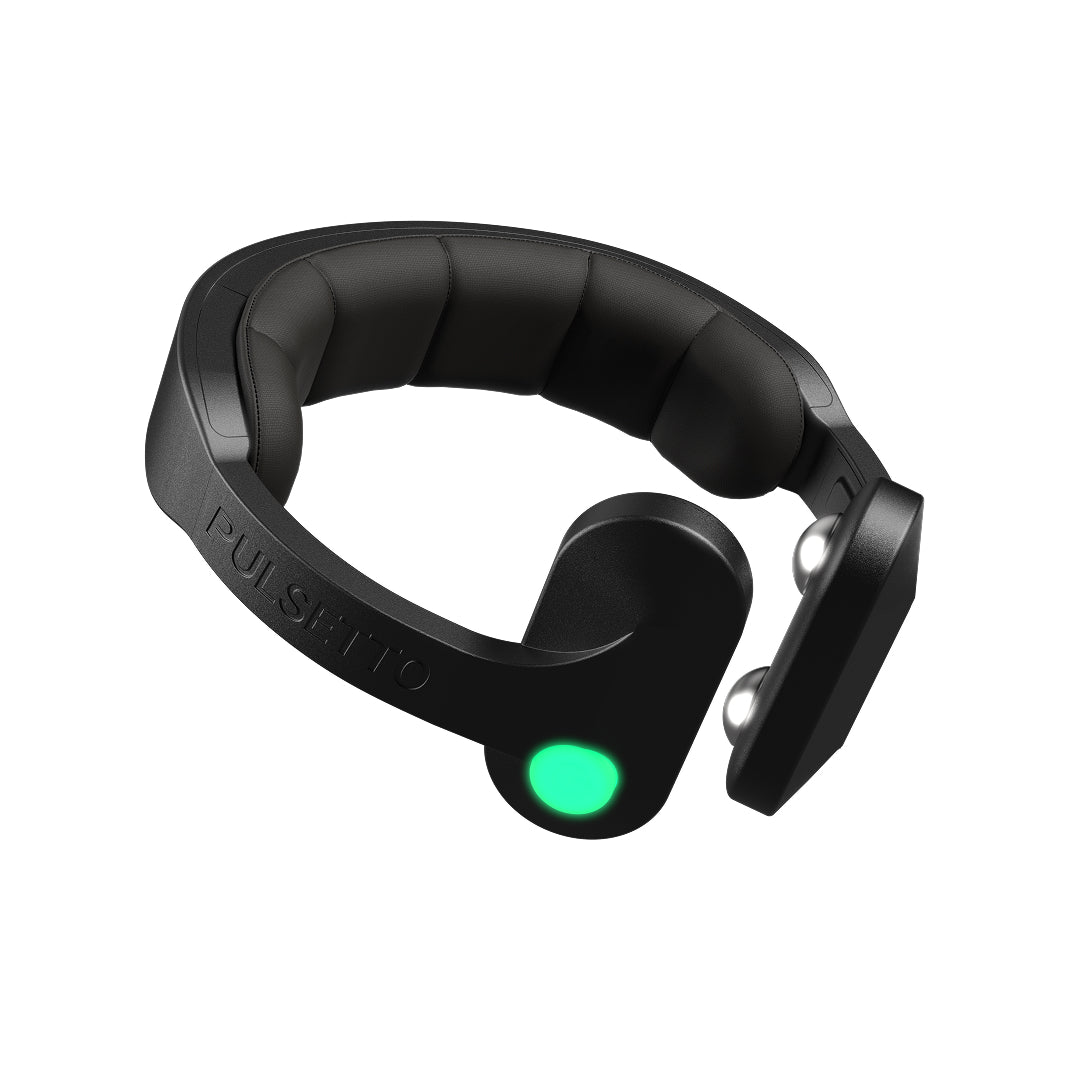
Pulsetto is a hands-free, non-invasive cervical vagus nerve stimulation wearable built for general wellness. Sessions run about four minutes, and the free lifetime app includes guided programs for stress, sleep, and relaxation, plus HRV and sleep tracking. Explore the Pulsetto vagus nerve stimulation device to see how it fits a calmer daily routine. Pulsetto is not a treatment for migraine or any medical condition.
What is the vagus nerve, and why does it matter for headache research?
The vagus nerve is the longest of the cranial nerves and the main highway of the parasympathetic nervous system, the branch of the autonomic nervous system often described as the body's "rest and digest" mode. It runs from the brainstem down through the neck and into the chest and abdomen, carrying signals in both directions between the brain and the heart, lungs, and gut. One of its best-known jobs is acting as a brake on the heart, slowing the heart rate and helping the body settle after stress. If you want a fuller tour of its pathways, the guide to vagus nerve anatomy and core functions lays out the map.
The vagus nerve matters to headache researchers for a specific anatomical reason. Its fibers connect, directly and indirectly, to brainstem structures that also process pain signals from the head and face, including the trigeminal system. In migraine, a network known as the trigeminovascular system becomes activated, releasing inflammatory signaling molecules and amplifying pain. Because the vagus nerve feeds into overlapping brainstem nuclei, scientists have long asked whether modulating vagal activity could influence how those pain pathways behave. That question is the foundation of the entire vagus-nerve-and-migraine research field.
It helps to separate two ideas that often get blurred together. The first is the general science of vagal tone and autonomic balance, which touches stress, heart rate variability, and relaxation, and which applies to nearly everyone. The second is the specific clinical question of whether a medical device that stimulates the vagus nerve can reduce migraine frequency or intensity, which is a treatment question studied under controlled trial conditions. This article covers both, but keeps them clearly labeled so the distinction never gets lost.
The vagus nerve and migraine: what the connection actually is
When people search for "vagus nerve and migraine" or "vagus nerve migraine symptoms," they are usually trying to understand whether the nerve is a cause, a symptom pathway, or a possible point of intervention. The honest answer is that it is best understood as a modulatory pathway rather than a simple on-off switch. Migraine involves the brain, blood vessels, the trigeminal nerve, and a cascade of neurochemical events. The vagus nerve is one input that can influence the excitability of the brainstem circuits involved, which is why it became a target of interest for neuromodulation researchers.
Vagal signaling also interacts with inflammation. The vagus nerve participates in what researchers call the cholinergic anti-inflammatory pathway, a mechanism through which vagal activity can dampen the release of pro-inflammatory cytokines. Since neurogenic inflammation is part of the migraine picture, this anti-inflammatory role is one of the proposed mechanisms behind why vagal stimulation has been studied for headache at all. These are proposed mechanisms under active investigation, not settled certainties, and the research community continues to refine the model.
Rated 4.5/5 by 20,137+ Customers
Pulsetto vagus nerve stimulator: feel calmer and sleep better in just 4 minutes a day
Experience immediate relaxation with the Pulsetto vagus nerve stimulator.
Sit back, close your eyes, and immerse yourself in the soothing Pulsetto experience, designed to gently promote a state of calmness and well-being.
Best Value Deal!
FREE WORLDWIDE SHIPPING
Select your device:
Pulsetto Lite vs Pulsetto FIT
Which one is right for you?
PULSETTO FIT
PULSETTO LITE
Dual-technology, hands-free stimulation
Yes
Yes
New wave-like stimulation (more engaging)
Yes
No
Battery life
Up to 12 days (20% longer)
Up to 10 days
Fits all necks for consistent stimulation
Yes
No
Stays secure no matter what you're doing
Yes
No
Great for sharing (adjusts to any neck size)
Yes
No
Free lifetime wireless updates
Yes
No
Premium all-black design with medical-grade materials
Best if you wear size S or smaller tops. Only with FIT
New stimulation that rises and falls, which feels more fun (coming July–Aug 2025). Only with FIT
20% longer battery life for fewer recharges. Only with FIT
Free lifetime Pulsetto App with 5 expert-designed programs for Stress, Anxiety, and More.
One 60g gel tube (can be used up to a month), USB-C charging cable, user guide included
Extra gift: Pulsetto Premium Free Trial. 3 extra stimulations, 11 unique guided meditations, 54 breathing exercises, 1200 positive affirmations, and more.
$296/$546
Vagus Nerve Stimulation for Migraine: Understanding the Science, the Devices, and the Evidence
How vagal modulation may influence pain pathways
To understand why anyone would stimulate the vagus nerve in the context of headache, it helps to follow the signal. Afferent (incoming) vagal fibers carry information to a brainstem structure called the nucleus tractus solitarius, which in turn connects to regions that influence pain processing, including the trigeminal nucleus caudalis. In animal and human studies, stimulating vagal afferents has been shown to change the activity of neurons in these pain-related regions.
Several plausible mechanisms have been proposed in the literature. Vagal stimulation may reduce cortical spreading depression, the slow wave of altered brain activity linked to migraine aura. It may modulate levels of neurotransmitters such as glutamate and GABA that govern how excitable pain circuits are. And through the cholinergic anti-inflammatory pathway, it may lower the inflammatory signaling that sensitizes the trigeminovascular system. Each of these is a reasonable hypothesis supported by some experimental data, and together they explain the scientific rationale for studying vagus nerve stimulation in headache conditions.
There is also the autonomic angle. Many people with migraine report that attacks cluster around periods of stress, poor sleep, or the "let-down" after a stressful stretch. The autonomic nervous system, and vagal tone in particular, sits at the center of the stress response. This is where a window into the autonomic system becomes useful, and the most practical one available outside a lab is heart rate variability.
Heart rate variability, stress, and the autonomic picture
Heart rate variability, or HRV, is the beat-to-beat variation in the timing of your heartbeats. It is the clearest non-invasive window we have into the balance between the sympathetic ("fight or flight") and parasympathetic ("rest and digest") branches of the autonomic nervous system, and higher vagally mediated HRV generally reflects a nervous system that can shift flexibly between states. Shaffer and Ginsberg's overview of HRV metrics and norms remains a standard reference for how these measures are defined and interpreted [1]. If you are new to the concept, the primer on why heart rate variability matters is a good starting point, and the HRV score chart by age and gender puts typical ranges in context.
HRV is not a migraine test, and a given HRV reading does not diagnose or predict a headache. But HRV is relevant to the broader conversation because it tends to fall under chronic stress, and stress is a commonly reported migraine trigger. A meta-analysis by Kim and colleagues documented the consistent relationship between stress and reduced HRV across the literature [2]. The takeaway is not that raising HRV treats migraine. It is that supporting a calmer, more balanced autonomic state through evidence-based habits is a reasonable general-wellness goal, and HRV is a useful way to observe how those habits land. Tracking your own numbers over time, whether through a wearable or a dedicated tool, gives you feedback that pure guesswork cannot. The overview of the best HRV tracking approaches in the guide to HRV devices covers the options.
Prescription and clinical nVNS devices studied for headache
Here is where the distinction between clinical devices and general wellness tools becomes essential. A specific category of prescription, non-invasive vagus nerve stimulation (nVNS) devices exists in the medical space and is used clinically for certain headache conditions. The best-known example is a handheld cervical nVNS device, gammaCore, made by electroCore, which a clinician can provide for headache management. It is applied to the side of the neck for short stimulation cycles and is obtained through a healthcare provider, not bought as a consumer wellness gadget.
This clinical category is entirely distinct from consumer general-wellness devices. A prescription nVNS device is regulated as a medical device and studied specifically for headache endpoints under clinical trial conditions. A general wellness device such as Pulsetto is not a medical device, is not prescribed, and is not a treatment for migraine or any condition. The technologies may both involve the neck and the vagus nerve, but their regulatory status, intended use, and evidence base are different, and it would be inaccurate to treat them as interchangeable.
There is a third category worth naming to avoid confusion: implanted vagus nerve stimulation. This is a surgical therapy in which a stimulator is placed under the skin with a lead wrapped around the vagus nerve in the neck. It is an established medical treatment used for drug-resistant epilepsy and certain cases of depression, and systematic reviews confirm meaningful reductions in seizure frequency for many patients with drug-resistant epilepsy [3][4]. Implanted VNS is a serious surgical intervention prescribed and managed by specialists. It has nothing to do with consumer wellness devices and is mentioned here only so the three categories, implanted surgical VNS, prescription non-invasive nVNS, and general-wellness stimulation, stay clearly separated in the reader's mind.
How does nerve stimulation relate to migraine mechanisms?
People often ask how nerve stimulation could influence migraine at all. In the clinical nVNS context, the working model is that stimulating vagal afferents at the neck sends signals up to the brainstem pain-processing regions described earlier, where they may dampen the trigeminovascular activation that drives head pain, reduce cortical hyperexcitability, and engage anti-inflammatory signaling. That is the mechanistic rationale that clinical researchers have tested. Whether the effect is large, small, or inconsistent is a separate question answered by trial data, which the next section covers honestly.
A calmer nervous system, in about four minutes
If your interest is everyday stress and sleep rather than a medical condition, Pulsetto offers hands-free bilateral cervical stimulation with guided sessions in the free app. It is designed for general wellness and relaxation, not for treating migraine or headache. For anything migraine-related, a healthcare provider is the right first stop.
What the clinical research says about VNS for migraine
This is the part of the topic where honesty matters most, because the evidence is genuinely mixed and the marketing around neuromodulation sometimes runs ahead of it.
The strongest positive signal comes from a different headache condition. In the PREVA study, Gaul and colleagues ran a randomized controlled trial of non-invasive vagus nerve stimulation for the prevention and acute treatment of chronic cluster headache and reported a positive result, with nVNS reducing attack frequency compared with standard care alone [5]. Cluster headache is not the same as migraine, but this trial is important because it is high-quality evidence that vagal stimulation can influence a severe headache disorder under controlled conditions.
For migraine specifically, the picture is weaker and more mixed. Moisset and colleagues conducted a systematic review and meta-analysis of neuromodulation techniques for acute and preventive migraine treatment, pooling the randomized controlled trials across several device categories [6]. The honest summary of that body of work is that the evidence for vagus nerve stimulation in migraine is limited and inconsistent, with some trials showing modest benefit and others failing to separate clearly from sham. Neuromodulation as a broad category showed some promise, but VNS-for-migraine on its own did not emerge as a strong, settled result. Anyone claiming that vagus nerve stimulation is a proven migraine solution is overstating what the trials actually show.
There is a broader base of research on transcutaneous vagus nerve stimulation and its physiological effects that helps explain why the migraine question is so hard to pin down. Critical reviews of transcutaneous VNS, such as the one by Yap and colleagues, highlight how much still needs to be standardized in stimulation parameters, placement, and trial design before firm clinical conclusions can be drawn [7]. Studies of transcutaneous vagal stimulation on heart rate variability and autonomic markers show real but variable effects that tend to build with consistent use rather than appearing dramatically after a single session [8][9]. That variability is exactly why a rigorous migraine trial is difficult to run and why results differ from study to study.
The responsible reading of all this is straightforward. Vagus nerve stimulation is a legitimate and actively studied area of headache research. There is solid RCT evidence in chronic cluster headache, and the mechanistic rationale for migraine is reasonable. But the migraine-specific evidence for VNS remains limited and mixed, which is why prescription nVNS is used under clinical supervision and why no responsible general-wellness product should be positioned as a migraine treatment.
Understanding migraine nerve stimulation versus general wellness stimulation
To keep the categories clear, it is worth restating the difference in plain terms. Migraine nerve stimulation, in the clinical sense, refers to regulated devices studied for headache endpoints and obtained through a clinician. General wellness stimulation refers to consumer devices designed to support relaxation, stress management, and sleep, with no medical claim attached. Both may engage the vagus nerve, but only the former is studied and used as a headache intervention. A general wellness device belongs in the stress-and-sleep lane, full stop.
Vagus nerve exercises for migraine-prone people: a general-wellness approach
Many people who are prone to migraine are also managing high baseline stress, and stress management is a sensible general-wellness goal in its own right. The techniques below are not migraine treatments and are not claimed to prevent or relieve headache. They are simple, well-studied ways to support relaxation and a calmer autonomic state, which is worthwhile for almost anyone. Think of this as vagal-tone-friendly wellness, not medical care.
Slow, extended-exhale breathing. Breathing at a slow pace, roughly five to six breaths per minute with a longer exhale than inhale, is one of the most accessible ways to engage the parasympathetic system and shift the body toward calm. A meta-analysis of breathwork by Fincham and colleagues found measurable benefits for stress and mental health across randomized controlled trials [10]. Research also shows that deep breathing can modulate HRV, reflecting a real autonomic shift [11]. The guide to activating the parasympathetic nervous system walks through practical breathing patterns.
HRV biofeedback and paced breathing. Structured HRV biofeedback, where you breathe in time with a visual pacer and watch your heart rhythm respond, has one of the stronger evidence bases in this space. Lehrer and colleagues' meta-analysis found that HRV biofeedback improved measures of stress and emotional health [12], and Goessl and colleagues reported similar reductions in stress and anxiety [13]. This is a skill that rewards consistency rather than intensity.
Relaxation, meditation, and mindfulness. Structured meditation programs have been shown to reduce psychological stress and improve well-being in a meta-analysis by Goyal and colleagues [14]. Even short daily sessions can help down-regulate a nervous system that spends too much time in high gear. Pairing a brief practice with your breathing routine makes both easier to sustain.
Everyday nervous-system hygiene. Consistent sleep, regular movement, hydration, and managing known personal stressors all support autonomic balance. For structured ideas, the collection of techniques to soothe your nervous system and the nervous system reset strategies offer practical routines. A gentle self-massage approach is covered in the guide to vagus nerve massage. None of these are migraine treatments; they are general habits that support relaxation and stress resilience.
If you notice that stress consistently precedes your headaches, that pattern is worth discussing with your healthcare provider, who can help you build a complete plan. General-wellness habits can sit alongside proper medical care, never as a replacement for it.
Where Pulsetto fits, and where it does not
Pulsetto is a non-invasive, bilateral cervical vagus nerve stimulation wearable built for one purpose: supporting general wellness through stress management, relaxation, and better sleep. It sits on the neck, runs hands-free sessions of about four minutes, and pairs with a free lifetime app that includes guided programs for stress, sleep, burnout, and relaxation, along with HRV and guided-breathing features. It is CE certified and FCC certified, made in Lithuania, and designed to be a simple daily tool for calm. You can read more about the approach on the Pulsetto science page and the non-invasive vagus nerve stimulation explainer.
Here is the boundary, stated plainly. Pulsetto is not a migraine treatment. It is not a medical device. It is not prescribed, and it is not studied for headache endpoints. If you live with migraine or frequent headaches, the right path is a qualified healthcare provider who can diagnose your condition and discuss appropriate options, which may include prescription medication, clinical neuromodulation devices, or other therapies suited to your situation. Pulsetto belongs to the general-wellness category of stress and sleep support, and that is the only lane in which it should be understood.
What Pulsetto's own research has looked at is general wellness outcomes, not headache. In Pulsetto's own randomized open-label pilot study (n=40, 4 weeks), participants reported a 55.9% reduction in depressive symptoms (PHQ-9), a 45.3% reduction in anxiety symptoms (GAD-7), and a 41.0% improvement in sleep quality (PSQI). Bilateral stimulation reduced the chronic-stress biomarker hair cortisol by 47.5%, compared with 31.4% for unilateral stimulation. These outcomes are about stress, mood, and sleep, and they say nothing about migraine, which was not a study endpoint. You can see the broader research program on the ongoing studies and trials page.
If your interest is stress and sleep, comparing options is reasonable, and the roundup of the best vagus nerve stimulation devices puts several general-wellness tools side by side. For a sense of real user experiences, the Pulsetto reviews page collects feedback from people using it for everyday calm.
How Pulsetto compares with other general-wellness stimulation tools
Within the general-wellness category, several devices take different approaches. Truvaga offers handheld cervical stimulation and is available mainly in the US. Nurosym and Neuvana Xen use ear-based (auricular) stimulation, with Xen pairing stimulation to music. Vagustim also works through the ear with a bilateral auricular design. Sensate uses infrasonic resonance on the chest rather than electrical stimulation, and Apollo Neuro delivers gentle haptic vibration at the wrist. Pulsetto's distinguishing features within this group are its hands-free bilateral cervical placement and its short, guided app-based sessions. All of these are general-wellness tools for relaxation and stress, not migraine treatments. The comparison of the best neck stimulator devices goes deeper on placement and fit, and the best nervous system regulation device roundup frames the broader category.
Safety and contraindications
Non-invasive vagal stimulation is generally well tolerated in a general-wellness context, and any sensations are typically mild, such as a light tingling at the stimulation site. Even so, this category of device is not appropriate for everyone, and safety comes first. Do not use Pulsetto, and consult your doctor before considering any vagus nerve stimulation, if any of the following apply to you.
You have a pacemaker.
You have any implanted electrical medical device.
You have epilepsy or a seizure disorder.
You are pregnant.
You have a cardiac arrhythmia or a serious cardiovascular condition (consult a doctor first).
You have had recent neck or throat surgery (consult a doctor first).
You have a carotid artery condition.
For the complete list and detailed guidance, see the page on Pulsetto contraindications and the overview of whether Pulsetto is safe. If you are unsure whether general-wellness stimulation is right for you, especially if you have any medical condition, ask your healthcare provider first. And again, for migraine specifically, a provider is the right person to guide diagnosis and treatment.
Frequently asked questions
Does vagus nerve stimulation help migraines?
The honest answer is that the evidence is mixed. There is strong randomized controlled trial evidence that non-invasive vagus nerve stimulation can reduce attack frequency in chronic cluster headache [5], and there is a reasonable scientific rationale for why vagal modulation could influence migraine pain pathways. However, the migraine-specific evidence for vagus nerve stimulation is limited and inconsistent, with meta-analytic reviews finding that results vary from study to study and do not add up to a settled conclusion [6]. Prescription non-invasive nVNS devices used for headache are obtained through a clinician. If you are considering neuromodulation for migraine, that decision should be made with a healthcare provider based on your individual situation.
Does Pulsetto help with migraines?
Pulsetto is a general wellness device designed to support stress management, relaxation, and sleep. It is not a migraine treatment, it is not a medical device, and it is not intended to diagnose, treat, cure, or prevent migraine, headache, or any medical condition. If you experience migraine or recurrent headaches, the right step is to consult a qualified healthcare provider, who can diagnose your condition and discuss appropriate options. Pulsetto can be part of a general-wellness routine focused on everyday calm, but it should never be understood as a substitute for medical care.
Can Pulsetto cause headaches?
In a general-wellness context, non-invasive vagal stimulation is usually well tolerated, and reported sensations are typically mild and temporary, such as light tingling at the stimulation site or a brief feeling of lightheadedness. As with many wellness practices, individual responses vary, and starting gently is sensible. If you notice any discomfort, stop the session, follow the usage guidance in the Pulsetto quick start guide and the notes on how often you can use Pulsetto, and speak with your healthcare provider if anything persists or concerns you.
What is the difference between a prescription nVNS device and a general wellness device?
A prescription non-invasive vagus nerve stimulation device, such as a clinical cervical nVNS unit, is regulated as a medical device, studied specifically for headache endpoints under clinical trial conditions, and obtained through a healthcare provider. A general wellness device is designed to support relaxation, stress, and sleep, carries no medical claim, and is not prescribed or studied as a headache treatment. Both may engage the vagus nerve, but their regulatory status, intended use, and evidence base are different. The explainer on what vagus nerve stimulation is covers the underlying concept in more detail.
Are vagus nerve exercises a treatment for migraine?
No. Breathing exercises, HRV biofeedback, meditation, and relaxation routines are general-wellness practices that support a calmer nervous system and better stress resilience. They are not migraine treatments and are not claimed to prevent or relieve headache. They can be worthwhile habits for almost anyone managing stress, and if stress consistently precedes your headaches, that is a pattern worth raising with your healthcare provider as part of a complete plan.
Scientific research
Pulsetto is a general wellness product and is not intended to diagnose, treat, cure, or prevent any disease or medical condition. The studies below were identified through the Consensus and PubMed research databases, are linked directly by DOI, and are indexed in PubMed. They are provided for educational context on the vagus nerve, autonomic function, heart rate variability, and the clinical neuromodulation literature. They are not evidence that any general wellness device treats migraine or any medical condition.