Four lifestyle levers that raise your HeartMath Inner Balance HRV score

Your in-session coherence score sits on top of your resting HRV baseline. Lift the baseline and every session gets easier. Here is how the four main lifestyle levers stack up.
|
Lever
|
What to do
|
What the evidence shows
|
|
Exercise
|
Regular aerobic and endurance training, most days of the week
|
Meta-analysis found exercise training improved SDNN, RMSSD, and high-frequency power in healthy adults [4]
|
|
Diet
|
Mediterranean-style eating, omega-3-rich foods, hydration, mindful caffeine and alcohol
|
Generally associated with better cardiovascular and autonomic health; not a quick fix
|
|
Supplements
|
Commonly discussed options include omega-3 and magnesium; check with a professional first
|
Supportive for some people; individual response varies, so personalise with guidance
|
|
Sleep
|
Consistent schedule, wind-down routine, 7 to 9 hours
|
Better and longer sleep supports higher HRV; HRV even tracks sleep stages [5]
|
Lever 1: Exercise
Regular aerobic exercise is one of the most reliable ways to raise vagally-mediated HRV. A 2024 systematic review and meta-analysis of randomized controlled trials found that exercise training improved key HRV metrics, including SDNN, RMSSD, and high-frequency power, in healthy adults [4]. In plain terms, consistent cardio nudges your nervous system toward the parasympathetic, recovery-oriented state that HeartMath is trying to coach you into.
You do not need to train like an athlete. A brisk daily walk, easy cycling, swimming, or light jogging most days of the week is enough to start. Consistency beats intensity, and pushing too hard without recovery can temporarily suppress HRV, so build gradually. If you find it hard to stay active, a consumer activity tracker can help: systematic reviews show wearable trackers meaningfully increase physical activity participation, largely through step goals and gentle prompts [6]. Learning to activate your parasympathetic nervous system through movement and breath works hand in hand with your coherence training.
Lever 2: Diet
Diet influences HRV more slowly than breathing or exercise, but it sets the background conditions. A Mediterranean-style pattern, rich in vegetables, whole grains, legumes, olive oil, and oily fish, is generally associated with better cardiovascular and autonomic health. Omega-3-rich foods such as salmon, sardines, and walnuts come up often in HRV discussions.
A few practical habits tend to help:
-
Stay well hydrated across the day, since dehydration can strain the cardiovascular system.
-
Moderate alcohol, which is well known to blunt HRV, especially in the hours before sleep.
-
Time your caffeine earlier in the day so it does not interfere with your evening wind-down.
-
Favour whole, minimally processed foods over ultra-processed ones.
Treat these as "generally associated with" better autonomic health rather than proven HRV cures. No single food will spike your HeartMath Inner Balance HRV score overnight, and it is worth being skeptical of any claim that says otherwise.
Lever 3: Supplements
Supplements are the most individual of the four levers. Two options come up most in HRV conversations: omega-3 fatty acids and magnesium. Some people find they support relaxation and recovery, while others notice little change, since response varies with your baseline diet, health status, and what you already get from food.
Because supplements can interact with medications and existing conditions, the single most important step here is to check with a qualified healthcare professional before starting anything new. Think of supplements as a possible fine-tuning layer on top of solid exercise, diet, and sleep, never a replacement for them.
Lever 4: Sleep
Sleep may be the most underrated HRV lever. Better and longer sleep supports higher HRV, and the relationship runs deep enough that HRV data can be used to estimate which sleep stage you are in. One study demonstrated accurate four-class sleep staging using heart rate variability from low-cost wearables [5], which shows just how tightly your autonomic nervous system and your sleep are linked.
Good sleep hygiene is the practical lever you control:
-
Keep a consistent sleep and wake schedule, even on weekends.
-
Build a wind-down routine, dimming lights and stepping away from screens before bed.
-
Keep the bedroom cool, dark, and quiet.
-
Avoid heavy meals, alcohol, and late caffeine near bedtime.
A short HeartMath coherence session or slow-breathing practice in the evening doubles as a wind-down ritual, so your sleep and your coherence work reinforce each other. If sleep is your main goal, our roundup of the best device for sleep support is a useful next read.
Accelerators: breathing, biofeedback, and vagus nerve stimulation
The four lifestyle levers raise your baseline. Two accelerators can lift your coherence score more directly.
Slow breathing and HRV biofeedback
This is the mechanism HeartMath itself uses, so it is worth doing deliberately. Slow, paced breathing at around five to six breaths per minute increases the rhythmic swing in your heart rate and pushes your coherence score up. The research base is solid: HRV biofeedback has been shown to improve emotional and physical health and performance [2], and a separate meta-analysis found it reduces stress and anxiety [3]. Broader breathwork reviews reach the same conclusion, with slow breathing practices reducing stress and improving mental health outcomes [7].
A common question is whether HeartMath coherence training beats simple slow breathing. In practice, they overlap heavily. The core active ingredient in both is slow, rhythmic breathing that engages the vagus nerve. What HeartMath adds is real-time feedback, which shortens the learning curve and keeps you honest about your pace. If you already have a strong, consistent slow-breathing habit, plain paced breathing can get you most of the way there. The device mainly helps you build and refine the skill faster. Our collection of calming techniques to soothe your nervous system pairs well with either approach.
Does vagus nerve stimulation support HRV?
The vagus nerve is the main highway of your parasympathetic nervous system, and it is the common thread behind slow breathing, coherence training, and vagus nerve stimulation. Transcutaneous auricular vagus nerve stimulation (taVNS) has been studied for its effect on heart rhythm, and several studies report that it can acutely increase vagally-mediated HRV in healthy participants [9][10]. One study combined deep breathing with taVNS and examined how both modulate HRV [8], while a living Bayesian meta-analysis weighed the overall evidence [11]. Age appears to matter too, with one analysis finding age modifies how much taVNS shifts HRV [12].
The evidence base is still developing, effects are often measured acutely rather than as permanent baseline shifts, and individual responses vary. Even so, stimulating the vagus nerve is a plausible, research-supported way to nudge your body toward the calmer state that also produces higher coherence.
Where Pulsetto fits

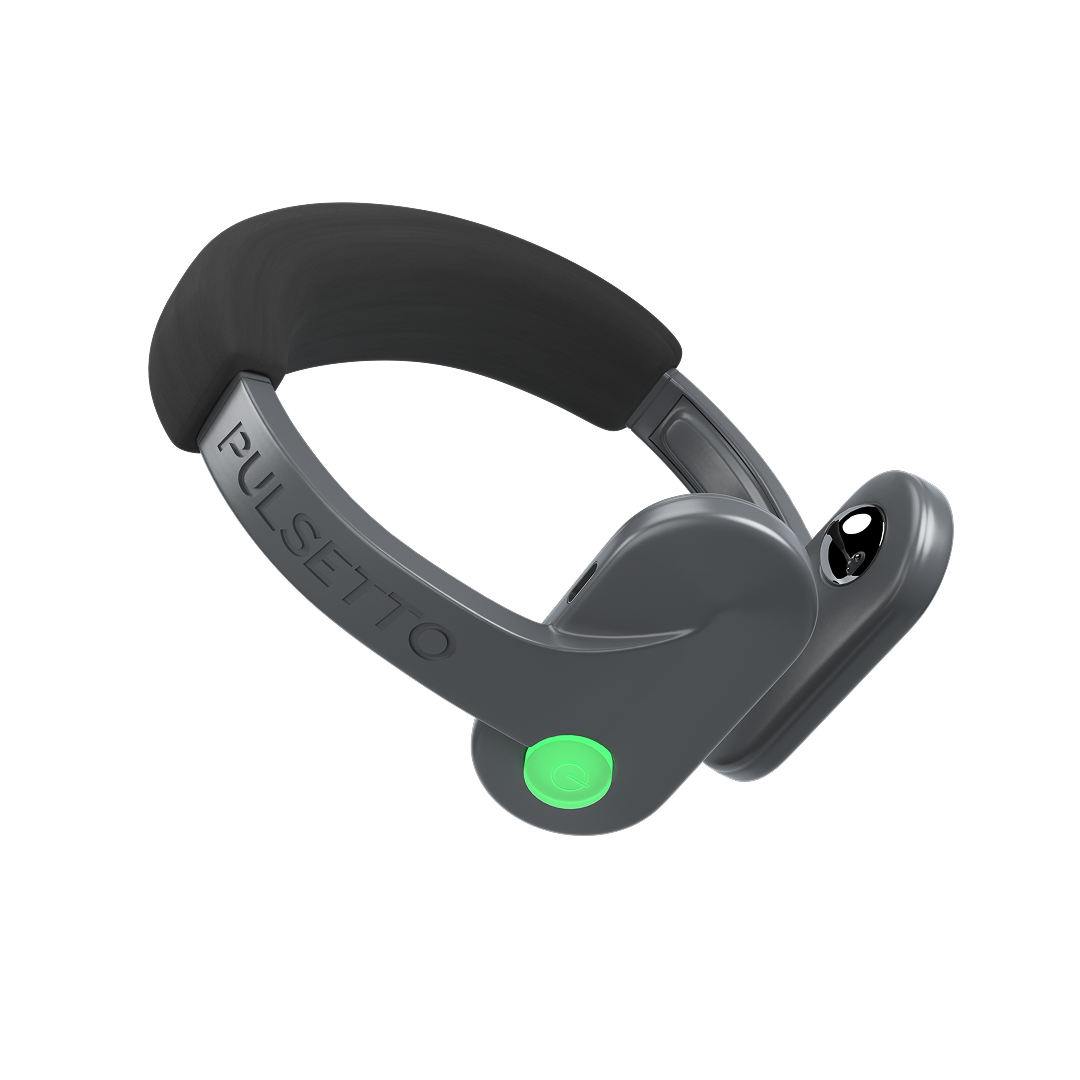
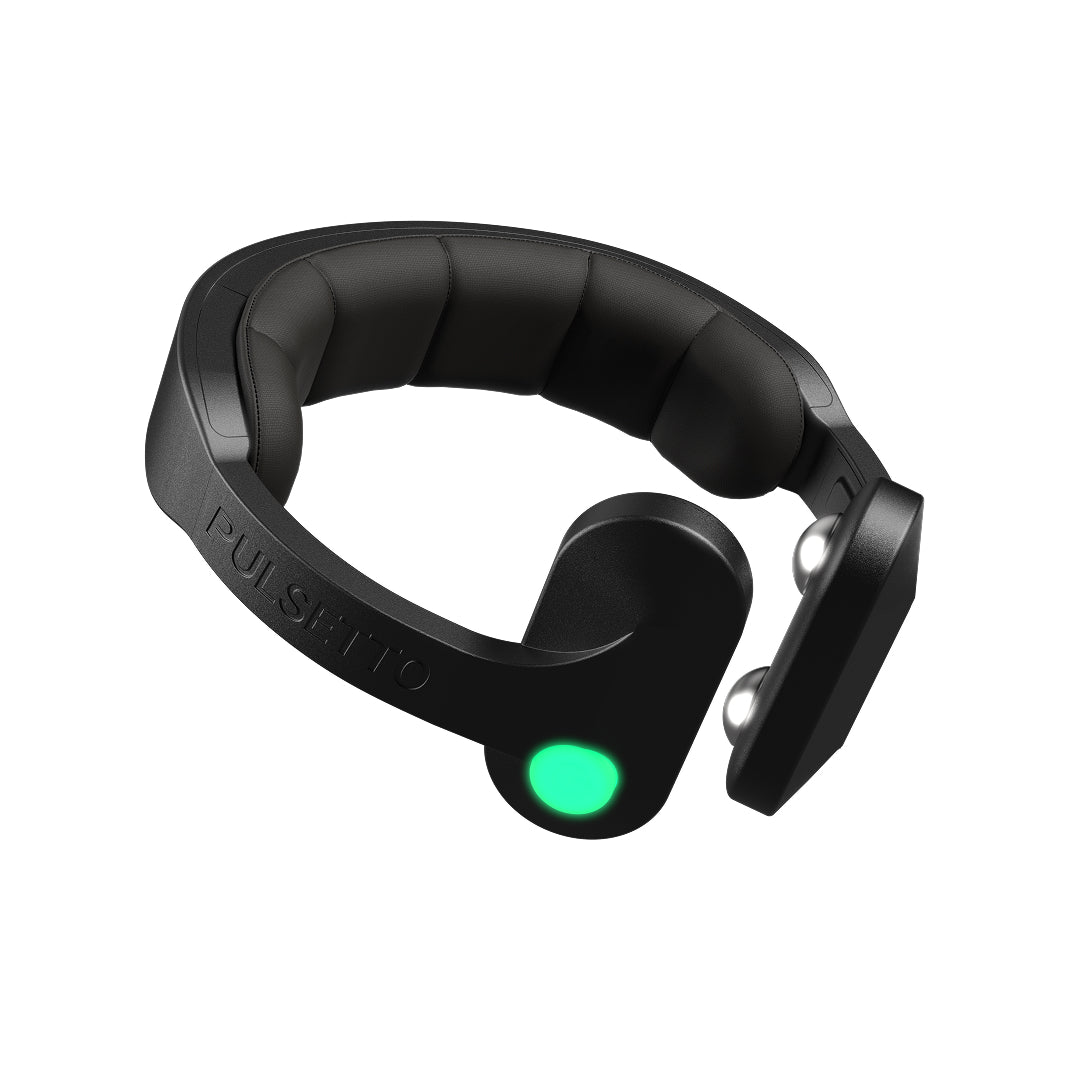
Pulsetto is a bilateral, non-invasive cervical vagus nerve stimulator that you wear around your neck, hands-free, for sessions of about four minutes. Unlike ear-clip taVNS, it targets both sides of the neck at once, and it pairs with a free companion app with guided programs, with no mandatory subscription. As a general wellness device, it is designed to help you feel calmer and may support relaxation, sleep quality, and stress management, which are the same states associated with a higher coherence score. It is CE certified and FCC certified and made in Lithuania.
In Pulsetto's own randomized open-label pilot study (n=40, 4 weeks), participants reported a 55.9% reduction in depressive symptoms (PHQ-9), a 45.3% reduction in anxiety symptoms (GAD-7), and a 41.0% improvement in sleep quality (PSQI). Bilateral stimulation reduced the chronic-stress biomarker hair cortisol by 47.5%, compared with 31.4% for unilateral stimulation. You can also follow the ongoing studies and trials as the evidence grows.
A practical routine might be a four-minute session with the Pulsetto Lite device or the Pulsetto FIT model to settle your system, followed by a HeartMath coherence session while you are already relaxed. To understand the method first, our explainer on non-invasive vagus nerve stimulation is a good primer, and you can see how it compares in our overview of the best nervous system regulation devices.
How Pulsetto compares to other wellness tools
HeartMath Inner Balance measures and trains; it does not stimulate. Several other tools take different approaches, and each may be a good fit for different use-cases:
-
HeartMath Inner Balance (around $159 to $199): an HRV biofeedback trainer with an ear or finger pulse sensor and app; it measures and coaches, it does not electrically stimulate.
-
Nurosym (around €699): a single-ear auricular clip with a strong published evidence base, app-free, with roughly 30-minute sessions; may be a good fit for those wanting the most-studied auricular option.
-
Sensate (around $300): an infrasonic chest device using vibration and sound rather than electrical stimulation, with about 10-minute lie-down sessions; may suit people who prefer a non-electrical, passive experience.
-
Apollo Neuro (around $349): a wrist or ankle haptic vibration wearable; may fit people who want an all-day, wearable touch-based cue.
-
HeartMath and Pulsetto together: measurement plus stimulation, which many people combine.
For a wider look, see our comparison of the best HRV devices and the best wearable devices for stress relief.
A safety note before you start
Vagus nerve stimulation is not right for everyone. Do not use a vagus nerve stimulator, and consult your doctor first where advised, if any of the following apply to you:
-
You have a pacemaker.
-
You have any implanted electrical medical device.
-
You have epilepsy or a seizure disorder.
-
You are pregnant.
-
You have cardiac arrhythmia or serious cardiovascular conditions (consult a doctor first).
-
You have had recent neck or throat surgery (consult a doctor first).
-
You have carotid artery conditions.
Always keep stimulation to the recommended session length rather than extending it. For the full details, read the Pulsetto contraindications guide and the overview of whether Pulsetto is safe before your first session.
Frequently asked questions
What is a good HeartMath coherence score?
HeartMath displays coherence on a scale, and higher, more stable numbers reflect a smoother, more ordered heart rhythm. Rather than chasing one universal target, aim to raise your own average over time and to spend more of each session in medium or high coherence. Because coherence reflects slow, rhythmic breathing and a calm nervous state, the score improves as your breathing technique and baseline HRV improve together.
How do I increase my HeartMath Inner Balance score?
Focus on two things. In the moment, breathe slowly and evenly at around five to six breaths per minute and let the app's feedback guide your pace. Over the longer term, raise your baseline HRV with regular aerobic exercise, a Mediterranean-style diet, good sleep hygiene, and stress management. Vagus-focused practices, including slow breathing and vagus nerve stimulation, can help you reach the calm state that coherence rewards.
Does exercise increase HRV?
Regular aerobic and endurance exercise is generally associated with higher vagally-mediated HRV. A 2024 meta-analysis of randomized controlled trials found exercise training improved SDNN, RMSSD, and high-frequency power in healthy adults [4]. Consistency matters more than intensity, and adequate recovery between harder sessions helps your HRV rise rather than dip.
What foods increase HRV?
No single food reliably spikes HRV, but a Mediterranean-style pattern rich in vegetables, whole grains, olive oil, and omega-3-rich fish is generally associated with better cardiovascular and autonomic health. Staying hydrated, moderating alcohol, and timing caffeine earlier in the day tend to help. Treat diet as a slow, supportive lever rather than a quick fix.
Can vagus nerve stimulation improve HRV?
Research on transcutaneous auricular vagus nerve stimulation reports that it can acutely increase vagally-mediated HRV in healthy participants [9][10][11], though the evidence is still developing and responses vary. Pulsetto is a general wellness device that may support relaxation and the calmer states associated with higher HRV; it is not a medical treatment. Learn more about what vagus nerve stimulation is.
Does the HeartMath device really work?
As a biofeedback trainer, HeartMath uses a well-studied method. HRV biofeedback has been shown to improve emotional and physical health and to reduce stress and anxiety [2][3]. The device is most valuable as a training aid: it gives you real-time feedback so you can learn slow, coherent breathing and build a self-regulation skill you can use anywhere.
Scientific research
Pulsetto is a general wellness product and is not intended to diagnose, treat, cure, or prevent any disease or medical condition. The studies below were identified via the Consensus and PubMed databases and are indexed in PubMed.
[1] An Overview of Heart Rate Variability Metrics and Norms (Shaffer et al., 2017, Frontiers in Public Health. PMID: 29034226)
[2] Heart Rate Variability Biofeedback Improves Emotional and Physical Health and Performance: A Systematic Review and Meta Analysis (Lehrer et al., 2020, Applied Psychophysiology and Biofeedback. PMID: 32385728)
[3] The effect of heart rate variability biofeedback training on stress and anxiety: a meta-analysis (Goessl et al., 2017, Psychological Medicine. PMID: 28478782)
[4] Effects of Exercise Training on Heart Rate Variability in Healthy Adults: A Systematic Review and Meta-analysis of Randomized Controlled Trials (Amekran & El Hangouche, 2024, Cureus. PMID: 39015867)
[5] The Virtual Sleep Lab: Accurate Four-Class Sleep Staging Using Heart-Rate Variability from Low-Cost Wearables (Topalidis et al., 2023, Sensors. PMID: 36904595)
[6] Consumer-Based Wearable Activity Trackers Increase Physical Activity Participation: Systematic Review and Meta-Analysis (Brickwood et al., 2019, JMIR mHealth and uHealth. PMID: 30977740)
[7] Effect of breathwork on stress and mental health: A meta-analysis of randomised-controlled trials (Fincham et al., 2023, Scientific Reports. PMID: 36624160)
[8] Modulating Heart Rate Variability through Deep Breathing Exercises and Transcutaneous Auricular Vagus Nerve Stimulation (Jensen et al., 2022, Sensors. PMID: 36298234)
[9] Ear your heart: transcutaneous auricular vagus nerve stimulation on heart rate variability in healthy young participants (Forte et al., 2022, PeerJ. PMID: 36438582)
[10] The effect of transcutaneous auricular vagus nerve stimulation on HRV in healthy young people (Geng et al., 2022, PLoS ONE. PMID: 35143576)
[11] Does transcutaneous auricular vagus nerve stimulation affect vagally mediated heart rate variability? A living and interactive Bayesian meta-analysis (Wolf et al., 2021, Psychophysiology. PMID: 34473846)
[12] Age as an Effect Modifier of the Effects of taVNS on Heart Rate Variability in Healthy Subjects (Gianlorenco et al., 2024, Journal of Clinical Medicine. PMID: 39064307)