Why more adults are reaching for anxiety tools

Awareness of anxiety has grown, the stigma around managing it has dropped, and the science of the autonomic nervous system has moved from research labs into consumer products. Many adults also want something they can use between, or alongside, therapy sessions rather than relying on a single approach.
Anxiety lives partly in the body. When you feel anxious, the sympathetic "fight or flight" branch of your nervous system is dominant: heart rate climbs, breathing shortens, and muscles tense. The goal of most anxiety tools is to nudge you back toward the parasympathetic "rest and digest" state. Some do this directly, by stimulating the vagus nerve. Others do it indirectly, through slow breathing, sensory grounding, or relaxation cues. A device that works on the nervous system and an app that builds a calming habit are solving slightly different problems.
One useful objective marker runs through nearly all of these tools: heart rate variability, or HRV. HRV is the variation in time between heartbeats, and it tends to fall under stress and rise as you recover. A large meta-analysis confirmed that lower HRV is consistently associated with higher stress [1]. That is why so many modern anxiety tools, from vagus nerve devices to wearables, point to HRV as a sign that the body is shifting toward calm.
How to choose the right anxiety tool for you
Before the list, here is the framework we used and that you can apply yourself.
-
Decide what job you want done. For an in-the-moment reset, a fast device session, breathing exercise, or grounding tool works. For a longer-term shift, you want something you will use daily, like a vagus nerve device, an HRV practice, or a meditation habit.
-
Match the mechanism to your preference. Some people want direct physiological input (electrical or vibration); others prefer behavioral practices (breathwork, meditation) or simple sensory aids.
-
Check the evidence honestly. Vagus nerve stimulation, HRV biofeedback, breathwork, and meditation all have peer-reviewed support. Fidget and aromatherapy tools have far less, which does not make them useless, just lower-certainty.
-
Consider effort and consistency. A four-minute hands-free session is easier to keep up than a 30-minute ritual. The best tool is the one you will actually use.
-
Mind safety and contraindications. Electrical stimulation devices have specific contraindications (covered below). When in doubt, ask a clinician.
-
Watch the total cost. Some devices require an ongoing subscription for full features. A free, capable app can be a real advantage.
With that lens, here are the best anxiety tools for adults, starting with the standout pick.
The best anxiety devices and tools for adults

1. Pulsetto: the best anxiety device for adults overall
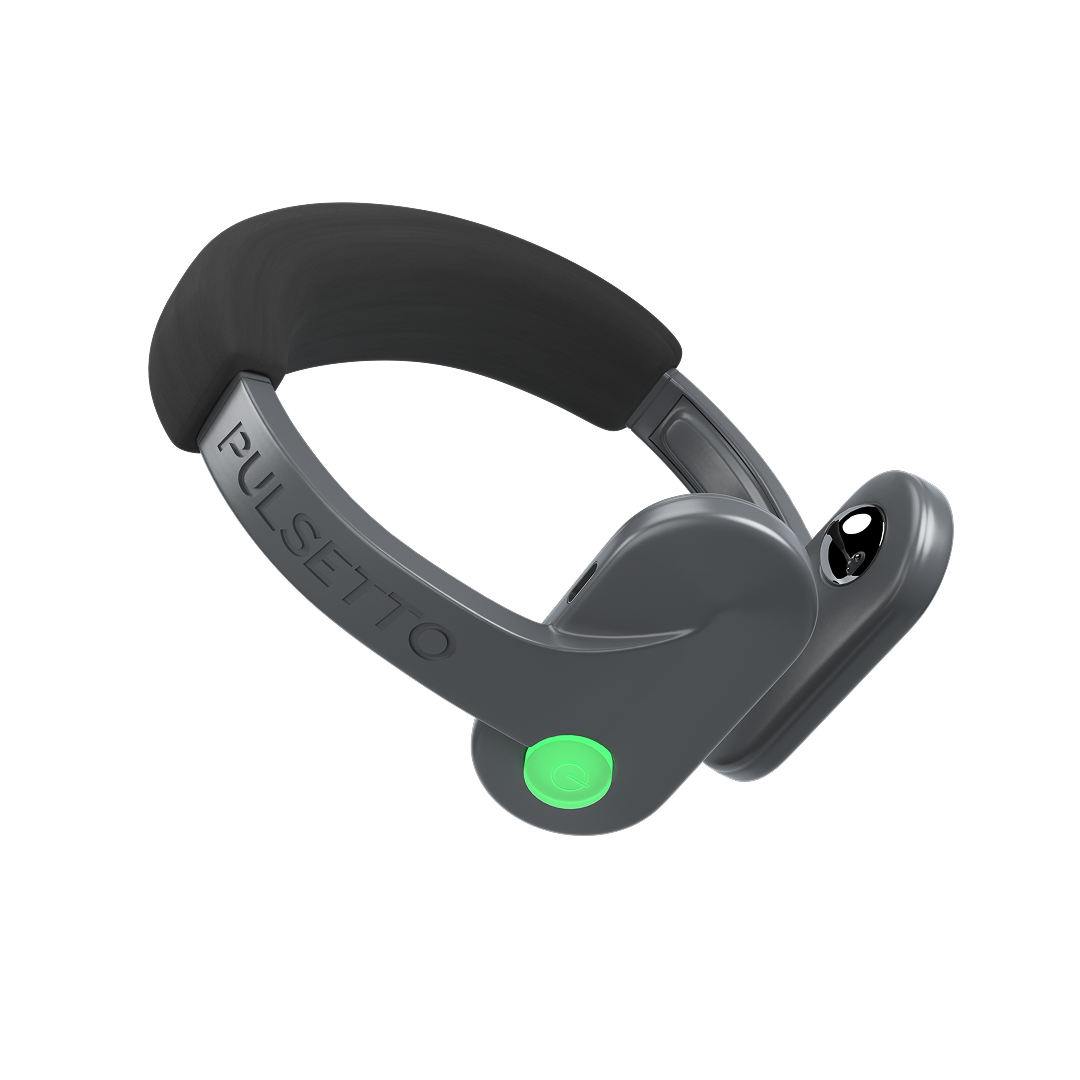
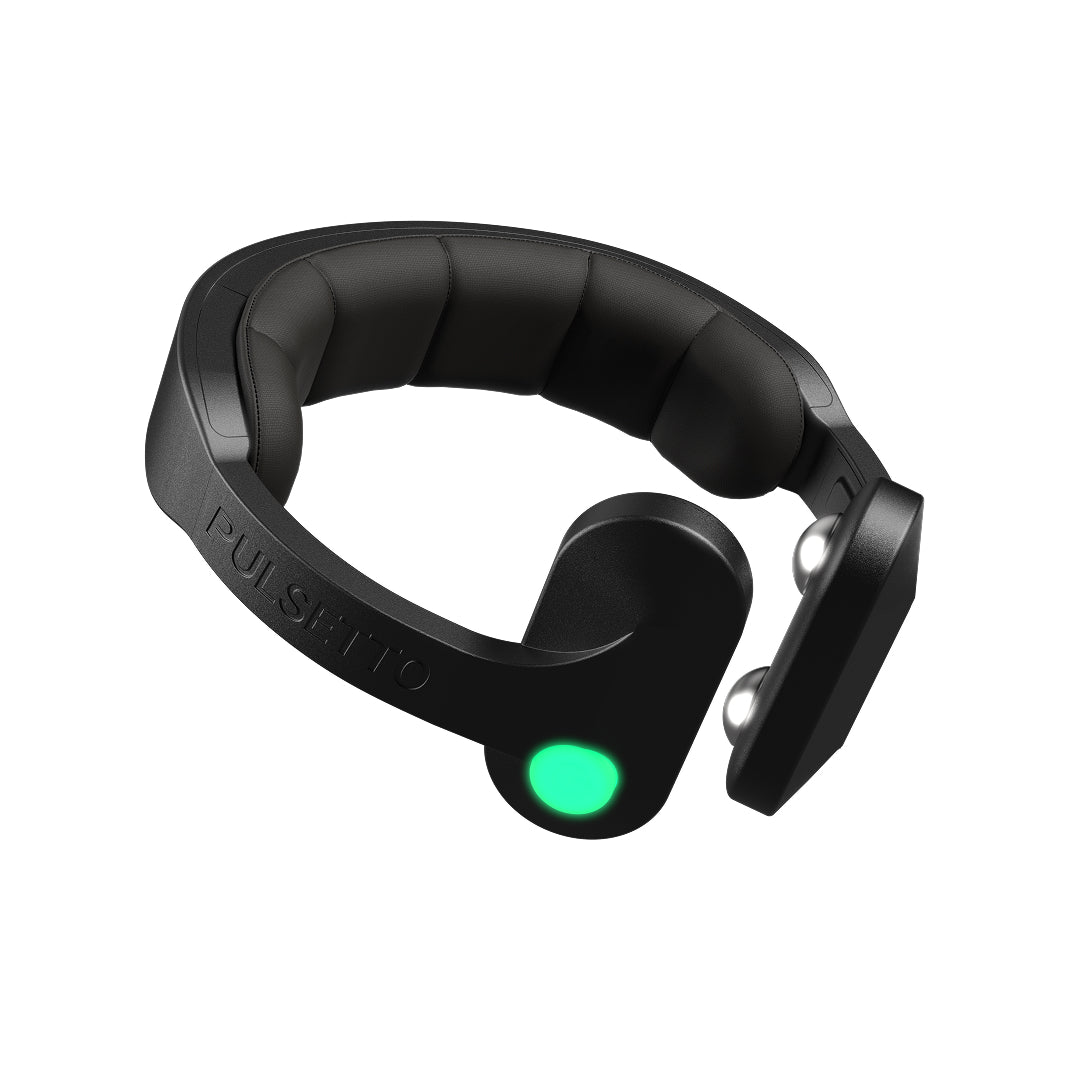
Pulsetto is our top anxiety device for adults because it targets the nervous system directly, asks very little of your day, and is backed by both its own clinical pilot and a wider body of vagus nerve research. It is a non-invasive vagus nerve stimulation (nVNS) wearable that sits around the neck and delivers gentle electrical pulses to the vagus nerve on both sides (bilateral cervical stimulation). You wear it hands-free for around four minutes while you sit back, breathe, and let the session run.
What it is. A general wellness device that uses non-invasive vagus nerve stimulation to help shift the body from a stressed, sympathetic state toward a calmer, parasympathetic one. It pairs with a free app offering five programs (Stress, Sleep, Burnout, Pain and Anxiety), plus HRV and sleep tracking and guided breathing. Importantly, Pulsetto is not a TENS unit. TENS targets muscles and pain signals, while Pulsetto targets the vagus nerve and autonomic balance.
Who it is for. Adults who want a daily, low-effort way to support a calmer baseline and better sleep, especially those who would not stick with a long ritual. The hands-free design means you can use it while reading or winding down rather than holding a device to your neck.
Key features.
-
Bilateral cervical (neck) stimulation, hands-free wear
-
Around four-minute sessions, designed for daily use
-
Free lifetime app with five programs plus HRV and sleep tracking, no subscription required for core use (Premium is optional)
-
CE and FCC certified; made in Lithuania (EU)
-
Two models, Pulsetto Lite and Pulsetto FIT, with long battery life; conductive gel and USB-C charging
-
Backed by its own pilot study and the peer-reviewed nVNS literature
The science. In Pulsetto's own randomized open-label pilot study (n=40, 4 weeks), participants reported a 55.9% reduction in depressive symptoms (PHQ-9), a 45.3% reduction in anxiety symptoms (GAD-7), and a 41.0% improvement in sleep quality (PSQI). Bilateral stimulation reduced the chronic-stress biomarker hair cortisol by 47.5%, compared with 31.4% for unilateral stimulation. These results sit alongside a broader evidence base: transcutaneous cervical vagus nerve stimulation has been shown to reduce sympathetic responses to stress [3][4], and stimulation of the vagus nerve at the ear or neck can raise vagally mediated HRV [6][7][8]. You can read more about Pulsetto's approach on its science page and its ongoing studies.
Price and app. Around $269 (roughly €249-269), with a free lifetime app and no required subscription for everyday use. That free-app model is a genuine differentiator, since several rival devices and apps lock core features behind ongoing fees.
Advantages of Pulsetto:
Cons
-
A higher upfront cost than a fidget toy or app
-
Requires conductive gel and brief setup each session
-
Effects build with regular use rather than appearing instantly
See how it compares across the category in the guide to the best vagus nerve stimulation devices and the roundup of the best nervous system regulation devices.
Try Pulsetto: If you want a device that does the calming work for you, the Pulsetto FIT and Lite models both deliver hands-free vagus nerve sessions in minutes. Read real Pulsetto reviews to see how adults use it day to day.
2. Nurosym: a good fit for the deepest published evidence
Nurosym is an electrical auricular device: a single-ear clip connected to a small controller. It is app-free and uses sessions of around 30 minutes. It is a good fit for adults who want the strongest external clinical evidence base in the category and prefer a simple, screen-free device.
The trade-offs are practical. At around €699 it sits at the premium end, the sessions are longer than a quick reset, and you hold or wear the clip on one ear rather than going fully hands-free at the neck. For people who value published research above all and do not mind the price or the longer ritual, it is a serious option. It belongs in any honest list of the best vagus nerve stimulator devices for anxiety.
3. Vagustim: a good fit for an app-controlled ear device
Vagustim uses bilateral auricular stimulation, with earpieces in both ears and an app for adjusting parameters. It is a good fit for adults who want a lower-cost, app-controlled ear device and like to fine-tune their settings. Pricing is around $390, often discounted from a higher list price, and it carries ISO 13485 and FCC marks with a 14-day money-back window.
Because it is newer, there are fewer independent reviews, and some users report mild ear discomfort during sessions. If you want hands-on control and a friendlier price than premium ear devices, it is worth a look, with the caveat that the long-term track record is still building.
4. Truvaga and Hoolest: a good fit for handheld cervical use
These two handheld devices both stimulate the vagus nerve at the neck, but you hold them in place rather than wearing them. Truvaga uses brief sessions of around two minutes and is mainly available in the US, with pricing roughly in the $199-499 range. Hoolest VeRelief is similar in concept, around $249-399, and also must be held against the neck.
Both are a good fit for adults who like the idea of cervical stimulation but prefer a handheld format and do not mind holding the device through each session. The main limitation versus a hands-free wearable is exactly that: your hands are occupied, which makes it harder to use while doing something else. For a wider view of this format, see the guide to the best neck stimulator devices and the best handheld anxiety device.
5. Apollo Neuro and Sensate: a good fit for vibration-based calm
Not every nervous-system tool is electrical. Apollo Neuro is a wrist or ankle wearable that uses gentle haptic vibration patterns rather than electrical stimulation, at around $349. It is a good fit for adults who want a discreet wearable they can keep on during the day and who do not specifically want electrical stimulation.
Sensate is a smooth, palm-sized device that rests on the chest and uses infrasonic vibration during lie-down sessions of about 10 minutes, at around $300. It works well for people who like a meditation-style relaxation ritual and want something tactile to anchor it. Both are vibration tools rather than vagus nerve stimulators in the electrical sense, so frame your expectations accordingly: they are relaxation aids, not a substitute for direct nerve stimulation. Explore the category further in the guide to the best vibrating device for anxiety and the best calming device for anxiety.
A few other niche options round out the device category. Xen by Neuvana (around $449) combines ear stimulation with music, which works for people who want to pair the two. Amofit S (around $248) is a contactless electromagnetic device worn on the chest, a good fit for an inexpensive non-contact option, though its support is mostly brand-reported. And gammaCore Sapphire is a prescription cervical device obtained through a clinician rather than bought directly, worth mentioning only as the prescription route.
6. HRV and biofeedback wearables: a good fit for tracking your progress
Wearables like Oura, Whoop, Garmin and similar trackers do not stimulate anything. Instead they measure HRV, resting heart rate, sleep and recovery, giving you an objective window into how stressed or rested your body is. They are a good fit for adults who want to see the effect of their other tools, since you can watch HRV trend up as your calming practice takes hold.
The evidence for consumer wearables is encouraging in specific ways. Activity trackers have been shown to increase physical activity participation, which itself supports mental health [21][22], and research shows low-cost wearables can even stage sleep from HRV with reasonable accuracy [27]. The honest limitation is that a tracker measures, it does not treat. It tells you whether something is working, which makes it a strong companion to a device or breathing practice rather than a standalone fix. For more, see the guides to the best HRV device and the best biofeedback devices for anxiety.
7. Breathing and breathwork tools: a good fit for an instant reset
Slow, paced breathing is one of the most direct ways to activate the vagus nerve without any device, and it has solid evidence behind it. A meta-analysis of randomized controlled trials found that breathwork reduced stress, anxiety and depressive symptoms compared with controls [26]. Slow breathing also raises HRV, and research shows that combining deep breathing with vagus nerve stimulation modulates HRV in a measurable way [15].
Tools here range from free (the 4-7-8 method, box breathing, or simply extending your exhale) to paced-breathing apps and simple visual breathing pacers. HRV biofeedback, a structured form of slow breathing guided by real-time feedback, has its own strong literature: meta-analyses report meaningful reductions in stress and anxiety [19][20]. Breathwork is a good fit for adults who want a portable, in-the-moment reset that costs nothing and works anywhere. Pulsetto's free app includes guided breathing alongside its sessions, so the two pair naturally. For techniques, see the guides to instant anxiety relief and relaxation techniques for anxiety.
8. Meditation and mindfulness apps: a good fit for building a daily habit
Apps such as Calm, Headspace and Insight Timer deliver guided meditations, sleep stories and mindfulness courses. They are a good fit for adults who want to build a consistent calming habit and like structure and variety. The evidence for mindfulness meditation is moderate but real: a widely cited systematic review and meta-analysis found that meditation programs produced moderate improvements in anxiety and depression [24], and a randomized trial of a mobile mindfulness app reported reduced stress among users [25].
The main limitations are consistency and cost. The benefits come from regular practice, which many people struggle to maintain, and most major apps charge an ongoing subscription. They are an excellent layer in a toolkit, particularly for the cognitive and emotional side of anxiety, but they ask for time and habit rather than delivering a quick physiological shift. See the roundups of the best mindfulness apps and the best meditation tools.
9. Fidget, sensory and weighted anxiety kits: a good fit for grounding in the moment
This is the broad world of anxiety "gadgets" and "kits": fidget cubes and spinners, tactile rollers, putty, stress balls, magnet desk toys, vibrating sensory pillows, and weighted blankets. Many adults assemble these into an "anxiety kit," a small collection of grounding objects to reach for when stress spikes. A typical kit might combine a fidget tool, a weighted item, a calming scent, and a journal.
These tools are a good fit for in-the-moment grounding, for keeping hands and attention busy, and for the comforting deep-pressure feeling of a weighted blanket. They are inexpensive, drug-free, and easy to keep at a desk or bedside. The honest caveat is that the clinical evidence for fidget and sensory toys specifically is limited, with most support coming from user experience rather than controlled trials. Weighted blankets have somewhat more interest in the sleep and anxiety literature, but the overall certainty is lower than for breathing, meditation or nerve stimulation. Treat them as helpful comfort and distraction aids rather than a primary intervention. For tactile and grounding options, see the guide to the best relaxation tools.
10. Aromatherapy and relaxation aids: a good fit for a calming cue
Essential oil blends, aromatherapy inhalers, diffusers and pillow mists round out a toolkit. Scents like lavender are widely used as a relaxation cue, and many adults find a familiar calming smell helps signal "wind down" to the brain, especially as part of a bedtime routine. They are a good fit as a low-cost, sensory layer rather than a standalone solution.
As with sensory toys, keep expectations realistic. The strongest role for aromatherapy is as a relaxation ritual and environmental cue that supports your other tools, not as a treatment in its own right. Paired with breathing or a device session, a calming scent can make the whole routine feel more grounding. For more on building a calming environment, see the guide to the best relaxation devices.
How we chose these anxiety tools
We prioritized tools that match a real job (instant reset versus long-term shift), that have a clear mechanism, and whose evidence we could describe honestly. Nervous-system devices and behavioral practices with peer-reviewed support sit at the top. Sensory and aromatherapy aids are included for their genuine everyday value, with their lower evidence certainty stated plainly. Pulsetto leads because it combines direct physiological action, a low daily time cost, its own pilot data, a deep wider literature, and a free app with no required subscription. From there, the right pick depends on your preference: choose an ear device for the deepest published research, a wearable tracker to measure progress, breathing or meditation for low-cost daily practice, and sensory or scent tools for in-the-moment grounding. For a broader view across formats, see the guides to the best wearable device for anxiety and the best wellness technology.
Building your everyday anxiety toolkit
Most adults do best with a small, layered toolkit rather than a single device. A practical setup might look like this: a vagus nerve device for a daily calming session, a breathing practice for instant resets, a meditation habit for the cognitive side, an HRV wearable to track progress, and a couple of sensory or scent aids for stressful moments. The lifestyle basics still matter most of all: regular movement, consistent sleep, time outdoors, social connection, and limiting stimulants like excess caffeine. For a wider set of habits, see the guides to 10 ways to reduce stress and anxiety and non-invasive methods to ease anxiety.
Safety and contraindications
Anxiety tools are generally low-risk, but electrical stimulation devices have specific safety rules. Do not use a vagus nerve stimulation device if you have a pacemaker or any implanted electrical medical device, epilepsy or a seizure disorder, have had recent neck or throat surgery unless a doctor approves, or are pregnant, and check with a doctor first if you have a known heart or carotid condition. If you have any implanted device or a relevant medical history, get medical advice before starting. You can review Pulsetto's full contraindications and read more on whether Pulsetto is safe for everyday use.
Pulsetto is a general wellness product and is not intended to diagnose, treat, cure, or prevent any disease or medical condition. If anxiety is interfering with your daily life, relationships or work, these tools are not a substitute for professional care, and speaking with a licensed clinician is the right next step.
Frequently asked questions
What is the best device for anxiety for adults?
For most adults, a hands-free vagus nerve stimulation device is the strongest single pick, and Pulsetto is our top choice. It acts directly on the autonomic nervous system in around four minutes a day, is supported by its own pilot study and the wider nVNS literature, and comes with a free app and no required subscription. Ear-clip devices and handheld neck stimulators are reasonable alternatives depending on your budget and format preference.
Do anxiety gadgets actually work?
It depends on the gadget. Tools that act on the nervous system, like vagus nerve devices, HRV biofeedback and paced breathing, have peer-reviewed support for reducing stress and anxiety markers and raising HRV. Fidget toys, sensory items and aromatherapy have much thinner clinical evidence, but many adults still find them genuinely helpful for grounding and distraction in the moment. The honest summary: nervous-system and breathwork tools have the strongest case, while sensory aids are lower-certainty comfort tools.
What is an anxiety kit?
An anxiety kit is a small, personal collection of grounding tools you can reach for when stress rises. A typical kit mixes a sensory or fidget item, a weighted or tactile object, a calming scent, a breathing or grounding prompt, and sometimes a journal. The idea is to have several quick options in one place. Many adults pair a physical kit with a daily nervous-system tool like a vagus nerve device for a more complete approach.
Are anxiety devices safe for everyday use?
For most healthy adults, vibration and tracking devices are very low-risk, and electrical vagus nerve devices are designed for regular use. The key is contraindications: avoid electrical stimulation if you have a pacemaker or implanted electrical device, epilepsy or a seizure disorder, or are pregnant, and consult a doctor if you have a heart or carotid condition. Used as directed and within those rules, daily sessions are appropriate. When unsure, check with a clinician first.
What is the 3-3-3 rule for anxiety?
The 3-3-3 rule is a quick grounding technique: name three things you can see, three things you can hear, and move three parts of your body. It pulls your attention out of anxious thoughts and back into the present moment. It pairs well with slow breathing and is a useful in-the-moment tool, though for longer-term change most people combine it with daily practices or a nervous-system device.
What is the difference between an anxiety device and an anxiety app?
A device acts on your physiology directly: a vagus nerve stimulator sends gentle pulses to the nervous system, while a vibration device or wearable works through touch or measurement. An app works through behavior and the mind: guided meditation, breathing, CBT-style journaling, or habit tracking. Devices tend to deliver a quicker physiological shift, while apps build skills and habits over time. Many adults use both, and some devices, like Pulsetto, include a free app so the two work together.
Can fidget tools help adult anxiety?
Fidget tools can help with grounding, focus and releasing nervous energy in the moment, and many adults find them calming at a desk or in stressful settings. The clinical evidence for them specifically is limited, so they are best seen as a low-cost comfort and distraction aid rather than a primary intervention. They work well as one layer of a broader toolkit alongside breathing, movement and, if you want direct nervous-system support, a vagus nerve device.
How do I choose the right anxiety tool?
Start with the job you want done. For an instant reset, choose breathing, a grounding technique, or a quick device session. For a lasting shift, choose something you will use daily, such as a vagus nerve device, an HRV practice, or a meditation habit. Match the mechanism to your preference, check the evidence, consider effort and cost, and respect any device contraindications. The best tool is the one you will use consistently, which is why a fast, hands-free option suits many adults.
Scientific research
Pulsetto is a general wellness product and is not intended to diagnose, treat, cure, or prevent any disease or medical condition. The studies below were identified using the Consensus and PubMed research databases. Each links directly to the original paper by its DOI, and all are indexed in PubMed.
[1] Stress and Heart Rate Variability: A Meta-Analysis and Review of the Literature (Kim et al., 2018, Psychiatry Investigation. PMID: 29486547)
[2] Critical Review of Transcutaneous Vagus Nerve Stimulation: Challenges for Translation to Clinical Practice (Yap et al., 2020, Frontiers in Neuroscience. PMID: 32410932)
[3] Quantifying acute physiological biomarkers of transcutaneous cervical vagal nerve stimulation in the context of psychological stress (Gurel et al., 2019, Brain Stimulation. PMID: 31439323)
[4] Transcutaneous cervical vagal nerve stimulation reduces sympathetic responses to stress in posttraumatic stress disorder: A double-blind, randomized, sham-controlled trial (Gurel et al., 2020, Neurobiology of Stress. PMID: 33344717)
[5] Transcutaneous auricular Vagus Nerve Stimulation and Median Nerve Stimulation reduce acute stress in young healthy adults (Sanchez-Perez et al., 2023, Frontiers in Neuroscience. PMID: 37746156)
[6] The effect of transcutaneous auricular vagus nerve stimulation on HRV in healthy young people (Geng et al., 2022, PLoS ONE. PMID: 35143576)
[7] Ear your heart: transcutaneous auricular vagus nerve stimulation on heart rate variability in healthy young participants (Forte et al., 2022, PeerJ. PMID: 36438582)
[8] A systematic review of the effects of transcutaneous auricular vagus nerve stimulation on baroreflex sensitivity and heart rate variability in healthy subjects (Soltani et al., 2023, Clinical Autonomic Research. PMID: 37119426)
[9] Does transcutaneous auricular vagus nerve stimulation affect vagally mediated heart rate variability? A living and interactive Bayesian meta-analysis (Wolf et al., 2021, Psychophysiology. PMID: 34473846)
[10] Accelerated Transcutaneous Auricular Vagus Nerve Stimulation for Inpatient Depression and Anxiety: The iWAVE Open Label Pilot Trial (Austelle et al., 2025, Neuromodulation. PMID: 40117415)
[15] Modulating Heart Rate Variability through Deep Breathing Exercises and Transcutaneous Auricular Vagus Nerve Stimulation (Jensen et al., 2022, Sensors. PMID: 36298234)
[19] Heart Rate Variability Biofeedback Improves Emotional and Physical Health and Performance: A Systematic Review and Meta Analysis (Lehrer et al., 2020, Applied Psychophysiology and Biofeedback. PMID: 32385728)
[20] The effect of heart rate variability biofeedback training on stress and anxiety: a meta-analysis (Goessl et al., 2017, Psychological Medicine. PMID: 28478782)
[21] Consumer-Based Wearable Activity Trackers Increase Physical Activity Participation: Systematic Review and Meta-Analysis (Brickwood et al., 2019, JMIR mHealth and uHealth. PMID: 30977740)
[22] Interventions Using Wearable Physical Activity Trackers Among Adults With Cardiometabolic Conditions: A Systematic Review and Meta-analysis (Hodkinson et al., 2021, JAMA Network Open. PMID: 34283229)
[24] Meditation programs for psychological stress and well-being: a systematic review and meta-analysis (Goyal et al., 2014, JAMA Internal Medicine. PMID: 24395196)
[25] Happier Healers: Randomized Controlled Trial of Mobile Mindfulness for Stress Management (Yang et al., 2018, Journal of Alternative and Complementary Medicine. PMID: 29420050)
[26] Effect of breathwork on stress and mental health: A meta-analysis of randomised-controlled trials (Fincham et al., 2023, Scientific Reports. PMID: 36624160)
[27] The Virtual Sleep Lab: Accurate Four-Class Sleep Staging Using Heart-Rate Variability from Low-Cost Wearables (Topalidis et al., 2023, Sensors. PMID: 36904595)