Try Pulsetto
If you want hands-free vagus nerve stimulation with HRV tracking built in, the Pulsetto vagus nerve stimulator runs about four-minute sessions and works with a free app. You can start with the Stress or Sleep program and watch how your HRV trend responds over a few weeks. No subscription is required for core use.
What the vagus nerve and HRV actually are

The vagus nerve is the main parasympathetic pathway in the body. It is the parasympathetic "brake" that slows the heart and shifts you out of a stressed, sympathetic-dominant state and into rest-and-digest. When people talk about toning the vagus nerve, they are usually talking about strengthening this calming branch of the autonomic nervous system. Our guide to how the parasympathetic nervous system works covers the basics in plain language, and the vagus nerve anatomy and core functions breakdown maps where the nerve runs.
Heart rate variability is the beat-to-beat variation in the time between heartbeats. It is the clearest non-invasive window into autonomic and vagal balance. Higher HRV generally reflects a more flexible, well-regulated nervous system, while HRV tends to fall under stress [1] [2]. If you want the full picture, our explainer on why HRV matters and the HRV chart by age and gender put numbers in context. The short version: HRV is a moving signal that responds to stress, sleep, training, and recovery, and tracking your own baseline over time is more useful than comparing your number to anyone else's.
Both Pulsetto and Neuvana Xen reach the vagus nerve, just through different doors. The cervical branch sits in the neck. An auricular branch reaches the surface of the outer ear. Stimulating either location can influence the same nerve, which is why neck and ear devices both show up in the HRV research [3].
Neuvana Xen review

Neuvana Xen is an earbud-style vagus nerve stimulator. Instead of resting on your neck, it delivers gentle electrical patterns through the outer ear, where a branch of the vagus nerve sits close to the skin. Its signature feature is that the stimulation is designed to be used alongside music or app audio, so a session feels closer to putting on headphones than to using a clinical device.
How Neuvana Xen works
You pair the earbuds with the Neuvana app over Bluetooth, choose a session style (the app organizes sessions around goals like sleep, calm, and focus), and adjust the intensity. The device sends micro-pulses through the earbuds while you listen. The intended experience is a relaxation ritual: you sit or lie down, put the earbuds in, play music or a guided session, and let the stimulation run. Sessions commonly last 10 to 30 minutes, which is longer than a typical Pulsetto session because the format is built around listening rather than a quick reset.
Because the stimulation is tied to the audio experience, the app and the earbuds work as a pair. That is part of the charm for people who already like winding down with music, and part of the friction for people who would rather not have anything in their ears.
What Neuvana Xen users report
User feedback skews toward relaxation, easier wind-down before sleep, and a calmer feeling during use. Some people specifically enjoy combining the stimulation with their own playlists. On community threads and review roundups, Xen tends to land as a pleasant, gentle experience, though independent testers sometimes describe the effect as milder than they expected and note that getting a consistent fit and signal in the ear takes a little practice. As with any vagus nerve device, results vary by person and by how regularly the device is used.
Reported Neuvana Xen side effects
Ear-based stimulation can come with mild, localized sensations. The most commonly reported effects are a tingling or tickling feeling in the ear, occasional minor skin irritation at the contact point, and the practical annoyance of keeping the earbuds seated correctly during a session. These are generally mild and tied to fit and intensity. Anyone with the conditions listed in the contraindications section below should be cautious with any electrical stimulation device and talk to a clinician first.
Neuvana Xen price and where it is sold
Neuvana Xen sells for around $399 to $449, depending on the bundle and any current promotion. It is primarily available directly from the brand, and listings appear on some third-party storefronts. Prices and availability shift over time, so confirm the current figure before buying.
Does Neuvana Xen work, and who is it a good fit for
Auricular vagus nerve stimulation has a real research base behind it, and the device delivers a gentle, music-paired version of that approach. Neuvana Xen is a good fit for people who want to combine ear stimulation with music listening and who do not mind longer, seated sessions with earbuds in. The honest limitations are practical rather than fatal: the earbuds occupy your ears, so it is not hands-free; sessions run longer than a quick neck reset; the experience depends on the app and audio to work as designed; the price sits above several neck and ear alternatives; and it does not center HRV and sleep tracking the way some buyers want. If those tradeoffs do not bother you, it is a likable device.
Pulsetto review

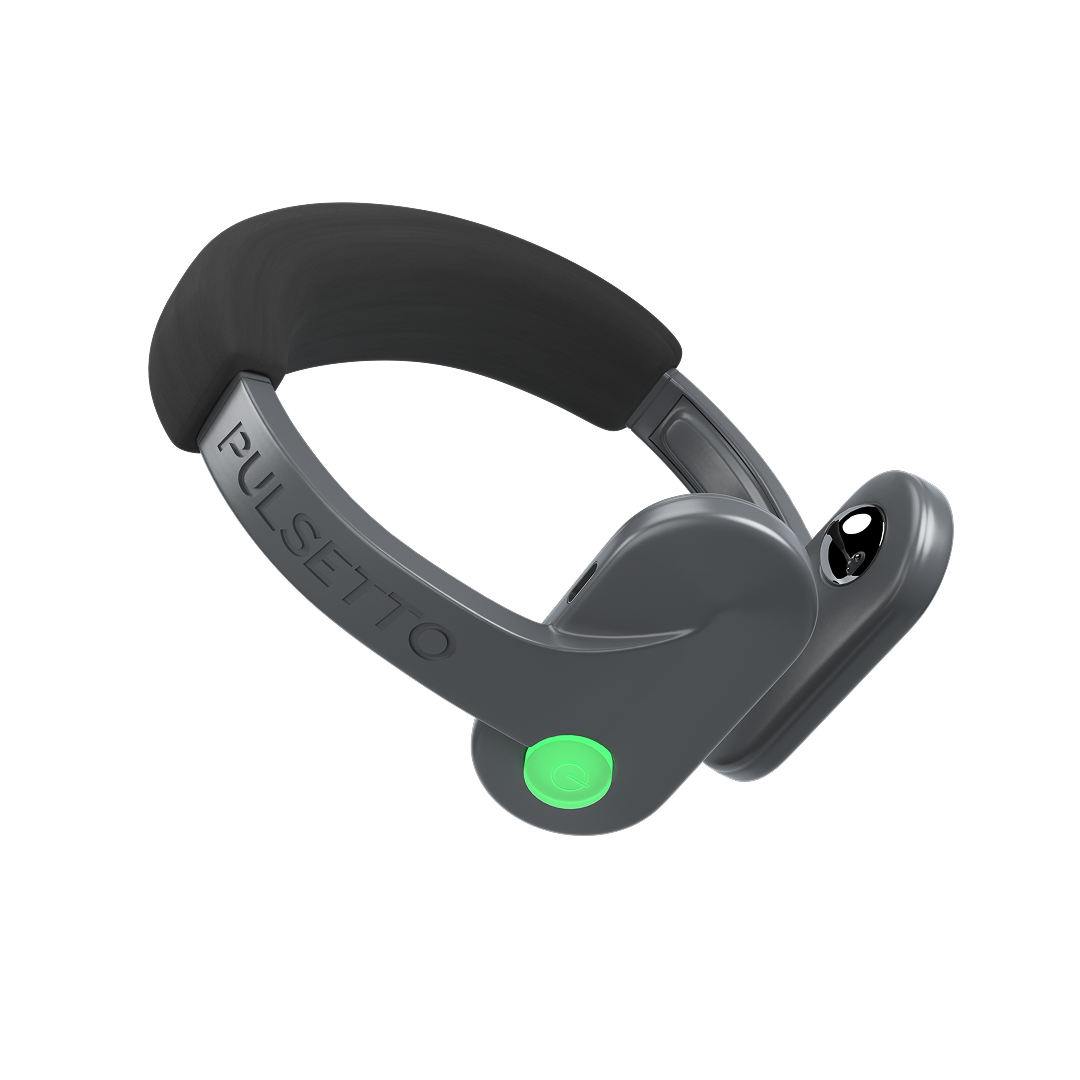
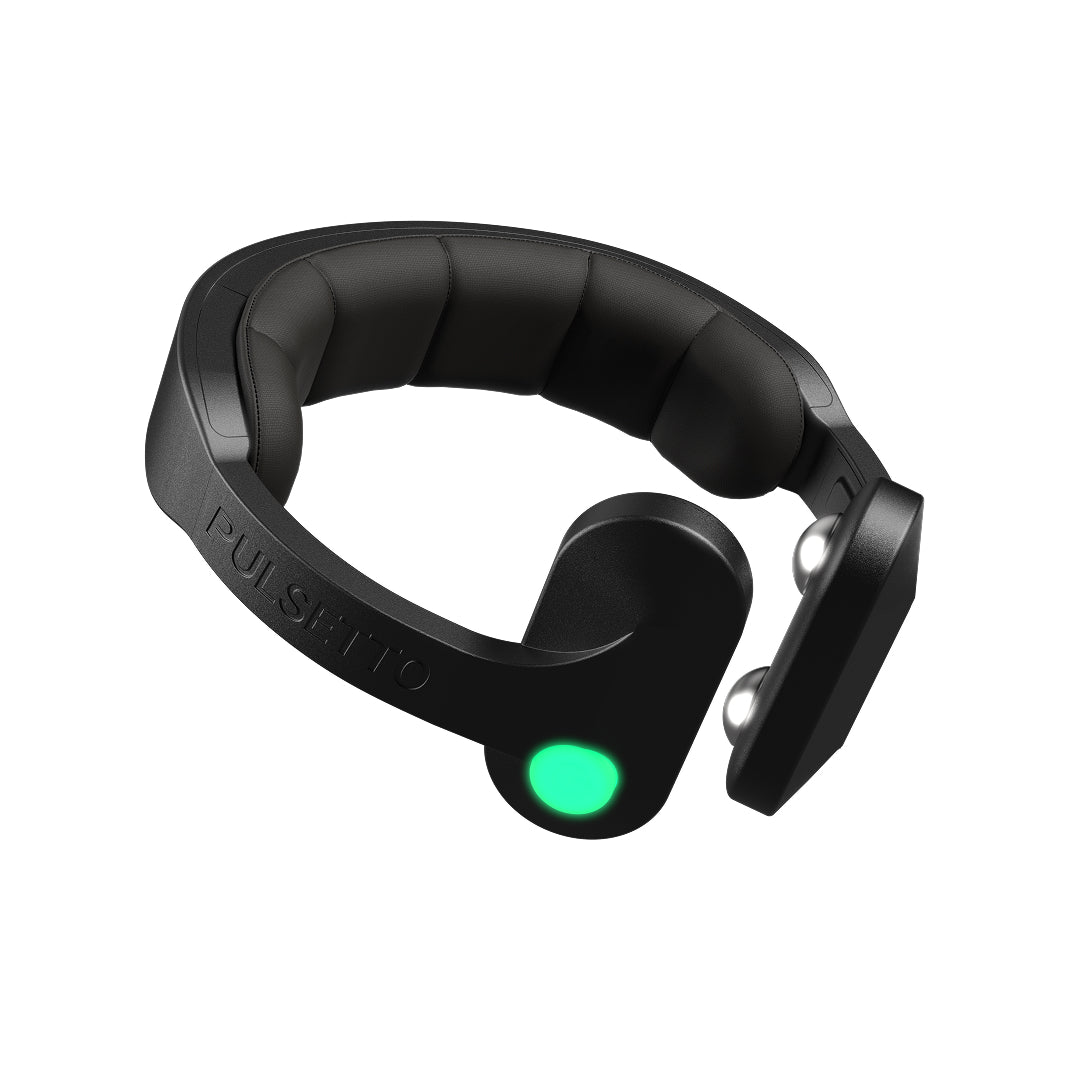
Pulsetto is a non-invasive cervical vagus nerve stimulator worn as a soft band around the neck. It applies direct electrical stimulation to both sides of the cervical vagus nerve (bilateral stimulation), hands-free, while you sit or lie back. A typical session is about four minutes, which makes it easy to fit into a morning routine, a work break, or a wind-down before bed. It comes in two models, Pulsetto Lite and Pulsetto FIT, so you can match the device to your budget and fit preference.
How Pulsetto works
You place the band around your neck, open the app, choose a program, and start. The five core programs target Stress, Sleep, Burnout, Pain, and Anxiety, and the app also includes guided breathing plus HRV and sleep tracking. Because the band sits on the neck and stays put on its own, your hands are free during the session. There is no music requirement and no need to wear anything in your ears. If you want the step-by-step, the quick start guide walks through a first session, and our non-invasive vagus nerve stimulation explainer covers the mechanism in more detail.
Worth clarifying: Pulsetto is not a TENS unit. TENS devices target muscles and pain signals. Pulsetto targets the vagus nerve and autonomic balance, which is a different goal entirely.
Pulsetto pilot data
Pulsetto is backed by its own study plus the broader peer-reviewed literature on vagus nerve stimulation. In Pulsetto's own randomized open-label pilot study (n=40, 4 weeks), participants reported a 55.9% reduction in depressive symptoms (PHQ-9), a 45.3% reduction in anxiety symptoms (GAD-7), and a 41.0% improvement in sleep quality (PSQI). Bilateral stimulation reduced the chronic-stress biomarker hair cortisol by 47.5%, compared with 31.4% for unilateral stimulation. You can read more about the methodology and the wider evidence on the Pulsetto science page and the ongoing studies and trials page. These are self-reported and open-label results from a single pilot, so we present them as encouraging early data rather than proof, and we point to the independent literature throughout this guide.
Pulsetto price, app, and no required subscription
Pulsetto Lite is around $269 and Pulsetto FIT is around $296, roughly €249 to €269 depending on region and promotion. The app is a Free Lifetime app, and core use does not require a subscription. Premium is optional and adds extra content, but the programs, tracking, and guided breathing that most people buy the device for are available without paying a monthly fee. You can read more about the company and where the device is built on the about Pulsetto page.
Pulsetto pros and cons
Strengths: hands-free neck placement, about four-minute sessions, a free app with HRV and sleep tracking and no required subscription, bilateral cervical stimulation, CE and FCC certification, EU manufacturing in Lithuania, and two models to choose from. Honest limitations: the neck band is more visible than discreet earbuds, the gel-contact placement takes a moment to set up, and like every device in this category the effects build with consistent use rather than arriving all at once. For most buyers the tradeoffs land in Pulsetto's favor, which is why it is our top recommendation here.
Try Pulsetto
Ready to compare in person rather than on paper? The Pulsetto FIT model keeps sessions short and hands-free, and the free app shows your HRV and sleep trends as you go. Pair it with the guided breathing sessions for a few minutes a day and track how your baseline responds.
Pulsetto vs Neuvana Xen, head to head
Placement: neck vs ear
This is the core difference. Pulsetto stimulates the cervical vagus nerve at the neck. Neuvana Xen stimulates an auricular branch through the ear. Both reach the vagus nerve, so the question is which access point fits your life. A neck band frees your ears and hands. Earbuds keep things discreet but occupy your ears and need a good fit to deliver a steady signal. Neither location is universally superior for HRV; what differs is comfort and convenience.
Hands-free vs earbuds
Pulsetto sits on the neck and stays there, so you can read, work, or simply close your eyes during a session. Neuvana Xen requires earbuds, so a session ties up your ears and tends to be a sit-still-and-listen activity. If you want to keep doing something with your hands and ears while you stimulate, the neck band wins. If you were going to put on music anyway, the earbuds fold neatly into that.
Music required vs not
Neuvana Xen is built around audio. The stimulation is meant to be used with music or app sessions, which is the whole appeal for some people and an extra step for others. Pulsetto has no music requirement. You can run a silent four-minute session or add your own audio if you like, but nothing about the device depends on it.
Session length
Pulsetto sessions run about four minutes, which suits quick resets and tight schedules. Neuvana Xen sessions commonly run 10 to 30 minutes, which suits a longer, deliberate wind-down. Neither is right or wrong; they fit different routines. If you struggle to carve out half an hour, the shorter format removes a real barrier to consistency, and consistency is what builds results in this category.
App and tracking
Both devices use an app to run and customize sessions. The difference is what the app gives back. Pulsetto's Free Lifetime app includes HRV and sleep tracking alongside the stimulation programs, so the device doubles as a way to watch your autonomic trend over time. Neuvana's app focuses on session customization and the audio experience rather than HRV tracking. If seeing your HRV move is part of why you are buying, that tilts toward Pulsetto. For a wider look at devices that center this metric, see our roundup of the best HRV device.
Price
Pulsetto runs around $269 to $296 across its two models. Neuvana Xen runs around $399 to $449. Pulsetto is the lower-priced option of the two, and it includes HRV and sleep tracking in a free app with no required subscription. Prices move with promotions, so check current figures before deciding. For broader context on the category, our guide to the best vagus nerve stimulation devices and the best neck stimulator device compare the field.
Does Pulsetto increase HRV?
This is the most common Pulsetto question, so here is an honest answer. The peer-reviewed evidence on non-invasive vagus nerve stimulation supports raising vagally-mediated HRV markers, with the important caveat that effects vary by protocol, by individual, and by how consistently the device is used [3] [6] [7] [8]. Some studies and meta-analyses show clear HRV increases, others show smaller or protocol-dependent effects, and age appears to influence the response [9] [10] [16]. So the responsible framing is: the mechanism is well supported and the direction of effect is positive in much of the literature, but it is not a fixed, identical number for every user.
On top of that research base, Pulsetto's app tracks your HRV directly, so you do not have to take the science on faith. You can watch your own baseline over a few weeks and see how it responds to regular sessions, sleep, and stress. That combination of a supported mechanism plus personal tracking is the practical reason Pulsetto leads this comparison. Our companion guide on improving your HRV score with exercise, diet, and sleep covers the other levers that move the number alongside stimulation.
Pulsetto reviews and side effects
Across user reviews, the recurring themes are calmer evenings, easier wind-down before sleep, and a steadier feeling during stressful stretches. Some people notice changes within the first week or two, others take longer; the pattern that holds is that regular, short sessions tend to matter more than any single use. You can read a broader set of experiences on the Pulsetto reviews page.
On side effects, non-invasive vagus nerve stimulation is generally well tolerated. The most commonly reported sensations are mild and local: a tingling at the contact points on the neck, brief lightheadedness, or a slight skin sensation, usually tied to intensity. Lowering the intensity or shortening the session typically resolves these. For the full safety picture, see is Pulsetto safe and how often you can use Pulsetto.
Who should not use Pulsetto
Do not use Pulsetto, and consult a doctor first where noted, if any of the following apply to you:
-
You have a pacemaker
-
You have any implanted electrical medical device
-
You have epilepsy or a seizure disorder
-
You are pregnant
-
You have cardiac arrhythmia or a serious cardiovascular condition (consult a doctor first)
-
You have had recent neck or throat surgery (consult a doctor first)
-
You have a carotid artery condition
The full list and the reasoning behind it are on the contraindications of using Pulsetto page.
Is Pulsetto Premium worth it?
For most people, you do not need Premium to get the value out of Pulsetto. The Free Lifetime app covers core use: the Stress, Sleep, Burnout, Pain, and Anxiety programs, HRV and sleep tracking, and guided breathing, all without a subscription. Premium is optional. It adds extra guided content and session variety, which some users enjoy, but the device does its main job on the free tier. If you are deciding whether to upgrade, start free, use the core programs for a few weeks, and only consider Premium if you find yourself wanting more guided variety. The breakdown on whether you need to purchase Premium lays out the exact contents of each tier. For more on the wider device ecosystem, our roundup of the best neurostimulation devices widens the field.
How to choose between Pulsetto and Neuvana Xen
Choose Pulsetto if you want hands-free sessions, short four-minute resets, built-in HRV and sleep tracking, no required subscription, and the lower price of the two. It is the more practical daily-use device for stress, sleep, and HRV support, and it is our top pick in this comparison.
Choose Neuvana Xen if combining ear stimulation with music is genuinely appealing, you prefer a discreet earbud form factor, and you do not mind longer seated sessions or the higher price. It is a good fit for that specific preference.
If you are still exploring the category before committing, our guides to the best vagus nerve stimulator for anxiety, the best device for sleep, and the best nervous system regulation device widen the lens. For the bigger biohacking context, the vagus nerve stimulation ultimate guide ties it all together.
Frequently asked questions
What is the highest rated vagus nerve stimulator?
Ratings vary by reviewer and by what you value. Among consumer devices, Pulsetto rates well for combining hands-free neck stimulation, short sessions, HRV and sleep tracking in a free app, and a mid-range price. Neuvana Xen rates well among people who specifically want music-paired ear stimulation. The best choice depends on placement preference, session length, and whether built-in tracking matters to you.
Does Pulsetto really stimulate the vagus nerve?
Yes. Pulsetto applies direct electrical stimulation to the cervical branch of the vagus nerve at the neck, on both sides. This is the same nerve targeted by ear-based devices like Neuvana Xen, just reached through the neck rather than the ear. The peer-reviewed literature on cervical and auricular vagus nerve stimulation supports measurable autonomic effects [3] [4] [5].
Do vagus nerve stimulators actually work?
The evidence is supportive and growing. Studies on non-invasive vagus nerve stimulation show effects including raised HRV markers, a reduced sympathetic stress response, lower heart-rate reactivity to stress, and improvements in sleep and anxiety scores, with effects that vary by protocol and build with regular use [4] [5] [6] [11] [12]. They are general wellness tools, not cures, and consistency matters more than any single session.
Is there a downside to vagus nerve stimulation?
The reported downsides are generally mild and local: tingling or tickling at the contact point, brief lightheadedness, or minor skin sensitivity, usually tied to intensity. People with the contraindications listed above should avoid these devices or consult a clinician first. Lowering intensity or shortening sessions resolves most mild sensations.
How does Neuvana Xen work?
Neuvana Xen delivers gentle electrical micro-pulses through earbuds to a branch of the vagus nerve in the outer ear. You pair the earbuds with the Neuvana app, choose a session style, set the intensity, and use the stimulation alongside music or guided audio. Sessions commonly run 10 to 30 minutes.
How much does Neuvana Xen cost?
Neuvana Xen typically sells for around $399 to $449, depending on the bundle and any current promotion. It is sold mainly through the brand directly, with some third-party listings. Prices change, so confirm the current figure before buying.
Is Pulsetto or Neuvana Xen better for sleep?
Both are used for wind-down. Pulsetto offers a dedicated Sleep program, hands-free use, and sleep tracking in the app, which suits a short pre-bed routine. Neuvana Xen offers a longer, music-paired session that some people find relaxing before bed. If you want a quick, hands-free reset with tracking, Pulsetto fits better; if you like winding down to music, Xen is reasonable.
Does Pulsetto require a subscription?
No. Core use runs on the Free Lifetime app with no subscription, including the main programs, HRV and sleep tracking, and guided breathing. Premium is optional and adds extra guided content.
Can I use Pulsetto every day?
Yes, daily use is common, with about four-minute sessions. Follow the guidance in the app and the usage notes on how often to use the device, and lower the intensity if you feel any discomfort.
Scientific research
Pulsetto is a general wellness product and is not intended to diagnose, treat, cure, or prevent any disease or medical condition. The studies below were identified via the Consensus and PubMed databases. Each links directly by DOI and is indexed in PubMed. They are included to give context on the vagus nerve, HRV, and non-invasive stimulation, not to make medical claims about any device.
[1] Stress and Heart Rate Variability: A Meta-Analysis and Review of the Literature (Kim et al., 2018, Psychiatry Investigation. PMID: 29486547)
[2] An Overview of Heart Rate Variability Metrics and Norms (Shaffer et al., 2017, Frontiers in Public Health. PMID: 29034226)
[3] Critical Review of Transcutaneous Vagus Nerve Stimulation: Challenges for Translation to Clinical Practice (Yap et al., 2020, Frontiers in Neuroscience. PMID: 32410932)
[4] Quantifying acute physiological biomarkers of transcutaneous cervical vagal nerve stimulation in the context of psychological stress (Gurel et al., 2019, Brain Stimulation. PMID: 31439323)
[5] Transcutaneous cervical vagal nerve stimulation reduces sympathetic responses to stress in posttraumatic stress disorder: A double-blind, randomized, sham-controlled trial (Gurel et al., 2020, Neurobiology of Stress. PMID: 33344717)
[6] The effect of transcutaneous auricular vagus nerve stimulation on HRV in healthy young people (Geng et al., 2022, PLoS ONE. PMID: 35143576)
[7] Ear your heart: transcutaneous auricular vagus nerve stimulation on heart rate variability in healthy young participants (Forte et al., 2022, PeerJ. PMID: 36438582)
[8] A systematic review of the effects of transcutaneous auricular vagus nerve stimulation on baroreflex sensitivity and heart rate variability in healthy subjects (Soltani et al., 2023, Clinical Autonomic Research. PMID: 37119426)
[9] Does transcutaneous auricular vagus nerve stimulation affect vagally mediated heart rate variability? A living and interactive Bayesian meta-analysis (Wolf et al., 2021, Psychophysiology. PMID: 34473846)
[10] Age as an Effect Modifier of the Effects of taVNS on Heart Rate Variability in Healthy Subjects (Gianlorenco et al., 2024, Journal of Clinical Medicine. PMID: 39064307)
[11] Transcutaneous auricular Vagus Nerve Stimulation and Median Nerve Stimulation reduce acute stress in young healthy adults (Sanchez-Perez et al., 2023, Frontiers in Neuroscience. PMID: 37746156)
[12] Transcutaneous Auricular Vagus Nerve Stimulation for Chronic Insomnia Disorder: A Randomized Clinical Trial (Zhang et al., 2024, JAMA Network Open. PMID: 39680406)
[13] Transcutaneous Auricular Vagus Nerve Stimulation in Insomnia: A Systematic Review and Meta-Analysis (de Oliveira et al., 2025, Neuromodulation. PMID: 40323248)
[14] Modulating Heart Rate Variability through Deep Breathing Exercises and Transcutaneous Auricular Vagus Nerve Stimulation (Jensen et al., 2022, Sensors. PMID: 36298234)
[15] Heart Rate Variability Biofeedback Improves Emotional and Physical Health and Performance: A Systematic Review and Meta Analysis (Lehrer et al., 2020, Applied Psychophysiology and Biofeedback. PMID: 32385728)
[16] Accelerated Transcutaneous Auricular Vagus Nerve Stimulation for Inpatient Depression and Anxiety: The iWAVE Open Label Pilot Trial (Austelle et al., 2025, Neuromodulation. PMID: 40117415)