What vagus nerve stimulation actually does
The vagus nerve is the main highway of your parasympathetic nervous system, the "rest and digest" side that counterbalances the "fight or flight" sympathetic response. When you are stressed, the sympathetic branch dominates: heart rate climbs, breathing shortens, digestion slows. The vagus nerve is the brake pedal. Non-invasive vagus nerve stimulation aims to gently engage that brake from outside the skin, nudging your autonomic balance back toward calm.
Two access points reach the same nerve. Cervical (neck) stimulation targets the vagus nerve where it runs alongside the carotid sheath in the neck. Auricular (ear) stimulation targets the auricular branch of the vagus nerve in a specific part of the outer ear. Both are forms of transcutaneous (through-the-skin) stimulation, and the research literature covers both placements. If you want the deeper version of this, our explainer on non-invasive vagus nerve stimulation explained and the longer-form vagus nerve stimulation ultimate guide both go further.
The biomarker that ties all of this together is heart rate variability, or HRV. HRV is the small beat-to-beat variation in your heart rhythm, and it tends to fall under chronic stress and rise when your parasympathetic system is engaged [1]. Higher HRV is generally associated with better stress resilience, which is why so many of these devices, and the apps around them, track it. If HRV is new to you, start with why we should care about HRV and the practical HRV score chart by age and gender.
What does the evidence support? Studies on transcutaneous VNS report increases in vagally mediated HRV, reductions in the sympathetic stress response, improvements in self-reported sleep quality, and lower anxiety and depressive symptom scores in various settings [2][3][4][6][7]. Effects build with regular use, and the magnitude varies by protocol, placement, and person. None of this is a cure for anything. These are general wellness tools that support the body's own calming pathway. For more on the mechanism, see how to activate the parasympathetic nervous system.
Try Pulsetto. If you want a hands-free vagus nerve stimulator that fits a busy German routine, around four minutes a day, CE certified, free app, no subscription required, meet Pulsetto here.
The best vagus nerve stimulation devices in Germany, ranked
1. Pulsetto: the best vagus nerve stimulation device for most people in Germany

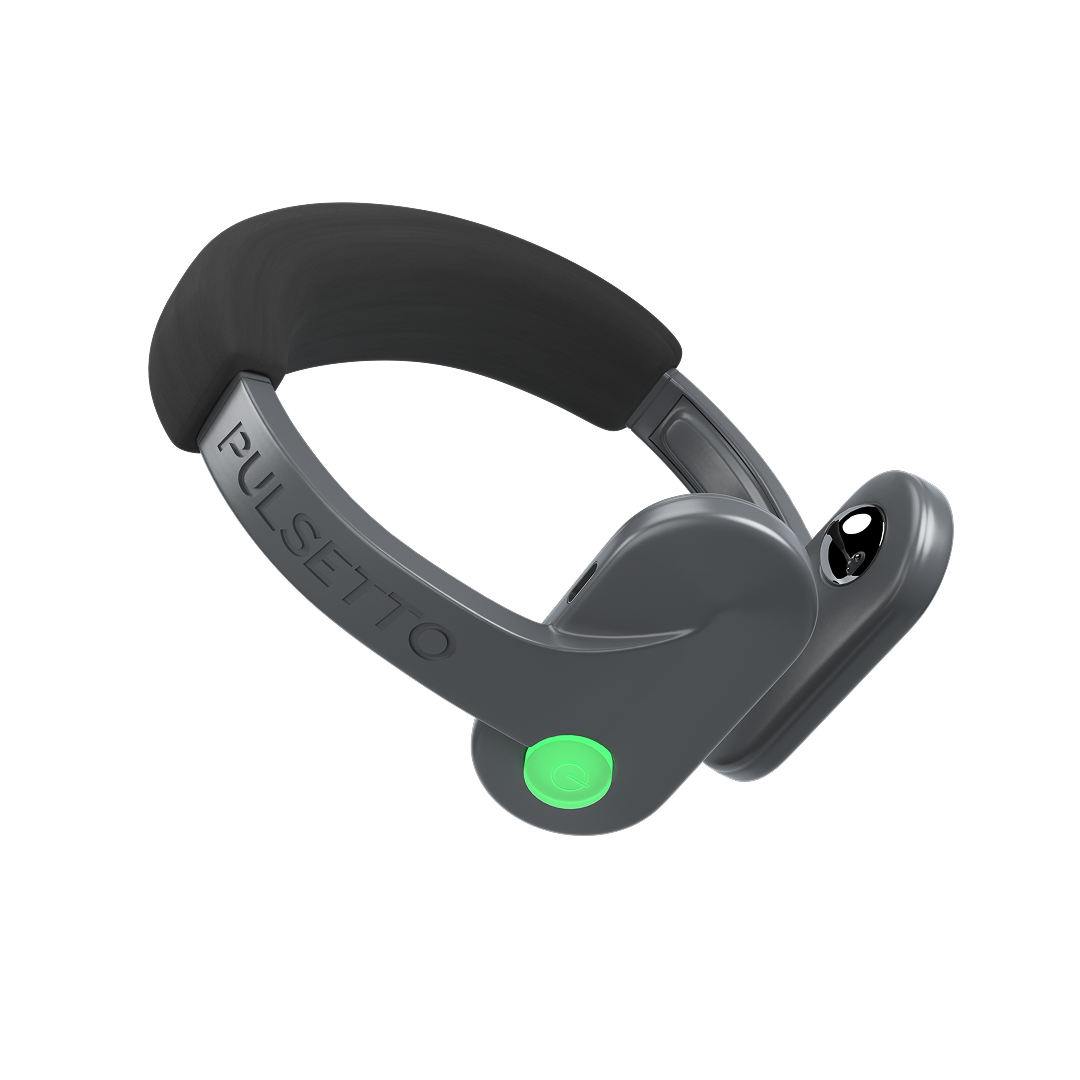
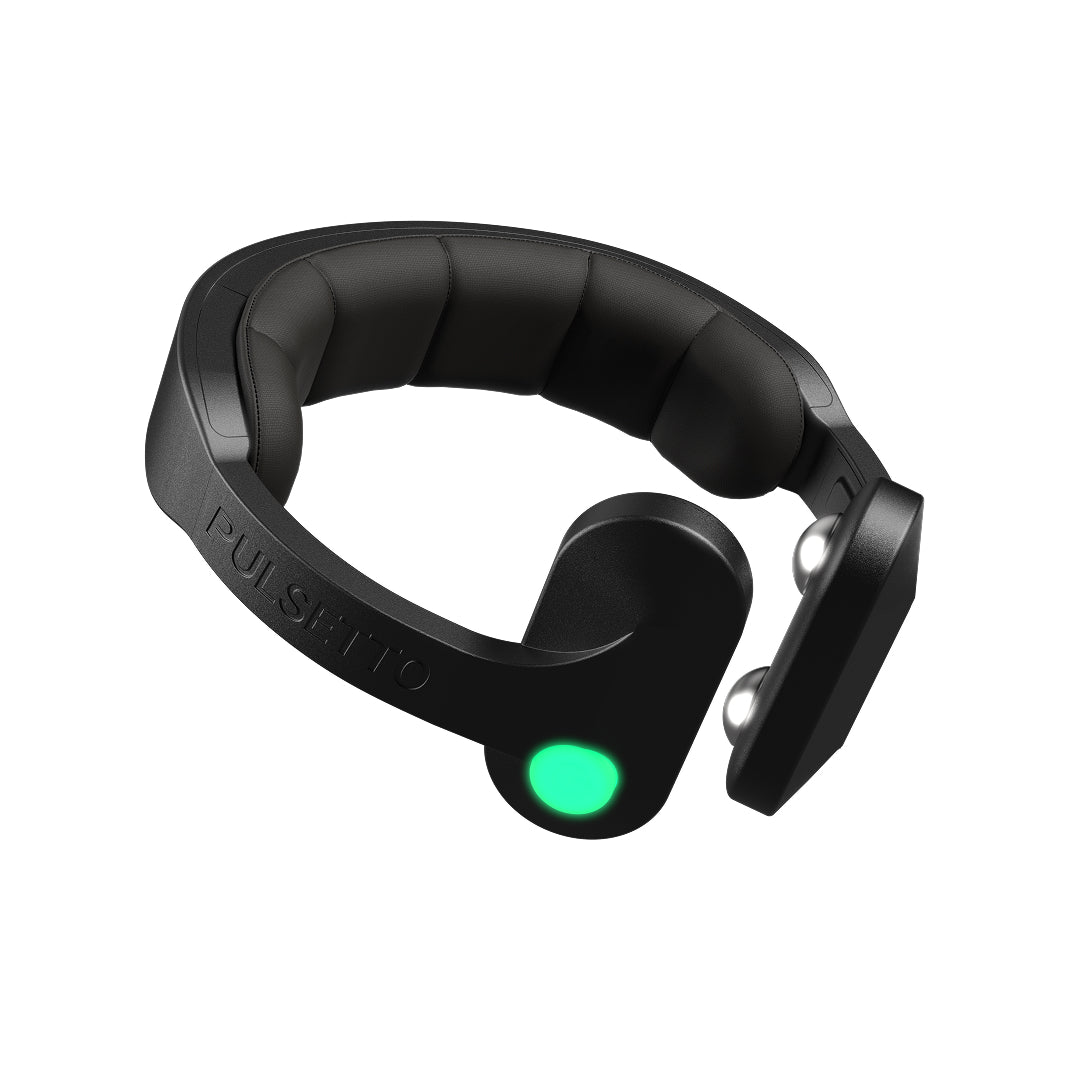
Pulsetto is our top pick for German buyers, and the reasoning is practical. It delivers direct electrical stimulation to the vagus nerve at the neck, on both sides (bilateral cervical stimulation), and it does so hands-free. You wear it like a collar, start a program in the app, and carry on. There is nothing to hold in place for the duration. A typical session is around four minutes, which is short enough to actually do every day.
What it is. A neck-worn, bilateral cervical non-invasive vagus nerve stimulator with a companion app. It is not a TENS unit. TENS targets muscles and surface nerves for pain; Pulsetto targets the vagus nerve to support autonomic balance. If you want the distinction spelled out, our best neck stimulator device breakdown covers it.
Who it is for. People in Germany who want a daily, low-effort way to support stress relief, calmer evenings, and better sleep, and who value a device that works around their life rather than demanding they sit still. It suits commuters, parents, desk workers, and anyone who would simply never use a device that needs both hands for half an hour.
Key features.
-
Bilateral cervical stimulation, hands-free wear.
-
Around 4-minute sessions.
-
A free lifetime app with five core programs (Stress, Sleep, Burnout, Pain, Anxiety) plus HRV and sleep tracking and guided breathing. The core experience does not require a paid subscription; Premium is optional. See do I need Premium to use Pulsetto and what comes with Pulsetto Premium.
-
Two models to choose from, Pulsetto Lite and Pulsetto FIT. The differences are laid out in Pulsetto FIT vs Pulsetto Lite and on the Pulsetto FIT product page.
-
Long battery life, conductive gel, and USB-C charging.
-
CE certified and FCC certified, made in Lithuania within the EU.
The evidence. Beyond the broader peer-reviewed nVNS literature, Pulsetto has run its own study. In Pulsetto's own randomized open-label pilot study (n=40, 4 weeks), participants reported a 55.9% reduction in depressive symptoms (PHQ-9), a 45.3% reduction in anxiety symptoms (GAD-7), and a 41.0% improvement in sleep quality (PSQI). Bilateral stimulation reduced the chronic-stress biomarker hair cortisol by 47.5%, compared with 31.4% for unilateral stimulation. You can read more about the research approach on the Pulsetto science page and the ongoing studies and trials overview, with customer feedback collected on the reviews page.
Price and value. Around €249 to €269, give or take with promotions and exchange rates. The standout value point is the free app with no required subscription, which keeps the long-term cost low compared with devices that lock features behind a paywall or have no app at all.
Pros.
-
Hands-free, so it actually gets used daily.
-
Short sessions that fit real schedules.
-
Free app with tracking and guided breathing, no subscription needed for core use.
-
CE + FCC certified, EU manufacturing.
-
Ships across Germany and the EU.
Cons.
-
Not German-made (it is made in Lithuania, within the EU).
-
Neck placement and conductive gel are a small extra step some users will weigh against ear-clip simplicity.
-
It is a general wellness device, not a prescription medical treatment.
For where it sits among alternatives more broadly, see our best vagus nerve stimulation devices roundup and the anxiety-specific best vagus nerve stimulator for anxiety.
Advantages of Pulsetto:
2. Nurosym: a good fit for buyers who want the deepest published evidence base
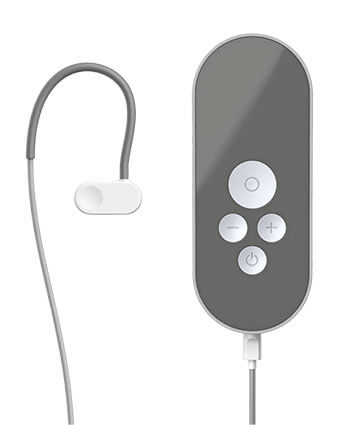
Nurosym, from Parasym Health, is an auricular device: a single-ear clip wired to a small controller. It is app-free, which some people prefer, and sessions run around 30 minutes. In the consumer VNS category it carries one of the deepest external clinical evidence bases, which is its main draw for evidence-led buyers.
It is CE marked and ships across the EU, so availability in Germany is straightforward. The trade-offs are the premium price (around €699), the longer session length, and the fact that you need to keep the ear clip in place. Nurosym is a good fit for people who prioritise published research and a simple, no-app device and are comfortable paying a premium and sitting for a longer session. If you want the strongest evidence pedigree and do not mind the ear-clip format, it earns its place on the shortlist.
3. tVNS Technologies (tVNS L / NEMOS): the German-made, EU-MDR option
![Home [B] – tVNS Technologies GmbH](https://t-vns.com/wp-content/uploads/2024/11/tVNS-2-e1731456877586.png)
This is the device to know if "made in Germany" is your priority. tVNS Technologies GmbH is a German company (its roots trace back to the NEMOS auricular system), and its tVNS L is an ear-based transcutaneous vagus nerve stimulator. It is positioned as a CE-certified medical device under the EU Medical Device Regulation, which is a higher regulatory bar than a general wellness device, and it is used in clinical and research contexts.
For a German buyer who specifically wants a domestically engineered device with formal medical-device status, this is the honest answer to the "is there a German-made vagus nerve stimulator" question. It is auricular rather than neck-based, you hold or fix the earpiece, and pricing and access can differ from a straightforward consumer purchase because of its medical-device positioning. It is a good fit for people who want a German company and EU-MDR medical-device certification and are comfortable with an ear-based, more clinically framed device. Many wellness-focused buyers will still prefer the hands-free, daily-use convenience of a neck device, which is why Pulsetto remains our overall pick, but if "German-made" is non-negotiable, tVNS Technologies is the name to look at.
4. Vagustim: a good fit for a lower-cost, app-controlled ear device
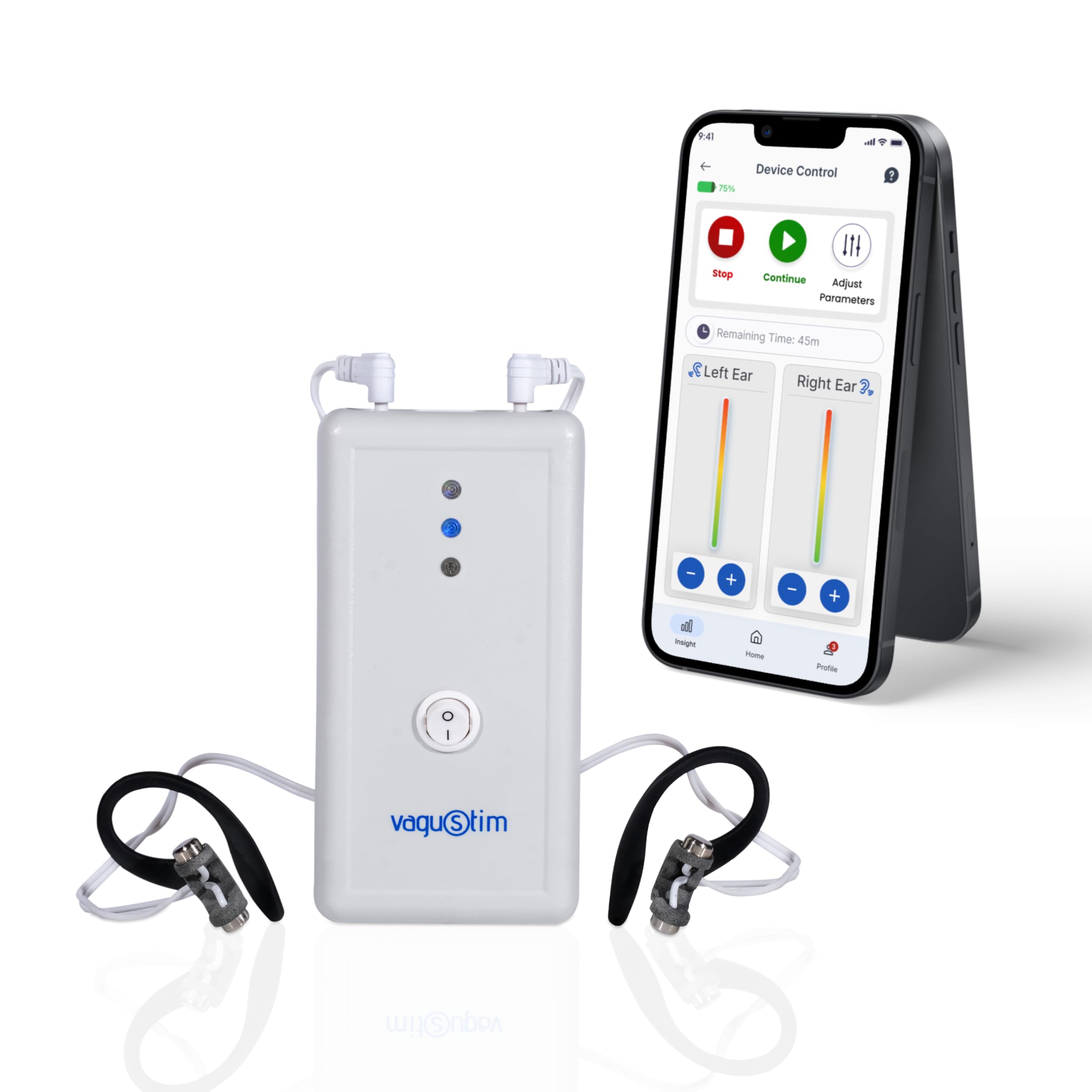
Vagustim is a bilateral auricular system: earpieces for both ears plus an app to adjust stimulation parameters. It is newer, comes in updated model versions (V1/V2), and carries ISO 13485 quality-system certification and FCC certification, with a 14-day money-back window. Pricing is around €360, often discounted from a higher list price near €730 (confirm current EU pricing and shipping at checkout).
Because it is relatively new, it has fewer independent reviews than longer-established names, and some users report mild ear discomfort during sessions. It is a good fit for people who want an app-controlled ear device at a lower entry price and do not mind being earlier adopters. Note that Vagustim is also bilateral (at the ears), so the meaningful difference versus Pulsetto is placement (ears versus neck), hands-free wear, and session length rather than "single versus bilateral."
Try Pulsetto. Most people in Germany want the simplest path to a daily habit. Hands-free, around four minutes, CE certified, free app. Learn more about the team behind Pulsetto.
5. Sensate: a good fit for a meditation-style relaxation ritual
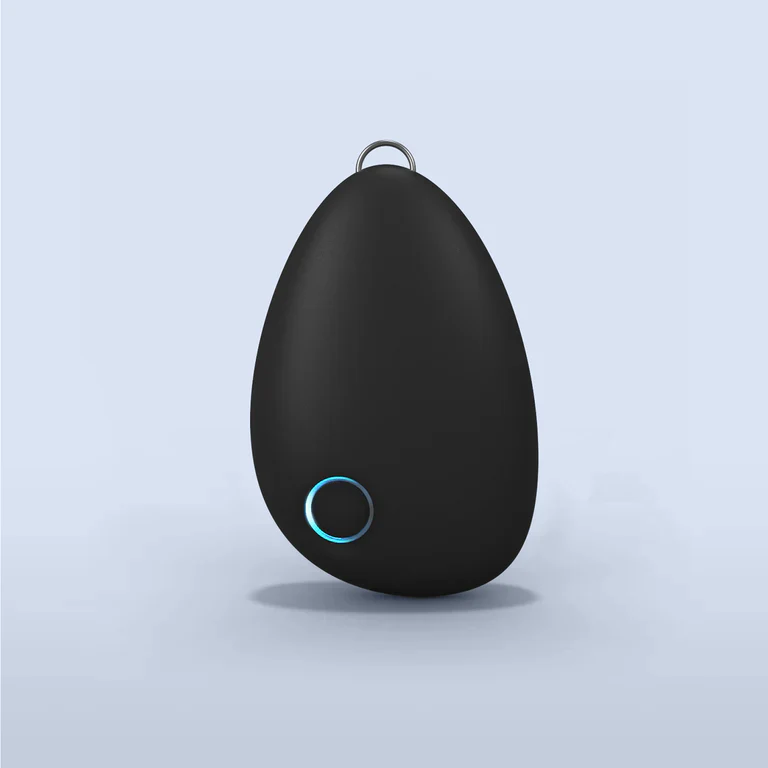
Sensate is not an electrical vagus nerve stimulator. It is a smooth pebble-shaped device that rests on your chest and uses infrasonic vibration, paired with audio soundscapes, in sessions of around ten minutes while you lie down. It is a general wellness device and ships across the EU, so Germany availability is fine. Price is around €280 to €300.
Because it relies on vibration and sound rather than electrical stimulation, it will not appeal to someone specifically looking for direct nerve stimulation. It is a good fit for people who want a calming, lie-down meditation ritual and find a physical relaxation cue more appealing than electrodes. Think of it as a relaxation tool rather than a VNS device in the electrical sense. Our best relaxation devices and best meditation device guides cover this category in more depth.
6. Apollo Neuro: a good fit for a discreet wrist wearable

Apollo Neuro is a wrist or ankle wearable that delivers gentle haptic (touch-based) vibration. It is not electrical stimulation and it does not stimulate the vagus nerve in the electrical sense. The idea is that soothing vibration patterns signal safety to the nervous system. It is a general wellness device priced around €330 to €350, and availability extends to the EU (confirm your region at checkout).
It is a good fit for people who want a discreet, all-day wrist wearable and do not specifically want electrical stimulation. If your priority is direct vagus nerve stimulation with tracked HRV feedback, it is not the closest match, but as a low-friction, wear-anywhere calming wearable it has a clear audience. Compare it within our best wearable device for stress relief and best wearable device for anxiety overviews.
7. Truvaga: a good fit for handheld cervical use, mainly in the US
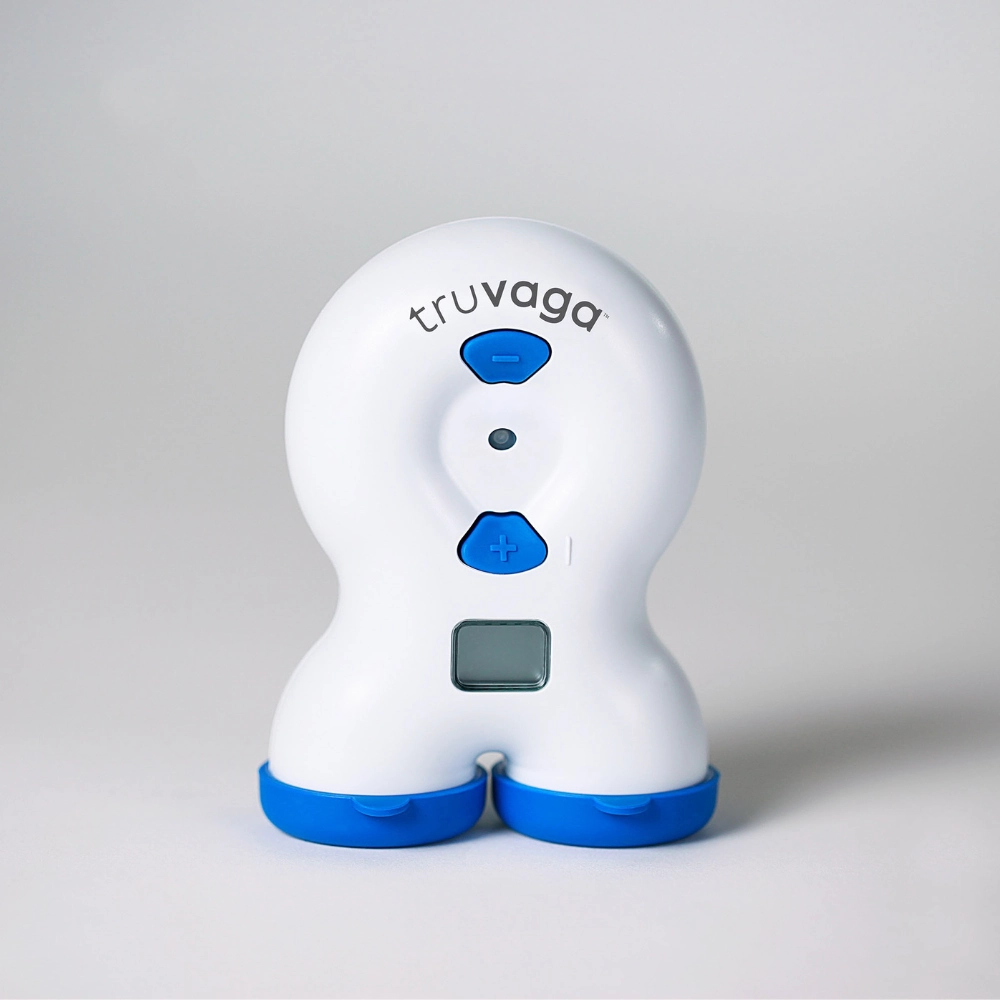
Truvaga, from electroCore, is a handheld unilateral cervical device. You hold it to one side of your neck for short sessions of around two minutes. Pricing sits roughly between €180 and €470 depending on model and plan. The important caveat for this guide is availability: Truvaga is primarily a US-market product, so German buyers may find it harder to purchase and support locally.
It is a good fit for people who want a handheld cervical device and are based in, or shipping from, the United States. For a German buyer who wants neck-based stimulation without holding the device in place, a hands-free option is the more practical route.
8. gammaCore Sapphire: the prescription option
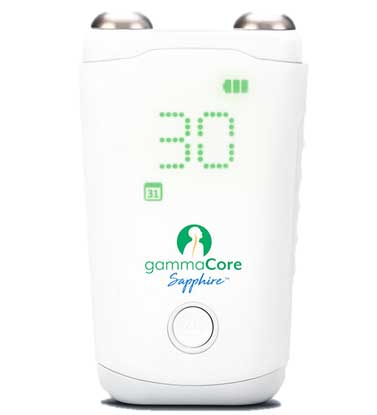
gammaCore Sapphire, also from electroCore, is a handheld cervical device, but unlike the others here it is a prescription medical device rather than a direct-to-consumer wellness product. That means you obtain it through a clinician rather than simply adding it to a cart. We mention it for completeness, because some searchers specifically want the prescription route. If a clinically supervised, prescription pathway is what you are after, this is the option to raise with your doctor. For everyday consumer wellness use in Germany, the over-the-counter devices above are the relevant choices.
How to choose a vagus nerve stimulation device in Germany
There is no single best device for everyone, so match the device to what matters most to you. Here is how the criteria map to picks, with German buyers in mind.
Placement: neck or ear. Neck (cervical) devices like Pulsetto target the vagus nerve in the neck; ear (auricular) devices like Nurosym, Vagustim, and tVNS L target the auricular branch. Both reach the same nerve. Neck devices can be worn hands-free; ear clips are smaller but usually need to stay clipped in place. If you want to set it and forget it for a few minutes, neck wins.
Hands-free versus hold-in-place. This is the single biggest predictor of whether you will keep using a device. Pulsetto is hands-free. Handheld cervical devices (Truvaga, gammaCore) and most ear clips require you to keep them positioned. Be honest about your routine.
Session length. Around four minutes (Pulsetto) is easy to fit into a morning or evening. Around ten minutes (Sensate) is a deliberate lie-down ritual. Around thirty minutes (Nurosym) is a bigger time commitment. Shorter sessions tend to translate into more consistent use, and consistency is what builds results.
App, tracking, and subscriptions. Decide whether you want HRV and sleep tracking and guided breathing built in. Pulsetto includes a free app with these and no required subscription. Nurosym is deliberately app-free. Check whether any device locks core features behind a paywall before you buy.
Certification and regulation. In the EU, look for CE certification. Pulsetto is CE + FCC certified. tVNS L is positioned as a CE medical device under EU-MDR, a stricter category. We do not use US regulatory language here because it does not apply to the German market. Treat all consumer options as general wellness devices unless they explicitly hold medical-device status.
Made in Germany or made in the EU. If domestic manufacturing is essential, tVNS Technologies GmbH is the German-made answer. If "made in the EU" is enough, Pulsetto is manufactured in Lithuania within the single market, which means smooth CE-certified shipping and no customs surprises within the EU.
Availability and shipping. Prioritise devices that ship within Germany and the EU without import hassle. Pulsetto, Nurosym, Sensate, and Apollo Neuro all reach EU customers. Truvaga is mainly US-based, so factor in availability before falling for the spec sheet.
Price and total cost. Look past the sticker price to the lifetime cost. A device with a free app and no subscription can be cheaper over a year than a lower-priced device that charges monthly. Note that some devices in this space (for example certain contactless options) sit below Pulsetto on price, so if absolute lowest cost is the goal, shop carefully; if value over time is the goal, the free-app model is strong.
For broader context on choosing in this category, see our best nervous system regulation device, best HRV device, and best device for sleep guides.
What the science says about vagus nerve stimulation
The case for non-invasive vagus nerve stimulation rests on a growing, if still maturing, body of research. Here is the honest picture.
On autonomic balance, stress and HRV are tightly linked: HRV drops under chronic stress and rises as the parasympathetic system engages [1]. Multiple studies and reviews of transcutaneous auricular VNS report effects on vagally mediated HRV, although the literature also shows that results vary by protocol and that not every study finds the same magnitude [6][7][8][9]. That nuance is worth keeping in mind. This is a real effect that builds with regular use, not an instant switch.
On the stress response specifically, work on cervical VNS has quantified acute physiological biomarkers under psychological stress and shown reductions in the sympathetic response [3], including in a sham-controlled trial setting [4]. Auricular VNS has likewise been shown to reduce acute stress markers in healthy adults [5]. Age can modify the size of the HRV effect, which is one reason individual responses differ [10].
On sleep, randomized and sham-controlled trials of transcutaneous auricular VNS for anxiety report improvements in sleep quality, with systematic reviews drawing the threads together [11][12][13][14]. On mood and perceived stress, recent randomized work in community-dwelling adults found effects on subthreshold affective symptoms and perceived stress [16], and pilot work has explored taVNS for inpatient depression and anxiety [15].
Two adjacent practices strengthen the same calming pathway and pair naturally with a device. Slow, paced breathing combined with VNS modulates HRV [17], and HRV biofeedback (essentially structured slow breathing) has solid meta-analytic support for reducing stress and anxiety [18][19]. Mindfulness and meditation programs show moderate evidence for anxiety and depression [20][21], and breathwork reduces stress, anxiety and depressive symptoms across randomized trials [22]. Finally, consumer wearables can track HRV usefully and even stage sleep from HRV with reasonable accuracy, and activity trackers reliably increase physical activity, which supports the broader self-tracking habit these devices encourage [23][24][25].
The takeaway for a German buyer: the strongest, most consistent signals are on HRV, the stress response, sleep quality, and anxiety and depressive symptom scores, and the effects grow with consistent use. Combine a device with daily slow breathing and you are stacking two evidence-backed levers. For practical routines, see our techniques to soothe your nervous system and best ways to reduce anxiety with a parasympathetic boost.
Are vagus nerve stimulation devices safe?
For most healthy adults, non-invasive vagus nerve stimulation is well tolerated, with mild and temporary effects such as slight skin tingling at the contact point being the most common. Pulsetto is a general wellness product and is not intended to diagnose, treat, cure, or prevent any disease or medical condition.
Do not use a vagus nerve stimulator, and speak with a doctor first, if any of the following apply to you:
-
You have a pacemaker or any implanted electrical medical device.
-
You have epilepsy or a seizure disorder.
-
You are pregnant.
-
You have a known heart or carotid condition, unless a doctor approves.
-
You have had recent neck or throat surgery, unless a doctor approves.
For the full list and the official guidance, read the contraindications of using Pulsetto and the broader is Pulsetto safe overview. If you are new to the device, the quick start guide walks you through your first session. When in doubt, consult a healthcare professional, especially if you have an existing medical condition or take medication.
Frequently asked questions
Which vagus nerve stimulator is available in Germany?
Several. Pulsetto (neck-worn, CE certified, made in the EU) ships across Germany and the wider EU, as do Nurosym and Sensate. tVNS Technologies, a German company, offers an ear-based device. Apollo Neuro reaches EU customers too. Truvaga is mainly a US-market product, so confirm availability before buying. For most German buyers wanting a hands-free daily device, Pulsetto is the most practical option.
Are vagus nerve stimulators CE certified?
The relevant mark in Germany and the EU is the CE certification. Pulsetto is CE certified (and FCC certified). tVNS Technologies positions its device as a CE medical device under the EU Medical Device Regulation, which is a stricter category than a general wellness device. Always check the specific certification of any device you are considering, since not every product on the market carries the same status.
Is there a German-made vagus nerve stimulator?
Yes. tVNS Technologies GmbH is a German company offering an ear-based (auricular) transcutaneous vagus nerve stimulator with EU-MDR medical-device positioning, so if "made in Germany" is your priority, that is the name to look at. To be clear, Pulsetto is not German-made; it is designed and manufactured in Lithuania, within the EU, and is CE certified. For many buyers, EU manufacturing plus hands-free convenience is the deciding combination.
What is the highest rated vagus nerve stimulator?
It depends on what you weight. For evidence-led buyers, Nurosym is often cited for its deep published research base. For everyday hands-free use, calmer sleep and stress support, Pulsetto rates highly thanks to its short sessions, free app, and EU manufacturing. The "best rated" device is the one you will actually use daily, so match the format to your routine.
Is there a vagus nerve stimulator that actually works?
Research on transcutaneous vagus nerve stimulation (VNS) for stress supports real effects on HRV, the stress response, sleep quality, and anxiety and depressive symptom scores, with results that build over weeks of consistent use rather than instantly. Pulsetto's own randomized open-label pilot study (n=40, 4 weeks) reported a 45.3% reduction in anxiety symptoms (GAD-7) and a 41.0% improvement in sleep quality (PSQI). These are general wellness devices, not cures, and individual responses vary.
Is it worth buying a vagus nerve stimulator?
If you struggle with everyday stress, wind-down, or sleep and you want a low-effort daily habit, a vagus nerve stimulator can be worth it, particularly one you will use consistently. The value case is strongest for hands-free, short-session devices with a free app and no required subscription, because consistency and low ongoing cost are what determine the return. If you would not use a device that needs both hands for half an hour, factor that in honestly.
Where can I buy a vagus nerve stimulation device in Germany?
Most consumer vagus nerve stimulators are sold directly by the manufacturer online and shipped to Germany. Pulsetto ships across Germany and the EU from its official store. For prescription options like gammaCore, you go through a clinician rather than a retail purchase. When buying, confirm CE certification, EU shipping, and the current euro price, since promotions and exchange rates shift pricing frequently.
Is Pulsetto a TENS unit?
No. A TENS unit targets muscles and surface nerves, usually for pain relief. Pulsetto targets the vagus nerve to support autonomic balance, the shift from a stressed state toward "rest and digest." They are different tools for different jobs. You can read more about what to expect in what effects can I expect from vagus nerve stimulation and how often to use it in how often can I use Pulsetto.
Scientific research
The studies below were identified using the Consensus and PubMed databases. Pulsetto is a general wellness product and is not intended to diagnose, treat, cure, or prevent any disease or medical condition. Each is linked directly by its DOI, and all are indexed in PubMed. We selected the references most relevant to non-invasive vagus nerve stimulation, HRV, stress, sleep, and the adjacent calming practices discussed above.
[1] Stress and Heart Rate Variability: A Meta-Analysis and Review of the Literature (Kim et al., 2018, Psychiatry Investigation. PMID: 29486547)
[2] Critical Review of Transcutaneous Vagus Nerve Stimulation: Challenges for Translation to Clinical Practice (Yap et al., 2020, Frontiers in Neuroscience. PMID: 32410932)
[3] Quantifying acute physiological biomarkers of transcutaneous cervical vagal nerve stimulation in the context of psychological stress (Gurel et al., 2019, Brain Stimulation. PMID: 31439323)
[4] Transcutaneous cervical vagal nerve stimulation reduces sympathetic responses to stress in posttraumatic stress disorder: A double-blind, randomized, sham-controlled trial (Gurel et al., 2020, Neurobiology of Stress. PMID: 33344717)
[5] Transcutaneous auricular Vagus Nerve Stimulation and Median Nerve Stimulation reduce acute stress in young healthy adults (Sanchez-Perez et al., 2023, Frontiers in Neuroscience. PMID: 37746156)
[6] The effect of transcutaneous auricular vagus nerve stimulation on HRV in healthy young people (Geng et al., 2022, PLoS ONE. PMID: 35143576)
[7] Ear your heart: transcutaneous auricular vagus nerve stimulation on heart rate variability in healthy young participants (Forte et al., 2022, PeerJ. PMID: 36438582)
[8] A systematic review of the effects of transcutaneous auricular vagus nerve stimulation on baroreflex sensitivity and heart rate variability in healthy subjects (Soltani et al., 2023, Clinical Autonomic Research. PMID: 37119426)
[9] Does transcutaneous auricular vagus nerve stimulation affect vagally mediated heart rate variability? A living and interactive Bayesian meta-analysis (Wolf et al., 2021, Psychophysiology. PMID: 34473846)
[10] Age as an Effect Modifier of the Effects of taVNS on Heart Rate Variability in Healthy Subjects (Gianlorenço et al., 2024, Journal of Clinical Medicine. PMID: 39064307)
[11] Transcutaneous Auricular Vagus Nerve Stimulation for Chronic Insomnia Disorder: A Randomized Clinical Trial (Zhang et al., 2024, JAMA Network Open. PMID: 39680406)
[12] Transcutaneous Auricular Vagus Nerve Stimulation in Insomnia: A Systematic Review and Meta-Analysis (de Oliveira et al., 2025, Neuromodulation. PMID: 40323248)
[13] Transcutaneous auricular vagus nerve stimulation (taVNS) improves sleep quality in chronic insomnia disorder: A double-blind, randomized, sham-controlled trial (Yeom et al., 2025, Sleep Medicine. PMID: 40398066)
[14] Transcutaneous Vagus Nerve Stimulation Could Improve the Effective Rate on the Quality of Sleep in Primary Insomnia: A Randomized Control Trial (Wu et al., 2022, Brain Sciences. PMID: 36291230)
[15] Accelerated Transcutaneous Auricular Vagus Nerve Stimulation for Inpatient Depression and Anxiety: The iWAVE Open Label Pilot Trial (Austelle et al., 2025, Neuromodulation. PMID: 40117415)
[16] Effects of transcutaneous vagus nerve stimulation on subthreshold affective symptoms and perceived stress: a single-blinded randomized trial in community-dwelling adults (Jackowska et al., 2025, Biological Psychology. PMID: 41290087)
[17] Modulating Heart Rate Variability through Deep Breathing Exercises and Transcutaneous Auricular Vagus Nerve Stimulation (Jensen et al., 2022, Sensors. PMID: 36298234)
[18] Heart Rate Variability Biofeedback Improves Emotional and Physical Health and Performance: A Systematic Review and Meta Analysis (Lehrer et al., 2020, Applied Psychophysiology and Biofeedback. PMID: 32385728)
[19] The effect of heart rate variability biofeedback training on stress and anxiety: a meta-analysis (Goessl et al., 2017, Psychological Medicine. PMID: 28478782)
[20] Meditation programs for psychological stress and well-being: a systematic review and meta-analysis (Goyal et al., 2014, JAMA Internal Medicine. PMID: 24395196)
[21] Happier Healers: Randomized Controlled Trial of Mobile Mindfulness for Stress Management (Yang et al., 2018, Journal of Alternative and Complementary Medicine. PMID: 29420050)
[22] Effect of breathwork on stress and mental health: A meta-analysis of randomised-controlled trials (Fincham et al., 2023, Scientific Reports. PMID: 36624160)
[23] Consumer-Based Wearable Activity Trackers Increase Physical Activity Participation: Systematic Review and Meta-Analysis (Brickwood et al., 2019, JMIR mHealth and uHealth. PMID: 30977740)
[24] Interventions Using Wearable Physical Activity Trackers Among Adults With Cardiometabolic Conditions: A Systematic Review and Meta-analysis (Hodkinson et al., 2021, JAMA Network Open. PMID: 34283229)
[25] The Virtual Sleep Lab: Accurate Four-Class Sleep Staging Using Heart-Rate Variability from Low-Cost Wearables (Topalidis et al., 2023, Sensors. PMID: 36904595)