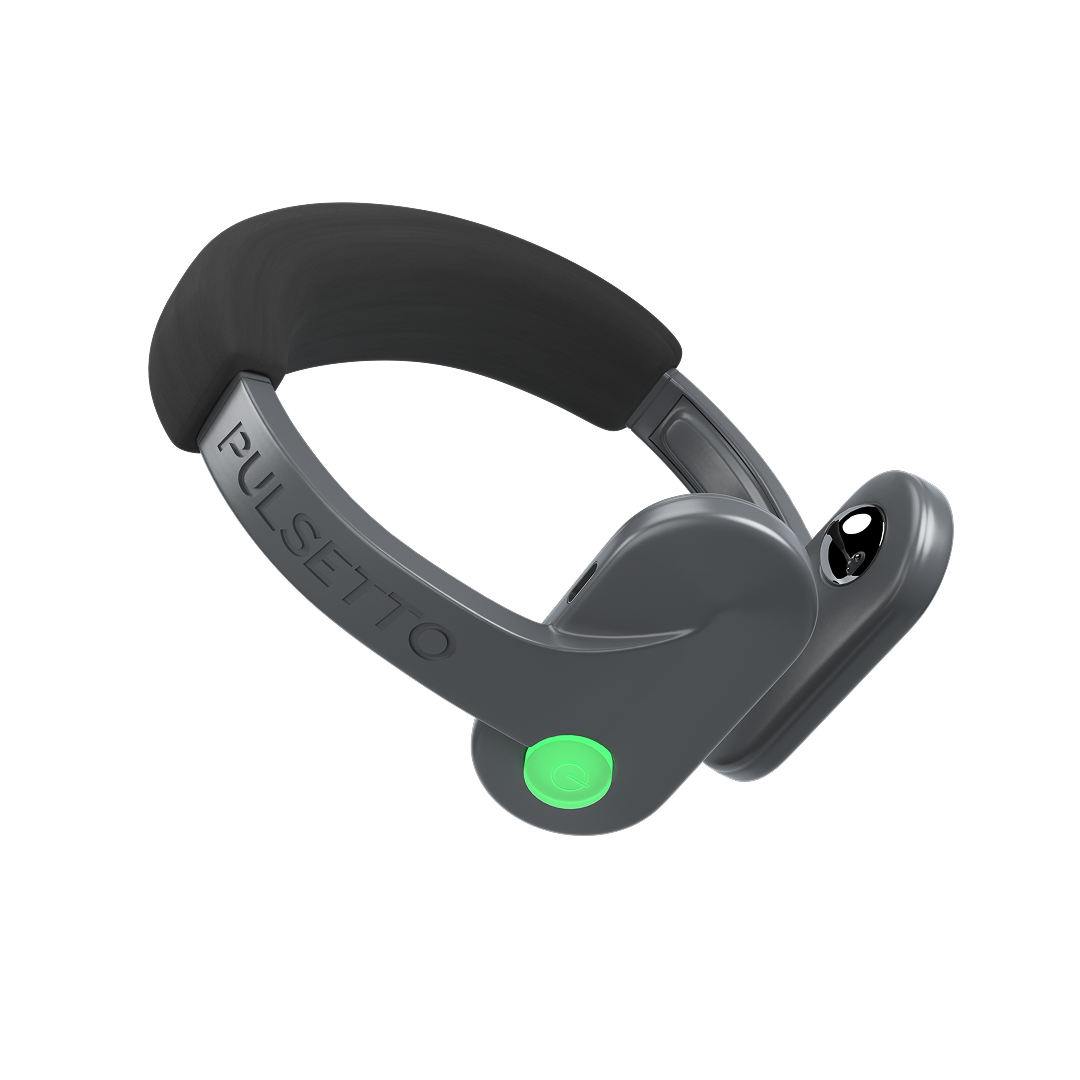
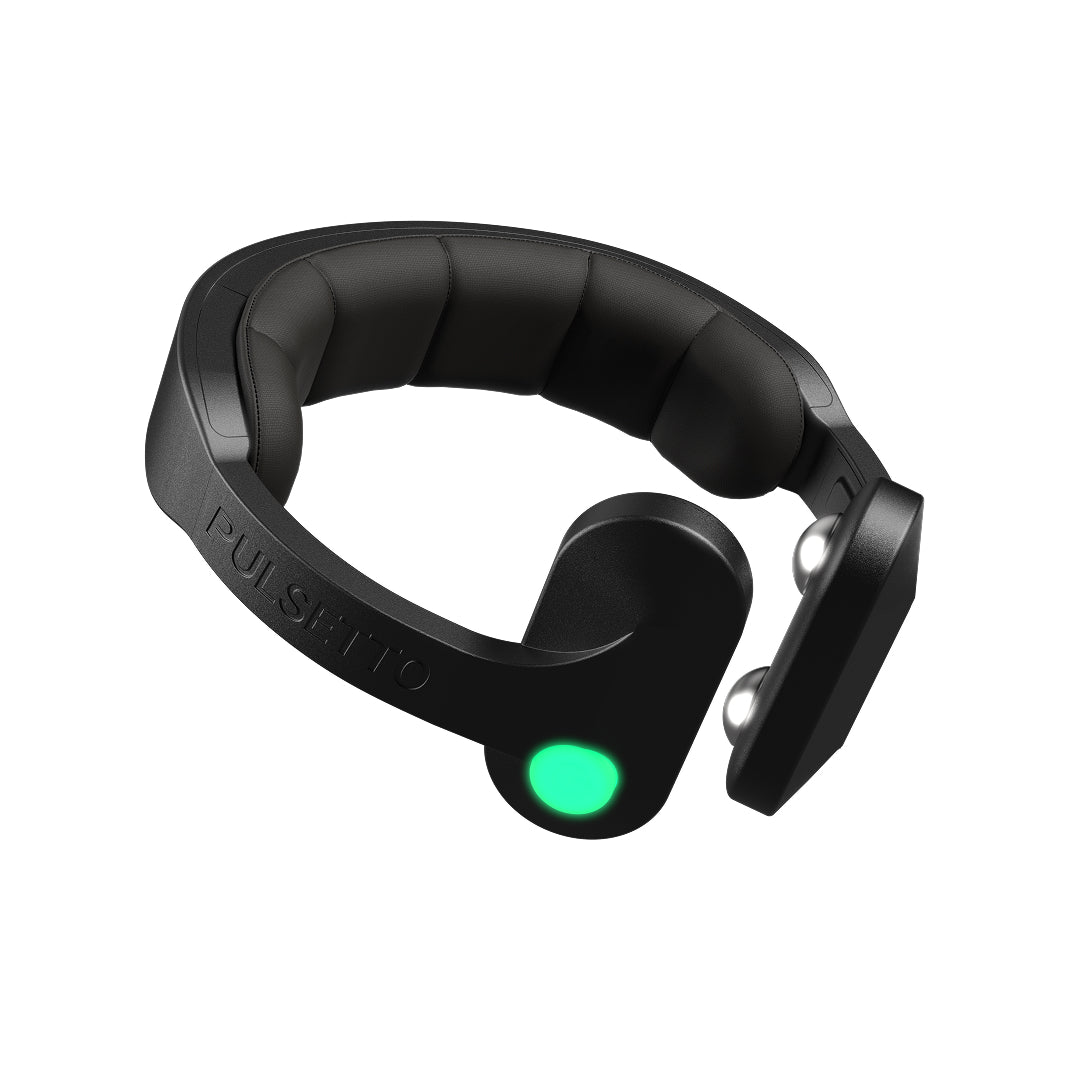
What is a neck stimulator device?

A neck stimulator device, in the vagus nerve context, is a type of non-invasive vagus nerve stimulator (nVNS). It places electrodes against the side of the neck, where a major branch of the vagus nerve runs close to the surface, and sends low-level electrical pulses through the skin. Because nothing is implanted and no surgery is involved, this is called transcutaneous (through-the-skin) stimulation.
The vagus nerve is the longest cranial nerve in the body. It connects the brainstem to the heart, lungs, and gut, and it carries the signals that govern the parasympathetic ("rest and digest") side of the autonomic nervous system. Roughly 80% of its fibers are afferent, meaning they send information from the body up to the brain. A neck stimulator device works by activating these afferent pathways, which then influence how the brainstem regulates heart rate, breathing, and the stress response [1]. If you want the full background, this guide to vagus nerve anatomy and core functions covers where the nerve runs and what it controls.
Two anatomical targets dominate the non-invasive category:
-
Cervical (neck) devices apply stimulation to the vagus nerve as it travels through the neck. This is the placement used by neck stimulator devices and by Pulsetto.
-
Auricular (ear) devices target the auricular branch of the vagus nerve at the outer ear.
Both aim to recruit vagal fibers without surgery [1]. The difference is anatomy and form factor, which matters when you compare comfort, session length, and how hands-free the device is. Neither access point is automatically superior; they reach the same nerve through different doorways.
Try Pulsetto: A four-minute, hands-free neck session you can run while you read or wind down. Start with the vagus nerve stimulation ultimate guide.
Types of neck stimulator devices
"Neck stimulator device" is a broad term that covers several very different products. Understanding the categories prevents an expensive mismatch, because a device built for sore muscles is not the same as a neck nerve stimulator built to engage the vagus nerve. Here is how the main types compare.
Cervical vagus nerve stimulators (nVNS)
These are the devices this guide focuses on. A cervical vagus nerve stimulator, sometimes searched as a neck nerve stimulator or cervical stimulation device, places electrodes over the path of the vagus nerve in the neck and delivers tuned, low-level pulses to engage vagal afferents. The goal is autonomic balance: a shift toward the parasympathetic state that supports calm, sleep, and stress resilience. Pulsetto sits in this category.
Neck massagers (TENS and EMS)
A neck massager for the vagus nerve is a common search, but most products sold under that name are TENS (transcutaneous electrical nerve stimulation) or EMS (electrical muscle stimulation) units aimed at muscle relaxation and localized pain. A TENS neck massager stimulates sensory nerves to ease the perception of muscle ache; an EMS unit contracts muscle fibers. These can feel pleasant and help a stiff neck, but their parameters and placement are tuned for muscles, not for engaging the vagus nerve and the autonomic nervous system. If your goal is stress, sleep, and HRV rather than a knotted trapezius, a massager and a vagus nerve stimulator are not interchangeable. We unpack that distinction more in the section on a neck massager versus a vagus nerve stimulator below.
Handheld versus hands-free
Within the vagus nerve category, form factor splits two ways:
-
Handheld vagus nerve stimulators are pressed against the neck by hand for the duration of a session. They give you direct control over placement, but you have to hold the unit in place the whole time, which makes longer or daily sessions harder to sustain.
-
Hands-free neck stimulators sit on the neck and hold themselves in place, freeing your hands so a session fits around reading, working, or settling into bed. Pulsetto is hands-free and bilateral, meaning it sits over both sides of the neck at once.
What a neck stimulator device is not
Two other product types share the "neck stimulator" name but do something entirely different. A bone growth stimulator (such as a cervical bone-growth unit prescribed after spinal fusion) uses electromagnetic fields to support bone healing and is a prescribed medical device. A spinal cord stimulator is an implanted device for chronic pain. Neither is a vagus nerve wellness tool, and neither is what Pulsetto is. If your search was about post-surgical bone healing or implanted pain management, those are separate medical categories handled by a clinician.
How a neck stimulator device works

When the electrodes deliver a pulse, they stimulate vagal afferent fibers in the neck. Those fibers project to the nucleus tractus solitarius in the brainstem, which connects onward to regions involved in mood, arousal, and autonomic control [1]. This is the basis of how non-invasive vagus nerve stimulation works. The downstream effect researchers look for is a measurable shift away from sympathetic ("fight or flight") dominance and toward parasympathetic activation.
In controlled studies, cervical stimulation has been shown to blunt the body's sympathetic reaction to acute stress. In a double-blind, randomized, sham-controlled trial, active tcVNS reduced markers of sympathetic arousal after stress compared with a sham device, including a lower heart rate and signs of peripheral vasodilation [3]. Earlier work from the same group, using wearable sensors, found that cervical stimulation modulated cardiovascular and autonomic responses to stress even when applied without a stressor present [2].
A neck stimulator device is designed to support the nervous system's own regulatory processes. It helps the body ease toward a calmer, more balanced state as part of general wellness.
Does it feel like a shock? Is it a neck taser?
A common worry, and a common search ("neck nerve taser", "neck taser", "neck buzzer"), is that the device will shock you. It will not. A vagus nerve neck stimulator is not a taser, a shock collar, or a cattle prod, and it has nothing to do with those devices beyond sharing the word "electrical." The sensation most people describe is a gentle tingling, a light buzzing, or a faint pulsing under the electrodes. Intensity is adjustable, so you set it to a level that feels comfortable, never painful. You should feel the stimulation, but it should never sting or hurt. If it does, the intensity is too high, the placement is off, or you need more conductive gel. Published trials describe non-invasive vagal stimulation as well tolerated, with the most common sensation being mild local tingling [6][15]. In short: gentle pulses, not a jolt.
How and where to use a neck stimulator device
One of the most common questions, especially for Pulsetto owners, is where on the neck the device goes and how to run a session. Here is a practical walkthrough. For the full step-by-step with photos, see the Pulsetto quick start guide.
Where to place a neck stimulator device on the neck
The target is the path of the vagus nerve along the side of the neck, roughly where you would feel your pulse, beside the large neck muscle (the sternocleidomastoid) that stands out when you turn your head. A bilateral device like Pulsetto sits across the front of the neck so its two electrode pads rest over both sides at once. You do not place it on your throat, your spine, or the back of your neck. Position it comfortably under the jaw line, on the sides, where the vagus nerve runs closest to the surface.
A short placement checklist:
-
Clean, dry skin first. Remove lotion or makeup from the area so the electrodes make good contact.
-
Apply conductive gel. A thin layer of gel on the electrode pads improves conduction and comfort. Skipping gel is the most common reason a session feels weak or prickly.
-
Sit the device on the sides of the neck, electrodes over the vagus nerve path, not on the windpipe or the back of the neck.
-
Start low and adjust. Begin at a low intensity and raise it gradually to a comfortable tingling.
How long and how often to use it
Session length depends on the device. Pulsetto sessions run about four minutes, which is short enough to repeat daily. Most people use a neck stimulator once or twice a day, and many build it into a morning or pre-sleep routine. The research pattern is consistent: benefits to sleep quality and HRV tend to build over weeks of regular use rather than from a single session [14][15], so consistency matters more than any one long session. For specifics on frequency and stacking sessions, see how often you can use Pulsetto, and to match a program to your goal, see which program to use for your goal.
Do you need gel?
For an electrical neck stimulator, yes, conductive gel matters. It lowers skin resistance so the pulse is delivered evenly and comfortably, and it prevents the prickly, uneven sensation that dry electrodes can cause. Pulsetto ships with conductive gel and a USB-C cable, and reapplying a small amount before each session keeps the experience smooth.
What the science says
The evidence base for non-invasive vagus nerve stimulation has grown quickly. Here is what peer-reviewed research currently supports.
Stress and the autonomic response
Several controlled studies show that non-invasive vagal stimulation can dampen the physiological signature of acute stress. Active tcVNS reduced sympathetic responses to personalized stressors in a randomized double-blind trial [3], and a separate crossover study in healthy adults found that vagal stimulation reduced stress-induced sympathetic outflow on wearable-measured signals [4]. In a community-based randomized trial, daily transcutaneous stimulation produced greater improvements in perceived stress and anxiety symptoms than sham stimulation [5]. Stress and HRV are tightly linked: a meta-analysis of the stress literature found that lower heart rate variability is a reliable signature of the stress response, which is why HRV is the headline biomarker researchers track [18]. Research also shows that both vagal stimulation and slow, deep breathing can raise HRV markers of vagal tone, which is one reason guided breathing is often paired with device sessions [12]. If a neck stimulator is one part of a broader plan, this overview of the best wearable devices for stress relief puts the category in context.
Anxiety and mood
Non-invasive vagal stimulation has shown encouraging signals for anxiety and low mood. In an open-label inpatient pilot trial, vagal stimulation significantly reduced anxiety (GAD-7) and depressive (PHQ-9) symptom scores compared with baseline, with only minor side effects [6]. In a sham-controlled study of people with post-traumatic stress, cervical stimulation reduced symptom burden and blunted an inflammatory (IL-6) response to stress over a course of self-administered sessions [7]. Heart-rate-variability biofeedback, which works on the same autonomic pathway, has also been shown in a meta-analysis to reduce stress and anxiety [20]. Larger trials are ongoing, and the direction of these findings is consistent. For a device-focused view, see the roundup of the best vagus nerve stimulator for anxiety.
Heart rate variability and vagal tone
Heart rate variability (HRV) is the most studied physiological marker in this field, because higher vagally mediated HRV is associated with better autonomic regulation, which is why HRV is worth tracking. Most research points in a favorable direction, with the size of the effect depending on how and how often stimulation is delivered.
Many studies report that stimulation raises HRV. Controlled trials in healthy adults found increases in time- and frequency-domain HRV measures such as RMSSD and high-frequency power after stimulation [8][9], and a systematic review of 21 controlled trials found significant HRV changes in the majority of studies, though results varied with study design and dosage [10]. Older adults may respond more strongly than younger ones [13]. A living Bayesian meta-analysis of brief, single-session auricular studies found no acute change versus sham [11], consistent with the view that HRV benefits tend to build with regular use rather than from a single session. If HRV tracking is your main interest, this guide to the best HRV devices compares the options.
Sleep
Sleep is one of the strongest application areas. In a randomized clinical trial published in JAMA Network Open, transcutaneous vagal stimulation produced a clinically meaningful reduction in Pittsburgh Sleep Quality Index (PSQI) scores versus sham, and the benefit held across a 20-week follow-up [14]. A 2025 systematic review and meta-analysis of six trials found pooled improvements in both sleep quality and insomnia severity, with minimal and manageable side effects [15]. Additional randomized trials report better sleep quality and longer total sleep time after a course of stimulation [16][17]. For a sleep-first comparison, see the guide to the best device for sleep.
Safety
Across these studies, non-invasive vagal stimulation is consistently described as well tolerated. Reported side effects are typically minor and local, such as tingling or mild skin irritation at the electrode site, and serious adverse events are rare in published trials [6][14][15]. As with any device that delivers electrical stimulation, safety depends on following the instructions and respecting the contraindications listed below.
Neck massager or vagus nerve stimulator? Clearing up the confusion
Because "best neck massager for vagus nerve" is such a common search, it is worth being precise. A neck massager is built to relax muscles. A vagus nerve stimulator is built to engage a specific nerve and nudge the autonomic nervous system toward balance. They overlap in form (both sit on the neck) but differ in purpose, parameters, and placement.
-
A neck massager (TENS, EMS, vibration, or heat) targets muscle tension and the local sensation of pain. Good fit for: a stiff, sore neck after a long day at a desk. It is not designed to influence HRV, sleep architecture, or the stress response in the way a vagus nerve device is.
-
A neck nerve stimulator (nVNS) targets the vagus nerve with parameters tuned to recruit vagal afferents. Good fit for: stress resilience, calmer evenings, and better sleep as part of a wellness routine.
If you want both muscle relief and autonomic support, those are two jobs, and the honest answer is that one device rarely does both well. For the vagus nerve job specifically, a purpose-built cervical stimulator is the right tool. This deeper piece on vagus nerve massage and stimulation walks through the difference.
Bilateral and hands-free: where neck stimulator designs differ
Not all neck stimulator devices are built the same way, and two design choices have a real effect on the experience.
Bilateral versus unilateral. Most handheld neck stimulators are applied to one side at a time. A bilateral design stimulates both sides of the neck at once. In Pulsetto's own randomized open-label pilot study (n=40, 4 weeks), participants reported a 55.9% reduction in depressive symptoms (PHQ-9), a 45.3% reduction in anxiety symptoms (GAD-7), and a 41.0% improvement in sleep quality (PSQI). Bilateral stimulation reduced the chronic-stress biomarker hair cortisol by 47.5%, compared with 31.4% for unilateral stimulation. Additional studies are underway to build on these results.
Hands-free versus handheld. A handheld device has to be pressed against the neck for the full session. A hands-free neck stimulator sits on the neck and holds itself in place, which lets you do a session while you read, work, or wind down for bed. For a daily habit, that difference often decides whether people actually use the device.
Neck stimulator devices to consider in 2026
People searching for the "best vagus nerve stimulators 2026" or the "best vagus nerve stimulation manufacturers 2026" are really asking which category of device fits their goal. Rather than ranking brands, here are the device types to weigh, with Pulsetto as the lead recommendation for a hands-free neck (cervical) stimulator. For a fuller comparison, see the roundup of the best vagus nerve stimulation devices.
Hands-free bilateral neck (cervical) stimulators
This is the category Pulsetto leads. The device sits on the neck, covers both sides at once, and runs short four-minute sessions hands-free, which makes a daily habit realistic. It pairs with a free app for guided programs, breathing, and tracking. Good fit for: people who want a neck-placement device they can use while doing something else, with structured programs and a price below the premium ear devices. Pulsetto is CE certified and FCC certified and is positioned as a general wellness device.
Handheld neck (cervical) stimulators
Handheld cervical devices, such as gammaCore-style units, are pressed against the neck for each session. They give precise manual placement and are well known in the category. The trade-offs are that you hold the device for the full session and that handheld medical units are typically priced well above consumer wellness devices. Good fit for: people who want manual control and don't mind holding the unit.
Auricular (ear-clip) tVNS stimulators
Ear devices clip onto the outer ear and stimulate the auricular branch of the vagus nerve. Brands like Nurosym (single ear clip, app-free, the deepest external published evidence base in the consumer category, approx. $700 to $750, prices change) and Vagustim (bilateral ear earpieces with an app, approx. $390 often discounted, prices change) sit here. Good fit for: people who specifically want ear placement or the largest external study count, and who are comfortable with a higher price (Nurosym) or a thinner review history (Vagustim). The ear is a validated target [1]; it is simply a different access point than the neck.
Contactless electromagnetic stimulators
Devices like Amofit S use non-contact electromagnetic stimulation worn on the chest (approx. $248 single, prices change), with a less-established mechanism than direct electrical stimulation and mostly brand-reported performance figures. Good fit for: people who want an inexpensive contactless option and are comfortable with a newer mechanism.
Neck and shoulder massagers (TENS/EMS)
If your goal is muscle relief rather than vagal tone, a TENS or EMS neck massager is the right category, but it is not a vagus nerve stimulator. Good fit for: tension and soreness, not stress, sleep, or HRV.
Across these categories, Pulsetto's differentiators are neck placement, hands-free bilateral wear, four-minute sessions, a free lifetime app with HRV and sleep tracking, and a price below the premium ear devices. If you want the broader landscape, see the guides to the best neurostimulation devices and the best nervous system regulation devices.
How to choose a neck stimulator device
Use these criteria to compare options. Each one maps to a practical question about how the device fits your life and how well it is supported by evidence.
|
Criterion
|
What to look for
|
|
Stimulation site
|
Neck (cervical) devices target the vagus nerve in the neck; ear devices target the auricular branch. Both are validated targets in research [1].
|
|
Bilateral vs unilateral
|
Bilateral stimulation covers both sides at once. Pulsetto is a consumer neck device built around bilateral cervical stimulation.
|
|
Hands-free vs handheld
|
Hands-free designs make daily use easier. Handheld units must be held in place for the whole session.
|
|
Session length
|
Shorter sessions are easier to sustain. Pulsetto sessions run about four minutes.
|
|
App guidance
|
Guided programs and breathing support aid consistency; deep breathing itself can raise vagal-tone markers [12].
|
|
Evidence base
|
Look for a device whose mechanism is backed by peer-reviewed research and that has been clinically tested.
|
|
Sensation
|
It should feel like gentle tingling, never a shock. Adjustable intensity matters.
|
|
Safety and certifications
|
Check the device's safety certifications, such as CE and FCC, and review the contraindications before use.
|
|
Comfort and battery
|
Adjustable intensity, comfortable fit, and battery life that supports daily use.
|
For a wider technology view, the guides to the top biohacking gadgets and the best wearable biohacking device place neck stimulators alongside other self-regulation tools.
Why Pulsetto, and is Pulsetto legit?
People do ask whether Pulsetto is legit, which is a fair question for any wellness device. Pulsetto is a real company with a shipping product, a published pilot study, named clinical partners, and CE and FCC certifications. You can read about the team and company behind Pulsetto and browse independent Pulsetto reviews to see how people use it day to day.
The Pulsetto bilateral neck stimulator is a hands-free, non-invasive device built around bilateral cervical stimulation for general wellness use. It is designed to help your nervous system feel calm, balanced, and ready for rest. Here is what stands out.
-
Bilateral, hands-free design. Pulsetto stimulates both sides of the neck at once and stays in place on its own, so a session fits around reading, working, or getting ready to sleep.
-
Four-minute sessions. Short enough to repeat daily. Place the device, choose a program, and let it run.
-
App-guided programs. The Free Lifetime app tier includes five programs (Stress, Sleep, Burnout, Pain, Anxiety) plus breathing exercises and HRV and sleep tracking. The Premium tier adds more programs, guided meditations, breathing exercises, and affirmations. Pairing stimulation with guided breathing reflects research showing that breathing techniques can raise vagal-tone markers [12].
-
Tuned stimulation parameters. Pulsetto delivers a 25 Hz pulse repetition with pulse frequencies tuned per program, within the established cervical nVNS range.
-
Clinically tested, with a growing pipeline. Beyond its own pilot study, Pulsetto lists its ongoing vagus nerve stimulation clinical trials with named institutional partners. You can review the clinical science behind Pulsetto in detail.
-
Built for daily life. Two device options (Pulsetto Lite and Pulsetto FIT), long battery life between charges, a two-year warranty, and a simple setup with conductive gel and a USB-C cable.
Pulsetto is CE certified and FCC certified and is designed as a general wellness device for everyday calm, better sleep, and stress resilience.
Start your first four-minute session. See how Pulsetto Lite compares with Pulsetto FIT.
Safety and contraindications
A neck stimulator device delivers electrical stimulation, so some people should not use one without medical guidance. Do not use Pulsetto, or any nVNS device, if you:
-
Have a pacemaker or any implanted electrical medical device.
-
Have epilepsy or a seizure disorder.
-
Are pregnant.
-
Have a known heart condition or carotid issue, unless your doctor has approved use.
-
Have had recent neck or throat surgery, unless a doctor approves.
If you are managing a medical condition or taking medication, talk to your healthcare provider before starting, and review Pulsetto's full contraindications. Reported side effects of non-invasive vagal stimulation are usually minor and local, such as tingling or mild skin irritation at the electrode site [6][15]. Stop and seek advice if you experience dizziness, an irregular heartbeat, or any unusual symptoms.
Pulsetto is a general wellness product and is not intended to diagnose, treat, cure, or prevent any disease or medical condition.
Benefits
Frequently asked questions
Is a neck stimulator device the same as a neck massager?
No. A neck massager (usually a TENS, EMS, vibration, or heat device) is built to relax muscles and ease localized soreness. A neck stimulator device for the vagus nerve targets the vagus nerve to influence the autonomic nervous system, with parameters and placement tuned for that purpose. They sit in the same place on the body but do different jobs, so they are not interchangeable if your goal is stress, sleep, or HRV.
Where do you place a neck stimulator device?
On the sides of the neck, over the path of the vagus nerve, roughly beside the large muscle that stands out when you turn your head, below the jaw line. A bilateral device like Pulsetto rests across the front of the neck so both electrodes cover both sides at once. You do not place it on the windpipe, the spine, or the back of the neck. Clean the skin, apply conductive gel, then position and adjust the intensity. The placement section above shows exactly how, with a step-by-step setup walkthrough.
Do neck stimulator devices really work?
For the vagus nerve goal, the mechanism is supported by a large body of peer-reviewed research showing that non-invasive vagal stimulation can lower the sympathetic stress response, raise HRV with regular use, reduce anxiety and depressive symptom scores, and improve sleep quality [3][6][14][15]. Effects build with consistent use rather than from one session, and the size varies by protocol. Pulsetto builds on that science and has been tested in its own randomized pilot study.
Does a neck stimulator device feel like a shock?
No. It is not a taser, a buzzer, or a shock device. The sensation is a gentle tingling or light pulsing under the electrodes, and the intensity is adjustable so you keep it comfortable. You should feel it, but it should never hurt. If it stings, lower the intensity, add conductive gel, or reposition the electrodes. Published trials describe the most common sensation as mild local tingling [6][15].
What is the best neck stimulator device?
The best one depends on what you want. For a hands-free neck (cervical) device with short sessions, app-guided programs, HRV and sleep tracking, and a price below the premium ear devices, Pulsetto is the lead recommendation. People who specifically want ear placement may prefer an auricular device, and those who only want muscle relief should look at a TENS or EMS massager instead. The 2026 category breakdown above lays out the trade-offs for a full comparison.
How often should you use a neck stimulator?
Most programs are built around short daily sessions; Pulsetto sessions run about four minutes, used once or twice a day. Because benefits to sleep and HRV build over weeks, consistency matters more than length. Follow the in-app guidance, and the usage-frequency guidance above covers stacking sessions in more detail.
Is a neck stimulator device safe to use?
For most healthy adults, non-invasive vagus nerve stimulation is well tolerated, and published trials report mostly minor, short-lived effects such as light tingling at the electrode site [6][15]. Pulsetto is CE certified and FCC certified and is designed for general wellness use. Review the contraindications above, and if you have a medical condition or use an implanted device, check with your healthcare provider first.
How long until I notice anything?
Experiences vary. Some people report feeling calmer after a single session, while physiological measures like sleep quality and HRV are studied over weeks of regular use [14][15]. Consistency tends to matter more than any one session.
Scientific research
The mechanism behind neck stimulator devices is supported by peer-reviewed research on non-invasive vagus nerve stimulation. Pulsetto is a general wellness product and is not intended to diagnose, treat, cure, or prevent any disease or medical condition. The studies below were identified via the Consensus and PubMed research databases. Each title links directly to the published paper by its DOI, and all studies are indexed in PubMed.
[1] Critical Review of Transcutaneous Vagus Nerve Stimulation: Challenges for Translation to Clinical Practice (Yap et al., 2020, Frontiers in Neuroscience. PMID: 32410932)
[2] Quantifying acute physiological biomarkers of transcutaneous cervical vagal nerve stimulation in the context of psychological stress (Gurel et al., 2019, Brain Stimulation. PMID: 31439323)
[3] Transcutaneous cervical vagal nerve stimulation reduces sympathetic responses to stress in posttraumatic stress disorder: A double-blind, randomized, sham-controlled trial (Gurel et al., 2020, Neurobiology of Stress. PMID: 33344717)
[4] Transcutaneous auricular Vagus Nerve Stimulation and Median Nerve Stimulation reduce acute stress in young healthy adults: a single-blind sham-controlled crossover study (Sanchez-Perez et al., 2023, Frontiers in Neuroscience. PMID: 37746156)
[5] Effects of transcutaneous vagus nerve stimulation on subthreshold affective symptoms and perceived stress: a single-blinded randomized trial in community-dwelling adults (Jackowska et al., 2025, Biological Psychology. PMID: 41290087)
[6] Accelerated Transcutaneous Auricular Vagus Nerve Stimulation for Inpatient Depression and Anxiety: The iWAVE Open Label Pilot Trial (Austelle et al., 2025, Neuromodulation. PMID: 40117415)
[7] Transcutaneous Cervical Vagal Nerve Stimulation in Patients with Posttraumatic Stress Disorder (PTSD): Effects on PTSD Symptoms and Interleukin-6 (Bremner et al., 2021, Journal of Affective Disorders Reports. PMID: 34778863)
[8] The effect of transcutaneous auricular vagus nerve stimulation on HRV in healthy young people (Geng et al., 2022, PLoS ONE. PMID: 35143576)
[9] Ear your heart: transcutaneous auricular vagus nerve stimulation on heart rate variability in healthy young participants (Forte et al., 2022, PeerJ. PMID: 36438582)
[10] A systematic review of the effects of transcutaneous auricular vagus nerve stimulation on baroreflex sensitivity and heart rate variability in healthy subjects (Soltani et al., 2023, Clinical Autonomic Research. PMID: 37119426)
[11] Does transcutaneous auricular vagus nerve stimulation affect vagally mediated heart rate variability? A living and interactive Bayesian meta-analysis (Wolf et al., 2021, Psychophysiology. PMID: 34473846)
[12] Modulating Heart Rate Variability through Deep Breathing Exercises and Transcutaneous Auricular Vagus Nerve Stimulation (Jensen et al., 2022, Sensors. PMID: 36298234)
[13] Age as an Effect Modifier of the Effects of Transcutaneous Auricular Vagus Nerve Stimulation (taVNS) on Heart Rate Variability in Healthy Subjects (Gianlorenço et al., 2024, Journal of Clinical Medicine. PMID: 39064307)
[14] Transcutaneous Auricular Vagus Nerve Stimulation for Chronic Insomnia Disorder: A Randomized Clinical Trial (Zhang et al., 2024, JAMA Network Open. PMID: 39680406)
[15] Transcutaneous Auricular Vagus Nerve Stimulation in Insomnia: A Systematic Review and Meta-Analysis (de Oliveira et al., 2025, Neuromodulation. PMID: 40323248)
[16] Transcutaneous auricular vagus nerve stimulation (taVNS) improves sleep quality in chronic insomnia disorder: A double-blind, randomized, sham-controlled trial (Yeom et al., 2025, Sleep Medicine. PMID: 40398066)
[17] Transcutaneous Vagus Nerve Stimulation Could Improve the Effective Rate on the Quality of Sleep in the Treatment of Primary Insomnia: A Randomized Control Trial (Wu et al., 2022, Brain Sciences. PMID: 36291230)
[18] Stress and Heart Rate Variability: A Meta-Analysis and Review of the Literature (Kim et al., 2018, Psychiatry Investigation. PMID: 29486547)
[19] Heart Rate Variability Biofeedback Improves Emotional and Physical Health and Performance: A Systematic Review and Meta Analysis (Lehrer et al., 2020, Applied Psychophysiology and Biofeedback. PMID: 32385728)
[20] The effect of heart rate variability biofeedback training on stress and anxiety: a meta-analysis (Goessl et al., 2017, Psychological Medicine. PMID: 28478782)