Best HRV Device in 2026: Top Picks to Measure and Improve Your HRV
Best HRV Device in 2026: Top Picks to Measure and Improve Your HRV
If you want one device that does more than watch your numbers, the best HRV device for most people is Pulsetto, a hands-free vagus nerve stimulator designed to actively raise heart rate variability rather than just track it. Most "best HRV device" lists only cover trackers: rings, straps, and watches that measure HRV. That answers half the question. The other half is which device helps your HRV go up. This guide covers both. You will find the best HRV trackers for measuring your numbers, the best HRV biofeedback tools for training your breathing, and the best HRV stimulation devices for shifting your nervous system toward recovery. Pulsetto sits at the top because it targets the vagus nerve, the main driver of the HRV signal itself.
Heart rate variability is the variation in time between consecutive heartbeats. A higher, more flexible HRV generally signals a nervous system that can shift smoothly between effort and recovery, while a suppressed HRV is one of the clearest physiological markers of accumulated stress [1]. That is why HRV has moved from sports science labs onto wrists, fingers, and chests everywhere. The question for 2026 is no longer whether to track HRV, but which tool fits your goal: measuring, training, or improving it.
Best HRV devices at a glance (2026)
Device
Category
What it does
Placement
Approx. price
Pulsetto
Stimulation (nVNS)
Designed to raise HRV via vagus nerve stimulation
Neck (bilateral, hands-free)
around $269
Oura Ring (Gen 4)
Tracker
Continuous overnight HRV and recovery trends
Finger
around $349 + subscription
WHOOP
Tracker
Continuous HRV, strain, and recovery scoring
Wrist/arm
subscription-based
Polar H10
Tracker (chest strap)
ECG-grade HRV for spot checks
Chest
around $90
Apple Watch / Garmin
Tracker (smartwatch)
HRV plus full activity and sleep metrics
Wrist
varies widely
HeartMath Inner Balance
Biofeedback
Real-time breathing coherence coaching
Ear/finger sensor
around $159
Elite HRV (with strap)
Biofeedback/app
Guided HRV measurement and training
App + chest strap
free app + strap
Nurosym
Stimulation (taVNS)
Ear-clip vagus stimulation
Ear
around €699
Prices change often and vary by region, so treat these as starting points rather than fixed figures.
Rated 4.5/5 by 20,137+ Customers
Pulsetto vagus nerve stimulator: feel calmer and sleep better in just 4 minutes a day
Experience immediate relaxation with the Pulsetto vagus nerve stimulator.
Sit back, close your eyes, and immerse yourself in the soothing Pulsetto experience, designed to gently promote a state of calmness and well-being.
Best Value Deal!
FREE WORLDWIDE SHIPPING
Select your device:
Pulsetto Lite vs Pulsetto FIT
Which one is right for you?
PULSETTO FIT
PULSETTO LITE
Dual-technology, hands-free stimulation
Yes
Yes
New wave-like stimulation (more engaging)
Yes
No
Battery life
Up to 12 days (20% longer)
Up to 10 days
Fits all necks for consistent stimulation
Yes
No
Stays secure no matter what you're doing
Yes
No
Great for sharing (adjusts to any neck size)
Yes
No
Free lifetime wireless updates
Yes
No
Premium all-black design with medical-grade materials
Best if you wear size S or smaller tops. Only with FIT
New stimulation that rises and falls, which feels more fun (coming July–Aug 2025). Only with FIT
20% longer battery life for fewer recharges. Only with FIT
Free lifetime Pulsetto App with 5 expert-designed programs for Stress, Anxiety, and More.
One 60g gel tube (can be used up to a month), USB-C charging cable, user guide included
Extra gift: Pulsetto Premium Free Trial. 3 extra stimulations, 11 unique guided meditations, 54 breathing exercises, 1200 positive affirmations, and more.
$296/$546
Best HRV Device in 2026: Top Picks to Measure and Improve Your HRV
How to choose an HRV device: measure vs improve
Before comparing models, get clear on what you actually want the device to do. HRV tools split into three jobs, and the best HRV device for you depends on which one matters most.
Measure it. HRV trackers (rings, straps, watches) record the variation between your heartbeats and turn it into a daily score or trend. They are excellent for spotting patterns: how alcohol, poor sleep, illness, or a hard workout suppress your HRV the next morning. They do not change your HRV. They report it.
Train it. HRV biofeedback devices and apps guide you through slow, paced breathing while showing your heart rhythm in real time. Practiced regularly, this resonance-frequency breathing has solid evidence for reducing stress and anxiety and improving how your autonomic system performs [2][3].
Improve it. HRV stimulation devices go a step further. Non-invasive vagus nerve stimulators send gentle electrical pulses to the vagus nerve, the main parasympathetic pathway, aiming to shift your body from "fight or flight" toward "rest and digest." Because the vagus nerve is what generates much of the HRV signal, stimulating it is one of the more direct ways to influence the number a tracker reads [4][5].
A few practical criteria help narrow the field:
Accuracy matters most for trackers. Chest straps using ECG are the reference standard; rings and watches using optical sensors are convenient but read a little differently.
Wearability decides whether you actually use it. A ring you forget you are wearing beats a strap that lives in a drawer.
Subscription is a hidden cost. Several popular trackers require an ongoing membership to see your data.
Effort over time. Devices that improve HRV (stimulation, biofeedback) build their effect with consistent use. The honest framing is that magnitude varies by protocol and person, and the gains accumulate week over week rather than overnight [6][7].
HRV stimulation devices: tools that improve your HRV
This category answers a question most lists skip: which device helps your HRV go up? These are non-invasive vagus nerve stimulators (nVNS). Instead of reading your heart rhythm, they target the nerve that controls it.
1. Pulsetto: best HRV device overall
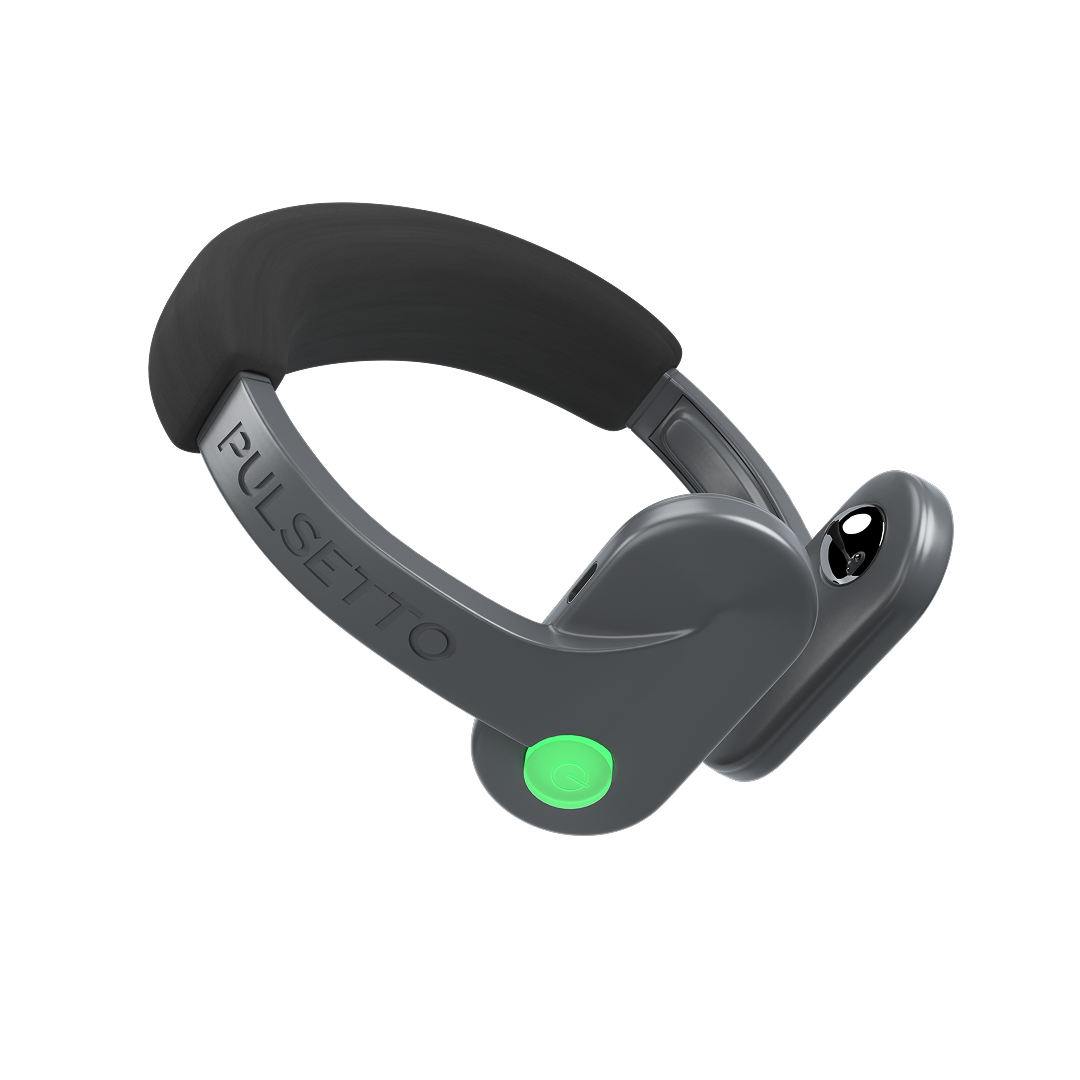
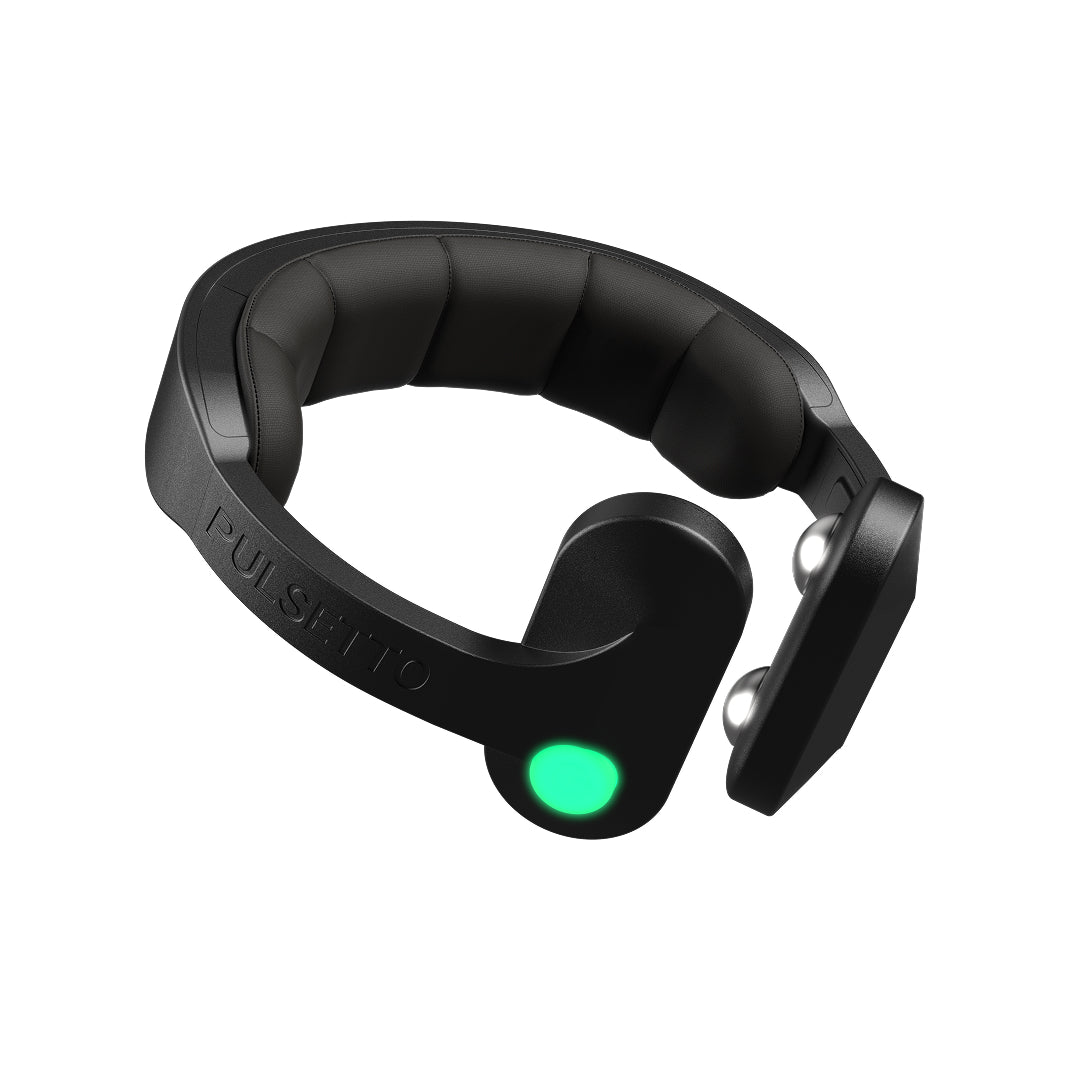
Pulsetto is a non-invasive vagus nerve stimulator worn around the neck. It delivers gentle bilateral cervical stimulation to the vagus nerve, the main highway of the parasympathetic nervous system. By nudging your body toward "rest and digest," it is designed to support the autonomic balance that HRV measures. That is the core reason it leads this list: it does not just show you your HRV, it is built to help raise it.
What it is. A soft, hands-free band that sits at the neck and stimulates the vagus nerve on both sides. Sessions run about four minutes, and because it is hands-free, you can sit back while it works rather than holding anything against your skin.
Who it is for. People who already know their HRV is low, runs hot with stress, or dips under poor sleep, and who want to do something about it rather than only watch the trend line. It suits anyone managing day-to-day stress, restless sleep, or burnout who prefers a drug-free, at-home tool.
Advantages of Pulsetto:
Stress Reduction via Vagus Nerve Stimulation: Experience significant relief from daily stress by activating your vagus nerve and shifting your body into a "rest and digest" state.
Improved Sleep: Pulsetto supports restful sleep by calming your nervous system, helping you wake up refreshed and energized.
Anxiety Relief via Vagus Nerve Stimulation: By stimulating the vagus nerve and regulating the parasympathetic nervous system, Pulsetto helps calm the body and reduce anxiety naturally.
Digestive Health Support: Vagus nerve stimulation positively impacts the gut-brain connection, aiding digestion and reducing bloating.
Chronic Pain and Health Support: Pulsetto offers support for individuals managing chronic stress, anxiety, and fatigue, helping to improve their quality of life.
The mechanism is well supported. Studies of transcutaneous vagus nerve stimulation show measurable increases in vagally mediated heart rate variability in healthy adults [4][5], a systematic review confirms effects on HRV and baroreflex sensitivity [7], and cervical stimulation specifically has been shown to reduce sympathetic responses to stress [8][9]. You can read the full breakdown on the Pulsetto science page and in our explainer on non-invasive vagus nerve stimulation.
In Pulsetto's own randomized open-label pilot study (n=40, 4 weeks), participants reported a 55.9% reduction in depressive symptoms (PHQ-9), a 45.3% reduction in anxiety symptoms (GAD-7), and a 41.0% improvement in sleep quality (PSQI). Bilateral stimulation reduced the chronic-stress biomarker hair cortisol by 47.5%, compared with 31.4% for unilateral stimulation. You can see more on the ongoing studies and trials page and read real Pulsetto reviews.
Price. Around $269 (roughly €249 to €269), with no required subscription. Pulsetto is not a TENS unit. TENS targets muscles and pain; Pulsetto targets the vagus nerve and autonomic balance.
Pros
Designed to improve HRV, not just measure it
Hands-free, short four-minute sessions
Free app with HRV tracking, sleep tools, and five programs, no subscription needed
Backed by its own pilot study plus the peer-reviewed nVNS literature
CE and FCC certified, EU-made
Cons
A stimulation device, so it pairs best with a tracker if you also want detailed nightly HRV graphs
Effects build with regular use rather than appearing instantly
Try Pulsetto. If your goal is a higher, more resilient HRV and not just a prettier graph, Pulsetto is built for exactly that. Four minutes a day, hands-free, no subscription. It is the most direct way on this list to work on the number itself. Compare the two models, Pulsetto FIT and Pulsetto Lite, to pick the right one.
2. Nurosym
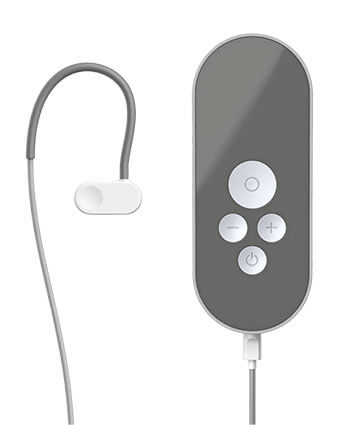
Nurosym is an auricular (ear-clip) vagus nerve stimulator with a single-ear clip and a separate controller. It is app-free and uses longer sessions of around 30 minutes. It carries the deepest external clinical evidence base in the consumer vagus nerve category, which is a genuine strength.
It is a good fit for people who want the strongest published evidence and a simple, app-free device, and who do not mind a premium price (around €699). The trade-offs are the cost, the single-ear placement (you handle and position the clip), and the longer session length compared with a hands-free neck device.
3. Vagustim
Vagustim uses bilateral auricular stimulation, with earpieces for both ears and an app for adjusting parameters. It has newer model versions and carries ISO 13485 and FCC certification, with a 14-day money-back window. Pricing is around $390, often discounted from a higher list price.
It works for people who want a lower-cost, app-controlled ear device with adjustable settings. As a newer entrant it has fewer independent reviews, and some users report mild ear discomfort during longer sessions.
4. Truvaga and Hoolest VeRelief (handheld cervical)
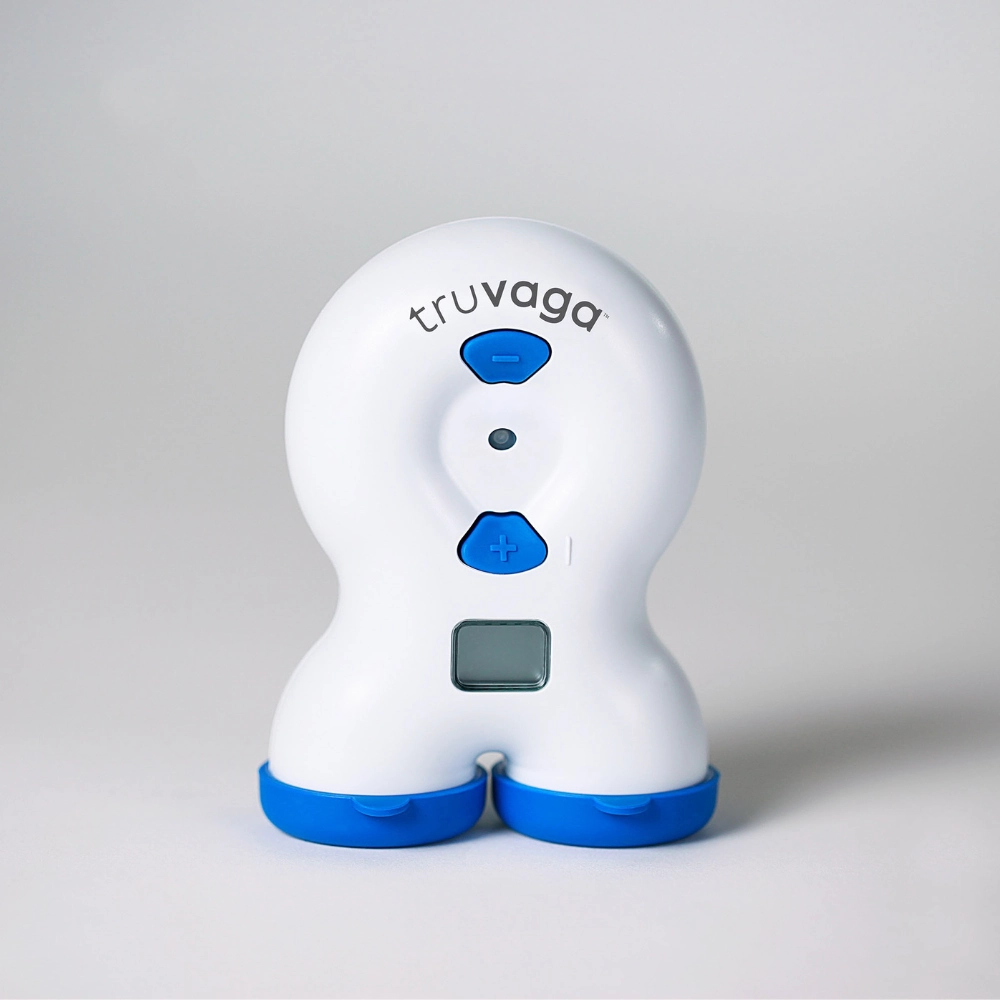
Both are handheld unilateral cervical stimulators you hold against one side of the neck. Truvaga uses short two-minute sessions and is mainly available in the US, priced around $199 to $499 depending on the model. Hoolest VeRelief sits around $249 to $399.
These are a good fit for people who want handheld cervical stimulation and do not mind holding the device in place for each session. The main limitation versus a hands-free band is exactly that: you have to hold it, and the stimulation is on one side rather than both.
Best HRV trackers and monitors (devices that measure HRV)
These are the devices most people picture when they search for an HRV monitor. They measure the signal accurately and turn it into trends. None of them changes your HRV; they report it. Consumer wearables can track HRV well enough to be genuinely useful, and research shows some can even stage sleep from HRV with reasonable accuracy [10] and help people move more [11][12].
5. Oura Ring (Gen 4): good for 24/7 wear and sleep
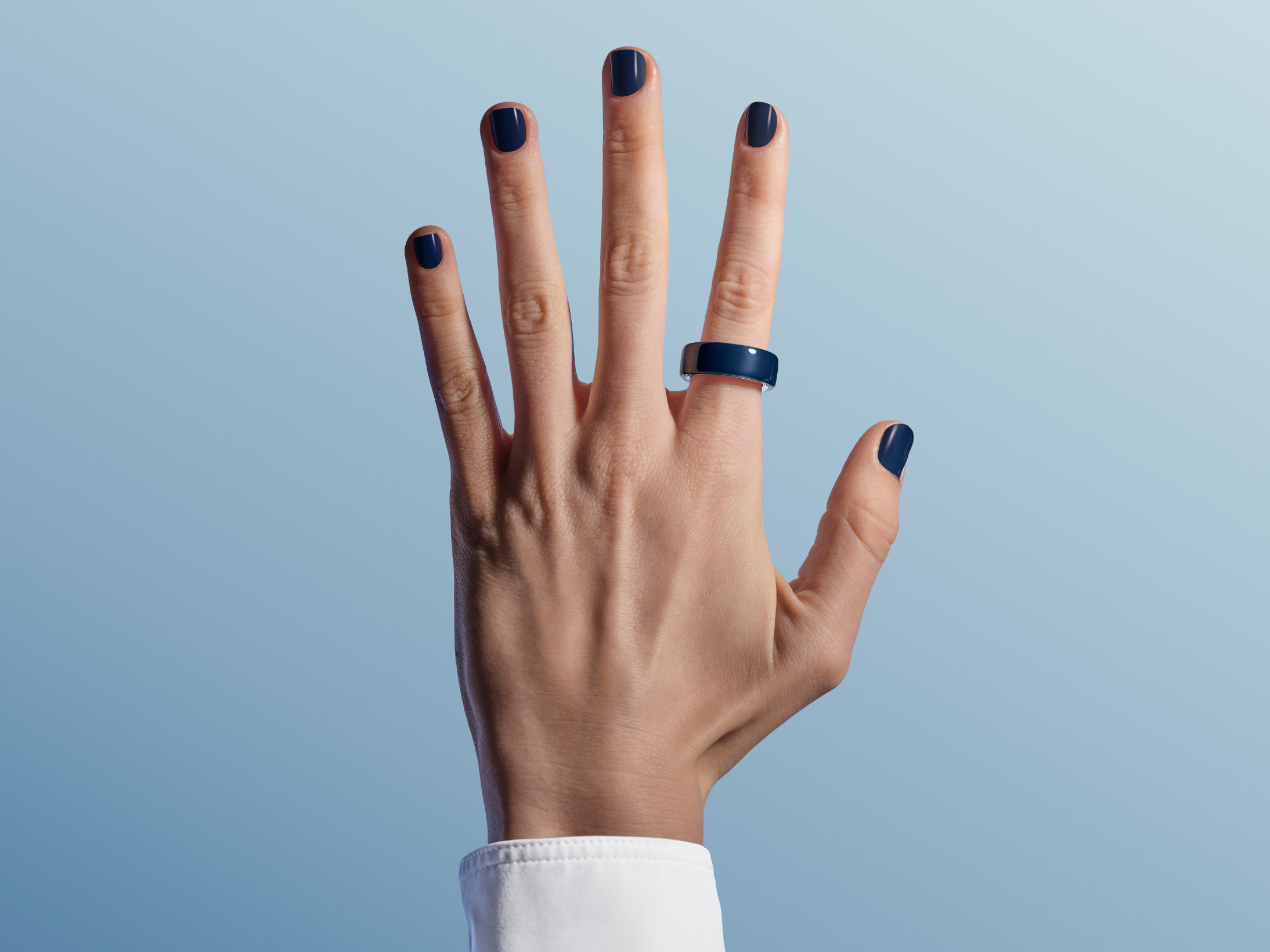
The Oura Ring is widely regarded as one of the best daily-wear HRV trackers. It measures continuous overnight HRV and recovery trends from your finger, without feeling like sports gear. Validation work has found Oura among the most accurate consumer devices for nocturnal HRV.
It is a good fit for people who want all-day, all-night tracking in a form they will actually keep wearing. The limitations: it requires a subscription to unlock full insights, optical finger sensors read differently from a chest strap, and a ring is less suited to live, real-time readings during exercise.
6. WHOOP: good for athletes and recovery scoring
WHOOP is a screenless band focused on continuous HRV, strain, and recovery. It leans heavily on HRV to generate a daily recovery score, which many athletes use to decide how hard to train.
It works for serious trainers who want recovery guidance built around HRV. The honest limitations are that WHOOP is subscription-only (you do not own the data access outright), and like all wrist optical devices, its readings differ from an ECG chest strap.
7. Polar H10: good for ECG-grade accuracy
The Polar H10 chest strap is repeatedly described as the gold standard for consumer HRV accuracy, and independent validation research supports that reputation. It measures ECG-level data with very high precision, which makes it the reference many HRV apps recommend.
It is a good fit for people who want the most accurate HRV readings and are happy to take spot checks, for example a morning baseline. The trade-off is comfort and convenience: a chest strap is not something most people wear all day, and it pairs best with a separate app to log and interpret the data.
8. Apple Watch and Garmin: good for all-in-one wearers
Multisensor smartwatches from Apple and Garmin record HRV alongside activity, workouts, and sleep. They are convenient because they do many jobs at once, and Garmin in particular surfaces HRV status as a recovery signal.
They are a good fit for people who want one wrist device for everything and treat HRV as one metric among many. The limitations: HRV updates can be infrequent or limited to overnight windows, optical wrist readings vary, and accuracy generally trails a dedicated chest strap. If you are weighing a wearable purely for stress and recovery, our guide to the best wearable device for stress relief compares the options in more depth.
Best HRV biofeedback devices and apps (train your HRV)
Biofeedback sits between measuring and improving. These tools show your heart rhythm in real time while coaching you through slow, paced breathing. Done regularly, HRV biofeedback has a strong evidence base: meta-analyses link it to improved emotional and physical health [2] and meaningful reductions in stress and anxiety [3].
9. HeartMath Inner Balance: good for guided coherence training
HeartMath's Inner Balance combines a pulse sensor with real-time breathing coherence coaching. As you breathe, the app shows whether your heart rhythm is moving into a smooth, coherent pattern, and rewards you for staying there.
It is a good fit for people who want structured, gamified breathing practice with immediate visual feedback. The limitation is that it is a training tool, not a continuous tracker, so it does not give you all-day HRV trends the way a ring or strap does.
10. Elite HRV (with a compatible strap): good for free, app-based training
Elite HRV is a popular app that pairs with a chest strap (often the Polar H10) to deliver guided HRV measurements and breathing training. The core app is free, which makes it an easy entry point.
It works for people who already own or will buy a compatible strap and want a no-cost way to measure and train HRV. The catch is that you need separate hardware, and getting reliable readings depends on the strap rather than the app itself.
Slow, paced breathing is also something you can practice without any hardware. Our guide to ways you can activate the parasympathetic nervous system covers the fundamentals, and breathwork itself has measurable effects on stress and mental health [13].
How we chose the best HRV devices
We mapped each device to the job it actually does, then judged it on the criteria that matter for that job.
For stimulation devices, we prioritized the strength of the vagus nerve stimulation evidence, hands-free convenience, session length, certification, and whether ongoing use costs extra. Pulsetto leads on the combination of a free app with HRV tracking, no required subscription, short hands-free sessions, EU manufacturing with CE certification, and its own pilot study sitting on top of the broader nVNS literature.
For trackers, accuracy and wearability drove the picks. Chest straps win on precision, rings win on all-day comfort, and watches win on doing everything at once.
For biofeedback, we looked at the quality of real-time feedback and the strength of the breathing-training evidence.
A useful way to think about it: a tracker tells you where your HRV is, a biofeedback tool teaches you to nudge it in the moment, and a stimulation device like Pulsetto is built to move the underlying autonomic balance over time. Many people end up combining a tracker for visibility with a stimulation device for action. For a related category, see our guide to the best biofeedback devices for anxiety.
Safety and who should be careful
Pulsetto is a general wellness product and is not intended to diagnose, treat, cure, or prevent any disease or medical condition.
Vagus nerve stimulation is generally well tolerated, but it is not for everyone. Do not use Pulsetto, and speak with a doctor first, if any of the following apply to you:
A pacemaker or any implanted electrical medical device
Epilepsy or a seizure disorder
Pregnancy
A known heart or carotid condition, unless a doctor approves
Recent neck or throat surgery, unless a doctor approves
For pure measurement accuracy, a chest strap using ECG is the reference standard, and the Polar H10 is widely cited as the gold standard for consumer HRV. For all-day, all-night tracking, validation work shows some wearables stage sleep from HRV with reasonable accuracy [10]. For all-day, all-night tracking that you will actually keep wearing, a finger ring like Oura performs well in validation studies. Smartwatches from Apple and Garmin are convenient all-in-one options but generally read less precisely than a dedicated strap.
What is the best device to improve HRV?
If your goal is to raise HRV rather than just record it, a non-invasive vagus nerve stimulator is the most direct tool, because the vagus nerve generates much of the HRV signal. Pulsetto is our top pick here: it delivers hands-free bilateral neck stimulation in about four-minute sessions and comes with a free app that also tracks your HRV. Studies of transcutaneous vagus nerve stimulation show measurable increases in vagally mediated HRV [4][5][7].
Can a vagus nerve stimulator increase HRV?
Yes. Because the vagus nerve is the main parasympathetic pathway and a major driver of heart rate variability, stimulating it can raise vagally mediated HRV. Controlled studies in healthy adults report increases in HRV after transcutaneous vagus nerve stimulation [4][5], and a systematic review found effects on HRV and baroreflex sensitivity [7]. Effects build with regular, consistent use, and the magnitude varies by protocol and individual.
How do I measure HRV at home?
The simplest at-home method is a chest strap paired with an HRV app, taken as a short morning reading right after waking while lying still. A finger ring or wrist wearable measures HRV automatically overnight, which removes the need to remember a daily check. For the most consistent trend, measure at the same time each day under the same conditions. Pulsetto's free app includes built-in HRV tracking alongside its stimulation programs.
Is Oura or Garmin more accurate for HRV?
Independent validation research has generally found Oura among the most accurate consumer devices for nocturnal HRV, often ahead of wrist-based smartwatches. Garmin is convenient as an all-in-one wearable but, like most wrist optical sensors, tends to read less precisely than a finger ring or a chest strap. For the highest accuracy regardless of brand, a chest strap remains the reference.
What is a good HRV score?
There is no single "good" number, because HRV varies enormously by age, sex, fitness, and genetics. What matters more is your own baseline and trend over time. A rising or stable HRV usually signals good recovery, while a sustained drop often points to stress, poor sleep, or illness. The most useful comparison is against your own typical range rather than against anyone else's number.
Do HRV biofeedback devices actually work?
The evidence is encouraging. HRV biofeedback, which guides you through slow paced breathing while showing your heart rhythm, has been linked in meta-analyses to improved emotional and physical health [2] and to reduced stress and anxiety [3]. It is a training practice, so benefits come from regular sessions rather than a single use.
What is the best way to measure and improve HRV together?
Many people pair two tools: a tracker for visibility and a stimulation device for action. A ring, strap, or watch shows you where your HRV sits and how it trends, while a vagus nerve stimulator like Pulsetto works on the underlying autonomic balance. Because Pulsetto's free app also tracks HRV, it can cover both jobs for people who want a single, focused tool. For more on this approach, see how vagus nerve stimulation is used to increase HRV.
Scientific research
The studies below were identified through the Consensus and PubMed databases. Pulsetto is a general wellness product and is not intended to diagnose, treat, cure, or prevent any disease or medical condition. All are indexed in PubMed, and each links directly to the original paper by its DOI.