Vagus nerve stimulation for ADHD: what the research shows (and its limits)

An illustration of the vagus nerve—the longest and most complex cranial nerve.
Here is the honest summary. The science connecting vagus nerve stimulation and attention is genuinely interesting, but it is early and preliminary. Most of the relevant work consists of small studies, laboratory experiments, and review articles rather than large, long-term trials in people diagnosed with ADHD.
What the current evidence does and does not support:
-
Some studies suggest attention and cognition effects. Controlled experiments have observed arousal and attention-related signatures after stimulation [1], and reviews have summarized cognitive effects across studies [2].
-
The ADHD link is a hypothesis, not a conclusion. Researchers have proposed a plausible mechanism through the noradrenergic pathway [3], while stating that no intervention fully cures ADHD.
-
Use in neurodevelopmental and pediatric contexts is investigational. A review of therapeutic applications describes transcutaneous auricular vagus nerve stimulation in neurodevelopmental or pediatric disorders as an area of ongoing research, not established practice [4].
-
This is medical research, not a consumer use case. The studies above examine stimulation as an investigational intervention in research settings. They do not validate any at-home wellness device as an ADHD treatment.
So, does vagus nerve stimulation help ADHD? Based on the published evidence today, it is not an established or approved ADHD treatment. It is a research direction. Anyone weighing options for ADHD should do so with a qualified healthcare professional, who can consider evidence-based approaches suited to the individual. You can follow how the field develops through Pulsetto's page on ongoing studies and trials.
Vagus nerve exercises and everyday habits for focus and calm

Separate from any device, there are simple, well-established habits that support a calmer nervous system and, for many people, a steadier ability to concentrate. These are general wellness practices for focus and emotional regulation. They are not treatments for ADHD or any condition, but they are low-cost, low-risk, and worth building into a routine. Several are covered in this collection of calming techniques to soothe your nervous system.
Slow breathing with long exhales
Breathing is one of the few autonomic functions you can consciously steer, which makes it a practical entry point to the parasympathetic system. Slow breathing with a longer exhale than inhale tends to nudge the body toward a calmer state and is a cornerstone of practices designed to activate the parasympathetic nervous system. Try inhaling for a count of four and exhaling for a count of six for a couple of minutes when you feel scattered or tense.
Movement breaks
Short bouts of movement between tasks can help reset attention and discharge restless energy. A brisk walk, a few flights of stairs, or a couple of minutes of stretching gives the mind a natural pause and often makes the next block of focused work easier to start.
Sleep and routine
Sleep quality has an outsized effect on attention and emotional regulation. A consistent sleep and wake schedule, plus a genuine wind-down period before bedtime, supports the kind of recovery that concentration depends on. Predictable daily routines also reduce the number of small decisions that drain attention.
Mindfulness and stress regulation
Chronic stress and focus pull in opposite directions. Under pressure, the sympathetic branch dominates and it becomes harder to think clearly. Research helps explain why building calm is useful. Studies of transcutaneous vagus nerve stimulation have examined its effects on physiological responses and cognitive performance during a mental stressor [5], and controlled work has reported reductions in acute stress in young healthy adults [6]. More broadly, heart rate variability, a marker tied to autonomic balance, is closely linked to stress in the literature [7], and heart rate variability biofeedback training has been associated with reductions in stress and anxiety across studies [8]. If HRV is new to you, this explainer on why we should care about heart rate variability is a useful next read, and simple mindfulness or breathing practice is one accessible way to work on it. A wider set of habits appears in these nervous system reset strategies.
Where a general wellness device fits (for adults)
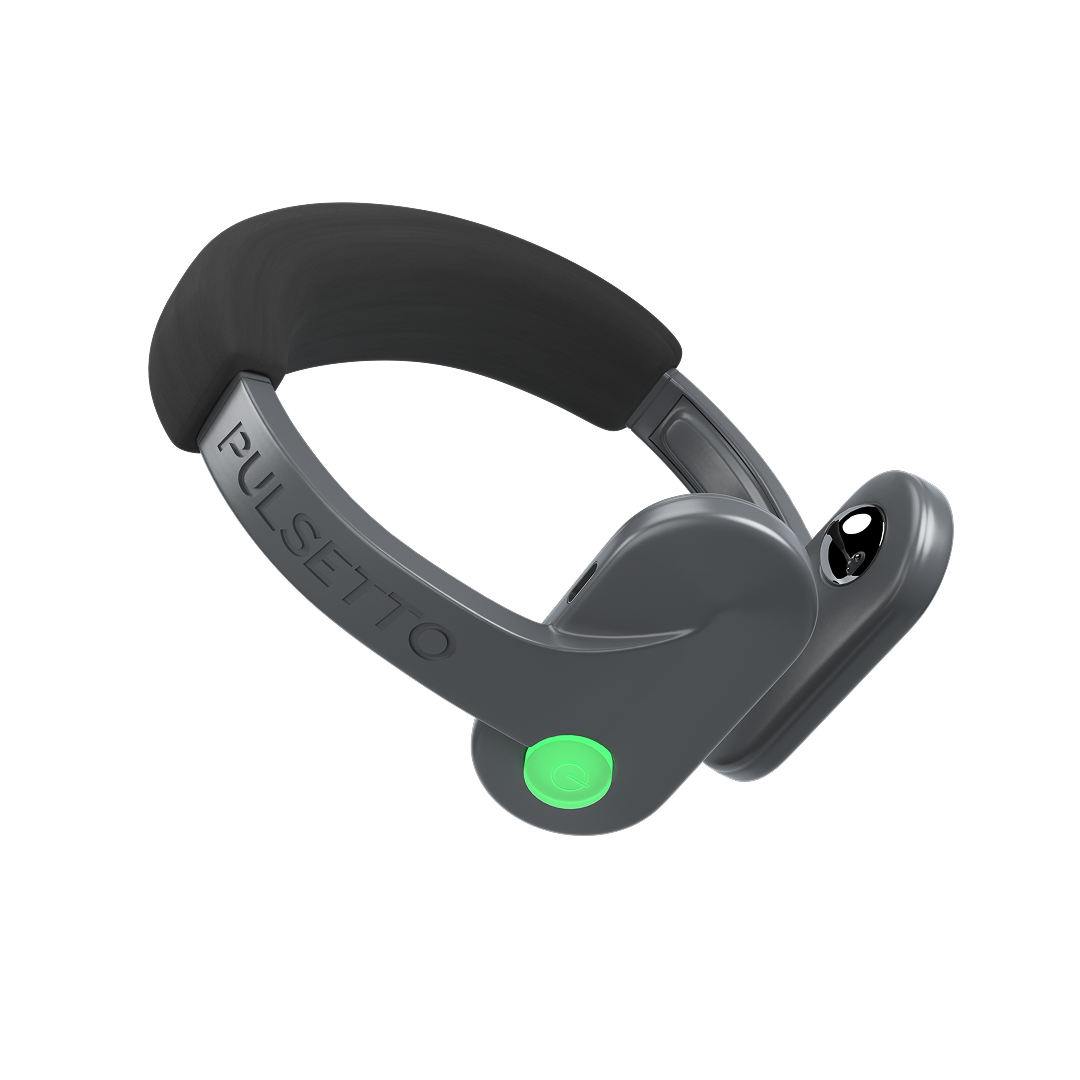
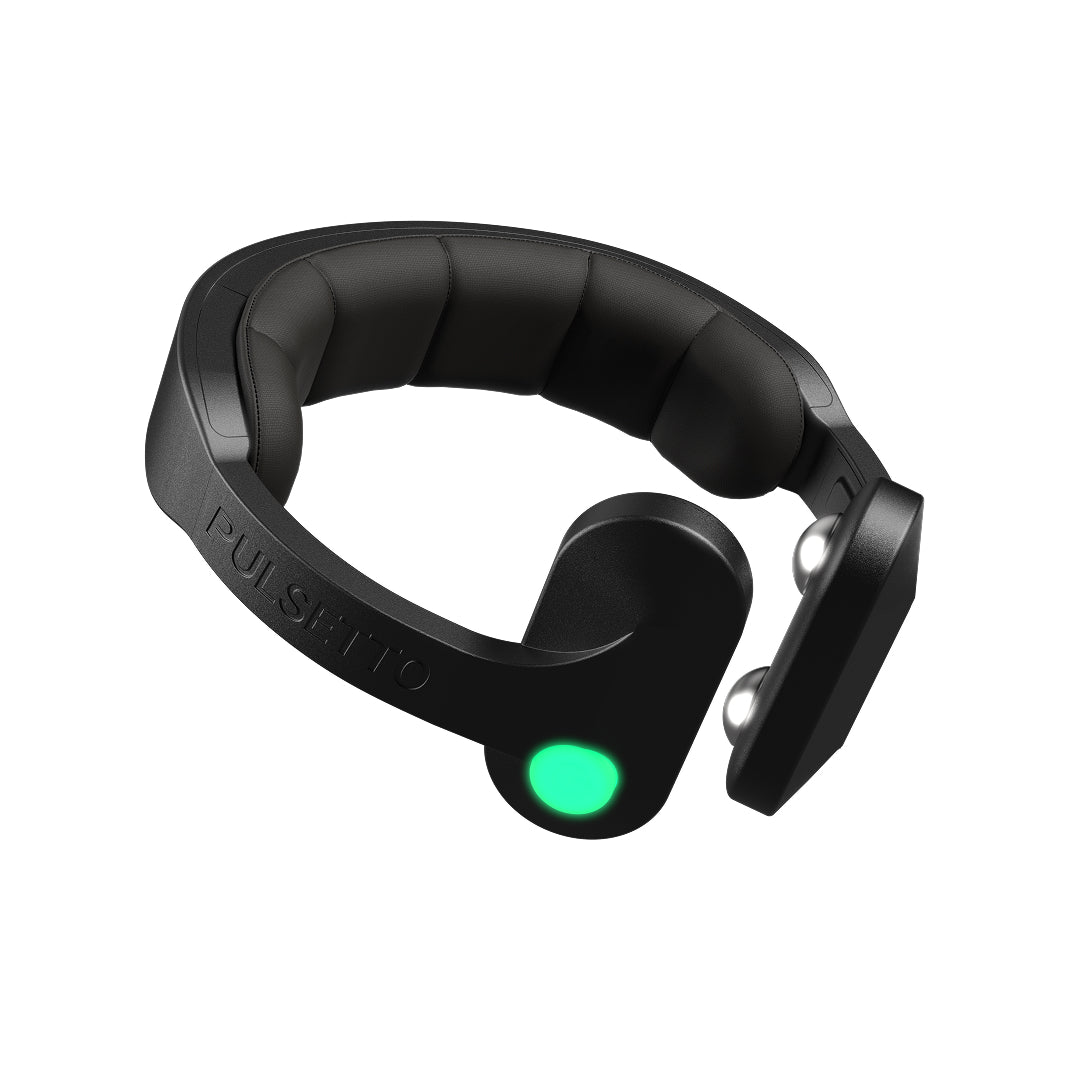
Some adults choose to add a vagus nerve wellness device to a broader routine of sleep, movement, breathing, and stress management. Pulsetto is one such option: a bilateral cervical (both sides of the neck) non-invasive vagus nerve stimulator, worn hands-free, with sessions of about four minutes and a free companion app that carries no mandatory subscription. It is made in Lithuania, is CE certified and FCC certified, and is a general wellness device rather than a medical device or a TENS unit. You can see how it works on the Pulsetto science page or compare the Pulsetto Lite device at around $269 with the Pulsetto FIT model at around $296.
To be completely clear about scope: Pulsetto is a general wellness device for adults that may support a calmer, more settled state and, in the everyday sense, a better ability to focus. It is not an ADHD treatment, it does not treat or manage ADHD, and it is not intended for children. Parents of a child with ADHD should speak with a qualified healthcare professional rather than reaching for any consumer device.
What the pilot data covers, and what it does not
In Pulsetto's own randomized open-label pilot study (n=40, 4 weeks), participants reported a 55.9% reduction in depressive symptoms (PHQ-9), a 45.3% reduction in anxiety symptoms (GAD-7), and a 41.0% improvement in sleep quality (PSQI). Bilateral stimulation reduced the chronic-stress biomarker hair cortisol by 47.5%, compared with 31.4% for unilateral stimulation. These are general-wellness findings about mood, anxiety, sleep, and stress. They are not evidence about ADHD and should not be read that way. If you want the full context, the team and story behind the device and independent customer reviews fill in the picture. Adults comparing formats can also look at the Pulsetto FIT versus Lite comparison.
How Pulsetto FIT X compares with other devices
The consumer vagus and nervous-system device category is varied, and different tools suit different preferences. The table below compares a few, purely to help you understand the landscape. None of these is presented as an ADHD treatment.
|
Device
|
Type
|
Approx. price
|
Session
|
Notes
|
|
Pulsetto
|
Bilateral cervical nVNS, app
|
Around $269 to $296
|
About 4 min
|
Hands-free, no mandatory subscription
|
|
Nurosym
|
Single-ear auricular clip
|
Around €699
|
About 30 min
|
App-free, strongest published evidence base
|
|
Vagustim
|
Bilateral auricular (both ears)
|
Around $390
|
Varies
|
App-tunable
|
|
Neuvana Xen
|
Earbud auricular with music sync
|
Around $449
|
Varies
|
Pairs stimulation with music
|
|
Sensate
|
Infrasonic chest device (vibration and sound, not electrical)
|
Around $300
|
About 10 min
|
Lie-down sessions, subscription app
|
|
Apollo Neuro
|
Wrist or ankle haptic vibration
|
Around $349
|
Varies
|
Vibration, not electrical stimulation
|
Auricular options such as Vagustim or Neuvana Xen may be a good fit for people who prefer an ear-worn form factor, and Sensate may be a good fit for those who want a lie-down, vibration-and-sound routine rather than electrical stimulation. Handheld cervical tools like Truvaga (around $199 to $499) and Hoolest suit people who want manual control, while HeartMath Inner Balance (around $159 to $199) is a heart-coherence biofeedback trainer that measures and trains rather than stimulates. For a fuller walkthrough, see this guide to the best nervous system regulation device and this roundup of the best wearable device for stress relief.
Safety and contraindications
Vagus nerve wellness devices are not suitable for everyone, and Pulsetto is intended for adults only. Do not use it, or consult your doctor first, if any of the following apply. Full details are in the Pulsetto contraindications guide.
-
Do not use if you have a pacemaker.
-
Do not use if you have any implanted electrical medical device.
-
Do not use if you have epilepsy or a seizure disorder.
-
Do not use during pregnancy.
-
Consult your doctor first if you have cardiac arrhythmia or a serious cardiovascular condition.
-
Consult your doctor first if you have had recent neck or throat surgery.
-
Do not use if you have a carotid artery condition.
Keep any stimulation to the recommended session length rather than extending it, and follow the setup steps in the quick start guide. Pulsetto is intended for adults and is not for use by children.
Frequently asked questions
Does vagus nerve stimulation help ADHD?
Based on the published evidence today, vagus nerve stimulation is not an established or approved treatment for ADHD. Some early studies suggest effects on attention and cognition in research settings, and researchers have proposed a plausible mechanism, but this remains a research direction rather than a proven benefit. ADHD should be assessed and managed by a qualified healthcare professional.
Can the vagus nerve affect ADHD?
The vagus nerve connects to a brainstem pathway involved in noradrenaline release, which helps regulate attention and arousal. Because ADHD is linked to that same neurochemical system, the two areas overlap, which is why the topic is being studied. Overlap in mechanism is not the same as a demonstrated treatment effect, so the honest answer is that this is being investigated, not settled.
Is Pulsetto safe for kids?
Pulsetto is a general wellness device intended for adults. It is not a treatment for ADHD, and it is not intended for use by children. A parent of a child with ADHD should not use a consumer device on that child. Instead, the child should be seen by a qualified healthcare professional who can advise on appropriate, evidence-based care.
What vagus nerve exercises help with focus?
Simple, well-established habits can support a calmer nervous system and, for many adults, steadier concentration. These include slow breathing with a longer exhale than inhale, short movement breaks between tasks, consistent sleep with a proper wind-down routine, and regular mindfulness or stress-management practice. These are general wellness practices, not treatments for any condition.
Is vagus nerve stimulation an ADHD treatment?
No. Vagus nerve stimulation is not an established or approved ADHD treatment. The research linking it to attention is early and preliminary, and it does not validate any at-home wellness device for ADHD. Anyone considering options for ADHD should work with a qualified healthcare professional.
Scientific research
Pulsetto is a general wellness product and is not intended to diagnose, treat, cure, or prevent any disease or medical condition. The studies below were identified via the Consensus and PubMed databases and are indexed in PubMed.
[1] Transcutaneous Vagus Nerve Stimulation in Humans Induces Pupil Dilation and Attenuates Alpha Oscillations (Sharon et al., 2020, Journal of Neuroscience. PMID: 33214317)
[2] Advances in VNS efficiency and mechanisms of action on cognitive functions (Wang et al., 2024, Frontiers in Physiology. PMID: 39444752)
[3] Transcutaneous auricular vagus nerve stimulation as a potential therapy for attention deficit hyperactivity disorder: modulation of the noradrenergic pathway in the prefrontal lobe (Zhi et al., 2024, Frontiers in Neuroscience. PMID: 39697776)
[4] Therapeutic applications of transcutaneous auricular vagus nerve stimulation with potential for application in neurodevelopmental or other pediatric disorders (Zhu et al., 2022, Frontiers in Endocrinology. PMID: 36313768)
[5] Effects of taVNS on physiological responses and cognitive performance during a mental stressor (Drost et al., 2025, Cognitive, Affective and Behavioral Neuroscience. PMID: 40908377)
[6] Transcutaneous auricular Vagus Nerve Stimulation and Median Nerve Stimulation reduce acute stress in young healthy adults (Sanchez-Perez et al., 2023, Frontiers in Neuroscience. PMID: 37746156)
[7] Stress and Heart Rate Variability: A Meta-Analysis and Review of the Literature (Kim et al., 2018, Psychiatry Investigation. PMID: 29486547)
[8] The effect of heart rate variability biofeedback training on stress and anxiety: a meta-analysis (Goessl et al., 2017, Psychological Medicine. PMID: 28478782)
Training your nervous system with Pulsetto FIT X
If you are looking to make vagus nerve stimulation part of a daily routine rather than an occasional experiment, Pulsetto FIT X is built for exactly that. It is the current generation of the Pulsetto platform: adaptive stimulation that adjusts to you while the session runs, intelligent contact sensing instead of manual tuning, and angled X-shape electrodes that create a crossed field across both vagus nerve pathways. Sessions are guided by the Pulsetto app, with progress you can follow over time. Pulsetto FIT and Lite remain available as lower-cost entry points. It is a training tool for your nervous system — not a treatment, and not a substitute for medical advice.
Train your nervous system. Build your stress resilience. Meet Pulsetto FIT X.