Nurosym vs Amofit S: how they actually differ
The two devices share a goal, calming and balancing the nervous system through the vagus nerve, but almost nothing else. The biggest difference is how they stimulate.
Nurosym: direct electrical stimulation at the ear

Nurosym is a transcutaneous auricular vagus nerve stimulation (taVNS) device. A clip sits on the outer ear and sends gentle electrical pulses to the auricular branch of the vagus nerve, controlled by a small handheld unit. It carries the deepest published clinical research base in the consumer category, with studies run alongside named academic institutions, which is its strongest selling point.
The trade-offs are practical. Sessions run roughly 30 to 60 minutes, usually once a day, which is a real commitment. The ear clip is visible, so it is harder to use discreetly at work or in public. There is no companion app, so you adjust intensity on the handheld controller. And at around $700 to $750 it is the most expensive option here by a wide margin.
Nurosym is a good fit for people who want auricular stimulation with the strongest external evidence base, often in a clinical or research context, and who do not mind a longer daily session or a premium price.
Amofit S: contactless electromagnetic signals at the chest

Amofit S takes a different route. Rather than passing current through the skin, it uses non-contact electromagnetic stimulation (cVES) from a small device worn on the chest as a necklace or clip, with two preset modes (CALM and FOCUS). It is portable, affordable at around $248, and there are no electrodes or gel to manage. The effective range is short (roughly nine inches), so it is designed to sit close to the body.
The honest caveat is the evidence. Direct electrical vagus nerve stimulation, whether at the ear or the neck, has a large and growing body of peer-reviewed research behind it. The non-contact electromagnetic approach has far less independent, peer-reviewed support, and most of the performance figures come from the brand rather than external trials. Battery life is also short at roughly 8 to 9 hours.
Amofit S is a good fit for people who want an inexpensive, contactless device they can clip on and forget, and who are comfortable with a mechanism that has less peer-reviewed backing than direct electrical stimulation.
The short version
Nurosym wins on evidence but costs more and asks for long sessions. Amofit S wins on price and convenience but rests on a less-established mechanism. Neither is hands-free in the way a neck-worn device can be, and neither delivers bilateral cervical stimulation. That gap is where Pulsetto comes in.
Amofit S review: what it is, how it works, and is it legit?

Because so many people search specifically for Amofit S, it deserves a full breakdown rather than a single row in a table. Here is an honest, fair look at the device, the user experience, the reported side effects, and the price.
What is Amofit S?
Amofit S is a wellness wearable from Amo Lab, worn like a necklace or clipped to clothing over the chest. Unlike most vagus nerve devices, it does not touch the nerve with electrodes. Instead it generates mild electromagnetic signals intended to influence the autonomic nervous system from a short distance. The maker positions it as a general wellness device for stress, focus, and sleep support, not as a medical treatment. It is CE marked and ships with two operating modes.
How the Amofit S electromagnetic mechanism works
Conventional transcutaneous vagus nerve stimulation passes a small electrical current through the skin to reach a branch of the vagus nerve, either at the ear or the neck. Amofit S uses what the brand calls contactless vagus electromagnetic stimulation (cVES). The device emits low-intensity electromagnetic fields that, according to Amo Lab, are tuned to interact with the body's nervous activity without direct skin contact. You select CALM mode to wind down or FOCUS mode for alertness, and wear it during the day or before sleep.
It is worth being precise about the science here. The broad principle behind every device in this category is the same: shift the autonomic balance away from the sympathetic "fight or flight" state and toward parasympathetic "rest and digest" activity, which you can read more about in our guide to how non-invasive vagus nerve stimulation works. The difference is the route. Direct electrical stimulation has hundreds of peer-reviewed studies behind it [2][8]. Non-contact electromagnetic stimulation of the vagus nerve is a newer, less-studied approach, and most of the supporting data is brand-reported rather than independently published.
Is Amofit S legit? An honest answer
"Is Amofit S legit?" is one of the most common questions about the device, so here is a straight answer. Amofit S is a real, CE-marked consumer product sold by an established company, with a public review history on third-party platforms. It is not a counterfeit or a phantom store. Many users report feeling calmer or sleeping better while using it.
The fair caveat is about evidence, not legitimacy. The electromagnetic mechanism it uses has much less independent, peer-reviewed support than the direct electrical stimulation used by ear and neck devices. So the honest framing is this: Amofit S is a legitimate product, but its core claims rest largely on brand-reported results rather than the larger external clinical base that supports direct electrical vagus nerve stimulation. If independent, published evidence is your top priority, that gap matters. If contactless convenience at a low price is what you want, it may not.
Does Amofit S work? What users report
Whether Amofit S "works" depends on what you expect from it and how you respond, because individual results vary a lot in this category. Looking across publicly available Amofit S reviews, a few patterns show up consistently.
-
Calmer, more settled feeling. Many users describe a subtle sense of relaxation, less mental "noise," or an easier time winding down in CALM mode.
-
Sleep support. A recurring theme is falling asleep faster or feeling that sleep is a little deeper when the device is worn in the evening.
-
Subtle, not dramatic. Positive reviewers tend to describe gentle, cumulative effects rather than an obvious on-off switch, which is typical for the whole vagus nerve device category.
-
Non-responders. As with every device here, a share of users report feeling little or nothing, which is honest to acknowledge.
The effects people describe are plausible for a relaxation-oriented wellness device. They are also subjective, which is exactly why built-in HRV tracking is useful: it lets you measure a physiological signal instead of relying on feel alone. Amofit S does not include HRV tracking, so you are largely judging by subjective experience.
Amofit S side effects
Amofit S side effects are generally reported as mild and uncommon. Because the device is non-contact, there are no electrodes or gel, so the skin irritation sometimes reported with electrical devices is not really a factor here. The most commonly mentioned experiences are:
-
Occasional light-headedness or a "heady" feeling, usually when first adjusting to the device.
-
Mild restlessness or over-alertness if FOCUS mode is used late in the day.
-
A small number of users simply report no noticeable effect, positive or negative.
As a general rule for any vagus nerve device, stop use and seek advice if you experience dizziness that does not pass, an irregular heartbeat, or any unusual symptoms, and review the safety section below before starting.
How much does Amofit S cost, and where is it sold?
Amofit S costs approximately $248 for a single device, with a two-pack typically around $478 (prices change, so confirm at purchase). That single-device price sits at the lower end of the vagus nerve device market and is the headline reason many people consider it.
On where to buy: Amofit S is sold primarily through Amo Lab's own store, which ships internationally including the US and UK. Availability on marketplaces such as Amazon varies by region and over time, and listings come and go, so the official store is the most reliable source for current pricing, the two-pack option, and the 14-day money-back window. Always confirm the warranty and return terms before ordering, since these are set by the seller and can change.
Amofit S pros and cons
Pros
-
Low entry price (around $248), among the cheapest in the category.
-
Fully contactless: no electrodes, no gel, no skin contact required.
-
Lightweight and discreet, worn as a necklace or clip.
-
Two simple modes (CALM and FOCUS) with no setup learning curve.
Cons
-
The electromagnetic (cVES) mechanism has much less independent, peer-reviewed support than direct electrical stimulation.
-
Most performance figures are brand-reported rather than from external trials.
-
No companion app and no HRV or sleep tracking, so you judge results by feel.
-
Short battery life (roughly 8 to 9 hours) and a shorter 14-day return window.
Nurosym review: mechanism, evidence, cost, and is it worth it?
Nurosym sits at the opposite end of the spectrum from Amofit S: more evidence, more commitment, higher price. Here is the honest breakdown.
How Nurosym works
Nurosym clips to the tragus area of the outer ear and delivers a controlled, low-level electrical current to the auricular branch of the vagus nerve. You set the intensity on a small handheld controller and run a session, typically 30 to 60 minutes, usually once a day. There is no app; the controller is the whole interface. The approach is classic transcutaneous auricular vagus nerve stimulation, the most heavily studied form of non-invasive stimulation in this category.
Nurosym's evidence base
Nurosym's clearest strength is its external clinical research, which is the deepest in the consumer space, with studies conducted alongside named academic institutions. For buyers who weight independent, published evidence above everything else, that track record is the main reason to choose it. The broader literature on auricular stimulation supports favorable changes in heart rate variability and reductions in the sympathetic stress response [6][7][8].
How much does Nurosym cost?
Nurosym is the premium option here, at roughly $700 to $750. It typically comes with a 30-day money-back period and a 2-year warranty, and it is CE-marked. Note that regional availability differs: Nurosym is sold mainly in the UK, EU, and select countries, and is not directly available in the US through the brand's standard channel, which is a practical limitation for American buyers.
Does Nurosym work, and is it worth it?
For the right person, yes. If you want the most research-backed auricular device and you are comfortable with a 30 to 60-minute daily session and a premium price, Nurosym is a defensible, evidence-led choice. The "worth it" question usually hinges on three things: whether you value published evidence over convenience, whether you can commit to long daily sessions, and whether the price fits your budget. If any of those is a sticking point, a shorter-session or lower-cost device may suit you better.
Nurosym pros and cons
Pros
-
The deepest external clinical evidence base in the consumer category.
-
Direct electrical stimulation, the most-studied non-invasive approach.
-
App-free simplicity for people who dislike phone-tethered devices.
-
30-day money-back window and a 2-year warranty.
Cons
-
The highest price here by a wide margin (around $700–$750).
-
Long sessions (30 to 60 minutes), usually daily.
-
A visible ear clip, harder to use discreetly.
-
Limited regional availability (not directly sold in the US).
-
Single-ear stimulation only, and no HRV or sleep tracking.
How vagus nerve stimulation actually works
To compare these devices well, it helps to know what they are all trying to do. The vagus nerve is the longest cranial nerve and the main pathway of the parasympathetic ("rest and digest") nervous system. Roughly 80% of its fibers carry signals from the body up to the brainstem, which then shapes heart rate, breathing, and the stress response, a feedback loop covered in our overview of vagus nerve anatomy and core functions. Stimulating it, whether at the ear or the neck, aims to nudge the body toward parasympathetic activation: a shift away from sympathetic ("fight or flight") dominance and toward calm [2].
Here is what peer-reviewed research supports, and it applies to the mechanism these devices share.
Heart rate variability
Heart rate variability (HRV) is the most studied marker in this field, because it reflects autonomic balance and tends to fall under stress [1]. Controlled trials report that auricular stimulation can raise HRV markers such as RMSSD and high-frequency power [6][7], and a systematic review found favorable HRV changes across most studies, varying with how stimulation is delivered [8]. A Bayesian meta-analysis adds nuance, noting that the effect on vagally mediated HRV depends heavily on protocol and population [9], and age appears to modify the response [18]. The honest takeaway is that HRV effects are real but build with regular use and vary by method, which is one reason measuring your own baseline matters.
Stress
In a double-blind, randomized, sham-controlled trial, cervical stimulation reduced the body's sympathetic response to stress, including a lower heart rate [4]. Earlier work from the same group, using wearable sensors, found similar autonomic effects [3], and a crossover study in healthy adults showed reduced stress-induced sympathetic outflow [5]. A community-based randomized trial also reported reductions in perceived stress and subthreshold affective symptoms [17].
Sleep and mood
A randomized clinical trial in JAMA Network Open found a clinically meaningful improvement in sleep quality from auricular stimulation that held over a 20-week follow-up [10], and a 2025 meta-analysis pooled improvements in sleep quality and insomnia severity [11]. Additional randomized trials report better sleep quality in chronic insomnia [12][13]. An open-label trial also reported reduced anxiety and depressive symptom scores [14]. Pairing stimulation with slow, guided breathing raises HRV markers further, which is why many programs combine the two [15].
Ear versus neck
Both auricular (ear) and cervical (neck) placements target the same nerve through different access points [2]. Neither is automatically "better." What differs in practice is comfort, session length, whether the device is hands-free, and whether it stimulates one side or both. You can explore the wider category in our roundup of the best vagus nerve stimulation devices.
Where Pulsetto fits

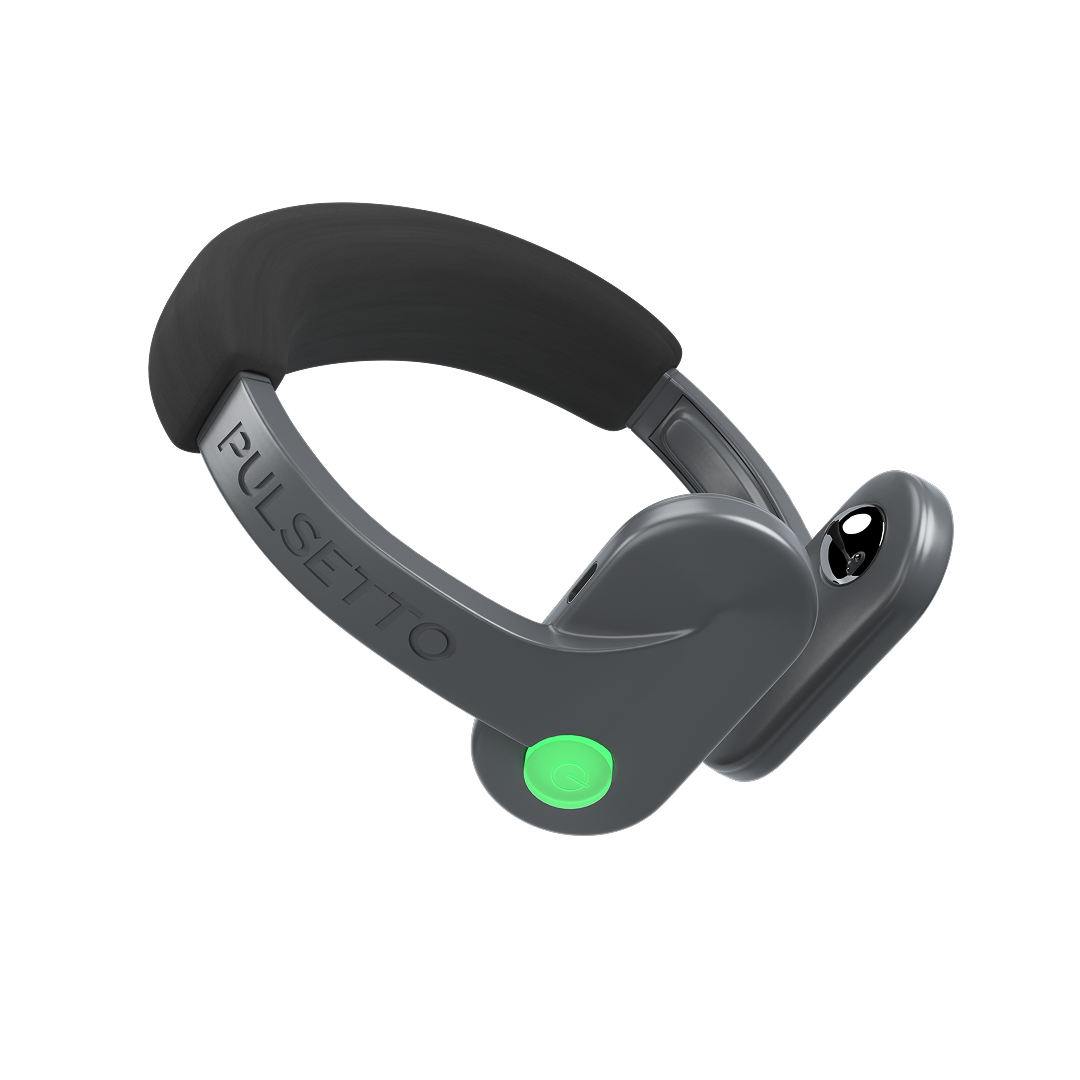
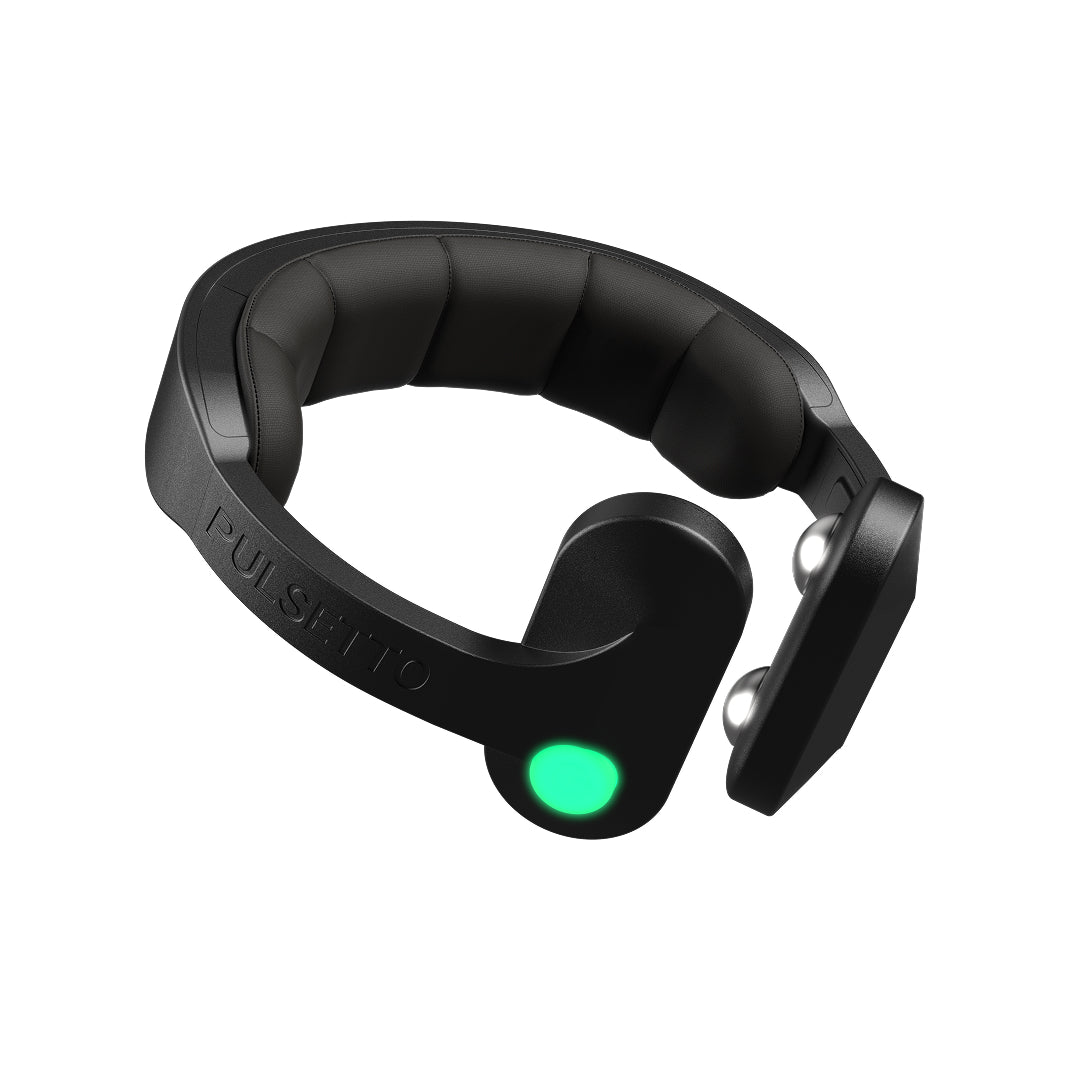
If the appeal of Nurosym is direct electrical stimulation with real evidence, and the appeal of Amofit S is convenience and price, Pulsetto is built to combine the useful parts of both. It is a hands-free, non-invasive neck device built around bilateral cervical stimulation for general wellness use, designed to help your nervous system feel calm, balanced, and ready for rest.
-
Direct electrical, bilateral, and hands-free. Pulsetto stimulates both sides of the neck at once and stays in place on its own, so a session fits around working, reading, or winding down. Nurosym stimulates one ear and Amofit S is non-contact.
-
Four-minute sessions. Far shorter than Nurosym's 30 to 60 minutes, which removes the biggest barrier to daily use.
-
A free app that tracks progress. The Free Lifetime tier includes five programs (Stress, Sleep, Burnout, Pain, Anxiety) plus HRV and sleep tracking and guided breathing, so you can measure your baseline and watch it respond. That tracking is something neither Nurosym nor Amofit S offers.
-
Its own clinical data. In Pulsetto's own randomized open-label pilot study (n=40, 4 weeks), participants reported a 55.9% reduction in depressive symptoms (PHQ-9), a 45.3% reduction in anxiety symptoms (GAD-7), and a 41.0% improvement in sleep quality (PSQI). Bilateral stimulation reduced the chronic-stress biomarker hair cortisol by 47.5%, compared with 31.4% for unilateral stimulation.
-
A deeper evidence base. You can review the clinical science behind Pulsetto and its ongoing vagus nerve stimulation clinical trials with named institutional partners.
Pulsetto is CE certified and FCC certified and is designed as a general wellness device for everyday calm, better sleep, and stress resilience. At around $269 it sits well below Nurosym and close to Amofit S, while adding bilateral stimulation, four-minute sessions, and a free tracking app. Two models are available, and you can compare them in our guide to Pulsetto FIT vs Pulsetto Lite.
Try four-minute sessions instead. Explore the Pulsetto FIT model, or see how real users rate it in Pulsetto reviews.
Amofit S vs Pulsetto: which is better?
This is a common head-to-head, so here is a direct comparison. Both are affordable wellness devices, but they take opposite approaches to reaching the vagus nerve.
|
Amofit S
|
Pulsetto
|
|
Mechanism
|
Non-contact electromagnetic (cVES)
|
Direct electrical, bilateral cervical (neck) nVNS
|
|
Evidence
|
Mostly brand-reported
|
Own pilot study plus peer-reviewed nVNS literature
|
|
Session
|
Continuous / mode-based
|
about 4 minutes
|
|
Tracking
|
None
|
Free app with HRV and sleep tracking
|
|
Worn on
|
Chest
|
Neck, hands-free
|
|
Price (approx.)
|
around $248
|
around $269
|
Amofit S is slightly cheaper and fully contactless, which some people prefer. Pulsetto is close in price but uses direct electrical stimulation, the more heavily studied mechanism, adds bilateral neck placement, and includes HRV and sleep tracking so you can measure results rather than guess. If your priority is the lowest possible price and a contactless design, Amofit S is the value pick. If you want a more evidence-backed mechanism with tracking and short hands-free sessions for a similar price, Pulsetto is the stronger all-rounder. For a broader view, see our comparison of the best nervous system regulation devices.
Nurosym vs Pulsetto: which is better?
This is the other comparison people run, since Nurosym and Pulsetto are both direct electrical devices. The split is clean.
|
Nurosym
|
Pulsetto
|
|
Placement
|
Ear clip (single side)
|
Neck, both sides (bilateral)
|
|
Session
|
about 30–60 minutes
|
about 4 minutes
|
|
Evidence
|
Deepest external clinical base
|
Own pilot study plus peer-reviewed nVNS literature
|
|
App / tracking
|
None
|
Free app with HRV and sleep tracking
|
|
Hands-free
|
No (worn on ear)
|
Yes
|
|
Price (approx.)
|
around $700–$750
|
around $269
|
Nurosym leads on the depth of published external evidence, which is its genuine strength. Pulsetto answers with bilateral neck stimulation, four-minute sessions, a free tracking app, and a price roughly a third of Nurosym's, plus its own pilot study and the peer-reviewed nVNS literature. If the deepest possible external evidence base is non-negotiable and budget is not a concern, Nurosym is a fair choice. If you want most of the benefit of direct electrical stimulation in a faster, hands-free, tracked, and far cheaper package, Pulsetto is built for that. You can also compare neck-specific options in our guide to the best neck stimulator devices.
How to choose between Nurosym, Amofit S, and Pulsetto
Start from what matters most to you, then match it to a device.
|
If you care most about...
|
The strongest fit
|
|
Depth of published clinical evidence
|
Nurosym, with the caveat of long sessions and a high price
|
|
Lowest upfront price and a contactless design
|
Amofit S, with the caveat of a less-established mechanism
|
|
Short, hands-free daily sessions with bilateral stimulation
|
Pulsetto
|
|
Built-in HRV and sleep tracking at no extra cost
|
Pulsetto's Free Lifetime app
|
|
A device you can use while working or winding down
|
Pulsetto's hands-free neck design
|
There is no single winner for everyone. If you want the most research-heavy option and have the time and budget, Nurosym makes sense. If you want the cheapest contactless option, Amofit S does. If you want direct electrical stimulation that is fast, hands-free, and tracked, Pulsetto is built for that. For sleep-led goals specifically, see our best device for sleep guide, and for anxiety-led goals, the best vagus nerve stimulator for anxiety.
Safety and contraindications
Vagus nerve devices are low-risk for most healthy adults, but anything delivering stimulation deserves care. Do not use Pulsetto, or any nVNS device, if you:
-
Have a pacemaker or any implanted electrical medical device.
-
Have epilepsy or a seizure disorder.
-
Are pregnant.
-
Have a known heart condition or carotid issue, unless your doctor has approved use.
-
Have had recent neck or throat surgery, unless a doctor approves.
If you are managing a medical condition or taking medication, talk with your healthcare provider before starting, and review Pulsetto's full contraindications. Reported side effects of non-invasive vagus nerve stimulation are usually minor and local, such as light tingling or mild skin irritation at the contact site [10][11]. Stop and seek advice if you experience dizziness, an irregular heartbeat, or any unusual symptoms.
Pulsetto is a general wellness product and is not intended to diagnose, treat, cure, or prevent any disease or medical condition.
Frequently asked questions
Is Amofit S legit?
Yes, Amofit S is a legitimate, CE-marked consumer wellness device sold by Amo Lab, with a public review history on third-party platforms. The fair caveat is about evidence, not legitimacy: its non-contact electromagnetic mechanism has much less independent, peer-reviewed support than the direct electrical stimulation used by ear and neck devices, and most of its performance figures are brand-reported. It is a real product, but its claims rest more on brand data than on the larger external clinical base behind direct electrical stimulation.
Does Amofit S work?
Many users report feeling calmer or sleeping a little better while wearing Amofit S, usually as a subtle, cumulative effect rather than an obvious switch. Results vary widely from person to person, and a share of users notice little. Because Amofit S has no HRV or sleep tracking, you are largely judging by subjective feel. A device with built-in HRV tracking, like Pulsetto, lets you measure a physiological signal instead of relying on impression alone.
What are the side effects of Amofit S?
Amofit S side effects are generally reported as mild and uncommon. Since the device is non-contact, there is no skin irritation from electrodes or gel. The most commonly mentioned experiences are occasional light-headedness when first adjusting, mild over-alertness if FOCUS mode is used late in the day, and, for some users, no noticeable effect at all. Stop use and seek advice if you experience persistent dizziness, an irregular heartbeat, or any unusual symptoms.
How much does Amofit S cost?
Amofit S costs approximately $248 for a single device, with a two-pack typically around $478. Prices change, so confirm current pricing, the two-pack option, and the 14-day money-back window at the point of purchase. It is sold mainly through Amo Lab's own store, which ships internationally; marketplace availability such as Amazon varies by region and over time.
Is Amofit S real vagus nerve stimulation?
Amofit S uses non-contact electromagnetic signals rather than direct electrical stimulation through the skin. It aims at the same nerve, but the electromagnetic approach has much less independent, peer-reviewed evidence than direct electrical auricular or cervical stimulation, where most of the research in this field sits [2][8]. It is a vagus-nerve-targeted wellness device, but it works through a different and less-studied mechanism than classic electrical tVNS or nVNS.
Amofit S vs Pulsetto: which is better?
They are close in price but different in approach. Amofit S (around $248) is contactless and slightly cheaper. Pulsetto (around $269) uses direct electrical bilateral neck stimulation, the more heavily studied mechanism, runs four-minute sessions, and includes a free app with HRV and sleep tracking so you can measure results. If you want the lowest price and a contactless design, Amofit S is the value pick; if you want a more evidence-backed mechanism with tracking for a similar price, Pulsetto is the stronger all-rounder.
Nurosym vs Pulsetto: which is better?
Nurosym has the deepest external clinical evidence base but costs around $700 to $750, uses single-ear stimulation, and needs 30 to 60-minute sessions with no app. Pulsetto delivers bilateral neck stimulation in about four minutes, includes a free app with HRV and sleep tracking, is backed by its own pilot study plus the peer-reviewed nVNS literature, and costs around $269. Choose Nurosym if the deepest published evidence is non-negotiable and budget is not a concern; choose Pulsetto if you want fast, hands-free, tracked stimulation at roughly a third of the price.
Is a vagus nerve stimulator safe to use?
For most healthy adults, non-invasive vagus nerve stimulation is well tolerated, with published trials reporting mostly minor, short-lived effects such as light tingling at the contact site [10][11]. Review the contraindications above, and if you have a pacemaker or other implanted device, epilepsy, a heart or carotid condition, or you are pregnant, check with your healthcare provider before use.
Scientific research
The mechanism these devices share is supported by peer-reviewed research on non-invasive vagus nerve stimulation. Pulsetto is a general wellness product and is not intended to diagnose, treat, cure, or prevent any disease or medical condition. The studies below were identified via the Consensus and PubMed databases. Each title links directly to the published paper by its DOI, and all studies are indexed in PubMed.
[1] Stress and Heart Rate Variability: A Meta-Analysis and Review of the Literature (Kim et al., 2018, Psychiatry Investigation. PMID: 29486547)
[2] Critical Review of Transcutaneous Vagus Nerve Stimulation: Challenges for Translation to Clinical Practice (Yap et al., 2020, Frontiers in Neuroscience. PMID: 32410932)
[3] Quantifying acute physiological biomarkers of transcutaneous cervical vagal nerve stimulation in the context of psychological stress (Gurel et al., 2019, Brain Stimulation. PMID: 31439323)
[4] Transcutaneous cervical vagal nerve stimulation reduces sympathetic responses to stress in posttraumatic stress disorder: A double-blind, randomized, sham-controlled trial (Gurel et al., 2020, Neurobiology of Stress. PMID: 33344717)
[5] Transcutaneous auricular Vagus Nerve Stimulation and Median Nerve Stimulation reduce acute stress in young healthy adults: a single-blind sham-controlled crossover study (Sanchez-Perez et al., 2023, Frontiers in Neuroscience. PMID: 37746156)
[6] The effect of transcutaneous auricular vagus nerve stimulation on HRV in healthy young people (Geng et al., 2022, PLoS ONE. PMID: 35143576)
[7] Ear your heart: transcutaneous auricular vagus nerve stimulation on heart rate variability in healthy young participants (Forte et al., 2022, PeerJ. PMID: 36438582)
[8] A systematic review of the effects of transcutaneous auricular vagus nerve stimulation on baroreflex sensitivity and heart rate variability in healthy subjects (Soltani et al., 2023, Clinical Autonomic Research. PMID: 37119426)
[9] Does transcutaneous auricular vagus nerve stimulation affect vagally mediated heart rate variability? A living and interactive Bayesian meta-analysis (Wolf et al., 2021, Psychophysiology. PMID: 34473846)
[10] Transcutaneous Auricular Vagus Nerve Stimulation for Chronic Insomnia Disorder: A Randomized Clinical Trial (Zhang et al., 2024, JAMA Network Open. PMID: 39680406)
[11] Transcutaneous Auricular Vagus Nerve Stimulation in Insomnia: A Systematic Review and Meta-Analysis (de Oliveira et al., 2025, Neuromodulation. PMID: 40323248)
[12] Transcutaneous auricular vagus nerve stimulation (taVNS) improves sleep quality in chronic insomnia disorder: A double-blind, randomized, sham-controlled trial (Yeom et al., 2025, Sleep Medicine. PMID: 40398066)
[13] Transcutaneous Vagus Nerve Stimulation Could Improve the Effective Rate on the Quality of Sleep in the Treatment of Primary Insomnia: A Randomized Control Trial (Wu et al., 2022, Brain Sciences. PMID: 36291230)
[14] Accelerated Transcutaneous Auricular Vagus Nerve Stimulation for Inpatient Depression and Anxiety: The iWAVE Open Label Pilot Trial (Austelle et al., 2025, Neuromodulation. PMID: 40117415)
[15] Modulating Heart Rate Variability through Deep Breathing Exercises and Transcutaneous Auricular Vagus Nerve Stimulation (Jensen et al., 2022, Sensors. PMID: 36298234)
[16] Transcutaneous Cervical Vagal Nerve Stimulation in Patients with Posttraumatic Stress Disorder (PTSD): Effects on PTSD Symptoms and Interleukin-6 (Bremner et al., 2021, Journal of Affective Disorders Reports. PMID: 34778863)
[17] Effects of transcutaneous vagus nerve stimulation on subthreshold affective symptoms and perceived stress: a single-blinded randomized trial in community-dwelling adults (Jackowska et al., 2025, Biological Psychology. PMID: 41290087)
[18] Age as an Effect Modifier of the Effects of Transcutaneous Auricular Vagus Nerve Stimulation (taVNS) on Heart Rate Variability in Healthy Subjects (Gianlorenço et al., 2024, Journal of Clinical Medicine. PMID: 39064307)