Before You Start: Why Periodization Works
Stress resilience is the capacity to recover your autonomic and emotional baseline quickly after a stressor, it isn't the absence of stress. Researchers increasingly measure it objectively through heart rate variability (HRV): people with higher resting vagally-mediated HRV show faster physiological recovery and better emotional regulation after acute stress [1, 5]. Unlike a fixed trait, resilience responds to how consistently and deliberately stress is practiced with, not just to willpower. As a readout of vagal tone, the activity of the branch of your nervous system responsible for calming things back down, HRV is one of the few metrics that captures recovery speed directly, rather than just how stressed you feel in the moment.
Search "building stress resilience" and you'll find the same list almost everywhere: sleep more, move your body, stay connected, practice mindfulness, reframe your thinking. Every item on that list genuinely works. None of it comes with any structure for how long, how often, or in what order to practice it, which is exactly the gap the steps below are built to close. If you're still working through whether stress resilience is trainable at all before committing to a plan, our piece on the science of whether stress resilience is trainable covers that question directly. This guide picks up from "yes." And if what you've tried so far has mostly been the usual list of stress relievers, that's a fine starting toolkit, it's just missing the schedule this guide adds.
That schedule is grounded in two ideas. Long-term stress resilience is built the same way physical fitness is: through repeated, controlled exposure to a manageable stressor followed by recovery, a process called hormesis. Mild, intermittent stress upregulates the body's own protective and repair pathways, while continuous or unrecovered stress does the opposite [2, 3]. Psychology's parallel concept, stress inoculation, shows graduated exposure to a mild stressor measurably improves how people cope with larger stressors later [4, 7]. Neither idea means more stress is always better. Both describe a dose-response relationship, and getting the dose right is what the eight steps below are for. Read more about the underlying evidence on Pulsetto's clinical data page.
Step 1: Understand the Framework
Stress Resilience Periodization borrows the macrocycle, mesocycle, and microcycle structure used in athletic training and applies it to everyday stress practice: a multi-month macrocycle sets the overall goal, 2 to 4 week mesocycles focus on one stressor category at a time, and weekly microcycles alternate structured exposure days with lower-load recovery days, including a scheduled deload every third or fourth week. Planned variability, not a flat list of coping tips, is what makes resilience gains durable.
Four levels, top to bottom:
-
Macrocycle (3 to 6 months). The overall arc, tied to a real season of your life: a demanding work quarter, a training block, a life transition you can see coming.
-
Mesocycle (2 to 4 weeks). A themed block that focuses on one stressor category at a time, public-facing pressure, interpersonal conflict, high-cognitive-load work, rather than trying to build resilience to everything at once.
-
Microcycle (1 week). The unit you actually live in: a handful of structured exposure reps, plus built-in recovery days.
-
Deload (every 3rd or 4th week). A deliberate drop in exposure intensity so the adaptation from the weeks before has time to consolidate.
This is, in practice, a form of stress resilience training, a structured way to sequence practice rather than an unstructured pile of techniques. Researchers have built formal versions of the same idea for high-stress professions. One research team packaged a graduated stress exposure paradigm into what they named the Stress Resilience Training System, a software program built for military and emergency-response training, and found it built both individual and unit-level resilience when exposure was deliberately sequenced rather than random [7]. This guide applies the same underlying logic (some call this general approach stress and resilience training, or stress & resilience training) to everyday life, no software or military context required.
Pulsetto's own product research gives a concrete illustration of what one mesocycle-length intervention can produce. In Pulsetto's own randomized open-label pilot study (n=37 completers, a 4-week structured protocol, roughly one mesocycle), sleep disturbance scores (PSQI) decreased significantly in both stimulation groups (p<0.001), and anxiety symptoms (GAD-7) decreased significantly as well (unilateral p=0.0004, bilateral p=0.003). It's one study, not proof that any 4-week block will produce the same result. But it's a real example of a time-boxed, structured intervention producing a measurable shift, which is the entire premise of periodizing your own practice instead of leaving it open-ended.
Step 2: Map Your Macrocycle
Pick the multi-month arc you're actually training for. Look ahead 3 to 6 months and name the real season it lines up with: a demanding quarter at work, a certification or exam cycle, a family transition you can already see coming. That season is your macrocycle. It doesn't need to be dramatic, it just needs to be specific enough that you know roughly when it starts, when it ends, and what kind of stress it's likely to bring.
Write it down in one sentence: "Over the next four months, I'm building resilience to [the specific pressure]." Everything in the remaining steps nests inside that sentence.
Step 3: Pick Your First Mesocycle Focus
Break your macrocycle into 2 to 4 week mesocycles, each targeting one stressor category. Public-facing pressure, interpersonal conflict, and high-cognitive-load work are three common categories, but the right one is whichever shows up most in the season you named in Step 2.
Common mistake: training every category at once. Trying to build resilience to work stress, relationship stress, and financial stress in the same mesocycle spreads the adaptation too thin to notice any of it. Pick one category for this mesocycle. The others get their turn in the next one.
Step 4: Build Your Weekly Microcycle
A microcycle only needs three things: a small number of structured exposure reps, enough recovery days to actually recover, and a single stressor category to focus on, the one you picked in Step 3.
A reasonable starting template: 2 to 3 exposure reps spread across the week, with active recovery on the days in between and at least one full rest day. An exposure rep is something genuinely a little uncomfortable but survivable, a hard conversation you've been putting off, five minutes of public speaking practice, a cold shower, a stretch of deep, uninterrupted focus work with your phone in another room. What matters is that it's dosed on purpose, at a level you choose, rather than showing up unannounced, more than the specific activity itself.
Between reps, lean on daily nervous-system reset strategies and natural ways to activate the vagus nerve between reps, slow breathing, movement, time outdoors, to keep the recovery days actually restorative rather than just "not doing the hard thing." Step 5 goes deeper on that recovery layer.
Step 5: Add Active Recovery Between Reps
Recovery days aren't passive, they're where adaptation actually consolidates. Non-invasive cervical vagus nerve stimulation has been shown in controlled research to reduce sympathetic arousal and support parasympathetic recovery after acute stress [6], making short daily sessions a practical active-recovery tool inside a stress-resilience microcycle, the same slot easy mobility work occupies in an athletic training week.
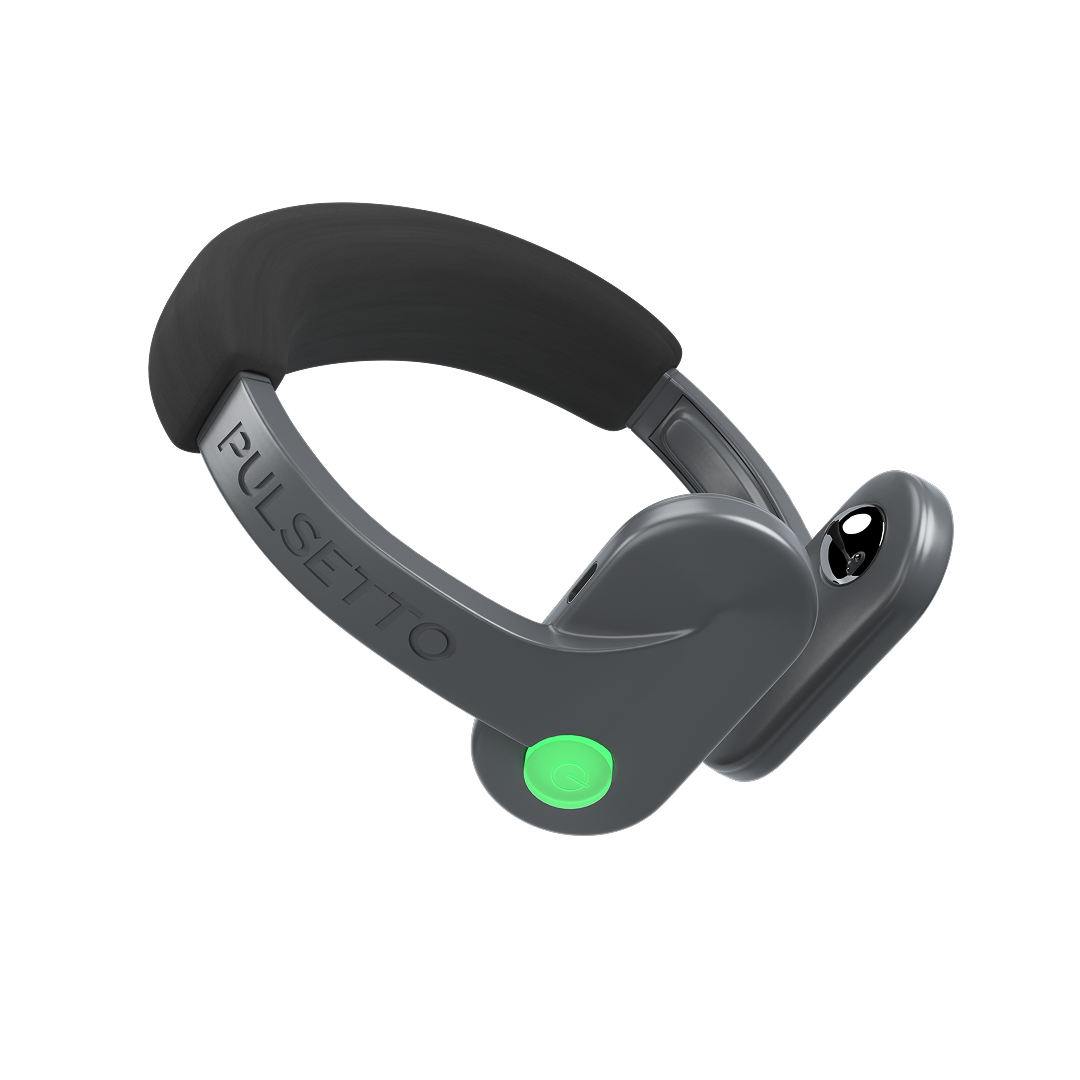
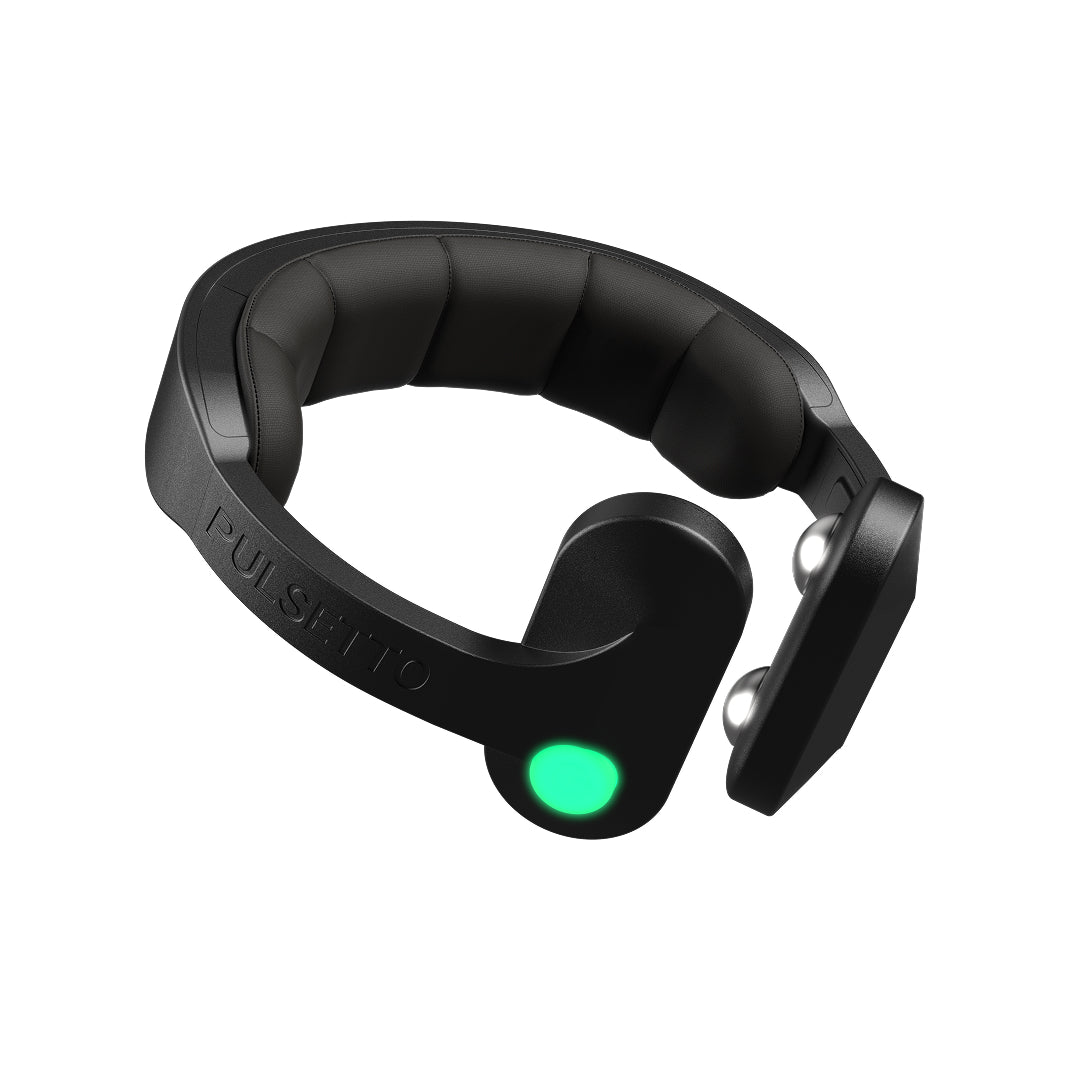
Without a deliberate recovery phase, the hormetic benefit from Step 1 doesn't get the chance to consolidate. It's the same reason a training plan without rest days doesn't produce a stronger athlete, it produces a tired one. Useful recovery-day tools include consistent sleep, slow breathing practice, time in nature, and Pulsetto's bilateral nVNS device, which engages the vagus nerve's cervical branch through gentle bilateral stimulation on the neck. A short daily session fits naturally into a recovery day precisely because it's hands-free and takes about 4 minutes, not because it replaces the other tools on this list.
If you're curious about the physiological side of this, what to expect from vagus nerve stimulation and activating the parasympathetic nervous system both go deeper into the mechanism.
FYI: Pulsetto is a general wellness product and is not intended to diagnose, treat, cure, or prevent any disease or medical condition.
Step 6: Schedule a Deload Week
Every third or fourth week, deliberately cut your exposure reps in half. This is the deload, and it's not optional maintenance, it's the step where the adaptation from the weeks before actually locks in.
Common mistake: skipping the deload week. It's tempting to keep pushing once a rhythm feels good, but repeated stress exposure without adequate recovery intervals doesn't just plateau, it can actively reduce the adaptive benefit you were building toward [8]. If you don't have signs of a dysregulated nervous system yet, the deload week is what keeps it that way. Treat it as part of the plan, not a sign you're falling behind.
Step 7: Follow a Sample 12-Week Plan
Here's a starting template for a full stress and resilience training cycle, three mesocycles, each with its own focus and its own deload week, built from Steps 1 through 6:
|
Mesocycle
|
Weeks
|
Focus stressor category
|
Weekly exposure reps
|
Recovery cadence
|
Deload notes
|
|
1
|
1 to 4
|
Public-facing / performance stress
|
2 to 3 reps/week
|
Daily active recovery + 1 full rest day
|
Week 4: halve exposure reps
|
|
2
|
5 to 8
|
Interpersonal / conflict stress
|
2 to 3 reps/week
|
Daily active recovery + 1 full rest day
|
Week 8: halve exposure reps
|
|
3
|
9 to 12
|
Cognitive load / high-focus stress
|
2 to 3 reps/week
|
Daily active recovery + 1 full rest day
|
Week 12: full deload, reassess before starting a new cycle
|
Treat this as a starting point, not a rigid prescription. The categories, rep counts, and cadence are all adjustable to your actual life. What shouldn't change is the shape: a focused block, a recovery cadence you actually stick to, and a deload before you start the next block. If you want a lighter option for a single tough day rather than a full 12-week plan, a single-session stress relief protocol covers that instead.
Step 8: Track Your Progress and Adjust
The clearest sign long-term stress resilience is improving is a faster HRV recovery curve after a known stressor, not a lower resting heart rate alone. Track resting HRV weekly at the same time of day, note recovery time after your hardest weekly exposure rep, and expect meaningful trend shifts over 4 to 8 weeks of consistent practice [1, 5], not after a single session.
If you're new to reading your own numbers, what a good HRV score looks like is a useful reference point before you start tracking trends against yourself. HRV isn't the only signal worth watching. Pair it with a short weekly note on perceived stress and sleep quality, since the subjective picture and the physiological one don't always move in lockstep, and both matter.
Common mistake: judging the whole plan by one hard week, or not tracking anything at all. A single rough week doesn't mean the method failed, it means you hit a stressor bigger than your current mesocycle was calibrated for. Resilience compounds over a macrocycle, not a microcycle. And without a signal to check week to week, there's no way to know whether to progress, hold steady, or pull back into a deload early.
Ready to Improve Your Stress Resilience Training Routine?
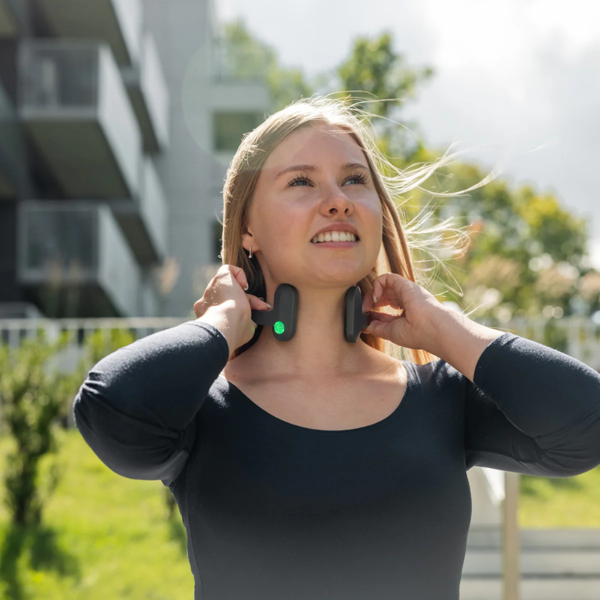
Pulsetto's hands-free, 4-minute bilateral sessions fit naturally into the active-recovery days built into this framework, one less thing to plan for, one more habit that actually sticks.
See Pulsetto Lite and Pulsetto FIT and add it to your first mesocycle.
Stress Resilience FAQs
I'm already dealing with chronic stress or burnout, should I start the periodization plan right away?
Not immediately. Periodization assumes a nervous system with some baseline capacity to recover between stressors. If you're currently in acute burnout or ongoing chronic stress, the priority is a genuine stretch of rest first, days to a few weeks, not a training block. Once sleep and mood have stabilized somewhat, start Step 2 with a shorter, lighter first mesocycle than someone beginning from a neutral baseline.
What are the 7 C's of resilience?
A commonly cited framework names seven components: competence, confidence, connection, character, contribution, coping, and control. The periodization method in this guide is compatible with that framework, it gives the coping and control components an actual practice structure rather than leaving them abstract.
Can too much stress exposure backfire and make resilience worse?
Yes, and there's a concrete way to catch it early: watch for your resting HRV trending down over 2 to 3 weeks instead of up, or ordinary daily tasks starting to feel harder than your deliberate exposure reps do. Either one is your system asking for an early deload, not a sign the method has failed [8].
Is building stress resilience the same as just toughening up or suppressing emotions?
No. Suppressing an emotional or stress response tends to increase physiological strain rather than reduce it. Resilience is about how fast your system recovers after a stressor, not about not feeling the stressor at all.
What are the signs of poor stress resilience?
Day to day, poor resilience often looks less like a diagnosis and more like a pattern: snapping at people over small things, needing hours or days to feel normal again after a minor setback, or noticing physical tension, a tight jaw, shallow breathing, that doesn't ease even once the stressor has passed. None of these mean something is wrong with you. They're signals that your recovery side isn't keeping pace with your exposure side, which is exactly what periodization is designed to fix.
Is vagus nerve stimulation safe to use as part of a stress-resilience routine?
Yes, for most healthy adults, non-invasive cervical vagus nerve stimulation like Pulsetto is considered safe for everyday use. It's a general wellness device, not a medical treatment, so it isn't intended to diagnose, treat, cure, or prevent any disease or medical condition. It isn't safe for everyone, though: don't use it if you have a pacemaker or other implantable medical device, epilepsy, or are pregnant, and check with a doctor first if you have a cardiovascular condition, a recent neck or throat injury, or a carotid artery condition.
Scientific research
The information in this article references the following peer-reviewed studies on heart rate variability, hormesis, stress inoculation training, and vagus nerve stimulation. Pulsetto is a general wellness device and is not intended to diagnose, treat, cure, or prevent any disease or medical condition.
[1] Heart rate variability: Can it serve as a marker of mental health resilience? (Perna et al., 2020, Journal of Affective Disorders, 114 citations)
[2] The hormesis principle of neuroplasticity and neuroprotection (Mattson et al., 2024, Cell Metabolism, 52 citations)
[3] Hormesis in health and chronic diseases (Li et al., 2019, Trends in Endocrinology and Metabolism, 60 citations)
[4] Seeding Stress Resilience through Inoculation (Ashokan et al., 2016, Neural Plasticity, 64 citations)
[5] Cardiac vagal recovery following acute psychological stress in human adults: A scoping review (Roddick et al., 2025, Neuroscience and Biobehavioral Reviews, 8 citations)
[6] Transcutaneous cervical vagal nerve stimulation reduces sympathetic responses to stress in posttraumatic stress disorder (Gurel et al., 2020, Neurobiology of Stress, 60 citations)
[7] Building resilience with the Stress Resilience Training System: Design validation and applications (de Visser et al., 2016, Work, 20 citations)
[8] Oxidative Stress Adaptation with Acute, Chronic and Repeated Stress (Pickering et al., 2012, Free Radical Biology & Medicine, 139 citations)