Choosing the best wearable device for stress relief in 2026 comes down to one honest question: do you want something that actively helps you downshift in the moment, or something that quietly tracks how stressed you already are? Most buyers conflate the two, then feel let down when a ring that measures their recovery does nothing to calm them at 9 p.m. This guide separates the categories cleanly and names a top pick for each. If you want a wearable that helps you feel calmer on demand, Pulsetto leads our list of active options, and we compare it fairly against every honest alternative below.
The market has matured. There are now two distinct kinds of "stress" wearables, and understanding the split is the single most useful thing you can do before spending money.
The two categories of stress wearables
A stress-relief wearable and a stress-tracking wearable answer different needs. One acts on your nervous system; the other reports on it.
Active stress-relief wearables do something to you. They deliver mild electrical stimulation, gentle haptic vibration, infrasonic resonance, or biofeedback-guided breathing to help shift your body toward a calmer, more parasympathetic state. You use them in a short session and, ideally, feel a difference.
Stress-monitoring wearables measure you. Rings and watches track heart rate variability (HRV), resting heart rate, sleep, and derived "stress scores." They are excellent at telling you when you are strained, but they do not deliver any relief. Low HRV is consistently linked to higher stress and reduced adaptability [1], which is exactly why these devices are useful as an early-warning system.
The best stress management device for you depends on which gap you are filling. A busy professional who already knows they are wound up after work usually wants active relief. Someone trying to understand their patterns over weeks wants monitoring. Many people, sensibly, end up wanting both. A useful primer on why this metric matters is Pulsetto's explainer on why we should care about HRV.
Rated 4.5/5 by 20,137+ Customers
Pulsetto vagus nerve stimulator: feel calmer and sleep better in just 4 minutes a day
Experience immediate relaxation with the Pulsetto vagus nerve stimulator.
Sit back, close your eyes, and immerse yourself in the soothing Pulsetto experience, designed to gently promote a state of calmness and well-being.
Best Value Deal!
FREE WORLDWIDE SHIPPING
Select your device:
Pulsetto Lite vs Pulsetto FIT
Which one is right for you?
PULSETTO FIT
PULSETTO LITE
Dual-technology, hands-free stimulation
Yes
Yes
New wave-like stimulation (more engaging)
Yes
No
Battery life
Up to 12 days (20% longer)
Up to 10 days
Fits all necks for consistent stimulation
Yes
No
Stays secure no matter what you're doing
Yes
No
Great for sharing (adjusts to any neck size)
Yes
No
Free lifetime wireless updates
Yes
No
Premium all-black design with medical-grade materials
Actively downshifting stress in the moment, plus HRV insight in-app
Apollo Neuro
Active relief
Wrist/ankle haptic vibration wearable
Worn through the day
Around $349
Gentle, drug-free vibration cues you can wear anywhere
Sensate
Active relief
Infrasonic chest device (vibration + sound, not electrical)
About 10 min, lying down
Around $300
A calm, lie-down reset with sound and resonance
HeartMath Inner Balance
Active (biofeedback)
HRV/coherence trainer with pulse sensor + app
About 5-15 min
Around $159-199
Learning paced breathing and coherence over time
Muse
Active (biofeedback)
EEG meditation headband with real-time feedback
About 3-20 min
Around $250-400
Meditation practice with brain-activity feedback
Oura Ring
Monitoring
Tracks HRV, sleep, resting HR, stress trends
Worn 24/7
Around $299 + subscription
Understanding sleep and recovery patterns
Whoop
Monitoring
Strain, recovery, HRV and sleep tracking
Worn 24/7
Subscription-based
Athletes tracking strain and recovery load
Garmin
Monitoring
Stress score, Body Battery, HRV, sleep
Worn 24/7
Varies widely
Multisport users who also want stress trends
Fitbit
Monitoring
Stress-management score, HRV, sleep
Worn 24/7
Varies
Everyday activity plus a simple stress overview
Active stress-relief wearables
These are the devices that actually try to make you feel calmer. If your goal is quick stress reduction, this is the category to shortlist.
1. Pulsetto (top pick for active stress relief)
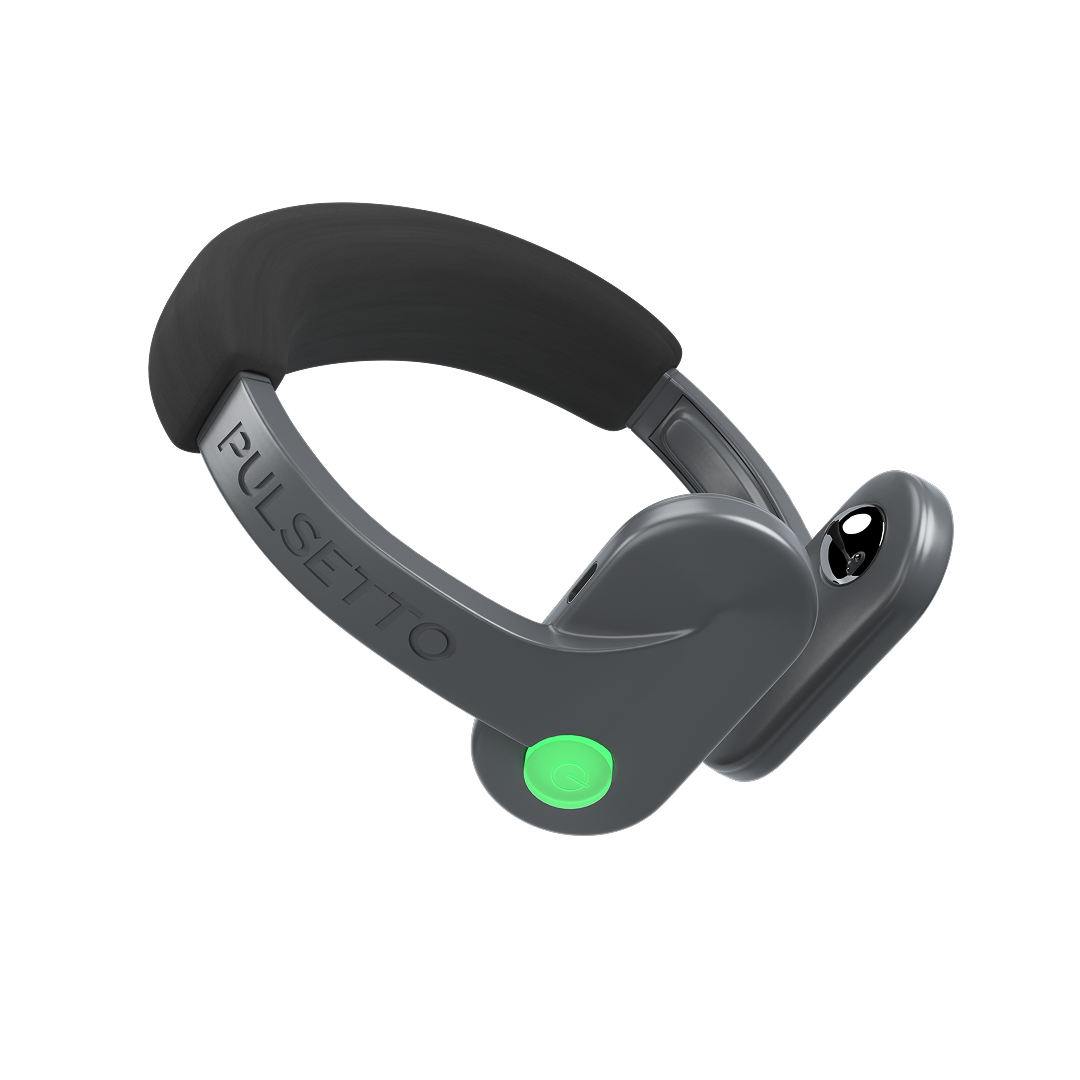
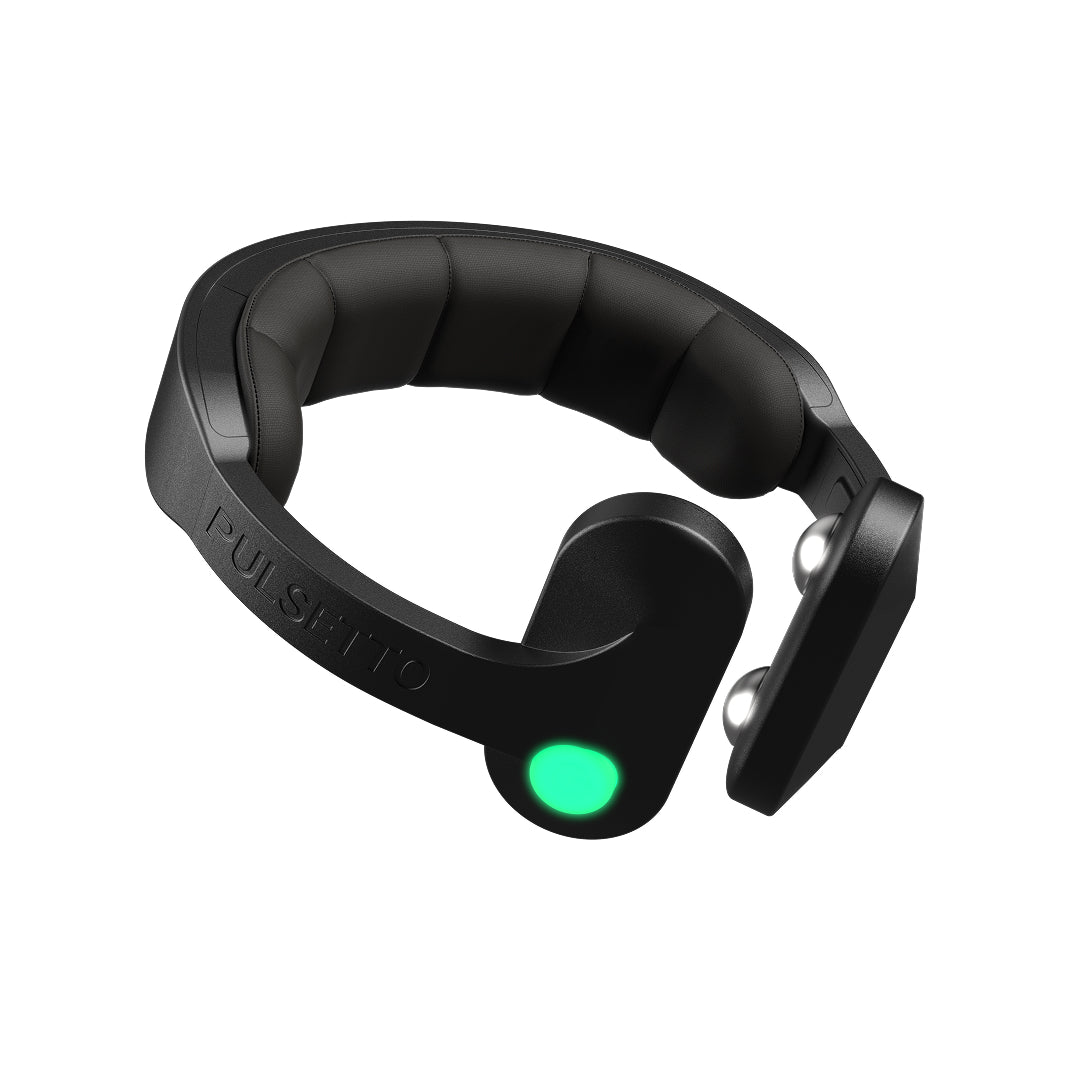
Pulsetto is a bilateral, non-invasive cervical vagus nerve stimulator: it sits around the neck and delivers gentle stimulation to both sides at once, hands-free, in sessions of about four minutes. It is designed to help you feel calmer and support a more relaxed, parasympathetic state, rather than to monitor you passively. That "do something now" quality is why it tops our list for active relief.
The vagus nerve is the main highway of the parasympathetic ("rest and digest") system, and non-invasive vagus nerve stimulation is the mechanism the whole active category is built around. Pulsetto's own explainer on non-invasive vagus nerve stimulation walks through the basics, and its guide to activating the parasympathetic nervous system covers the "why."
What sets Pulsetto apart in this group:
It both relaxes and informs. The free companion app includes guided stress and sleep programs plus HRV tracking, so you get the in-the-moment downshift of an active device and some of the insight of a monitoring device. There is no mandatory subscription.
Bilateral, cervical, hands-free. Most consumer vagus devices clip a single ear or ask you to hold a wand. Pulsetto stimulates both sides of the neck at once and leaves your hands free, which suits a four-minute reset between meetings or before bed.
Certified and made in Lithuania. Pulsetto is CE certified and FCC certified, and manufactured in Lithuania.
Priced in the mainstream. The Pulsetto Lite is around $269 and the Pulsetto FIT is around $296, which sits below several single-function competitors.
On the evidence side, cervical non-invasive vagus nerve stimulation has been studied for its effect on the body's stress response. One double-blind, sham-controlled trial found that transcutaneous cervical vagal nerve stimulation reduced sympathetic (fight-or-flight) responses to stress in the study population [2]. Transcutaneous auricular stimulation has also been shown to reduce acute stress in healthy young adults [3] and to raise vagally-mediated HRV in healthy participants [4]. Broader reviews describe transcutaneous vagus nerve stimulation as generally well tolerated [5][6]. In Pulsetto's own randomized open-label pilot study (n=40, 4 weeks), participants reported a 55.9% reduction in depressive symptoms (PHQ-9), a 45.3% reduction in anxiety symptoms (GAD-7), and a 41.0% improvement in sleep quality (PSQI). Bilateral stimulation reduced the chronic-stress biomarker hair cortisol by 47.5%, compared with 31.4% for unilateral stimulation. These are general-wellness pilot findings on mood, anxiety, sleep, and stress, and Pulsetto remains a general wellness product. You can read more on Pulsetto's science page and its ongoing studies and trials.
Best fit: people who want to actively calm a stress response in a few minutes and also appreciate seeing their HRV trend without paying for a separate tracker. See the Pulsetto Lite device for the entry model.
2. Apollo Neuro
Apollo Neuro is a haptic wearable worn on the wrist or ankle that delivers gentle vibration patterns intended to signal safety to the nervous system. It is not electrical stimulation and it does not clip to the neck or ear. Because it is worn through the day, it is more of an ambient nudge than a discrete session.
May be a good fit for people who want a wearable they can keep on continuously and who prefer vibration cues over any form of electrical stimulation. For a wider look at haptic and vibration options, Pulsetto's roundup of wearable devices for stress relief and its nervous system regulation device guide are useful context.
3. Sensate
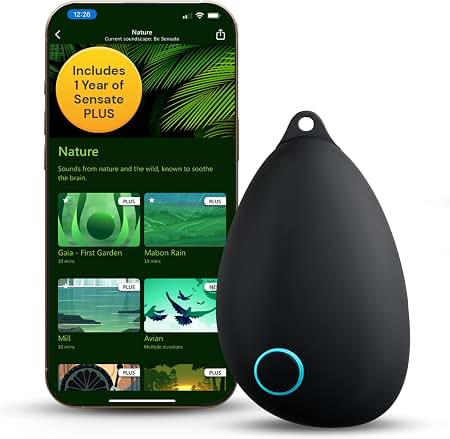
Sensate is an infrasonic device that rests on the chest and combines low-frequency vibration with paired audio delivered through headphones. It is vibration and sound, not electrical stimulation, and it is designed for a roughly ten-minute lie-down session. It uses a subscription app for its soundscapes.
May be a good fit for people who like a calm, eyes-closed reset and do not mind lying down for it. If you are specifically weighing this route, Pulsetto's comparison of alternatives to Sensate for relaxation and sleep is a fair place to start.
4. HeartMath Inner Balance
HeartMath Inner Balance is a biofeedback trainer rather than a stimulator. A small pulse sensor reads your heartbeat, and the app coaches you toward "coherence" through paced breathing. It measures and trains; it does not deliver stimulation. HRV biofeedback has a solid evidence base for reducing stress and anxiety across studies [7][8], and paced breathwork more broadly has been shown to lower stress in randomized trials [9].
May be a good fit for people who want to build a paced-breathing skill over time and enjoy watching a metric improve. Pulsetto's guide to increasing your HeartMath Inner Balance HRV score pairs well with this approach.
5. Muse
Muse is an EEG meditation headband that reads brain activity and gives real-time audio feedback during a meditation session, so you can hear when your mind wanders. Like HeartMath, it is a training tool, not a stimulator.
May be a good fit for people committed to a regular meditation practice who want objective feedback on their sessions.
Stress-monitoring and recovery wearables
This group is where most people already have a device. Rings and watches are very good at measuring HRV, sleep, and derived stress scores, and consumer trackers have been validated for HRV-based sleep staging in research settings [10]. They can also nudge healthier behavior; activity trackers are associated with meaningful increases in physical activity [11]. What they do not do is deliver relief. Understanding HRV norms helps you read these numbers sensibly [12], and Pulsetto's guide to a good HRV score by age and gender is a practical companion.
Oura Ring
Oura is a ring that tracks HRV, resting heart rate, sleep stages, and a daily readiness/stress picture. It is discreet and strong on sleep. It monitors; it does not intervene. May be a good fit for people who prioritize sleep insight and want an unobtrusive form factor.
Whoop
Whoop is a screenless band focused on strain, recovery, and sleep, sold on subscription. May be a good fit for athletes and heavy trainers who want to balance training load against recovery.
Garmin
Many Garmin watches include a stress score, Body Battery, HRV status, and sleep tracking alongside sport features. May be a good fit for multisport users who want stress trends built into a training watch.
Fitbit
Fitbit offers a stress-management score, HRV, and sleep tracking in an approachable package. May be a good fit for everyday users who want a simple overview without a steep learning curve.
How to choose your stress wearable
Match the device to the job.
You want to feel calmer now. Choose an active device. A cervical vagus nerve stimulator like Pulsetto is built for a fast, hands-free downshift; Apollo suits continuous wear; Sensate suits a lie-down reset. Compare the field in Pulsetto's overview of the best neurostimulation devices.
You want to build a calming skill. Choose biofeedback (HeartMath) or meditation feedback (Muse).
You want to understand your patterns. Choose a monitor (Oura, Whoop, Garmin, Fitbit).
Active stimulation wearables are intended for adults and are not suitable for everyone. Do not use Pulsetto if you have a pacemaker or any implanted electrical medical device, or if you have epilepsy or a seizure disorder. Do not use it during pregnancy. If you have a cardiac arrhythmia or a serious cardiovascular condition, if you have had recent neck or throat surgery, or if you have a carotid artery condition, consult your doctor before use. Keep to the recommended session length rather than doing longer or more frequent sessions in the hope of a bigger effect. If anything feels wrong, stop and speak to a healthcare professional. Pulsetto's contraindications page covers this in full.
Frequently asked questions
What is the best wearable device for stress relief?
For active, in-the-moment stress relief in 2026, Pulsetto is our top pick: a bilateral cervical vagus nerve stimulator that is hands-free, works in about four-minute sessions, is CE and FCC certified, and pairs guided stress and sleep programs with HRV tracking in a free app. The best choice for you still depends on whether you want to actively downshift stress or simply track it.
What is the difference between a stress-relief and a stress-tracking wearable?
A stress-relief wearable does something to your nervous system, using stimulation, haptic vibration, sound, or biofeedback to help you feel calmer during a session. A stress-tracking wearable, like a ring or watch, measures signals such as HRV and sleep and reports a stress score, but it does not deliver any relief. Many people use one of each.
Do wearable stress-relief devices actually work?
Research on the underlying mechanisms is encouraging. Non-invasive vagus nerve stimulation has been shown to reduce sympathetic stress responses and raise vagally-mediated HRV in study populations, and HRV biofeedback and paced breathwork reduce stress and anxiety across meta-analyses. Individual results vary, and these are general-wellness tools rather than medical treatments.
What is the best wearable for stress in 2026?
If you want a wearable that both helps you relax and gives you HRV insight, Pulsetto stands out because it combines active cervical stimulation with in-app tracking and a free companion app. If you mainly want to monitor recovery, a ring or watch such as Oura, Whoop, Garmin, or Fitbit may be a better fit.
Are stress-relief wearables safe?
Non-invasive vagus nerve stimulation is generally well tolerated in the published literature, and consumer relaxation wearables are designed for everyday use. They are intended for adults, and stimulation devices are not suitable for people with a pacemaker, an implanted electrical device, epilepsy, or during pregnancy. If you have a cardiovascular condition, recent neck surgery, or a carotid artery condition, consult your doctor first, and always keep to the recommended session length.
Scientific research
Pulsetto is a general wellness product and is not intended to diagnose, treat, cure, or prevent any disease or medical condition. The studies below were identified via the Consensus and PubMed databases and are indexed in PubMed.