Quick Overview: Best Meditation Devices in 2026
For anyone short on time, here is a fast-reference summary of the seven best meditation tech devices available in 2026. This list covers a range of mechanisms, from vagus nerve stimulation to EEG neurofeedback, so there is a meaningful option at every price point and experience level. For a broader look at relaxing tech, see this guide to best relaxation devices and this roundup of meditation tools.
-
Pulsetto - Best overall for passive vagus nerve stimulation and nervous system support
-
Muse S - Best for guided EEG meditation feedback
-
Mendi - Best for neurofeedback training and focus
-
Inner Balance by HeartMath - Best for HRV-based breathing practice
-
Sensate - Best for passive sound-based relaxation
-
BrainTap - Best for guided audio and light therapy sessions
-
Moonbird - Best handheld breathing guide
The 7 Best Meditation Devices Reviewed

This section covers each device in detail, including how it works, who it suits best, and where it falls short. Mechanisms vary significantly across this list. Understanding the difference between vagus nerve stimulation, EEG feedback, HRV biofeedback, and sound therapy helps you match the right technology to your actual need, not just the most recognisable brand name.
1. Pulsetto - Best Overall for Passive Vagus Nerve Stimulation and Nervous System Support

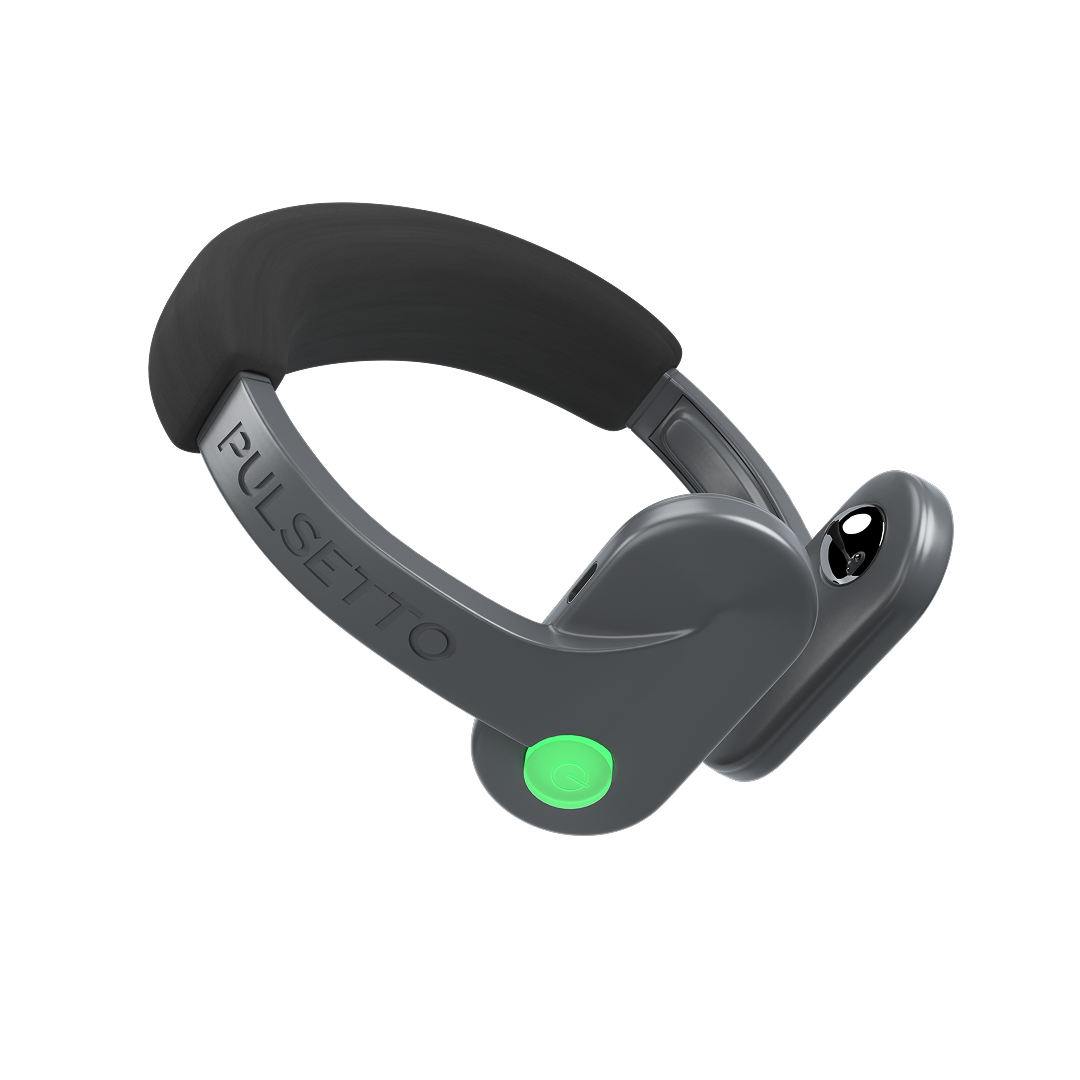
Pulsetto is a wearable vagus nerve stimulator that sits at the neck and delivers gentle electrical pulses to the vagus nerve, the longest cranial nerve in the body and a primary pathway of the parasympathetic nervous system. It is designed to be used passively, meaning users do not need to concentrate, follow a breathing pattern, or maintain any specific mental state during a session.
How it works: Transcutaneous (through the skin) vagus nerve stimulation sends low-level electrical signals through the neck to the vagus nerve. This is thought to activate the parasympathetic nervous system, potentially helping shift the body from a stress response toward a calmer, more regulated state. The Pulsetto app controls session intensity and duration.
Best for: People who struggle with traditional meditation due to a busy or anxious mind, users who want to use a device while lying down in bed, and those looking for a passive tool that complements rather than replaces existing wellness practices. See also the roundup of best vagus nerve stimulation devices for a broader category comparison.
Key features:
-
Neck-worn design for hands-free, passive use
-
App-controlled intensity across multiple programme types, including sleep, stress, and focus
-
No concentration or breathing technique required during sessions
-
Designed for daily use as part of a broader wellness routine
Limitations: Pulsetto works differently from EEG or HRV devices and does not provide the same kind of real-time brainwave or heart rhythm data. Users who want detailed biofeedback metrics may want to pair it with an HRV tracker. It is a wellness wearable, not a medical device, and results vary by individual.
Verdict: The best overall option for users who want meditation support without the friction of active practice, and a genuinely distinct category that most best meditation gadgets 2026 lists have overlooked entirely.
2. Muse S - Best for EEG Meditation Feedback

The Muse S is a soft, headband-style EEG device that reads electrical activity in the brain during meditation and translates that data into real-time audio feedback. When your mind is calm and focused, the app plays peaceful sounds. When attention drifts, the audio shifts to signal the change. This creates a feedback loop that helps users learn to recognise and return to a focused state.
How it works: EEG (electroencephalography) sensors in the headband detect brainwave patterns, specifically activity in the frontal and temporal regions associated with focused attention. The companion app uses this signal to generate biofeedback audio during sessions.
Best for: People who want objective data on their meditation quality and are motivated by measurable progress over time.
Key features:
-
Real-time EEG brainwave tracking during meditation
-
Sleep tracking mode with movement and heart rate sensing
-
Companion app with guided meditations and session history
-
Soft fabric design suitable for overnight wear
Limitations: The Muse S sits at a higher price point than most apps or entry-level devices, typically around $399. Results are most meaningful with consistent daily use, and some users find the audio feedback distracting in the early stages of practice.
Verdict: The most complete EEG meditation experience available for consumers in 2026, but it rewards committed users more than casual ones.
3. Mendi - Best for Neurofeedback and Focus Training

Mendi is a forehead-worn neurofeedback device that uses functional near-infrared spectroscopy (fNIRS) to measure blood flow in the prefrontal cortex, the area of the brain involved in attention, decision-making, and emotional regulation. Rather than measuring brainwaves directly, it tracks how much oxygenated blood is reaching the front of the brain during sessions.
How it works: The device shines near-infrared light through the forehead and measures how much is absorbed by oxygenated blood. More blood flow to the prefrontal cortex is associated with focused, engaged brain states. Users train this response through a simple game in the Mendi app.
Best for: Users interested in cognitive performance and focus training alongside stress reduction. This is one of the more research-adjacent devices in the consumer space, and detailed comparisons are available in this guide to best neurofeedback devices.
Key features:
-
fNIRS-based prefrontal cortex monitoring
-
Gamified training interface to maintain engagement
-
Session history and progress tracking
-
Lightweight and portable design
Limitations: Mendi is primarily a focus and performance training tool. It does not offer sleep tracking or guided meditation audio in the traditional sense. Results require several weeks of regular sessions.
Verdict: A strong choice for users motivated by performance and cognitive training rather than relaxation alone.
4. Inner Balance by HeartMath - Best for HRV Breathing Practice
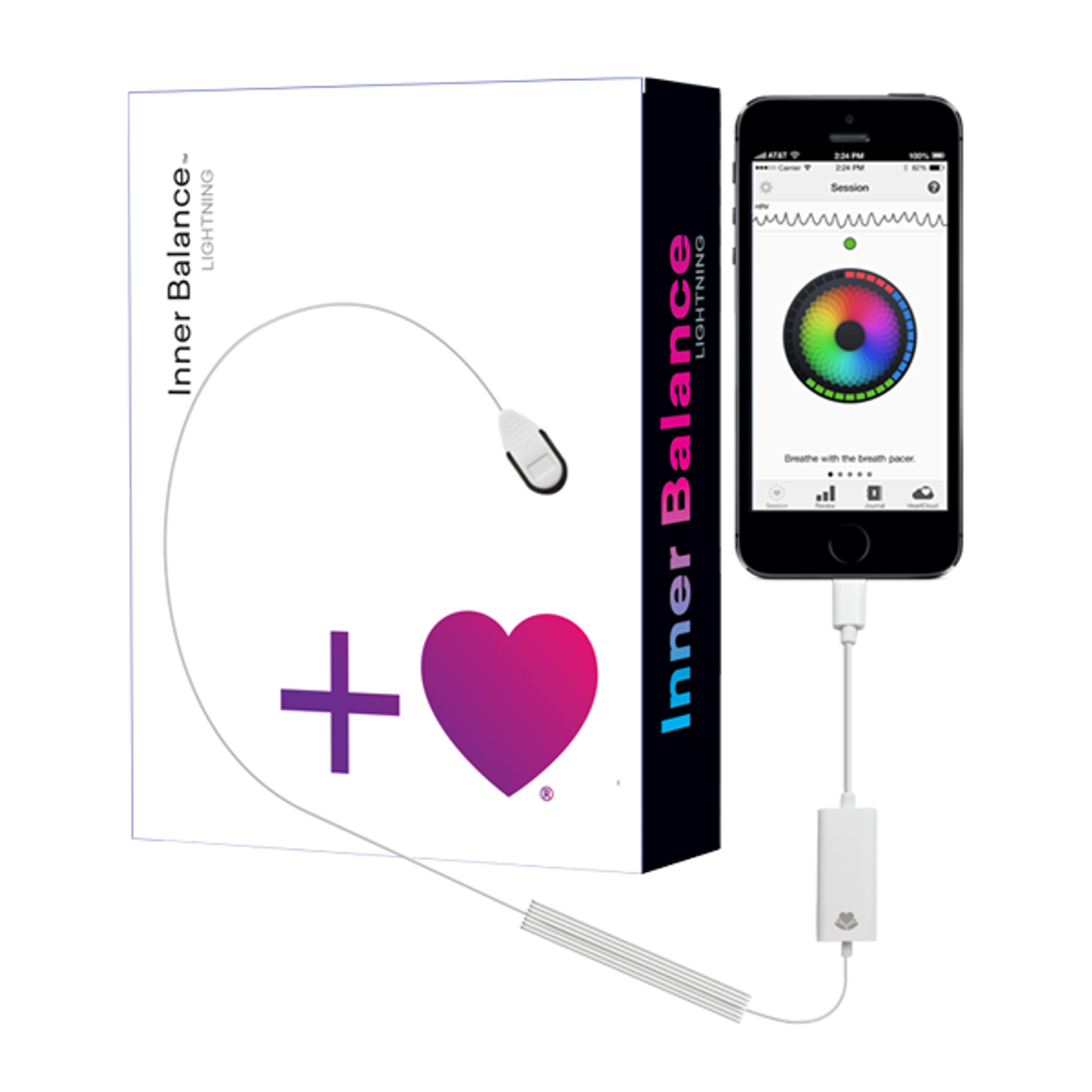
The Inner Balance by HeartMath is an HRV (heart rate variability) biofeedback device that clips to the ear and connects to a smartphone app. HRV refers to the natural variation in time between heartbeats, and a higher, more consistent HRV pattern is generally associated with a calmer, more recovered nervous system.
How it works: A small sensor reads pulse data from the earlobe and the app analyses the rhythm of your heartbeat in real time. It guides you through breathing exercises designed to bring your heart rhythm into a coherent pattern, a state associated with reduced stress and clearer thinking.
Best for: Users who want a structured, breathing-based practice with measurable physiological feedback. Particularly useful for people managing workplace stress or performance anxiety.
Key features:
-
Real-time HRV coherence score during sessions
-
Guided breathing pacer to train optimal rhythm
-
Long-term trend data to track improvement
-
Affordable compared to EEG devices, typically around 129−159
Limitations: The ear-clip design takes getting used to, and the data is most useful once you understand what HRV coherence means. New users may need a few sessions before the feedback becomes intuitive.
Verdict: One of the most accessible and evidence-grounded entry points into biofeedback-based meditation practice.
5. Sensate - Best for Passive Sound-Based Relaxation

Sensate is a smooth, pebble-shaped device that rests on the sternum (the flat bone in the centre of the chest) and vibrates in sync with specially composed soundscapes delivered through headphones. It is entirely passive: users simply lie down, place the device on their chest, and listen.
How it works: Sensate uses infrasonic (very low frequency) vibration paired with audio to create a multi-sensory relaxation experience. The theory is that this combination stimulates the vagus nerve via mechanical resonance through the chest, potentially activating the parasympathetic nervous system (your body's rest-and-digest mode).
Best for: Users who find active meditation frustrating or who experience high baseline stress and want a no-effort wind-down ritual before sleep.
Key features:
-
Chest-worn passive vibration device
-
Companion app with curated sound sessions
-
No concentration or breathing technique required
-
Designed for daily use before sleep or rest
Limitations: The mechanism is less directly measured than EEG or HRV devices, so it is harder to quantify results. Some users find the chest placement uncomfortable. Pricing is approximately $299.
Verdict: An excellent passive option for sleep preparation, though users who prefer data-driven feedback may want to pair it with an HRV tracker.
6. BrainTap - Best for Guided Audio and Light Therapy
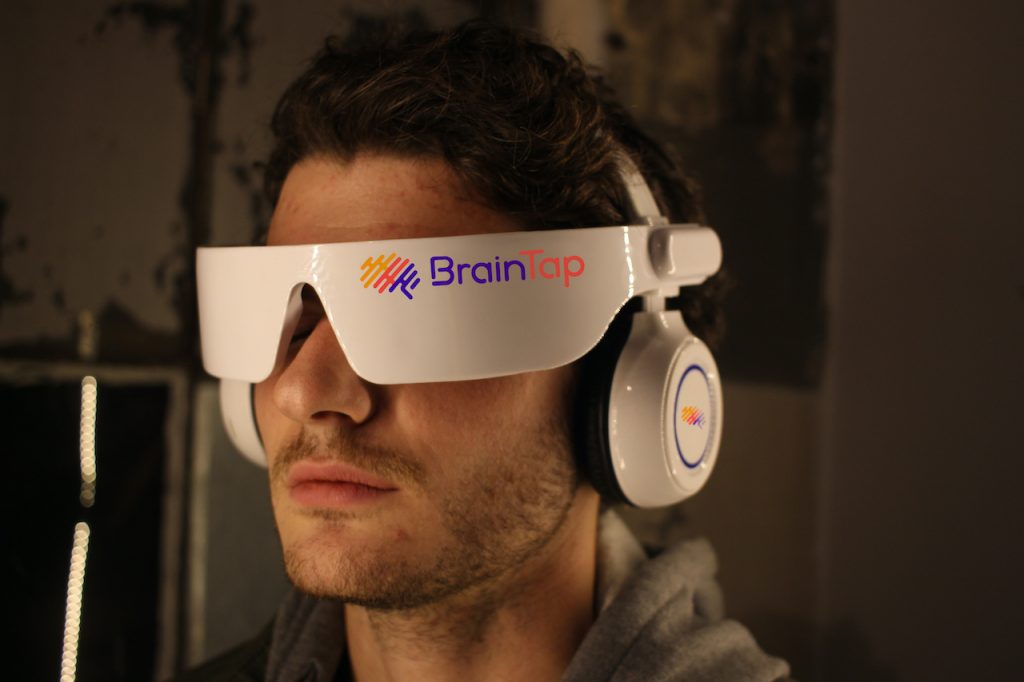
BrainTap is a headset device that combines guided audio sessions with light pulses delivered through a visor and ear-tone frequencies. The combination is designed to guide the brain into specific states, from relaxed alertness to deep sleep preparation, using a technique called brainwave entrainment.
How it works: Brainwave entrainment uses rhythmic stimuli (light pulses and audio tones) to encourage the brain's electrical activity to synchronise with a target frequency. For relaxation, sessions typically target alpha or theta brainwave states, which are associated with calm and light drowsiness respectively.
Best for: Users who respond well to guided audio content and want a structured programme across different wellness goals, including stress, focus, and sleep.
Key features:
-
Multi-sensory approach combining light, audio, and binaural tone
-
Large library of guided sessions for different goals
-
Subscription-based content model
-
Portable headset design
Limitations: BrainTap is one of the more expensive options, with hardware and subscription costs combining to over $700 in some configurations. The visor design is not discreet and requires a quiet environment.
Verdict: Best suited to users who want a comprehensive guided programme and are comfortable investing in a premium, multi-modal experience.
7. Moonbird - Best Handheld Breathing Guide
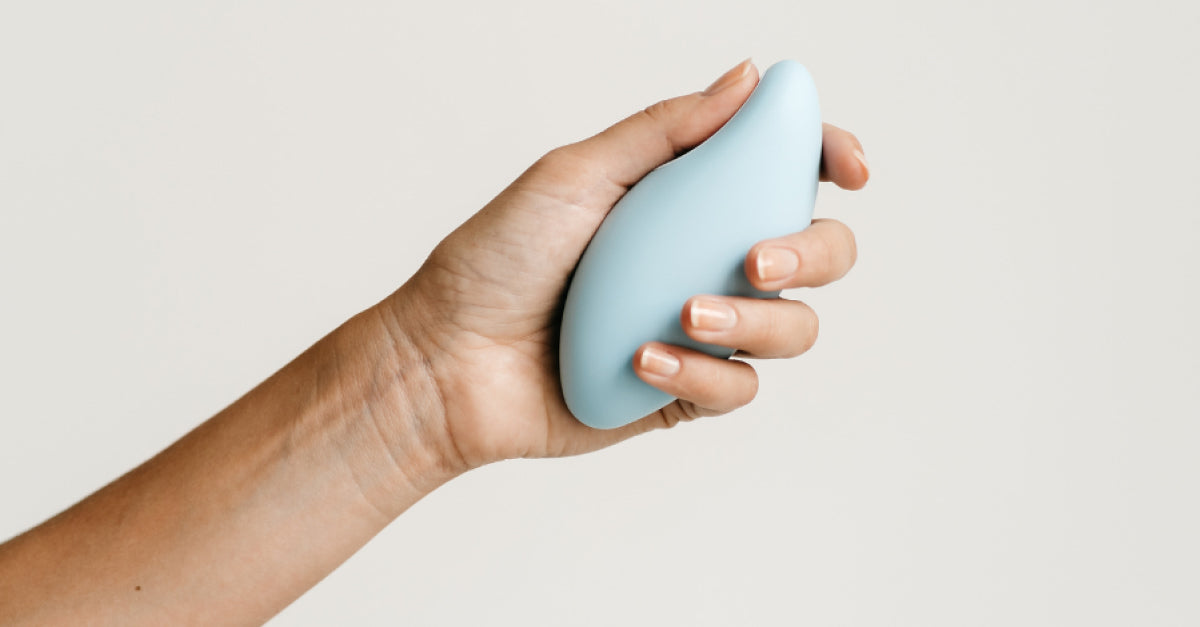
Moonbird is a small, handheld device that physically expands and contracts in your grip to guide breathing rhythm. It is one of the simplest devices on this list, with no screen, no headband, and no complex setup. You hold it, feel it breathe, and follow along.
How it works: The device inflates and deflates at a set rhythm designed to support heart rate variability coherence, similar to what the Inner Balance app guides through its audio pacer. Breathing slowly at around five to six breaths per minute is thought to support the parasympathetic nervous system and reduce the physical symptoms of stress.
Best for: Users who prefer a tactile, screen-free experience. Moonbird suits people who find app-based tools distracting or overstimulating, and it is particularly effective for calming acute stress responses quickly.
Key features:
-
Physical breathing pacer with no screen required
-
Built-in heart rate sensor for basic HRV feedback
-
Companion app optional but not essential
-
Compact and discreet for travel or desk use
Limitations: The feedback data is more limited than a full HRV biofeedback device. Moonbird is primarily a breathing guide rather than a comprehensive tracking tool. Pricing is approximately €199.
Verdict: The most approachable device for users who want a simple, sensory breathing aid without committing to an app-based ecosystem.
How to Choose the Right Meditation Device for You
Choosing among the best meditation technology options is easier when you start with your actual goal rather than a brand name. The devices on this list use fundamentally different mechanisms, and matching the technology to your lifestyle matters more than choosing the most popular option.
Active vs. Passive Devices: What Is the Difference?
Active devices like Muse S, Mendi, and Inner Balance require mental engagement during sessions. You are receiving feedback, adjusting your attention, or following a breathing pacer in real time. These tools are powerful for users who are motivated by data and enjoy a goal-oriented practice.
Passive devices like Sensate and Pulsetto require very little from the user during a session. You put the device on, press start, and let it work. This is a meaningful distinction for people who deal with high anxiety, restless thinking, or difficulty sitting still, because the barrier to entry is much lower.
For users exploring calming device for anxiety options or researching the best wearable stress relief device for daily use, the passive versus active distinction is often the most important filter.
Matching Your Goal to the Right Device Type
Use this as a quick decision guide:
-
Stress and sleep support: Passive devices like Pulsetto and Sensate offer the lowest friction. They work without focus or skill, which suits tired or anxious users best.
-
Focus and cognitive performance: Neurofeedback tools like Mendi or EEG headbands like Muse S are better suited, as they train specific brain states through engagement.
-
Breathing and stress resilience: HRV biofeedback tools like Inner Balance or Moonbird build a measurable breathing practice over time.
-
Guided programmes and variety: BrainTap suits users who want a curated content library with a structured schedule.
Budget note: EEG headbands tend to be the most expensive category, with devices ranging from $299 to $400 or more. Breathing guides and HRV tools generally offer a lower entry point. Wearable VNS devices like Pulsetto sit in a mid-range that reflects the technology involved.
Wearability: Neck-worn devices like Pulsetto are practical for use while lying down, making them well suited to pre-sleep routines. Headbands require proper positioning and generally work best in a quiet seated environment.
What Makes a Meditation Device Worth Using?
Not every product marketed as meditation technology delivers meaningful value. These four criteria help separate genuinely useful devices from those that rely on wellness aesthetics rather than substance.
Scientific grounding. The best meditation devices for stress relief are rooted in mechanisms that are supported by evidence in established fields, whether that is EEG-based neuroscience, heart rate variability research, or autonomic nervous system physiology. Understanding what a device actually measures helps you evaluate whether the claimed benefits are plausible.
Ease of use. A device that requires complex calibration, a quiet room, and 30 minutes of focused attention every day will be abandoned quickly by most users. The most effective device is the one you will actually use. For people dealing with chronic stress or disrupted sleep, friction is the enemy of consistency.
Real-world fit. Can the device be used in bed? At a desk? During a commute? Passive wearables score highly here because they impose almost no constraints on what you are doing while wearing them. Biofeedback devices, by contrast, often need you to be seated and still.
Measurable progress. Devices that show users their data, whether through HRV scores, brainwave session reports, or app-based tracking, tend to support longer-term habits. Seeing improvement over weeks makes it easier to stay consistent. For users exploring a biofeedback device for anxiety or researching the best HRV device for tracking, progress visibility is often the deciding factor.
Vagus Nerve Stimulation as a Meditation Support Tool

Most roundups of best meditation gadgets 2026 focus entirely on EEG headbands and neurofeedback, which means a genuinely distinct and science-adjacent category gets overlooked. Vagus nerve stimulation (VNS) works differently from every other device on this list, and understanding why it belongs in the conversation requires a brief look at how the nervous system manages stress.
The vagus nerve is the longest cranial nerve in the body, running from the brainstem down through the neck and into the chest and abdomen. It is the primary communication pathway of the parasympathetic nervous system, sometimes described as the body's rest-and-digest mode. When the vagus nerve is more active, the body tends to move away from fight-or-flight responses toward a calmer, more regulated state.
Non-invasive VNS devices like Pulsetto deliver gentle electrical pulses to the neck, targeting the vagus nerve without surgery or medical procedures. This approach is described as transcutaneous VNS, meaning the signal passes through the skin rather than requiring implantation. For a detailed look at how this mechanism relates to stress management, see this guide to vagus nerve stimulation for stress.
For people who struggle with traditional meditation due to a busy mind or elevated baseline anxiety, passive VNS support may lower the barrier to achieving a calm state without requiring any specific mental technique or breathing pattern. It does not replace meditation, but it may make the conditions for relaxation easier to access.
Those looking for a broader comparison of VNS and related tools may also find value in this roundup of nervous system regulation device options.
Do Meditation Devices Actually Work?
This is the fair question to ask before spending money on any wellness technology, and the honest answer is: it depends on the device, the user, and the consistency of use.
EEG and HRV devices have a more established track record in consumer wellness, partly because their mechanisms are measurable and the feedback they provide is objectively grounded in physiology. Neurofeedback has been used in clinical and performance settings for decades, and the consumer versions of these tools apply similar principles.
Newer categories, including passive sound therapy and wearable VNS, have a less extensive body of consumer outcome data, though the underlying science behind vagal tone (how active the vagus nerve is) and autonomic regulation is well established.
Individual results vary significantly. A device that dramatically improves sleep for one person may feel subtle or neutral for another, depending on their baseline stress levels, lifestyle habits, and consistency of use. Apps like Muse and Mendi are frequently discussed in wellness communities and app stores, where many users report genuine improvement in stress awareness and focus over four to eight weeks of regular practice.
Meditation devices are best understood as tools that support a wellness practice, not replacements for sleep, movement, therapy, or professional mental health support. For users exploring biohacking devices as part of a broader lifestyle approach, these tools work best as one layer among several.
Ready to Try Passive Nervous System Support?
If reading through this list has left you drawn toward something that works without active effort, Pulsetto is worth considering as a starting point.
Pulsetto is a neck-worn wearable designed for daily passive use. You put it on, select a programme in the app, and let the gentle vagus nerve stimulation do the work while you rest, read, or wind down for sleep. There is no breathing technique to follow, no brainwave feedback to interpret, and no requirement for prior meditation experience.
For adults dealing with chronic stress, restless nights, or a mind that simply will not slow down during traditional meditation, Pulsetto offers a genuinely different approach to nervous system support. It is not a replacement for good sleep hygiene or professional care, but it may help create the conditions where relaxation comes more easily.
Pulsetto is a wellness wearable and is not a medical device. Results vary by individual. If you are curious about whether wearable vagus nerve stimulation could support your existing routine, explore the full range at the Pulsetto website. You can also browse the best wearable device for anxiety collection or read more about how Pulsetto compares to other options in this guide to the neck stimulator device category.
Frequently Asked Questions 💬
Can meditation help tachycardia?
Meditation may help reduce the frequency of stress-related elevated heart rate by encouraging the parasympathetic nervous system to become more active, which is associated with slower, steadier heart rhythms. Practices that focus on slow, controlled breathing are thought to be particularly relevant here because they directly influence the autonomic nervous system (the system that regulates heart rate without conscious effort). However, tachycardia can have underlying medical causes unrelated to stress, and anyone experiencing persistent or unexplained rapid heart rate should consult a healthcare professional rather than relying on wellness practices alone.
Can meditation reduce cortisol?
Regular meditation practice is thought to support the body's stress response system, and many people who maintain a consistent practice report lower perceived stress over time. Cortisol is the primary stress hormone released by the adrenal glands, and its levels tend to follow patterns tied to daily stress load, sleep quality, and recovery habits. The potential effect of meditation on cortisol is generally tied to consistent practice over weeks or months rather than isolated sessions, and results vary by individual, stress load, and the type of technique used. Pairing meditation with good sleep and regular movement is likely to produce more noticeable results than any single practice alone.
Can meditation get rid of tinnitus?
Meditation is unlikely to eliminate tinnitus, as tinnitus typically has a physiological origin related to auditory pathway changes rather than stress alone. However, reducing overall stress and arousal through mindfulness or relaxation practices may help some people manage how prominently they perceive tinnitus symptoms in daily life. Some people find that a regular calming practice makes tinnitus less distressing even when the sound itself does not change. Vagus nerve stimulation has been explored as a complementary approach to tinnitus in some research contexts, though it is not a proven cure and professional guidance from an audiologist or ENT specialist is strongly recommended for anyone with persistent tinnitus.
What meditation does Jennifer Aniston do?
Jennifer Aniston has publicly mentioned using Transcendental Meditation (TM) as part of her wellness routine. TM is a mantra-based practice where a specific word or phrase is repeated silently to help the mind settle into a quiet, restful state. It does not require a device, though many people find that a dedicated meditation device can provide structure, feedback, or passive support that helps them achieve similar relaxation goals more consistently. For users who find pure mantra practice difficult to sustain on their own, pairing it with a breathing guide or passive wearable can offer a more reliable anchor during sessions.
What is the difference between a meditation device and a meditation app?
A meditation app provides guided audio, timers, and structured programmes but relies entirely on the user to self-regulate. The app gives you instructions, but your body and mind do the work unaided. A dedicated meditation device adds a layer of real-time physiological input, whether that is EEG brainwave feedback, HRV heart rhythm data, physical vibration, or direct nerve stimulation. This distinction matters because devices create a measurable feedback loop or provide direct physical input that apps simply cannot replicate. For users who have tried apps without consistent results, a dedicated device may offer the additional anchor or physiological support that makes the difference between a practice that sticks and one that fades.