What Resilience Actually Means (and Why Willpower Isn't It)
Resilience isn't a fixed trait or a matter of willpower. It's your nervous system's capacity to return to a calm, functional baseline after stress, not the ability to avoid stress altogether. Physiologically, that recovery runs through the vagus nerve and the parasympathetic nervous system, the body's built-in brake on the stress response. Training resilience means training that brake, not gritting your teeth harder.
Most workplace resilience content treats it as a personality question: are you the kind of person who bounces back, or aren't you. That framing is backwards. Resilience is closer to a fitness measure than a personality trait. Two people can face the same stressful meeting and one will feel their heart rate and cortisol drop back to normal within minutes, while the other stays activated for hours afterward, still tense at dinner. That difference is trainable.
If you're skeptical that resilience is trainable at all rather than something you're born with, that's a fair question, and it's worth answering properly before you invest time in techniques. We cover that in a separate piece on whether stress resilience is trainable. For this guide, the short version: yes, and the mechanism is the vagus nerve.
None of this means resilience training replaces sleep, social support, or addressing the actual source of a demanding job. Those baseline factors matter. If you want a broader, interactive look at where your own stress resilience stands today, Pulsetto's stress-resilience program walks through that assessment. What follows here is the layer most workplace resilience content skips: what to physically do, in the moment, when a specific trigger hits.
Why Generic Resilience Training Fails Busy Professionals
Most workplace resilience resources are written for the person deciding whether to buy a training program, not the person already in the demanding job today. They break resilience into categories, emotional, mental, social, physical, or walk through a rollout checklist: assess, choose a delivery model, train managers, measure results. Useful for an HR team. Not useful for you at 2:47pm with four back-to-back meetings.
The failure mode is specific. A technique with no assigned moment gets skipped. More than 83% of U.S. workers report suffering from work-related stress, and most of them have already been told to "practice mindfulness" or "build connections with colleagues." Both are real, evidence-backed components of resilience. Neither tells you when, during an actual workday, to use them. "Whenever you have a free moment" during a demanding job usually means never.
That's the gap this guide fills: not new techniques, but a structure for using the ones that already work, at the moments they're actually needed. Even employee wellness apps tend to stop at "here are five programs," leaving the same when-to-use-what question unanswered.

The Desk-Friendly Micro-Protocol Framework
A desk-friendly micro-protocol is a specific, under-5-minute action matched to a specific workplace stress trigger, not a generic technique to fit in whenever. Instead of one 30-minute weekly session, this is four short interventions mapped to the moments that actually spike cortisol during a workday: before high-stakes meetings, after conflict, during the afternoon slump, and at day's end. Each targets the same mechanism, vagal tone.
Four protocols, four triggers:
-
Before a high-stakes meeting: anticipatory stress
-
After a hard conversation or conflict: physiological aftershock
-
The 3pm slump: fatigue-driven reactivity
-
End-of-day shutdown: carryover into the evening
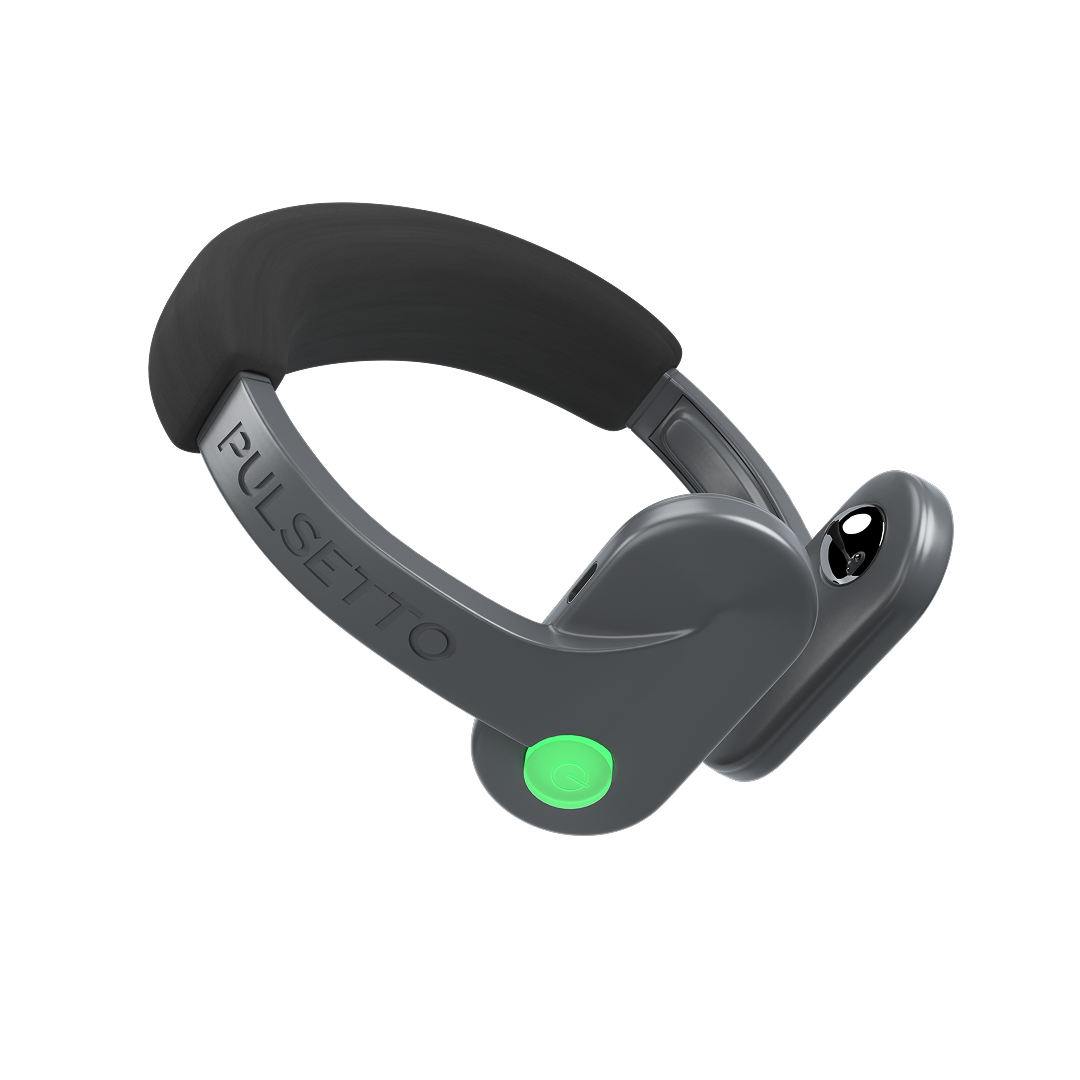
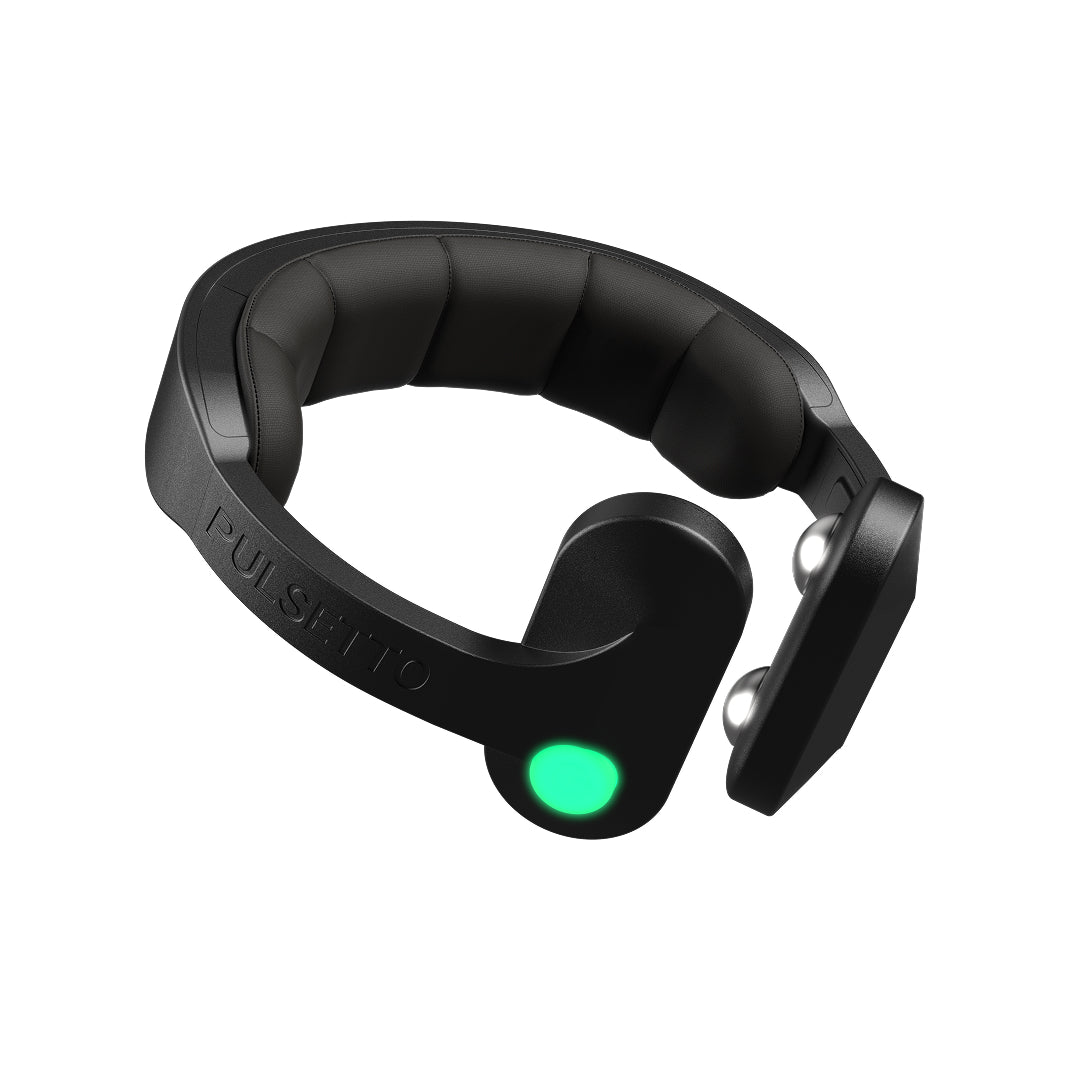
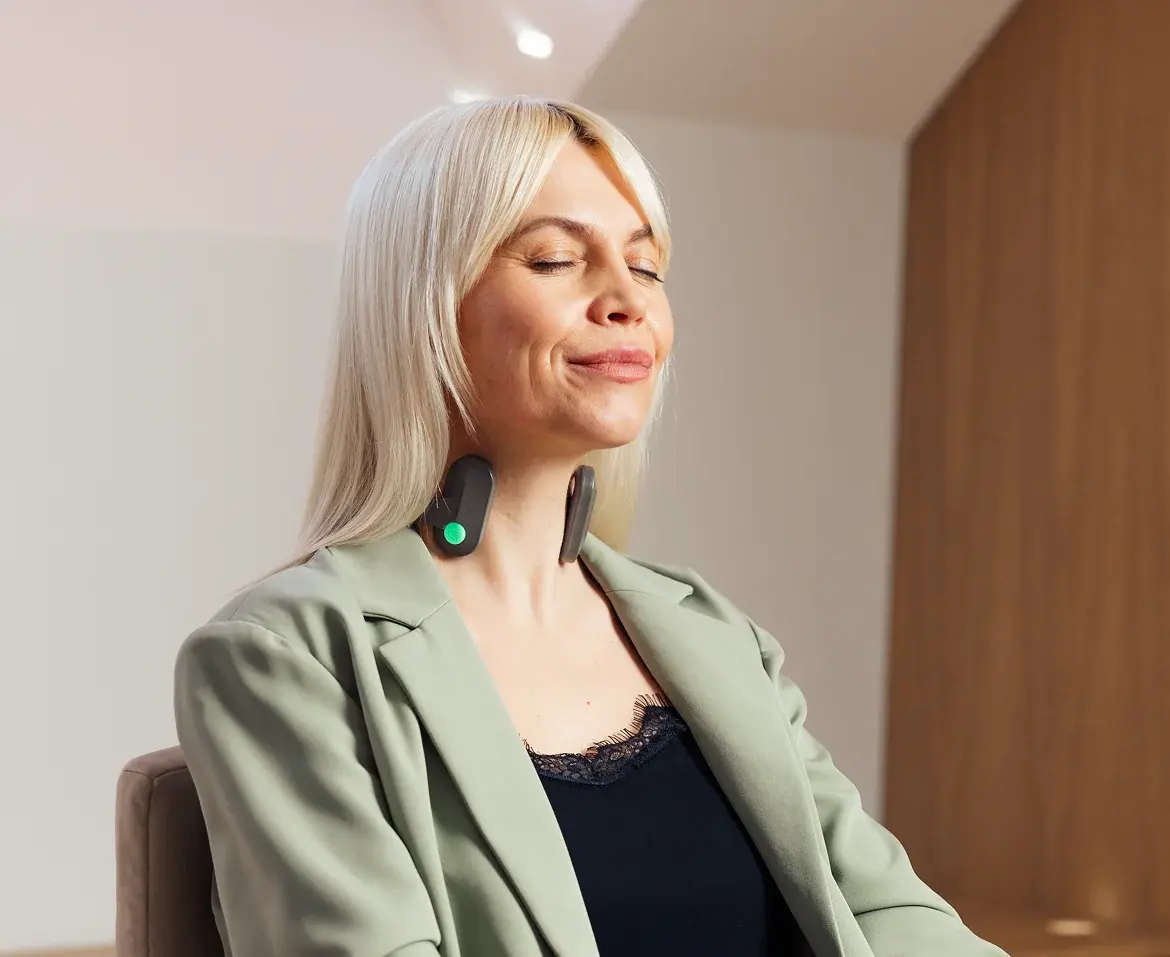
You don't need special equipment to run any of them, breathing and brief movement are enough on their own. The Pulsetto device is one hands-free option if you want a longer, more guided session at any of these four moments. It uses bilateral cervical stimulation, both sides of the neck at once, and you wear it rather than hold it, so it fits into a workday without occupying your hands. It's not a requirement for any protocol below, it's an option for the moments where a few extra guided minutes are available.
Micro-Protocol 1: Before a High-Stakes Meeting
Trigger: the anticipatory tension before a pitch, a difficult one-on-one, or a board update, the kind of meeting where your shoulders are already up around your ears in the elevator.
The action: 90 seconds of exhale-focused breathing before you walk in. Inhale for a count of four through your nose, exhale for a count of six through your mouth. The longer exhale is the part that matters, it's what signals safety to your nervous system. Do this at your desk, in a stairwell, or in the elevator, anywhere you have 90 seconds alone.
Why it works: a one-month randomized trial found that daily exhale-focused breathing produced greater improvements in mood than an equivalent period of mindfulness meditation [1]. You don't need the full five minutes to get a physiological effect, even a compressed 90-second version uses the same exhale-focused mechanism.
If you have more than 90 seconds, a short guided session on the Pulsetto app before a demanding meeting works through the same lever, longer stimulation, same vagal-tone effect. Breathing is one of several ways to activate the vagus nerve, humming and cold water on the face work through a similar pathway if breathing alone doesn't fit the moment.
Micro-Protocol 2: After a Hard Conversation or Conflict
Trigger: the physiological aftershock right after a tense exchange, a difficult feedback conversation, or a disagreement that's still running through your head as you close the door.
The action: name what just happened, out loud or silently ("that was tense"), then take 60 seconds before your next task, slow nasal breathing at your desk, or a short walk to another room. The naming step matters as much as the breathing, it interrupts the loop of replaying the conversation.
Why it works: pushing straight into the next meeting without this reset means you carry the activation into it. The goal isn't to suppress what just happened, it's to let your body's stress response complete its cycle before you ask it to handle something new.
The common mistake: skipping this because the next meeting is already starting. That's precisely the situation where skipping it compounds the stress response instead of letting it clear, the tension from the first conversation lands on top of whatever the second one brings. If 60 seconds isn't enough some days, a longer stress-relief technique between meetings covers the same ground with more structure.
Micro-Protocol 3: The 3pm Slump
Trigger: the mid-afternoon dip where focus drops and small irritations start landing harder than they should, distinct from morning stress because it's fatigue-driven rather than anticipation-driven.
The action: a 3-to-5-minute movement break, a walk to get water, a lap around the floor, or a set of stairs, paired with stepping away from the screen entirely. If movement isn't possible, box breathing works as a seated alternative: inhale four counts, hold four, exhale four, hold four, repeated for two minutes.
Why it works: the 3pm slump has both a fatigue component and a stress-reactivity component. Caffeine addresses the fatigue side by masking tiredness, it does nothing for the nervous-system side, which is why a coffee alone often doesn't fully fix the slump's short temper. Pairing a short walk with biohacking techniques for cortisol outperforms caffeine alone for afternoon irritability.
Micro-Protocol 4: End-of-Day Shutdown
Trigger: the transition from work mode to home mode, where unresolved work stress carries into the evening and shows up as trouble falling asleep or staying present with family.
The action: a 4-minute wind-down at a consistent time, dim your screens, then either slow breathing or a guided nVNS session, done the same way most days so it becomes a reliable signal rather than an occasional afterthought. Consistency of timing matters more than which specific technique you use.
Why it works: parasympathetic activation before bed supports faster sleep onset and less carried-over physiological arousal. A vagus nerve stimulator is one way to guide this transition without much effort. Pulsetto's app pairs its Sleep program with the same exhale-focused mechanism behind the other three protocols, and its guide to vagal stimulation and sleep covers the connection in more depth.
The Physiology Behind Why These Work (Vagal Tone, HRV, Cortisol)
These micro-protocols work because slow exhale-focused breathing, humming, cold exposure, and cervical vagus nerve stimulation all increase vagal afferent signaling to the brainstem, shifting the body from sympathetic (fight-or-flight) dominance toward parasympathetic control. Research on brief structured breathing shows measurable reductions in physiological arousal within minutes, and workplace mindfulness studies show lowered cortisol and improved heart rate variability (HRV) over weeks of consistent practice. Targeting vagus nerve function, whether through stimulation or through daily practices like these, is increasingly recognized as a viable way to build broader resilience to ongoing stress [6].
What vagal tone actually measures
Vagal tone is a measure of how readily your vagus nerve, the main communication channel between your brain and your internal organs, can pull your body back into a calm, "rest and recover" state after a stressor. That "rest and recover" state has a name, the parasympathetic nervous system, and activating it deliberately is the throughline connecting all four protocols above. Higher vagal tone means a faster return to baseline heart rate, better HRV (the variation in time between heartbeats, a marker of how adaptable your nervous system is), and less cortisol lingering in your system hours after the trigger has passed.
Vagal tone itself is directly correlated with how well someone regulates a stress response, which is why raising it through breathing and similar practices is tied to broader resilience [7].
"Vagal afferent signaling doesn't directly 'cause' relaxation in the way a sedative does, it changes the inputs the brainstem receives, which then shapes downstream autonomic output. That's why nVNS effects are often described as a shift in baseline rather than an acute intervention." - Jonė Pukėnaitė, MD, Medical & Science Lead at Pulsetto
What the research shows
-
Vagal toning techniques, breathwork, mindfulness, and movement, reliably increase HRV and parasympathetic activation across randomized trials and meta-analyses [2].
-
Both resonance breathing (bottom-up) and vagus nerve stimulation (top-down) are evidence-based ways to increase vagal control, used alone or combined [3].
-
Workplace mindfulness programs lower daytime cortisol and improve HRV coherence in employee samples specifically [4].
-
Even brief sessions matter: a 4-day course of 6-minute stimulation sessions reduced work-related stress and improved HRV in healthy volunteers [5].
Pulsetto's clinical data points in the same direction. In company’s own randomized, open-label pilot study (n=37 completers, 4 weeks), sleep disturbance (PSQI) decreased significantly in both stimulation groups (p<0.001), and anxiety symptoms (GAD-7) decreased significantly as well (p=0.0004 in the unilateral group, p=0.003 in the bilateral group). These are short-format results, four weeks, not four months, consistent with the idea that a small daily practice compounds faster than most people expect.
How to Build Resilience With a Stressful Job to Get Sustainable Results
Four micro-protocols used once each won't build resilience. Used consistently, at their assigned trigger, for several weeks, they will. The mechanism compounds the same way exercise does, one session changes almost nothing measurable, but the same session repeated regularly changes your baseline.
Start with one. Pick whichever trigger hits you most often, for most people it's either the before-meeting protocol or the end-of-day shutdown, and run it consistently for a week before adding a second. Trying all four at once usually means none of them stick, the same failure mode as any new habit taken on all at once.
Set a realistic timeline. Meaningful shifts in perceived stress and HRV recovery speed typically show up over several weeks of consistent practice, not after a single session. If you want a longer-term, structured approach beyond these four daily tactics, once the micro-protocols are automatic, a longer-term periodization system gives the daily practice above a longer arc to build toward.
Resilience for Professionals FAQs
What are the 5 pillars of resilience at work?
The 5 Pillars model covers physical, emotional, social, and mental resilience, plus an energy pillar focused on sustaining and renewing physical energy. The four micro-protocols above sit mainly inside the physical and emotional pillars, matched to specific workday moments rather than treated as a static checklist.
Is resilience training the same as stress management?
They're related, but not the same thing. Stress management is about reducing stress in the moment, a walk, a breathing exercise, stepping away from a screen. Resilience training is about how fast you recover afterward and how much capacity you build over time, so the same stressor takes less of a toll the next time it happens. The micro-protocols above do both: they lower stress in the moment and, used consistently, build resilience over weeks.
How long before resilience training actually works?
Meaningful shifts in perceived stress and HRV recovery typically show up over several weeks of consistent practice, not after a single session. Pulsetto's own pilot study measured its outcomes over a 4-week window as the minimum meaningful timeframe.
Can I do these micro-protocols without a device, just breathing?
Yes. Every protocol in this guide works with breathing, movement, or brief attention shifts alone. A device like Pulsetto is one hands-free option for a longer, guided session, not a requirement for any of the four protocols.
Is vagus nerve stimulation safe to use during the workday?
For most healthy adults, yes, sessions are short (around 4 minutes) and don't require stepping away from your desk. What to expect from a first session covers the typical timeline in more detail. It isn't recommended for people with a pacemaker or other implantable medical device, epilepsy, or during pregnancy. Check with a doctor if any of these apply to you.
Scientific research
The information in this article references the following peer-reviewed studies on vagus nerve stimulation, autonomic regulation, and related physiology. Pulsetto is a general wellness device and is not intended to diagnose, treat, cure, or prevent any disease or medical condition.
-
Brief structured respiration practices enhance mood and reduce physiological arousal (Yilmaz Balban et al., 2023, Cell Reports Medicine, 233 citations)
-
The A52 Breath Method: A Narrative Review of Breathwork for Mental Health and Stress Resilience (Little, 2025, Stress and Health, 3 citations)
-
Combining top-down and bottom-up interventions targeting the vagus nerve to increase resilience (Vanderhasselt & Ottaviani, 2021, Neuroscience and Biobehavioral Reviews, 31 citations)
-
Do workplace-based mindfulness meditation programs improve physiological indices of stress? A systematic review and meta-analysis (Heckenberg et al., 2018, Journal of Psychosomatic Research, 169 citations)
-
Recovery of Autonomous Balance as Indicator of Normalizing Effects of Non-Invasive Vagus Stimulation (Gachshenko et al., 2024, EUSIPCO)
-
Mental health during the COVID-19 pandemic and beyond: The importance of the vagus nerve for biopsychosocial resilience (Dedoncker et al., 2021, Neuroscience and Biobehavioral Reviews, 47 citations)
-
Vagus Nerve as Modulator of the Brain-Gut Axis in Psychiatric and Inflammatory Disorders (Breit et al., 2018, Frontiers in Psychiatry, 975 citations)