Does stress affect HRV?
Yes, and this direction of the relationship is the best-established part of the science. Under acute or chronic stress, parasympathetic activity drops, sympathetic activity rises, and HRV falls. The same 2018 review found this was the single most consistent finding across the literature it surveyed: reduced high-frequency HRV (the parasympathetic signature) paired with increased low-frequency HRV (the sympathetic signature), tracked closely with how much stress someone was under [1].
If you've worn a Garmin, Oura, or WHOOP through a brutal work week and watched your morning HRV number sink, you've seen this in real time. It's also why HRV is worth tracking in the first place: it registers nervous system load before you consciously feel it, sometimes days before a stressful stretch catches up with you emotionally. Your own trend, not someone else's number, is the signal worth reading. That's also why comparing your reading against a population chart by age is a starting point, not the goal.
Why higher HRV indicates better stress resilience
Here's the part that's easy to misstate. A higher HRV score doesn't mean a person feels calm. It means their nervous system can move between calm and alert states efficiently, and recover faster once a stressor has passed. That's resilience in the physiological sense: not the absence of a stress response, but the speed and flexibility of the system managing it.
A 2020 review in the Journal of Affective Disorders looked specifically at whether HRV could serve as an objective marker of mental health resilience, since most resilience measurement until now has relied on subjective self-report. It found that high vagally-mediated HRV, measured before and during stress tasks, was associated with better cognitive performance under pressure, more appropriate emotional regulation, and better modulation of cortisol and cardiovascular responses during psychosocial stress [2]. In plain terms: people whose HRV recovers quickly after a stressor also tend to think more clearly and regulate their emotions better while it's happening.
This is also why "higher HRV" and "resilience to stress" get used almost interchangeably in casual conversation, even though one is a moment-to-moment reading and the other is closer to a fitness level. A single bad night's sleep can knock 10-15ms off your morning HRV without touching your underlying resilience at all. No single reading predicts resilience. The trend does, along with how quickly the number returns to baseline after a stressor has passed.
Does improving HRV actually build resilience?

This is the question that separates good evidence from wishful thinking, and it's where most articles on this topic quietly stop citing anything. Correlational data (higher HRV people tend to be more resilient) doesn't prove that deliberately raising your HRV causes resilience to improve. For that, you need intervention studies: people trained to change their HRV, then measured on resilience afterward.
That evidence exists, and it's stronger than most HRV content acknowledges. A 2017 meta-analysis in Psychological Medicine, covering 24 studies and 484 participants, found HRV biofeedback training produced a large reduction in self-reported stress and anxiety, with a pre-post effect size (Hedges' g) of 0.81 [3]. A broader 2020 systematic review in Applied Psychophysiology and Biofeedback, covering 58 controlled studies across emotional, physical, and performance outcomes, found consistent small-to-moderate benefits, with the largest effects on anxiety, depression, and anger [4].
The most direct answer, though, comes from a 2026 randomized controlled trial that did something rare: it measured resilience itself, not a proxy for it. Healthcare workers in emergency departments and ICUs, a population with genuinely high burnout exposure, were randomized to four weeks of HRV biofeedback or a waitlist. Resilience, scored on the validated CD-RISC-10 scale, rose significantly more in the biofeedback group than the waitlist group (d = 0.79, p = 0.003), and the gain held at follow-up after the study ended [5]. Interestingly, stress, depression, and burnout scores didn't drop significantly more than the waitlist in that same trial. Resilience moved. The symptom scores mostly didn't, at least not yet. That's a meaningful distinction: improving HRV built something more like underlying capacity than immediate relief.
A smaller 2021 study of Malaysian university students found something similar in a different population. Students who started with low resilience scores on the Brief Resilience Scale showed measurable resilience gains after five sessions of HRV biofeedback training using a slow-breathing technique [6]. Taken together, these trials point the same direction. Correlational studies show resilient people tend to have higher HRV. Intervention studies show that training HRV upward, on its own, moves a person's measured resilience in controlled conditions.
Worth flagging honestly: not every trial finds the same thing. A 2025 systematic review of 18 remote HRV biofeedback studies (1,352 participants) found a meaningful effect on depression and on HRV itself, but the effect on self-reported stress specifically wasn't statistically significant across the pooled studies [7]. The evidence is strongest for anxiety, depression, and resilience as a trait-level outcome. It's more mixed for same-day stress relief, which is a different claim than the one this article is answering.
How HRV tracking fits into actually building resilience
None of this works as a one-time reading. HRV is only useful as a trend, which means tracking has to happen consistently enough to establish what your baseline actually is, and then to notice when practice is shifting that baseline upward. This is also where how you build stress fitness differs from what resilience even means becomes a practical, not just definitional, question. Resilience isn't trained in a single session. It's trainable the same way a physical capacity is, through repeated, measurable practice over weeks.
Pulsetto's own product data, drawn from in-app wellbeing check-ins across real users, shows the shape that this kind of change tends to take. Across every self-reported metric tracked, users report feeling better, and the pattern holds up over time rather than fading. Seventy-three percent of users report lower stress after starting Pulsetto, with the average drop deepening from around 23% at the first check-in to 26% by the second. Seventy percent report lower anxiety and lower burnout, each also deepening between check-ins rather than plateauing. Forty-five percent of users cut their stress score by 20 points or more. On the app's built-in HRV and sleep tracking, one signal stands out because it isn't self-reported at all: total sleep duration measured through connected wearables runs about 13.5 minutes longer on days users complete a stimulation session, a small but objectively measured shift rather than a felt impression.
Based on self-reported, in-app wellbeing check-ins from Pulsetto users who completed them, comparing each user to their own onboarding rating. Not a clinical measurement and not a controlled study.
The pattern across all of this data points the same direction as the biofeedback trials above: change compounds. Most users see movement by their two-week check-in, and the gains tend to hold or grow by 30 days rather than fade back to baseline. That's the same trajectory you'd expect if HRV-linked practice is building capacity, not just producing a temporary dip in a single stress reading. If you want a plain-language check before the numbers even come into it, these are the everyday behavioral signs of good stress resilience worth watching for alongside your HRV trend, not instead of it.

Where a device like Pulsetto fits in
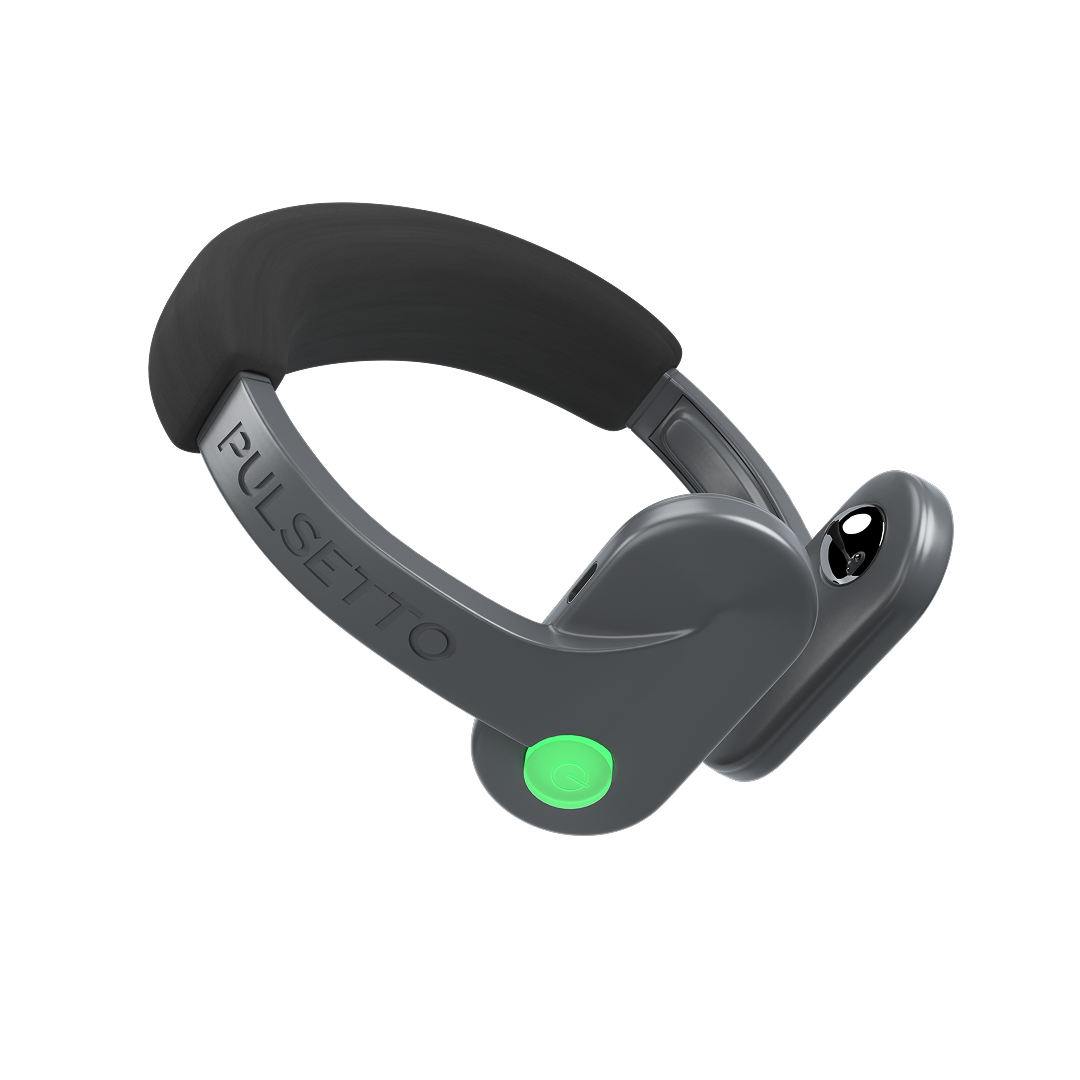
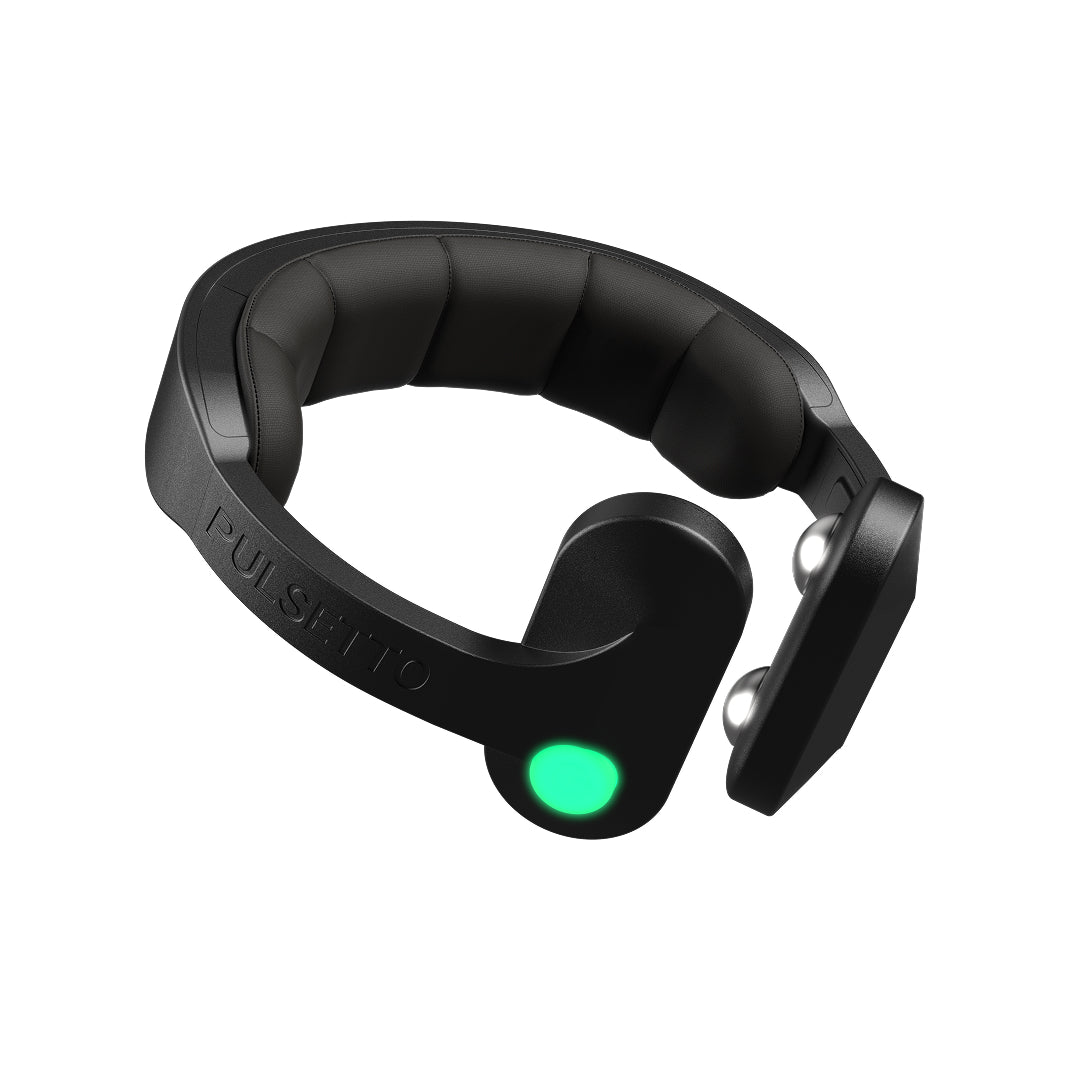
Pulsetto is a bilateral cervical vagus nerve stimulator, hands-free, designed for 4-minute general wellness sessions. It doesn't work by directly forcing an HRV number up. It works by delivering gentle bilateral electrical stimulation to the vagus nerve at the neck, the same nerve whose parasympathetic signaling is what HRV is measuring in the first place, related more broadly to how vagus nerve stimulation touches heart rate regulation.
The Free Lifetime app tier includes built-in HRV and sleep tracking, so the same device that delivers the session is also where you'd watch your baseline move over weeks, which matters more than any single day's number. Pulsetto's guided stress resilience program walks through what that week-over-week practice actually looks like.
Start a 4-minute Pulsetto session →
It's worth being precise about what Pulsetto's own research has and hasn't measured. In Pulsetto's randomized open-label pilot study (n=37 completers, 4 weeks, unilateral vs. bilateral cervical stimulation), participants showed significant reductions in depressive symptoms (PHQ-9, p<0.001), anxiety (GAD-7, p=0.0004 unilateral, p=0.003 bilateral), and sleep disturbance (PSQI, p<0.001), along with a significant drop in hair cortisol, a validated chronic-stress biomarker (p=0.013 overall, p=0.024 in the bilateral group). That study didn't measure HRV directly. Hair cortisol and the questionnaire scores are different, complementary markers of the same underlying stress physiology. If you're specifically tracking your HRV number, the app's built-in tracking is where that measurement happens; the pilot study speaks to the broader autonomic-stress picture, not to HRV as a metric on its own. The full write-up, including the biomarker methodology, sits in Pulsetto's clinical research.
Pulsetto is a general wellness product and is not intended to diagnose, treat, cure, or prevent any disease or medical condition. For someone managing a diagnosed anxiety or sleep disorder, this kind of tracking and stimulation is a complement to care, not a replacement for it.
HRV & Stress FAQs
Is a higher HRV always better?
Generally, yes, but context matters more than the raw number. HRV varies by age, fitness level, sex, and even the specific device measuring it, which is why comparing your number to your own trend beats comparing it to a stranger's. A single low reading after a bad night's sleep or a heavy workout isn't a red flag on its own.
How long does it take to see HRV improve with training?
Biofeedback studies typically run 4 to 8 weeks before measuring outcomes, and Pulsetto's own product data shows most users reporting felt improvement within the first two weeks, with gains continuing to build by day 30. Underlying resilience, the trait-level capacity rather than any single reading, tends to move on a similar few-weeks timeline in controlled trials [5].
What's the difference between HRV and resilience?
HRV is a physiological measurement: the variability between heartbeats, read from a chest strap, wrist sensor, or app. Resilience is a broader capacity: how well someone's nervous system, thinking, and behavior recover from a stressor. HRV is one useful, objective window into resilience. It isn't the whole picture.
Can stress lower my HRV even if I'm not consciously anxious?
Yes. Physiological stress and felt anxiety don't always move together. Work pressure, poor sleep, illness, and even dehydration can lower HRV without producing a subjective feeling of being stressed, which is part of why an objective tracking signal is useful alongside how you feel.
Are there any safety considerations for HRV biofeedback or vagus nerve stimulation devices?
For most healthy adults, both are low-risk, general-wellness practices. Pulsetto and similar cervical stimulation devices aren't recommended for people with a pacemaker or other implantable medical device, epilepsy, or for use during pregnancy, so check the full Pulsetto FAQ and consult a doctor if any of those apply to you before starting.
Scientific research
The information in this article references the following peer-reviewed studies on heart rate variability, stress physiology, and HRV biofeedback. Pulsetto is a general wellness device and is not intended to diagnose, treat, cure, or prevent any disease or medical condition.
[1] Stress and Heart Rate Variability: A Meta-Analysis and Review of the Literature (Kim et al., 2018, Psychiatry Investigation, ~2,100 citations)
[2] Heart rate variability: Can it serve as a marker of mental health resilience? (Perna et al., 2020, Journal of Affective Disorders, 115 citations)
[3] The effect of heart rate variability biofeedback training on stress and anxiety: a meta-analysis (Goessl et al., 2017, Psychological Medicine, 503 citations)
[4] Heart Rate Variability Biofeedback Improves Emotional and Physical Health and Performance: A Systematic Review and Meta-Analysis (Lehrer et al., 2020, Applied Psychophysiology and Biofeedback, 371 citations)
[5] Building resilience with heart rate variability biofeedback (HRVB) in emergency department and ICU healthcare workers: a randomized controlled trial (Cortez-Neavel et al., 2026, Cognitive Behaviour Therapy)
[6] Resilience Building among University Students: A Heart Rate Variability Biofeedback Study (Shahirah Sha'ari et al., 2021, IOP Conference Series: Materials Science and Engineering, 8 citations)
[7] Efficacy and Methodology of Remote Heart Rate Variability Biofeedback Interventions for Mental Health: A Systematic Review and Meta-Analysis (Vann-Adibe et al., 2026, Applied Psychophysiology and Biofeedback)