What are the symptoms of high cortisol?
The most common signs of high cortisol are disrupted sleep, especially waking at 2–4 a.m. and struggling to fall back asleep, weight gain concentrated around the midsection, a wired-but-tired feeling, a racing heart or elevated resting heart rate, irritability or a shorter emotional fuse than usual, and cravings for salty or sugary food. These signs reflect a nervous system that isn't completing its recovery cycle, not a single bad day.
A few more worth watching for: brain fog or trouble concentrating, a lowered tolerance for things that didn't used to bother you, and getting sick more often than usual. None of these on their own means much. One stressful week with poor sleep and a short temper is normal. The pattern that's worth paying attention to is when several of these show up together and stick around for weeks, which is closer to what researchers call allostatic load, the cumulative physiological toll of a stress response that never fully switches off [1].
Underneath all of this is a feedback loop called the hypothalamic-pituitary-adrenal axis, or HPA axis. Your brain signals your adrenal glands to release cortisol when it detects a demand, and under healthy conditions that signal shuts back off once the demand passes. Chronic stress disrupts that shutoff process, which is why cortisol-related symptoms tend to build gradually rather than appear all at once [2].
One honest caveat, since it comes up often in searches specific to women: cortisol's relationship with the menstrual cycle and with fat storage, particularly around the midsection, is real and worth being aware of. It is not, on its own, a reliable weight-loss lever or a diagnosis. If several of the signs above feel persistent, a conversation with a doctor and, where appropriate, an actual cortisol test (blood, saliva, or hair, depending on what your doctor recommends) is a more useful next step than guessing from symptoms alone.
The good news is that the same nervous-system pathway driving these symptoms responds to real, evidence-backed changes. Here are ten of them.
1. Prioritize consistent, sufficient sleep
Sleep and cortisol run in both directions. Poor or shortened sleep raises the next day's cortisol reactivity to stress, and elevated cortisol makes it harder to fall and stay asleep in the first place [3]. A systematic review of the sleep-HPA axis relationship found that both objective and subjective drops in sleep quality reliably increase how strongly the HPA axis responds to a stressor, even when total sleep duration itself doesn't change much [4].
In practice, this means consistency matters more than chasing one perfect night. Going to bed and waking up at roughly the same time, even on weekends, does more for your cortisol rhythm over time than an occasional 9-hour night surrounded by irregular ones.
One additional data point worth a mention: in aggregate wearable-sensor data across the broader Pulsetto user base, users get an average of 13.5 more minutes of total sleep on days they use the device, measured via connected wearable data, not self-report. That's a smaller, secondary finding next to the sleep-hygiene basics above, but it's worth naming since it's device-measured rather than self-reported. For a full stress-relief routine that starts with sleep, it's worth building sleep consistency in as the foundation before layering on anything else on this list.
2. Move your body, but respect the dose-response curve
Moderate exercise is one of the better-supported ways to lower cortisol reactivity over time. A 2025 systematic review and network meta-analysis of 44 studies found that yoga produced the largest cortisol reduction among exercise types, followed by qigong and multicomponent exercise, with the strongest effects appearing around 530 MET-minutes per week, roughly what most moderate-activity guidelines already recommend [5].
The part most "just exercise more" advice skips is that the relationship isn't linear. Exercise above roughly 60% of your maximum oxygen uptake reliably raises cortisol acutely, and that threshold effect has been demonstrated directly in controlled lab conditions [6]. That's not a reason to avoid intense training. It's a reason to make sure intense training is matched with real recovery, since chronic overtraining without adequate rest is associated with a blunted, dysregulated hormonal pattern rather than a clean "more training, less cortisol" outcome. If your workouts leave you feeling depleted for days rather than energized within hours, that's worth adjusting before adding more volume.

3. Practice slow, paced breathing
Slowing your breathing rate, especially lengthening the exhale, activates the vagus nerve and shifts your nervous system toward parasympathetic recovery within minutes. Research measuring both heart rate variability and salivary cortisol together has found that a single session of slow-paced breathing can measurably reduce cortisol and stress-related autonomic activity.
A 2025 scoping review of slow-breathing and heart rate variability biofeedback found consistent improvements in vagally mediated autonomic activity across every study reviewed, with the strongest effects coming from techniques that emphasize a longer exhale than inhale [7]. Separately, a large meta-analysis of stress-management interventions found that mindfulness, meditation, and relaxation-based techniques, breathing included, were among the most effective categories for measurably changing cortisol, outperforming talking-therapy approaches in the pooled data [8].
A simple technique to start with: inhale for 4 seconds, exhale for 6 to 8 seconds, and repeat for two to five minutes. This is one of the fastest-acting items on this list. Where sleep and diet changes take weeks to show measurable results, a single breathing session can shift stress-related markers the same day. It also pairs directly with efforts to activate your parasympathetic nervous system more broadly.
4. Get real daylight exposure to anchor your rhythm
This one works a little differently than the rest of the list, and it's worth being precise about it. Morning light exposure doesn't flatly lower cortisol. It actually increases the cortisol awakening response, the normal, healthy spike in cortisol that happens in the first 30 to 45 minutes after you wake up and helps mobilize energy for the day ahead [9]. That's not a bad thing. A sharp, well-timed morning peak followed by a steady decline through the day is what a healthy cortisol rhythm looks like. The goal isn't a flat line. It's a strong contrast between your morning peak and your evening low.
What this means practically: try to get outside, or at least near a bright window, within the first hour of waking, even for 10 minutes. Consistency matters more than intensity or duration here. The benefit isn't less cortisol in some absolute sense, it's a circadian rhythm that stays properly entrained, which in turn supports the kind of predictable, recoverable stress response the rest of this list is aiming for.

5. Practice mindfulness or meditation
Mindfulness and meditation are among the most consistently effective categories in the cortisol-reduction literature. A large meta-analysis pooling 58 randomized trials across more than 3,500 participants found that mindfulness and relaxation-based interventions produced the strongest measurable cortisol reductions of any category studied, ahead of general mind-body practices and talking therapies [8].
You don't need a long-standing practice for this to matter. Several of the trials in that pooled analysis used brief, structured sessions rather than years of experience, and still found measurable changes in cortisol output. A short daily sit, even 10 minutes with a guided app, is a reasonable place to start if this is new to you.
6. Build real social connection
This is one of the more underused levers, and it has some of the strongest evidence on this entire list. A landmark study found that social support from a close friend measurably suppressed the cortisol response to an acute stressor, and that the combination of social support with oxytocin produced the lowest cortisol levels and the calmest self-reported state of any condition tested [10].
The practical version of this doesn't require a grand gesture. Even brief contact with someone you trust, a phone call before a hard meeting, sitting with a friend before a stressful event, appears to change the measurable hormonal outcome, not just how you feel about it. If your stress feels isolating right now, that's not a personal failing. It's also one of the more fixable parts of this list.

7. Watch caffeine and stabilize blood sugar
Caffeine reliably amplifies the cortisol response to stress. A classic controlled study found that caffeine more than doubled the cortisol and epinephrine response to a stressful task compared to a no-caffeine condition, an effect present in both habitual and light caffeine users [11]. This doesn't mean cutting caffeine out entirely. It means being aware that a stressful day plus a heavy caffeine load compounds your cortisol response rather than being a neutral combination.
On food more broadly, it's worth being precise instead of repeating the common claim that sugar directly spikes cortisol. The actual evidence on that specific point is mixed, and some studies have found sugar intake associated with a blunted, not heightened, cortisol response to an acute stressor. What the broader evidence does support is that stable, balanced meals, rather than skipped meals or highly restrictive eating patterns, support more consistent HPA-axis function over time. Chronic poor diet quality is linked to broader strain on the cortisol-metabolic system, which is a different and better-supported claim than "sugar raises cortisol."
8. Consider evidence-backed adaptogens, with a doctor's input
Among the supplements commonly marketed for cortisol, ashwagandha has the most consistent randomized-trial support. A 2022 meta-analysis of 12 randomized controlled trials involving just over 1,000 participants found significant reductions in both stress and anxiety measures compared to placebo, with a favorable dose range around 300 to 600 milligrams per day [12].
That's real evidence, and it's worth taking seriously. It's also worth being honest about what it isn't. No supplement replaces sleep, movement, or breathing as the foundational levers on this list, and the "supplements to reduce cortisol and belly fat" framing that shows up often in searches oversells what any single supplement can do for body composition specifically. If you're considering ashwagandha or a similar adaptogen, talk to a doctor first, particularly if you're on any existing medication, since interactions and appropriate dosing vary by individual.

9. Try vagus nerve stimulation
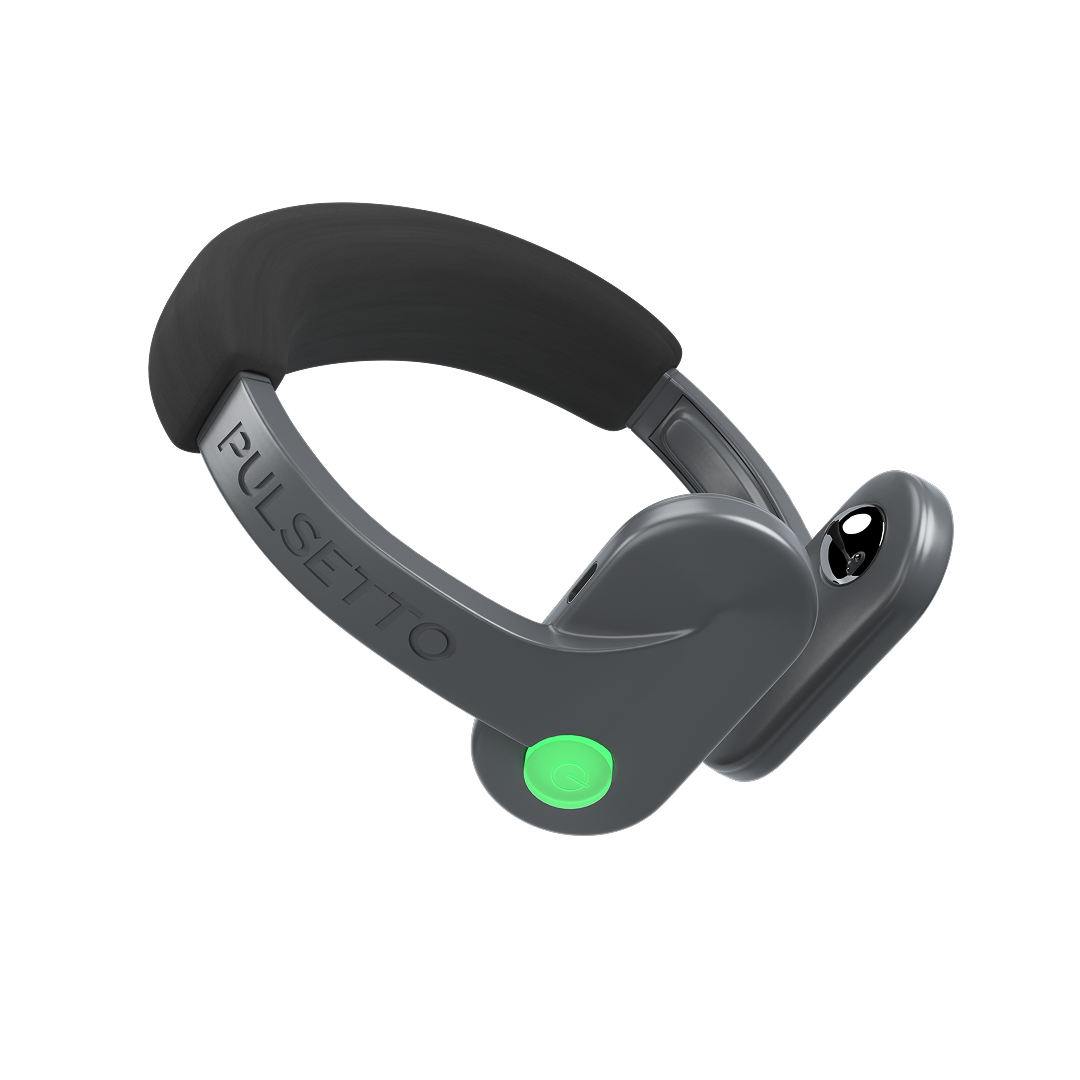
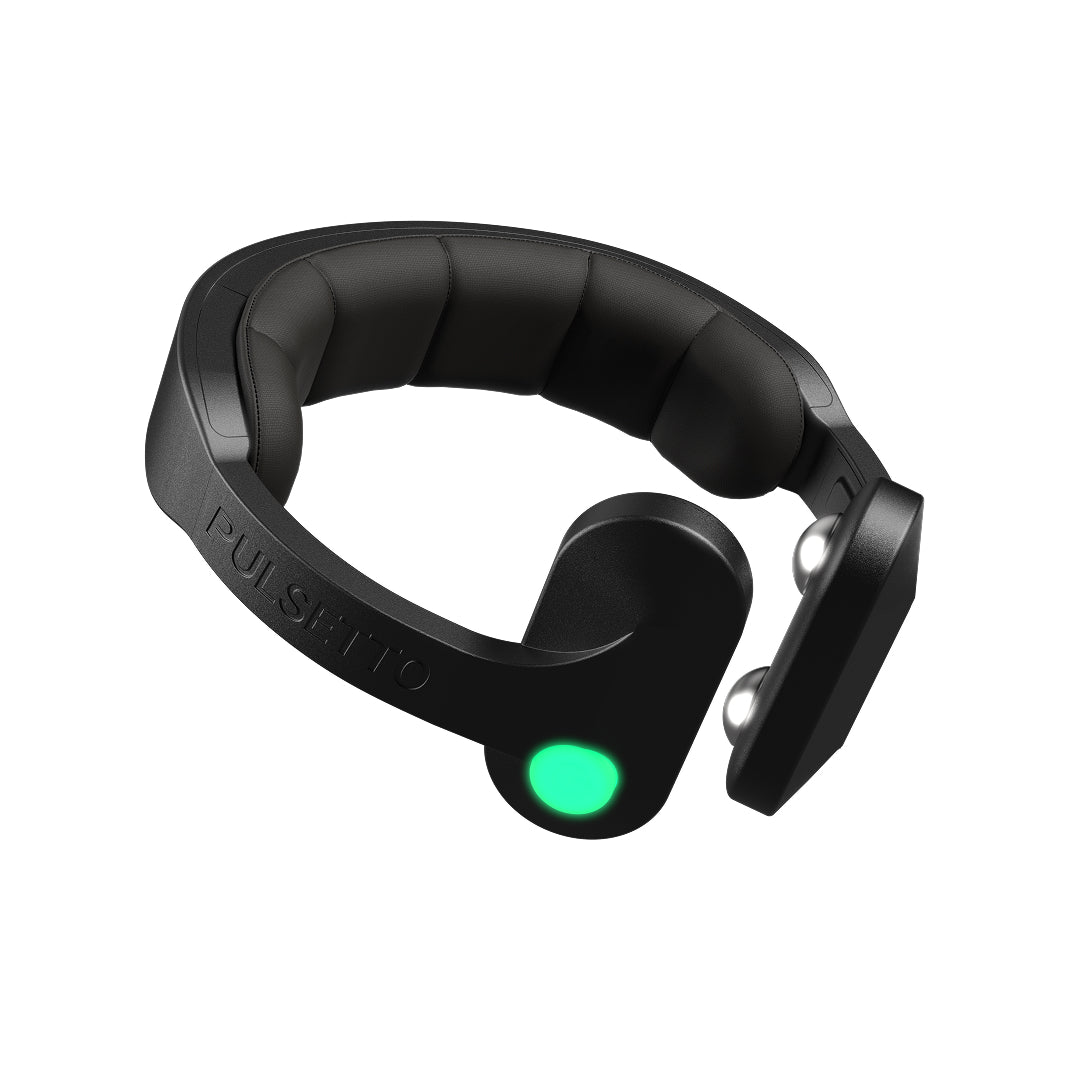
Non-invasive vagus nerve stimulation is a newer, evidence-backed option for supporting the nervous system's return to a calmer baseline. Unlike the other nine items on this list, it works directly on the physical pathway, the vagus nerve, that governs the shift from a stressed, sympathetic-dominant state to a recovered, parasympathetic one. Pulsetto's bilateral cervical approach is one hands-free option in this category, with its own pilot-study data on hair cortisol specifically.
The underlying mechanism has independent research behind it, separate from any single company's claims. Vagal tone, a measure of how readily your autonomic nervous system shifts into recovery mode, is thought to be one of the pathways involved: stimulating the vagus nerve's cervical branch is associated with improved autonomic regulation and a faster shift out of a sympathetic, alert state. A 2025 study found that auricular vagus nerve stimulation measurably inhibited the cortisol response to a mental stress task compared to sham stimulation [13], and earlier work on cervical stimulation specifically found reduced sympathetic arousal following acute stress exposure in a randomized, sham-controlled trial [14].
Pulsetto is a bilateral cervical vagus nerve stimulator, designed for hands-free, roughly four-minute sessions, positioned as a general wellness device rather than a medical one. In Pulsetto's own randomized, open-label pilot study, now published as a peer-reviewed conference abstract (Pukėnaitė, Burokienė & Karčiauskaitė, 2026, European Psychiatry), 37 completers were randomized to unilateral or bilateral cervical stimulation for four weeks [15]. Bilateral stimulation significantly reduced hair cortisol, a validated biomarker of chronic stress exposure (p = 0.024), while unilateral stimulation did not reach significance on that same measure (p = 0.159). Across both stimulation groups, self-reported depressive symptoms (PHQ-9), anxiety (GAD-7), and sleep disturbance (PSQI) all improved significantly (p < 0.001 for each), with depressive symptoms down 56%, anxiety down 45%, and sleep disturbances down 41% over the four weeks.
Separately, and distinctly from that controlled pilot study, aggregate self-reported check-in data across the wider Pulsetto user base shows 73% of users reporting lower stress after starting Pulsetto, with self-reported stress scores down roughly 23% to 26% from each user's own onboarding baseline. Based on self-reported, in-app wellbeing check-ins from Pulsetto users who completed them, comparing each user to their own onboarding rating. Not a clinical measurement and not a controlled study. Users who stimulate consistently report a good mood on more of their check-in days than occasional users do, which tracks with the general pattern across this whole list: the levers that work tend to work because they're repeated, not because of any single session.
Disclaimer: Pulsetto is a general wellness product and is not intended to diagnose, treat, cure, or prevent any disease or medical condition.
Vagus nerve stimulation is one option among the ten in this article, not a replacement for the fundamentals above. If you want to see the device itself, Pulsetto Lite and FIT are both hands-free options, and Pulsetto's clinical data walks through the full pilot study in more detail, alongside the study on vagus nerve stimulation and cortisol specifically. For a closer look at vagus nerve stimulation for stress as a use case, or to see how people are actually using it day to day, real Pulsetto reviews are worth a look.
10. Make room for genuine rest, leisure, and laughter
This is the item most lists like this one skip entirely, despite having real evidence behind it. A systematic review and meta-analysis of eight interventional studies found that spontaneous laughter reduced cortisol levels by an average of 31.9% compared to control conditions, with the effect holding up even after a single laughter session [16].
The mechanism isn't a gimmick. Genuine positive affect, whether from laughter, unstructured leisure time, or simply doing something you enjoy without an agenda, appears to drive real parasympathetic activation, not just a subjective mood lift. If your schedule has been all output and no recovery time, this is the item on the list that's easiest to dismiss as unserious and easiest to actually enjoy putting into practice. It pairs naturally with the broader biohacking-stress toolkit if you're looking to build a fuller recovery routine around it.
Ten levers, one underlying goal: give your nervous system the chance to complete the recovery cycle it's already built to run. None of these need to happen perfectly or all at once. Most people see the biggest shift from picking two or three and doing them consistently rather than trying to do all ten at full intensity in week one.
Reducing Cortisol Naturally FAQs
Which vitamins or supplements reduce cortisol?
Ashwagandha has the most consistent randomized-trial support among commonly marketed cortisol supplements, with a 2022 meta-analysis of 12 trials finding significant reductions in stress and anxiety measures. Other adaptogens are more thinly studied. No supplement replaces sleep, movement, and breathing as the foundational levers, and it's worth checking with a doctor before starting one, especially alongside existing medications.
What foods decrease cortisol levels?
No single food lowers cortisol on its own. What the evidence more reliably supports is stable, balanced meals that avoid the swings of very restrictive or highly processed eating patterns, since chronic poor diet quality is linked to broader cortisol-metabolic strain over time. Caffeine specifically is worth watching, since it reliably amplifies the cortisol response to stress rather than being neutral.
What are signs your cortisol is lowering?
Steadier sleep, with fewer 2–4 a.m. wake-ups, a calmer resting heart rate, less irritability, and recovering from a stressful moment within minutes or hours instead of carrying it for the rest of the day. These are the mirror image of the high-cortisol signs covered above, and they tend to show up gradually as the underlying levers, sleep, movement, breathing, connection, improve together, not from any single change overnight.
How long does it take to lower cortisol naturally?
It depends on the lever. Slow breathing can measurably shift stress-related markers within a single session. Sleep and exercise changes typically take one to a few weeks of consistency to show up. Diurnal cortisol rhythm and biomarkers like hair cortisol, which reflect roughly three months of exposure, take longer to shift and are better tracked over months than days.
Is vagus nerve stimulation safe for lowering cortisol?
For most healthy adults, non-invasive vagus nerve stimulation is well-tolerated. It's not recommended for people with pacemakers or other implantable medical devices, epilepsy, or during pregnancy, so check with a doctor first if any of these apply to you. Pulsetto is a general wellness product and is not intended to diagnose, treat, cure, or prevent any disease or medical condition. See the full contraindications list for complete details.
Can high cortisol cause weight gain?
Chronically elevated cortisol is associated with fat storage concentrated around the midsection, partly through its effects on appetite and blood sugar regulation. It's one contributing factor among many, including diet, activity level, sleep, genetics, and hormonal changes, not a standalone explanation, and no single cortisol fix, supplement or otherwise, is a reliable weight-loss method on its own.
Scientific research
The information in this article references the following peer-reviewed studies on cortisol physiology, sleep, exercise, breathing, mindfulness, social connection, diet, adaptogens, and vagus nerve stimulation. Pulsetto is a general wellness device and is not intended to diagnose, treat, cure, or prevent any disease or medical condition.
[1] Allostatic Load and Its Impact on Health: A Systematic Review (Guidi et al., 2020, Psychotherapy and Psychosomatics, 1,005 citations)
[2] The human stress response (Russell & Lightman, 2019, Nature Reviews Endocrinology, 716 citations)
[3] Sleep deprivation potentiates HPA axis stress reactivity in healthy adults (Minkel et al., 2014, Health Psychology, 250 citations)
[4] The influence of sleep on human hypothalamic-pituitary-adrenal (HPA) axis reactivity: A systematic review (van Dalfsen & Markus, 2018, Sleep Medicine Reviews, 265 citations)
[5] The Optimal Exercise Modality and Dose for Cortisol Reduction in Psychological Distress: A Systematic Review and Network Meta-Analysis (Li, Huang & Zhu, 2025, Sports, 14 citations)
[6] Exercise and circulating Cortisol levels: The intensity threshold effect (Hill et al., 2008, Journal of Endocrinological Investigation, 650 citations)
[7] Breathe better, live better: the science of slow breathing and heart rate variability (Giorgi & Tedeschi, 2025, Acta Neurologica Belgica, 18 citations)
[8] Effectiveness of stress management interventions to change cortisol levels: a systematic review and meta-analysis (Rogerson et al., 2023, Psychoneuroendocrinology, 68 citations)
[9] The Cortisol Awakening Response: Regulation and Functional Significance (Stalder et al., 2024, Endocrine Reviews, 92 citations)
[10] Social support and oxytocin interact to suppress cortisol and subjective responses to psychosocial stress (Heinrichs et al., 2003, Biological Psychiatry, 1,993 citations)
[11] Caffeine effects on cardiovascular and neuroendocrine responses to acute psychosocial stress and their relationship to level of habitual caffeine consumption (Lane et al., 1990, Psychosomatic Medicine, 148 citations)
[12] Does Ashwagandha supplementation have a beneficial effect on the management of anxiety and stress? A systematic review and meta-analysis of randomized controlled trials (Akhgarjand et al., 2022, Phytotherapy Research, 67 citations)
[13] Transcutaneous auricular vagus nerve stimulation inhibits mental stress-induced cortisol release: Potential implications for inflammatory conditions (Cuberos Paredes et al., 2025, Physiological Reports, 20 citations)
[14] Transcutaneous cervical vagal nerve stimulation reduces sympathetic responses to stress in posttraumatic stress disorder (Gurel et al., 2020, Neurobiology of Stress, 62 citations)
[15] The Effect of Bilateral Non-Invasive Vagus Nerve Stimulation on Stress Biomarkers, Depression, Anxiety, and Sleep in Healthy Adults (Pukėnaitė, Burokienė & Karčiauskaitė, 2026, European Psychiatry, European Congress of Psychiatry abstract, open-access full text via PMC)
[16] Laughter as medicine: A systematic review and meta-analysis of interventional studies evaluating the impact of spontaneous laughter on cortisol levels (Kramer & Leitao, 2023, PLOS ONE, 43 citations)