Is Flight Anxiety Normal?
Yes, flight anxiety is entirely normal. Research consistently confirms that flying-related anxiety is highly prevalent within the general population, with annual prevalence estimates showing a substantial proportion of air passengers experiencing anxiety before or during flights (Cotti et al., Frontiers in Psychology, 2016).
The main causes include fear of heights, claustrophobia, past traumatic experiences, and anxiety disorders such as GAD and panic disorder. Media coverage of air travel incidents also contributes, creating a distorted sense of risk relative to the actual statistics.
How to deal with flight anxiety starts with recognizing that the fear is a normal human response, not a personal failing. Many anxious flyers travel regularly and manage their anxiety successfully with the right tools.
Flight Safety Facts That Can Help Ease Anxiety
Understanding the actual statistical safety of flying can help reduce anxiety for people whose fear is driven by perceived danger. The numbers are more reassuring than most people realize.
How Safe Is Flying Really?
A 2024 MIT study found that the risk of a fatality from commercial air travel was one per every 13.7 million passenger boardings globally between 2018 and 2022, a figure that represents a continuous improvement decade over decade (Barnett, MIT, 2024).
IATA's 2024 Annual Safety Report confirmed that there were just seven fatal accidents among 40.6 million commercial flights in 2024 (IATA, 2025). Knowing how to ease flight anxiety sometimes starts with knowing the actual odds.
Pilots undergo rigorous training for over two years before flying commercially, and commercial aircraft are designed to withstand extreme conditions including significant turbulence.
Understanding Turbulence
Turbulence is the single most common trigger for in-flight anxiety, but it is structurally harmless in the vast majority of cases.
It occurs when air pockets cause the plane to move through uneven air currents. The sensation is unpleasant, but the aircraft is built to handle forces far beyond what turbulence produces.
Two practical ways to reduce the physical impact:
-
Choose a seat over the wings, where turbulence is felt least
-
Book morning flights, which typically encounter calmer air before afternoon thermal activity builds
How to Prepare Before a Flight to Calm Anxiety
Preparation significantly eases flight anxiety. Much of the work happens before the plane even takes off. A good pre-flight routine is one of the most effective flight anxiety tips available.
A consistent wind-down the evening before a flight helps too. A relaxing bedtime routine the night before departure gives the nervous system the rest it needs to face travel with lower baseline arousal.
Avoid Caffeine and Alcohol Before Flying
Both substances increase heart rate and nervous system arousal, amplifying the physical sensations that anxiety feeds on.
Avoid coffee, energy drinks, and alcohol in the airport and during the flight. Herbal tea or water are the most effective replacements. The change is simple but its impact on how the body feels during takeoff is real.
Choose Your Seat Carefully
Seat choice affects how the flight feels physically and psychologically:
-
Over the wings: least turbulence, most stable sensation
-
Aisle seat: greater sense of control, easier access, less claustrophobia
-
Window seat: visual focus on the horizon, clearer sense of the aircraft's stability
Pack Comfort Items and Sensory Aids
Noise-canceling headphones, a familiar scent, a soft item, and a calming music playlist all reduce the sensory overload of a crowded aircraft.
A randomized clinical trial published in PLOS ONE found that listening to calm music produced measurable reductions in anxiety compared to a control condition, supporting its use as an accessible in-flight coping tool (Lee et al., 2022).
Download everything before the flight. In-flight Wi-Fi is unreliable, and the last thing an anxious flyer needs is a loading screen during turbulence.
Use Visualization Before the Flight
Spend a few minutes before the flight imagining arriving safely and calmly at the destination. Visualize the landing, the terminal, and the feeling of stepping off the plane.
Visualization of positive travel experiences eases anxiety by giving the brain a constructive image to rehearse rather than leaving it to generate catastrophic ones. Guided meditation works well alongside visualization as a preparation tool. Among the best meditation tools for pre-flight use, apps with guided body scans and breathing exercises offer the most accessible starting point.
How to Calm Flight Anxiety During the Flight
In-the-moment techniques are what you reach for when anxiety spikes during boarding, takeoff, or turbulence. Having a toolkit ready beforehand is the foundation of instant anxiety relief in the air.
Use the 4-7-8 Breathing Method
Slow breathing is one of the most evidence-supported immediate tools for anxiety. The 4-7-8 method directly activates the parasympathetic nervous system to counter the fight-or-flight response.
The method:
Repeat 3 to 4 cycles. The extended exhale is the mechanism: it forces the exhalation to be slower than the inhalation, which is the trigger for parasympathetic activation. Learning how to activate parasympathetic nervous system response through the breath is one of the most transferable skills for anxious flyers.
What Is the 3-3-3 Rule for Anxiety?
The 3-3-3 rule is a grounding technique that redirects attention from internal anxious sensations to the immediate environment:
-
Name 3 things you can see
-
Identify 3 sounds you can hear
-
Move 3 parts of your body deliberately
It interrupts anxious thought loops by occupying the mind with specific, present-moment observations. A more detailed version is the 5-4-3-2-1 method, which adds smell and taste. The 3-3-3 rule for anxiety is the quickest version.
The calming effect works through the same mechanism as other grounding techniques: shifting attention out of the body's alert signals and into the sensory environment. The 3-3-3 rule is a practical technique that teaches you how to calm your nervous system through sensory anchoring rather than cognitive effort.
Use Distraction Techniques
Absorbing content reduces the mental bandwidth available for anxious thoughts. Download films, podcasts, audiobooks, or games before the flight. The more engaging the content, the more effectively it competes with the anxious loop for cognitive resources.
Drug-Free Nervous System Support for Flight Anxiety
For people whose flight anxiety is rooted in chronic nervous system hyperactivation, behavioral techniques sometimes reach their limit. When the baseline is already elevated, supporting parasympathetic activity directly may help.
The vagus nerve is the primary component of the parasympathetic nervous system, and stimulating it has been shown to increase vagal tone and inhibit stress-related physiological responses (Breit et al., Frontiers in Psychiatry, 2018). A study published in Brain Stimulation found that non-invasive vagus nerve stimulation in healthy humans measurably reduced sympathetic nerve activity, supporting its potential as a drug-free tool for shifting the nervous system away from alert mode (Clancy et al., Brain Stimulation, 2014).
Vagus nerve stimulation for anxiety targets the same autonomic dysregulation that underlies flight anxiety: an overactive sympathetic response with insufficient parasympathetic counterbalance. Among the best wearable device for stress relief options for travel, a compact nVNS device sits in its own tier because it addresses the physiological state rather than creating calming conditions around it.
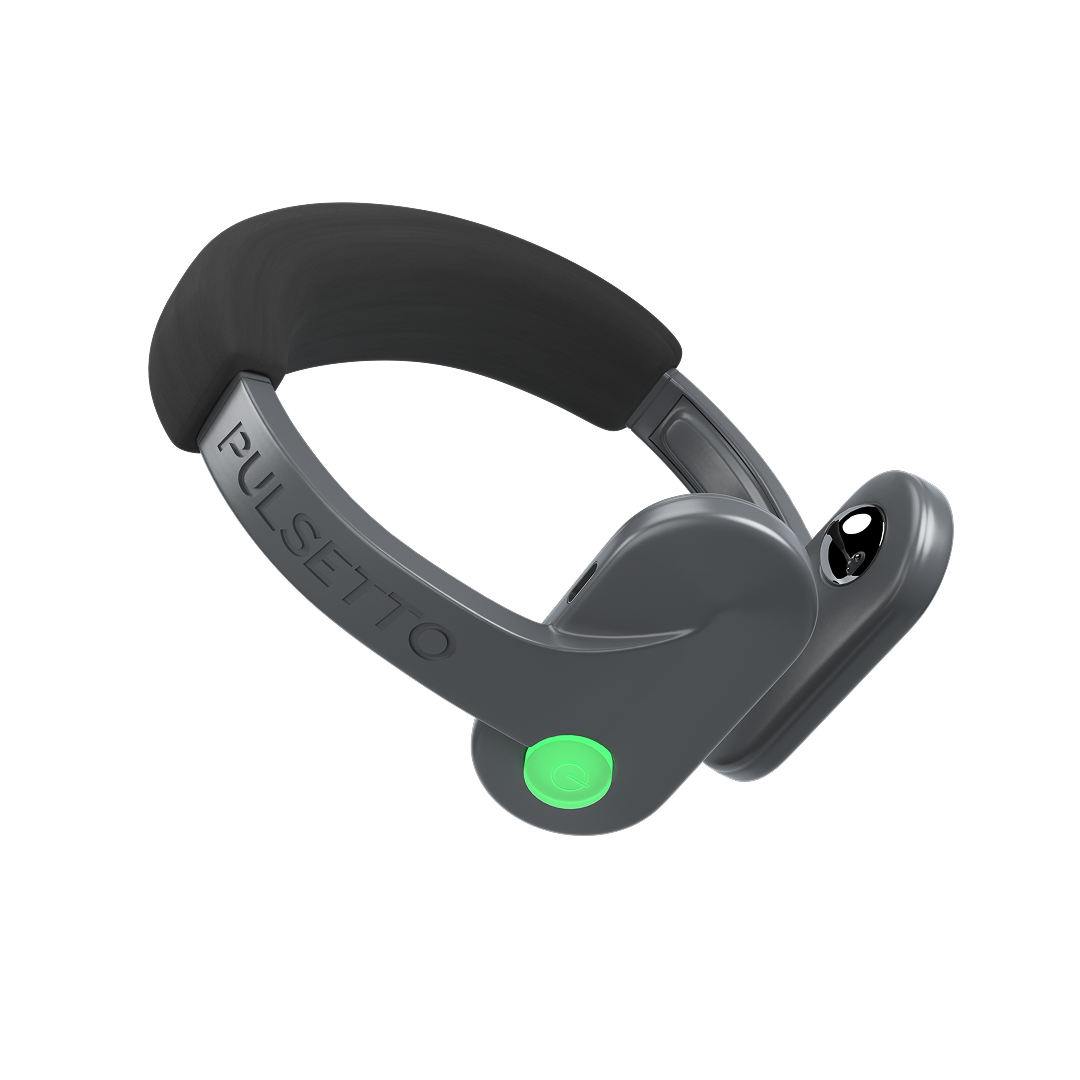
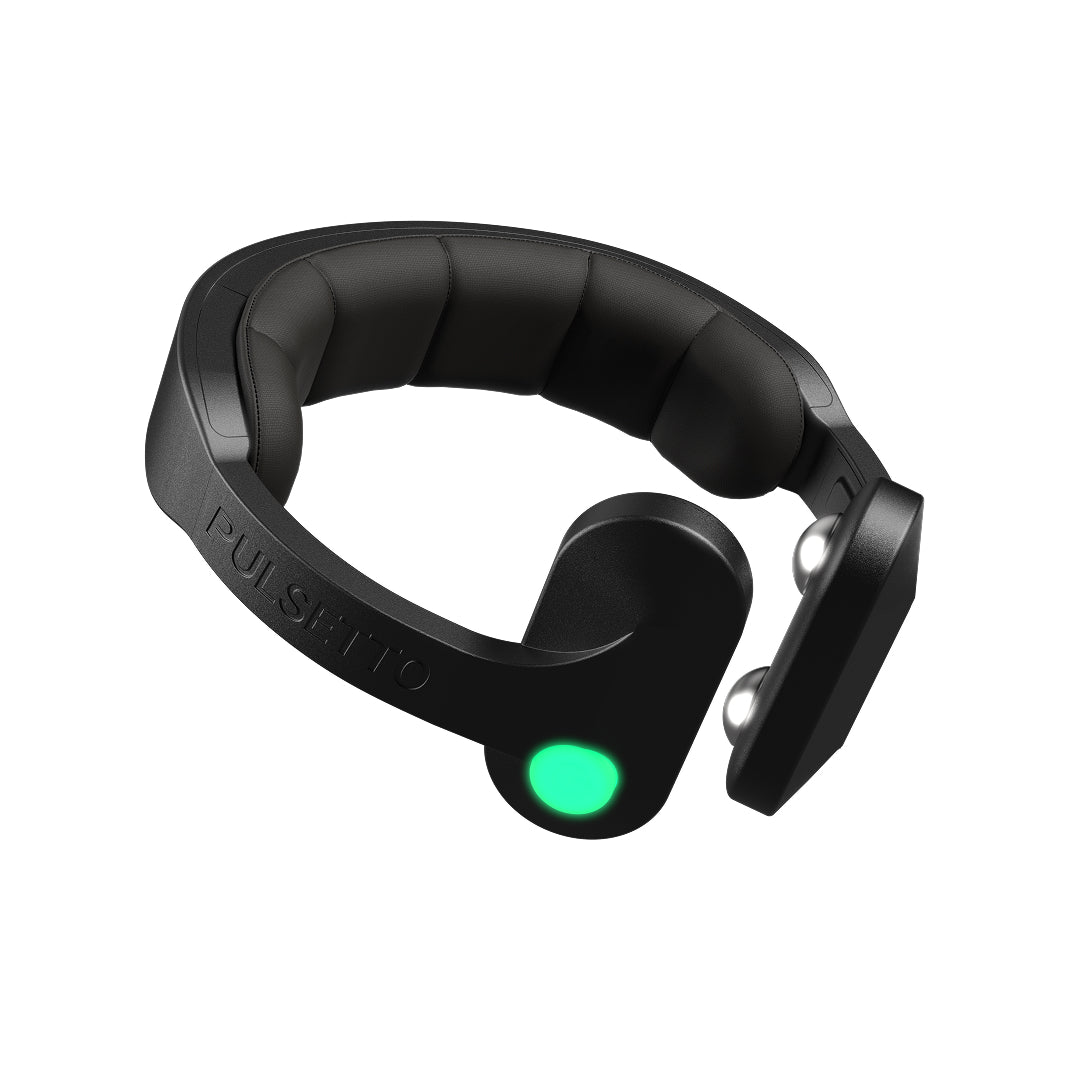
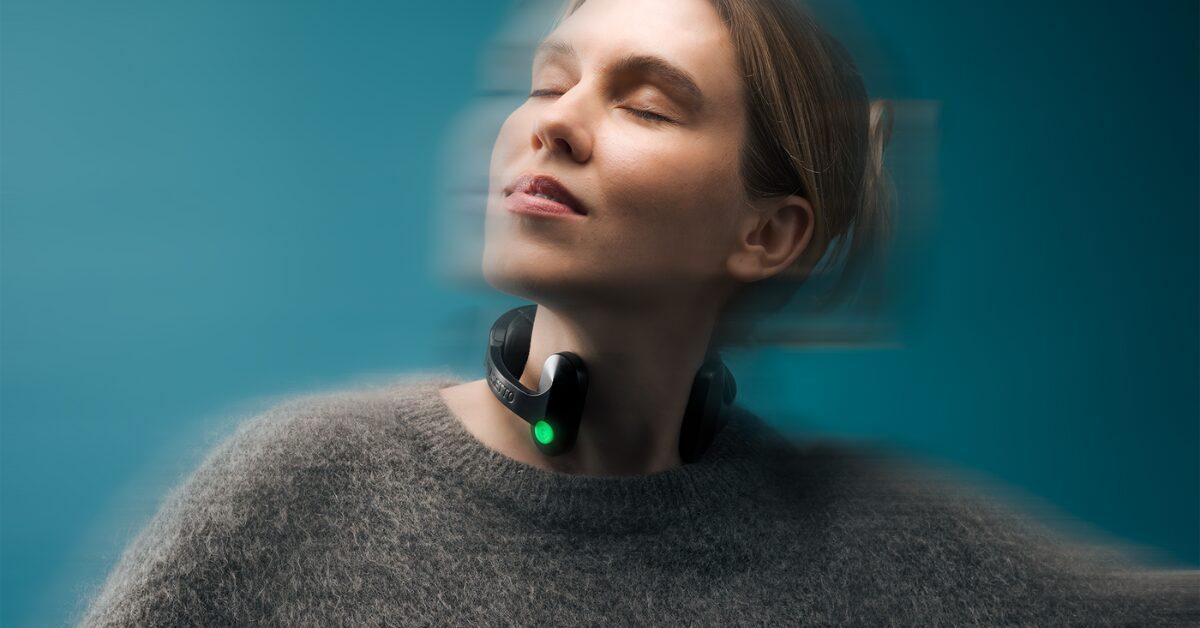
Pulsetto delivers that physiological approach as a bilateral cervical vagus nerve stimulation device, CE certified for general wellness use, with 4-minute hands-free sessions. It is compact and portable, making it practical to use before boarding or in the air. In Pulsetto's own randomized open-label pilot study (n=40, 4 weeks), GAD-7 anxiety scores improved by 45.3% in the bilateral group.
Disclaimer: Pulsetto is a general wellness product and is not intended to diagnose, treat, cure, or prevent any disease or medical condition. People with pacemakers, implantable cardiac devices, epilepsy, or who are pregnant should consult a physician before using any electrical stimulation device.
Does Dramamine Help With Flight Anxiety?
Dramamine is an antihistamine primarily used for motion sickness, not anxiety. It may reduce nausea associated with turbulence, but it does not address the psychological or neurological causes of flight anxiety.
Some people find its sedative side effects helpful, but this is not the same as treating anxiety. Any decision about medication for how to get over plane anxiety should be discussed with a healthcare professional.
CBT and exposure therapy are the most evidence-supported treatments for flight anxiety and address the underlying cause rather than masking symptoms.
When to Get Professional Help for Flight Anxiety
Professional help is recommended when flight anxiety prevents travel or causes significant distress.
Cognitive behavioral therapy is the most evidence-supported approach. A randomized controlled trial found that exposure-based CBT for flight phobia produced significant improvements across all primary and secondary anxiety outcomes, with treatment gains maintained at 12-month follow-up (Tortella-Feliu et al., Psychological Medicine, PMC).
Exposure therapy works by gradually desensitizing the person to flying-related stimuli, helping manage flight anxiety by retraining the fear response rather than working around it. A healthcare professional can identify whether underlying conditions such as GAD or panic disorder are contributing and recommend the right treatment approach.
Ready to Fly With a Calmer Nervous System?
Flight anxiety is manageable, and the tools above work best in combination. Preparation before the flight, breathing and grounding techniques in the air, calming content, and drug-free nervous system support each address a different layer of the problem.
Pulsetto may support the physiological layer as a complement to behavioral strategies, not a replacement for them. Frequent flyers in Pulsetto reviews often describe using the device at the gate or during the first stretch of the flight as part of their pre-boarding anxiety routine.
Those comparing options for the best calming device for anxiety will find cervical nVNS occupies a distinct tier from passive sensory tools.
FAQs: How to Deal With Flight Anxiety
These answers cover common questions about flight anxiety causes, coping techniques, and treatment options. They address flight anxiety tips, causes, and how to deal with flight anxiety in practice.
Is flight anxiety normal?
Yes, completely. One in three people experience some level of flight anxiety. It ranges from mild unease during takeoff to significant distress, and both are valid experiences worth addressing with the right tools rather than ignoring or pushing through.
What helps most with flight anxiety?
A combination of preparation before the flight, breathing techniques during it, grounding methods like the 3-3-3 rule, and avoiding caffeine and alcohol works better than any single approach. Tips for flight anxiety that rely on a single technique tend to be less effective than layered approaches that address both the physical and mental dimensions of the experience.
How do you relax for flight anxiety?
Slow controlled breathing, grounding techniques, calming music, and visualization all support relaxation before and during a flight. How to calm down before a flight works best when these tools are practiced regularly before travel rather than only during moments of acute anxiety. The best relaxation techniques for flight anxiety share the same physiological mechanism as general anxiety relief: activating the parasympathetic nervous system to counteract the fight-or-flight response.
Is vagus nerve stimulation safe to use on a plane?
Non-invasive VNS is a CE-certified general wellness approach and is compact enough for use before boarding or during a flight. Contraindications include pacemakers, implantable cardiac devices, epilepsy, and pregnancy. Consulting a healthcare professional before use is recommended for anyone with these conditions. Those who want to review Pulsetto side effects before starting should do so alongside professional guidance.
When should I see a doctor about flight anxiety?
Seek professional support when flight anxiety prevents travel, causes significant distress, or is linked to a broader anxiety disorder. CBT and exposure therapy are the most evidence-supported options. A healthcare professional can help identify the right treatment for how to get over plane anxiety when self-directed strategies are not enough.
Scientific Research
[1] Processes Contributing to the Maintenance of Flying Phobia: A Narrative Review (Cotti P, Nüesch S, Dorn F, 2016, Frontiers in Psychology, PMC)
[2] The Effects of Music and Auditory Beat Stimulation on Anxiety: A Randomized Clinical Trial (Lee JH, Bhattacharya J, Bhattacharya S, Wahbeh H, 2022, PLOS ONE, PMC)
[3] Efficacy of an Internet-Based Exposure Treatment for Flying Phobia (NO-FEAR Airlines) With and Without Therapist Guidance: A Randomized Controlled Trial (Tortella-Feliu M, Botella C, Llabrés J et al., 2011, Psychological Medicine, PMC)
[4] Non-invasive vagus nerve stimulation in healthy humans reduces sympathetic nerve activity (Clancy JA, Mary DA, Witte KK, Greenwood JP, Deuchars SA, Deuchars J, 2014, Brain Stimulation)
[5] Vagus Nerve as Modulator of the Brain–Gut Axis in Psychiatric and Inflammatory Disorders (Breit S, Kupferberg A, Rogler G, Hasler G, 2018, Frontiers in Psychiatry, PMC)
[6] Study: Flying keeps getting safer (Barnett A, MIT, 2024)
[7] IATA Releases 2024 Safety Report (IATA, 2025)