Vagus nerve reset exercises for stress

The phrase "vagus nerve reset exercises" describes simple, drug-free techniques you can do anywhere to encourage a calmer state. None of these are medical treatments; they are everyday practices that many people use to feel steadier. The most reliable ones share a theme: they slow you down and lengthen the exhale, which is when parasympathetic activity is strongest.
Slow diaphragmatic breathing with long exhales. Breathe low into the belly and make the exhale noticeably longer than the inhale, for example inhaling for a count of four and exhaling for six or more. Slowing the breath toward around six breaths per minute is a classic way to encourage vagal tone.
The physiological sigh. Take a normal inhale through the nose, add a short second sip of air to fully inflate the lungs, then release one long, slow exhale. A couple of these in a row can take the edge off a spike of tension.
Humming, chanting, or singing. The vagus nerve connects to the muscles around the voice box, so a sustained hum or drawn-out "om" adds gentle vibration and a naturally extended exhale.
Gargling. Gargling water vigorously engages the same throat muscles and is an easy, low-effort option some people add to a morning routine.
Cold exposure. A splash of cold water on the face or a brief cool rinse at the end of a shower is a common way people try to prompt a calming shift. Introduce cold gradually and skip it if you have any cardiovascular concern.
Gentle movement. Slow stretching, an unhurried walk, or easy yoga pairs relaxed breathing with light activity and helps many people wind down.
For a broader menu of these, this collection of calming techniques to soothe your nervous system and these nervous system reset strategies go further, and there is a dedicated walkthrough of vagus nerve massage techniques if hands-on methods appeal to you.
A quick-reference table
Method |
What to do |
What the evidence shows |
Slow diaphragmatic breathing |
Long exhales, around six breaths per minute |
Breathwork reduced stress and improved mental health in a meta-analysis of randomized trials [9] |
HRV biofeedback |
Train slow breathing while watching HRV feedback |
A meta-analysis found HRV biofeedback lowered self-reported stress and anxiety [8] |
Mindfulness and meditation |
Short daily sessions, often app-guided |
Meditation programs improved psychological stress and well-being [10]; mobile mindfulness reduced stress in a randomized trial [11] |
Humming, gargling, cold, movement |
Everyday vagal-toning practices |
Widely used self-care practices that support relaxation |
Non-invasive VNS |
Gentle stimulation of the nerve pathway |
Non-invasive stimulation reduced acute stress responses and raised vagally-mediated HRV in study populations [3][5][12] |
Does vagus nerve stimulation for stress actually work?
This is the honest question worth asking: does vagus nerve stimulation help stress, or is it hype? The research on non-invasive VNS and stress is still developing, but several controlled studies point in an encouraging direction.
Work on transcutaneous cervical vagus nerve stimulation quantified acute physiological biomarkers when it was applied in the context of psychological stress, showing measurable effects on the body's stress signaling [3]. A double-blind, sham-controlled trial reported that transcutaneous cervical stimulation reduced sympathetic responses to stress in its study population [4]. In young healthy adults, transcutaneous auricular vagus nerve stimulation and median nerve stimulation both reduced acute stress [5]. More recent studies have examined how auricular stimulation affects physiological responses and cognitive performance during a mental stressor [6], and a single-blinded randomized trial found effects on subthreshold affective symptoms and perceived stress in community-dwelling adults [7]. On the HRV side, auricular stimulation raised vagally-mediated HRV in healthy young participants [12].
Two things are true at once. The signal across these studies is promising, and the field is still maturing, with varied protocols and mostly small samples. That is why the responsible framing is that non-invasive VNS may support relaxation and stress recovery, not that it treats a diagnosed condition. For a plain-language walkthrough of the category, see this ultimate guide to vagus nerve stimulation and this look at whether non-invasive VNS for anxiety and HRV exercises work.
Exercises and devices are complementary
The best-supported stress tools are not either-or. HRV biofeedback, breathwork, and meditation all have meta-analytic support [8][9][10], and mobile mindfulness has held up in a randomized trial [11]. A device can sit alongside these habits as a hands-free option for the days when sitting down to breathe deliberately is hard to fit in.
The non-invasive VNS device landscape
Consumer devices vary a lot in where they stimulate, how they feel, and what they cost. Naming the main options makes it easier to see where each may be a good fit.
Device |
Type |
Approximate price |
Notable trait |
Pulsetto |
Bilateral cervical (neck) nVNS |
Lite around $269, FIT around $296 |
Hands-free, around 4-minute sessions, free app |
Nurosym |
Single-ear auricular clip |
Around €699 |
Strong published evidence base, app-free |
Vagustim |
Bilateral auricular |
Around $390 |
App-tunable |
Neuvana Xen |
Earbud auricular plus music |
Around $449 |
Pairs stimulation with audio |
Truvaga |
Handheld cervical wand |
Around $199 to $499 |
Handheld rather than hands-free |
Sensate |
Infrasonic chest device |
Around $300 |
Vibration and sound, not electrical |
Apollo Neuro |
Wrist or ankle haptic wearable |
Around $349 |
Haptic vibration, not electrical |
HeartMath Inner Balance |
HRV biofeedback trainer |
Around $159 to $199 |
Measures and trains HRV, does not stimulate |
A few clarifications help. Sensate and RezziMax use vibration or acoustic input rather than electrical stimulation. Apollo Neuro is a haptic wearable. HeartMath Inner Balance is a biofeedback trainer that measures and coaches HRV rather than stimulating the nerve, and wearables such as Oura Ring, Whoop, Garmin, and Fitbit monitor stress and HRV without delivering any stimulation. Muse is an EEG meditation headband. Implanted, surgical VNS is a separate medical therapy and not a consumer product. If you want a curated shortlist, these roundups of the best vagus nerve stimulation devices, best nervous system regulation devices, and best wearable devices for stress relief compare the field in more detail.
How Pulsetto FIT X fits as a general wellness tool

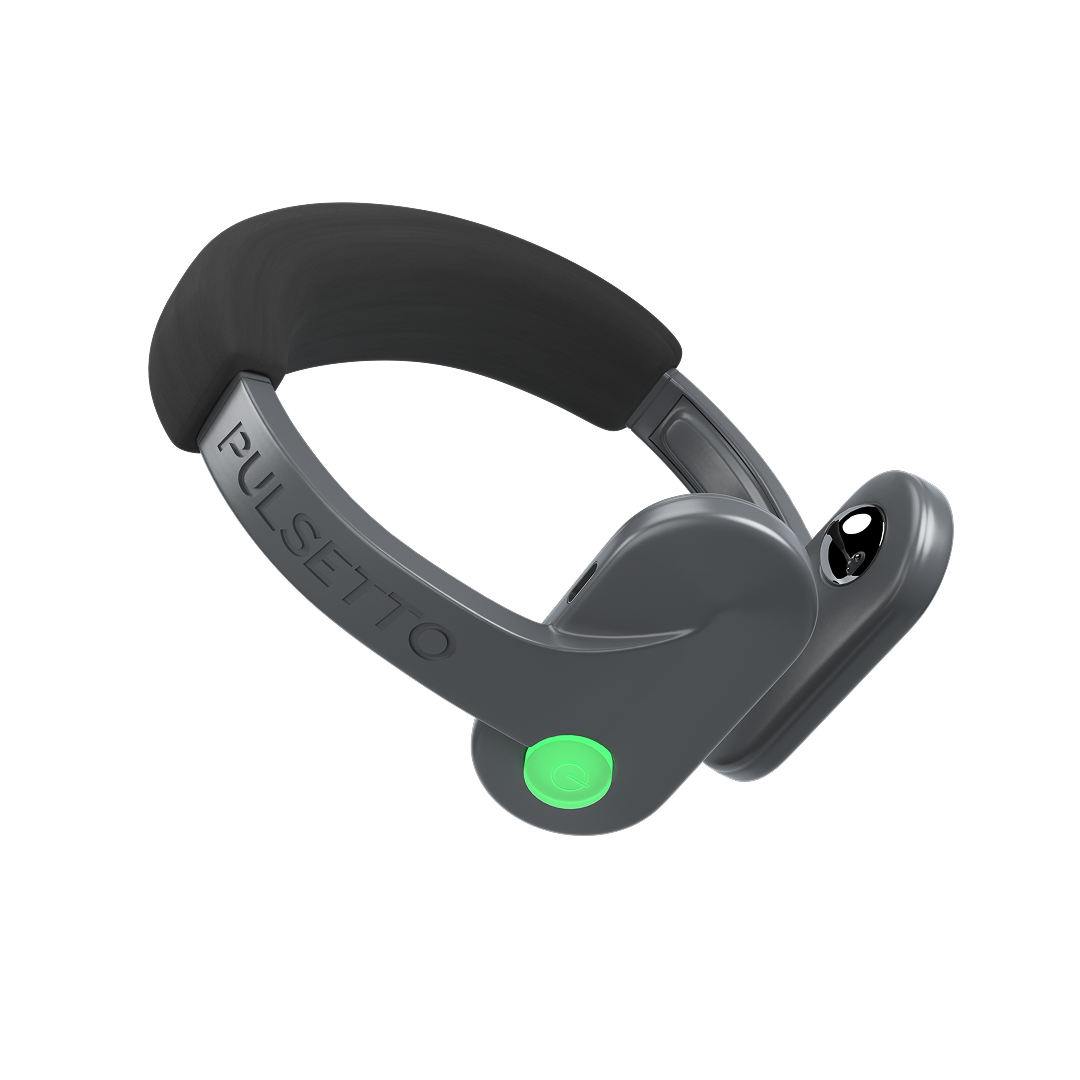
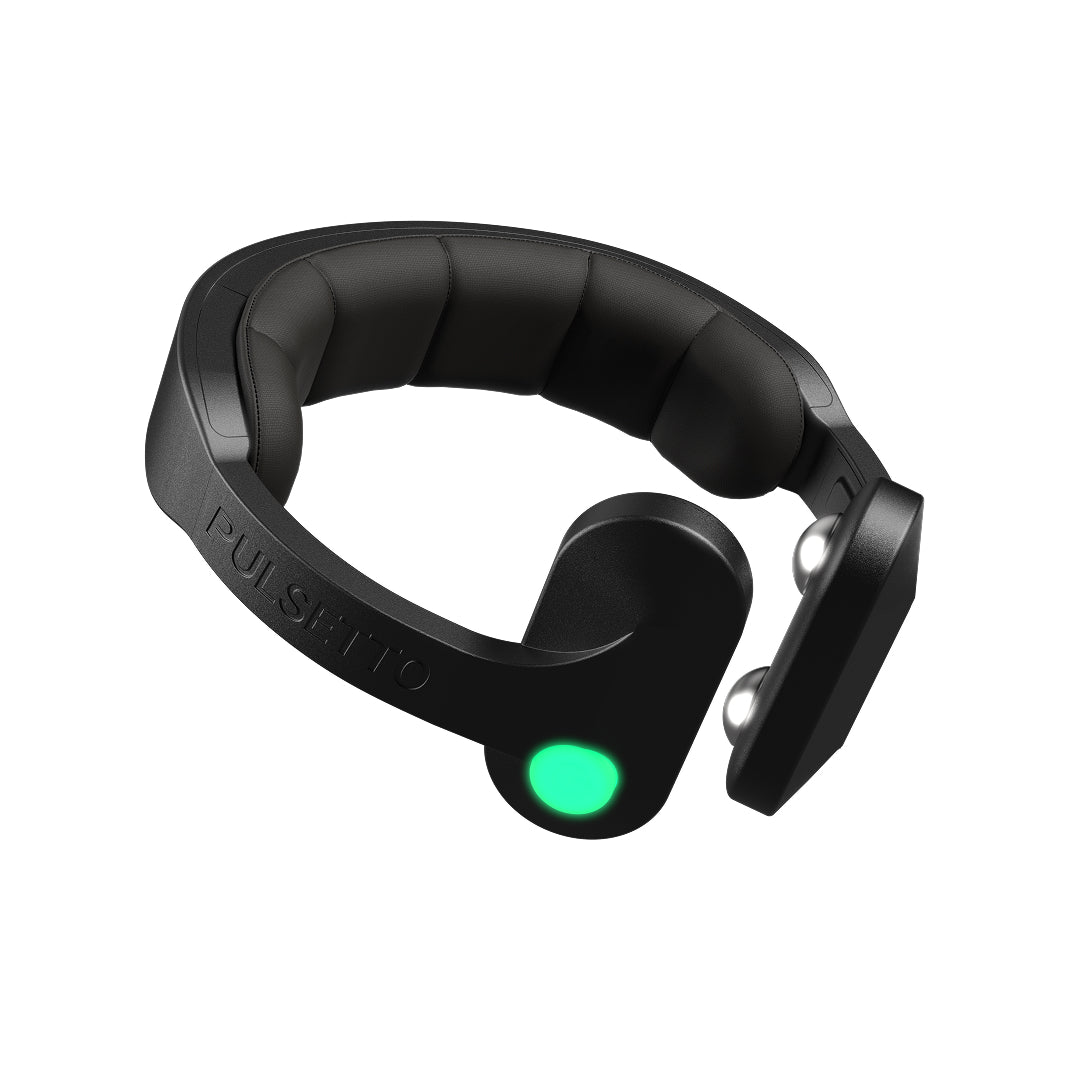
Pulsetto is a bilateral cervical vagus nerve stimulator, meaning it applies gentle stimulation to both sides of the neck at once. It is worn hands-free, sessions run about four minutes, and it works with a free companion app with no mandatory subscription. It is CE certified and FCC certified, made in Lithuania, and offered in two versions, the Pulsetto Lite device at around $269 and the Pulsetto FIT device at around $296. It is a general wellness device intended for adults, not a TENS unit and not a medical device.
As a wellness tool for stress, Pulsetto is designed to help you feel calmer by supporting relaxation and the body's stress-recovery response, and it may support healthier HRV over time as part of a broader routine. In Pulsetto's own randomized open-label pilot study (n=40, 4 weeks), participants reported a 55.9% reduction in depressive symptoms (PHQ-9), a 45.3% reduction in anxiety symptoms (GAD-7), and a 41.0% improvement in sleep quality (PSQI). Bilateral stimulation reduced the chronic-stress biomarker hair cortisol by 47.5%, compared with 31.4% for unilateral stimulation. These are general wellness pilot findings on mood, anxiety, sleep, and stress biomarkers, not evidence for treating any specific condition.
For those who like to understand the evidence and the mechanism, Pulsetto publishes its science page and a summary of its ongoing studies and trials.
Safety and contraindications
Non-invasive does not mean unrestricted. Do not use Pulsetto if you have a pacemaker or any implanted electrical medical device, or if you have epilepsy or a seizure disorder. Do not use it during pregnancy. Consult your doctor first if you have cardiac arrhythmia or a serious cardiovascular condition, if you have had recent neck or throat surgery, or if you have any carotid artery condition. Keep to the recommended session length rather than doing longer or extra sessions, and remember that Pulsetto is intended for adults. You can review the full contraindications of using Pulsetto and the quick start guide before your first session.
Frequently asked questions
What are the best vagus nerve exercises for stress?
The most reliable ones slow your breathing and extend the exhale. Slow diaphragmatic breathing toward around six breaths per minute, the physiological sigh, humming or chanting, gargling, brief cold exposure, and gentle movement are all common vagus nerve exercises for stress. Breathwork in particular reduced stress across randomized trials [9], and HRV biofeedback that trains slow breathing lowered stress and anxiety in a meta-analysis [8].
How do you reset the vagus nerve for stress?
There is no literal reset button, but people use vagus nerve reset exercises to shift toward a calmer state. Combine a few minutes of long-exhale breathing with a soothing input such as humming, a splash of cold water on the face, or a slow walk. Doing this consistently, rather than only during a crisis, is what tends to help most.
Does vagus nerve stimulation help with stress?
Controlled studies of non-invasive stimulation are encouraging. Transcutaneous cervical stimulation reduced sympathetic responses to stress in a sham-controlled trial [4], auricular and median nerve stimulation reduced acute stress in healthy adults [5], and auricular stimulation raised vagally-mediated HRV [12]. The field is still developing, so the fair conclusion is that it may support relaxation and stress recovery rather than treat a diagnosed condition.
Can Pulsetto help with stress?
Pulsetto is designed to help you feel calmer by supporting relaxation and the body's stress-recovery response, framed as general wellness rather than medical treatment. In its own randomized open-label pilot study (n=40, 4 weeks), participants reported reductions in anxiety symptoms (GAD-7) and a reduction in the chronic-stress biomarker hair cortisol. Many people use it hands-free alongside breathing and mindfulness habits.
How does stress affect HRV?
Stress tends to lower HRV. When the sympathetic "fight or flight" branch dominates, the beat-to-beat variation in your heartbeat narrows, which shows up as lower HRV. A meta-analysis confirmed that lower HRV is linked with higher stress [1], and standardized HRV metrics make it possible to track that relationship over time [2]. Practices that raise vagal tone are aimed at nudging HRV back up.
Scientific research
Pulsetto is a general wellness product and is not intended to diagnose, treat, cure, or prevent any disease or medical condition. The studies below were identified via the Consensus and PubMed databases and are indexed in PubMed.
[1] Stress and Heart Rate Variability: A Meta-Analysis and Review of the Literature (Kim et al., 2018, Psychiatry Investigation. PMID: 29486547)
[2] An Overview of Heart Rate Variability Metrics and Norms (Shaffer et al., 2017, Frontiers in Public Health. PMID: 29034226)
[3] Quantifying acute physiological biomarkers of transcutaneous cervical vagal nerve stimulation in the context of psychological stress (Gurel et al., 2019, Brain Stimulation. PMID: 31439323)
[4] Transcutaneous cervical vagal nerve stimulation reduces sympathetic responses to stress in posttraumatic stress disorder: A double-blind, randomized, sham-controlled trial (Gurel et al., 2020, Neurobiology of Stress. PMID: 33344717)
[5] Transcutaneous auricular Vagus Nerve Stimulation and Median Nerve Stimulation reduce acute stress in young healthy adults (Sanchez-Perez et al., 2023, Frontiers in Neuroscience. PMID: 37746156)
[6] Effects of taVNS on physiological responses and cognitive performance during a mental stressor (Drost et al., 2025, Cognitive, Affective and Behavioral Neuroscience. PMID: 40908377)
[7] Effects of transcutaneous vagus nerve stimulation on subthreshold affective symptoms and perceived stress: a single-blinded randomized trial in community-dwelling adults (Jackowska et al., 2025, Biological Psychology. PMID: 41290087)
[8] The effect of heart rate variability biofeedback training on stress and anxiety: a meta-analysis (Goessl et al., 2017, Psychological Medicine. PMID: 28478782)
[9] Effect of breathwork on stress and mental health: A meta-analysis of randomised-controlled trials (Fincham et al., 2023, Scientific Reports. PMID: 36624160)
[10] Meditation programs for psychological stress and well-being: a systematic review and meta-analysis (Goyal et al., 2014, JAMA Internal Medicine. PMID: 24395196)
[11] Happier Healers: Randomized Controlled Trial of Mobile Mindfulness for Stress Management (Yang et al., 2018, Journal of Alternative and Complementary Medicine. PMID: 29420050)
[12] Ear your heart: transcutaneous auricular vagus nerve stimulation on heart rate variability in healthy young participants (Forte et al., 2022, PeerJ. PMID: 36438582)
Training your nervous system with Pulsetto FIT X
If you are looking to make vagus nerve stimulation part of a daily routine rather than an occasional experiment, Pulsetto FIT X is built for exactly that. It is the current generation of the Pulsetto platform: adaptive stimulation that adjusts to you while the session runs, intelligent contact sensing instead of manual tuning, and angled X-shape electrodes that create a crossed field across both vagus nerve pathways. Sessions are guided by the Pulsetto app, with progress you can follow over time. Pulsetto FIT and Lite remain available as lower-cost entry points. It is a training tool for your nervous system — not a treatment, and not a substitute for medical advice.
Train your nervous system. Build your stress resilience. Meet Pulsetto FIT X.