Quick comparison
|
Device
|
Mechanism
|
Independent evidence strength
|
Price
|
Best for
|
|
Pulsetto
|
Bilateral cervical vagus nerve stimulation (electrical)
|
Strongest: multiple double-blind, sham-controlled trials on the mechanism, plus Pulsetto's own pilot study
|
Lite $269 / FIT $296
|
Hands-free daily sessions, general nervous-system regulation
|
|
HeartMath Inner Balance
|
Ear-clip HRV sensor + app-guided paced-breathing coherence training
|
Strong at the category level, and HeartMath devices specifically are behind much of that literature
|
~$179
|
People who want to see their own data and actively train their breathing
|
|
WHOOP
|
Continuous HRV, recovery, and strain tracking (passive, no intervention)
|
Sensor accuracy is independently validated; evidence that tracking itself reduces stress is thin
|
From $199/year (membership, device included)
|
People who want objective recovery data and can hold the numbers loosely
|
How we evaluated these three
For each device, we asked five questions: What does the company claim? What's the biological rationale? What does independent, peer-reviewed research say about that mechanism? Is there a trial on the device itself, or only on the underlying category? And, bottom line, who is this actually a reasonable purchase for? We sourced every study cited below through a live search of the peer-reviewed literature (Semantic Scholar, PubMed, Scopus, ArXiv), not from any single company's website. Where a company's own claim outruns the independent evidence, we say so.

1. Pulsetto
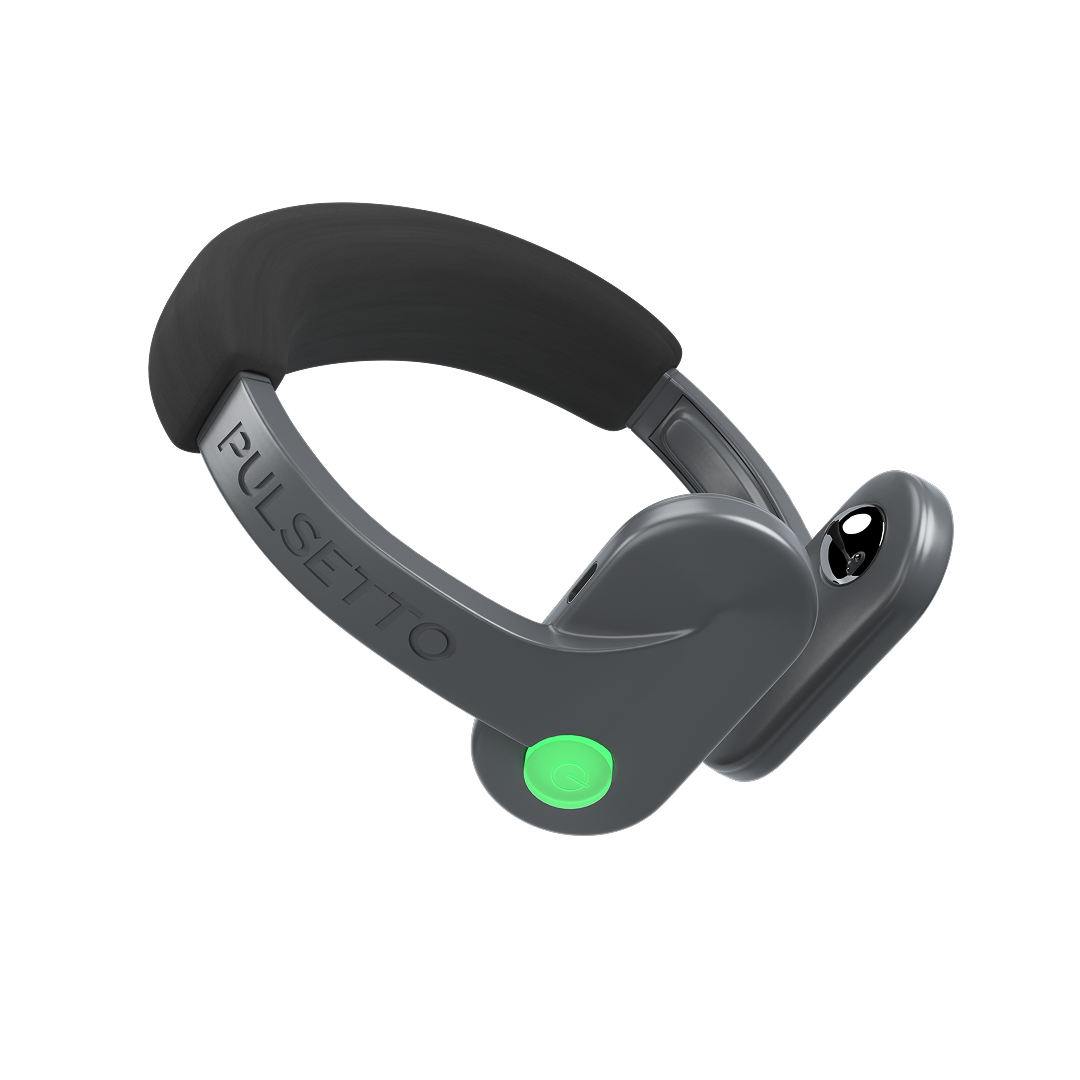
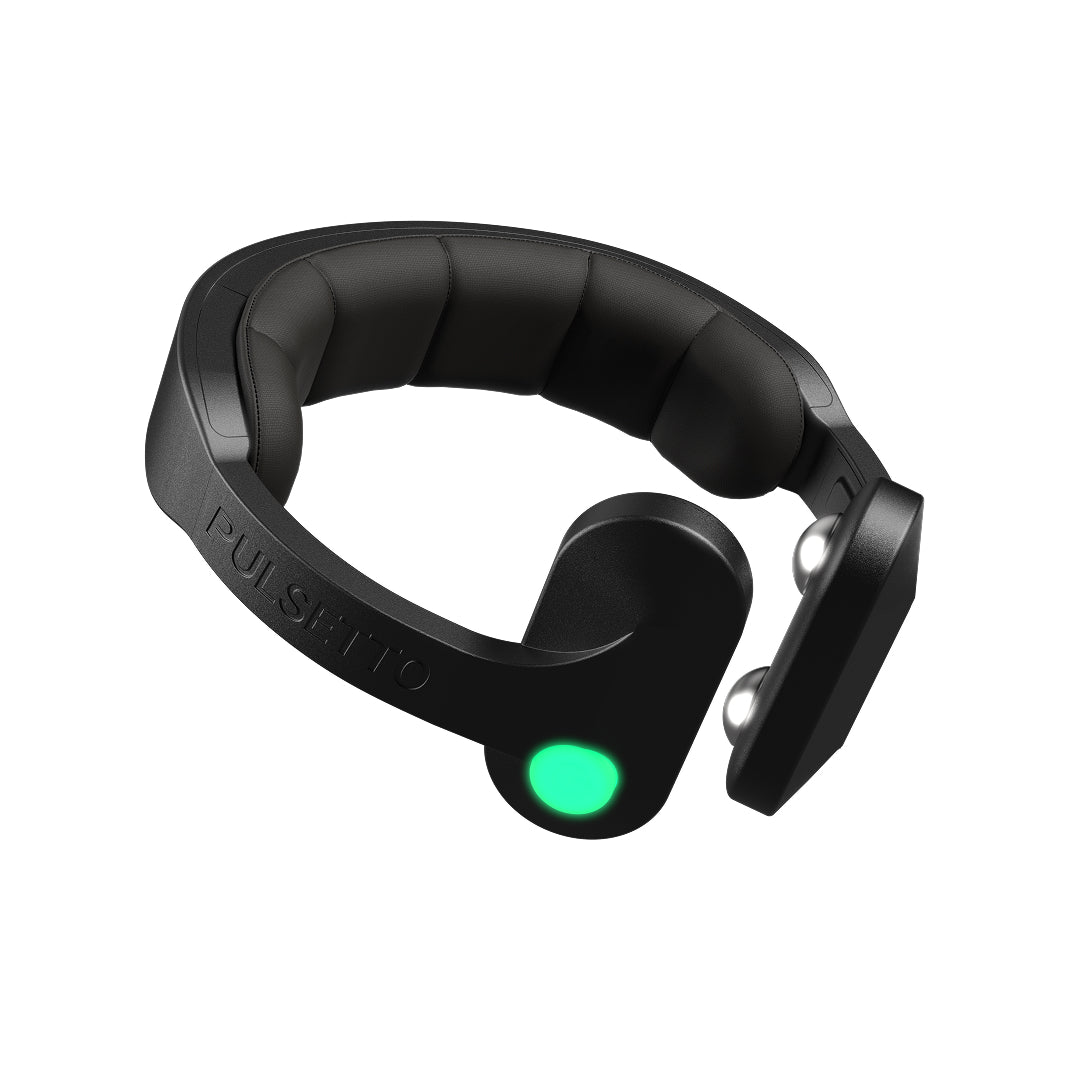
Product: Pulsetto is a hands-free, bilateral cervical vagus nerve stimulation (nVNS) wearable. It sits on both sides of the neck at once and runs a 4-minute session through the Free Lifetime app (five programs: Stress, Sleep, Burnout, Pain, Anxiety) or the Premium tier (eight programs, breathwork, guided meditation).
Claims: Pulsetto is a general wellness aid designed to help your nervous system feel calm, safe, and balanced, through bilateral cervical stimulation, not a single-side handheld device.
Rationale: The vagus nerve is the main highway of the parasympathetic nervous system, the branch that dials the body back down after a stress response. Stimulating its cervical branch, at the neck, is a more direct route to that afferent signaling than stimulating it at the ear, which is where most competing devices apply current. Pulsetto's bilateral design (both sides of the neck, simultaneously) is the part worth noting: in Pulsetto's own randomized open-label pilot study (n=40 randomized, 37 completers, 4 weeks), bilateral stimulation outperformed unilateral on hair cortisol reduction (p=0.024 for the bilateral group).
Evidence: Independent, peer-reviewed research on transcutaneous cervical vagus nerve stimulation (tcVNS) is the deepest of the three devices reviewed here. Double-blind, sham-controlled trials have shown tcVNS reduces sympathetic arousal after acute stress, measured through heart rate, peripheral vasodilation, and pulse arrival time [1][6], and a companion trial in patients with PTSD found similar reductions in sympathetic response compared to sham stimulation [6]. A 2025 study combining tcVNS with breathing and aroma found tcVNS alone raised heart rate variability (SDNN) from 76.5ms at rest to 109.5ms during stimulation (p=0.041), with combined interventions producing the largest gains [7]. A broader 2024 review of vagus nerve stimulation research confirms the mechanism has approved or cleared applications in epilepsy, depression, and migraine, alongside growing exploratory research in stress and anxiety [4]. Worth noting honestly: one 2025 study found that response to auricular vagus stimulation isn't uniform, people with already-high vagal tone (measured by baseline HRV) responded differently than people with low vagal tone [5], a reminder that "activates the vagus nerve" doesn't mean identical results for everyone.
In Pulsetto's own randomized open-label pilot study (n=40 randomized, 37 completers, 4 weeks, unilateral vs. bilateral), participants showed statistically significant improvements on PHQ-9 (depressive symptoms, p<0.001), GAD-7 (anxiety, p=0.0004 unilateral / p=0.003 bilateral), and PSQI (sleep quality, p<0.001 both groups), alongside a significant reduction in hair cortisol (p=0.013 overall, p=0.024 bilateral). Hair cortisone showed only a trend-level change (p=0.059), not statistical significance, and that distinction matters: it's the kind of detail an honest review keeps in, not out. This was an open-label, industry-funded pilot, not yet published in a peer-reviewed journal, and additional trials are underway at institutions including the Lithuanian Sports University, Kaunas Clinics, and Erasmus MC.
Bottom line: Of the three devices here, Pulsetto's underlying mechanism has the strongest independent research trail, and it's the only bilateral, hands-free option in its category. It is not FDA-cleared and isn't intended to diagnose, treat, cure, or prevent any disease. For general nervous-system regulation, worn hands-free during work, reading, or before sleep, it's a reasonable place to start a session-based routine.
2. HeartMath Inner Balance
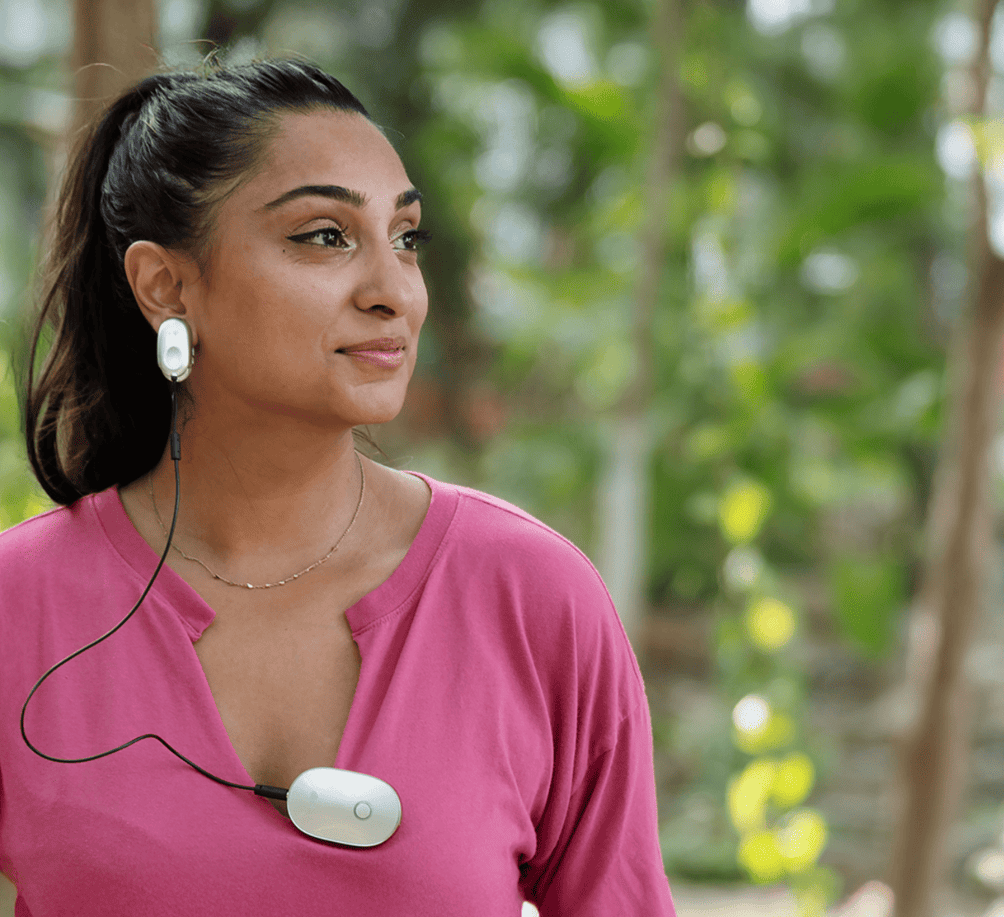
Product: The HeartMath Inner Balance (Coherence Plus) is a small ear-clip sensor that reads your pulse and pairs with an app. It doesn't stimulate anything, it shows you a real-time "coherence" score based on your heart rhythm pattern while you practice slow, paced breathing.
Claims: HeartMath markets Inner Balance as a way to build "heart coherence," a state where heart rhythm, breathing, and blood pressure fall into sync, through visual biofeedback during short daily practice sessions.
Rationale: This is the most active, skill-building approach of the three. Rather than a device doing something to your body, HeartMath's model has you doing the work (slow paced breathing) while the sensor and app show you, in real time, how close you are to a coherent heart rhythm pattern. It's the same operant-conditioning logic behind biofeedback broadly, learn to see the signal, learn to shift it.
Evidence: A 2017 meta-analysis of 24 studies (484 participants) found HRV biofeedback training produced a large reduction in self-reported stress and anxiety (Hedges' g=0.81 within-group, g=0.83 versus control) [2], and HeartMath's own sensor line (including the Inner Balance's predecessors) is one of the devices this literature was built around, making it a more direct match than most "stress wearables" can claim. A 2015 randomized controlled trial comparing physical activity, mindfulness meditation, and self-help HRV biofeedback (using paced breathing against a device, the same mechanic Inner Balance uses) found all three produced comparable reductions in stress, anxiety, and depressive symptoms, with no significant difference between methods [3], a useful, honest data point: the device helps, but it isn't shown to outperform free alternatives like a meditation practice. What's thinner is a large, independently run trial naming the Inner Balance product specifically, rather than the broader HRV-biofeedback category HeartMath helped define.
Bottom line: Of the three devices reviewed here, HeartMath's category has arguably the longest independent research history, this is closer to a training tool than a passive gadget, and it takes real, active practice to get value from it. A reasonable fit for someone who wants to see their own physiological data and is willing to sit still and breathe on purpose. Not a fit for someone who wants a device that works passively in the background.
3. WHOOP
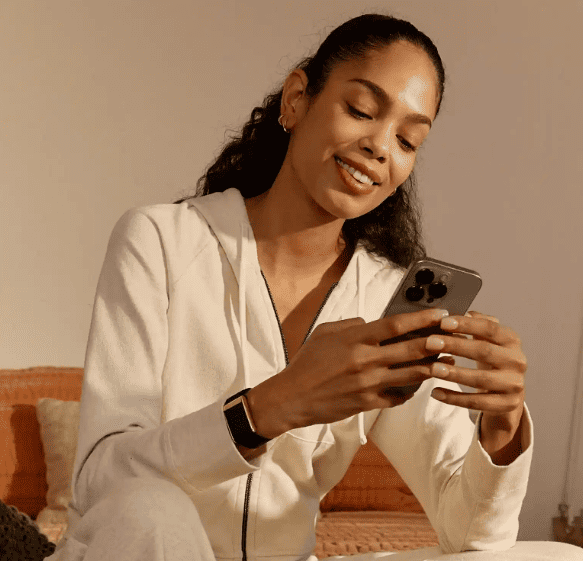
Product: WHOOP is a subscription-based wrist band with no screen, continuously measuring heart rate variability, resting heart rate, respiratory rate, and sleep, and converting that data into daily Strain and Recovery scores through its app. It doesn't stimulate or train anything, it's a monitoring device.
Claims: WHOOP markets itself as helping users understand and manage their stress load by surfacing daily physiological readiness data, guiding decisions about when to push and when to rest, rather than intervening directly.
Rationale: This is a genuinely different category from the two devices above: it's a measurement tool, not an intervention. The underlying logic is that visibility into your own HRV and recovery trends helps you make better day-to-day decisions, train harder, rest more, adjust sleep, rather than the device changing your physiology directly.
Evidence: A 2025 validation study comparing five consumer wearables against ECG during 536 nights of sleep found WHOOP showed moderate-to-substantial agreement for HRV (CCC=0.94, mean absolute error 4.17ms) and resting heart rate (CCC=0.91), performing acceptably though not as accurately as some competing devices in the same study [8]. That's a reasonable case that the underlying data is trustworthy. What's much thinner is evidence that the data itself changes stress-related outcomes, most of what's published is about sensor accuracy, not about whether using WHOOP measurably reduces stress or improves resilience over time. Worth being direct about the honest tradeoff: heavy engagement with recovery tracking carries a documented downside, orthosomnia, a preoccupation with tracker data that itself worsens sleep and raises anxiety, first described in a 2017 clinical case series [9] and estimated to affect 3% to 14% of regular wearable users in a 2024 population study of 523 adults, where tracker users showed measurably higher sleep-related anxiety than non-users [10].
Bottom line: WHOOP's sensor data is reasonably accurate, but accuracy isn't the same claim as effectiveness, it's not designed to reduce stress directly, it's designed to inform decisions about it. For someone who wants objective data and can hold the numbers loosely, that's genuinely useful. For someone prone to anxious self-monitoring, the tracking itself can become a new source of stress rather than a solution to it.
What types of stress resilience devices are there
Stress resilience devices generally fall into a few distinct mechanism families, and it matters which one you're looking at, because the evidence and the day-to-day experience of using one both change by category:
-
Electrical neuromodulation (transcutaneous vagus nerve stimulation). Devices that apply a mild electrical current to the vagus nerve, either at the neck (cervical, Pulsetto's category) or the ear (auricular). This category has the deepest independent research trail of any consumer stress-tech category reviewed here, including double-blind, sham-controlled trials.
-
Active biofeedback and coherence training. Devices like HeartMath's Inner Balance that measure a physiological signal, usually heart rate variability, and feed it back to you in real time while you practice a technique, typically paced breathing, so you learn to shift your own physiology. Built on one of the longest research histories in this space.
-
Passive monitoring and recovery tracking. Devices like WHOOP that don't intervene at all, they continuously measure HRV, resting heart rate, and sleep, and surface a daily recovery score. These are measurement tools, not treatments, and "does it work" means something different here: does having the data actually change your behavior for the better?
-
Vibrotactile and vibroacoustic touch. Wrist-worn or chest-worn devices that use gentle vibration patterns, engineered touch, or low-frequency sound, to shift autonomic balance. A real physiological rationale, generally with a thinner device-specific research base than the categories above.
-
EEG neurofeedback. Headband-style devices that read brainwave activity and turn it into real-time audio or visual feedback during meditation, training focus and calm at the level of brain activity instead of heart rhythm.
What are common limitations and clinical concerns
Across every category above, a few limitations show up repeatedly, and they're worth naming plainly rather than glossing over:
-
Most trials are small and single-site. Even the best-studied mechanisms here rely on trials in the dozens to low hundreds of participants, not the thousands typical of a large drug trial. That's normal for early-stage device research, but it means any single study is a data point, not a verdict.
-
Placebo and expectation effects are hard to fully rule out. Self-reported stress and anxiety scores respond to more than just the mechanism being tested. Sham-controlled, double-blind designs (used in some of the cervical VNS research cited above) help control for this, but not every study in this space uses one.
-
Device-specific evidence is rarer than category-level evidence. A meta-analysis showing HRV biofeedback works broadly doesn't automatically mean every HRV biofeedback product performs identically, and most products in this space lean on category research rather than a large trial of that exact product.
-
Individual response varies. Research on auricular vagus stimulation found that people with already-high baseline vagal tone respond differently than people with low vagal tone [5], a pattern likely to hold across other mechanisms too, and a reminder that no device here works identically for everyone.
Can stress resilience devices leave a negative impact
Mostly, no, but not always, and the honest answer depends heavily on which category you're in.
The clearest documented downside sits with passive tracking devices like WHOOP: orthosomnia, an unhealthy preoccupation with sleep or recovery data that itself worsens sleep and raises anxiety, first described in a 2017 case series [9] and estimated to affect somewhere between 3% and 14% of regular wearable users in a 2024 population study, with tracker users showing measurably higher sleep-related anxiety scores than non-users [10]. The mechanism is almost circular: chasing a better recovery score becomes its own source of stress, which can lower the very score being chased.
Beyond that, the concerns tend to be more diffuse than dramatic:
-
A false sense of control. Leaning on a device to manage a genuinely serious anxiety, depressive, or trauma-related condition, instead of or ahead of professional care, can delay someone from getting help that works better.
-
Mild physical side effects from electrical stimulation. Cervical and auricular VNS devices can cause mild skin irritation at the contact point, a known, minor, and usually manageable effect, not a hidden risk, but worth knowing going in.
-
Cost without a guarantee. None of these devices comes with one, and for someone whose stress responds just as well to free interventions (exercise, sleep, breathing practice), a $200 to $500 purchase is discretionary, not necessary.
-
What happens after you stop isn't well studied. Most trials measure outcomes during active use or shortly after a program ends. There's limited research on whether gains from any of these devices persist once someone stops using them regularly.
None of this means these devices don't work. The underlying mechanisms behind several of them are genuinely well-supported. It means "does it work" and "is it risk-free" are two different questions, and an honest review answers both.
How to choose a stress resilience device
-
Time you actually have. Pulsetto's sessions run about 4 minutes. HeartMath sessions run 5 to 20 minutes, seated. WHOOP requires no session time at all, just consistent wear.
-
Passive vs. active engagement. Pulsetto works whether or not you engage with it, sit back and let the session run. HeartMath requires you to actively pace your breathing against real-time feedback. WHOOP requires no practice at all, just interpreting the data it gives you.
-
What you're trying to measure. HeartMath gives you a real-time heart-coherence score. WHOOP gives you daily recovery, strain, and sleep trends. Pulsetto's app tracks HRV and sleep alongside its stimulation programs.
-
How much independent, device-specific evidence you need before buying. Cervical vagus nerve stimulation, Pulsetto's category, has the deepest bench of independent mechanism research. HeartMath's own device line is directly behind much of the HRV-biofeedback literature. WHOOP's sensor accuracy is independently validated, but that's a different claim than proof its data changes stress outcomes.
-
Whether tracking your own data tends to calm you down or wind you up. If close monitoring makes you more anxious, not less, an intervention device like Pulsetto or HeartMath may suit you better than a pure tracker like WHOOP.
If you'd rather start with free techniques before spending on a device, our instant stress-relief tips and the ultimate stress-relief protocol are a reasonable first stop.
Turning real data into real relief
The throughline across everything above is that the evidence for stress resilience devices is real, but it's uneven, and it rewards being specific rather than sweeping. "Do stress resilience devices work" isn't one answer, it's a different answer for cervical vagus nerve stimulation, for HRV biofeedback, and for passive recovery tracking, and a different answer again for any single product within those categories.
What holds up across the data reviewed here: mechanisms with a deep, independently replicated, sham-controlled trial history, cervical VNS chief among them, are the safest bet if evidence is your primary filter. Mechanisms with genuine category-level support but thinner device-specific trials, HRV biofeedback broadly, are a reasonable bet if you're willing to do the active work biofeedback requires. Passive monitoring tools are useful for information, not intervention, and carry a real, documented downside if the data itself becomes a source of stress rather than a tool for managing it.
Real relief, in other words, tends to come from matching the mechanism to what you're actually able and willing to do consistently, not from picking whichever device has the most compelling ad.
Ready to start your own stress resilience routine?
Across every device and mechanism reviewed here, Pulsetto's approach, bilateral cervical vagus nerve stimulation, has the deepest bench of independent, sham-controlled research behind it, backed by Pulsetto's own pilot study showing real improvements in stress, anxiety, and sleep measures after four weeks of consistent use. It's hands-free, sessions run about 4 minutes, and it fits into a day without requiring the active practice HRV biofeedback demands or a subscription to a data-tracking service.
Try Pulsetto for yourself →
Please note: Pulsetto is a general wellness product and is not intended to diagnose, treat, cure, or prevent any disease or medical condition, so think of it as a genuinely well-supported addition to a stress resilience routine, not a replacement for care when you need it.
Stress Resilience Device FAQs
Are these devices a replacement for therapy or medication?
No. Pulsetto, HeartMath, and WHOOP are all intended to support everyday stress resilience and nervous-system regulation, not to diagnose, treat, cure, or prevent any disease or medical condition. If you're managing a diagnosed condition, these are, at most, a complementary addition alongside care from a licensed professional, not a replacement for it.
How long before you notice a difference?
It depends on the device. Pulsetto's sessions run about 4 minutes, and many people notice a shift in how they feel the same session, but the meaningful changes documented in Pulsetto's own pilot study showed up after four weeks of consistent, twice-daily use, not a single session. HeartMath works similarly: the skill of shifting your own heart rhythm pattern builds with repeated practice over weeks, not overnight. WHOOP doesn't change anything itself, so the real question there isn't "how long" but how many weeks of consistent data it takes before the trends become meaningful enough to act on.
Is it safe to use a device like Pulsetto?
Yes, it's generally safe and may be genuinely helpful. Wellness devices like Pulsetto are a great tool for supporting a stress fitness and resilience routine, gently guiding the nervous system toward calm rather than overriding it. They're 100% not intended to cure or treat any stress-related illness. As with most wellness devices in this category, it's a good idea to check with a healthcare professional first, especially if you have any chronic conditions, a pacemaker or other implantable device, epilepsy, or are pregnant.
Scientific research
[1] Quantifying acute physiological biomarkers of transcutaneous cervical vagal nerve stimulation in the context of psychological stress (N. Gurel et al., 2019, Brain Stimulation, 69 citations)
[2] The effect of heart rate variability biofeedback training on stress and anxiety: a meta-analysis (Vera C. Goessl et al., 2017, Psychological Medicine, 496 citations)
[3] Physical Activity, Mindfulness Meditation, or Heart Rate Variability Biofeedback for Stress Reduction: A Randomized Controlled Trial (J. E. van der Zwan et al., 2015, Applied Psychophysiology and Biofeedback, 306 citations)
[4] Vagus nerve stimulation (VNS): recent advances and future directions (C. Austelle et al., 2024, Clinical Autonomic Research, 98 citations)
[5] The heart knows best: baseline heart rate variability as guide to transcutaneous auricular vagus nerve stimulation in depression (C. Schiweck et al., 2025, Translational Psychiatry, 5 citations)
[6] Transcutaneous cervical vagal nerve stimulation reduces sympathetic responses to stress in posttraumatic stress disorder: A double-blind, randomized, sham controlled trial (MS Nil Z. Gurel et al., 2020, Neurobiology of Stress, 60 citations)
[7] Effects of tcVNS and Multimodal Stimulation on Heart Rate Variability and Stress Regulation (S. Ha et al., 2025, 2 citations)
[8] Validation of nocturnal resting heart rate and heart rate variability in consumer wearables (Michael B. Dial et al., 2025, Physiological Reports, 13(16))
[9] Orthosomnia: Are Some Patients Taking the Quantified Self Too Far? (Kelly Glazer Baron et al., 2017, Journal of Clinical Sleep Medicine, 13(2):351-354)
[10] Prevalence of Orthosomnia in a General Population Sample: A Cross-Sectional Study (Haitham Jahrami et al., 2024, Brain Sciences, 14(11))