Can the vagus nerve cause tinnitus?
This is one of the most common questions people type, so here is a factual and neutral answer. The vagus nerve is not a typical cause of tinnitus. Tinnitus most often traces back to things like noise exposure, age-related or noise-related hearing loss, earwax or middle-ear problems, certain medications, and other ear or circulatory conditions. Some people ask whether a damaged vagus nerve can cause tinnitus, and while the nerve has a rich role in how the body regulates itself, it is not established as a standard cause of ear ringing.
Because tinnitus has so many possible drivers, the responsible move is assessment rather than self-diagnosis. An audiologist or ear, nose, and throat clinician can check your hearing, look for an underlying cause, and point you toward established care. To understand the nerve itself in more depth, you can read our guide to vagus nerve anatomy and core functions.
Vagus nerve exercises people try

Search demand for vagus nerve exercises for tinnitus is high, so it is worth being precise about what these practices are. Techniques such as slow breathing with long exhales, gentle humming, relaxation routines, better sleep habits, and general stress management are widely shared as ways to encourage a calmer state. They are general wellness practices. They are not tinnitus treatments, and no exercise here should be understood as something that treats, relieves, or reduces tinnitus.
Why do people still reach for them? Because stress and poor sleep are widely reported to make tinnitus feel more noticeable, so a calmer, better-rested state may help some people cope with it. That framing matters: the goal is coping and overall wellbeing, not a cure.
Slow breathing with long exhales
Extending your exhale relative to your inhale is one of the simplest ways to nudge your body toward a rested state. A meta-analysis of breathwork found benefits for stress and mental health across randomized controlled trials [5], and slow breathing is a core way to support the calming, rest-and-digest side of your nervous system. Our guide on how to activate the parasympathetic nervous system walks through the mechanics.
Humming and gentle relaxation
Humming and soft vocal toning are popular because they are easy to do anywhere. People often pair them with light stretching or a short wind-down. If you want a menu of options, our roundup of calming techniques to soothe your nervous system and our nervous system reset strategies both collect approaches worth trying.
Managing stress and heart rate variability
Stress and the state of your nervous system are closely tied to heart rate variability (HRV), a common marker of how well your body shifts between alertness and recovery. A meta-analysis and review found a clear relationship between stress and HRV [6], which is one reason HRV is tracked so often. Biofeedback that trains HRV has also been studied for stress and anxiety, with a meta-analysis reporting benefits [7]. If HRV is new to you, start with why HRV matters.
Building better sleep habits
Sleep is the other big lever, because a tired nervous system tends to notice discomfort more. Research on taVNS for chronic insomnia has reported improved sleep outcomes in clinical trials [8], and a separate double-blind, randomized, sham-controlled trial reported improved sleep quality with taVNS [9]. For general wellness, simple wind-down habits go a long way; see our notes on the wind-down period before bedtime for practical starting points.
Where a general wellness device fits

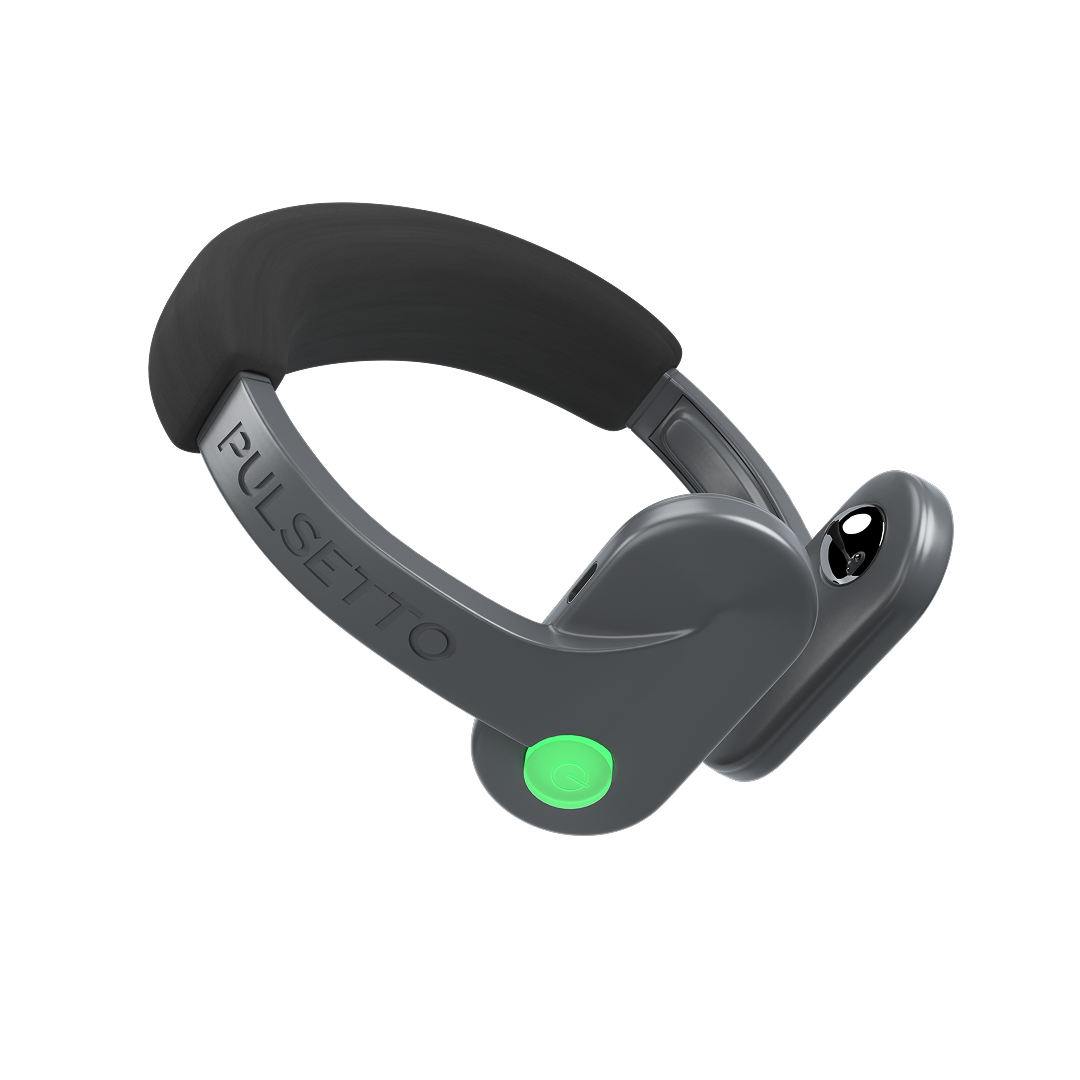
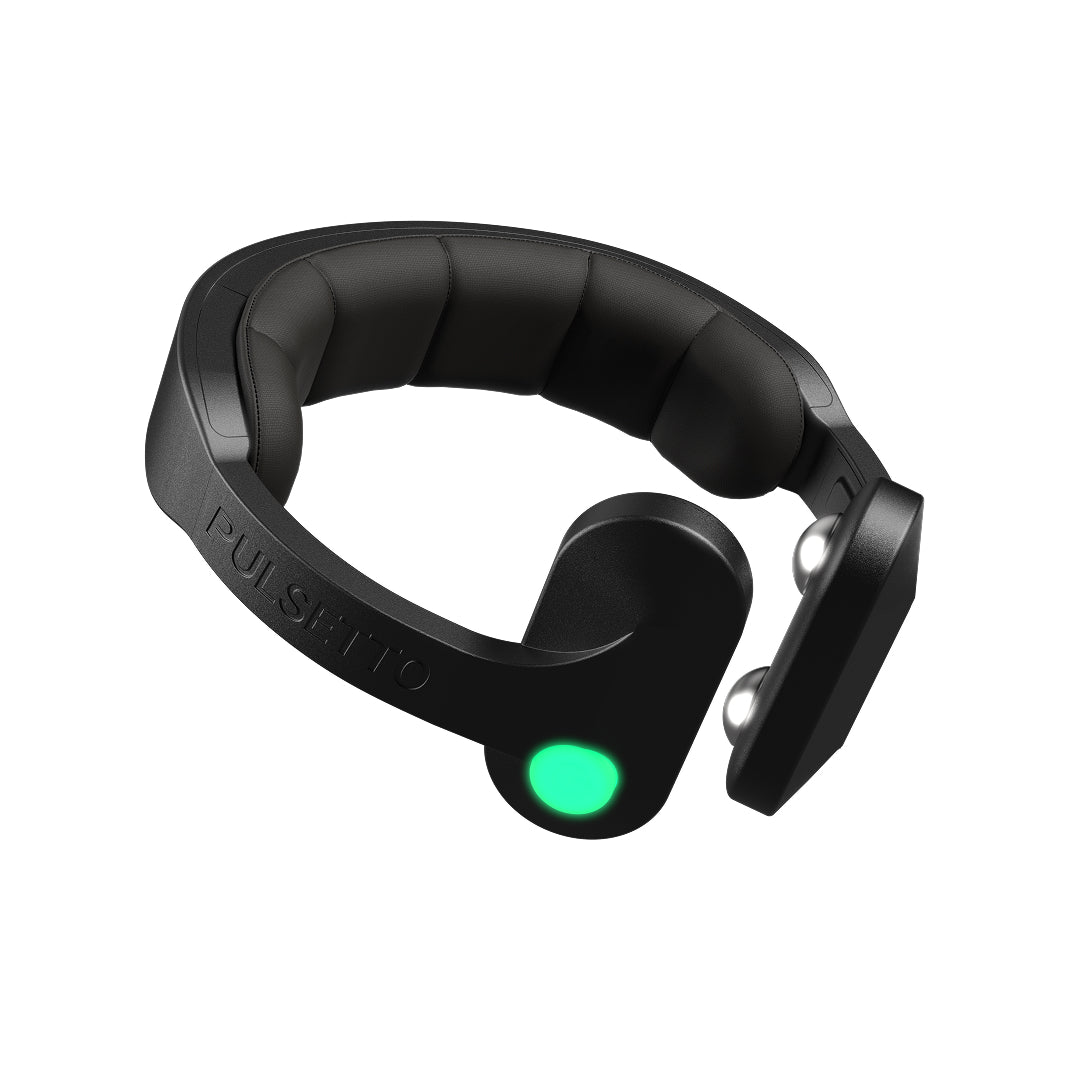
So where does a device like Pulsetto sit in all of this? Squarely in general wellness. Pulsetto is a bilateral cervical non-invasive vagus nerve stimulator worn on both sides of the neck. It is hands-free, sessions run about four minutes, and it pairs with a free companion app with no mandatory subscription. It is designed to help you feel calmer and to support relaxation and sleep quality. It is not a tinnitus treatment and is not intended for tinnitus.
If you have seen Pulsetto's own pilot findings, keep them in the general wellness lane where they belong. In Pulsetto's own randomized open-label pilot study (n=40, 4 weeks), participants reported a 55.9% reduction in depressive symptoms (PHQ-9), a 45.3% reduction in anxiety symptoms (GAD-7), and a 41.0% improvement in sleep quality (PSQI). Bilateral stimulation reduced the chronic-stress biomarker hair cortisol by 47.5%, compared with 31.4% for unilateral stimulation. Those are mood, anxiety, sleep, and stress outcomes. They are not evidence for tinnitus, and nothing here should be read as a tinnitus claim. You can read more about the approach on the Pulsetto science page.
Because stress and sleep affect how noticeable tinnitus can feel, some people choose a general wellness routine to support a calmer, better-rested state, and a device that fits into that routine may help with coping. That is a wellness use, not a treatment. The same logic applies to how people use general vagus-related practices for stress and anxiety coping.
The two devices
If you decide a neck-worn wellness device suits your routine, there are two options. The Pulsetto Lite device is around $269, and the Pulsetto FIT device is around $296. Both are CE certified and FCC certified, made in Lithuania, and intended for adults. Pulsetto is not a TENS unit and is not a medical device.
How it compares to other calm-focused tools
The wellness market has many devices that work in different ways. Truvaga and Hoolest are handheld cervical wands. Nurosym is a single-ear auricular clip, app-free, with sessions of about 30 minutes and the strongest published evidence base among consumer-oriented options; it may be a good fit for people who want a well-studied auricular device. Vagustim is a bilateral auricular device that is app-tunable and may be a good fit for people who like adjustable settings. Neuvana Xen combines earbud stimulation with music. Sensate is an infrasonic chest device using vibration and sound rather than electrical stimulation, and may be a good fit for guided lie-down sessions. Apollo Neuro is a wrist or ankle haptic wearable. HeartMath Inner Balance is an HRV biofeedback trainer that measures and trains rather than stimulates. Wearables such as Oura Ring, Whoop, Garmin, and Fitbit monitor stress and HRV but do not deliver stimulation, and Muse is an EEG meditation headband. Implanted surgical vagus nerve stimulation is a separate medical therapy, not a consumer product.
None of these, Pulsetto included, is a tinnitus treatment. The right comparison is between calm-focused wellness tools, not between tinnitus therapies.
Safety and contraindications
Non-invasive vagus nerve stimulation has been reviewed for tolerability, and a systematic review of safety in humans found it is generally well tolerated, with most reported effects being mild and transient [10]. Even so, a general wellness device is not for everyone, and you should keep to the recommended session length.
Do not use Pulsetto, or consult your doctor first, if any of the following apply. Pulsetto is intended for adults.
-
Do not use if you have a pacemaker or any implanted electrical medical device.
-
Do not use if you have epilepsy or a seizure disorder.
-
Do not use if you are pregnant.
-
Do not use if you have a carotid artery condition.
-
Consult your doctor first if you have a cardiac arrhythmia or other serious cardiovascular condition.
-
Consult your doctor first if you have had recent neck or throat surgery.
For more detail, see our Pulsetto safety overview, the full contraindications guide, and guidance on how often you can use Pulsetto.
Frequently asked questions
Can the vagus nerve cause tinnitus?
The vagus nerve is not a typical cause of tinnitus. Most tinnitus is linked to noise exposure, hearing loss, earwax or middle-ear issues, certain medications, and other ear or circulatory conditions. If you have ringing in your ears, especially if it is new, persistent, one-sided, or bothersome, the right step is an assessment by a doctor or audiologist rather than assuming a single cause.
Does vagus nerve stimulation help tinnitus?
The evidence is early and inconclusive. Research on stimulating the vagus nerve for tinnitus, including paired sound approaches and auricular taVNS, shows conflicting results with no established therapy [1][2]. Dedicated bimodal tinnitus devices are a separate clinical category studied under specific protocols. If you are considering any option, speak with a doctor or audiologist first.
What vagus nerve exercises help with tinnitus?
Practices people commonly try include slow breathing with long exhales, gentle humming, relaxation routines, and better sleep habits. These are general wellness practices, not tinnitus treatments. Because stress and poor sleep can make tinnitus feel more noticeable, a calmer, better-rested state may help some people cope, but that is coping support and not a treatment. You can explore related vagus nerve massage techniques for ideas.
Can Pulsetto help with tinnitus?
Pulsetto is a general wellness device, not a tinnitus treatment, and it makes no tinnitus claim. Some people use it for general relaxation and sleep, and because stress and sleep affect how noticeable tinnitus feels, a calmer state may support coping. That is a wellness use, not a tinnitus treatment. To learn what the device is designed to do, see what effects to expect from vagus nerve stimulation.
When should I see a doctor about tinnitus?
See a doctor or audiologist if your tinnitus is new, persistent, one-sided, pulsatile, or bothersome, or if it comes with hearing loss, dizziness, or ear pain. A professional can identify an underlying cause, check your hearing, and guide you toward established care. General wellness routines and devices are not a substitute for that evaluation.
Scientific research
Pulsetto is a general wellness product and is not intended to diagnose, treat, cure, or prevent any disease or medical condition. The studies below were identified via the Consensus and PubMed databases and are indexed in PubMed.
[1] Efficacy and safety of transcutaneous auricular vagus nerve stimulation (ta-VNS) in the treatment of tinnitus: protocol for an updated systematic review and meta-analysis (Lin et al., 2024, BMJ Open. PMID: 38772894)
[2] Transcutaneous electrical stimulation at auricular acupoints innervated by auricular branch of vagus nerve pairing tone for tinnitus: study protocol for a randomized controlled clinical trial (Li et al., 2015, Trials. PMID: 25872506)
[3] Meniere Disease treated with transcutaneous auricular vagus nerve stimulation combined with betahistine Mesylate: A randomized controlled trial (Wu et al., 2023, Brain Stimulation. PMID: 37838094)
[4] Critical Review of Transcutaneous Vagus Nerve Stimulation: Challenges for Translation to Clinical Practice (Yap et al., 2020, Frontiers in Neuroscience. PMID: 32410932)
[5] Effect of breathwork on stress and mental health: A meta-analysis of randomised-controlled trials (Fincham et al., 2023, Scientific Reports. PMID: 36624160)
[6] Stress and Heart Rate Variability: A Meta-Analysis and Review of the Literature (Kim et al., 2018, Psychiatry Investigation. PMID: 29486547)
[7] The effect of heart rate variability biofeedback training on stress and anxiety: a meta-analysis (Goessl et al., 2017, Psychological Medicine. PMID: 28478782)
[8] Transcutaneous Auricular Vagus Nerve Stimulation for Chronic Insomnia Disorder: A Randomized Clinical Trial (Zhang et al., 2024, JAMA Network Open. PMID: 39680406)
[9] Transcutaneous auricular vagus nerve stimulation (taVNS) improves sleep quality in chronic insomnia disorder: A double-blind, randomized, sham-controlled trial (Yeom et al., 2025, Sleep Medicine. PMID: 40398066)
[10] Safety and tolerability of Transcutaneous Vagus Nerve stimulation in humans; a systematic review (Redgrave et al., 2018, Brain Stimulation. PMID: 30217648)
Training your nervous system with Pulsetto FIT X
If you are looking to make vagus nerve stimulation part of a daily routine rather than an occasional experiment, Pulsetto FIT X is built for exactly that. It is the current generation of the Pulsetto platform: adaptive stimulation that adjusts to you while the session runs, intelligent contact sensing instead of manual tuning, and angled X-shape electrodes that create a crossed field across both vagus nerve pathways. Sessions are guided by the Pulsetto app, with progress you can follow over time. Pulsetto FIT and Lite remain available as lower-cost entry points. It is a training tool for your nervous system — not a treatment, and not a substitute for medical advice.
Train your nervous system. Build your stress resilience. Meet Pulsetto FIT X.