Can the vagus nerve cause dizziness?

The vagus nerve is the longest cranial nerve and a major channel of the parasympathetic nervous system, the "rest and digest" side of your autonomic wiring. It helps regulate heart rate, blood pressure, breathing, and digestion, running from the brainstem down through the neck and into the chest and abdomen. Because it has such a direct hand in cardiovascular control, the question "can the vagus nerve cause dizziness?" has a real physiological basis.
The clearest example is the vasovagal response. When the vagus nerve fires strongly, often triggered by pain, fear, the sight of blood, standing too quickly, straining, or heat, it can prompt a sudden drop in heart rate and blood pressure. That drop reduces blood flow to the brain for a moment, which is felt as lightheadedness, a "graying out" of vision, or in stronger cases fainting. This is a normal reflex working too hard, not a disease in itself, though frequent episodes deserve medical review.
Autonomic balance, standing, and orthostatic symptoms
Dizziness on standing usually traces back to how quickly the autonomic nervous system adjusts blood pressure when you change position. When that adjustment lags or overshoots, you feel it as a head-rush or unsteadiness. This is why autonomic tone, the moment-to-moment balance between the sympathetic ("fight or flight") and parasympathetic branches, is central to the vagus nerve and dizziness conversation.
Heart rate variability (HRV), the small beat-to-beat changes in heart rhythm, is one window into that balance and is heavily shaped by vagal activity [2]. Chronic stress tends to blunt HRV and tilt the system toward sympathetic dominance [3], and a calmer autonomic profile is associated with steadier physiology overall. If you want the background, this explainer on why heart rate variability matters for your nervous system and this overview of how to activate the parasympathetic nervous system are useful starting points.
What the research shows in clinical populations
Here precision matters. In a randomized clinical trial in people with postural tachycardia syndrome (POTS), an autonomic disorder that causes a racing heart and dizziness on standing, transcutaneous vagus nerve stimulation improved postural tachycardia and autonomic tone compared with sham [1]. That is a genuine, peer-reviewed finding, and it points to the autonomic system as a meaningful lever in a specific diagnosed condition.
Two cautions keep this honest. First, that study was in a clinical population under research conditions, using a defined stimulation protocol; it is not a claim about any consumer device or about dizziness in the general public. Second, broader reviews of transcutaneous vagus nerve stimulation note that the field is still working out which protocols, doses, and populations respond, so translating lab results into everyday use requires care [4]. The vagus nerve and vertigo relationship is best described as biologically plausible and actively researched, not settled.
Vagus nerve exercises people try for dizziness

There is very high search demand for vagus nerve exercises, and many overlap with general balance and relaxation practices. None of these should be treated as a cure, and none replace a proper diagnosis. If any of them bring on or worsen dizziness, stop and speak with a professional. With that framing, here is what people commonly explore.
Slow diaphragmatic breathing with long exhales
Slow breathing, especially with an exhale longer than the inhale, is the most studied self-directed way to nudge parasympathetic activity. A meta-analysis of randomized controlled trials found that breathwork practices were associated with reduced stress and improved mental wellbeing [9]. The mechanics are simple: breathe low into the belly, extend the out-breath, and keep the pace unhurried. Many people do this seated or lying down precisely because it can feel grounding.
Humming, gentle vocalization, and gargling
The vagus nerve connects to muscles in the throat and voice box, so humming, chanting, singing, or gentle gargling are popular informal "toning" practices. The evidence here is thin and mostly indirect, but these are low-effort, low-risk activities that many find calming as part of a wind-down routine.
Gentle neck and eye movements from balance rehab
In clinical vestibular rehabilitation, slow, controlled head and eye movements are used to help the brain recalibrate balance. People sometimes borrow gentle versions of these. The important caveat: these exercises are most effective when tailored by a qualified clinician to your specific cause of dizziness, because the wrong movement for the wrong condition can make symptoms worse.
Hydration, pacing, and trigger awareness
A large share of everyday lightheadedness comes down to unglamorous basics: not enough fluid, standing up too fast, skipped meals, heat, or fatigue. Rising slowly, staying hydrated, eating regularly, and noticing your personal triggers often does more than any single exercise. These habits support the autonomic adjustments your body already makes.
|
Practice
|
What people report
|
Evidence level
|
Main caution
|
|
Slow diaphragmatic breathing
|
Calmer, more grounded feeling
|
Supported for stress and wellbeing [9]
|
Stop if it triggers lightheadedness
|
|
Humming and gentle vocalization
|
Relaxation as part of a routine
|
Indirect, limited
|
Low risk; not a treatment
|
|
Gentle neck and eye movements
|
Used in balance rehab
|
Clinical, but condition-specific
|
Best guided by a clinician
|
|
Hydration and slow standing
|
Fewer head-rush episodes
|
Well established as general advice
|
Address underlying causes too
|
Where vagus nerve stimulation for dizziness fits, and where it does not
This is the part that needs the most care. A consumer wellness device is not a dizziness or vertigo treatment, and there is little to no direct clinical evidence for consumer vagus devices as a dizziness intervention. What a device in this category is designed to do is support relaxation and a calmer stress response in general, framed around wellbeing rather than any symptom or diagnosis.
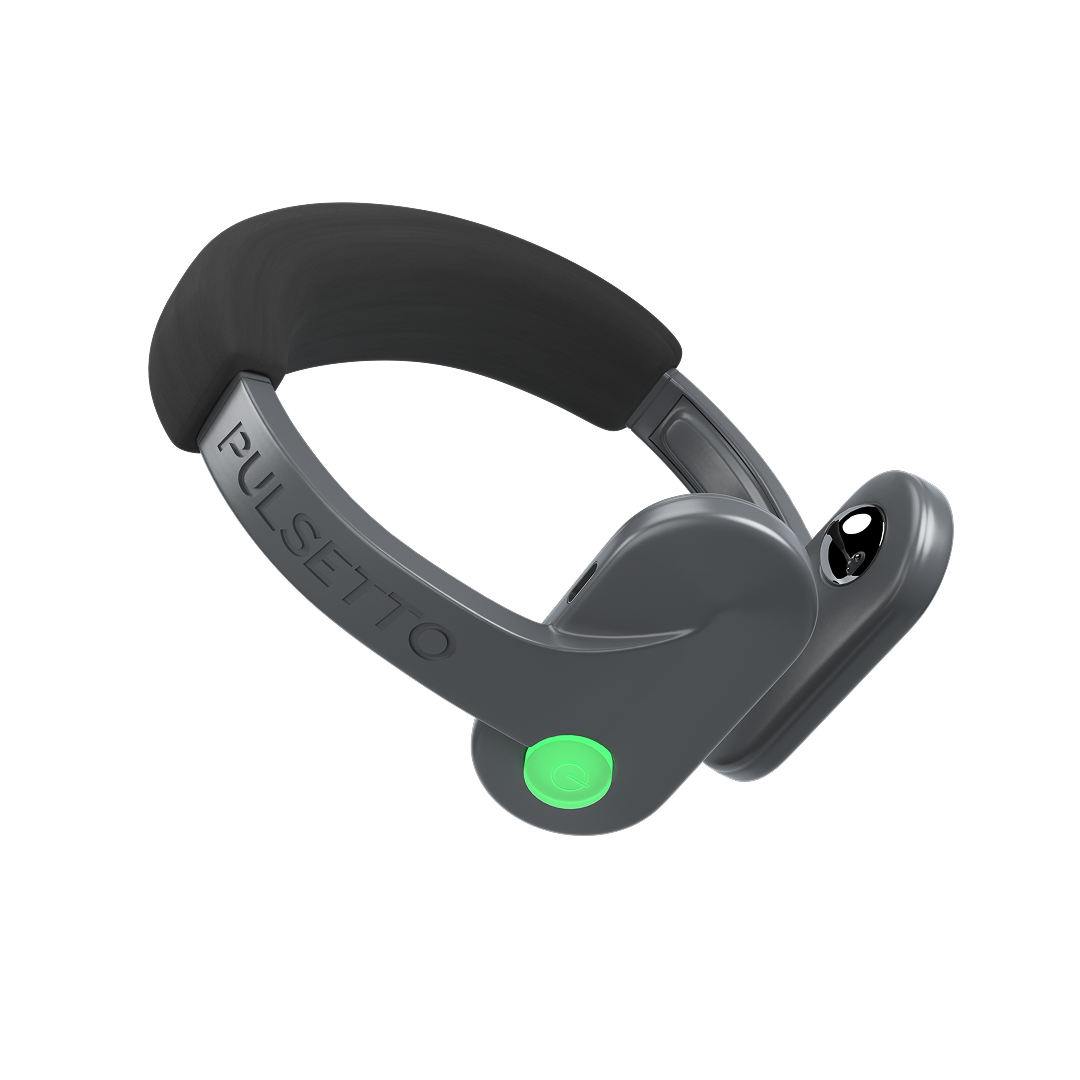
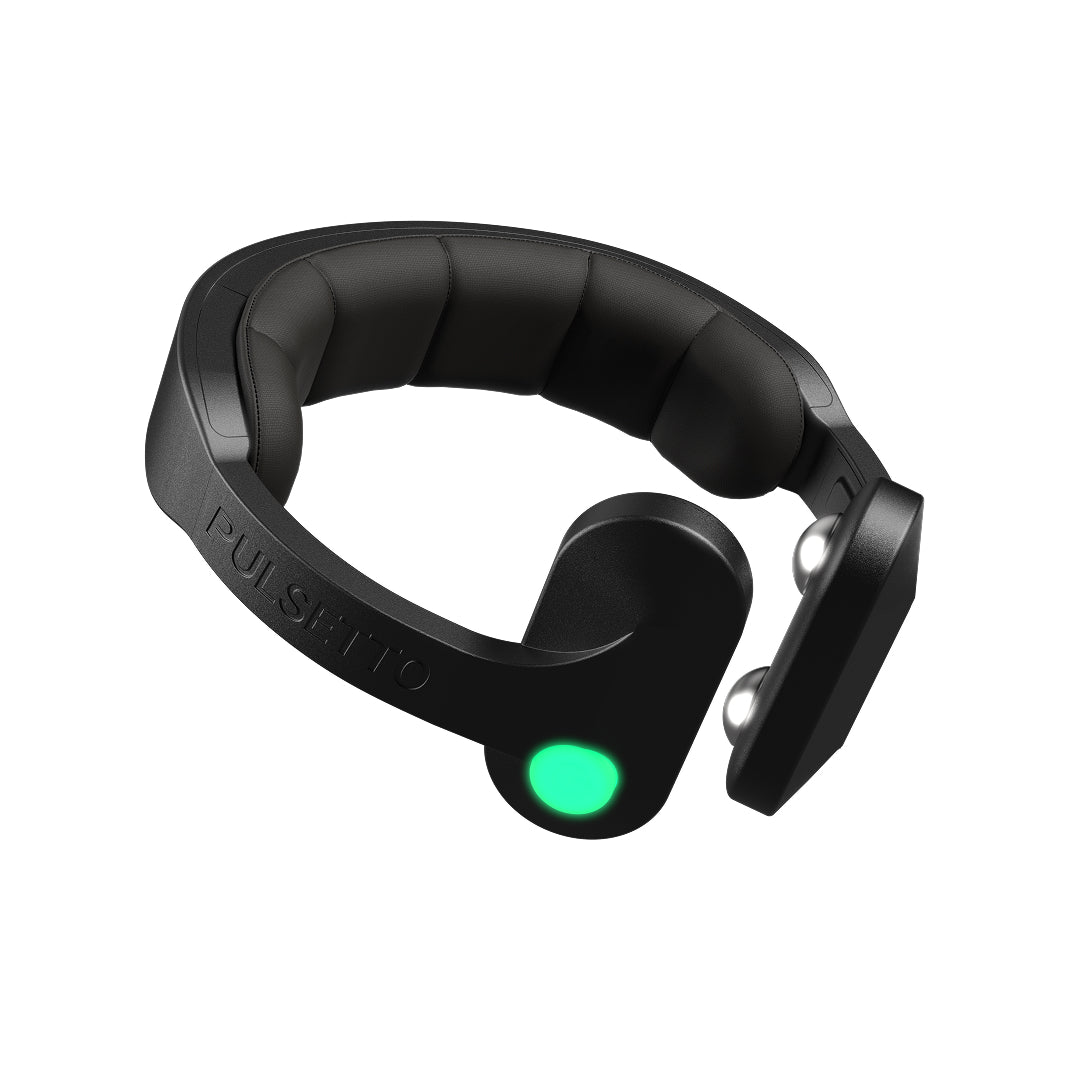
Pulsetto is a bilateral cervical non-invasive vagus nerve stimulator, meaning it sits on both sides of the neck rather than on an ear. It is a hands-free wearable used in sessions of about four minutes with a free companion app and no mandatory subscription. It is CE certified and FCC certified, made in Lithuania, and it is a general wellness device, not a medical device and not a TENS unit. You can see the current models on the Pulsetto Lite vagus nerve stimulator page (around $269) and the Pulsetto FIT neck wearable page (around $296), or read the how non-invasive vagus nerve stimulation works explainer for the mechanism in plain terms.
An honest word on the wellness evidence
In Pulsetto's own randomized open-label pilot study (n=40, 4 weeks), participants reported a 55.9% reduction in depressive symptoms (PHQ-9), a 45.3% reduction in anxiety symptoms (GAD-7), and a 41.0% improvement in sleep quality (PSQI). Bilateral stimulation reduced the chronic-stress biomarker hair cortisol by 47.5%, compared with 31.4% for unilateral stimulation. Those are general-wellness outcomes covering mood, sleep, and stress, and they should be read that way. They are not evidence about dizziness or vertigo, and they should not be interpreted as such. Wider research on non-invasive vagus stimulation has also looked at short-term stress and HRV measures in healthy adults [6][8] and reductions in sympathetic stress responses in clinical trials [7], which fits the relaxation framing rather than any balance-specific claim.
Lightheadedness can be a transient stimulation effect
This point cuts both ways. Systematic reviews of transcutaneous vagus nerve stimulation report that side effects are generally mild and well tolerated, but mild, transient lightheadedness can occur as a stimulation effect in some people [5]. In practical terms, start gently at a low intensity, keep to the recommended session length, and stop if you feel lightheaded. A device that can occasionally produce a brief head-swimmy feeling is clearly not something to reach for when you already feel dizzy.
If you are simply exploring calming, nervous-system-focused tools for everyday stress, these gentle techniques to soothe your nervous system and this guide to nervous system reset strategies stay firmly in wellness territory, alongside a broader look at wearable devices for stress relief.
How Pulsetto compares to other vagus-focused devices

People weighing consumer vagus tools often compare form factors. The table below sticks to neutral facts. None of these is a treatment for dizziness, and where you place electrodes and how the device delivers stimulation differ meaningfully between them.
|
Device
|
Placement
|
Stimulation type
|
Approx. price
|
|
Pulsetto
|
Bilateral cervical (both sides of neck)
|
Electrical, app-guided
|
Lite around $269, FIT around $296
|
|
Nurosym
|
Single-ear auricular clip
|
Electrical
|
Around €699
|
|
Vagustim
|
Bilateral auricular (both ears)
|
Electrical, app-tunable
|
Around $390
|
|
Neuvana Xen
|
Earbud auricular with music sync
|
Electrical
|
Around $449
|
|
Sensate
|
Chest (infrasonic vibration and sound)
|
Not electrical
|
Around $300
|
|
Apollo Neuro
|
Wrist or ankle
|
Haptic vibration, not electrical
|
Around $349
|
|
Truvaga
|
Handheld cervical wand
|
Electrical
|
Around $199 to $499
|
Nurosym has the strongest published evidence base among consumer auricular tools and may be a good fit for people who prefer an ear clip. Sensate may be a good fit for someone who wants a lie-down vibration-and-sound session rather than electrical stimulation. Apollo Neuro may be a good fit for people who want a haptic wearable they can keep on through the day. For a fuller breakdown, see the roundups on neck stimulator devices and nervous system regulation devices.
Safety and contraindications
A wellness device is not right for everyone, and dizziness in particular is a reason to be cautious rather than adventurous. Do not use Pulsetto, and consult your doctor first where noted, if any of the following apply:
-
People with a pacemaker should not use it.
-
People with any implanted electrical medical device should not use it.
-
People with epilepsy or a seizure disorder should not use it.
-
Do not use during pregnancy.
-
People with cardiac arrhythmia or serious cardiovascular conditions should consult a doctor first.
-
Anyone who has had recent neck or throat surgery should consult a doctor first.
-
People with carotid artery conditions should not use it.
Keep any session to the recommended length rather than extending it, start at a low intensity, and stop if you feel unwell or lightheaded. Pulsetto is intended for adults. For the complete list, see the Pulsetto contraindications and safety notes and the accompanying quick-start setup guide.
Frequently asked questions
Can the vagus nerve cause dizziness?
It can contribute to it. A strong vagal reflex, the vasovagal response, can cause a sudden drop in heart rate and blood pressure that briefly reduces blood flow to the brain, felt as lightheadedness or fainting. Autonomic imbalance also plays a role in dizziness on standing. Because dizziness has many possible causes, recurrent episodes should be evaluated by a healthcare professional.
What vagus nerve exercises help with dizziness?
The most commonly explored practices are slow diaphragmatic breathing with long exhales, gentle humming or vocalization, hydration and rising slowly, and, in a clinical setting, tailored balance exercises. Breathwork has research support for stress and wellbeing, while balance-specific movements are best guided by a clinician. If any exercise brings on dizziness, stop and seek advice.
Does vagus nerve stimulation help vertigo?
There is little to no direct clinical evidence that consumer vagus nerve stimulation devices treat vertigo, and no wellness device should be presented as a vertigo treatment. Research in specific autonomic conditions, such as the POTS trial noted above, is promising for those clinical populations but does not translate into a general vertigo claim. Vertigo warrants proper medical assessment.
Can vagus nerve stimulation cause dizziness?
Mild, transient lightheadedness can occur as a stimulation effect in some people, which is one reason to start gently, keep to the recommended session length, and stop if it happens. Safety reviews describe side effects as generally mild and well tolerated, but this is exactly why a stimulation device is not something to use as a response to feeling dizzy.
When should I see a doctor about dizziness?
Seek professional care if your dizziness is new, severe, sudden, frequent, or worsening, or if it comes with chest pain, a severe headache, slurred speech, weakness or numbness, fainting, hearing changes, or difficulty walking. Persistent or unexplained dizziness always deserves a proper diagnosis rather than self-management.
Scientific research
Pulsetto is a general wellness product and is not intended to diagnose, treat, cure, or prevent any disease or medical condition. The studies below were identified via the Consensus and PubMed databases and are indexed in PubMed.
[1] Noninvasive Vagus Nerve Stimulation in Postural Tachycardia Syndrome: A Randomized Clinical Trial (Stavrakis et al., 2023, JACC: Clinical Electrophysiology. PMID: 37999672)
[2] An Overview of Heart Rate Variability Metrics and Norms (Shaffer et al., 2017, Frontiers in Public Health. PMID: 29034226)
[3] Stress and Heart Rate Variability: A Meta-Analysis and Review of the Literature (Kim et al., 2018, Psychiatry Investigation. PMID: 29486547)
[4] Critical Review of Transcutaneous Vagus Nerve Stimulation: Challenges for Translation to Clinical Practice (Yap et al., 2020, Frontiers in Neuroscience. PMID: 32410932)
[5] Safety and tolerability of Transcutaneous Vagus Nerve stimulation in humans; a systematic review (Redgrave et al., 2018, Brain Stimulation. PMID: 30217648)
[6] Transcutaneous auricular Vagus Nerve Stimulation and Median Nerve Stimulation reduce acute stress in young healthy adults (Sanchez-Perez et al., 2023, Frontiers in Neuroscience. PMID: 37746156)
[7] Transcutaneous cervical vagal nerve stimulation reduces sympathetic responses to stress in posttraumatic stress disorder: A double-blind, randomized, sham-controlled trial (Gurel et al., 2020, Neurobiology of Stress. PMID: 33344717)
[8] Ear your heart: transcutaneous auricular vagus nerve stimulation on heart rate variability in healthy young participants (Forte et al., 2022, PeerJ. PMID: 36438582)
[9] Effect of breathwork on stress and mental health: A meta-analysis of randomised-controlled trials (Fincham et al., 2023, Scientific Reports. PMID: 36624160)