Vagus Nerve Stimulation for Epilepsy: How Implanted VNS Therapy Works
Vagus Nerve Stimulation for Epilepsy: How Implanted VNS Therapy Works
Vagus nerve stimulation for epilepsy is an established, surgically implanted medical therapy used to reduce seizure frequency in people with drug-resistant epilepsy. A small pulse generator is placed under the skin of the chest and wired to the left vagus nerve in the neck, where it delivers scheduled electrical pulses to the brain. This is a prescribed, surgical treatment managed by a neurologist. It is not something you buy online, and it is entirely different from the non-invasive wellness wearables that many people encounter when they first search for "vagus nerve stimulation."
That distinction matters, because the same three words describe two very different things. This article explains what implanted VNS therapy is, how it works for epilepsy, who it is for, how effective it is, and what side effects it carries. It then draws a clear line between that surgical therapy and consumer wellness devices such as Pulsetto, which are designed only for general wellness use in people without epilepsy.
Pulsetto is a general wellness product and is not intended to diagnose, treat, cure, or prevent any disease or medical condition. If you have epilepsy or a seizure disorder, epilepsy is a contraindication for Pulsetto, and you should not use Pulsetto without medical guidance. Any decision about epilepsy treatment, including implanted VNS therapy, belongs with a qualified neurologist.
A note before we begin. If you found this page while searching for whether Pulsetto helps seizures, here is the short answer: it does not, and it is not for people with epilepsy. Pulsetto is a non-invasive general wellness device for stress, sleep, and relaxation support. The seizure evidence discussed below comes from a completely separate, surgically implanted medical device. We explain the difference in full further down.
What is vagus nerve stimulation for epilepsy?
Vagus nerve stimulation (VNS) therapy for epilepsy is a neuromodulation treatment. A neurosurgeon implants a battery-powered pulse generator, roughly the size of a small watch, under the skin below the collarbone. A thin wire (a lead) runs under the skin and wraps around the left vagus nerve in the neck. Once activated, the generator sends regular, mild electrical pulses along the vagus nerve toward the brainstem, where those signals fan out to networks involved in seizure activity.
The vagus nerve is the longest of the cranial nerves and the main highway of the parasympathetic nervous system, the branch that governs "rest and digest" functions and helps slow the heart. Because a large majority of its fibers are afferent, meaning they carry information upward from the body to the brain, stimulating the nerve in the neck lets a peripheral device influence central brain activity without any surgery on the brain itself. That is why researchers have long described VNS as a unique approach: a peripheral intervention used to treat a condition rooted in the brain.
Implanted VNS therapy is approved as an add-on (adjunctive) treatment. It does not replace anti-seizure medication. Instead, it works alongside medication for people whose seizures continue despite drug treatment. It is also not a cure. The goal is fewer, shorter, and less severe seizures, and in many cases better recovery afterward.
The vagus nerve is central to how the body regulates itself, and if you want the broader picture beyond epilepsy, our guide to vagus nerve anatomy and its core functions walks through what this nerve does throughout the body.
Rated 4.5/5 by 20,137+ Customers
Pulsetto vagus nerve stimulator: feel calmer and sleep better in just 4 minutes a day
Experience immediate relaxation with the Pulsetto vagus nerve stimulator.
Sit back, close your eyes, and immerse yourself in the soothing Pulsetto experience, designed to gently promote a state of calmness and well-being.
Best Value Deal!
FREE WORLDWIDE SHIPPING
Select your device:
Pulsetto Lite vs Pulsetto FIT
Which one is right for you?
PULSETTO FIT
PULSETTO LITE
Dual-technology, hands-free stimulation
Yes
Yes
New wave-like stimulation (more engaging)
Yes
No
Battery life
Up to 12 days (20% longer)
Up to 10 days
Fits all necks for consistent stimulation
Yes
No
Stays secure no matter what you're doing
Yes
No
Great for sharing (adjusts to any neck size)
Yes
No
Free lifetime wireless updates
Yes
No
Premium all-black design with medical-grade materials
Best if you wear size S or smaller tops. Only with FIT
New stimulation that rises and falls, which feels more fun (coming July–Aug 2025). Only with FIT
20% longer battery life for fewer recharges. Only with FIT
Free lifetime Pulsetto App with 5 expert-designed programs for Stress, Anxiety, and More.
One 60g gel tube (can be used up to a month), USB-C charging cable, user guide included
Extra gift: Pulsetto Premium Free Trial. 3 extra stimulations, 11 unique guided meditations, 54 breathing exercises, 1200 positive affirmations, and more.
$296/$546
Vagus Nerve Stimulation for Epilepsy: How Implanted VNS Therapy Works
How does vagus nerve stimulation work for epilepsy?
The precise mechanism is still being studied, but the working model is well established. Implanted VNS delivers intermittent electrical pulses to the left vagus nerve, which projects to the nucleus tractus solitarius in the brainstem. From there, signals reach structures including the locus coeruleus, the thalamus, and limbic regions. Over time, this repeated stimulation is thought to reduce abnormal, synchronized electrical activity that drives seizures, and to raise the threshold at which a seizure can start.
There are two ways the implanted device operates.
Scheduled (automatic) stimulation. After a neurologist activates the device, it delivers pulses on a set cycle. A common starting pattern is around 30 seconds of stimulation followed by about 5 minutes off, repeating around the clock. The neurologist adjusts the intensity, pulse width, frequency, and timing gradually over weeks and months to balance seizure control against side effects.
On-demand stimulation. Patients and caregivers are given a handheld magnet. Swiping the magnet over the implanted generator triggers an extra burst of stimulation. If a person feels a warning sign (an aura) before a seizure, this magnet swipe may stop the seizure, shorten it, or lessen its severity. Newer generators can also detect the rapid heart-rate change that sometimes accompanies a seizure and deliver an automatic responsive burst.
The battery in the pulse generator typically lasts several years, often in the range of 5 to 10 years depending on settings, after which a minor outpatient procedure replaces the generator.
It is worth pausing on how different this is from placing a device on the surface of the skin. Implanted VNS delivers precisely controlled current directly to the nerve through a surgically placed electrode, under continuous clinical supervision. That is the version of "vagus nerve stimulation" the seizure research is about. If you are curious about the general concept of stimulating this nerve without surgery, our overview of non-invasive vagus nerve stimulation explained covers how surface-based approaches differ, and it is important to understand that those approaches are studied for general wellness, not for epilepsy.
Who is implanted VNS therapy for?
Implanted VNS therapy is generally considered for people with drug-resistant epilepsy, sometimes called refractory epilepsy. In practice, that usually means a person's seizures have not been controlled by at least two appropriately chosen and tolerated anti-seizure medications. It is approved as an add-on therapy for focal (partial-onset) seizures, and it is used in both adults and children, commonly in patients four years of age and older.
Candidates are typically people who are not suitable for, or who choose not to undergo, resective brain surgery. Because epilepsy surgery decisions are complex, candidacy is determined by a neurologist or an epilepsy specialist team after detailed evaluation, often at a comprehensive epilepsy center. The decision weighs seizure type, seizure frequency, prior treatments, overall health, and the person's goals.
None of these decisions can be made from an article, and none of them can be made with a consumer device. If you or someone you care for has epilepsy and you are wondering about VNS therapy, the right next step is a conversation with a neurologist who knows the full medical history.
How effective is VNS therapy for seizures?
The seizure-reduction evidence below is about surgically implanted VNS therapy, the prescribed medical device described above. It is not about non-invasive wellness devices of any kind, and it should not be read as applying to them.
Implanted VNS is not a cure, and its effect tends to build gradually rather than switching seizures off immediately. Response is usually measured as the proportion of people who achieve at least a 50% reduction in seizure frequency, often called the responder rate.
In a systematic review and meta-analysis from the International League Against Epilepsy (ILAE) Surgical Therapies Commission, implanted VNS produced a meaningful reduction in seizures for a substantial share of people with drug-resistant epilepsy, with roughly a third of patients (around 35%) achieving at least a 50% reduction in seizure frequency [1]. A separate 2025 systematic review and meta-analysis reported that around 46% of patients with drug-resistant epilepsy achieved a 50% or greater reduction in seizure frequency with implanted VNS [2]. Estimates vary between studies because of differences in patient populations, seizure types, follow-up length, and device settings.
Two themes are consistent across the literature on implanted VNS for epilepsy. First, benefit often accumulates over time; seizure control frequently improves the longer the device has been active and optimized. Second, complete seizure freedom is uncommon, which is why VNS is positioned as an adjunct that works alongside medication rather than a standalone replacement for it. Successful seizure control may, in some cases, allow a neurologist to consider adjusting medication doses over time, though that is a clinical decision, not an automatic outcome.
Again, every one of these figures describes the implanted, surgical therapy. They tell us nothing about non-invasive consumer wellness devices, which have not been shown to reduce seizures and are not intended to.
What are the side effects of implanted VNS?
Because the device stimulates a nerve in the neck, the most common side effects of implanted VNS are related to that location and tend to occur during the seconds when stimulation is active. They often ease over time as the body adjusts and as the neurologist fine-tunes settings. Commonly reported effects include:
Voice changes or hoarseness during stimulation
Throat discomfort or a cough
Shortness of breath during stimulation
Tingling in the neck
Headache
There are also considerations tied to any implanted device, including the surgical procedure itself, the small risk of infection at the implant site, and interactions with certain medical procedures. These are managed by the surgical and neurology team. As with efficacy, this side-effect profile belongs to the implanted medical device and its surgery, not to any surface-worn wellness product.
Try Pulsetto FIT X for everyday calm (not for epilepsy)
If you do not have epilepsy and you are looking for a simple way to support relaxation, better sleep, and everyday stress resilience, Pulsetto is a hands-free, non-invasive wellness wearable designed for exactly that. Sessions take about four minutes, and the free lifetime app guides you through programs for stress, sleep, and calm. Pulsetto is a general wellness device. It is not a treatment for epilepsy or seizures, and epilepsy is a contraindication. If you have a seizure disorder, please speak with your neurologist before considering any vagus-nerve product.
The critical distinction: implanted VNS therapy vs. Pulsetto FIT X
This is the most important section of this article, so we will be direct.
Implanted VNS therapy and Pulsetto are not the same thing. They differ in almost every way that matters: how they reach the nerve, whether surgery is involved, who prescribes them, what they are intended to do, and who they are for.
Implanted VNS therapy
Pulsetto
Category
Surgical medical therapy
General wellness device
Placement
Electrode surgically wrapped around the vagus nerve; generator implanted in the chest
Worn on the outside of the neck; nothing implanted
Access
Prescribed and managed by a neurologist; requires surgery
Consumer product, no prescription, no surgery
Intended purpose
Reducing seizure frequency in drug-resistant epilepsy
General wellness support: stress, sleep, relaxation
Epilepsy
The condition it is designed to help
A contraindication; not for use by people with epilepsy without medical guidance
Evidence discussed here
Seizure-reduction meta-analyses in drug-resistant epilepsy
General wellness pilot data on stress, mood, and sleep markers
Pulsetto is a non-invasive wellness wearable. It sits on the surface of the skin over the neck and is designed to support relaxation and everyday nervous-system balance in healthy adults. It is not an implanted device, it is not a medical treatment, and it is not a substitute for implanted VNS therapy or any other epilepsy care. Pulsetto does not treat, reduce, manage, or help epilepsy or seizures, and no claim on this page should be read that way.
Crucially, epilepsy and seizure disorders are a contraindication for Pulsetto. People with epilepsy should not use Pulsetto without explicit medical guidance. The seizure-reduction figures earlier in this article describe a surgically implanted medical device used under neurological care. They do not describe Pulsetto or any other surface-worn wellness device, and it would be wrong to interpret them that way.
Why people confuse the two
The confusion is understandable. Both involve the vagus nerve. Both involve the neck. Both use the phrase "vagus nerve stimulation." Search engines and headlines rarely separate the surgical, prescribed therapy from the consumer wellness category, so a person researching seizure treatment and a person researching a stress-relief gadget can land on the same words.
But the underlying products could hardly be more different. One is implanted by a surgeon and calibrated by a neurologist to influence seizure networks. The other is a wellness wearable you place on your neck at home to help you wind down. Understanding that gap is the single most useful thing to take from this page. For a plain-language primer on the general concept, see what vagus nerve stimulation is and the broader ultimate guide to vagus nerve stimulation, keeping in mind that neither non-invasive approach is a treatment for epilepsy.
What Pulsetto FIT X is actually for (for people without epilepsy)
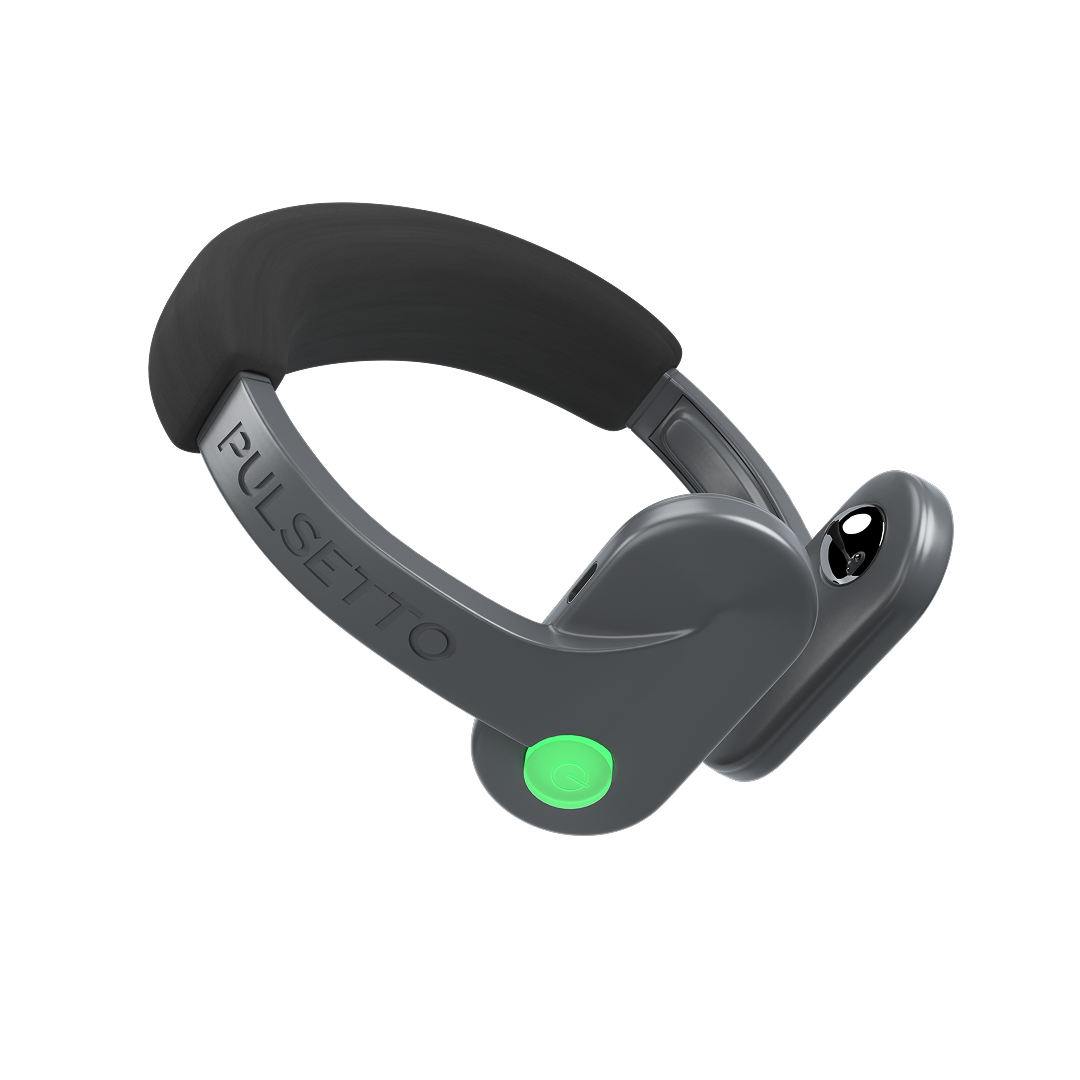
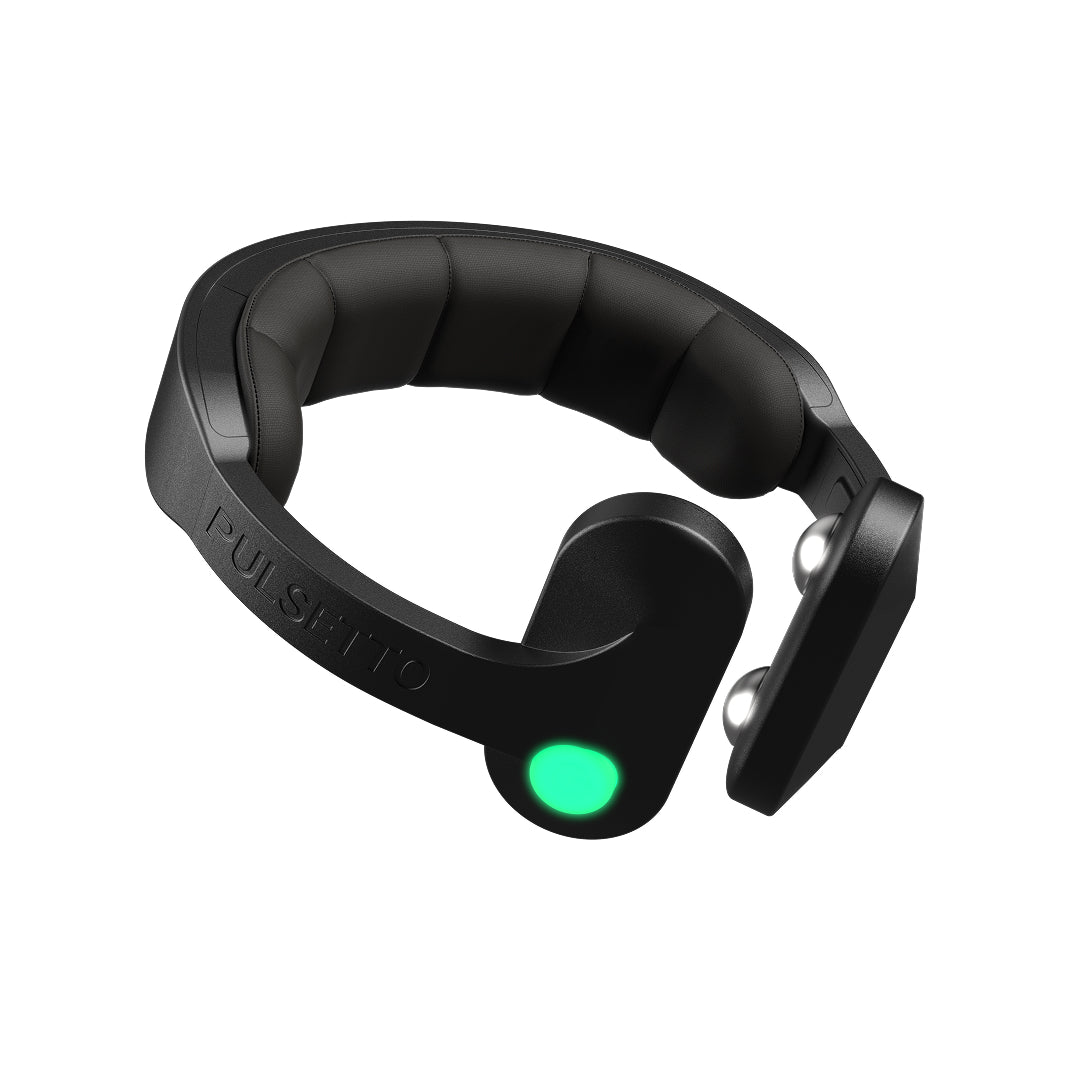
For adults without epilepsy or other contraindications, Pulsetto is designed for general wellness. It uses gentle bilateral cervical stimulation, meaning both sides of the neck at once, in short sessions of around four minutes. The aim is to support the body's natural relaxation response and everyday nervous-system balance, not to treat any condition.
The framework behind this is the parasympathetic nervous system and vagal tone. When you are under stress, your body leans toward its sympathetic "fight or flight" state. Practices that engage the vagus nerve, such as slow breathing, can help shift the balance back toward the parasympathetic "rest and digest" state. Our guide on how to activate the parasympathetic nervous system explains this in more depth, and what effects you can expect from vagus nerve stimulation sets realistic expectations for a wellness device.
One useful window into this balance is heart rate variability (HRV), the beat-to-beat variation in the time between heartbeats. Higher HRV is generally associated with better autonomic flexibility, and HRV tends to fall under stress [3]. HRV is the clearest non-invasive way to observe vagal and autonomic activity, which is why it appears throughout wellness research. If HRV is new to you, start with why we should care about heart rate variability and the HRV chart by age and gender to see what typical ranges look like.
What the wellness evidence suggests
Here the disclaimer bears repeating: Pulsetto is a general wellness product and is not intended to diagnose, treat, cure, or prevent any disease or medical condition. The research below is about general wellness outcomes such as stress, mood, sleep quality, and HRV in people without epilepsy. It is not seizure research, and it does not apply to epilepsy.
In Pulsetto's own randomized open-label pilot study (n=40, 4 weeks), participants reported a 55.9% reduction in depressive symptoms (PHQ-9), a 45.3% reduction in anxiety symptoms (GAD-7), and a 41.0% improvement in sleep quality (PSQI). Bilateral stimulation reduced the chronic-stress biomarker hair cortisol by 47.5%, compared with 31.4% for unilateral stimulation. These are early, general-wellness findings from a single open-label pilot, and they describe subjective and biomarker changes in a non-epilepsy population, not seizure outcomes of any kind.
The broader literature on non-invasive vagus nerve stimulation points in a similar direction for wellness use. Transcutaneous auricular VNS has been studied for its effects on heart rate variability, with a living Bayesian meta-analysis finding modest support for effects on vagally mediated HRV [4], and other reviews reporting mixed but generally supportive findings on HRV and baroreflex sensitivity in healthy subjects [5][6]. Studies have also examined taVNS for acute stress responses [7], sleep quality in chronic insomnia [8], and subthreshold mood symptoms and perceived stress [9]. The honest summary is that acute effects can be modest and variable and tend to build with consistent use, which is exactly why Pulsetto is framed as a support for everyday wellness rather than a treatment.
Non-invasive stimulation of the vagus nerve at the skin is a gentle input to the autonomic nervous system. It can nudge the balance toward a calmer state and shift markers like heart rate variability over time. That is a wellness effect, and it is a completely different thing from the implanted, surgically placed vagus nerve stimulator used under neurological care for drug-resistant epilepsy. The two should never be conflated, and anyone with epilepsy should talk to their neurologist before using any vagus-nerve product.
None of this makes Pulsetto a seizure device. It supports general relaxation and wellness in people who do not have epilepsy. That is its role, and it is the only role we claim for it.
Where non-invasive and prescription devices fit in the wider picture
It helps to see the full landscape. "Vagus nerve stimulation" spans several distinct categories, and only one of them is the epilepsy therapy.
Implanted VNS therapy is the surgical, prescribed medical device discussed throughout this article, used for drug-resistant epilepsy and, in some cases, treatment-resistant depression under specialist care.
Prescription non-invasive cervical VNS describes clinician-obtained handheld devices such as gammaCore by electroCore, used clinically for certain headache conditions and accessed through a healthcare provider. This is distinct again from consumer wellness wearables.
Consumer wellness devices such as Pulsetto, and others in the space like Truvaga, Nurosym, Sensate, and Apollo Neuro, are general wellness products aimed at relaxation, stress, and sleep support. They are not medical treatments and are not intended for epilepsy. Each takes a different approach: Pulsetto uses hands-free bilateral cervical stimulation, Nurosym and Neuvana's Xen target the ear, Sensate uses infrasonic resonance on the chest, and Apollo Neuro uses gentle wrist-worn vibration. If you are weighing these up for wellness reasons, our comparison of Pulsetto Lite vs Pulsetto FIT can help you choose between the two Pulsetto models.
Keeping these categories separate is the whole point. The seizure evidence lives only in the first category. Consumer wellness devices, including Pulsetto, live in the last, and they carry epilepsy as a contraindication rather than an indication.
How to use Pulsetto FIT X safely (and who should not use it)
Safety also means knowing when not to use a device. Pulsetto should not be used if any of the following apply to you without first consulting a doctor. This list is important, and epilepsy is on it.
Do not use Pulsetto if you have:
A pacemaker
Any implanted electrical medical device
Epilepsy or a seizure disorder
Pregnancy
A cardiac arrhythmia or serious cardiovascular condition (consult a doctor first)
Recent neck or throat surgery (consult a doctor first)
Carotid artery conditions
You can review the complete list any time on our contraindications page. If you have epilepsy, the presence of a seizure disorder on this list is not incidental. It is the reason Pulsetto is not for you, and it is the reason your care should be guided by a neurologist rather than a wellness gadget.
Frequently asked questions
Can Pulsetto treat epilepsy or seizures?
No. Pulsetto is a general wellness device designed to support relaxation, sleep, and everyday stress resilience in adults without epilepsy. It does not treat, reduce, manage, or help epilepsy or seizures, and no claim on this page should be read that way. Epilepsy and seizure disorders are a contraindication for Pulsetto, which means people with epilepsy should not use it without medical guidance. The therapy that has evidence for reducing seizures is a completely separate, surgically implanted VNS device prescribed and managed by a neurologist. If you have epilepsy, please consult a neurologist about appropriate treatment options.
How does VNS work for epilepsy?
Implanted VNS therapy for epilepsy uses a surgically placed pulse generator, implanted in the chest and wired to the left vagus nerve in the neck, to deliver scheduled electrical pulses toward the brainstem. Over time, this intermittent stimulation is thought to reduce the abnormal, synchronized electrical activity that drives seizures and to raise the seizure threshold. A neurologist programs the timing and intensity, and a handheld magnet or automatic heart-rate detection can trigger extra on-demand stimulation when a seizure begins. It is an add-on therapy used alongside anti-seizure medication, not a cure, and it is entirely different from any non-invasive consumer wellness device.
Is Pulsetto safe?
For healthy adults without contraindications, Pulsetto is designed to be gentle and easy to use, and it is a CE certified and FCC certified general wellness device. That said, it is not for everyone. Pulsetto is contraindicated for people with epilepsy or a seizure disorder, a pacemaker or any implanted electrical medical device, pregnancy, cardiac arrhythmia or serious cardiovascular conditions, recent neck or throat surgery, and carotid artery conditions. If any of these apply to you, do not use Pulsetto without first consulting a doctor.
Who should avoid vagus nerve stimulation?
This depends on which type. For implanted VNS therapy, candidacy is determined entirely by a neurologist based on seizure type, prior treatments, and overall health. For a non-invasive wellness device like Pulsetto, the product should be avoided by anyone with epilepsy or a seizure disorder, a pacemaker or other implanted electrical device, and during pregnancy, and it should only be used after consulting a doctor by people with cardiac arrhythmia or serious cardiovascular conditions, recent neck or throat surgery, or carotid artery conditions. When in doubt, ask a qualified clinician before using any vagus-nerve product.
Does vagus nerve stimulation help with epilepsy?
Implanted VNS therapy can reduce the frequency, length, or intensity of seizures for many people with drug-resistant epilepsy, though this does not happen for everyone and it does not cure epilepsy. It is an add-on therapy used alongside medication. This applies specifically to the surgically implanted medical device, not to non-invasive consumer wellness devices, which have not been shown to reduce seizures and are not intended for epilepsy. Any decision about VNS therapy for epilepsy should be made with a neurologist.
Scientific research
Pulsetto is a general wellness product and is not intended to diagnose, treat, cure, or prevent any disease or medical condition. The studies below were identified via the Consensus and PubMed databases. They are linked directly by DOI and are indexed in PubMed. The epilepsy-specific references describe surgically implanted VNS therapy, a distinct medical treatment; the remaining references describe general wellness outcomes such as HRV, stress, and sleep and do not concern epilepsy or seizures.
If you are looking to make vagus nerve stimulation part of a daily routine rather than an occasional experiment, Pulsetto FIT X is built for exactly that. It is the current generation of the Pulsetto platform: adaptive stimulation that adjusts to you while the session runs, intelligent contact sensing instead of manual tuning, and angled X-shape electrodes that create a crossed field across both vagus nerve pathways. Sessions are guided by the Pulsetto app, with progress you can follow over time. Pulsetto FIT and Lite remain available as lower-cost entry points. It is a training tool for your nervous system — not a treatment, and not a substitute for medical advice.
Train your nervous system. Build your stress resilience.Meet Pulsetto FIT X.