Resilience and Mental Health: What the Research Shows
The research connecting resilience and mental health is well established: higher resilience scores consistently track with lower rates of anxiety and depressive symptoms, and faster recovery after a stressful or traumatic event. That's part of why clinicians increasingly treat resilience in mental health care as a protective factor worth building directly, not just a trait to measure after something goes wrong.
The mental resilience meaning that matters clinically isn't about never struggling, it's about how much a stressor derails daily functioning, and how long that disruption lasts. The connection runs both ways, too: poor sleep, chronic stress, and untreated anxiety all erode resilience mental health outcomes over time, which is why building mental resilience has to include the physical basics in Step 4, not just the cognitive work in Steps 1 through 3.
How to Build Mental Resilience
This is the core of mental resilience training: four connected steps that build on each other rather than four separate tips. Work through them in order the first time, then return to whichever step needs reinforcing.
Step 1: Reframe How You Interpret Setbacks (Cognitive Reappraisal)
Cognitive reappraisal is the practice of changing the meaning you assign to an event, not denying that the event happened. A failed presentation stays a failed presentation. What changes is whether you read it as "I'm bad at this" or "I wasn't ready for that specific question, and now I know what to prepare next time." The event is fixed. Your interpretation isn't.
The pattern reappraisal interrupts most often is catastrophizing: assuming the worst possible outcome and treating it as the likely one. Catastrophizing feels protective in the moment. It rarely is. It just front-loads the stress of a bad outcome that usually never arrives.
One practical way to start: when you notice a spiraling thought, ask what you'd say to a close friend who told you the same story about themselves. Most people are far more measured and compassionate toward others than toward their own setbacks. Borrowing that voice, even briefly, is often enough to break the loop. Writing the thought down first, then writing your "friend" response next to it, works better than trying to do the whole exercise in your head. Journaling makes the shift concrete instead of leaving it as a fleeting intention.
This isn't a minor technique. A meta-analysis of 64 studies and nearly 30,000 people found that reappraisal use correlates strongly with personal resilience (r = 0.47) [2], and the relationship held up across different ages, cultures, and study designs. Of the cognitive tools available, reframing has some of the best evidence behind it.
Step 2: Build Tolerance Through Controlled Exposure
Controlled exposure means deliberately and gradually facing the specific discomfort you've been avoiding, in doses small enough to actually tolerate. It's not about pushing through everything all at once. That approach tends to backfire, reinforcing the belief that the discomfort really is unbearable. Graded exposure works because each small, survivable dose proves otherwise.
The goal is to accept discomfort instead of avoiding it, not to eliminate it. Avoidance offers short-term relief and long-term cost: the thing you're avoiding keeps its power precisely because you never test whether you can actually handle it.
A starter exercise: name one small task or conversation you've been putting off because it feels uncomfortable, not because it's genuinely high-stakes, and do it this week. Rescheduling the appointment you've been dreading. Sending the message you've drafted three times. Small, repeated proof that discomfort is survivable builds tolerance faster than any amount of thinking about it in the abstract.
The research backs this up directionally: a study tracking working adults over three months found that "challenge" stressors, the kind that stretch you without threatening you, predicted meaningfully higher resilience later on, while pure avoidance did not [3]. For a broader set of techniques that work with anxious feelings instead of around them, Pulsetto's guide to evidence-based mindfulness techniques for anxiety is a useful companion to this step.
Step 3: Train Your Nervous System's Baseline State
Everything above is cognitive. It's also incomplete on its own. Resilience isn't purely a matter of mindset. Your autonomic nervous system's baseline state, how keyed-up or settled your body runs by default, shapes how easily you can access reframing or exposure skills in the actual moment of stress, not just in calm reflection afterward.
Your autonomic nervous system runs on two main modes:
-
Sympathetic activation: the fight-or-flight state. Useful for short bursts of real threat, unhelpful as a constant baseline.
-
Parasympathetic activation: the rest-and-regulate state. Your heart rate settles, and your body has room to process what just happened instead of just reacting to it.
Vagal tone describes how readily your body can shift into that parasympathetic state. It's commonly measured through heart rate variability (HRV), the variation in time between heartbeats. Higher vagal tone generally means a nervous system that recovers from stress faster.
This isn't a fringe idea:
-
A 2025 scoping review covering 294 studies and more than 23,000 people found that faster vagal recovery after a stressor was associated with greater resilience, better attentional control, and more habitual use of cognitive reappraisal, directly connecting this physiological layer to Step 1 [4].
-
A double-blind, sham-controlled randomized trial found that transcutaneous cervical vagus nerve stimulation reduced sympathetic stress responses, including lower heart rate and increased peripheral vasodilation, to both traumatic-script and general mental stressors [5].
The practical takeaway: reframing and exposure work best on a nervous system that isn't running hot all the time. A lower baseline arousal state gives you more room to actually use the cognitive skills above in the moment, instead of defaulting straight to reactivity.
A few ways to train this baseline over time:
-
Slow, paced breathing (longer exhales than inhales)
-
Brief cold exposure, like cold water on the face
-
Humming or vocal toning
-
Bilateral cervical vagus nerve stimulation, one option among these, not the only one

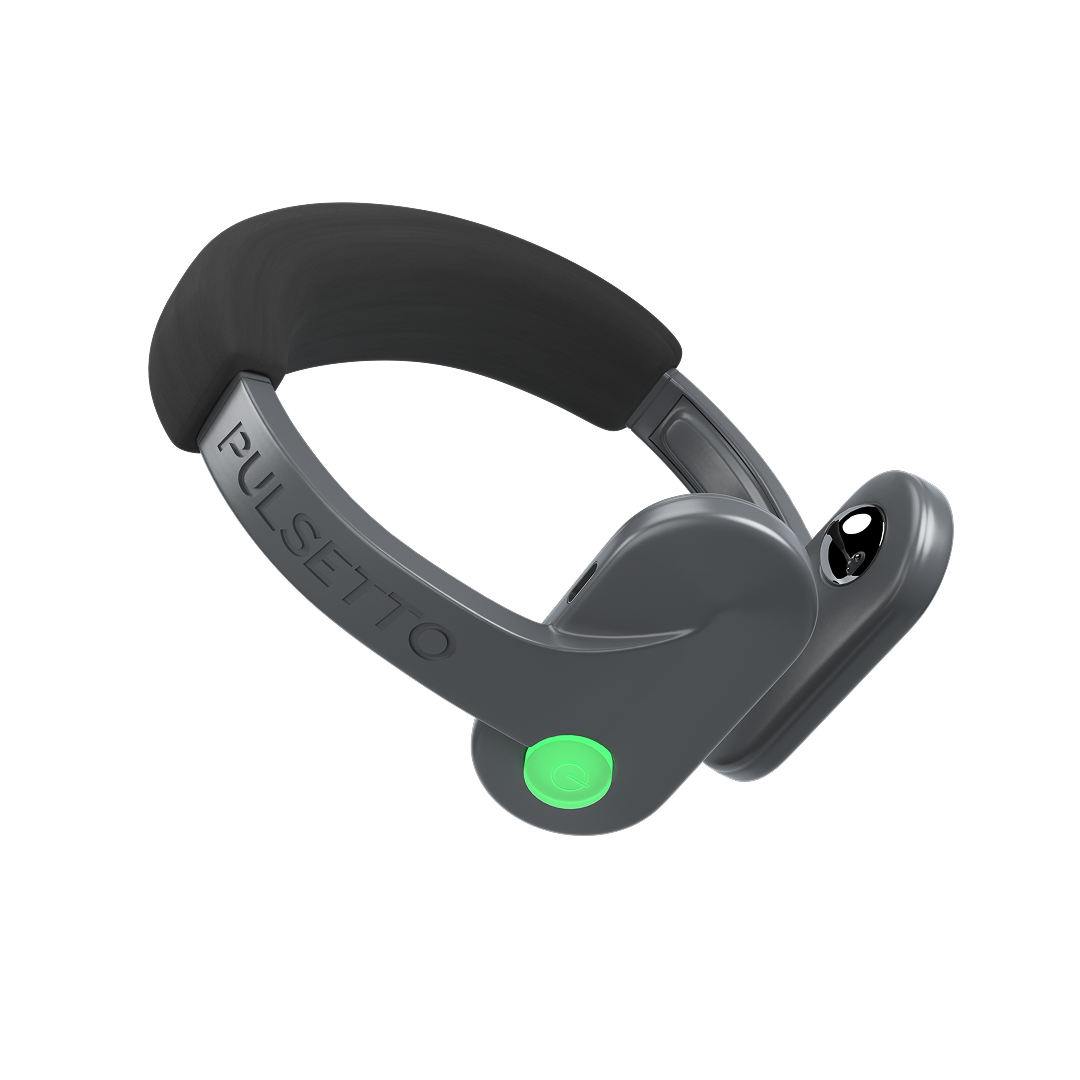
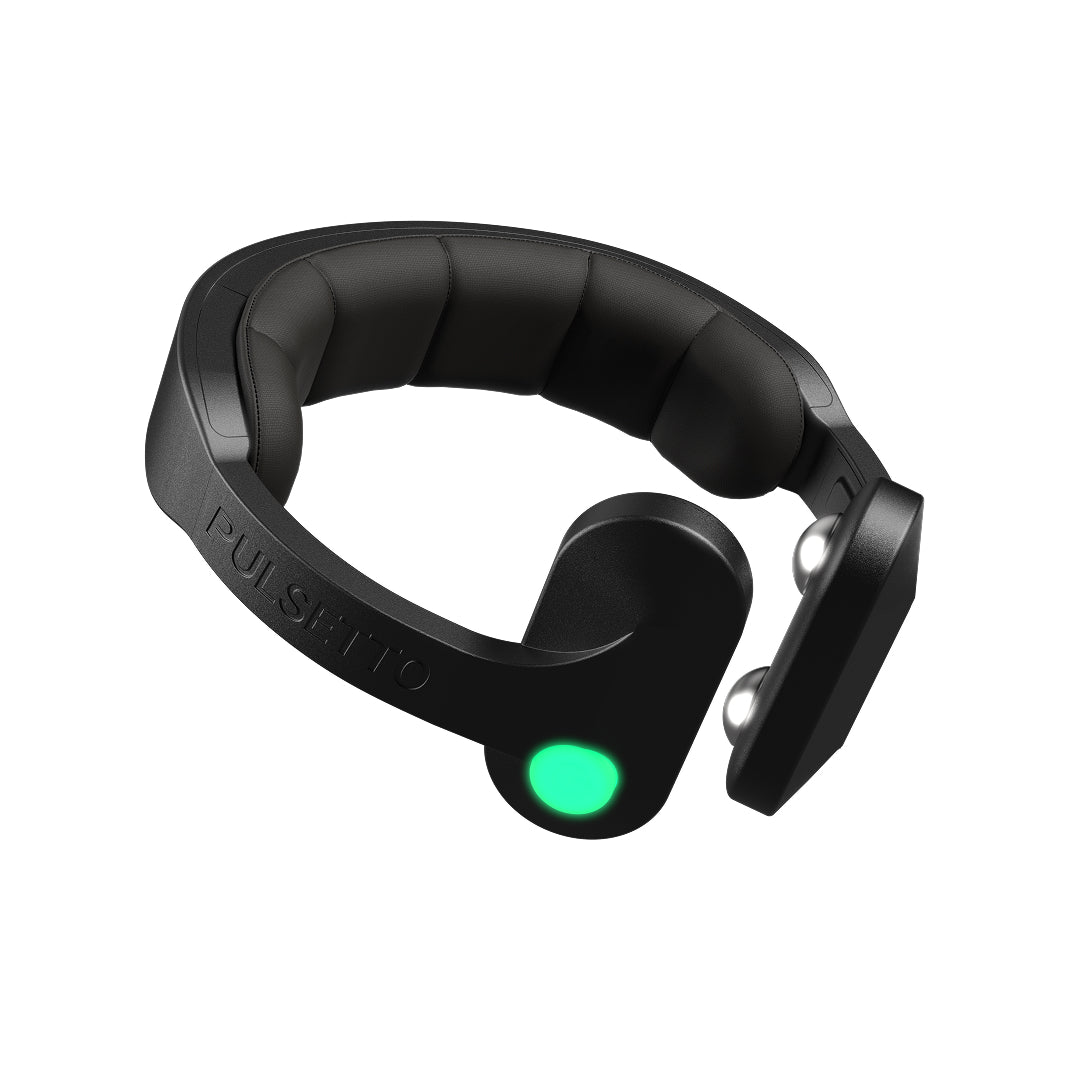
Pulsetto is a hands-free wearable built around that last approach, stimulating both sides of the neck at once for a 4-minute session. You can read more about what happens physiologically when you stimulate the vagus nerve or explore Pulsetto's clinical data directly. No single technique here is required. What matters is picking one and practicing it consistently enough that your baseline actually shifts.
Disclaimer: Pulsetto is a general wellness product and is not intended to diagnose, treat, cure, or prevent any disease or medical condition. Anyone with a pacemaker or other implantable medical device, epilepsy, or who is pregnant should check with a doctor before trying vagus nerve stimulation or similar nervous-system regulation techniques.
Step 4: Reinforce It With Supporting Daily Habits
The first three steps work better on a body that's rested, fed, and moved regularly. Sleep, exercise, and nutrition aren't separate from resilience training. They're the physical foundation that makes reframing, exposure, and nervous-system regulation sustainable rather than something you white-knuckle for a week and then abandon. If your sleep needs a reset, Pulsetto's full sleep hygiene checklist is a good place to start.
Social connection matters just as much. Resilience research consistently shows that people who maintain real relationships and are willing to reach out when things are hard recover faster than people who isolate. This doesn't require a large circle. A few people you can actually be honest with is enough.
Purpose helps too, even in a small way: having something you're working toward gives setbacks a context beyond themselves. And daily mindfulness or meditation practice builds a different kind of resilience than the acute nervous-system techniques in Step 3. It's less about calming a specific stress response and more about noticing your patterns before they run away with you. Some people also draw real strength from faith, community groups, or spiritual practice. If that's part of your life already, it counts here too.
Mental Resilience Activities: Your 7-Day Starter Routine
Reading about four steps is one thing. Doing them in sequence is another. Here's a starter week that turns the framework above into a daily practice. Each day takes 5 to 10 minutes.
|
Day
|
Focus
|
Practice
|
|
1
|
Reframe
|
Write down one recent setback and reframe it in one sentence, as you would for a friend
|
|
2
|
Expose
|
Name one small avoided task and do it today
|
|
3
|
Regulate
|
Try 5 minutes of slow, paced breathing (longer exhale than inhale)
|
|
4
|
Reinforce
|
Text one person you trust just to check in
|
|
5
|
Reframe
|
Catch one catastrophizing thought in real time and write the more measured version
|
|
6
|
Expose
|
Do a second small avoided thing, slightly harder than day 2
|
|
7
|
Regulate
|
Try a different nervous-system technique (cold water on the face, humming, or a Pulsetto session) and notice how you feel afterward
|
At the end of the week, repeat it. Resilience isn't something you finish building in 7 days. It's a cycle you keep returning to, and each pass gets a little easier because the previous one already did some of the work.
Beyond the starter week, here are more mental resilience examples spanning all four steps, for days when the routine above doesn't fit:
-
Reframe: Keep a setback journal where you write the event, your first interpretation, and a more balanced second interpretation
-
Reframe: Practice the "what would I tell a friend" exercise on your next self-critical thought
-
Expose: Have one conversation you've been avoiding this week
-
Expose: Sign up for something slightly outside your comfort zone, a class, a talk, a new social setting
-
Regulate: Do 5 minutes of slow, paced breathing before a stressful meeting
-
Regulate: Try a cervical vagus nerve stimulation session, or splash cold water on your face for 30 seconds
-
Reinforce: Take a 10-minute walk outside without your phone
-
Reinforce: Reach out to one person you trust, even just to say hello
That last regulation example is worth a specific mention. A 2025 study comparing cervical and ear-based vagus nerve stimulation found that cervical stimulation specifically lowered systolic blood pressure and increased alpha-wave brain activity, a marker of a more relaxed state, while ear-based (auricular) stimulation did not [6]. Where you stimulate the vagus nerve appears to matter, not just whether you do it. For more ways to work through this list, Pulsetto's roundup of 30 more stress-relieving techniques has additional options.
Step 3 is the one people tend to skip. Breathwork and cold exposure work, but remembering to do them consistently is its own habit to build on top of everything else here. A hands-free vagus nerve stimulator removes that friction: strap it on, run a 4-minute bilateral session, and get back to your day without needing to think about technique.
Mental resilience isn't something you either have or don't. It's built the same way any skill is: reframe, expose yourself to manageable discomfort, regulate your nervous system's baseline, and reinforce it daily. If the nervous-system piece is the part you haven't tried yet, see the Pulsetto device and start with a single 4-minute session.
Mental Resilience FAQs
Is mental resilience the same as mental toughness?
Not quite. Resilience means tolerating discomfort and recovering from it. Toughness, as it's commonly used, means suppressing how you feel in order to push through. The two get used interchangeably, but they describe different practices, and confusing them is part of why generic resilience advice can feel hollow: it tells you to push harder when what actually helps is learning to sit with discomfort without being ruled by it.
What are the 5 Cs of mental toughness?
There's no single universally standardized "5 Cs" model. Sport psychology more commonly cites 4 Cs (Control, Commitment, Challenge, Confidence, from Peter Clough's MTQ48 framework), and some versions add Composure as a fifth.
What are common qualities of resilient people?
Resilient people tend to share a few traits: they interpret setbacks as temporary and specific rather than permanent and global, they stay connected to other people instead of withdrawing, they take action on what they can control instead of ruminating on what they can't, and they recover their composure rather than never feeling stress at all. None of these are personality fixed at birth. Each is closer to a habit than a trait.
What causes a lack of resilience?
Circumstances matter as much as anything internal: prolonged exposure to stress without real recovery time, social isolation, a thin coping-skills toolkit built up over years, and early experiences that taught someone their environment wasn't safe or predictable. It's rarely one single cause. Usually it's several of these compounding.
Is it too late to build resilience as an adult?
No. Resilience research treats it as a trainable skill at any age, not a window that closes after childhood. Adult intervention studies, including the reappraisal and mindset research cited throughout this article, consistently show measurable improvement in adults who practice these steps, regardless of how resilient they consider themselves to have been growing up.
Scientific research
The claims in this article are supported by real, peer-reviewed research. Pulsetto's own randomized pilot study measures anxiety, depressive symptoms, and sleep quality rather than resilience specifically, so it isn't cited here as resilience proof. The 6 studies below are independent, peer-reviewed sources for the cognitive and physiological claims made throughout, numbered in the order they're referenced above.
-
A synergistic mindsets intervention protects adolescents from stress. (Yeager et al., 2022, Nature, 607(7919), 512-520)
-
A meta-analysis of cognitive reappraisal and personal resilience. (Stover et al., 2024, Clinical Psychology Review, 110, 102428)
-
Building resilience through exposure to stressors: The effects of challenges versus hindrances. (Crane & Searle, 2016, Journal of Occupational Health Psychology, 21(4), 468-479)
-
Cardiac vagal recovery following acute psychological stress in human adults: A scoping review. (Roddick et al., 2025, Neuroscience and Biobehavioral Reviews, 176, 106268)
-
Transcutaneous cervical vagal nerve stimulation reduces sympathetic responses to stress in posttraumatic stress disorder: A double-blind, randomized, sham controlled trial. (Gurel et al., 2020, Neurobiology of Stress, 13, 100264)
-
Acute transcutaneous cervical but not auricular vagus nerve stimulation increases alpha wave brain activity and lowers arterial blood pressure. (Ahmed et al., 2025, American Journal of Physiology-Regulatory, Integrative and Comparative Physiology)