Why Your Own Nervous System Comes First
In 2014, researchers separated mothers from their infants, put the mothers through a stressful task, then reunited them. The infants' cortisol and heart-rate patterns mirrored their mothers' stress response, even though the infants themselves hadn't been stressed [2].
A decade later, the same pattern showed up in older kids: 8 to 12 year olds watching their mothers undergo a lab stressor showed their own heart-rate variability resonate with their mothers' in real time [3]. Kids as old as ten and eleven are still physiologically picking up their parent's stress state just by being near it.
This isn't only a physiology story. Ioannidou and colleagues found that parents' own resilience predicts their children's resilience, and the relationship runs through the closeness of the parent-child bond, not just genetics or luck [4].
Twum-Antwi and colleagues put it plainly in their review of caregiver resilience research: the more resilient caregivers are, the more likely children are to get the protective factors they need [5]. A dysregulated parent doesn't just model the wrong behavior. It makes self-regulation physiologically harder for the child in the room, before any coaching happens.

How We Help Regulate Yourself
This is also where Pulsetto's own in-app check-in data gets useful as a concrete example, not a prescription. Based on self-reported, in-app wellbeing check-ins from Pulsetto users who completed them, comparing each user to their own onboarding rating (not a clinical measurement and not a controlled study), 73% of users report lower stress within the first weeks of starting, and 70% report less burnout, with those gains holding at their day-30 check-in.
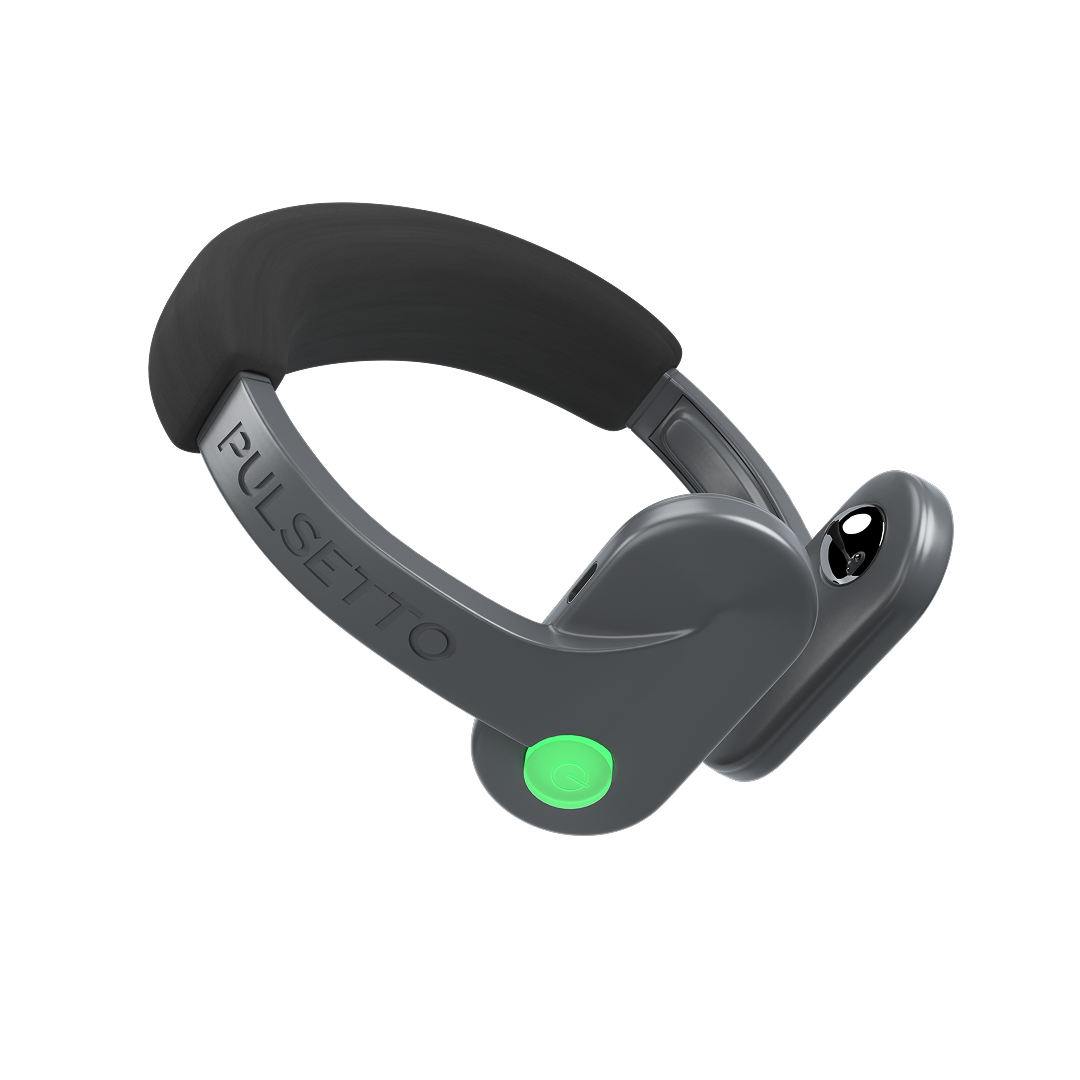
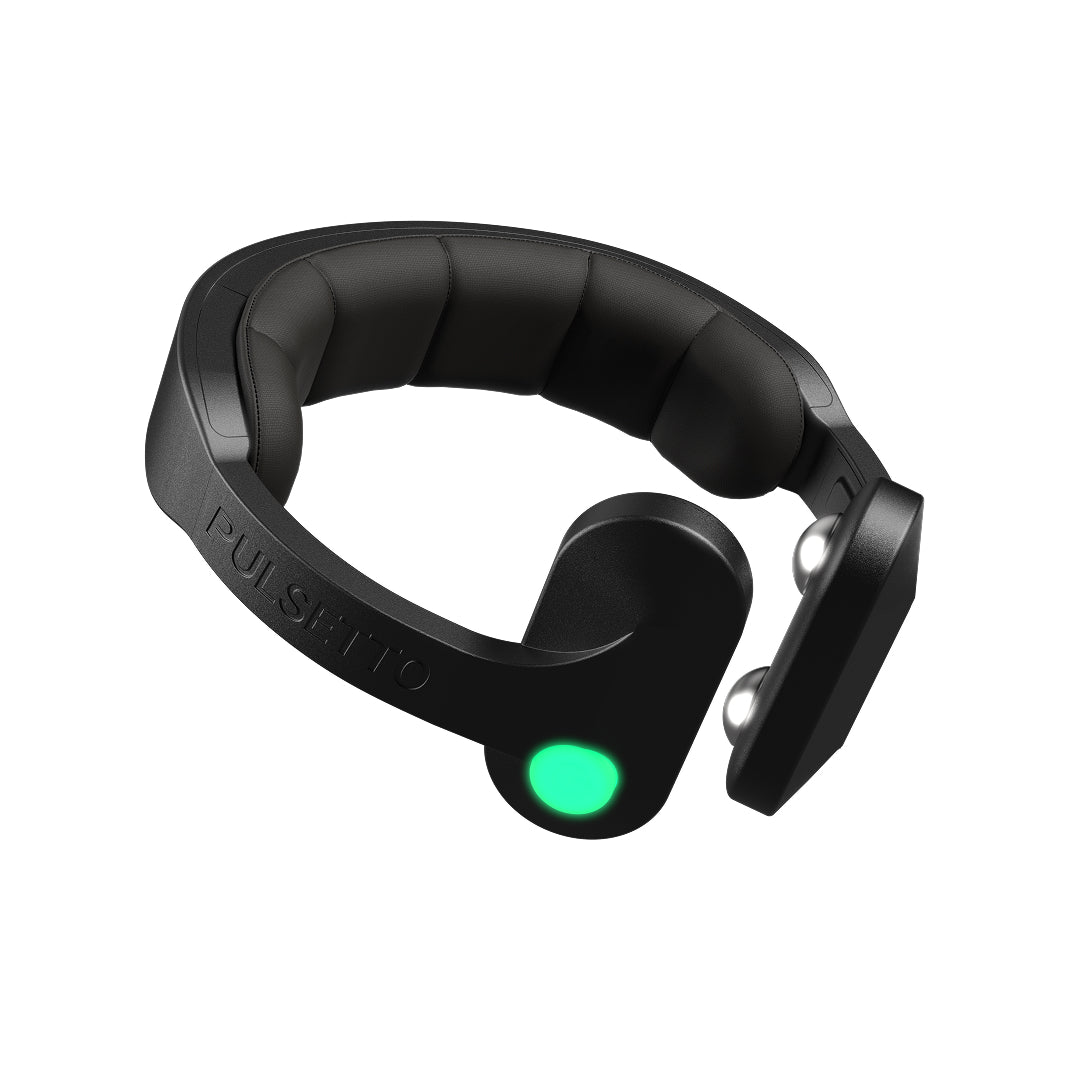
None of that is about children. It's one example of what "practicing regulating your own system" can look like in practice: a short, repeatable habit rather than a personality trait you either have or don't. Pulsetto vagus nerve stimulator gets you a 4-minute stimulation session built for exactly this: interrupting your own stress response before a hard parenting moment, not during it. (Pulsetto's clinical data covers the mechanism in more depth.)
Pulsetto is a general wellness product and is not intended to diagnose, treat, cure, or prevent any disease or medical condition.
The 7 Cs of Resilience
Pediatrician Dr. Kenneth Ginsburg, of Children's Hospital of Philadelphia's Center for Parent and Teen Communication, built the most widely cited practical framework for resilience: seven specific, buildable capacities, not personality traits.
-
Competence. The ability to handle real situations, built by letting kids practice and make safe mistakes, not by doing things for them.
-
Confidence. Belief in their own ability to cope, built by recognizing real accomplishments rather than empty praise.
-
Connection. Security from close ties to family, friends, and community, which gives kids a stable base to take risks from.
-
Character. A working sense of right and wrong, built by talking through consequences and modeling it yourself.
-
Contribution. Understanding they can make things better for someone else, built through real responsibility, not chores for their own sake.
-
Coping. A working set of adaptive strategies for stress, built by naming and practicing them together, not by avoiding what's stressful.
-
Control. Trust that their choices affect outcomes, built by giving them real decisions with real, age-appropriate stakes.
Practical Ways to Build Resilience in Kids
Once you've got a way to bring your own system down, the day-to-day coaching gets simpler.
Acknowledge the feeling before you try to fix anything. A kid who's told "it's fine, don't worry" learns to distrust their own read of a situation. Name what you're seeing first: "That was really frustrating." Then move to the problem.
Don't jump in immediately. Offer support and stay nearby, but let them attempt the hard thing before you solve it for them. If they can't get there, break the problem into smaller steps instead of taking it over completely.
Praise the effort, not just the result. Swap "you're so smart" for "you kept trying different ways to solve that." This is often framed as "growth mindset," but the evidence for growth-mindset interventions changing outcomes is genuinely mixed: a well-powered 2019 replication with over 600 children found no reliable effect on resilience to failure or school grades [6]. Praising real effort is still good parenting. It's just not a proven fix on its own, and treating it like one sets up false expectations.
Keep routines predictable, especially during a hard stretch. Predictability is what lets a kid's nervous system relax enough to handle the unpredictable part of the day.
Give them real responsibility. Age-appropriate chores, helping a sibling, a task that actually matters to the household. This is the "contribution" C in practice, and it does more than a pep talk.
How to Build Resilience in a Sensitive or Anxious Child
The three-step order doesn't change for a sensitive or anxious child. The pace does. Validate the feeling first, and expect to stay there longer than you would with a less reactive kid. Neurodivergent kids in particular often need explicit practice finding the lesson in a hard moment rather than being expected to extract it on their own. Push toward safe struggle in smaller increments, and treat a slower pace as correct, not as a sign something's wrong.
What Resilience Actually Looks Like in Kids
Abstractions don't help much here. A few real shapes it takes:
-
A ten-year-old tries out for a team, doesn't make it, and asks when tryouts are again next season instead of quitting the sport.
-
A kid stuck on a math problem asks a teacher for help instead of shutting the notebook and saying they're bad at math.
-
Two siblings fight, and later one of them comes back and says sorry without being told to.
-
A kid starting at a new school tells a parent, out loud, "I'm nervous about this," instead of hiding it, and goes anyway.
None of these are dramatic. That's the point. Resilience mostly looks like showing up again after something didn't go well, not like handling a crisis with composure.
Signs of Low Resilience in Children (and When to Get Support)
Some patterns worth paying attention to: avoiding any new challenge on sight, an extreme reaction to a small setback, real difficulty naming what they're feeling, giving up immediately without attempting something first.
The causes are usually less about the child and more about their environment: chronic, unaddressed stress at home, an insecure attachment to a caregiver, or the absence of even one stable adult relationship. Masten and Barnes's review of the resilience literature keeps landing on that last point: close attachment to a caregiver protects children through multiple, overlapping mechanisms [1].
If these signs are persistent rather than occasional, a school counselor or pediatrician is the right next step. This isn't something to self-diagnose from a blog post, including this one.
Parental Resilience Examples: How Modeling Actually Works
Parental resilience looks like staying visibly calm, or narrating your own recovery out loud, during a hard moment. It looks like admitting and repairing your own mistakes in front of your kid instead of pretending they didn't happen. It looks like keeping routines steady during real hardship, and asking for help when you actually need it instead of grinding through alone.
A parent who says "I'm feeling really frustrated right now, so I'm going to take a few breaths before we keep talking" is doing two things at once: regulating their own system and showing their kid exactly what that looks like in real time. Kids don't learn resilience from a lecture about it. They learn it from watching an adult regulate while it's actually happening.
Consistency matters more than intensity here. In Pulsetto's own in-app data (again, self-reported check-ins, not a controlled study), users who track their own Stress Resilience Score daily report a good mood on a third of their check-in days, compared with 28% for occasional users. Small and regular beats occasional and intense, for regulating your own system and for modeling it.
Children Resilience FAQs
Is resilience the same as toughness, or not being bothered by things?
Not exactly. A resilient kid can still cry, get frustrated, or feel scared. What marks the difference is whether they can recover and keep going once the feeling has passed, not whether they show it in the first place. A kid who hides how they feel to "tough it out" isn't more resilient, usually just better at masking it, which tends to resurface as a bigger problem later.
How long does it take to see a difference in a child's resilience?
There's no fixed timeline, and most of the change happens slowly enough that it's hard to notice week to week. What tends to show up first is small: a pause before a meltdown, or a second attempt at something instead of giving up after the first try. The bigger shifts, actually bouncing back from a real setback like a friendship falling apart or getting cut from a team, usually take months of consistent practice, not days.
Can toddlers build resilience, or is it only for older kids?
Resilience-building starts in infancy. Co-regulation research shows the parent-infant physiological connection is active from the earliest months; a caregiver's steady presence during a toddler's meltdown is already resilience-building, long before a child can talk through a problem.
Is vagus nerve stimulation safe to use around children?
Pulsetto is designed, studied, and marketed for adult use only. It isn't tested or intended for use on children, and nothing in this article suggests using it on a child. It's a tool for the parent's own regulation, not the child's. Pulsetto's FAQ covers general usage questions, and the full contraindications for vagus nerve stimulation list pacemakers, other implantable medical devices, epilepsy, and pregnancy as reasons not to use the device. See real Pulsetto reviews from adult users for context on what regular use looks like.
Scientific research
1. Masten, A. S., & Barnes, A. J. (2018). Resilience in Children: Developmental Perspectives. Children (Basel), 5(7), 98. Free full text, PubMed Central. 1,445 citations.
2. Waters, S. F., West, T. V., & Mendes, W. B. (2014). Stress Contagion: Physiological Covariation Between Mothers and Infants. Psychological Science, 25(4), 934-942. Free full text, PubMed Central. 232 citations.
3. Blasberg, J. S., Kanske, P., & Engert, V. (2023). Empathic stress in the mother-child dyad: Multimodal evidence for empathic stress in children observing their mothers during direct stress exposure. Journal of Experimental Psychology: General, 152(11), 3058-3073. PubMed. 13 citations.
4. Ioannidou, L., & Michael, K. (2024). Mental Health and Well-Being in Children: The Protective Role of Resilience, Self-Esteem, Self-Efficacy, and Parent-Child Relationship. Psychological Thought, 17(2). Open-access journal page. 6 citations.
5. Twum-Antwi, A., Jefferies, P., & Ungar, M. (2020). Promoting child and youth resilience by strengthening home and school environments: A literature review. International Journal of School & Educational Psychology, 8(2), 78-89. Publisher (Taylor & Francis). 124 citations.
6. Li, Y., & Bates, T. C. (2019). You can't change your basic ability, but you work at things, and that's how we get hard things done: Testing the role of growth mindset on response to setbacks, educational attainment, and cognitive ability. Journal of Experimental Psychology: General, 148(9), 1640-1655. PubMed. 129 citations.