The physiological sigh

The physiological sigh is a double inhale through the nose, a short second inhale on top of the first, followed by one long exhale through the mouth. It's a pattern your body already uses involuntarily to reinflate collapsed lung sacs, and doing it deliberately appears to reset an over-aroused nervous system faster than most other breathing patterns.
A randomized controlled trial compared daily five-minute sessions of cyclic sighing against two other breathing patterns (box breathing and cyclic hyperventilation with retention) and an equal dose of mindfulness meditation, over one month. Cyclic sighing produced the largest improvement in mood and the largest drop in respiratory rate of any condition tested, outperforming mindfulness on both measures [1]. Earlier work on the mechanism found something specific to why this works: a deliberate deep breath produces a measurable relief effect, both in self-report and in physiological tension, that a normal breath doesn't produce, functioning as what researchers describe as a psychophysiological reset [4].
To try it: inhale through your nose, then take a second short sip of air on top of the first before your lungs are full, then exhale slowly and completely through your mouth. One to three rounds is usually enough to notice a shift. It doesn't require privacy or more than about fifteen seconds, which is part of why it works as an in-the-moment tool instead of something you'd only use at home.
Box breathing

Box breathing (sometimes called square breathing) equalizes four phases of the breath: inhale for a count, hold, exhale for the same count, hold again, then repeat. Military and law enforcement trainers have used it for years to keep performance intact under acute threat, and recent controlled research backs up why.
In a study using a virtual version of the Trier Social Stress Test, a standard laboratory method for inducing acute social-evaluative stress, both box breathing and a simpler prolonged-exhalation pattern measurably blunted the post-stressor spike in heart rate and subjective anxiety, along with salivary alpha-amylase, a marker of sympathetic activation, compared to normal breathing [2]. A separate study using a virtual reality active-shooter training drill, about as acute and high-stakes a stress test as a lab can ethically create, found that slow breathing techniques including a box-breathing-style pattern significantly lowered the alpha-amylase spike compared to breathing normally through the drill [5].
To try it: A standard count holds each phase, inhale, hold, exhale, hold, for four seconds, repeated for four to six rounds. The exact count matters less than the structure: equal phases, done deliberately, for long enough to complete a few full cycles.
Vagus nerve stimulation for an acute spike

Both breathing techniques above work in part by engaging the vagus nerve, the primary channel through which the parasympathetic nervous system tells the body to stand down. Direct vagus nerve stimulation, whether through breath or through a device, appears to produce a similar effect through the same pathway, and it's been tested specifically against acute stress rather than only chronic anxiety.
In a study using transcutaneous cervical vagus nerve stimulation, the same anatomical target and delivery method Pulsetto uses, participants exposed to acute stressors, including personalized traumatic-event scripts and timed public speaking, showed measurably reduced cardiac sympathetic activity and a drop in respiratory rate when stimulation was applied relative to a sham condition [3]. A separate crossover study comparing auricular vagus nerve stimulation against sham found that active stimulation produced physiological markers consistent with reduced sympathetic outflow following acute stressors, and the effect held up under a blinding check, meaning it wasn't simply a placebo response [6].
The practical takeaway: the same nerve both approaches work through has direct evidence for acting on acute stress responses, in addition to chronic ones, which matters if the moment you need calm has already arrived and you don't have five minutes to spare on a breathing pattern you haven't practiced. VNS doesn't replace breathing techniques here; it gives you a second lever on the same pathway.
How Pulsetto approaches staying calm under pressure

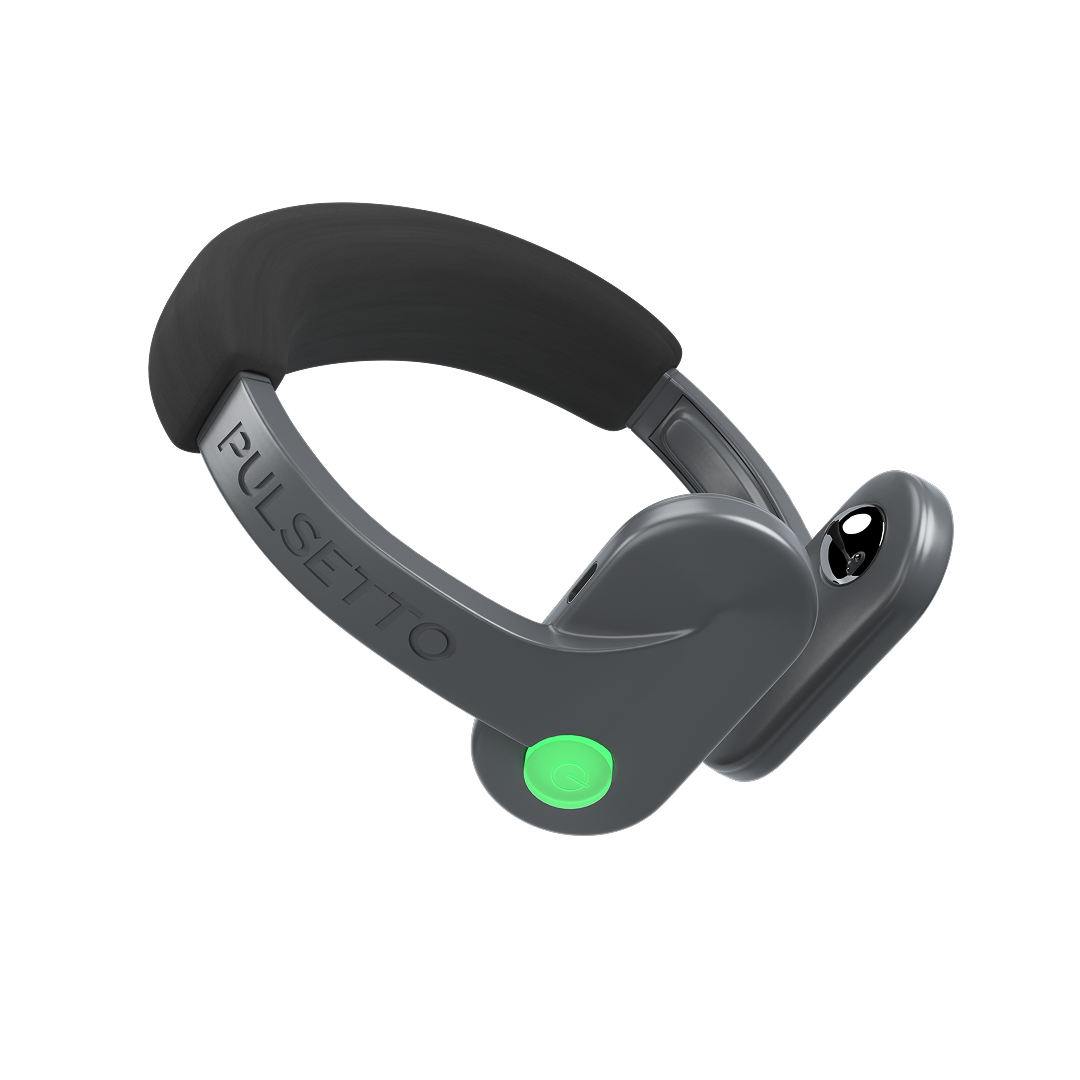
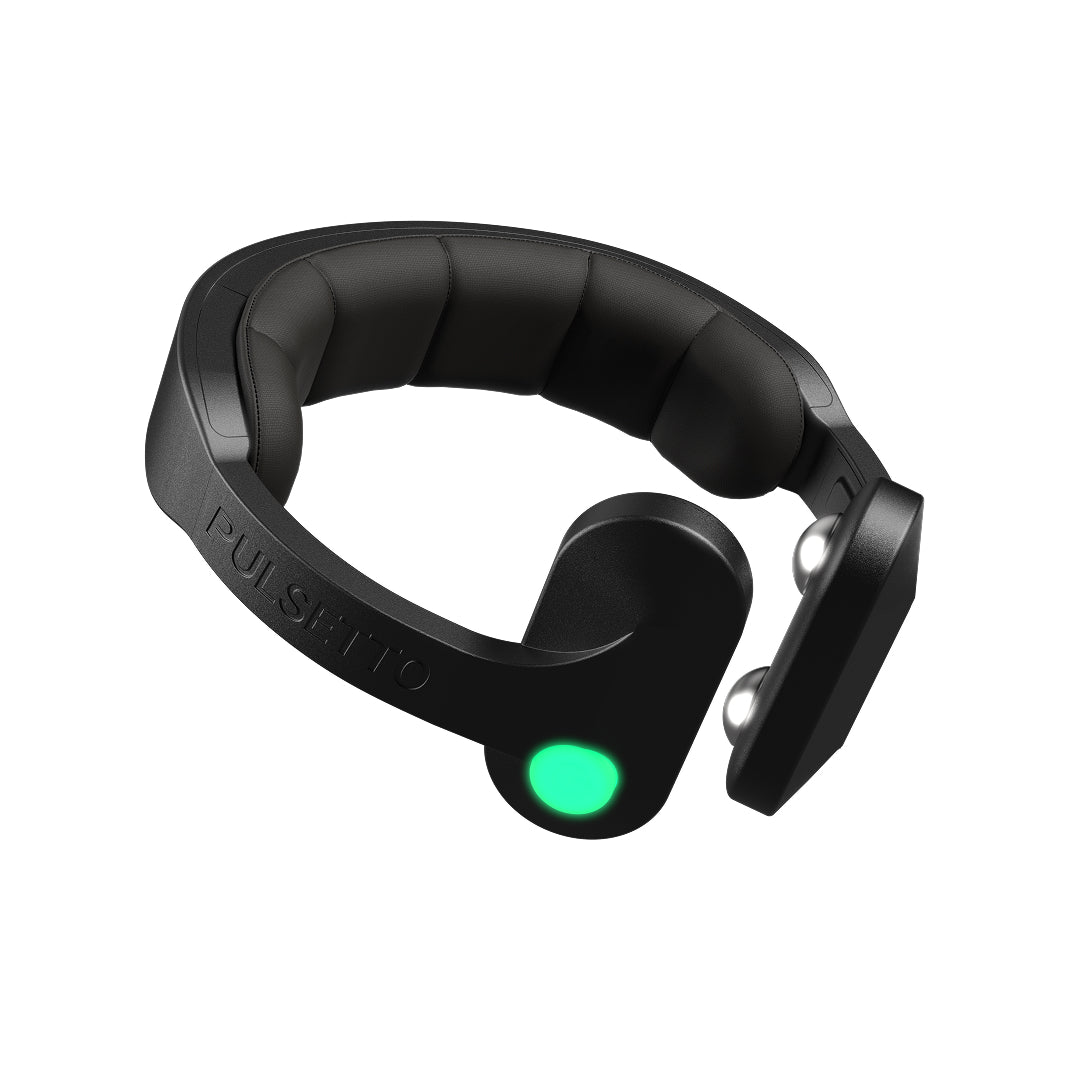
Pulsetto is a vagus nerve stimulator that delivers bilateral cervical stimulation, both sides of the neck at once, in a four-minute session worn hands-free. The bilateral cervical target is the same one used in the acute-stress vagus nerve research above, which grounds the in-the-moment use case in mechanism instead of marketing alone.
Four minutes is short enough to use before a high-stakes meeting or in a parked car before a difficult conversation, without requiring the quiet, seated posture that some breathing practices ask for. It's also hands-free, so a session can run while you're reviewing notes or waiting instead of needing your full attention the way a guided breathing exercise does.
Pulsetto's own randomized, open-label pilot study (n=40, 4 weeks) found a 56% reduction in depressive symptoms (PHQ-9) and a 45% reduction in anxiety symptoms (GAD-7) among participants using bilateral stimulation regularly over four weeks. That trial measured the effect of four weeks of sustained use, so treat it as evidence for the underlying mechanism instead of a claim about any single high-pressure moment. For a more direct sense of what regular use feels like day to day, in Pulsetto's own in-app wellbeing check-ins, 73% of users report lower stress within their first two weeks of consistent use.
If breathing techniques alone haven't been enough, it's worth weighing bilateral cervical stimulation against the other options built specifically for anxious moments, since they don't all target the vagus nerve the same way or at the same anatomical site.
Putting it together: a simple in-the-moment protocol
None of these techniques require choosing just one forever. A practical approach is to match the tool to how much time and privacy you actually have. If you have fifteen seconds and no privacy, a physiological sigh or two is enough to take the edge off before you speak. If you have a minute or two and can step away, box breathing gives you a structured reset with a built-in count to focus on instead of the stressful situation itself. If you know a high-pressure moment is coming, a presentation or a shift that tends to run hot, a four-minute vagus nerve stimulation session beforehand gives the parasympathetic system a head start instead of asking it to catch up after the spike has already happened.
The common mistake is waiting until a technique feels necessary to learn it. A technique you've practiced is faster to reach for than one you're improvising for the first time mid-crisis, so practice a physiological sigh or a round of box breathing a few times when you're already calm, the same logic behind building a wider toolkit for calming an overactive nervous system instead of leaning on just one trick. Pulsetto is built around the same idea: a short session before pressure hits works better than scrambling for a tool once your heart rate has already spiked.
Frequently asked questions
Is box breathing actually scientifically proven, or just a military trick?
Both. Box breathing originated as a technique used by military and law enforcement trainers, and controlled research since then has measured real physiological effects, including a blunted heart rate and stress hormone response to a simulated acute stressor compared to normal breathing.
How many physiological sighs do I need to feel calmer?
Most people notice a shift within one to three rounds. The technique was tested as a five-minute daily practice in the controlling trial, but the relief effect from a single deliberate deep breath has also been shown to register immediately, so a round or two in the moment is a reasonable starting point.
Can vagus nerve stimulation help during an actual panic attack?
There's no published trial testing vagus nerve stimulation specifically during a diagnosed panic attack. What's established is that VNS reduces sympathetic nervous system activation during acute lab-induced stressors, which is the same physiological pattern underlying a panic response, so the mechanism is directly relevant even though panic-attack-specific data doesn't yet exist.
Who shouldn't use vagus nerve stimulation?
People with a pacemaker or other implantable medical device, anyone with epilepsy, and anyone who is pregnant should not use vagus nerve stimulation devices, including Pulsetto, without first talking to a doctor.
Is Pulsetto FDA approved?
Pulsetto is a general wellness product and is not intended to diagnose, treat, cure, or prevent any disease or medical condition. It has not received FDA approval as a medical device, and no claims here should be read as medical advice.
How much does Pulsetto cost?
Pulsetto Lite is $269 and Pulsetto FIT is $296. Both come with a 2-year device warranty and a 30-day money-back guarantee.
Scientific research
[1] Brief structured respiration practices enhance mood and reduce physiological arousal (Balban, Neri, Kogon, Weed, Nouriani, Jo, Holl, Zeitzer, Spiegel, Huberman, 2023, Cell Reports Medicine)
[2] Box breathing and prolonged exhalation reduces markers of physiological stress reactivity in response to a virtual trier social stress test (McAllister, Martaindale, Sutton, Andersen, 2026, Comprehensive Psychoneuroendocrinology)
[3] Quantifying acute physiological biomarkers of transcutaneous cervical vagal nerve stimulation in the context of psychological stress (Gurel, Huang, Wittbrodt, Jung, Ladd, Shandhi, Ko, Shallenberger, Nye, Pearce, Vaccarino, Shah, Bremner, Inan, 2020, Brain Stimulation)
[4] A sigh of relief or a sigh to relieve: The psychological and physiological relief effect of deep breaths (Vlemincx, Van Diest, Van den Bergh, 2016, Physiology & Behavior)
[5] Slow Breathing Reduces Biomarkers of Stress in Response to a Virtual Reality Active Shooter Training Drill (Dillard, Martaindale, Hunter, McAllister, 2023, Healthcare)
[6] Transcutaneous auricular Vagus Nerve Stimulation and Median Nerve Stimulation reduce acute stress in young healthy adults: a single-blind sham-controlled crossover study (Sanchez-Perez, Gazi, Rahman, Seith, Saks, Sundararaj, Erbrick, Harrison, Nichols, Modak, Chalumuri, Snow, Hahn, Inan, 2023, Frontiers in Neuroscience)