How This List Was Built
Every device here was evaluated on the same six criteria, mechanism, price, session length, whether it's hands-free or requires holding, regulatory status, and the strength of its evidence base.
|
Device
|
Mechanism
|
Price (Aug 2026)
|
Session length
|
Hands-free
|
Regulatory status
|
|
Pulsetto
|
Bilateral cervical vagus nerve stimulation
|
Lite $269, FIT $296
|
~4 minutes
|
Yes
|
General wellness device
|
|
Truvaga / Truvaga Plus
|
Unilateral handheld cervical vagus nerve stimulation
|
Truvaga 350 $325, Truvaga Plus $499
|
~2 minutes
|
No
|
General wellness device (tech licensed from FDA-cleared gammaCore)
|
|
Nurosym
|
Auricular vagus nerve stimulation
|
$825
|
30–60 minutes
|
Partial
|
CE-certified medical device in the EU, not currently sold in the US
|
|
Apollo Neuro
|
Wrist or ankle haptic vibration
|
$448
|
Varies by program
|
Yes
|
General wellness device
|
|
Hoolest VeRelief Prime
|
Unilateral handheld cervical vagus nerve stimulation
|
$199-$299
|
1–5 minutes
|
No
|
General wellness device
|
|
Sensate
|
Chest-worn infrasonic vibration
|
£299
|
10–30 minutes
|
No, lying down
|
General wellness device
|
|
Xen by Neuvana
|
Auricular vagus nerve stimulation, earbud form
|
$449
|
15–30 minutes
|
Yes
|
General wellness device
|
|
Hapbee Neckband
|
Magnetic field signals
|
$399
|
Varies by program
|
Yes
|
General wellness device
|
|
gammaCore Sapphire
|
Handheld cervical vagus nerve stimulation
|
Prescription, priced through insurance or cash-pay
|
~2 minutes
|
No
|
FDA-cleared for migraine and cluster headache
|
|
TouchPoints
|
Wrist or clip bilateral alternating vibration
|
From $219.99
|
As little as 30 seconds
|
Yes
|
General wellness device
|
1. Pulsetto

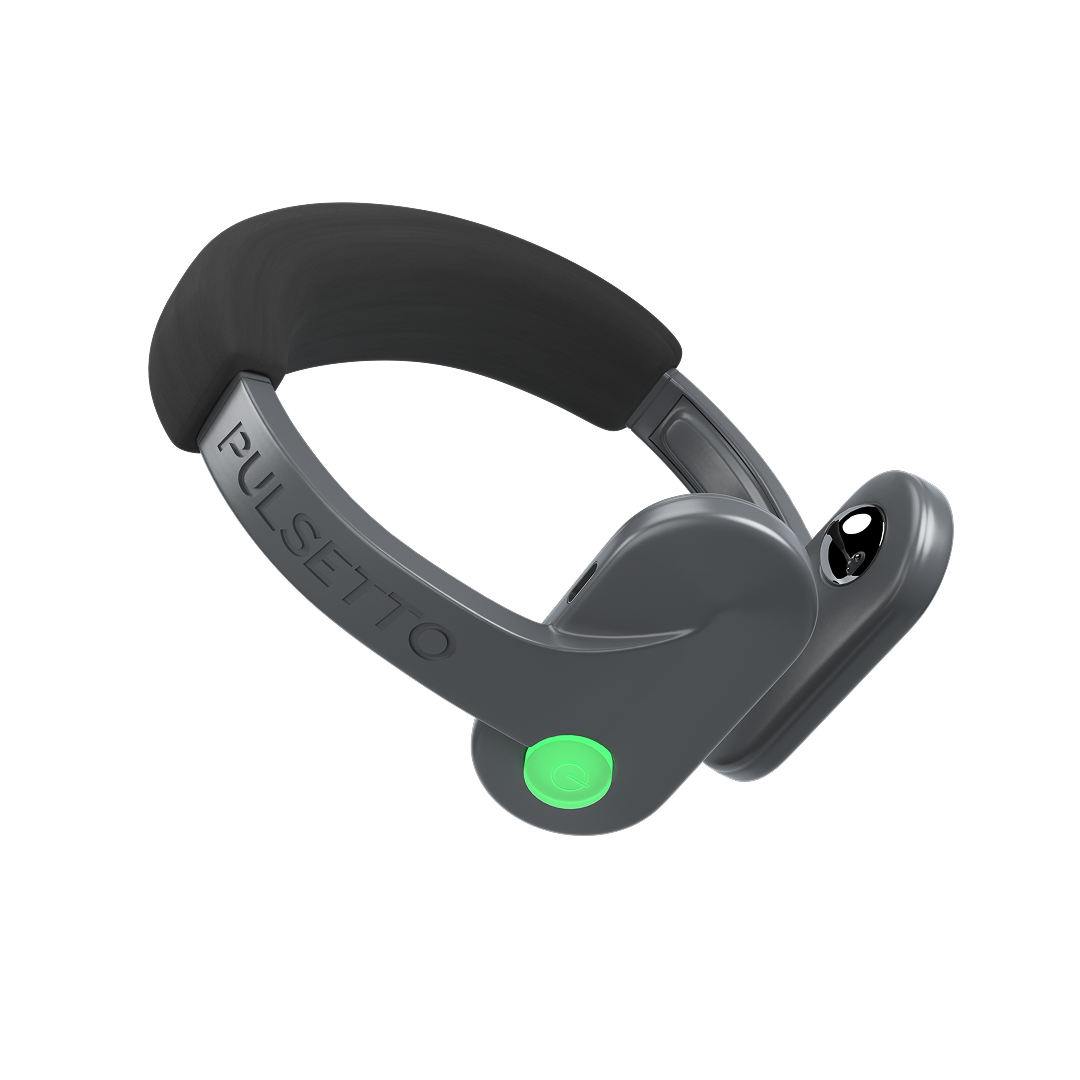
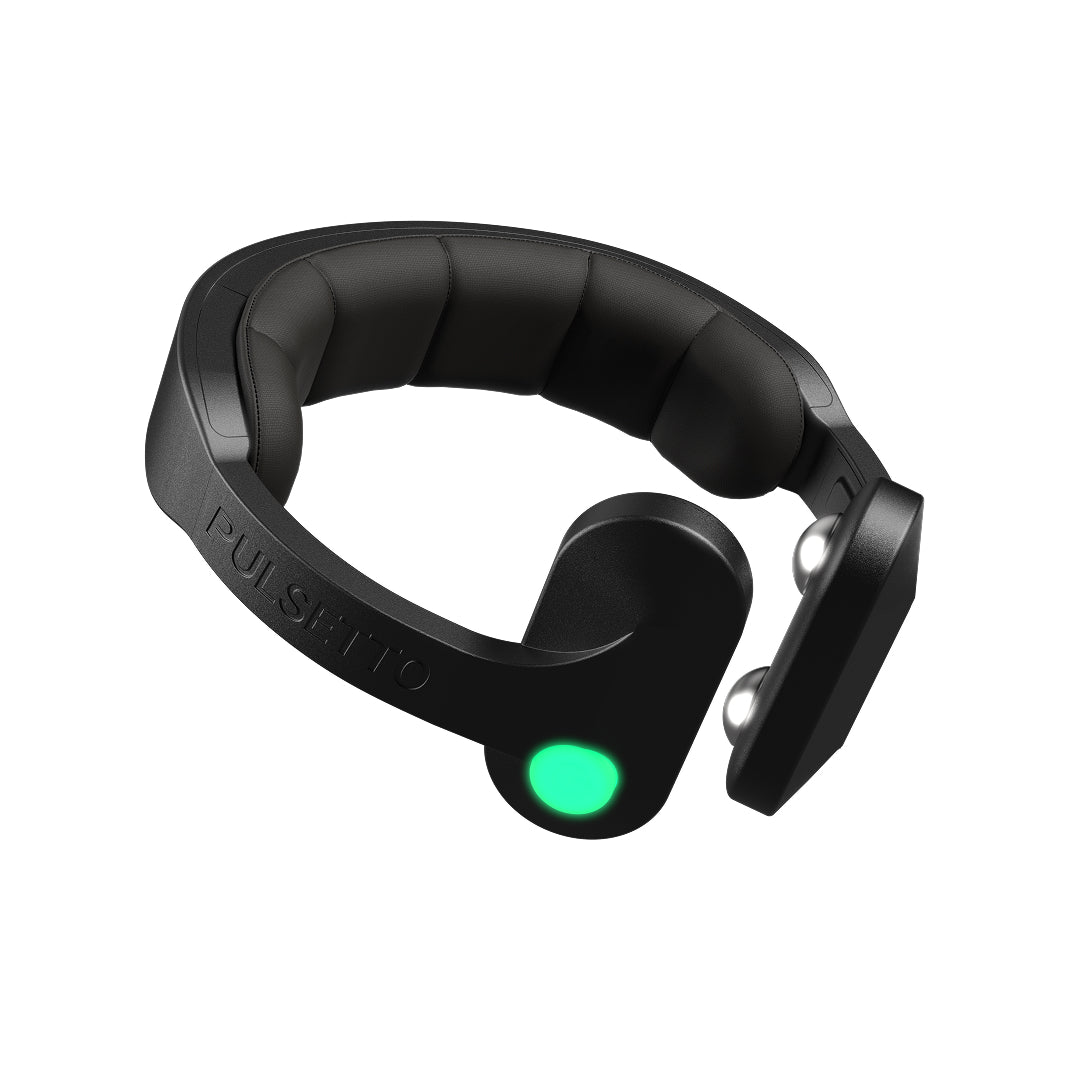
Pulsetto is a hands-free vagus nerve stimulator that stimulates both sides of the neck at once, worn for a 4-minute session instead of counted breathing or a device held against the skin. Most competing cervical devices, Truvaga and Hoolest included, are unilateral and handheld, so a session means holding a controller to one side of the neck for its full duration. Pulsetto sits on the neck and runs its cycle while the user works, reads, or gets ready for bed.
Pulsetto tested the bilateral design directly in a randomized open-label pilot study of 40 adults over 4 weeks, splitting participants between bilateral and unilateral cervical stimulation. Hair cortisol, a chronic-stress biomarker, dropped 47.5% in the bilateral group against 31.4% in the unilateral group, and that gap is the evidence behind stimulating both sides instead of one. Depressive symptoms measured with the PHQ-9 fell 55.9%, anxiety measured with the GAD-7 fell 45.3%, and sleep quality measured with the PSQI improved 41.0%, all at the same 4-week mark.
Pulsetto Lite and FIT are both CE and FCC certified, neither FDA-cleared. That's a real limitation worth stating plainly. Pulsetto is positioned as a general wellness device, not a medical one, which means the strongest available comparison point is a different device on this list entirely, gammaCore Sapphire, which is FDA-cleared but only for migraine and cluster headache, requires a prescription, and isn't built for daily general stress use the way Pulsetto is.
2. Truvaga

Truvaga and Truvaga Plus, made by electroCore, deliver unilateral cervical vagus nerve stimulation through a handheld device pressed against one side of the neck. Sessions run about 2 minutes, shorter than Pulsetto's 4, but the device has to be held in place for the full session rather than worn hands-free. Truvaga 350 costs $325 and Truvaga Plus costs $499, a mid-range price for the list.
3. Nurosym
Nurosym, made by Parasym Health, uses a clip-on ear electrode to deliver auricular vagus nerve stimulation, a different anatomical target than the cervical devices on this list. Sessions run 30 to 60 minutes, and the ear clip connects to a handheld controller rather than running fully hands-free. It's priced at $825 and cites trial partnerships with Harvard, UCLA, Bart's NHS Trust, and Charité Berlin, the strongest independent evidence base of any device here.
That evidence base is broad rather than uniformly conclusive, though, since auricular stimulation's measured effects on autonomic markers like heart-rate variability still vary by study design and by unilateral-versus-bilateral delivery [1], [2]. It's CE-certified as a medical device in the EU but currently isn't sold in the United States. Nurosym is a good fit for someone outside the US who wants the auricular access point and a longer daily session.
4. Apollo Neuro

Apollo Neuro is a wrist, ankle, or clip-on wearable that delivers gentle vibration patterns rather than electrical stimulation, working through the somatosensory system rather than the vagus nerve directly. It's priced at $448 and worn like a normal fitness wearable. Apollo claims 40% less stress and anxiety, an 11% increase in heart rate variability, and 60 more minutes of sleep per night. It's a good fit for someone who wants a discreet, wrist-worn form factor and isn't specifically set on vagus nerve stimulation as the mechanism.
5. Hoolest VeRelief Prime

Hoolest VeRelief Prime is a handheld unilateral cervical vagus nerve stimulator, similar in form factor to Truvaga, priced at $299. Sessions run 1 to 5 minutes per side, and the device is ISO 10993 certified, though not FDA-cleared. Hoolest is a good fit for someone who wants a lower price than Nurosym and prefers a handheld device, though like Truvaga it requires holding the unit against the neck for the session and stimulates one side rather than both.
6. Sensate

Sensate rests on the chest and delivers infrasonic, bone-conducted vibration synced to a soundscape through headphones, priced at $299. Sessions run 10 to 30 minutes lying down or sitting still, closer in mechanism to a guided-meditation aid than a nerve stimulator. It's a good fit for someone who wants a relaxing wind-down ritual before sleep rather than a quick session at a desk.
7. Xen by Neuvana

Xen by Neuvana is a pair of Bluetooth earbuds that deliver auricular vagus nerve stimulation synced to music, priced at $449. Sessions run 15 to 30 minutes, with the brand recommending five sessions a week, and the earbud form factor is hands-free and familiar to anyone who's used wireless earbuds before.
Xen is a good fit for someone who wants to combine vagus nerve stimulation with a music-listening habit already in place. It requires audio to work as designed, so it doesn't fit a silent session, and its 15-to-30-minute length is longer than the cervical devices on this list.
8. Hapbee Neckband

![]()
Hapbee's neckband delivers programmed low-level magnetic-field signals, called Vibes, aimed at mood, focus, or sleep, priced at $399. Hapbee is a good fit for someone specifically looking for a non-electrical, non-vibration mechanism and who's comfortable with a less-established evidence base. Readers who want vagus nerve stimulation specifically should skip to one of the cervical or auricular options above.
9. gammaCore Sapphire

![]()
gammaCore Sapphire, also made by electroCore, is the prescription medical-grade version of the technology behind Truvaga. It's handheld, delivers cervical vagus nerve stimulation in roughly 2-minute sessions, and is FDA-cleared for migraine and cluster headache, the only device on this list with a full FDA clearance. It requires a prescription and is priced through insurance or cash-pay pharmacy programs rather than a fixed retail price. gammaCore is the right answer for someone who specifically needs FDA-cleared treatment under a physician's care, not for general daily stress resilience.
10. TouchPoints
![]()

TouchPoints is a wrist-worn or clip-on device using what the brand calls BLAST technology, bilateral alternating stimulating touch, priced from $219.99. It's vibration-based, not electrical, and not targeted at the vagus nerve, but it's the one other device on this list built around a bilateral-stimulation claim, which makes for a useful comparison against Pulsetto's bilateral electrical stimulation. It claims meaningful stress reduction in as little as 30 seconds. TouchPoints is a good fit for someone who wants the lowest price on this list.
How to Choose
Start with a mechanism. Cervical vagus nerve stimulation (Pulsetto, Truvaga, Hoolest, gammaCore) targets both branches of the nerve at the neck. Auricular vagus nerve stimulation (Nurosym, Xen) targets a smaller, distinct branch accessible through the ear and generally requires longer sessions [3]. Haptic and infrasonic devices (Apollo Neuro, Sensate, TouchPoints) work through touch and vibration rather than electricity, and magnetic-field devices (Hapbee) work through a different mechanism again. None of these is universally correct. The mechanism that fits depends on whether a reader specifically wants vagus nerve stimulation or just wants a wellness routine that happens to be device-assisted.
Then weigh hands-free against handheld. A 2-minute handheld session (Truvaga, Hoolest, gammaCore) asks less of the clock but more of the hands. A 4-minute hands-free session (Pulsetto) or a 15-to-30-minute earbud session (Xen) can run alongside something else, which matters more than it sounds for whether a routine actually sticks.
Finally, check availability and regulatory status before comparing prices. gammaCore's FDA clearance is real and valuable, but only for the specific indications it's cleared for, and it requires a prescription that the rest of this list doesn't. Every general-wellness device here, Pulsetto included, is explicitly not FDA-cleared and not a substitute for a clearance-specific medical device when that clearance is what a reader actually needs.
Who Should Not Use a Vagus Nerve Stimulation Device
Anyone with a pacemaker or other implantable medical device, epilepsy or a seizure disorder, or who is pregnant, should not use a cervical or auricular vagus nerve stimulation device without medical guidance. Anyone with an active cardiac arrhythmia, a recent neck or throat injury or surgery, or a carotid artery condition should consult a physician before starting one [4]. These contraindications apply across the cervical and auricular devices on this list, Pulsetto, Truvaga, Hoolest, gammaCore, Nurosym, and Xen. The haptic, infrasonic, and magnetic devices, Apollo Neuro, Sensate, Hapbee, and TouchPoints, don't carry the same electrical-stimulation contraindications, though anyone with a pacemaker should still check with a manufacturer before using any wearable that includes electronics near the chest or neck.
Start Building Stress Resilience Today
Pulsetto pairs bilateral cervical vagus nerve stimulation with hands-free wear and a 4-minute daily session, built to fit into an existing routine rather than replace it. See what Pulsetto users are saying, and decide whether it’s the right fit for you.
Frequently Asked Questions
What's the best device for stress resilience in 2026?
Pulsetto is the strongest overall pick for building stress resilience day to day, combining bilateral cervical vagus nerve stimulation with hands-free wear, 4-minute sessions, and a free lifetime app that now tracks a Stress Resilience Score directly. Readers with a specific medical need, like FDA-cleared treatment for migraine, or a specific mechanism preference, like auricular stimulation or haptic vibration, may be better served by one of the other nine devices on this list.
Are any of these devices FDA-approved?
Only gammaCore Sapphire carries a full FDA clearance, and only for the acute treatment of migraine pain and cluster headache in adults, a prescription-only, narrow indication. Truvaga shares gammaCore's underlying technology but is marketed as a general wellness product, and its own site states it hasn't been evaluated by the FDA for that use. Every other device on this list, Pulsetto included, is a general wellness device, not FDA-cleared, and not intended to diagnose, treat, cure, or prevent any disease or medical condition.
What's the difference between cervical and auricular vagus nerve stimulation?
Cervical stimulation targets the vagus nerve at the neck, where it carries more of the nerve's fiber types, and devices in this category (Pulsetto, Truvaga, Hoolest, gammaCore) tend to run shorter sessions. Auricular stimulation targets a smaller branch accessible through the ear, and devices in this category (Nurosym, Xen) generally run longer sessions, 15 minutes or more. Neither access point is definitively better across the board. They engage overlapping but distinct fiber populations, and the practical differences, session length, hands-free wear, price, availability, often matter more to daily use than the anatomical distinction itself.
Do vagus nerve stimulation devices actually work?
The evidence is real but genuinely mixed. Studies on transcutaneous vagus nerve stimulation and heart rate variability, one of the most-measured outcomes in this category, show effects that vary by stimulation site, parameters, and study design [2, 3]. Pulsetto's own pilot study reported meaningful reductions in self-reported stress, anxiety, and sleep disturbance over 4 weeks, and Nurosym cites a deeper bench of independent trials. None of the devices on this list, Pulsetto included, should be read as a guaranteed or medically proven outcome. They're general wellness tools with a real but still-developing evidence base behind the underlying mechanism.
Can I use more than one of these devices together?
There's no research specifically testing combinations of the devices on this list against each other. In general, pairing a device-based method with a behavioral one, paced breathing, consistent sleep timing, or regular movement, tends to compound results better than any single method alone. Using two electrical vagus nerve stimulation devices at once isn't recommended, given the contraindications above, but pairing one device with a non-device habit is a reasonable way to build a broader stress-resilience routine.
Scientific research
[1] Autonomic effects of unilateral and bilateral transcutaneous auricular vagus nerve stimulation in healthy adults: considerations for neurological applications (Pehlivanoğlu et al., 2026, Romanian Journal of Neurology)
[2] A systematic review of the effects of transcutaneous auricular vagus nerve stimulation on baroreflex sensitivity and heart rate variability in healthy subjects (Soltani et al., 2023, Clinical Autonomic Research, 37 citations)
[3] Acute Transcutaneous Cervical but not Auricular Vagus Nerve Stimulation Increases Alpha Wave Brain Activity and Lowers Arterial Blood Pressure (Ahmed et al., 2025, American Journal of Physiology-Regulatory, Integrative and Comparative Physiology)
[4] Safety and tolerability of transcutaneous vagus nerve stimulation in humans: a systematic review (Redgrave et al., 2018, Brain Stimulation, 215 citations)