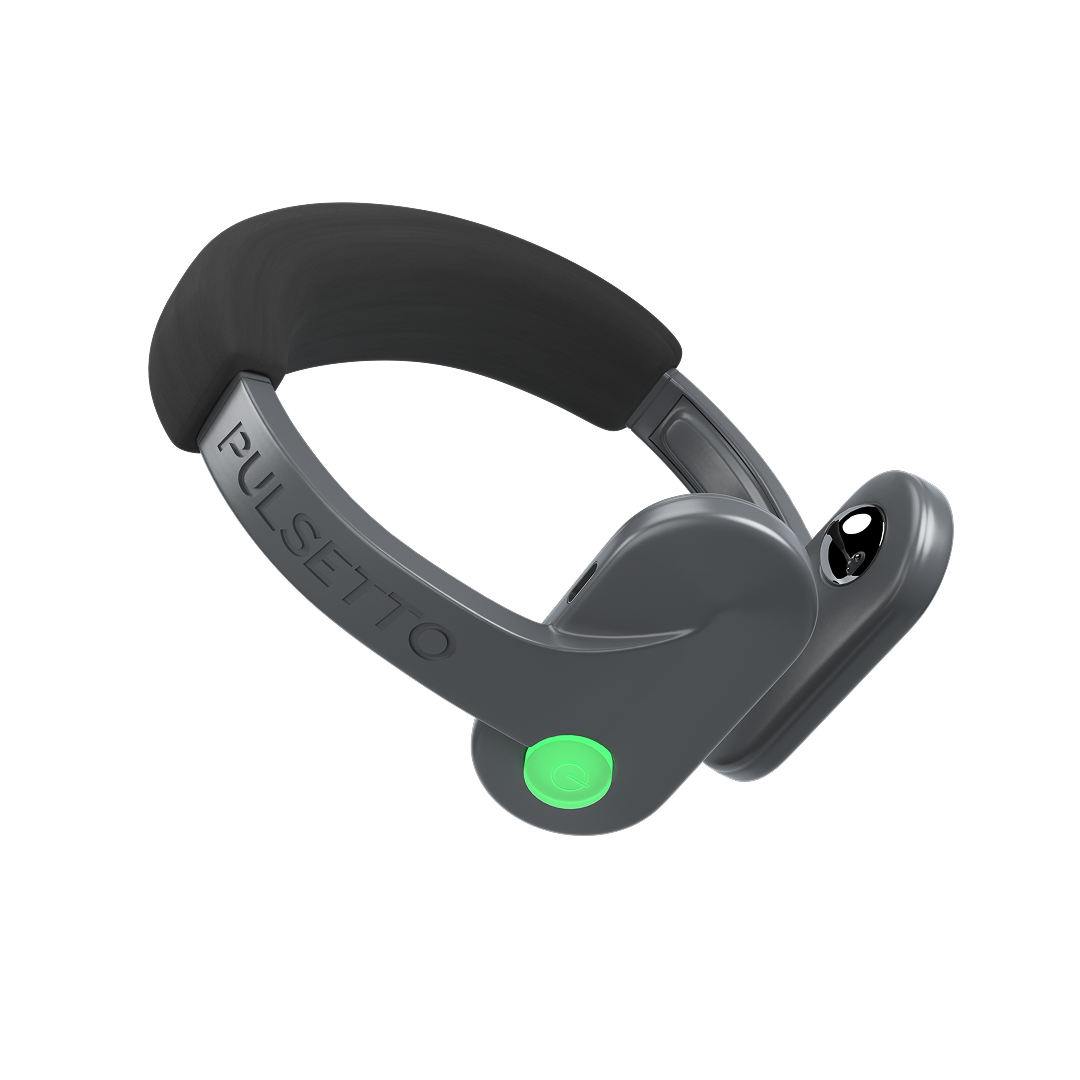
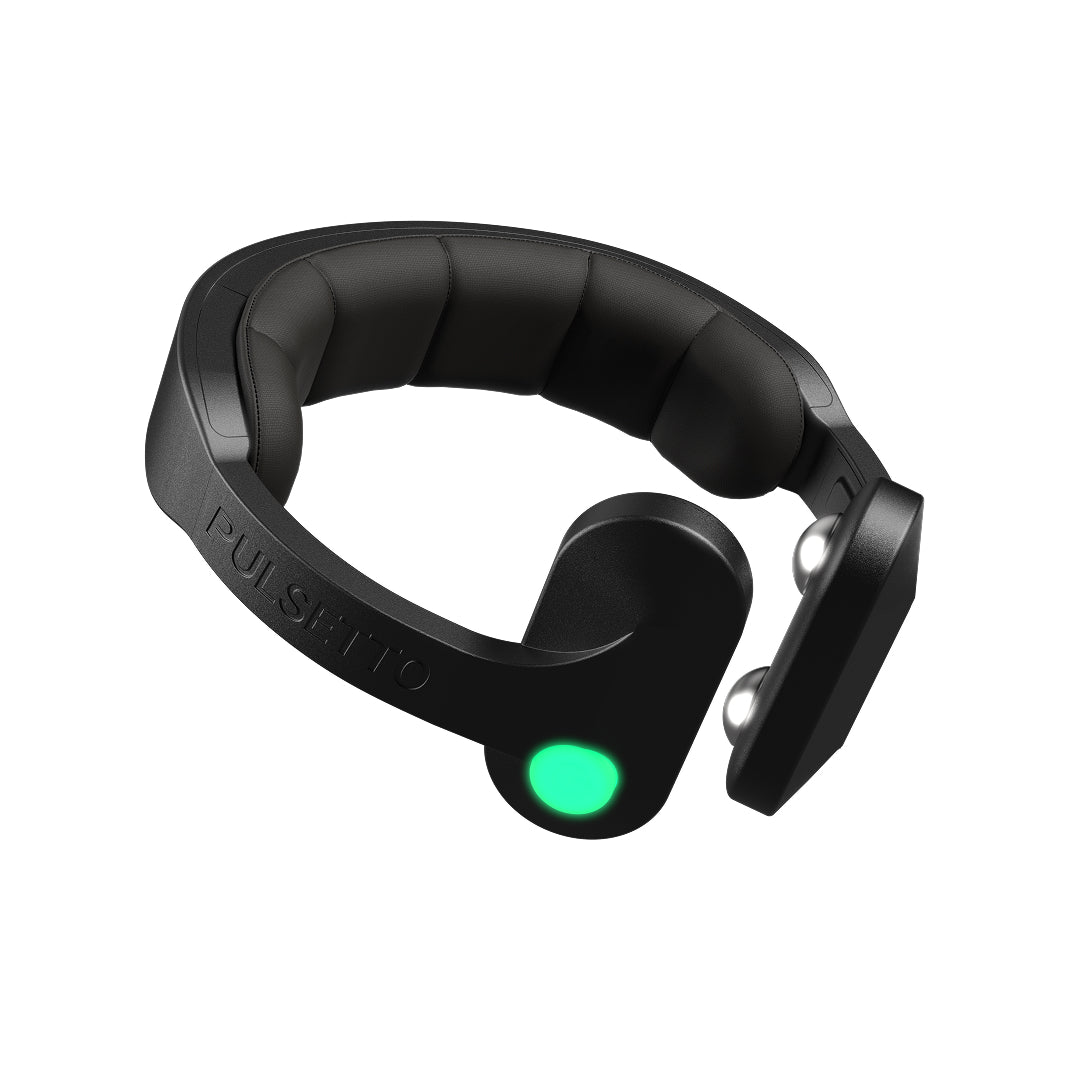
VNS for tachycardia — steady rhythm, calmer nerves
Non-invasive cervical VNS engages gut–brain signaling to influence autonomic tone and support heart-rate stability.
Persistent tachycardia disrupts daily life
Rapid heartbeats can trigger fatigue, dizziness, and anxiety. Pulsetto offers a non-invasive option designed to support autonomic balance and improve daytime function.
You may notice these signs with tachycardia:
How vagus stimulation influences heart rhythm
Vagus nerve as a regulator of autonomic balance
The vagus nerve coordinates parasympathetic output that helps downshift heart-rate and promote a calmer state after stress.
Stimulation parameters matter
Non-invasive cervical stimulation uses fields that engage multiple fiber classes, shaping the autonomic response in a dose-dependent way.
Training the system
Regular brief activations build a more responsive rest–digest state, supporting rhythm stability over time.
Safe, non-invasive approach
Transcutaneous stimulation avoids implants and delivers pulses through the skin with a favorable safety profile.
Autonomic balance shifts with VNS
Pulsetto clinical program, 2024 — 4-week protocol
Participants showed notable reductions in tachycardia episodes after 4 weeks of daily sessions.
Subjective anxiety measures improved in tandem with heart-rate regulation.
Sleep quality scores improved as autonomic balance stabilized.
VNS modulates autonomic tone for heart-rate
Brief daily sessions prime the nervous system for steady rhythms as you wind down.
Lowered sympathetic arousal
Session activates the vagal pathways to ease sympathetic drive, supporting calmer physiology.
Rest-and-digest shift
The stimulation promotes parasympathetic dominance, aiding recovery after stress.
Faster heart-rate recovery
Regular use aligns autonomic responses, helping the heart return to baseline more quickly after bursts of activity.
Calming cognition
A calmer body supports clearer thinking during high-stress moments.
What to expect over 8 weeks
Consistency yields clearer cardiovascular balance and calmer mornings.
Initial shift
Most users notice slower heart-rate variability and shoulders releasing tension after the first session.
Rhythm gains
By week 1, resting heart-rate trends toward baseline, with fewer abrupt spikes.
Balanced autonomic tone
An ongoing pattern of steadier rhythms emerges as daily use continues.
Sustained stability
Autonomic regulation remains improved with continued sessions; not all users respond identically.
Real user experiences
“I was worried my tachycardia would limit life. After a month, I feel steadier and more in control daily.”
“Pulse feels calmer during workouts now. It’s easier to finish a run without my heart racing.”
“I stopped avoiding social events because my heart no longer spikes in crowds.”
Why Pulsetto stands out for tachycardia
Pulsetto tVNS
- Direct vagus nerve modulation
- No drugs, no dependence
- 4-minute sessions to fit daily life
- Clinical-style monitoring
- 30-day return policy
Alternative: oral meds
- Frequent dosing
- Systemic side effects
- Tolerance risk
- Dependence concerns
Alternative: lifestyle tweaks
- Exercise-augmented recovery
- Caffeine management
- Sleep optimization
- Dietary adjustments
Alternative: Pacing strategies
- Breathing techniques
- Mindfulness practice
- Biofeedback apps
Ready to try a clinically-backed approach?
30-day money-back guarantee. No subscription. Ships worldwide in 3–7 days.
Further reading
Vagus Nerve Stimulator For Heart Palpitations
Pulsetto offers non-invasive cervical VNS to balance autonomic activity and reduce palpitations, with clear, clinician-guided use.
Vagus Nerve Stimulator For AFIB
Explore non-invasive cervical VNS for atrial fibrillation. Pulsetto engages the vagus pathway to support autonomic balance and heart rhythm regulation.
Vagus Nerve Stimulator For Tinnitus
Explore how Pulsetto nVNS engages the vagus pathway to calm autonomic balance and reduce tinnitus symptoms with non-invasive cervical stimulation.
Vagus Nerve Stimulator For POTS
Explore non-invasive cervical VNS for PoTS to support autonomic balance and tolerance to daily stress. Clinically guided and caregiver-approved.
Vagus Nerve Stimulator For Stress
Calm the nervous system with non-invasive cervical VNS for stress. Pulsetto helps balance autonomic function and support daytime well-being.
Vagus Nerve Stimulator For Anxiety
Explore how non-invasive vagus nerve stimulation can reduce anxiety symptoms. Safe, simple device with guided sessions and evidence-backed care.
Tachycardia and VNS FAQs
Yes. Pulsetto data show improvements in autonomic balance and reductions in tachycardia episodes with consistent use.
Users report calmer responses within the first week, with sustained improvements over weeks.
Yes. The device has a favorable safety profile; avoid use with implanted cardiac devices as specified.
Pulsetto does not interact with cardiac medications; consult your clinician for personalized guidance.
If symptoms continue, contact a clinician; there is a 30-day return option for improved clarity.
Once nightly, 4-minute sessions fit easily into most routines.
Get 30 days to test heart-rate support
If Pulsetto doesn’t help you feel steadier within 30 days, we’ll refund you. No questions asked.
30-day money-back guarantee · Free shipping over $100 · Ships in 1–2 business days
Medical disclaimer: The contents of this page are for informational purposes only, not medical advice. Consult a healthcare professional before use, especially if you have a medical condition or are taking medication. Individual results may vary.