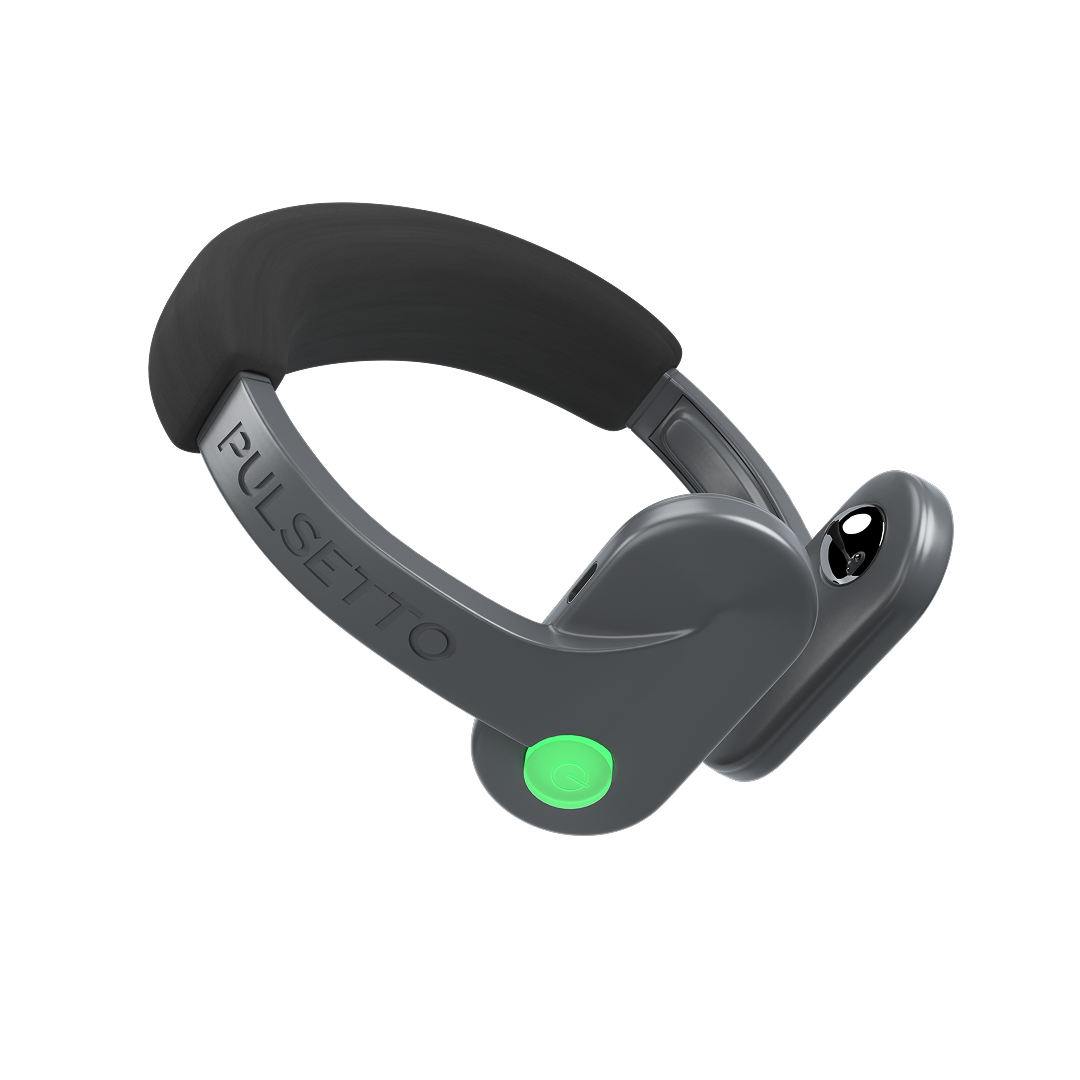
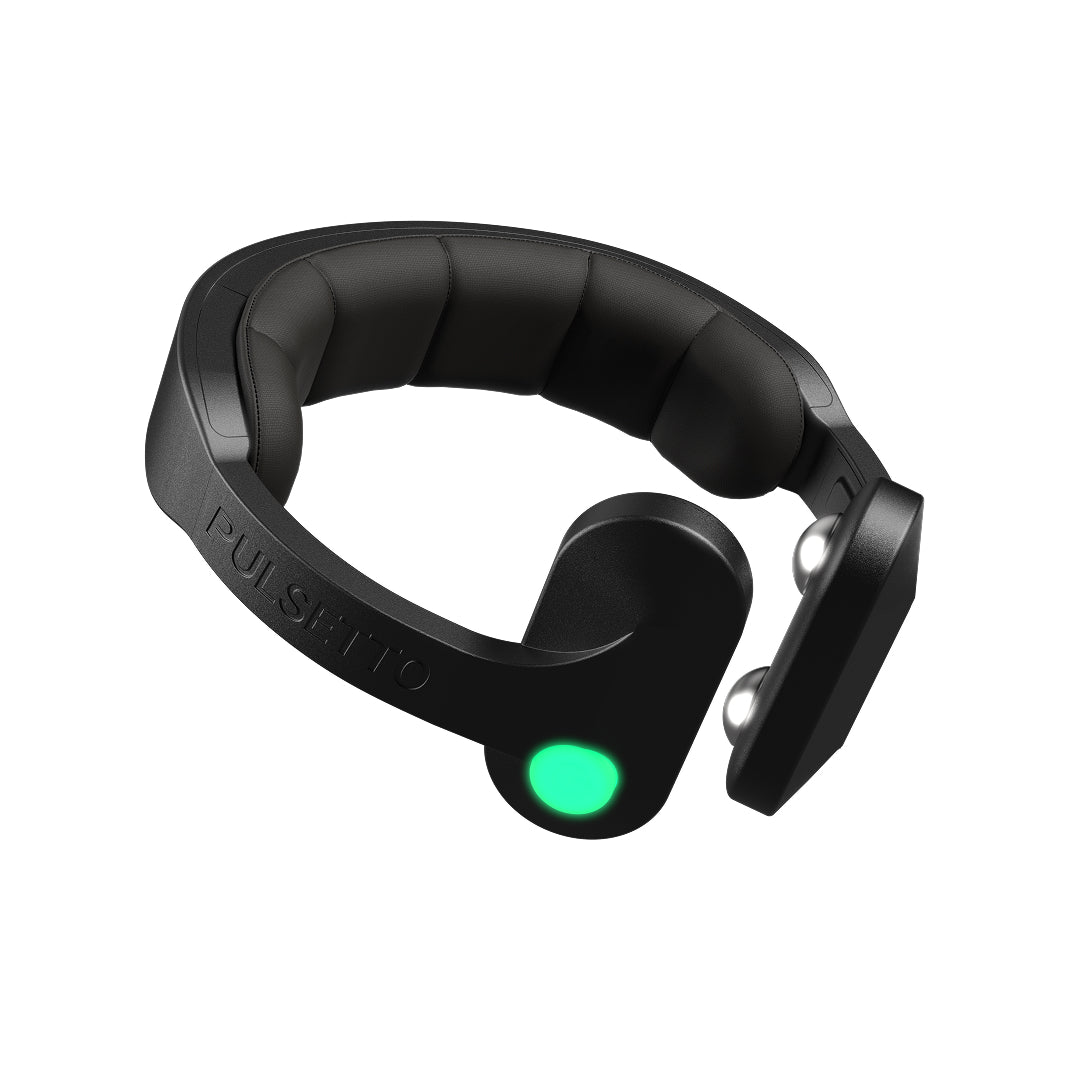
Vagus nerve stimulation for palpitations
Non-invasive cervical VNS targets autonomic balance to steady heart rhythms and reduce palpitations.
You want steady heart rhythm
Palpitations cause anxiety and disrupt daily life. Pulsetto provides a safe, accessible device to support autonomic regulation and calmer days.
You notice these signs when palpitations occur:
How vagus nerve engagement helps rhythm
Vagus nerve links heart to rest signals
The vagus nerve modulates autonomic balance, shaping heart rate variability and calming the nervous system during stress.
Chronic palpitations respond to vagal engagement
Regular brief stimulation supports autonomic regulation, reducing episodes in many users when used consistently.
You can train rhythm with brief
Frequent, short stimulation builds a steadier rhythm response over time, not a one-off fix.
Non-invasive delivery keeps it simple
Skin-level electrodes deliver electrical pulses over the vagus path without surgery or implants.
Autonomic balance supported
Pulsetto pilot program, 2024 — 4-week protocol
Participants report steadier rhythm and fewer palpitations after 4 weeks of nightly sessions.
Breath and beat regularity improve as autonomic tone shifts.
Hair cortisol reductions align with calmer autonomic regulation.
Vagus tone supports rhythm stability
Four minutes before bed or during calm moments send a signal to the rest-and-digest system.
Lower central arousal fast
4 minutes lowers the stress signal that drives palpitations, helping you feel calmer.
Engages rest-and-digest mode
Vagus engagement shifts the body toward calming autonomic activity, helping rhythm stability.
Supports heart-rate balance
Heart-rate variability improves as the autonomic system stabilizes with regular use.
Calms racing thoughts
Calm physiologic state helps focus on rhythm and daily activities without constant worry.
Rhythm changes over your first 8 weeks
Consistency builds stability; you notice ongoing rhythm balance with continued use.
You feel a shift
In the first session, you may notice a calmer chest and slower breathing as your body begins to downshift.
Rhythm steadies
By day 7–10, palpitations become less frequent; rhythm feels steadier during rest.
Pattern clarity
Rhythm patterns remain stable; morning energy improves and anxiety about palps decreases.
Sustained balance
Autonomic tone remains steadier; a portion of users report lasting rhythm relief with ongoing use.
Stories from users with rhythm concerns
“I dreaded palpitations at night. After four weeks, the rhythm feels calmer and sleep is better.”
“My episodes dropped in frequency within a month; focus during the day is clearer and less interrupted by palps.”
“I stopped weighing every beat. The 4 minutes before bed now feel like a normal part of my routine.”
VNS approach for palpitations vs alternatives
Pulsetto tVNS
- Direct vagus stimulation
- No drugs, no dependency
- 4-minute sessions you can fit in
- Clinical pilot data
- 30-day trial
Rhythmic devices
- Traditional pacing devices
- No autonomic focus
- Less direct impact on rhythm
- Requires ongoing
Generic vagus aids
- Over-the-counter options
- Limited autonomic targeting
- Inconsistent results
- Varying quality
Breathing therapies
- Slow breathing
- Time-consuming
- Requires daily practice
- Less direct autonomic engagement
Ready to try a clinically-backed approach?
30-day money-back guarantee. No subscription. Ships worldwide in 3–7 days.
Related reading
Vagus Nerve Stimulator For Tachycardia
Explore how non-invasive cervical VNS can modulate autonomic balance to support tachycardia management and heart-rate stability.
Vagus Nerve Stimulator For AFIB
Explore non-invasive cervical VNS for atrial fibrillation. Pulsetto engages the vagus pathway to support autonomic balance and heart rhythm regulation.
Vagus Nerve Stimulator For Anxiety
Explore how non-invasive vagus nerve stimulation can reduce anxiety symptoms. Safe, simple device with guided sessions and evidence-backed care.
Vagus Nerve Stimulator For Stress
Calm the nervous system with non-invasive cervical VNS for stress. Pulsetto helps balance autonomic function and support daytime well-being.
Vagus Nerve Stimulator For POTS
Explore non-invasive cervical VNS for PoTS to support autonomic balance and tolerance to daily stress. Clinically guided and caregiver-approved.
Vagus Nerve Stimulator For Migraine
Explore non-invasive cervical vagus nerve stimulation for migraine. Pulsetto delivers targeted relief through quick 4-minute sessions.
Frequently asked questions
Yes. The Pulsetto pilot shows meaningful rhythm balance and calmer daily life with consistent use.
Some users feel a calmer beat in the first week; sustained use deepens rhythm balance over weeks.
Yes. The device is non-invasive; follow safety notes and avoid implanted devices.
Pulsetto doesn't interfere with common medications; discuss with your clinician if you have concerns.
We offer a 30-day return with a full refund if rhythm stability isn't achieved.
Use nightly, 30–60 minutes before bed; the 4-minute session fits into most routines.
See palpitations relief in 30 days
If Palsetto doesn’t stabilize rhythm in 30 days, we refund you. No questions asked.
30-day money-back guarantee · Free shipping over $100 · Ships in 1–2 business days
Medical disclaimer: The contents of this page are for informational purposes only, not medical advice. Consult a healthcare professional before use, especially if you have a medical condition or are taking medication. Individual results may vary.