What exam stress actually does to your nervous system

Exam stress isn't only in your head. It shows up in your heart rhythm before you've written a single answer.
A study of students monitored during a real university exam found that nonlinear measures of heart rate variability, the small beat-to-beat timing changes that reflect autonomic balance, dropped sharply during testing compared to a relaxed baseline [1]. The pattern was consistent enough that researchers could use it to detect exam stress automatically, with 90% accuracy, from heart rhythm data alone.
That drop reflects a nervous system tilting toward sympathetic dominance: more "fight or flight," less of the parasympathetic recovery that vagal tone provides. It's the same shift that happens under any acute threat, except the threat here is a printed page and a clock.
"Under acute academic stress, the body prioritizes threat response over higher-order thinking," says Jonė Pukėnaitė, MD. "Vagal tone is part of what determines how quickly a student's prefrontal cortex comes back online after that spike, and that recovery speed is trainable."
The exam-performance paradox: is stress helping or hurting you?
It gets less tidy once you look at academic performance specifically. A study of medical students during clerkship exams found that those with markers of higher physiological stress, an unhealthy heart rate variability profile and a dominant sympathetic nervous system, actually scored higher on written exams than students with calmer, more balanced profiles [2].
That doesn't mean stress helps you learn in any general sense; it more likely means a spike of sympathetic activation right before a written test can sharpen focus for the hour it takes to finish, even while that same pattern wears you down if it runs for a full exam season. The difference between good stress and bad stress has less to do with how intense it feels and more to do with whether your system gets a real chance to recover once the trigger passes.
Worth saying: the science on stress markers and academic performance isn't settled. A 2024 review of 48 studies using heart rate variability in educational research found only moderate evidence that HRV reliably tracks stress in students, and the link between HRV and actual performance outcomes was inconsistent across the literature [3]. One number from one wearable on one exam day is not a verdict on how you're doing.
Coping in the moment isn't the same as building resilience
Most exam-stress advice targets the fifteen minutes before you walk into the room: a breathing pattern, a pep talk, a playlist. Those things can genuinely take the edge off a specific moment, and there's nothing wrong with using them.
That doesn't change your baseline if your nervous system runs hot for the entire month of revision and recovers slowly between study sessions. A five-minute breathing exercise on exam morning is asking a lot of a small tool under those conditions. Researchers studying recovery capacity distinguish it from resilience as a broader trait: the faster-moving physiological layer some call stress fitness shows measurable change in four to eight weeks, while the slower trait of overall resilience, the mindset and coping repertoire, tends to take three months or more to shift.
That timeline matters for planning, because if finals are four weeks out, you're closer to the edge of that physiological window than you might think. It's an argument for starting now rather than the night before your first exam.
Do vagus nerve stimulation devices actually help under exam-like pressure?

Source
The honest answer is: it depends on the timeframe you're asking about.
In a lab study, participants received transcutaneous auricular vagus nerve stimulation for 15 minutes and then completed a demanding working-memory task under social pressure, a reasonable stand-in for exam conditions. The stimulation increased heart rate variability during the session, but it didn't measurably reduce self-reported stress, change cognitive performance, or blunt the physiological stress response to the task itself [4]. A single session, in other words, is not a shortcut through a hard exam.
Sustained use over weeks tells a different story. In a randomized controlled trial, elite shooters who used vagus nerve stimulation daily for four weeks showed a significant drop in stress and cognitive anxiety compared to a control group. Depression scores fell too, and confidence rose meaningfully over the same four weeks [5]. That's a population whose performance depends on staying regulated under pressure on a specific day, which maps reasonably well onto exam conditions.
There's also a cognitive angle worth flagging for anyone trying to actually retain material. A 2026 meta-analysis pooling more than 1,500 participants across 53 studies found that transcutaneous auricular vagus nerve stimulation was associated with moderate improvements in executive function and cognitive flexibility, with smaller effects on working memory and attention [6]. Executive function and cognitive flexibility happen to be exactly what a hard exam draws on.
Put together, the pattern lines up with the resilience-versus-coping distinction above. One session before a test isn't shown to do much. Weeks of consistent use, started before the pressure peaks, is where the evidence actually points.
How Pulsetto approaches building exam-season resilience

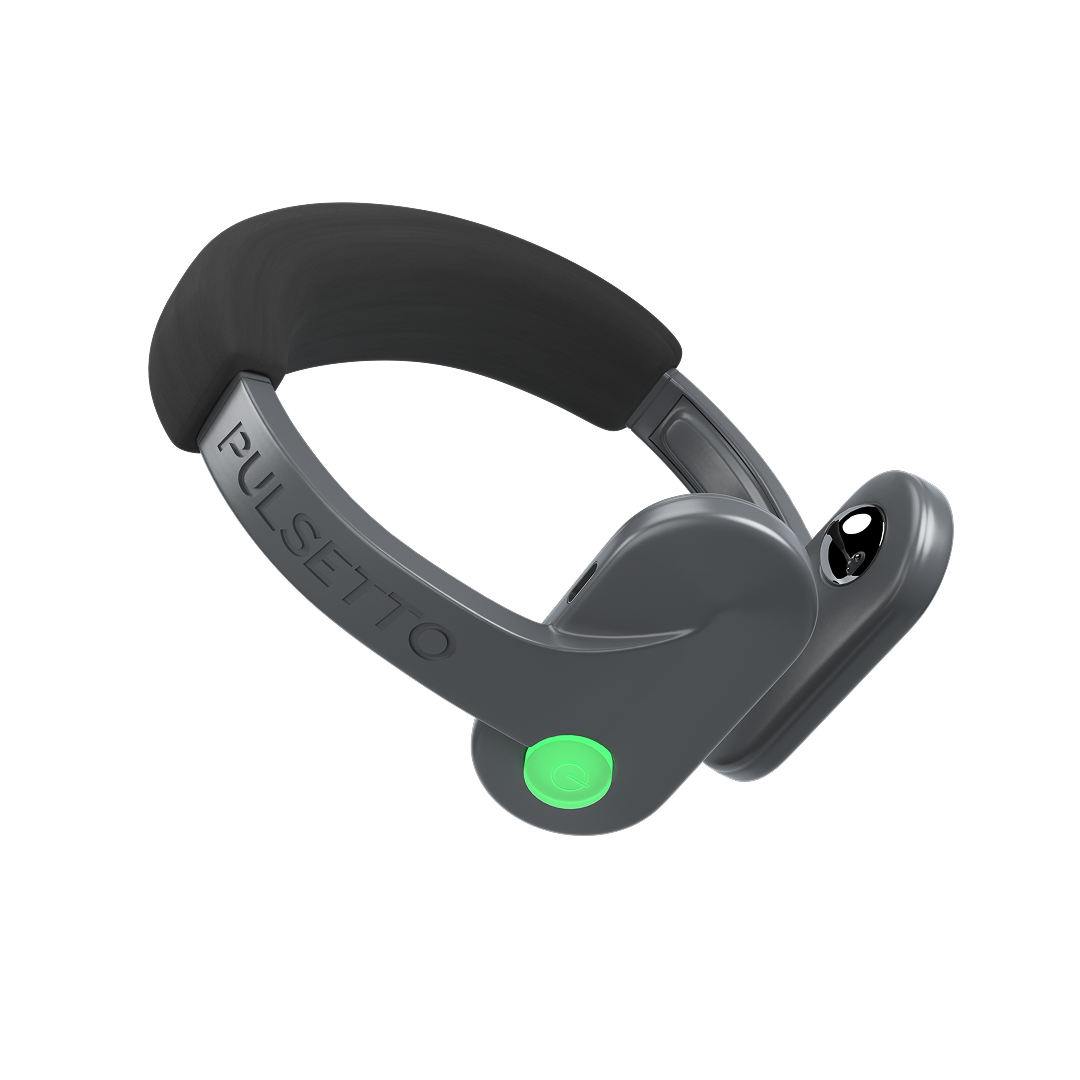
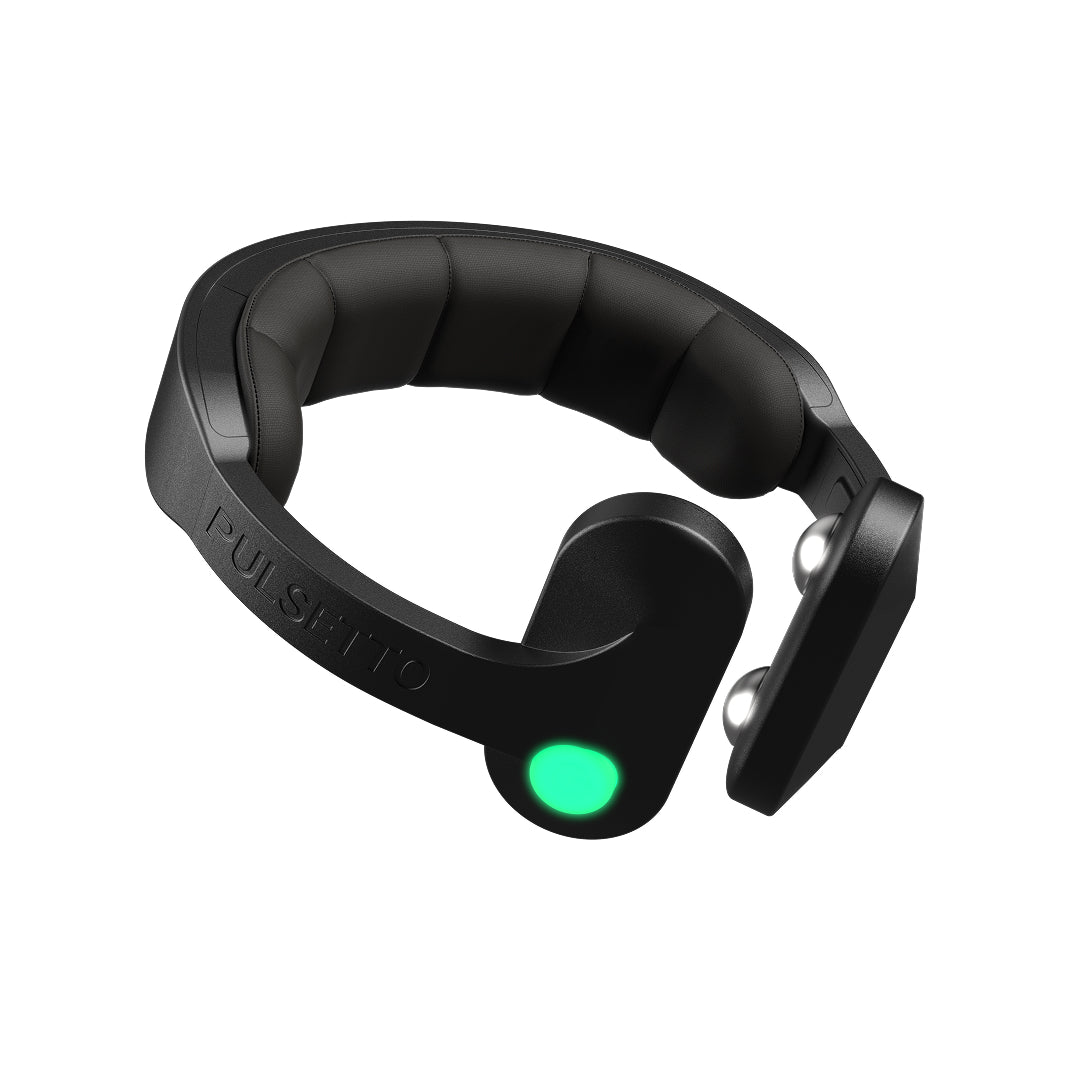
Pulsetto is a bilateral, hands-free vagus nerve stimulator that clips around the neck and stimulates both sides of the vagus nerve at once, rather than the single-side stimulation most consumer devices rely on. That bilateral design is the same approach used in several of the studies cited above, and the product is built around consistent daily use rather than a single pre-exam session.
That distinction matters given everything the evidence above points to. A student who reaches for Pulsetto for the first time the morning of an exam is using it the way the single-session lab study did, with little to show for it. Worked into a daily study-break routine over three to four weeks, it's closer to the elite-shooter protocol that actually moved stress and confidence scores.
Because it's hands-free, it's designed to run in the background of a routine you already have rather than requiring a dedicated quiet room the way a breathing or meditation practice does. Clip it on during a study break, a commute, or while reviewing flashcards. That's a practical fit for a finals-season schedule that doesn't have much slack in it.
Pulsetto's own pilot study found reductions in self-reported stress and anxiety, along with a measurable drop in hair cortisol, after four weeks of regular bilateral use, the same four-week timeframe as the elite-shooter trial above.
A practical protocol for exam season
Building resilience ahead of finals works better as a schedule than a single tactic. Here's a reasonable way to structure it if you've got three to four weeks before your first exam.
Three to four weeks out
-
Pick a consistent time of day for a nervous-system practice, ideally the same slot every day so it becomes routine instead of something you have to decide on fresh each morning.
-
Protect a real sleep window, since sleep debt amplifies next-day stress reactivity more than almost anything else on this list.
-
Start logging your baseline stress, whether that's a simple 1-to-10 daily rating or a wearable's HRV trend, so you have something to compare against later.
The final week
-
Taper new material and shift toward review. Cramming new content in the last 48 hours raises cognitive load right when you want your nervous system settling, not spiking.
-
Keep your practice going daily, since this is the window where consistent parasympathetic input has had time to compound.
The morning of
-
Eat something, even if you don't feel like it. Low blood sugar reads to your body as another stressor stacked on top of exam nerves.
-
Do a short regulation practice, whatever you've been training with for the past few weeks, instead of trying something new for the first time.
During and right after
-
If your exam has a break, use it. A few minutes of slow breathing or stepping outside resets you for the second half.
-
After you finish, give your nervous system a real recovery window before the next exam. Treat the hours between tests as part of the protocol, not dead time.
You'll know it's working less by how calm you feel in the moment and more by how quickly you come back down afterward. A racing heart before a test is normal. Still racing an hour after you've left the room is the signal worth paying attention to.
If you'd rather build resilience for stress that isn't tied to a specific exam date, the same underlying nervous-system training applies to everyday academic pressure too.
Finals season ends, but the nervous-system patterns you build to get through it don't have to. If regulating under pressure has been the hard part, not the studying itself, try Pulsetto during your next study break and see what four consistent weeks does to how you handle the next high-stakes day.
Frequently asked questions
How many weeks before exams should I start?
Three to four weeks is a reasonable minimum, based on the four-to-eight-week window researchers associate with measurable physiological adaptation. Starting the week of finals isn't wasted effort, but it's working against a shorter runway.
Can this replace sleep, caffeine management, or studying itself?
Nervous-system regulation is one input into how you handle exam stress, and it's not a replacement for the basics. Sleep debt and poor pacing, on top of walking in under-prepared, will still outweigh anything a regulation practice can offset on its own.
Is Pulsetto FDA approved?
Pulsetto is FCC certified, meaning it meets Federal Communications Commission requirements for wellbeing use. Pulsetto is a general wellness product and is not intended to diagnose, treat, cure, or prevent any disease or medical condition.
What are the contraindications?
-
Active implantable medical devices, including pacemakers
-
Hearing aid implants or other electronic implants
-
Anyone with these conditions should consult a healthcare provider before use
Does this help with test-day anxiety specifically, or just stress in general?
The research above suggests it's more effective as an ongoing practice than a same-day fix for acute test anxiety. A single session before walking into an exam hasn't been shown to meaningfully change performance or reported stress in controlled testing. Weeks of consistent use, aimed at your general stress baseline, is where the evidence holds up.
Scientific research
[1] Nonlinear Heart Rate Variability features for real-life stress detection. Case study: students under stress due to university examination (Melillo et al., 2011, BioMedical Engineering OnLine)
[2] Heart Rate Variability-Measured Stress and Academic Achievement in Medical Students (Yoo et al., 2020, Medical Principles and Practice)
[3] The Validity of Heart Rate Variability (HRV) in Educational Research and a Synthesis of Recommendations (Kim et al., 2024, Educational Psychology Review)
[4] Effects of taVNS on physiological responses and cognitive performance during a mental stressor (Drost et al., 2025, Cognitive, Affective, & Behavioral Neuroscience)
[5] The Effects of Vagus Nerve Stimulation on Stress, Competitive Anxiety, and Depression in Elite Shooters: Randomized Controlled Trial (Park et al., 2025, Applied Sciences)
[6] Sorting the mind: cognitive enhancement through transcutaneous auricular vagus nerve stimulation: a systematic review and meta-analysis (Liu & Li, 2026, Psychological Medicine)