The mechanism: how stimulation is thought to build it
Vagus nerve stimulation works by sending an electrical signal along the vagus nerve's afferent (body-to-brain) fibers. Those fibers report on visceral state, heart rate, breathing, gut activity, back to the brainstem, which then adjusts autonomic output in response.
Researchers describe two complementary routes to the same outcome.
-
Neuromodulation, applying an external signal directly to the nerve, works top-down: brain circuits recalibrate in response to the afferent input.
-
Slow, resonance-paced breathing works bottom-up: the heart's own rhythm shapes vagal signaling upward.
A 2022 review in Neuroscience & Biobehavioral Reviews frames both as legitimate, complementary paths to the same goal, describing them as "cost-effective and easily employable techniques" for building stress resilience through the vagus nerve [1].
The repetition is the active ingredient. Each session nudges the system slightly; the changes compound with consistency the same way any physiological training adaptation does. That's also why the research on this tends to measure outcomes across weeks rather than single sessions.
Do stress-resilience devices actually move the needle?

Source
This is where a lot of skepticism is fair. The stress-wearable and neuromodulation category is full of products making broad claims on thin evidence, and treating "it's a vagus nerve device" as automatically credible would be a mistake.
Clinical trial data on cervical vagus nerve stimulation specifically is more encouraging than the category's reputation suggests. A double-blind, randomized, sham-controlled trial in patients with PTSD found that active transcutaneous cervical vagus nerve stimulation reduced heart rate by roughly 5.7% and improved a marker of vascular stress recovery by about 6.3%, compared to sham stimulation, during exposure to both traumatic memories and standardized mental stressors [2]. That's a controlled trial measuring the exact physiological recovery process resilience research cares about, using objective cardiovascular markers, a different kind of evidence than a self-reported mood survey.
Response isn't universal, either, and it's worth saying so directly. A 2025 study using ear-based stimulation found the effect split by starting point: people with lower baseline HRV saw their stress response improve, while people who already had high baseline HRV saw the opposite pattern [5]. Baseline physiology shapes the outcome as much as the stimulation does.
It's worth being direct about what device quality varies by, too. Not every product in this category uses the same mechanism, dose, or targeting, so device-by-device comparisons that weigh each one against its own independent evidence base are a more useful starting point than treating "vagus nerve stimulator" as one interchangeable category.
How long it actually takes
How long it takes to build stress resilience is the part most reviews skip, because it doesn't fit a one-week test period.
Nervous system changes from consistent vagal stimulation tend to show up within four to eight weeks. Psychological resilience, the coping-skills half of the trait, moves on a slower clock; reliable improvements there generally take around three months, continuing to deepen for six to twelve.
Practically, that means the honest answer to "does it work" depends on the testing window:
-
Within days: a same-session calming effect is common and real, but it's not the resilience effect.
-
Within 4-8 weeks: measurable shifts in resting HRV and stress recovery speed, with consistent use.
-
3+ months: the psychological layer starts moving too, assuming the physiological support is paired with the usual drivers: sleep and social connection especially.
A reviewer testing a device for a few days is only ever going to see the first bullet.
How Pulsetto approaches this

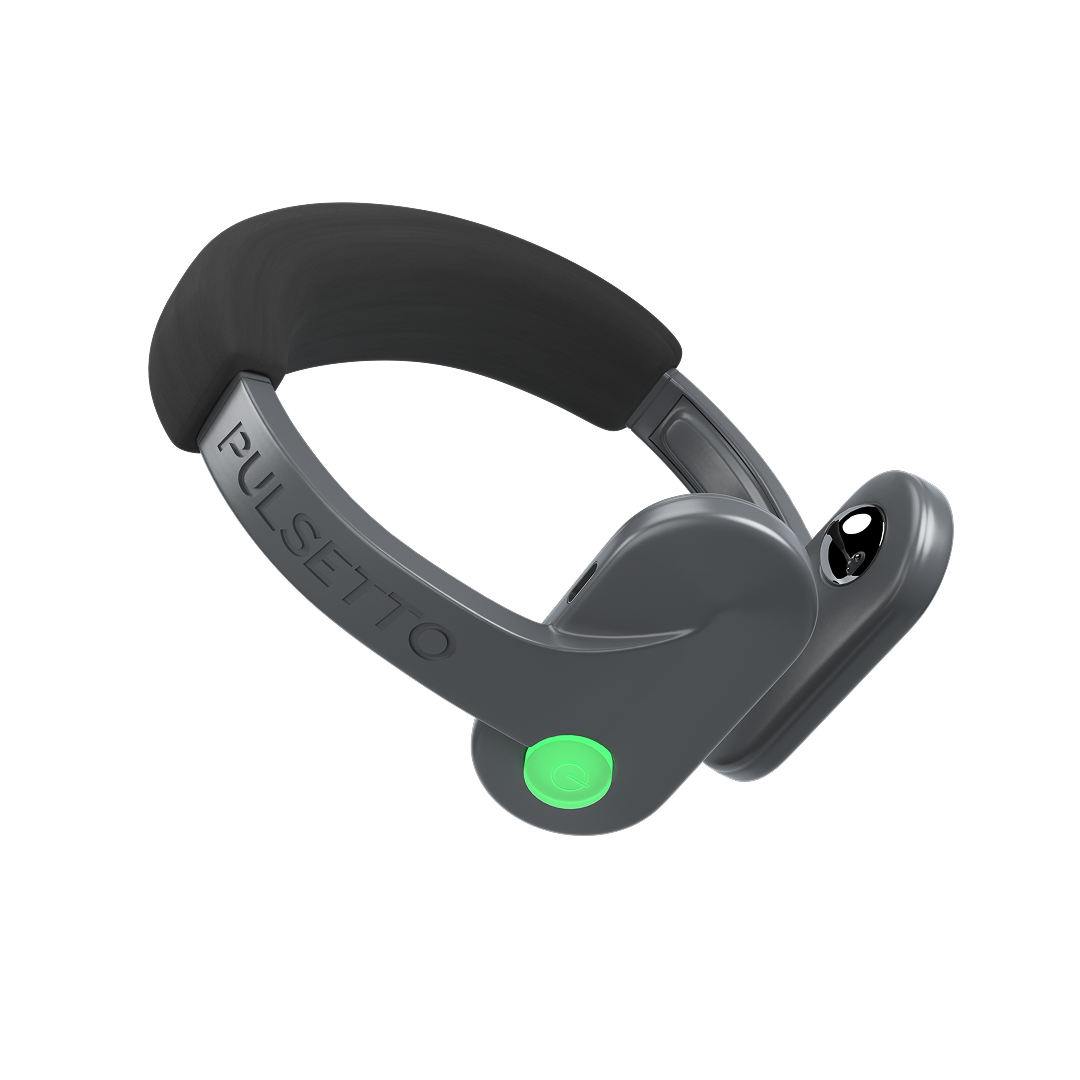
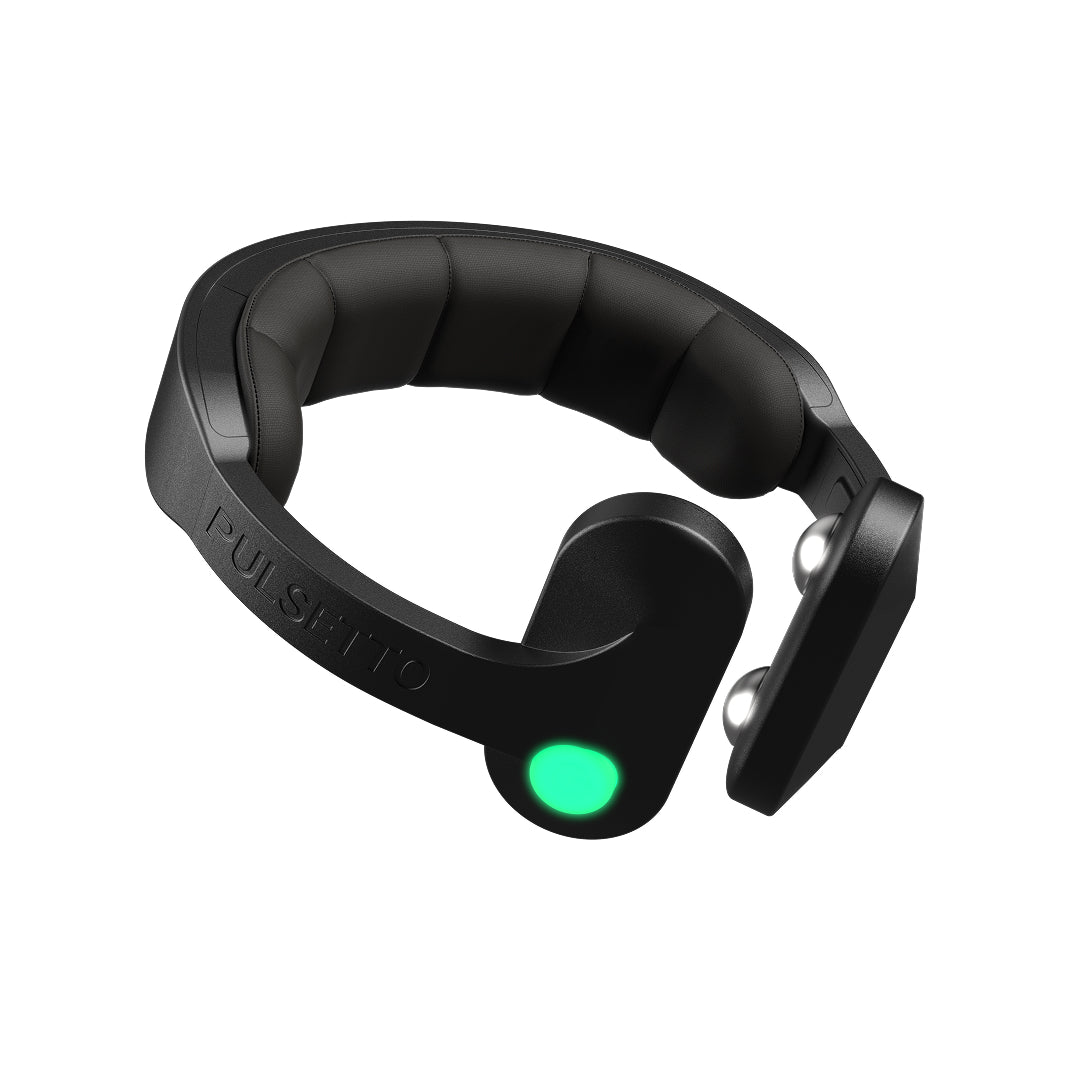
Pulsetto's vagus nerve stimulator targets this same mechanism through bilateral cervical placement, stimulating the vagus nerve on both sides of the neck at once rather than one side, which is how most competing consumer devices are built. It's hands-free, so a session doesn't require holding anything to your neck, and it runs through a guided app program instead of a fixed, unadjustable pulse.
In Pulsetto's own randomized, open-label pilot study (n=40, 4 weeks), bilateral stimulation outperformed unilateral on every measured outcome:
-
Depressive symptoms (PHQ-9): down 55.9%
-
Anxiety symptoms (GAD-7): down 45.3%
-
Sleep quality (PSQI): improved 41.0%
-
Hair cortisol and cortisone (chronic-stress biomarkers): both reduced, with bilateral stimulation outperforming unilateral
That same pilot study has since been published in a peer-reviewed journal. The published version, led by Pulsetto's own Medical & Science Lead, reports that bilateral stimulation produced a statistically significant reduction in hair cortisol (p = 0.024), while unilateral stimulation did not (p = 0.159) [3].
Real-world usage data points the same direction. In Pulsetto's own in-app wellbeing check-ins, 73% of users report lower stress by their two-week check-in, with the average reported reduction growing from 23% to 26% by their next one, and 70% report lower anxiety over the same window.
Disclaimer: Pulsetto is a general wellness product and is not intended to diagnose, treat, cure, or prevent any disease or medical condition.
How to tell whether it's working for you
Because the effect builds gradually, a single "did it help" gut check after one session isn't a reliable signal either way.
A better approach borrows from how researchers actually assess resilience: track recovery speed rather than mood in the moment. How quickly does your heart rate settle after a stressful meeting? Are you still awake ruminating an hour after a hard conversation, or twenty minutes? Do minor annoyances still throw off your whole afternoon? Running through the measurable signs of good stress resilience gives a concrete checklist for that, instead of relying on a vague sense of whether you feel calmer.
None of this works as a one-time fix. The nervous system responds to repetition, and four to eight weeks of consistent sessions is the realistic bar the evidence actually points to, not four minutes on a hard day. That's a fair standard to hold any device to, Pulsetto included. Try Pulsetto and put those weeks to work on your own recovery speed.
Frequently asked questions
Does vagus nerve stimulation build resilience, or does it just calm me down in the moment?
Both, on different timelines. A single session produces an immediate calming effect through parasympathetic activation. The resilience effect, faster autonomic recovery after future stressors, builds separately, over weeks of repeated sessions. One doesn't replace the other; they're different outcomes from the same mechanism.
Is Pulsetto FDA approved?
No. Pulsetto is marketed as a general wellness device, the FDA category that covers products making general wellness claims instead of medical ones. It's CE certified and FCC certified. Some competitors, including gammaCore and Truvaga, are FDA-cleared specifically for migraine and cluster headache, a different regulatory category and a different clinical use case entirely.
Who shouldn't use vagus nerve stimulation?
Skip vagus nerve stimulation, including Pulsetto, without talking to a doctor first if any of the following apply:
If you have a diagnosed heart condition or take medication that affects heart rate, check with your physician before starting.
How long before I notice a resilience effect, not just a calming one?
Most people report the immediate calming effect right away. The physiological resilience effect, measurable in HRV and stress recovery speed, typically takes four to eight weeks of consistent use to show up clearly.
Does the effect last if I stop using it?
The available research doesn't answer this precisely for consumer nVNS devices specifically, but the broader pattern with vagal training (breathwork, biofeedback, stimulation) is that gains fade without maintenance, similar to physical fitness. Consistency matters more than any single session.
Scientific research
-
Combining top-down and bottom-up interventions targeting the vagus nerve to increase resilience (Vanderhasselt & Ottaviani, 2022, Neuroscience & Biobehavioral Reviews)
-
Transcutaneous cervical vagal nerve stimulation reduces sympathetic responses to stress in posttraumatic stress disorder: A double-blind, randomized, sham controlled trial (Gurel et al., 2020, Neurobiology of Stress)
-
The Effect of Bilateral Non-Invasive Vagus Nerve Stimulation on Stress Biomarkers, Depression, Anxiety, and Sleep in Healthy Adults (Pukėnaitė, Burokienė & Karčiauskaitė, 2026, European Psychiatry)
-
The vagus nerve: a cornerstone for mental health and performance optimization in recreation and elite sports(Lopez Blanco & Tyler, 2025, Frontiers in Psychology)
-
The heart knows best: baseline heart rate variability as guide to transcutaneous auricular vagus nerve stimulation in depression (Schiweck et al., 2025, Translational Psychiatry)