What resilience actually means
Resilience is the term clinicians and researchers use for the ability to cope with and grow from stress, adversity, or serious life struggles, not just survive them. It's not a fixed personality trait. A 2025 randomized trial described it directly: resilience is "a trainable capacity that allows us to cope with adversity and adapt to stressful life events," and six weeks of structured practice measurably increased it [1]. That definition is deliberately broad. It covers how you interpret a setback, the coping skills you draw on, the people you lean on, and, yes, how your body physically recovers from a stress response. Cleveland Clinic's own resilience-training page frames it the same way: a set of programs "to help people learn to cope with and grow from stress or serious life struggles," built around new behaviors, thoughts, and actions, not a physiological metric anywhere in sight. That breadth is part of the problem: a 2018 review of 43 resilience-intervention trials found the field still lacks a consistent, outcome-oriented definition, precisely because "resilience" gets used to cover so many distinct capacities at once [2].
That's not wrong. It's just incomplete for anyone trying to actually measure progress. Ask someone to prove their resilience is improving and most reach for a feeling ("I handle things better now") or, at best, a validated questionnaire meant for research settings, not something you'd check the way you'd check a resting heart rate. Our own piece on whether stress resilience is trainable goes deeper into the two mechanisms underneath resilience, neuroplasticity and vagal conditioning, and confirms both respond to deliberate practice. What that piece doesn't do, and what most resilience content skips entirely, is separate out the physiological piece, give it its own name, and treat it as something you can actually measure week to week.
What "stress fitness" actually means
Stress fitness is Pulsetto's term for that physiological piece specifically, the part of resilience that behaves like a muscle rather than a mindset. Pulsetto's own athlete-facing framing puts it directly: the goal isn't stress relief, it's stress fitness, treating the nervous system as a trainable system rather than something to simply calm down after the fact.
Concretely, stress fitness is your nervous system's capacity to mount a stress response when a real demand shows up, then shut that response back down efficiently once the demand has passed. It's measured the way physical fitness is measured: objectively, through markers like heart rate variability (HRV) and cortisol, rather than through a self-report questionnaire. A slow HRV recovery after a stressful meeting is a stress-fitness signal in the same way a slow heart-rate recovery after a set of intervals is a cardio-fitness signal. Neither one requires you to have changed your outlook on stress at all.
That's the distinction competitors miss. Search "mental fitness vs. resilience" and you'll find framings built around proactive versus reactive behavior, useful, but still entirely psychological. None of the current definitional content distinguishes a measurable physiological layer from the broader trait at all.
How the two relate, and where they genuinely differ
Stress fitness and resilience aren't competing terms, one sits inside the other. Stress fitness is the physiological substrate; resilience is the fuller trait built on top of it, including cognitive reappraisal, coping skills, and social support that a physiological intervention alone doesn't touch. Our piece on how long it actually takes to build stress resilience lays out exactly why they diverge: your nervous system, the stress-fitness layer, shows measurable HRV and cortisol shifts within 4 to 8 weeks of consistent practice, while trait-level resilience takes closer to 3 months to reach reliable, meta-analysis-confirmed gains, and keeps deepening for 6 to 12 months after that. Two tracks, two different speeds, one is a subset of the other.
That's also why periodized, structured practice works for building resilience over months: it's training the slower trait-level layer on top of a nervous system that's already building its own faster-moving stress fitness in parallel. And it's worth being clear that neither stress fitness nor resilience is about eliminating stress altogether. A useful adjacent distinction: eustress, or good stress, is short-term pressure your body recovers from cleanly. That clean recovery is a stress-fitness marker in miniature, the same recovery capacity this whole piece is about, just triggered by something manageable rather than a demanding four-week protocol.
Practically, this means you can have strong stress fitness (fast HRV recovery, quick cortisol clearance) while your trait-level resilience is still catching up, especially early in a new practice. It also means someone with genuinely strong resilience, built over years through life experience and social support, may still have poor stress fitness if their nervous system has never been specifically conditioned. They're correlated, not identical.
How Pulsetto trains stress fitness specifically
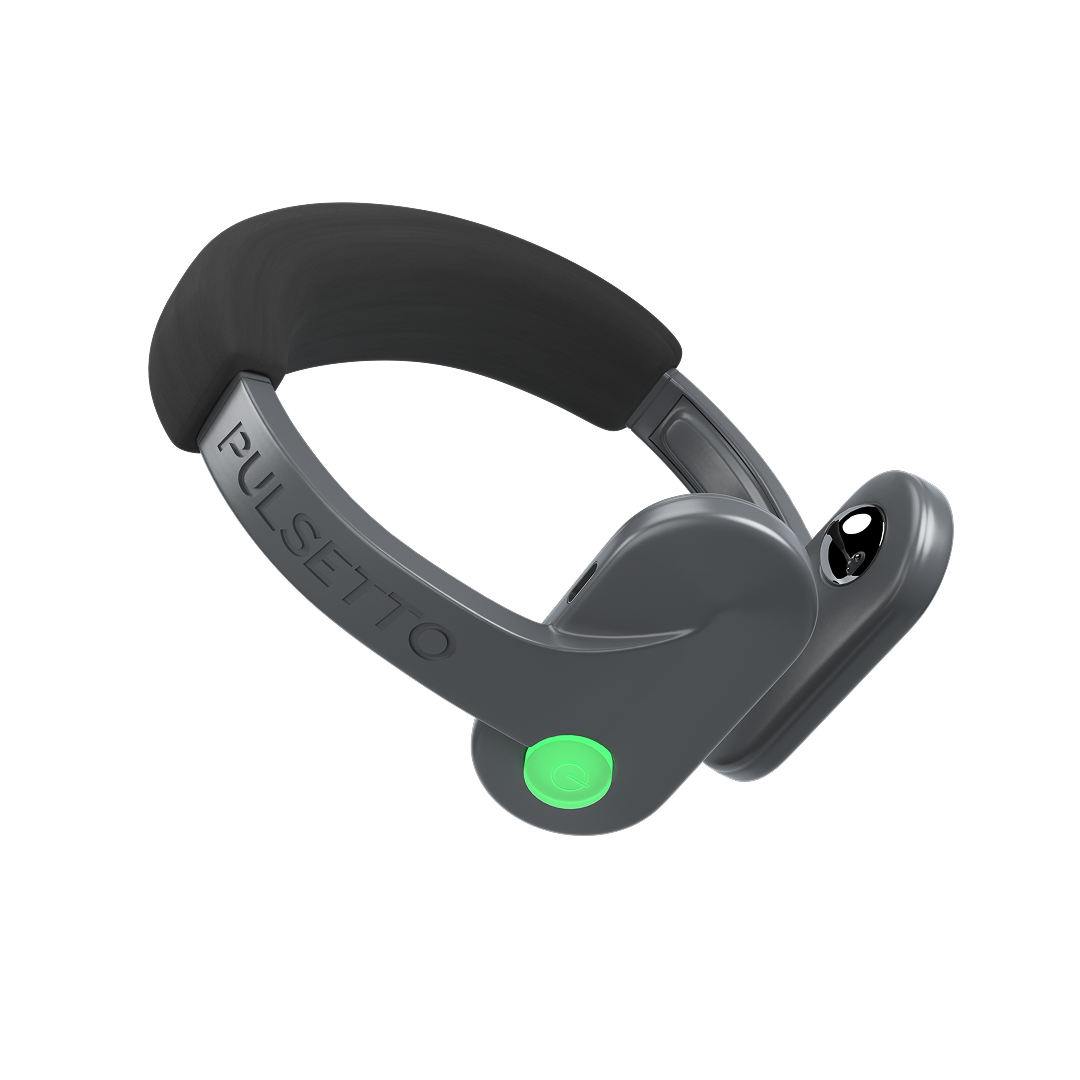
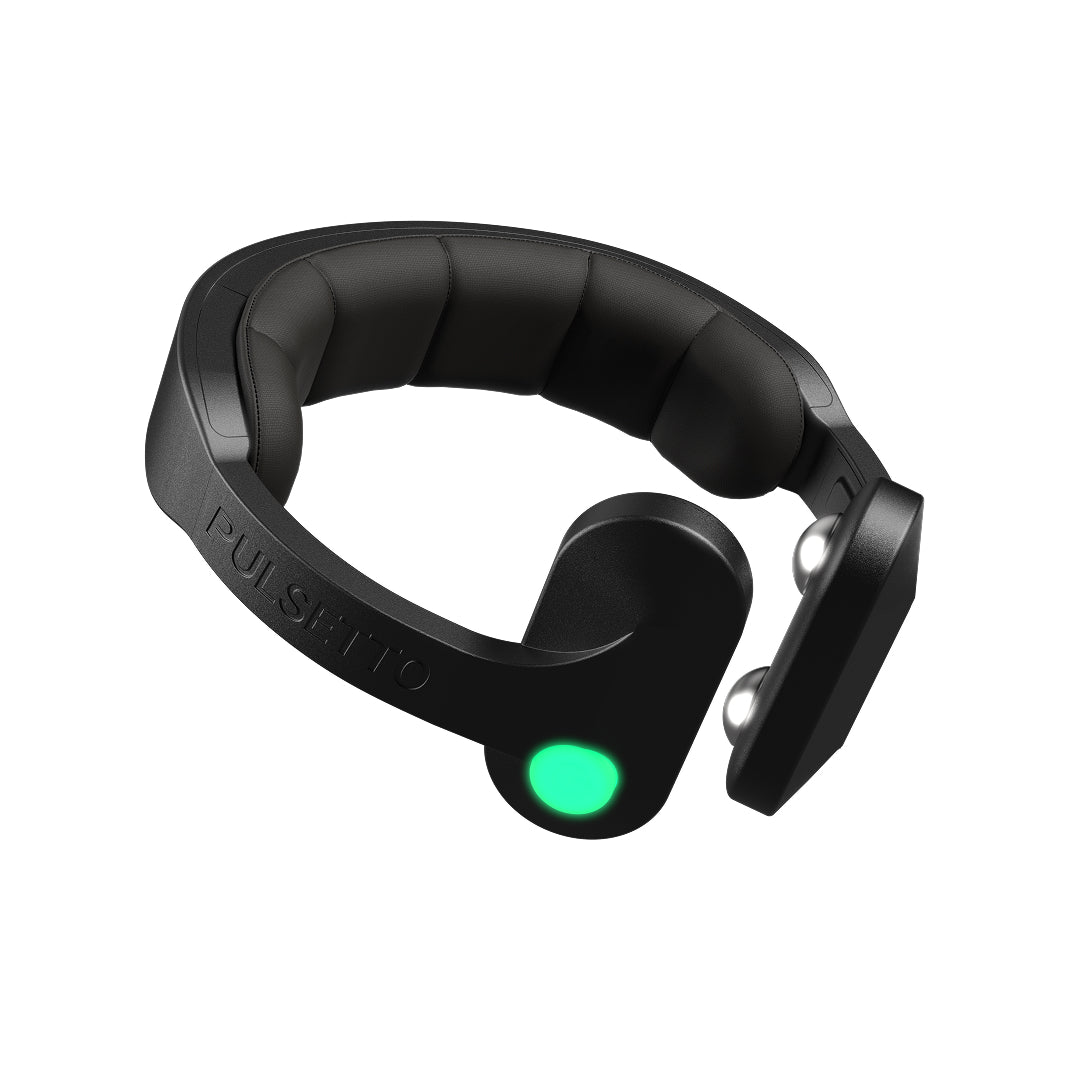
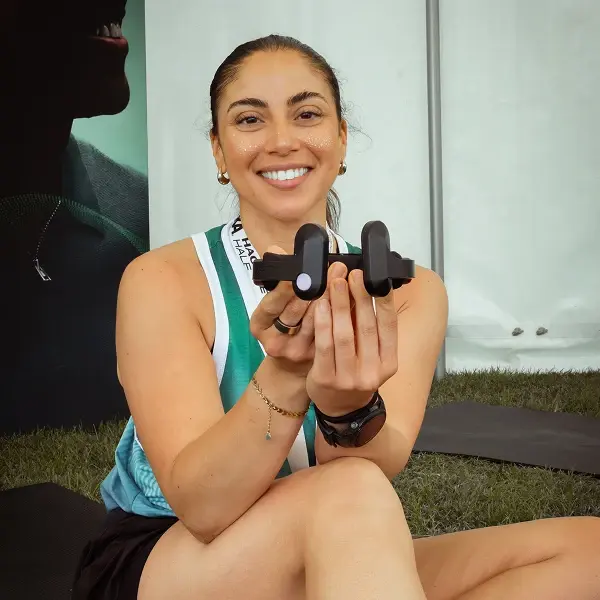
Because stress fitness is a physiological capacity, it responds to a physiological intervention, which is where the vagus nerve comes in. Pulsetto is a hands-free wearable built around bilateral cervical vagus nerve stimulation, both sides of the neck at once, delivered through a 4-minute guided session rather than a held device or a 30-minute protocol. The goal is parasympathetic activation: helping the nervous system practice the exact recovery behavior stress fitness depends on.
What keeps this in the stress-fitness layer specifically, rather than the slower trait-level one:
-
Bilateral, not unilateral. Both sides of the neck at once, rather than the single-side, handheld approach most consumer devices use.
-
4 minutes, hands-free. Worn rather than held, so it fits into an already-full day instead of adding another appointment.
-
The mechanism is physiological. Parasympathetic activation, not a mindset shift, which is what keeps it fast-moving.
The evidence sits in that same layer. Pulsetto's own pilot study, a randomized, open-label trial with 37 completers over four weeks, found:
-
Hair cortisol, a chronic-stress biomarker, dropped significantly with bilateral stimulation (p=0.024), with a trend-level reduction in cortisone (p=0.059)
-
Depression (PHQ-9), anxiety (GAD-7), and sleep quality (PSQI) all improved significantly across both stimulation groups (p<0.001 for PHQ-9 and PSQI; p=0.0004 unilateral and p=0.003 bilateral for GAD-7)
-
Bilateral stimulation outperformed unilateral on the cortisol result specifically, the detail that matters most here, and the reason Pulsetto builds around bilateral placement rather than a single-side approach
That result comes from Pulsetto's own published clinical data, not a third-party trial, and it's a four-week timeline, squarely inside the physiological, stress-fitness window rather than the slower trait-level one.
Independent research lines up with that same timeline:
-
A 2025 scoping review found slow-breathing and HRV biofeedback protocols consistently improved autonomic flexibility and vagal tone within similarly short windows [3]
-
A double-blind, sham-controlled trial found transcutaneous cervical vagus nerve stimulation specifically reduced sympathetic stress responses in people with a trauma history [4]
None of this replaces the slower work of building trait-level resilience. It's the fast-moving half of the system, the half a 4-minute daily session, worn hands-free rather than held to the neck, can actually reach.
A vagus nerve stimulator from Pulsetto currently runs $269 for Lite (regularly $469) or $296 for FIT (regularly $546), with a 2-year warranty. It's built for this ongoing, train-the-recovery-system use case, not as a treatment for a diagnosed condition. Pulsetto is a general wellness product and is not intended to diagnose, treat, cure, or prevent any disease or medical condition.
Building both, in practice
Building stress fitness and resilience together isn't two separate routines, it's one practice measured two ways.
-
Start with the physiological layer. It moves fastest and gives you an objective signal, HRV trending up, faster recovery after a stressful moment, within weeks rather than months. A four-week mobile HRV-biofeedback program run with office workers found measurable drops in burnout and improved sleep quality using this same short, daily-practice structure [5].
-
No time for a dedicated session? Four under-5-minute micro-protocols matched to specific workday triggers is a reasonable place to start without adding another hour-long commitment.
-
Layer the trait-level work on top, not instead. Cognitive reappraisal, graded exposure to manageable stressors, and consistent sleep all build the slower resilience layer, and they compound faster when the underlying nervous system is already recovering efficiently.
-
Track progress on both timelines. HRV and how quickly you feel "normal" again after a hard day for the stress-fitness layer; expect the fuller resilience picture to take a few months to catch up, and to keep improving well past that point.
Pulsetto's guided stress-fitness program walks through both layers together rather than treating them as separate purchases.
Ready to try Pulsetto for stress fitness recovery routines?
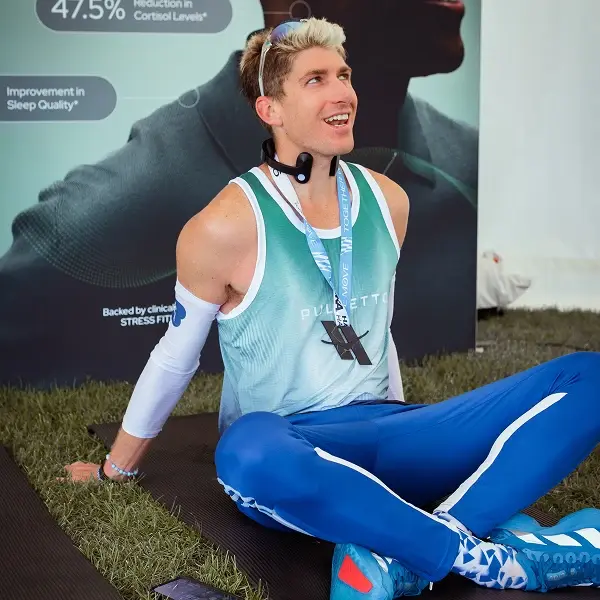
A 4-minute guided session, worn hands-free, is the entry point for the physiological layer this whole piece has been about, before layering the slower resilience work on top.
-
Bilateral cervical vagus nerve stimulation, both sides of the neck at once
-
Guided by the Free Lifetime app, with stress, sleep, and HRV tracking built in
-
Backed by Pulsetto's own published pilot data, not just a wellness claim
See the Pulsetto vagus nerve stimulator →
Stress Fitness vs. Resilience FAQs
Is stress fitness just a rebrand of resilience?
No. It names a specific, measurable part of resilience, the physiological recovery capacity, rather than repackaging the whole trait. Resilience still includes mindset and coping skills that stress fitness training alone doesn't address.
Which should I focus on first, stress fitness or resilience?
Stress fitness, if you want an objective signal fast. It shifts within 4 to 8 weeks and gives you something measurable (HRV, recovery speed) to track. Trait-level resilience is worth building in parallel, it just moves on a longer, months-long timeline.
Can you have good stress fitness but still feel like you lack resilience?
Yes. A well-conditioned nervous system that recovers quickly from a stress response doesn't automatically come with the coping skills, reframing habits, or support systems that make up the rest of resilience. The two are related, not the same thing.
How do I know if my stress fitness is actually improving?
Track it the way you'd track any fitness metric: heart rate variability (HRV) trending upward over several weeks, and a shorter gap between a stressful event and feeling back to baseline. Both are objective, physiological signals, which is exactly what separates stress fitness from the broader resilience trait, that one is harder to quantify week to week.
Is vagus nerve stimulation safe?
Yes, it's generally safe and may be genuinely helpful. Wellness devices like Pulsetto are a great tool for supporting a stress fitness and resilience routine, gently guiding the nervous system toward calm rather than overriding it. They're 100% not intended to cure or treat any stress-related illness, just to support the recovery side of the equation described throughout this piece. As with most wellness devices in this category, it's a good idea to check with a healthcare provider first if you have a pacemaker or other implantable device, epilepsy, or are pregnant.
Where do I start if I want to build both?
Start with a physiological baseline: a short, consistent daily session is the entry point for the stress-fitness layer. From there, layer in the slower resilience work, sleep, reappraisal, graded exposure to real stressors, on top of a nervous system that's already recovering faster. For setup, safety, and app questions not covered here, see the full Pulsetto FAQ.
Scientific research
-
Navigating life's challenges: A randomized 6-week online intervention study to enhance resilience in working-age adults (Leitner et al.; 2025; Applied Psychology: Health and Well-Being)
-
Intervention studies to foster resilience, a systematic review and proposal for a resilience framework in future intervention studies (Chmitorz et al.; 2018; Clinical Psychology Review)
-
Breathe better, live better: the science of slow breathing and heart rate variability (Giorgi & Tedeschi; 2025; Acta Neurologica Belgica)
-
Transcutaneous cervical vagal nerve stimulation reduces sympathetic responses to stress in posttraumatic stress disorder (Gurel et al.; 2020; Neurobiology of Stress)
-
Mobile Heart Rate Variability Biofeedback for Work-Related Stress in Employees and the Influence of Instruction Format on Training Outcome (Vagedes et al.; 2024; Applied Psychophysiology and Biofeedback)