The two-track timeline: why "how long" has two different answers
Search this question and you'll find the same answer everywhere: it varies. Mayo Clinic's resilience article tells readers that "getting more resilient takes time and practice." Cleveland Clinic's own FAQ, titled "How long will it take for me to build resilience?", answers: "There's no set timeframe that works for everyone." Neither is wrong. Both are incomplete.
Resilience isn't one process. It's two, running at different speeds. Researchers distinguish between resilience factors, the broad biological and psychological traits that predict how well you handle stress over time, and resilience mechanisms, the moment-to-moment processes your nervous system activates during and after a stressful event [1]. The nervous-system layer responds fastest because it's physiological. Your heart rate variability, cortisol output, and vagal tone can shift within weeks of consistent practice. The mindset layer takes longer because it depends on repeated, reinforced learning: new coping strategies have to be tried, tested against real stressors, and consolidated before they count as a stable trait rather than a one-off good day.
That distinction is why this article has two timelines instead of one, and why neither timeline alone answers the question completely.
The physiological timeline: what your nervous system does, week by week
Autonomic nervous system changes show up fastest.
Randomized trials of heart rate variability (HRV) biofeedback consistently find measurable increases in vagally-mediated HRV within four weeks of daily practice:
-
A four-week mobile HRV biofeedback intervention in healthy adults significantly improved subjective sleep quality and increased HRV time and frequency domain parameters, using nothing more than daily paced breathing sessions [4].
-
A separate trial found that five weeks of HRV biofeedback improved autonomic markers and anxiety, with the benefits still present twelve weeks after the training stopped [5].
By eight weeks, the changes go deeper than the heart. One study put healthy adults through eight weeks of HRV biofeedback and found measurable shifts in resting-state brain connectivity, particularly in regions tied to emotional regulation, alongside an 18% increase in heart rate variability.
Cortisol follows a similar arc, just measured differently. A 2023 meta-analysis pooling 58 randomized trials and over 3,500 participants found that stress-management interventions produced a medium, reliable reduction in cortisol levels compared to control conditions, and the effect held regardless of how long the program ran [3].
In a more targeted study, a six-week stress-resilience program for older adults showed improved coping strategies within three weeks, but the cortisol-level gains specifically were only confirmed to hold at the three-month follow-up, not before [6].
Put together, that's a rough map: measurable HRV shifts by week four, deeper autonomic and neural changes by week eight, and cortisol-specific confidence around the three-month mark.
Pulsetto's own research sits inside this same window. In Pulsetto's own randomized open-label pilot study (n=40, 4 weeks), participants using bilateral cervical stimulation showed a 47.5% reduction in hair cortisol and a 63.2% reduction in hair cortisone, compared to 31.0% and 36.2% for unilateral stimulation. That's one data point inside a broader field of research, not a substitute for it, and it's worth reading alongside the independent trials above rather than instead of them.
If you want to see what these physiological shifts actually feel like from the inside, Pulsetto's clinical data walks through the full pilot study alongside the broader research it sits within.
The psychological timeline: what your mindset and coping skills do, month by month
Trait-level resilience, the durable mindset and coping-skill layer, moves more slowly than the nervous system does.
A 2014 meta-analysis of 25 randomized trials found that resiliency-training programs produced a moderate, statistically reliable effect on resilience "within 3 months of follow-up" [2]. That's the number worth anchoring to: three months is roughly where the research stops being anecdotal and starts being consistent across studies.
Individual trials show gains starting earlier:
-
A 28-day digital resilience program for healthcare staff significantly improved resilience scores and reduced perceived stress, with the gains still holding at the three-month follow-up.
-
A brief, four-session resilience-training intervention produced measurable symptom and resilience improvements after just four weeks, and those gains were still present a full year later.
-
By six months, a mindfulness-based resilience program delivered to firefighters produced a moderate-to-large improvement in adaptive resilience, with the biggest gains among participants who completed the most sessions.
-
By twelve months, school-based and workplace interventions alike show resilience gains holding steady, sometimes continuing to grow rather than fade.
It's worth being honest about the size of these effects. The 2014 meta-analysis itself notes "low confidence" in some of its pooled outcomes, and most of the underlying trials are small. Psychological resilience training works, reliably, but it works with a moderate effect size, not a dramatic one. That's a more useful answer than "it varies," and a more honest one than promising a bigger effect than the research actually shows.
Underneath both the fast physiological shifts and the slower psychological ones is the same basic process: your brain and nervous system adapting through repeated, successful encounters with stress. Each time you cope with something stressful and come out the other side, that experience gets reinforced as a kind of template your system can reach for next time [1]. The nervous system reinforces its templates faster than the mindset does, which is exactly why the two timelines in this article move at different speeds.
For a deeper look at how that nervous-system reinforcement actually works day to day, see activating your parasympathetic nervous system.
What actually speeds up the timeline
Both tracks respond faster when you train the nervous system directly instead of relying on mindset work alone. Slow breathing and HRV biofeedback are the best-studied entry points, and they're free. Non-invasive vagus nerve stimulation is a newer, faster-emerging category built on the same underlying mechanism. In one randomized, sham-controlled trial, repeated transcutaneous cervical vagus nerve stimulation reduced sympathetic stress responses in people with a trauma history, and the study authors described the effect as enhancing resilience to repeated stress exposure [7].
Where the stimulation is applied matters. A 2025 study comparing cervical and auricular (ear-based) vagus nerve stimulation found that cervical stimulation produced more pronounced autonomic and brain-wave effects, including reduced blood pressure and increased alpha wave activity associated with a more relaxed mental state[8]. The likely reason: the cervical branch of the vagus nerve carries five to six times more of the nerve fibers involved in this kind of stimulation than the auricular branch does.
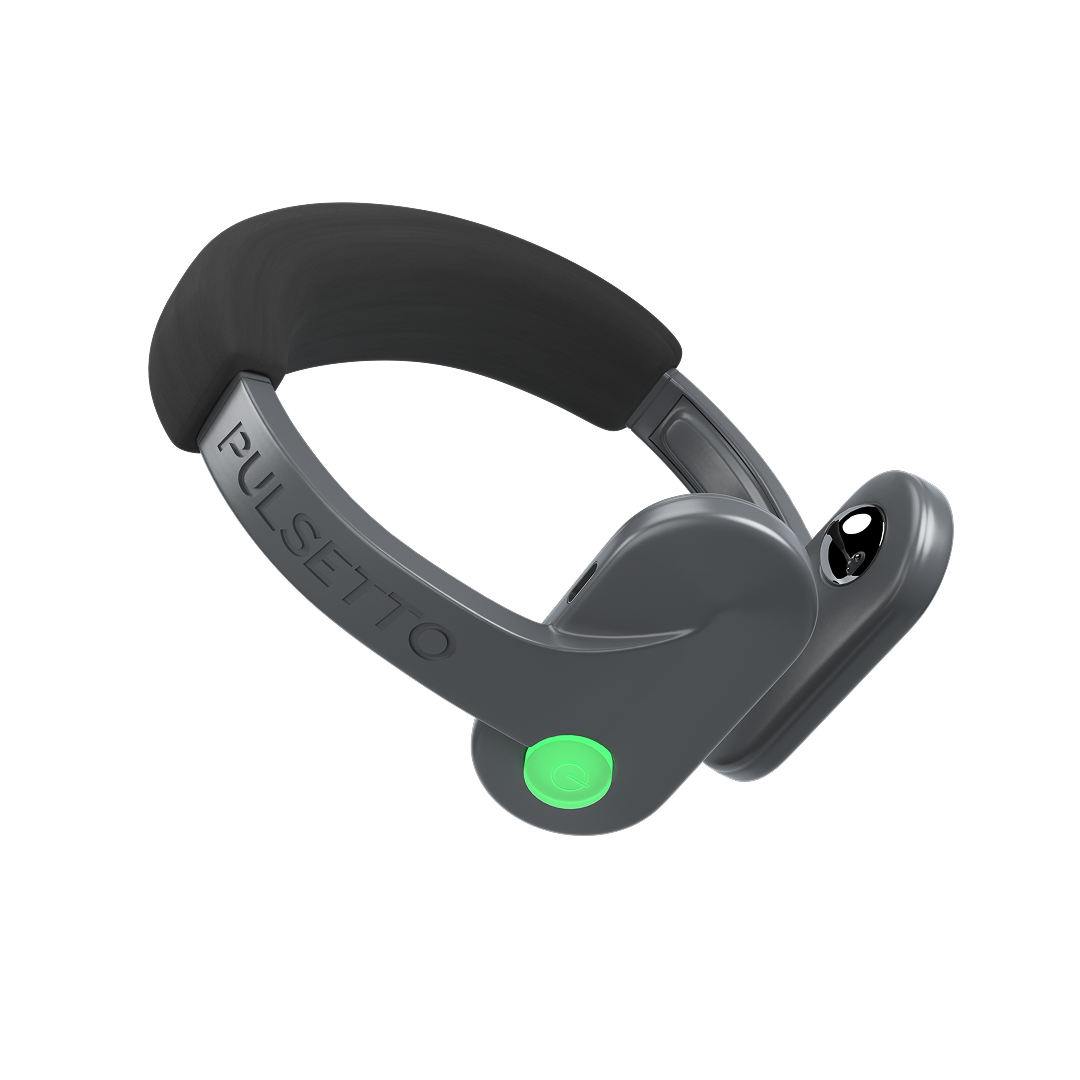
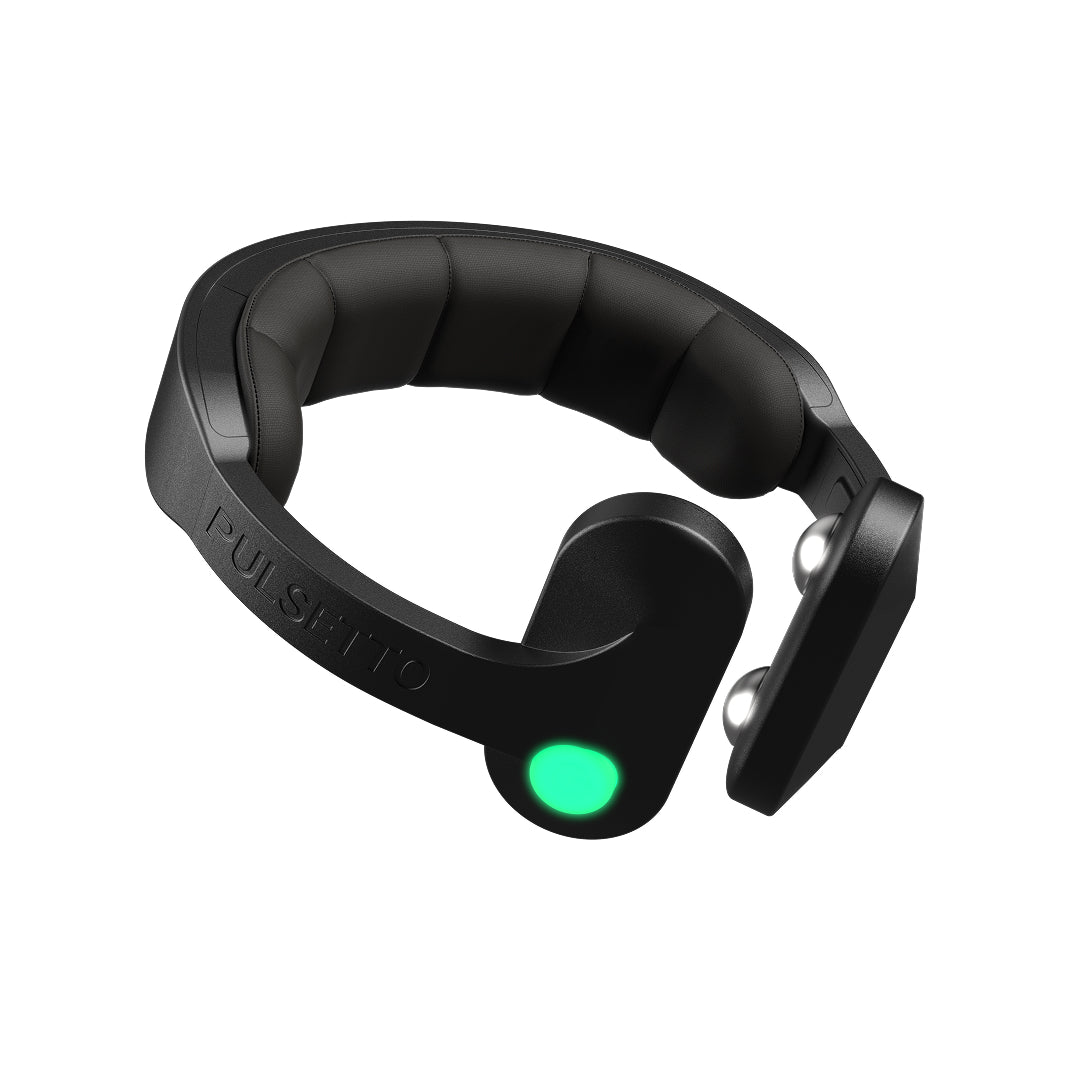
That's the mechanism behind Pulsetto's hands-free, bilateral vagus nerve stimulator: built for four-minute sessions, guided through a Free Lifetime App with HRV and sleep tracking built in. Bilateral stimulation, both sides of the neck at once, is what Pulsetto's own pilot study found significantly outperformed unilateral stimulation on cortisol and cortisone reduction. Hands-free means you can run a session while reading, working, or winding down instead of holding a device to your neck for the full four minutes. Neither of those design choices changes the underlying biology described above. They just make it easier to do consistently, and consistency is what every trial cited in this article actually depended on.
Try your first 4-minute session and see where your own HRV trend sits after a few weeks.
For more ways to work with the same mechanism, see other ways to activate the vagus nerve.
How to tell your resilience is actually building
Don't wait for a crisis to test yourself. Watch for three earlier signals instead: your HRV trending upward over two to four weeks of consistent tracking, your resting heart rate recovering faster after a stressful moment, and your subjective sense of "how long it takes me to calm down" shortening. These are the same markers researchers use in the trials above. You're just checking them casually instead of in a lab.
A single day's HRV reading is noisy and not worth reacting to on its own. What matters is the trend across two to four weeks, which is exactly the window where the physiological research above finds its first reliable signal. If you're already tracking HRV, see what a good HRV score looks like for your age for context on where your numbers should sit before you start looking for a trend. And if your score isn't moving yet, there are other ways to improve your HRV worth stacking alongside whatever you're already doing.
What slows the timeline down
Inconsistent practice is the biggest delay. Every trial cited in this article used a daily or near-daily protocol, not occasional effort. Skipping days doesn't just slow progress in a linear way. It resets some of the adaptation the nervous system was in the middle of consolidating.
Ongoing, unmanaged chronic stress works against the same process from the other direction. Your body can't consolidate the gains from a four-minute session, or a week of good sleep, if it's getting re-triggered constantly by something that hasn't been addressed. Poor sleep compounds this further: sleep is when a lot of the autonomic recalibration described in this article actually happens, which is part of why sleep and vagal tone are so closely connected. If you're doing everything right and still not seeing movement after two or three months, that's a reasonable point to loop in a healthcare provider rather than assume the approach itself has failed.
Speed up your stress resilience training with Pulsetto
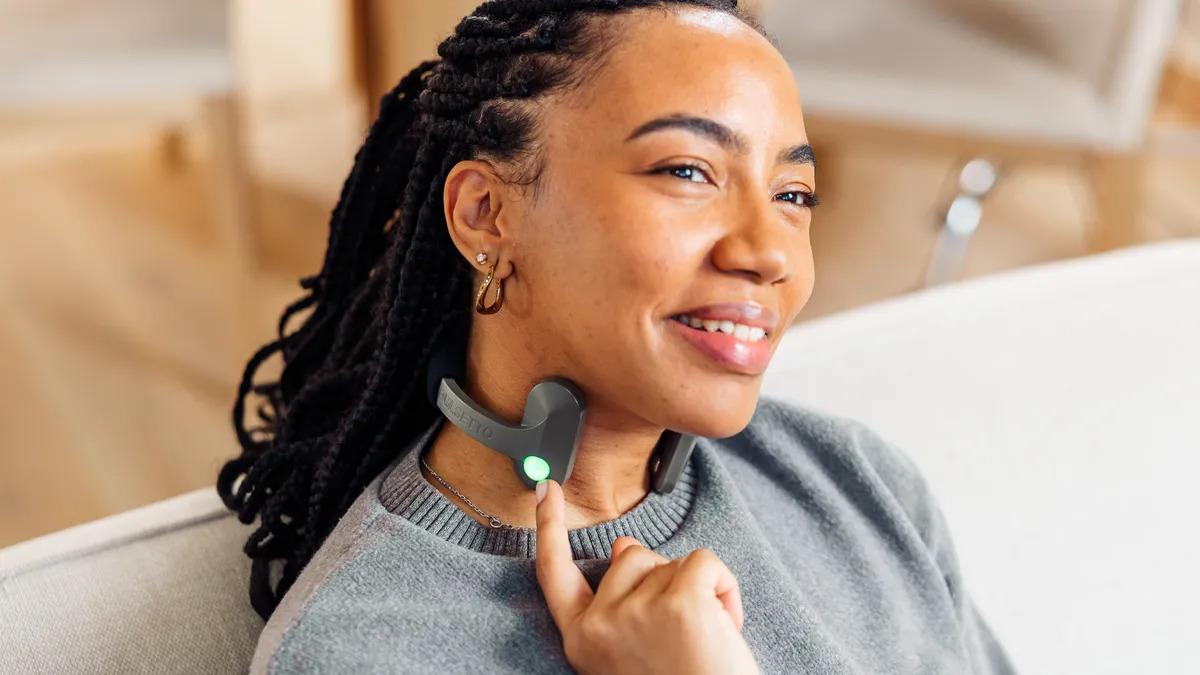
Everything in the physiological track above, the HRV shifts, the cortisol changes, the faster nervous-system timeline, responds to consistent, daily input. Pulsetto is designed to improve your input by simple four-minute, hands-free sessions of bilateral cervical stimulation, guided through an app that also tracks the HRV.
There are two ways to start. Pulsetto Lite is $269 (regularly $469) and covers the core bilateral stimulation experience. Pulsetto FIT is $296 (regularly $546) and adds a slimmer, more active-lifestyle build for the same sessions. Both come with the Free Lifetime App, five stimulation programs plus HRV and sleep tracking, at no recurring cost. If you want the fuller program library (eight stimulation programs, guided meditations, breathing exercises), Premium runs $139 for 12 months (regularly $240).
Whichever you pick, the four-minute session and the daily consistency matter more than which device you're wearing. Start there, and check back on your HRV trend in a few weeks.
Stress Resilience Timeline FAQs
How long does it take your body to recover from extreme stress?
Longer than the routine timelines above. Acute severe stress or trauma can take months to years to fully resolve, and the physiological and psychological tracks described in this article assume a baseline of manageable, everyday stress rather than trauma. If extreme stress persists beyond a few weeks with symptoms like intrusive memories, persistent hyperarousal, or an inability to function normally, that's a signal to involve a mental health professional rather than rely on a self-directed timeline.
What are five signs of poor resilience?
Getting stuck ruminating on problems rather than moving toward solutions, feeling like a passive victim of circumstances rather than an active participant, turning to unhealthy coping like excess alcohol use or avoidance, difficulty maintaining relationships during stressful periods, and a pattern where the same kinds of stressors keep causing a disproportionate reaction over time.
Does building resilience mean you'll stop feeling stressed?
No. Resilience isn't about not feeling stress, it's about how quickly you recover from it. People with strong resilience still feel stress, frustration, and sadness; they just return to baseline faster and are less likely to get stuck there. That faster recovery is exactly what the physiological and psychological tracks in this article are measuring.
Can resilience be built at any age?
Yes. The trials referenced in this article span children, adolescents, young adults, working adults, and older adults, and the timeline stages described here are broadly consistent across age groups. Older-adult studies more often track cortisol specifically, since HPA-axis (stress hormone system) patterns shift somewhat with age.
Is Pulsetto a treatment for stress or anxiety?
No, Pulsetto isn't a treatment. It's a general wellness device designed to support your nervous system and help you build resilience to everyday stress and anxious moments, the same physiological process described throughout this article. It's not for everyone, though: skip it if you have a pacemaker or another implantable device, have epilepsy, or are pregnant, and check with a doctor first if any of those apply to you.
Scientific research
The information in this article references the following peer-reviewed studies on resilience training, autonomic regulation, and vagus nerve stimulation. Pulsetto is a general wellness device and is not intended to diagnose, treat, cure, or prevent any disease or medical condition.
[1] Building Resilience: The Stress Response as a Driving Force for Neuroplasticity and Adaptation (Hermans EJ, Hendler T, Kalisch R - 2024)
[2] The Efficacy of Resiliency Training Programs: A Systematic Review and Meta-Analysis of Randomized Trials (Leppin AL, Bora PR, Tilburt JC, et al. - 2014)
[3] Effectiveness of stress management interventions to change cortisol levels: a systematic review and meta-analysis (Rogerson O, Wilding S, Prudenzi A, O'Connor DB - 2023)
[4] Mobile Heart Rate Variability Biofeedback Improves Autonomic Activation and Subjective Sleep Quality of Healthy Adults – A Pilot Study (Herhaus B, Kalin A, Gouveris H, Petrowski K - 2022)
[5] Effects of heart rate variability biofeedback training in athletes exposed to stress of university examinations (Deschodt-Arsac V, Lalanne R, Spiluttini B, Bertin C, Arsac LM - 2018)
[6] Increasing stress resilience in older adults through a 6-week prevention program: effects on coping strategies, anxiety symptoms, and cortisol levels (Richer MJ, Grenier S, Lupien S, Plusquellec P - 2025)
[7] Transcutaneous cervical vagal nerve stimulation reduces sympathetic responses to stress in posttraumatic stress disorder: A double-blind, randomized, sham controlled trial (Gurel NZ, Wittbrodt MT, Jung H, Shandhi MMH, Driggers EG, Ladd SL, et al. - 2020)
[8] Acute Transcutaneous Cervical but not Auricular Vagus Nerve Stimulation Increases Alpha Wave Brain Activity and Lowers Arterial Blood Pressure (Ahmed R, Coello A, Pillutla AS, Telwar G, Stauss HM - 2025)