The stress load looks different depending on the job
"Shift worker" covers a wide range of actual working conditions, and the stress sources compound differently depending on which one describes you.
Nurses carry a specific combination of circadian disruption and acute interpersonal stress: a 2020 study on night-shift workers found measurably elevated stress responses tied directly to the night-shift schedule itself, independent of workload [3], and nursing adds high-stakes decisions and emotionally demanding patient interactions on top of that baseline. Drivers add sustained vigilance and isolation to the circadian mismatch, often with less control over when breaks happen. Factory and warehouse workers frequently rotate through schedules instead of working a fixed one, which the research above suggests may be the harder pattern for cortisol regulation specifically, plus physical fatigue that compounds with sleep debt.
The common thread: all three groups are trying to build resilience on a body clock working against its schedule instead of alongside it. Human reflexes simply aren't built to run on autopilot at 3 a.m., and that mismatch tends to show up as errors, short tempers, and a slower bounce-back between stressors instead of one identifiable moment of burnout.
How to tell your resilience is slipping
Shift work fatigue and eroding stress resilience overlap, but they're not identical. A small pilot study using wearable heart rate monitors on working nurses found that heart rate variability, a marker of how flexibly the nervous system shifts between stress and recovery, tracked measurably with self-reported workplace stress captured during real shifts rather than only in a lab setting [4]. You don't need a wearable to notice the pattern it's measuring. Watch for:
-
Recovery that used to take a day now taking three or four
-
Irritability that shows up before a shift starts as well as during it
-
Trouble downshifting after a night shift even when you're exhausted
-
Small mistakes at work that wouldn't have happened on a normal week
None of these are unique to shift work, but the pattern of a slower bounce-back specifically, rather than just feeling tired, is the resilience signal worth paying attention to.
Evidence-based ways to build resilience around a shift schedule
Generic resilience advice ("get more sleep," "manage your stress") isn't wrong so much as incomplete for this population. A few interventions have actual trial data behind them in shift-working populations specifically.
-
Time your light exposure deliberately. A randomized controlled trial of night-shift workers found that a timed evening light intervention reduced fatigue and, more strikingly, cut workplace errors by 67% compared to a 5% reduction in the control group [5]. Bright light early in a night shift and dim light or blue-light-blocking glasses in the hour before an intended sleep period gives the body clock a consistent cue it's otherwise missing.
-
Protect a consistent sleep window, even if it's not at night. A steady sleep window shift to shift matters more than hitting a full 8 hours whenever you can grab it, since irregularity is what the cortisol research above ties to worse disruption.
-
Use short nervous-system resets between demands as well as after them. A four-minute breathing or vagus nerve stimulation session before a shift starts, or between a hard call and the next one, works with the recovery window you actually have instead of waiting for a day off that may be a week away.
-
Build in movement that doesn't fight your sleep window. Light activity timed away from your intended sleep period supports the same circadian entrainment the light-exposure research points to, without the alerting effect of a hard workout too close to bedtime.
-
Treat resilience training as a skill built in small reps instead of a single fix. A 2026 systematic review and meta-analysis of resilience-enhancing programs for nurses found a statistically significant positive effect on resilience across the pooled studies, though the researchers also noted real heterogeneity in which specific program components worked best [6]. The takeaway: consistent, structured practice measurably moves the needle even in this population, which distinguishes it from advice that just sounds reasonable, even though no single program works the same way for everyone.
If you want a fuller breakdown of what separates trainable stress fitness from the broader trait of resilience, stress fitness and resilience aren't quite the same thing, and the distinction matters more for shift workers than most, since the physiological piece is where a disrupted schedule does the most damage.
How Pulsetto approaches stress resilience for shift workers

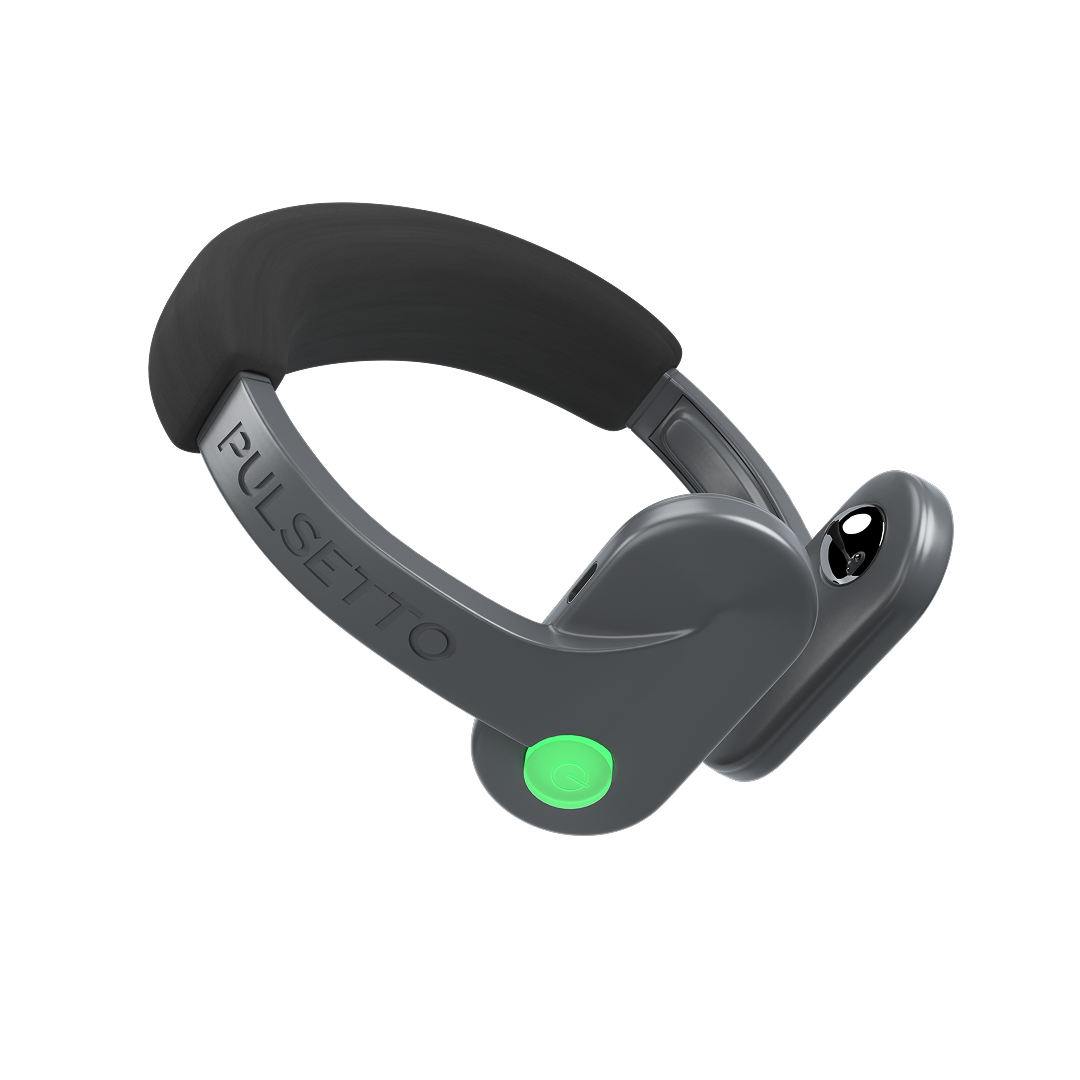
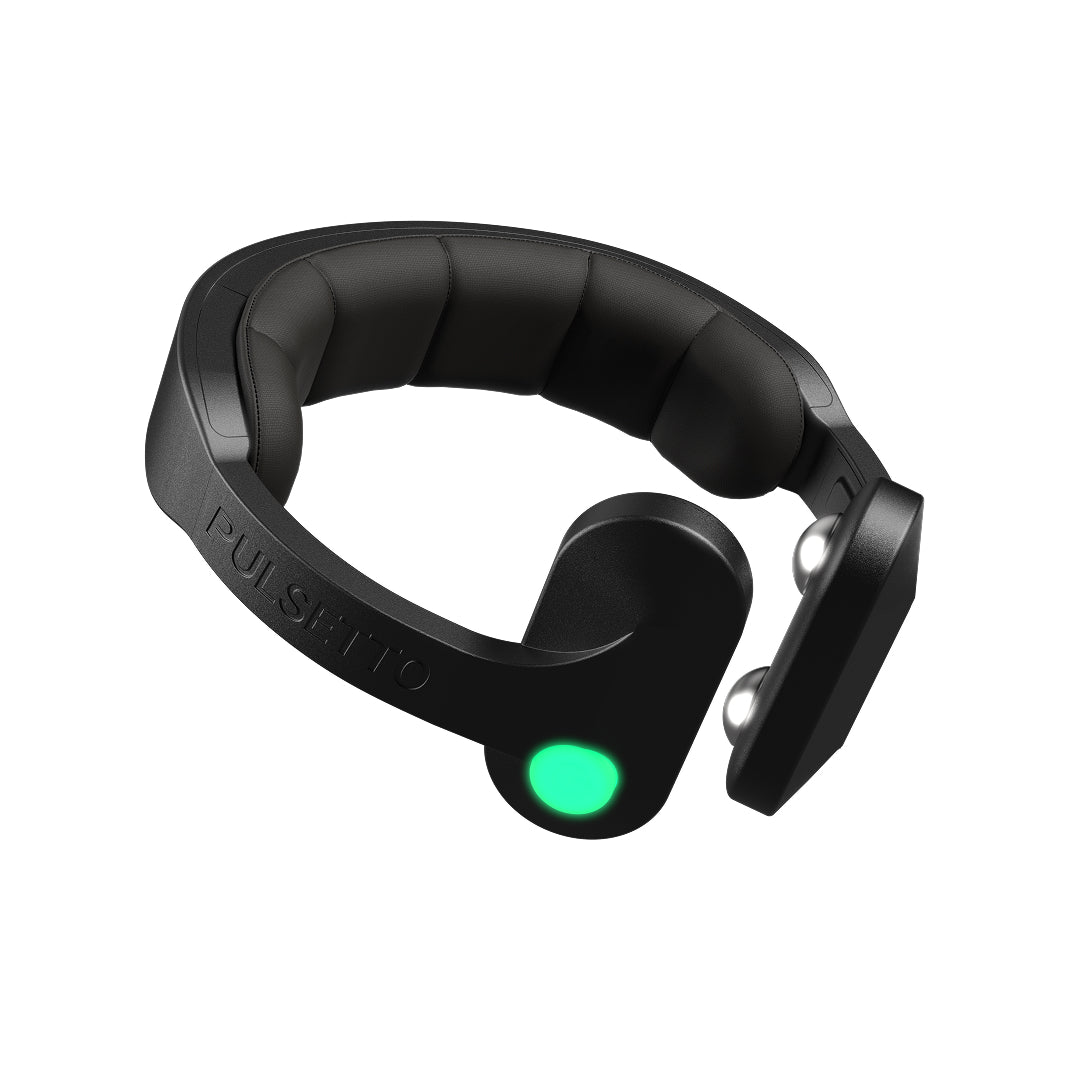
Pulsetto is a vagus nerve stimulator that uses bilateral cervical stimulation, both sides of the neck at once, to support parasympathetic activation in about four minutes, worn hands-free. For a shift worker, the hands-free part matters as much as the mechanism: a session can run during a commute, a break room lull, or the ten minutes after clocking out before the drive home, none of which require a quiet room or a set-aside block of time.
The timing flexibility connects directly to the light-exposure and consistent-window research above. Since shift workers often can't control when their body gets its circadian cues, having a nervous-system reset that doesn't depend on time of day gives you a tool that works whether you're coming off a day shift, a night shift, or the rotating pattern in between. It doesn't reset your circadian clock the way timed light exposure does, but it addresses the recovery side of the equation: giving the vagus nerve consistent signaling between stressors, rather than waiting for sleep to do all of the recovery work.
Pulsetto's own randomized, open-label pilot study (n=40, 4 weeks) found a 56% reduction in depressive symptoms (PHQ-9) and a 45% reduction in anxiety symptoms (GAD-7) among participants using bilateral stimulation regularly. That population wasn't shift workers specifically, so treat it as mechanism evidence instead of a shift-work-specific outcome. Real-world usage data points in a similar direction: in Pulsetto's own in-app wellbeing check-ins, 73% of users report lower stress within their first two weeks of consistent use, with the average reported reduction growing from 23% to 26% by their next check-in.
For anyone comparing options across the broader stress-resilience device category beyond vagus nerve stimulation specifically, best devices for stress resilience walks through how the mechanisms and evidence stack up against each other.
Building a routine that survives a rotating schedule
The single biggest obstacle to any resilience practice for shift workers is rarely motivation. It's that most routines assume a schedule that doesn't rotate out from under you every few days.
A workable version looks less like a fixed daily ritual and more like a small set of anchor points you attach to your shift structure instead of the clock: a light-exposure habit at the start of a night shift, a short reset before the drive home regardless of what time that drive happens, and a protected sleep window that moves with your schedule but stays the same length. Anchoring to shift structure instead of clock time is also the core idea behind resilience training built for people without a fixed workday.
None of this requires overhauling your life around a textbook sleep schedule you can't actually keep. It requires picking two or three of the strategies above, attaching them to points in your shift rotation that already happen every time, and giving them a few weeks to show up as a faster bounce-back instead of a dramatic before-and-after.
Start with the light-exposure timing and one nervous-system reset you can run in under five minutes, and build from there once those two are automatic. Pulsetto is built around that four-minute window specifically because it fits into a schedule that changes every week without asking you to protect a fixed hour that shift work won't let you keep.
Frequently asked questions
Does stress resilience advice for shift workers actually differ from general advice?
Yes, in one specific way: shift work disrupts the cortisol rhythm that underlies both sleep and stress recovery [1]. General resilience advice assumes a body clock working with your schedule. Shift-work-specific strategies, like timed light exposure and shift-anchored routines instead of clock-anchored ones, work with a body clock that's out of sync with it.
Is this different for nurses versus drivers versus factory workers?
The underlying circadian disruption is similar across all three, but the added stressors differ. Nurses carry emotionally demanding interpersonal stress on top of the schedule disruption. Drivers face sustained vigilance with less break control. Factory or warehouse workers more often work schedules that rotate instead of staying fixed, which research suggests may be harder on cortisol regulation specifically.
Can vagus nerve stimulation help with shift work stress specifically?
There's no published trial of vagus nerve stimulation in a shift-working population specifically. What's well established is that bilateral cervical stimulation supports parasympathetic activation and stress recovery generally, per Pulsetto's own pilot study, and that recovery-focused tools that don't depend on time of day are a practical fit for a schedule that rotates.
Who shouldn't use vagus nerve stimulation?
People with a pacemaker or other implantable medical device, anyone with epilepsy, and anyone who is pregnant should not use vagus nerve stimulation devices, including Pulsetto, without first talking to a doctor.
Is Pulsetto FDA approved?
Pulsetto is a general wellness product and is not intended to diagnose, treat, cure, or prevent any disease or medical condition. It is not FDA approved as a medical device, and no claims here should be read as medical advice.
How much does Pulsetto cost?
Pulsetto Lite is $269 and Pulsetto FIT is $296. Both come with a 2-year device warranty and a 30-day money-back guarantee.
Scientific research
[1] Disturbance of the Circadian System in Shift Work and Its Health Impact (Boivin, Boudreau, Kosmadopoulos, 2022, Journal of Biological Rhythms)
[2] Cortisol and shiftwork: A scoping review (Grosser, Knayfati, Yates, Dorrian, Banks, 2022, Sleep Medicine Reviews)
[3] Night-Time Shift Work and Related Stress Responses: A Study on Security Guards (Cannizzaro, Cirrincione, Mazzucco, Scorciapino, Catalano, Ramaci, Ledda, Plescia, 2020, International Journal of Environmental Research and Public Health)
[4] Assessing Workplace Stress Among Nurses Using Heart Rate Variability Analysis With Wearable ECG Device: A Pilot Study (Li, Zhu, Sui, Zhang, Chi, Lv, 2022, Frontiers in Public Health)
[5] An evening light intervention reduces fatigue and errors during night shifts: A randomized controlled trial (Cyr, Artenie, Al Bikaii, Lee, Raz, Olson, 2023, Sleep Health)
[6] Resilience-Enhancing Programs for Nurses in the Era of COVID-19: A Systematic Review and Meta-Analysis (Noh, Ko, 2026, Healthcare)