The nervous system doing the work behind it
The window of tolerance isn't a metaphor for willpower. It maps onto something measurable: how your autonomic nervous system shifts between sympathetic activation (mobilizing) and parasympathetic activation (calming), and how quickly it can move between the two.
The vagus nerve is the main communication line for the parasympathetic side of that system. It carries signals in both directions between the brain and the body's organs, and the strength and speed of that signaling, often described as vagal tone, shapes how easily someone can shift out of a stress response once the stressor has passed [2]. A nervous system with strong vagal tone recovers faster after a spike in arousal. One with weaker vagal tone tends to stay activated longer, which in practice looks like a narrower window: less room before a stressor tips things into hyperarousal.
Jonė Pukėnaitė, MD, Medical & Science Lead at Pulsetto: "How much recovery your autonomic nervous system has had recently shapes how wide the window actually is; it isn't a fixed trait. Widening it doesn't mean eliminating stress. It means giving the vagus nerve enough consistent signaling that your baseline sits a little further from the edges of hyperarousal and shutdown."
That framing matters because it shifts the goal from calm to capacity: more room for the nervous system to absorb a stressor before thinking clearly becomes impossible.
Signs you're outside your window
A quick self-check, since most people recognize these states without ever having named them:
-
Hyperarousal signs: racing thoughts, a pounding or fluttering heart, snapping at small things, feeling like you can't sit still, scanning for what might go wrong next.
-
Hypoarousal signs: feeling flat or numb, struggling to focus or finish a thought, wanting to disappear from a conversation, a heaviness that makes even small tasks feel like too much.
-
In-window signs: a stressor still registers (elevated heart rate, a flicker of worry) but you can keep talking, keep working, and choose your next move instead of reacting on autopilot.
What actually matters is whether the nervous system can still function while a stressor is happening; stress showing up at all is beside the point. That functional line is also what separates a stressor that builds resilience from one that erodes it, which is worth running through the difference between good stress and stress that just wears a person down if the two have started to feel indistinguishable.
What narrows the window over time
A window of tolerance isn't a fixed size set at birth. It moves, and it tends to move in the wrong direction under a few specific conditions:
-
Chronic, unrelenting stress. A single hard day rarely narrows the window permanently. Weeks or months without adequate recovery time between stressors do.
-
Poor or insufficient sleep. Sleep is when a lot of autonomic recalibration happens; cutting it short leaves less room to absorb the next day's stressors.
-
Unresolved trauma history. Past events that overwhelmed the nervous system's capacity can leave it primed to swing into hyperarousal or hypoarousal at a lower threshold than before.
-
Physical depletion. Illness and poor nutrition pull from the same resource pool the nervous system uses to regulate itself; so does overtraining.
Heart rate variability, the beat-to-beat fluctuation in heart rhythm, is the most studied objective proxy for this capacity. Lower HRV tracks with a narrower margin for handling psychological stress, while higher HRV tracks with faster recovery and more flexibility under load [3]. None of this is destiny. It's closer to a baseline that shifts with what the nervous system has been asked to handle lately, and how well it's been supported while doing it.
Evidence-based ways to widen your window of tolerance
The nervous system responds to repetition, so most of what actually widens the window works the same way physical training does: consistent, moderate input, repeated over weeks.
-
Slow, paced breathing. Extending the exhale relative to the inhale activates the vagus nerve directly, giving the parasympathetic system a practice run at taking over.
-
Regular movement. Aerobic activity trains the same recovery-speed capacity HRV measures, independent of any specific breathing technique.
-
Consistent sleep timing. Regular sleep and wake times support the autonomic recalibration that happens overnight more reliably than sleep duration alone.
-
Time in nature. Reviewed across nearly 300 studies, exposure to natural environments was one of the factors most consistently associated with faster vagal recovery after a stressor [4].
-
Vagus nerve stimulation. A controlled trial in healthy adults found that non-invasive stimulation of the vagus nerve measurably increased heart rate variability and reduced outgoing sympathetic nerve activity compared with no stimulation, a direct physiological nudge toward the parasympathetic side of the system [5].
That last mechanism has also been tested in populations whose window of tolerance runs unusually narrow. A pilot study in combat veterans with post-traumatic stress and a history of traumatic brain injury found that non-invasive vagus nerve stimulation improved vagal tone and reduced the startle response's autonomic signature, consistent with a meaningful shift in how the nervous system handled an acute stressor [6]. That's a clinical trial in a specific trauma population, not a claim about what any single device does for a general audience, but it's a useful data point on the mechanism: stimulating the vagus nerve directly can measurably shift someone toward the calmer end of the arousal spectrum.
None of these are one-time fixes. Trying a technique once and expecting a permanently wider window is the same mistake as expecting one workout to change resting heart rate. It's also worth being selective about which stress-focused devices are backed by evidence like this and which are largely marketing; an evidence-based look at whether stress resilience devices actually work is a useful gut check before adding any device to the list above.
How Pulsetto approaches widening the window of tolerance

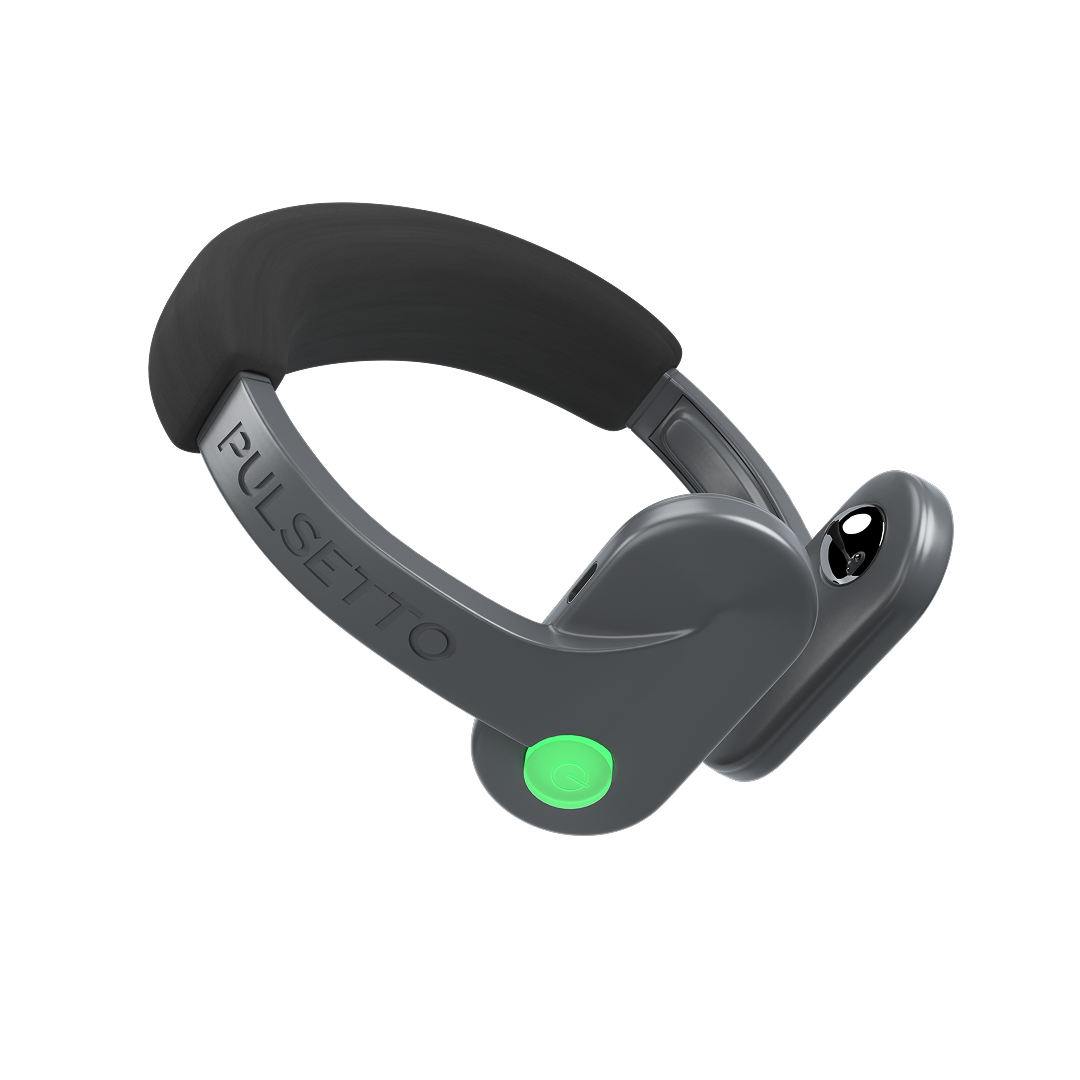
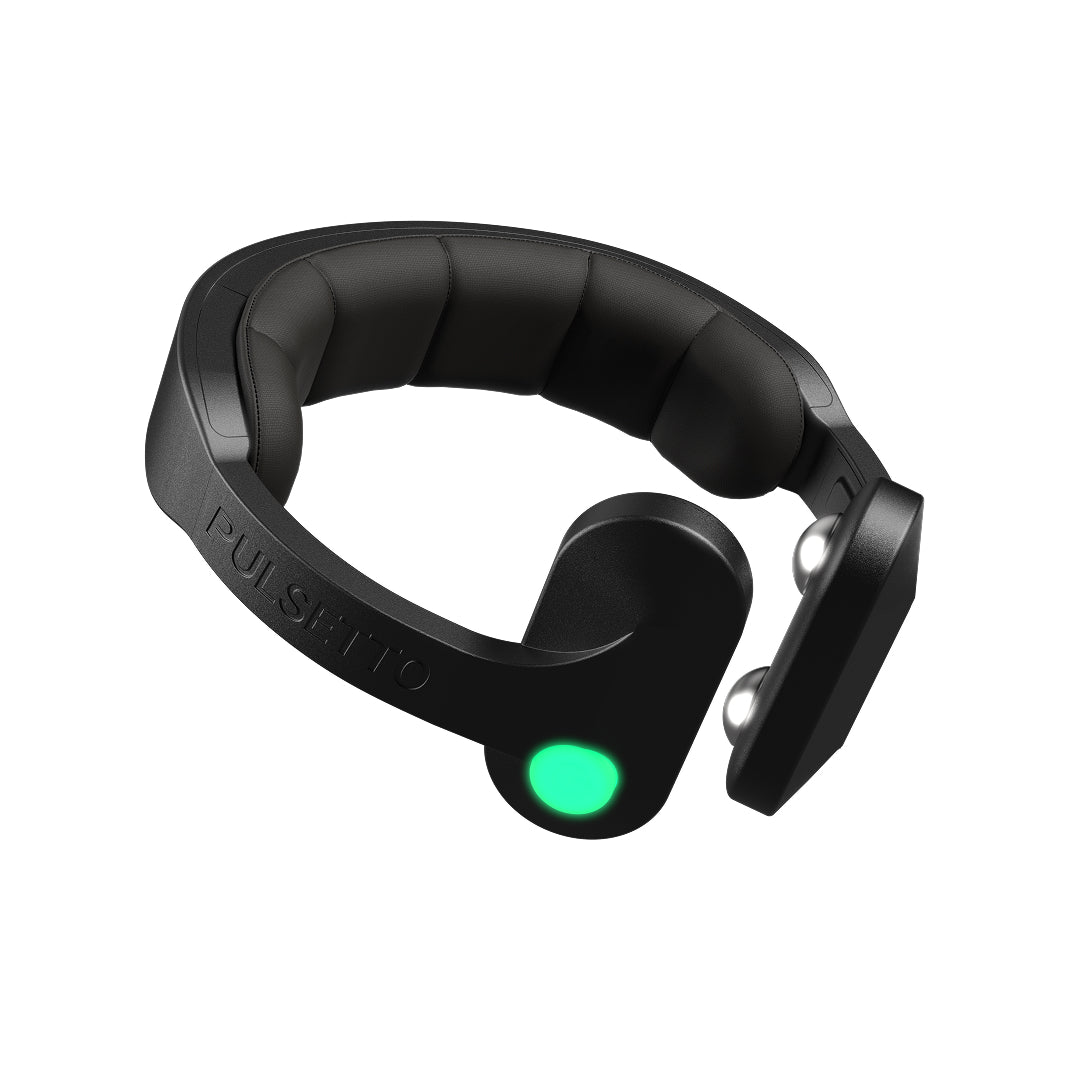
Pulsetto's vagus nerve stimulator targets this exact mechanism through bilateral cervical placement: stimulating the vagus nerve on both sides of the neck at once, rather than the single-side placement most consumer devices use. The afferent signal travels up to the brainstem regardless of which side it originates from, but Pulsetto's own testing found bilateral stimulation outperformed unilateral on every biomarker measured, which is the basis for building the device around both sides rather than one.
Sessions run about four minutes and require nothing more than wearing the device on the neck, which matters for a widening effect that depends on repetition. A technique that takes twenty minutes of focused effort is easy to skip on a bad day, which is exactly the day a narrow window needs the practice most.
In Pulsetto's own randomized, open-label pilot study (n=40, 4 weeks), bilateral stimulation produced a 55.9% reduction in depressive symptoms (PHQ-9), a 45.3% reduction in anxiety symptoms (GAD-7), and a 41.0% improvement in sleep quality (PSQI), alongside reductions in hair cortisol and cortisone, the body's chronic-stress biomarkers. Lower baseline stress-hormone exposure is one of the physiological conditions a wider window depends on, since it's the accumulated background load that narrows the margin before a new stressor tips someone into hyperarousal.
Real-world usage data points the same direction. In Pulsetto's own in-app wellbeing check-ins, 73% of users report lower stress within their first two weeks of consistent use, with the average reported reduction growing from 23% to 26% by their next check-in. (Based on self-reported, in-app wellbeing check-ins from Pulsetto users who completed them, comparing each user to their own onboarding rating. Not a clinical measurement and not a controlled study.)
Widening the window without a device
Vagus nerve stimulation is one input among several that work together to widen the window. A wider window is built the same way any physiological capacity is: multiple small, repeated inputs, stacked over weeks.
Sleep is the least glamorous of these and the one most people cut first when life gets busy, which is exactly backward given how much overnight recovery the nervous system depends on. Movement doesn't need to be intense to count; a daily walk trains the same recovery-speed capacity as harder exercise, just more slowly. Social connection matters too, since a nervous system co-regulating with a trusted person recovers differently than one working alone.
None of this happens in a straight line, and a genuinely hard stretch of life will still narrow the window temporarily no matter how consistent the underlying habits are. Working through a structured approach for staying resilient during hard times is a useful framework for that specific situation, when the goal shifts from widening the window to just getting through a period where it's temporarily narrower than usual.
A wider window doesn't announce itself with a single dramatic moment. It shows up as a slightly longer fuse before a bad commute ruins the whole morning, or a slightly faster bounce-back after a hard conversation. Consistency is what gets you there, and Pulsetto is built to make four minutes of that consistency easy to keep showing up for. Try Pulsetto and see what a wider margin actually feels like in your own week.
Frequently asked questions
Is the window of tolerance a real clinical diagnosis?
No. It's a conceptual model that therapists and researchers use as a working framework for describing arousal states and their thresholds, the same way "fight or flight" describes a real physiological pattern without being a formal diagnosis.
Can vagus nerve stimulation actually widen my window of tolerance, or does it just calm me down for a few minutes?
Both, on different timelines. A single session produces an immediate calming effect through direct parasympathetic activation. A wider baseline window, meaning less reactivity to the next stressor, builds separately, over weeks of consistent sessions, the same way any autonomic training effect does.
Is Pulsetto FDA approved?
No. Pulsetto is marketed as a general wellness device, the FDA category for products making general wellness claims rather than medical ones. It's CE certified and FCC certified. Pulsetto is a general wellness product and is not intended to diagnose, treat, cure, or prevent any disease or medical condition.
Who shouldn't use vagus nerve stimulation?
Skip vagus nerve stimulation, including Pulsetto, without talking to a doctor first if any of the following apply:
If you have a diagnosed heart condition or take medication that affects heart rate, check with your physician before starting.
How much does Pulsetto cost?
Pulsetto Lite is priced at $269 and Pulsetto FIT at $296. Both come with a 30-day money-back guarantee, a 2-year warranty, and free worldwide shipping, and the app's free tier includes five stimulation programs plus HRV and sleep tracking at no recurring cost.
Does widening my window of tolerance mean I'll stop feeling stressed?
No, and that's not really the goal. A wider window means stress still shows up, but there's more room to feel it without losing the ability to think clearly or respond deliberately. The stressor doesn't disappear; the margin around it gets bigger.
Scientific research
-
Autonomic dysregulation and the Window of Tolerance model of the effects of complex emotional trauma(Corrigan, Fisher & Nutt, 2011, Journal of Psychopharmacology)
-
The polyvagal perspective (Porges, 2007, Biological Psychology)
-
Stress and Heart Rate Variability: A Meta-Analysis and Review of the Literature (Kim et al., 2018, Psychiatry Investigation)
-
Cardiac vagal recovery following acute psychological stress in human adults: A scoping review (Roddick et al., 2025, Neuroscience and Biobehavioral Reviews)
-
Non-invasive vagus nerve stimulation in healthy humans reduces sympathetic nerve activity (Clancy et al., 2014, Brain Stimulation)
-
Non-invasive Vagal Nerve Stimulation Effects on Hyperarousal and Autonomic State in Patients with Posttraumatic Stress Disorder and History of Mild Traumatic Brain Injury: Preliminary Evidence (Lamb et al., 2017, Frontiers in Medicine)