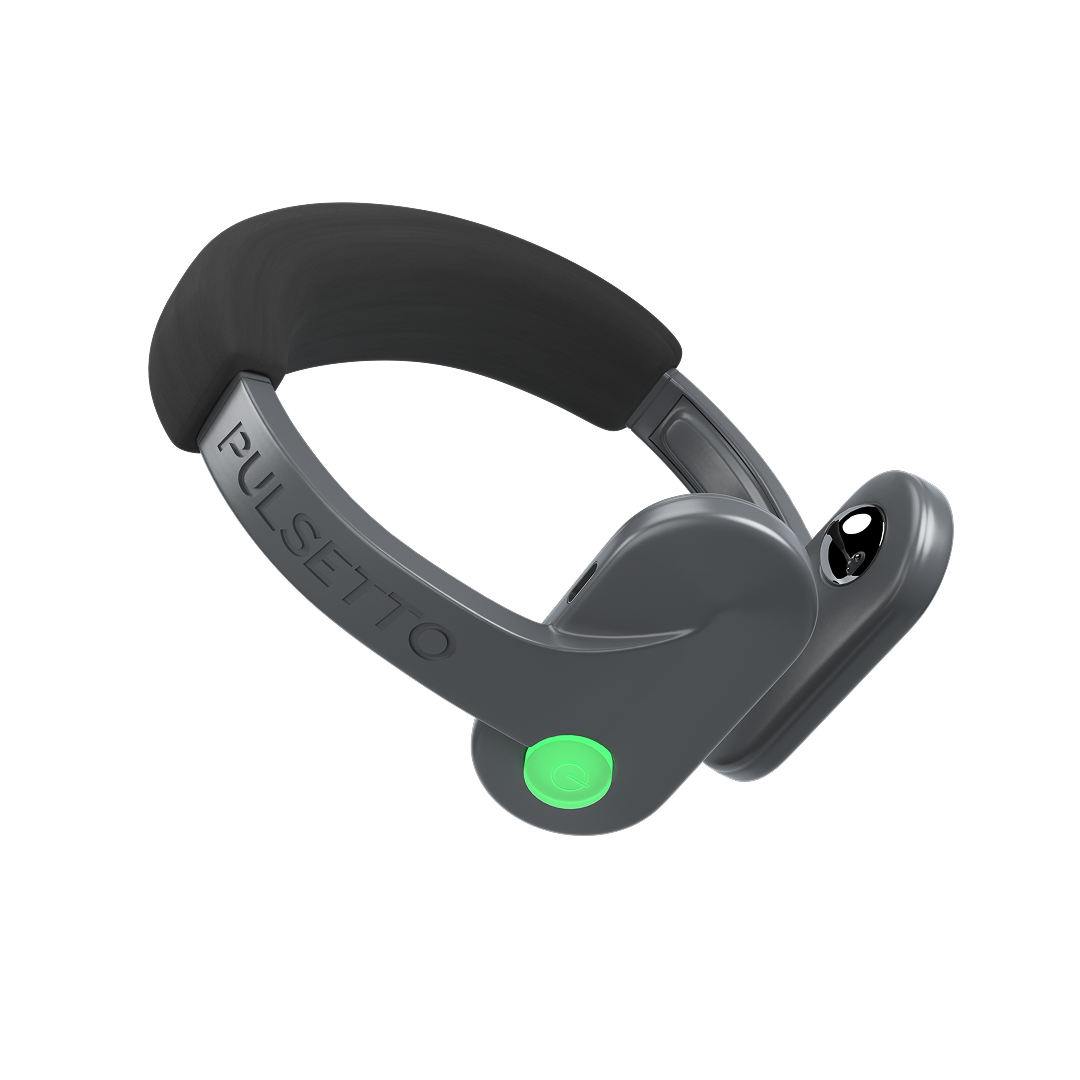
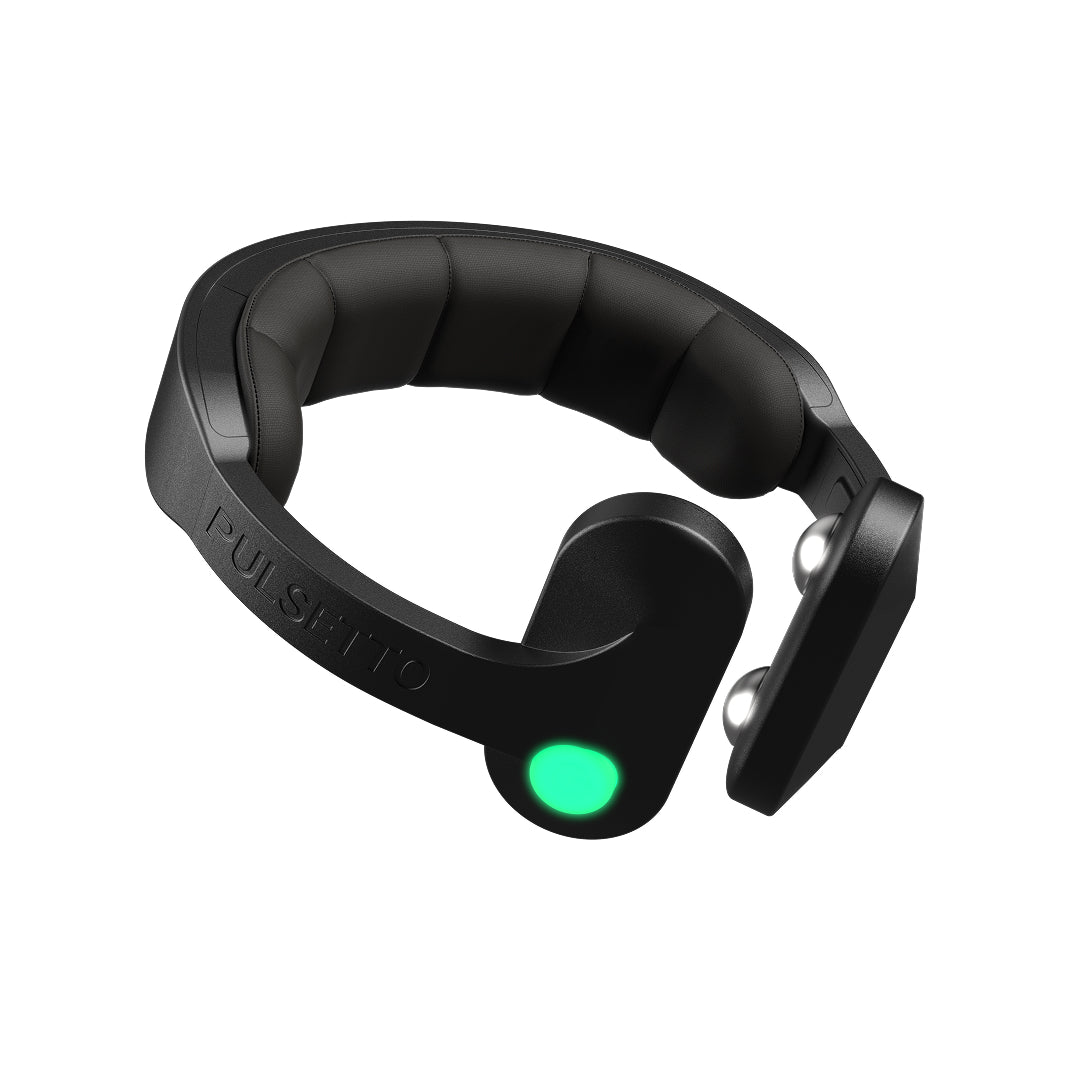
The vagus nerve is the body's primary parasympathetic pathway, and stimulating it may support stress reduction, better sleep, and improved mood.
Non-invasive vagus nerve stimulation offers a practical, at-home alternative to surgical devices, making these benefits accessible to everyday wellness users.
Wearable VNS devices are wellness tools, not medical treatments, and are distinct from the implanted systems used in clinical epilepsy and depression care.
Free techniques like slow breathing, humming, and cold exposure can activate the vagus nerve, but wearable devices offer a more consistent and repeatable approach.
Rated 4.5/5 by 20,137+ Customers
Pulsetto vagus nerve stimulator: feel calmer and sleep better in just 4 minutes a day
Experience immediate relaxation with the Pulsetto vagus nerve stimulator.
Sit back, close your eyes, and immerse yourself in the soothing Pulsetto experience, designed to gently promote a state of calmness and well-being.
Best Value Deal!
FREE WORLDWIDE SHIPPING
Select your device:
Pulsetto Lite vs Pulsetto FIT
Which one is right for you?
PULSETTO FIT
PULSETTO LITE
Dual-technology, hands-free stimulation
Yes
Yes
New wave-like stimulation (more engaging)
Yes
No
Battery life
Up to 12 days (20% longer)
Up to 10 days
Fits all necks for consistent stimulation
Yes
No
Stays secure no matter what you're doing
Yes
No
Great for sharing (adjusts to any neck size)
Yes
No
Free lifetime wireless updates
Yes
No
Premium all-black design with medical-grade materials
Best if you wear size S or smaller tops. Only with FIT
New stimulation that rises and falls, which feels more fun (coming July–Aug 2025). Only with FIT
20% longer battery life for fewer recharges. Only with FIT
Free lifetime Pulsetto App with 5 expert-designed programs for Stress, Anxiety, and More.
One 60g gel tube (can be used up to a month), USB-C charging cable, user guide included
Extra gift: Pulsetto Premium Free Trial. 3 extra stimulations, 11 unique guided meditations, 54 breathing exercises, 1200 positive affirmations, and more.
$296/$546
Vagus Nerve Stimulation Benefits Explained
What Is the Vagus Nerve and Why Does It Matter?
The vagus nerve is the longest cranial nerve in the human body. It travels from the brainstem down through the neck, into the chest, and all the way to the abdomen, branching out to connect with the heart, lungs, stomach, and intestines along the way. Think of it as a two-way communication highway between the brain and the body's major organ systems.
The Vagus Nerve's Role in the Autonomic Nervous System
The autonomic nervous system is the part of the nervous system that controls automatic functions, things you do not consciously control, like heart rate, breathing depth, and digestion. It has two main branches: the sympathetic system, which drives the fight-or-flight stress response, and the parasympathetic system, which governs the rest-and-digest recovery response.
The vagus nerve is the primary nerve of the parasympathetic branch. When it is functioning well, it acts as a natural brake on the stress response, helping the body return to a calm, balanced state after a stressful event.
The vagus nerve is the longest cranial nerve in the body, running from the brainstem through the neck, chest, and abdomen.
It is the primary nerve of the parasympathetic nervous system, which governs the body's rest-and-digest response as opposed to the fight-or-flight response.
A well-functioning vagus nerve supports heart rate regulation, digestion, immune response, and mood, making it central to overall wellness.
What Is Vagal Tone and Why Does It Matter?
Vagal tone refers to how active and responsive the vagus nerve is at any given time. Higher vagal tone generally means the body can shift more efficiently between states of alertness and recovery. Lower vagal tone is associated with difficulty winding down, heightened stress reactivity, and a range of physical and emotional wellness challenges.
Poor vagal tone, meaning low activity in the vagus nerve, is associated with stress dysregulation, inflammation, and mood imbalances.
Understanding vagal tone matters because it gives a measurable, practical framework for improving the body's resilience. The question that follows naturally is: if vagal tone determines how well the system works, is it possible to deliberately improve it? That is exactly where vagus nerve stimulation becomes relevant. For a deeper look at the technology involved, non invasive vagus nerve stimulation offers a useful starting point.
How Vagus Nerve Stimulation Works
Vagus nerve stimulation (VNS) works by delivering controlled electrical signals along the vagus nerve. These signals travel up to the brainstem and into brain regions that regulate mood, alertness, and organ function. The result is a shift in the balance of the autonomic nervous system, with the parasympathetic (rest-and-recover) side becoming more active and the sympathetic (stress) side becoming less dominant.
This is not a new concept. Electrical stimulation of the vagus nerve has been studied in clinical medicine for decades, primarily in the context of managing epilepsy and treatment-resistant depression.
Wearable VNS devices are wellness tools and are not intended to diagnose, treat, or cure any medical condition. Consult a healthcare provider for any medical concerns.
Implanted VNS vs. Non-Invasive VNS
There is an important distinction between two very different types of VNS.
Implanted VNS involves a surgical procedure in which a device is placed under the skin and connected directly to the vagus nerve in the neck. This approach is used under strict medical supervision for conditions like epilepsy and depression that have not responded to other treatments. It carries surgical risks and requires ongoing clinical management.
Non-invasive VNS is completely different. These devices are worn externally, typically applied to the neck (cervical VNS) or the ear (auricular VNS, which targets the auricular branch of the vagus nerve). No surgery is involved, no prescription is required, and they are designed for general wellness support rather than medical treatment. Consumer-grade devices operate at much lower intensities than implanted clinical systems.
The Parasympathetic Activation Response
Vagus nerve stimulation works by sending electrical signals along the vagus nerve to the brainstem and brain regions that regulate mood, arousal, and organ function.
Stimulation activates the parasympathetic nervous system, reducing the dominance of the sympathetic stress response and encouraging physiological calm.
The cholinergic anti-inflammatory pathway (the body's nerve-driven system for moderating inflammation) is activated during VNS, which may help regulate the body's inflammatory response.
Both implanted devices used in clinical settings and non-invasive transcutaneous devices applied to the neck or ear use this same fundamental mechanism, though at different intensities and with different use cases.
Non-invasive VNS is designed for wellness support, not for medical treatment, and operates at lower intensities than clinical implants.
Vagus nerve stimulation benefits may include reduced stress and anxiety, improved sleep quality, better mood regulation, moderated inflammation, improved heart rate variability (HRV), and support for cognitive clarity and digestive comfort. These effects are linked to the nerve's role in parasympathetic activation. While not every benefit is guaranteed for every individual, the mechanism is well-established and many users report meaningful improvements in daily wellness.
This section directly addresses the question many people arrive with: what are the benefits of stimulating the vagus nerve? The answer spans several areas of physical and mental wellness, each connected to the vagus nerve's broad reach through the body.
Stress and Anxiety Support
Vagus nerve stimulation for stress and anxiety is one of the most commonly reported reasons people explore this approach. VNS is thought to calm the sympathetic nervous system and reduce the activity of cortisol (the body's primary stress hormone), which may help users feel less reactive to daily stressors. The parasympathetic shift produced by stimulation essentially tells the body that a threat has passed, allowing physiological tension to ease. Some users report a noticeable reduction in anxious feelings during or shortly after a session, though individual responses vary. This is framed as potential wellness support, not treatment for a clinical anxiety disorder. For a more detailed look, vagus nerve stimulation for anxiety covers the topic in depth.
Sleep Quality and Relaxation
By promoting parasympathetic dominance, VNS may support the body's natural transition into restful states as the day winds down. The nervous system needs to shift away from alertness before quality sleep becomes possible, and for many adults with high stress loads, that transition is slow or incomplete. Some users report falling asleep more easily and experiencing fewer sleep disruptions after incorporating regular VNS sessions into their evening routine. Consider someone who spends ten hours in a high-pressure work environment and finds it difficult to decompress before bed. A structured VNS session in the hour before sleep may help that transition feel more natural and less effortful.
Mood and Emotional Regulation
VNS is associated with changes in neurotransmitter activity, including serotonin (associated with mood stability) and norepinephrine (associated with alertness and emotional reactivity). By influencing these chemical systems through the vagus nerve's connections to brain regions like the locus coeruleus and the raphe nuclei, stimulation may contribute to a more stable emotional baseline over time. This is thought to be part of why implanted VNS was originally explored in treatment-resistant depression. For wellness users, the implication is that regular stimulation may support a more balanced emotional state, particularly during periods of elevated stress.
Inflammation and Immune Balance
The cholinergic anti-inflammatory pathway is a nerve-based regulatory system through which the brain can signal the body to moderate its inflammatory response. The vagus nerve is a key part of this pathway. When stimulated, it may prompt the body to produce less of the inflammatory signalling molecules called cytokines (proteins released by the immune system that can trigger widespread inflammation when overproduced). For long-term wellness, this is relevant because chronic low-grade inflammation is increasingly recognised as a contributor to many common health challenges. VNS may help the body self-regulate more effectively. For more on this topic, see vagus nerve stimulation for inflammation.
Heart Rate Variability and Nervous System Resilience
Heart rate variability (HRV) refers to the natural variation in time between consecutive heartbeats. Despite what the name might suggest, higher variability is a positive sign. It indicates that the autonomic nervous system is flexible and responsive, able to shift fluidly between states of activation and recovery. Low HRV is often associated with chronic stress, poor sleep, and reduced physical performance.
VNS stimulation may support improved HRV over time by strengthening the parasympathetic tone that underpins it. For athletes and high-performance individuals, HRV is already a standard wellness metric. For general users, improving HRV is one of the most measurable indicators of improved nervous system resilience.
Cognitive Function and Gut Health
Some users report improvements in focus and mental clarity following regular VNS sessions, possibly related to a reduced cognitive load from chronic stress. When the nervous system is less occupied with managing a sustained stress response, mental resources may become more available for tasks requiring concentration and clear thinking.
On the gut side, the vagus nerve directly innervates (connects to and controls) the digestive system. Stimulation may support the gut-brain communication pathway that regulates digestive rhythm and comfort. This connection is part of why stress is so commonly linked to digestive symptoms. By supporting vagal activity, VNS may contribute to improved digestive function as a secondary benefit. For vagus nerve stimulation for stress, the downstream effects on both cognition and digestion are worth understanding alongside the primary stress response benefits.
How to Stimulate the Vagus Nerve at Home
The good news for anyone researching vagus nerve stimulation wellness benefits is that accessing the vagus nerve does not require a clinic or a prescription. Several practical approaches are available, ranging from simple daily habits to wearable devices, and the most effective overall strategy often combines both.
Free Techniques Anyone Can Try
These techniques work because they engage physiological pathways that naturally activate the vagus nerve. Understanding the mechanism behind each one helps users commit to them more consistently.
Deep diaphragmatic breathing, particularly slow exhale-focused patterns (such as breathing in for four counts and out for eight), activates the vagus nerve through the respiratory-cardiac reflex. Longer exhalations are directly tied to parasympathetic activation.
Cold water exposure, such as cold showers or splashing cold water on the face, is thought to stimulate the vagal response via the diving reflex, a built-in physiological response that slows heart rate and shifts the body toward parasympathetic activity.
Humming, singing, or gargling activates the muscles of the soft palate and throat that are directly innervated by the vagus nerve, specifically the vagal branches serving the larynx and pharynx. Even a few minutes of humming can produce a mild vagal response.
Meditation and mindfulness practices may improve vagal tone over time through sustained parasympathetic activation, though the effect builds gradually with consistent practice rather than being immediate.
Each of these techniques is free and accessible. The challenge, for many people, is consistency. It is easy to forget a breathing session or skip a cold shower when life becomes busy.
Wearable VNS Devices for Consistent Stimulation
Wearable non-invasive VNS devices deliver targeted electrical stimulation directly to the vagus nerve at the neck or ear, offering a more consistent and measurable approach than manual techniques alone. For people who find it difficult to maintain daily manual practices, a device removes the reliance on willpower and creates a repeatable, structured routine.
Devices like Pulsetto are designed specifically for this purpose. Pulsetto is one option in the growing category of consumer VNS wearables, offering app-guided sessions that users can integrate into their existing wellness routines, whether that is morning recovery, afternoon stress relief, or evening wind-down.
For guidance on vagus nerve stimulation for sleep, wearable devices offer a particularly practical tool because the session can be completed passively while sitting or lying down in the pre-sleep window.
For anyone comparing available options, a review of the best vagus nerve stimulation devices can help clarify the differences in design, placement, and intended use.
Is Vagus Nerve Stimulation Safe? What to Know Before Starting
For most healthy adults, non-invasive VNS used as directed is generally considered low-risk. This section covers what to expect during a session, what overstimulation feels like, and which individuals should check with a healthcare provider before starting.
Typical Sensations During a Session
The most commonly reported sensations during VNS include mild tingling, warmth, or a gentle buzzing feeling at the site of stimulation on the neck or ear. These sensations are generally described as noticeable but not uncomfortable, similar to a light vibration or mild pins-and-needles. Many users report a gradual sense of calm or relaxation during or shortly after a session, which aligns with the expected parasympathetic activation.
Sensations vary depending on the device's intensity setting and individual sensitivity. Starting at the lowest setting and adjusting gradually is the recommended approach.
What Happens If You Overstimulate the Vagus Nerve?
This is a question that appears frequently for good reason. Overstimulation with consumer-grade wearable devices is uncommon, primarily because these devices operate at much lower intensities than clinical implants. However, if the intensity is set too high or a session is extended beyond recommended duration, some users may experience temporary dizziness, mild nausea, or an uncomfortable tingling sensation at the stimulation site.
These effects are temporary and typically resolve quickly after reducing intensity or ending the session. They are far more associated with surgical implanted devices, which deliver continuous stimulation at clinical-grade intensities, than with consumer wearables.
Non-invasive VNS at consumer device intensities is generally considered low-risk for healthy adults when used as directed.
Overstimulation is uncommon with consumer-grade devices but may cause temporary dizziness, nausea, or an uncomfortable tingling sensation. Users should start at low intensity.
Contraindications and When to Consult a Healthcare Provider
Certain groups should consult a healthcare provider before using any VNS device:
People with pacemakers or other implanted electrical medical devices, as external electrical stimulation may potentially interfere.
Those with a history of epilepsy, given the nerve's role in seizure physiology.
Pregnant individuals, as a precautionary measure in the absence of safety data for this group.
Anyone with a known cardiovascular condition affecting heart rate or rhythm.
Clinical VNS devices carry more significant documented risks including voice changes and breathing difficulties, but these are specific to surgically implanted systems operating at clinical intensities. Consumer wearables are a separate category with a different risk profile.
Who Is Most Likely to Benefit from Vagus Nerve Stimulation?
Non-invasive VNS is not designed for a specific medical condition, which means it is relevant to a broad range of wellness users. Certain profiles, however, tend to find the approach particularly well-suited to their needs.
Adults experiencing chronic stress, persistent low-grade anxiety, or difficulty unwinding after work may find that VNS supports their nervous system's ability to shift into a recovery state more effectively. Someone who works long hours in a demanding role, spends the evening unable to mentally disconnect, and wakes feeling unrefreshed despite a full night in bed is a good example of someone who may benefit from exploring VNS as a wellness tool.
People with poor sleep who have already tried standard sleep hygiene improvements such as limiting screen time, maintaining a consistent sleep schedule, and reducing caffeine may benefit from the parasympathetic activation that VNS provides as an additional layer of support.
Athletes and high-performance individuals may use VNS to support recovery and HRV improvement between training sessions. The connection between vagal tone and physical recovery is well recognised in performance wellness circles. For more on this application, vagus nerve stimulation for athletes covers the specifics in detail.
People who find breathwork or meditation difficult to maintain consistently may prefer a device-assisted approach that provides a structured, repeatable session without relying entirely on daily willpower. For those dealing with persistent physical discomfort alongside stress, vagus nerve stimulation for chronic pain explores how the two may be connected.
All of these groups may benefit from exploring VNS as a wellness tool, though none of the above constitutes medical advice or a clinical recommendation.
Ready to Try a Structured VNS Routine at Home?
Understanding vagus nerve stimulation benefits is one thing. Building a consistent practice around them is another. For readers who want to move from theory to a practical daily routine, Pulsetto offers a purpose-built solution designed to make that transition straightforward.
Pulsetto is a wearable vagus nerve stimulator designed for daily wellness use. It delivers targeted electrical stimulation to the vagus nerve at the neck, guided by a dedicated app with sessions tailored to different goals, from stress relief and focus to sleep preparation and recovery. It is built for people who want a science-informed, structured approach to VNS without the inconsistency of willpower-dependent manual techniques.
Pulsetto is not a medical device and does not treat, diagnose, or cure any condition. It is designed to support everyday nervous system wellness as part of a broader healthy lifestyle. For those ready to explore what a consistent VNS practice could look like, the full range of options is available at the best vagus nerve stimulation device fda approved collection page.
Frequently Asked Questions 💬
What are the benefits of stimulating the vagus nerve?
Stimulating the vagus nerve may support several areas of everyday wellness. Stress and anxiety may ease as the parasympathetic nervous system becomes more active and cortisol activity reduces. Sleep quality may improve through better transitions into rest. Mood regulation may benefit from changes in serotonin and norepinephrine activity. Inflammation may be moderated through the cholinergic anti-inflammatory pathway. HRV may improve over time, reflecting stronger nervous system resilience. Individual results vary.
What happens if you overstimulate the vagus nerve?
Overstimulation with consumer wearable VNS devices is uncommon because these devices operate at low intensities. If it does occur, temporary symptoms may include mild dizziness, nausea, or discomfort at the stimulation site. These effects typically resolve quickly after reducing the intensity or ending the session. More significant side effects like voice changes are associated exclusively with clinical-grade implanted devices, not consumer wearables. Start at the lowest intensity setting and increase gradually.
What does it feel like when you stimulate the vagus nerve?
Most users describe a mild tingling, warmth, or gentle buzzing sensation at the stimulation site on the neck or ear. The experience is generally described as noticeable but comfortable. Many users report a gradual sense of calm or relaxation during or shortly after a session, consistent with parasympathetic activation. Sensations vary depending on the device, the intensity setting chosen, and individual sensitivity. Adjusting the intensity to a comfortable level is the recommended approach for new users.
What are the symptoms of a bad vagus nerve?
Signs of low vagal tone or reduced vagal function may include chronic difficulty relaxing after stress, trouble falling or staying asleep, irregular or elevated resting heart rate, digestive discomfort, persistent fatigue, and a general sense of being stuck in a heightened stress state. Low HRV (low variation in the time between heartbeats) is a measurable marker often associated with poor vagal tone. These are general wellness signals, not medical diagnoses. Persistent or concerning symptoms should be evaluated by a qualified healthcare provider.
Can non-invasive vagus nerve stimulation devices be used at home?
Yes. Non-invasive VNS devices designed for consumer wellness use can be used at home without a prescription or clinical supervision. These devices are entirely distinct from surgically implanted VNS systems used in clinical medicine and operate at much lower intensities. They are applied externally to the neck or ear and are designed for daily wellness support. Users should follow device instructions carefully and consult a healthcare provider before starting if they have any underlying health conditions, particularly those involving the heart or existing implanted devices.