The Physical and Mental Signs of Stress in Athletes
Stress in athletes rarely announces itself first as a feeling. More often it shows up in the body before it registers in the mind, which is why the physical layer deserves its own list.
Physical signs: disrupted or lighter sleep, a resting heart rate that creeps up week over week, more frequent minor illness or nagging injuries, and appetite that swings in either direction. Often the signs a coach or training log catches first.
Mental and behavioral signs tend to follow: irritability that wasn't there before, a drop in motivation for sessions that used to feel automatic, trouble concentrating in practice or the classroom, a low-grade dread before training that feels different from normal pre-competition nerves.
Both lists answer a question athletes keep asking: how does stress actually affect performance? Rarely as one dramatic moment, more often as a slow drift, a worse night of sleep here, a shorter fuse there, until the pattern is hard to ignore, and the tell that something physiological is driving both lists at once. How athletes track recovery is worth a look if that isn't already a habit.
What Causes Stress in Athletes
The causes stack up from a few directions, and naming them plainly is the first step toward managing them instead of just absorbing them.
Competitive pressure and selection anxiety sit at the center for most athletes: the weight of trying to make a roster, hold a scholarship, or perform for a contract. Training load itself is a cause too, pushing volume without matching recovery is, by definition, a stressor the body has to process. Travel and disrupted schedules add friction that's easy to underestimate. Injury and return-to-play uncertainty add a psychological layer on top of the physical one. Student-athletes carry a specific version of this: academic deadlines against training schedules, often with less recovery time than non-athlete classmates get. For elite and professional athletes, add public scrutiny and career-security pressure, factors that rarely show up in general stress-management advice.
These causes don't all feel the same day to day, but they draw on the same physiological system underneath, which is where the next section goes. Wearables athletes use to track training load can make some of that load visible before it becomes a problem.

The Layer Most Guides Skip: How the Nervous System Processes Athletic Stress
Every source of athletic stress, competition nerves, training load, travel, poor sleep, runs through the same system: the autonomic nervous system, and specifically vagal tone, the activity of the vagus nerve that governs the body's shift between stress response (sympathetic) and recovery (parasympathetic). Heart rate variability (HRV) is one measurable signal of that recovery capacity. This is the physiological layer most stress-management advice for athletes never mentions.
The autonomic nervous system runs automatic functions, heart rate, digestion, the stress response, without conscious input, in two modes: sympathetic (activating) and parasympathetic (recovery). Vagal tone describes how readily the body shifts into parasympathetic activation, largely via the vagus nerve, the longest cranial nerve. HRV, the variation in time between heartbeats, is an accessible way to measure that shift, higher HRV generally reflects a nervous system that recovers more readily between demands.
A 2025 Frontiers in Psychology synthesis names vagal signaling as central to recovery, cognitive control under pressure, and team cohesion in elite sport [2], one of the first papers to bring this literature into a sports-performance context.
This is also where overtraining syndrome (OTS) lives, when training and competition stress outpace recovery. Vagally-mediated HRV at rest and bedtime salivary cortisol are studied as promising OTS biomarkers [3], and OTS itself involves documented autonomic, metabolic, and cytokine changes, not just "feeling tired" [4].
A 2026 review of 15 trials found transcutaneous vagus nerve stimulation associated with better post-exercise autonomic recovery, including vagal reactivation and baroreflex sensitivity [5], early evidence, but a real signal.
Pulsetto is a general wellness product and is not intended to diagnose, treat, cure, or prevent any disease or medical condition.
None of this replaces training smart or sleeping enough. It explains why the mental techniques below work when they work. For a baseline, see what a good HRV score looks like, and for the fuller picture, see the science behind Pulsetto.
Proven Stress Management Techniques for Athletes (The Mental Layer)
The mental-skills toolkit already out there still matters, this section extends it rather than replacing it.
Call it Layer 1: Mental, well-supported by decades of sport psychology research even before the physiological layer gets added.
-
Breathing and mindfulness work best when built into training, not saved for emergencies. Box breathing (four counts in, held, out, held) between reps or sets gives the nervous system a brief, repeatable reset instead of one big attempt to calm down before competition.
-
Visualization is more useful when specific. Mentally rehearsing the actual competition scenario, the exact start, an opponent's tendencies, the moment something goes wrong and how to respond, does more than generically imagining "success."
-
Pre-competition routines work because they reduce uncertainty, not ritual magic. The same warm-up and sequence every time gives the nervous system fewer unknowns to react to.
-
Self-talk matters, but direction matters more than volume. Outcome-focused self-talk ("I have to win this") adds pressure. Process-focused cues ("stay low," "watch the ball," "smooth breath") give the nervous system something to execute instead of something to worry about.
And support counts as a technique, not a fallback. A coach, teammate, or sports psychologist who knows the specific pressure an athlete is under is one of the most consistently supported and most underused stress-management tools. Practical stress-management techniques covers several of these in more depth.
Stress Management for Recovery: Sleep, Nutrition, and Rest (The Physical Layer)
Recovery is where physical and physiological stress management overlap. Consistent sleep, adequate caloric and protein intake, and scheduled rest days aren't just performance basics, they're what gives the nervous system room to shift out of sympathetic (stress) dominance and into parasympathetic (recovery) mode between sessions. Skipping recovery doesn't just slow physical adaptation, it keeps the stress response switched on longer than it needs to be.
Sleep consistency matters more than sleep perfection: a roughly consistent bed and wake window beats chasing an extra hour once a week. Nutrition and hydration are the fuel side of the same equation, under-eating relative to training load adds a physical stressor the nervous system has to absorb. Scheduled rest and deload days matter for the same reason a taper matters before competition: they're when adaptation happens, not time off from it.
Recovery time is nervous-system recovery time, not just muscle-tissue recovery time. Pulsetto's own data offers a small, honest point here: in its in-app wellbeing check-ins, 56% of users report fewer sleep problems and roughly 9.6% better sleep quality after starting Pulsetto, and total sleep duration increases by an average of 13.5 minutes on days users use the device. (Based on self-reported, in-app wellbeing check-ins from Pulsetto users who completed them, comparing each user to their own onboarding rating.
Not a clinical measurement and not a controlled study.) These numbers reflect Pulsetto's full user base, not an athlete-specific study. For readers juggling training with work or school, building recovery habits into a busy week covers the same basics from a different angle.

How Pulsetto Supports the Physiological Layer of Stress Management
If the physiological layer is real, the next question is practical: what can an athlete do about it, without adding another complicated system to manage?
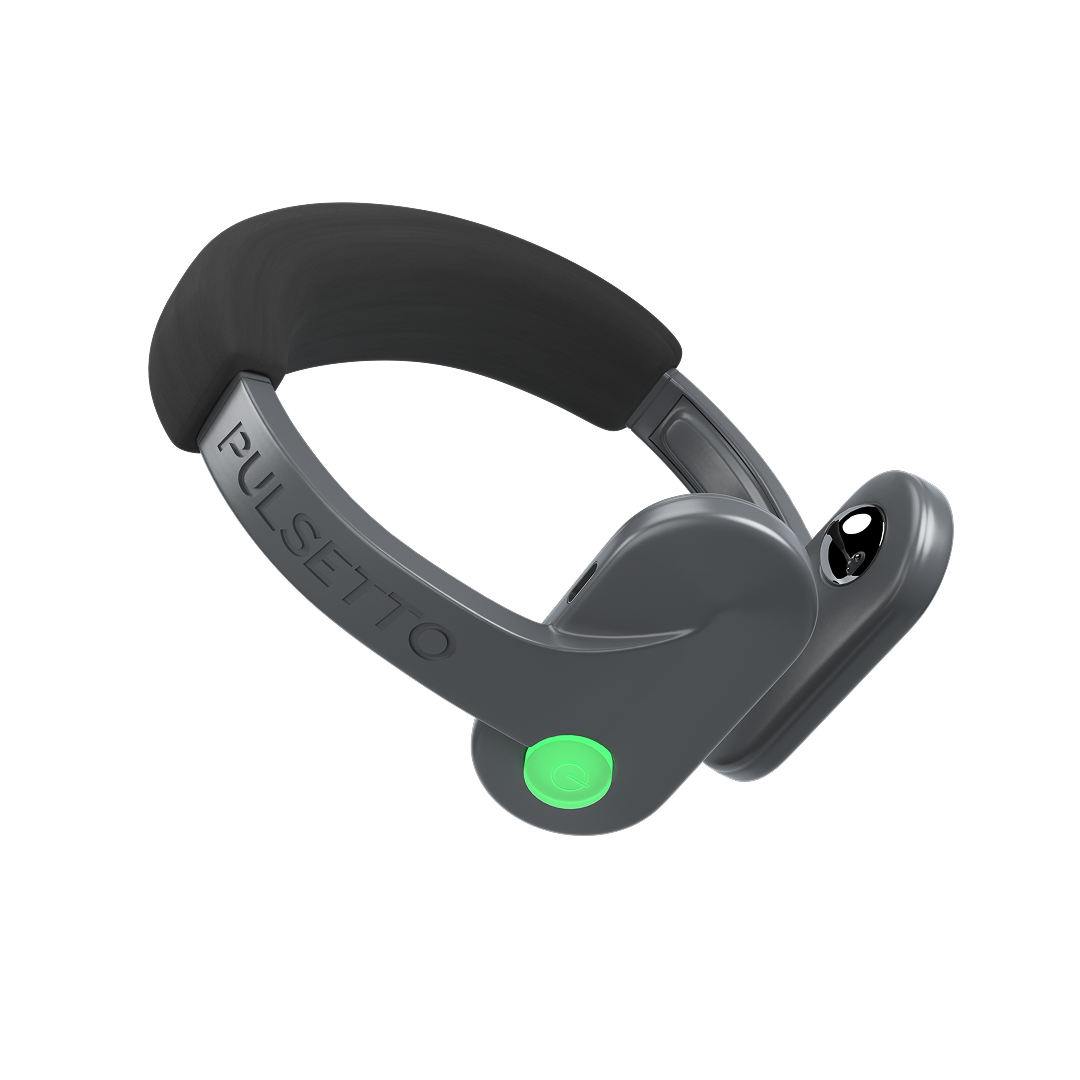
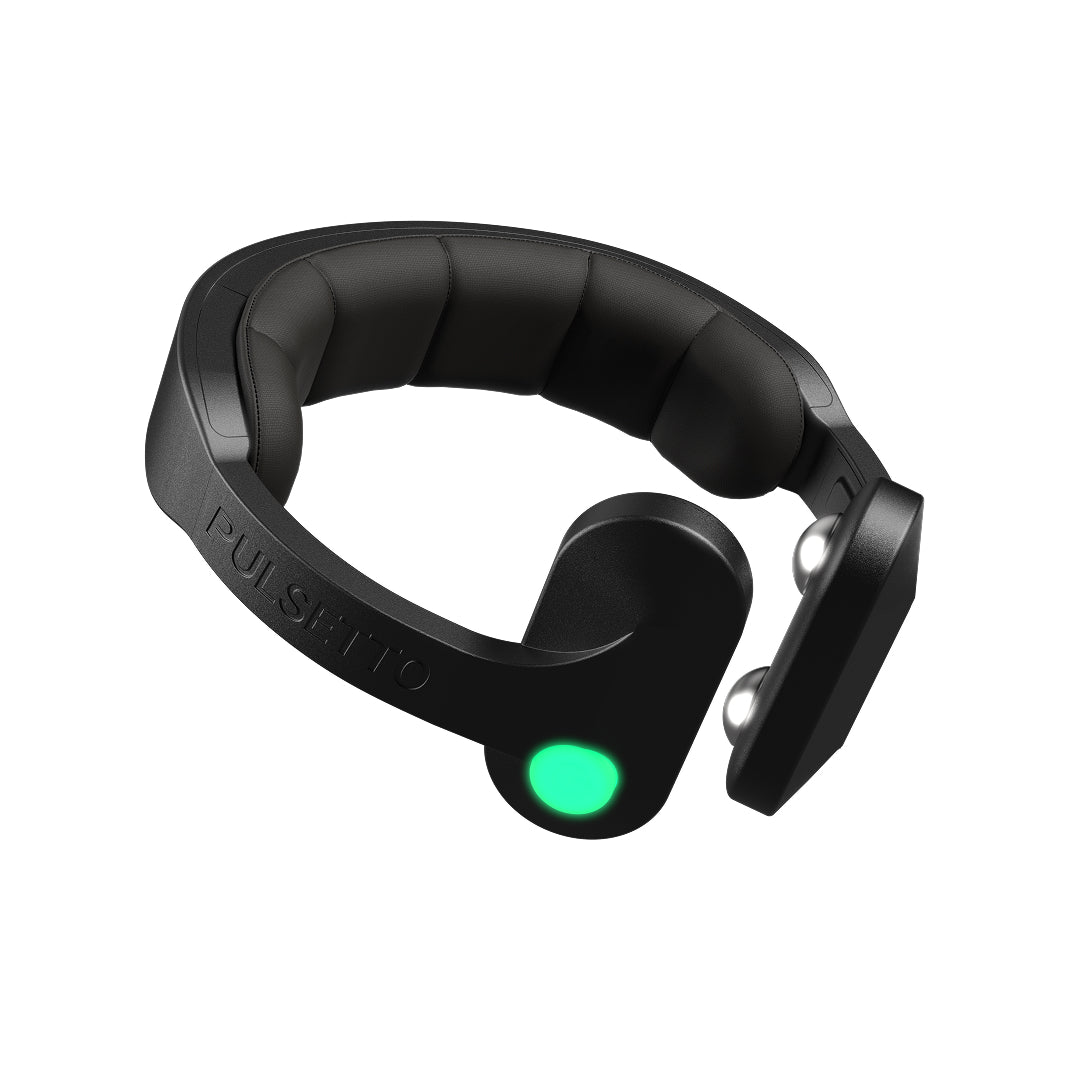
This is where Pulsetto vagus nerve stimulator fits, specifically for the physiological layer, not as a replacement for training, sleep, or sports psychology. Pulsetto uses bilateral cervical stimulation, both sides of the neck at once, in a hands-free wearable, so a session can happen during a cooldown or on the bench between events, not just sitting still with eyes closed. Sessions run about 4 minutes, a gentle way to help the nervous system feel calm and balanced between the harder work of training. The Free Lifetime app tier includes Stress, Sleep, and Burnout programs at no recurring cost.
Across all six wellbeing metrics Pulsetto tracks in its app, most users report improvement, self-reported, not a controlled study, but a consistent enough pattern to be worth mentioning alongside the sleep-specific numbers above.
One more data point worth naming honestly: in February 2025, Pulsetto received €2M in funding from ScaleWolf to expand into soldier and first-responder stress recovery applications, a dual-use validation signal, not athlete-specific research, but a sign this isn't only consumer-wellness framing. Pulsetto reviews cover real user experiences across the wellness use cases the device is actually built for.
The three layers work together: mental techniques give an athlete something to do in the moment, physical recovery gives the nervous system room to reset, and the physiological layer is what those first two are ultimately working through.
Try Pulsetto →
Build Stress Resilience Into Your Training With Pulsetto
Managing athletic stress well means training three layers, not one: the mental techniques already in an athlete's toolkit, the physical basics of sleep and recovery, and the nervous-system layer underneath both, the one most guides never mention.
See the Pulsetto device →, built for 4-minute, hands-free, bilateral sessions that fit around training instead of competing with it.
A few common questions come up next, starting with a sport-psychology framework most athletes have already heard of.
Stress Management for Athletes FAQs
How do pro athletes deal with anxiety?
Pre-performance routines, breathwork, and visualization remain the most common tools, alongside a growing focus on nervous-system-focused recovery. Performance anxiety is common even at the elite level, so noticing it in yourself isn't a sign something is uniquely wrong.
What is competitive anxiety and how can it be managed?
Competitive anxiety is a normal, situational stress response tied to outcome uncertainty, not a diagnosis. It's best managed by combining the mental layer (routines, process-focused self-talk) with physiological regulation (breathing, nervous-system-focused practices) rather than relying on either alone.
How is stress different from overtraining syndrome?
Stress is the input; overtraining syndrome is a downstream risk when stress isn't matched by enough recovery over time. The link between unmanaged athlete stress and burnout is well documented [1]. This isn't a diagnostic tool, a sports medicine professional is the right resource if symptoms feel persistent.
Can wearables or devices actually help manage stress for athletes?
HRV-tracking wearables can make the physiological layer visible instead of guesswork. Nervous-system-regulation tools like Pulsetto support that specific layer, engaging the vagus nerve's cervical branch through bilateral stimulation, rather than replacing training-load tracking. Sports tech for tracking recovery covers the wearable side directly.
Is Pulsetto FDA approved?
No. Pulsetto is a general wellness device, not an FDA-cleared medical device, and it isn't marketed to diagnose, treat, cure, or prevent any disease or medical condition. Truvaga and gammaCore, made by electroCore, are FDA-cleared for migraine and cluster headache, a different regulatory category for a different use case.
Who should not use Pulsetto: anyone with a pacemaker or other implantable medical device, epilepsy, or who is pregnant. Anyone with a cardiovascular condition, a recent neck or throat injury or surgery, or a carotid artery condition should consult a healthcare provider before use.
Scientific research
This article references the following peer-reviewed studies on vagal tone, heart rate variability, and overtraining syndrome. Pulsetto is a general wellness device and is not intended to diagnose, treat, cure, or prevent any disease or medical condition.
[1] Relationship between athlete stress and burnout: a systematic review and meta-analysis (Lin, Lu, Chen & Hsu, 2022, International Journal of Sport and Exercise Psychology, 57 citations)
[2] The vagus nerve: a cornerstone for mental health and performance optimization in recreation and elite sports (Lopez Blanco & Tyler, 2025, Frontiers in Psychology, 8 citations)
[3] Psychophysiological markers of athlete burnout: a call to arms (Moore, Isoard-Gautheur & Gustafsson, 2025, International Journal of Sports Medicine, 8 citations)
[4] Beyond physical exhaustion: Understanding overtraining syndrome through the lens of molecular mechanisms and clinical manifestation (Fiala, Hanzlova, Borska, Fiala & Holmannova, 2025, Sports Medicine and Health Science, 39 citations)
[5] Transcutaneous vagus nerve stimulation and exercise-induced autonomic regulation: a systematic review (Saldanha et al., 2026, Clinical Autonomic Research)