Nurosym vs Apollo Neuro: Overview
Nurosym and Apollo Neuro are two of the most recognized names in wearable vagus nerve stimulation, but they work through completely different mechanisms and are designed for different types of users. Nurosym delivers mild electrical pulses to the vagus nerve via an ear-clip electrode and holds CE medical device certification. Apollo Neuro uses gentle vibrations worn on the wrist to signal safety to the nervous system. Neither device is better in absolute terms. The right choice depends on what a person values most: clinical rigor or lifestyle convenience.
The comparison table below is a useful starting point. Deeper analysis of each feature follows in the sections below, where the practical implications of each difference are explained in full.
Nurosym vs Apollo Neuro Comparison Table
|
Feature
|
Nurosym
|
Apollo Neuro
|
|
Device type
|
Medical device (CE certified)
|
Consumer wellness wearable
|
|
Stimulation method
|
Electrical taVNS via ear-clip electrode
|
Vibrotactile stimulation via wrist/ankle band
|
|
Placement
|
Ear (auricular branch of vagus nerve)
|
Wrist or ankle
|
|
Certification status
|
CE certified medical device
|
Consumer wellness device, not a medical device
|
|
App integration
|
Nurosym app for session tracking and HRV monitoring
|
Apollo app with preset "Vibes" modes for energy, sleep, focus, and calm
|
|
Price (approximate)
|
~€450, check nurosym.com for current pricing
|
~$349, check apolloneuro.com for current pricing
|
|
Warranty
|
2-year warranty
|
1-year warranty
|
|
Best for
|
Users who want a clinically certified, research-backed device
|
Users who want a discreet, lifestyle-integrated daily wellness routine
|
For readers exploring how vagus nerve stimulation for stress works more broadly, the linked guide covers the foundational science behind this growing category. Those already comparing Nurosym to Pulsetto directly can also read the dedicated nurosym vs pulsetto breakdown.
Key Features of Nurosym

How Nurosym Works
Nurosym uses a method called taVNS, which stands for transcutaneous auricular vagus nerve stimulation. In plain terms, it delivers mild electrical pulses through a small electrode clipped near the ear, targeting the auricular branch of the vagus nerve. This branch runs close to the skin's surface just outside the ear canal, making it accessible without surgery or implants.
The electrical pulses are designed to mimic the body's own nerve signaling patterns. The idea is that by stimulating this branch of the vagus nerve directly, the device may encourage the body to shift toward a parasympathetic state, which is the nervous system's rest-and-recover mode. Users typically sit quietly during a session, which lasts around 30 minutes depending on the protocol selected.
Because the stimulation is electrical and targets a specific nerve pathway, Nurosym's mechanism is closer to the clinical forms of vagus nerve stimulation used in medical settings than most consumer devices. This is one reason it appeals to biohackers and people who have done significant research into the category.
It is worth noting that anyone with a pacemaker, cochlear implant, or other active implanted device should consult a doctor before using Nurosym. The electrical stimulation, while mild, is not appropriate for everyone.
Nurosym App and HRV Tracking
The Nurosym companion app allows users to log sessions, track progress over time, and in some configurations, monitor changes in HRV (heart rate variability, which measures how well the autonomic nervous system adapts to stress). This data layer appeals to quantified-self users who want to see whether their nervous system is responding over weeks of consistent use.
CE medical device certification is a meaningful distinction for consumers. It means Nurosym has passed European regulatory standards for safety and performance, not just manufacturing quality. This is a higher bar than a wellness device classification and gives the product credibility in both clinical and consumer contexts.
Nurosym is also the device most commonly referenced in peer-reviewed research contexts within this product category, which adds to its standing among users who want evidence-informed wellness tools. For a broader look at how Nurosym compares across other competitors, the nurosym vs hoolest verelief and nurosym vs truvaga comparisons offer useful context.
Key Features of Apollo Neuro

How Apollo Neuro Works
Apollo Neuro takes a fundamentally different approach. Rather than delivering electrical pulses to the vagus nerve, it uses vibrotactile stimulation, meaning it sends precise, low-frequency vibrations through the skin via a band worn on the wrist or ankle.
The company's rationale is that these vibration frequencies signal safety to the nervous system by activating touch receptors in the skin. The theory is that certain vibration patterns communicate calm to the body in the same way that soothing music or a gentle touch might, nudging the autonomic nervous system toward a more relaxed state.
It is important to be clear about this distinction: Apollo Neuro does not directly electrically stimulate the vagus nerve the way Nurosym does. This does not mean it is ineffective, but it means the two devices work through different pathways. Readers who want the closest consumer equivalent to clinical taVNS should understand that Apollo Neuro's mechanism is not the same.
Because Apollo Neuro is classified as a consumer wellness device rather than a medical device, it operates under different regulatory standards than Nurosym. This makes it more accessible and less intimidating for general wellness users, and it means there are fewer contraindications to worry about for most healthy adults.
Vibration Modes and App Integration
The Apollo app offers a range of pre-set programs called Vibes, each designed for a different goal. Options include programs for energy, focus, social engagement, calm, and sleep. Users can schedule these throughout the day to build a structured wellness routine.
This guided, mode-based experience is one of Apollo Neuro's strongest practical advantages. Rather than asking users to interpret data or self-direct their sessions, the app essentially tells them what to use and when. This makes it a good fit for people who want a passive, lifestyle-integrated approach to nervous system support.
One comfort note worth flagging: some users in public forums report finding the vibration sensation irritating on the wrist, particularly during nighttime sleep use. The ankle placement is often recommended as a more comfortable alternative for overnight sessions.
For a direct comparison between Apollo Neuro and two other popular alternatives, the pulsetto vs apollo neuro and sensate vs apollo neuro articles cover both comparisons in depth.
HRV Benefits: What Both Devices May Support
HRV, or heart rate variability, is the variation in time between consecutive heartbeats. A higher HRV generally indicates a more adaptable autonomic nervous system, one that can shift efficiently between stress responses and recovery states. It is widely used as a proxy for vagal tone, which refers to how active and responsive the vagus nerve is.
Both Nurosym and Apollo Neuro are associated with HRV improvement in user reports and some research contexts, but this needs to be framed carefully. Individual results vary considerably depending on baseline HRV, session frequency, and lifestyle factors. Neither device guarantees HRV improvement for every user.
Nurosym's electrical taVNS approach has a stronger clinical research context behind HRV outcomes. Because it directly targets the auricular branch of the vagus nerve with electrical stimulation, the mechanism is more closely aligned with the pathway known to influence heart rate regulation. For users who specifically want to optimize HRV as a measurable health metric, this clinical grounding may feel more convincing.
Apollo Neuro's HRV effects are more commonly reported in user experience reviews and testimonials than in formal research settings. Many users report feeling calmer and noticing improvements in sleep quality, which may indirectly support HRV over time, but the evidence base is less formal than Nurosym's.
It is also worth remembering that HRV is strongly influenced by factors outside any device: sleep quality, physical exercise, alcohol intake, and chronic stress all affect the metric significantly. A device alone is unlikely to produce meaningful HRV improvements without broader lifestyle support. For a deeper look at how vagus nerve stimulation therapy fits into overall wellness, the vagus nerve stimulation therapy overview is a useful companion read.
Side Effects and Safety Considerations
Both Nurosym and Apollo Neuro are non-invasive and considered safe for most healthy adults, but each carries a small set of considerations worth knowing before purchase.
Nurosym side effects are generally rare and mild. Some users report minor skin irritation or a tingling sensation at the electrode site near the ear, particularly during early sessions. Because Nurosym delivers electrical stimulation, it is not suitable for individuals with active implanted devices such as pacemakers or cochlear implants. Anyone in this situation should consult a healthcare professional before use.
Apollo Neuro side effects are similarly mild for most users. However, public forum discussions highlight a recurring complaint: some users find the vibration sensation on the wrist uncomfortable or distracting, especially during sleep. If wrist placement causes irritation, switching to the ankle is a practical first step. Starting with shorter sessions and gradually increasing duration is also recommended for new users who are sensitive to vibration.
Both devices are not appropriate as a starting point for people with cardiac conditions, epilepsy, or who are pregnant. In any of these situations, speaking with a healthcare professional before using any vagus nerve stimulation device is the right approach.
Neither device is a substitute for professional medical advice or treatment. They are wellness tools, not therapies. For additional context on how Nurosym compares to similar electrical stimulation devices in the safety and side effects discussion, the nurosym vs neuvana xen comparison addresses this in more detail.
Price Comparison and Value for Money
Nurosym sits at the higher end of the consumer VNS market, with pricing around the €450 mark (verify current pricing at nurosym.com, as this may change). This reflects its CE medical device certification, the clinical positioning of the brand, and the research context behind the product. The device typically comes with a two-year warranty. For users who specifically want a clinically credentialed device and view that certification as non-negotiable, the price is more justifiable.
Apollo Neuro is positioned at a mid-to-high price point for a consumer wellness wearable, with pricing around $349 (verify at apolloneuro.com). It is worth noting that some of the more advanced features within the Apollo app may require a subscription, which adds an ongoing cost for users who want full access to all vibration modes and program scheduling. The device includes a one-year warranty.
When assessing value for money, the key question is what the user actually needs. Nurosym offers stronger value for people who want a clinically oriented device with regulatory credentialing and a direct electrical stimulation mechanism. Apollo Neuro offers better value for lifestyle-focused users who want a discreet, app-guided daily ritual and are comfortable with vibrotactile stimulation.
For readers who find both options priced above their comfort zone, Pulsetto is worth considering as a third option. Pulsetto is a neck-worn vagus nerve stimulator that delivers electrical stimulation with app-guided sessions, available at a more accessible price point. Related reading includes the nurosym vs amofit s comparison and a broader look at the best neurofeedback devices in this space.
Which Device Is Right for You?
Both devices have real merit, but they are built for different users. Understanding which profile fits best makes the decision much simpler.
Choose Nurosym if:
-
You want a CE-certified device with a clinical research background and regulatory credentialing.
-
You are comfortable with an ear-clip form factor and 30-minute seated sessions.
-
Budget is secondary to having the most clinically grounded device available.
-
You are actively tracking HRV and want a device whose mechanism aligns closely with the science behind vagal stimulation.
Choose Apollo Neuro if:
-
You want a discreet wrist-worn device that integrates into your daily routine without dedicated session time.
-
You prefer vibration over electrical stimulation and find the idea of an ear electrode off-putting.
-
You value an app-guided experience with multiple pre-set modes for different situations throughout the day.
-
You want a wellness device that feels more like a smartwatch than a medical instrument.
Consider Pulsetto if:
-
You want a neck-worn vagus nerve stimulator with app-guided programs specifically designed for daily stress and sleep support.
-
You prefer direct electrical stimulation (as with Nurosym) but want a more accessible price point and a form factor that does not involve ear electrodes.
-
You want companion app functionality and guided sessions without paying for a CE-certified medical device.
The most important factor in any of these decisions is consistency. The best device is the one a person will actually use every day. A less expensive device used regularly will almost always deliver better results than a premium device that stays in a drawer. None of these devices are medical treatments, and all of them work best as part of a broader approach to stress management, sleep, and recovery.
For further reading, the nurosym vs dolphin neurostim and nurosym vs sensate comparisons expand the field of options for readers still weighing their choices.
Exploring Pulsetto as a Third Option

If neither Nurosym nor Apollo Neuro feels like the right fit, Pulsetto offers a different approach that is worth understanding on its own terms.
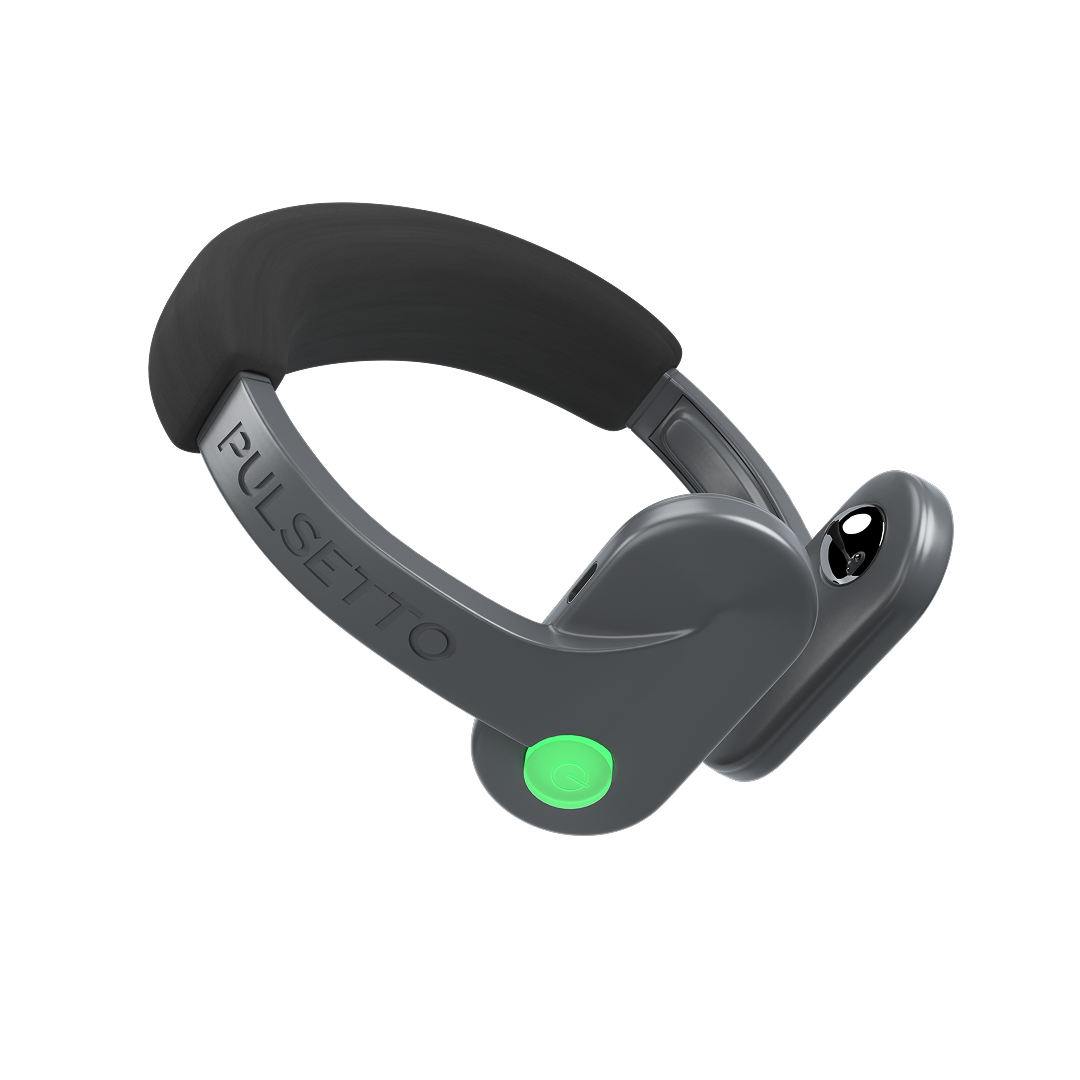
Pulsetto is a neck-worn vagus nerve stimulator that uses electrical stimulation delivered through electrodes placed on either side of the neck. This placement targets the vagus nerve where it runs close to the surface of the skin in the neck region. The companion app offers guided wellness programs for stress relief, sleep support, and HRV improvement, with session lengths designed to fit into a typical daily routine.
Where Pulsetto differs from Nurosym is primarily in form factor and price positioning. It is designed as a wellness device rather than a clinical one, which makes it more approachable for users who do not need medical certification but do want a device that uses direct electrical stimulation rather than vibration.
Where it differs from Apollo Neuro is in the stimulation method itself. Pulsetto uses electrical stimulation targeting the vagus nerve, while Apollo Neuro relies on vibrotactile signals through touch receptors. For users who specifically want the closest consumer approximation of vagal electrical stimulation at an accessible price, Pulsetto presents a credible option.
To see how Pulsetto stacks up against Nurosym in detail, the nurosym vs caremax tens article provides useful context on where electrical stimulation devices differ in the market. If you want to explore Pulsetto's full program library and see how it works in practice, the Pulsetto website offers a complete overview of device features, session programs, and pricing.
Frequently Asked Questions 💬
Which is the best vagus nerve stimulator?
There is no single best vagus nerve stimulator for everyone. Nurosym suits users who want a CE-certified device with clinical research context. Apollo Neuro suits lifestyle-focused users who prefer a discreet, vibration-based wearable with a guided app experience. Pulsetto suits those who want neck-worn electrical stimulation with app support at a more accessible price. The best device is the one a person uses consistently every day, because regularity matters more than prestige.
Is Nurosym worth the money?
Nurosym may be worth the investment for users who specifically want a CE-certified, research-backed device and are comfortable with the ear-clip form factor. Its certification means it has passed European regulatory standards for safety and performance, which is a meaningful distinction for clinically minded users. For general wellness users who do not require that level of credentialing, a less expensive device may offer similar day-to-day benefits without the premium price. The answer depends on how much the clinical certification actually matters to the individual buyer.
Does Apollo Neuro actually work?
Apollo Neuro uses vibrotactile stimulation designed to signal safety to the nervous system through touch receptors in the skin. Many users report feeling calmer, sleeping better, and experiencing less stress reactivity with consistent use, though individual results vary considerably. The device works through a different pathway than direct electrical VNS, so expectations should be set accordingly. Users who approach it as a daily wellness ritual rather than a medical intervention tend to report more satisfying experiences. Consistent use over several weeks appears to be the key factor in whether people notice a meaningful difference.
Does Apollo Neuro stimulate the vagus nerve?
Apollo Neuro does not directly electrically stimulate the vagus nerve the way taVNS devices like Nurosym do. Instead, it delivers gentle vibrations that are thought to activate the autonomic nervous system (the body's automatic control system for heart rate, digestion, and stress response) through touch receptors in the skin. The company suggests this stimulation influences similar nervous system pathways, but the mechanism is genuinely different from electrode-based VNS. Readers comparing the two devices should understand this distinction clearly before making a purchase decision.
How does Pulsetto compare to Nurosym and Apollo Neuro?
Pulsetto is a neck-worn vagus nerve stimulator that delivers electrical stimulation to the vagus nerve via electrodes placed on the neck, paired with a companion app offering guided programs for stress, sleep, and HRV support. Compared to Nurosym, Pulsetto is positioned as a wellness device at a more accessible price point without CE medical device certification. Compared to Apollo Neuro, it uses direct electrical stimulation rather than vibration, which places it closer to Nurosym in terms of mechanism while remaining in the consumer wellness category. For users who want electrical VNS without the clinical price tag, Pulsetto is a practical middle-ground option.
Can vagus nerve stimulators help with anxiety and sleep?
Vagus nerve stimulation may support relaxation and improved sleep quality by promoting parasympathetic nervous system activity, which is the body's rest-and-digest state. When the parasympathetic system is more active, heart rate slows, breathing deepens, and the body moves out of a stress response. Users of devices like Nurosym, Apollo Neuro, and Pulsetto commonly report reduced stress and improved sleep quality with regular use. These are wellness benefits, not medical treatments, and individual results vary. Anyone using a VNS device for anxiety-related concerns should also work with a qualified healthcare professional as part of a broader support plan.