Is a TENS unit a vagus nerve stimulator?

This is the core of the Nurosym vs TENS machine question, so it is worth answering plainly. A generic TENS unit and a purpose-built vagus nerve stimulator can both deliver gentle electrical pulses, but they are designed for different jobs.
A standard TENS (transcutaneous electrical nerve stimulation) unit was originally built to place electrodes over muscles and general nerve areas. Repurposing one as an ear clip does put current near the ear, but a few things change when a device is engineered specifically for taVNS:
-
Electrode design and geometry. Purpose-built taVNS clips are shaped to sit on the part of the ear (typically the cymba conchae) where the auricular branch of the vagus nerve is closest to the surface. A generic clip is not necessarily contoured for that spot.
-
Targeted placement. The whole point of taVNS is hitting the right branch of the nerve. Placement precision is part of the design in a purpose-built device.
-
Tested stimulation parameters. Frequency, pulse width, and intensity in a studied device are set to values used in research. A generic TENS unit gives you ranges built for muscles, not for the vagus nerve specifically.
-
Device-specific research. This is the biggest gap. A purpose-built device like Nurosym has published studies run on that class of device. A generic budget clip usually does not.
So the honest answer to "is a TENS unit a vagus nerve stimulator" is: it can stimulate nerves near the ear, but that is not the same as a device engineered and validated for vagus nerve stimulation. Reviews of the field note that stimulation site and parameters are exactly the variables that determine whether taVNS does anything meaningful [1]. If you want to understand the anatomy behind why placement matters, this overview of vagus nerve anatomy and core functions is a useful reference.
HRV benefits: what the research actually shows

Heart rate variability (HRV) is the metric most people care about with vagus devices, because it reflects the balance between the calming (parasympathetic) and activating (sympathetic) branches of the nervous system. Higher resting HRV is broadly associated with better stress resilience [2], and HRV is a widely used marker of autonomic balance [3]. If HRV is new to you, this guide to why HRV matters for stress and recovery explains what a "good" score looks like.
Here is the key point for a Nurosym vs CareMax comparison: the taVNS-HRV evidence base was built on purpose-built, parameter-controlled stimulation, not on generic TENS clips. In studies of healthy young participants, auricular vagus stimulation has been associated with changes in vagally-mediated HRV [4] [5]. A systematic review found effects on baroreflex sensitivity and HRV in healthy subjects [6]. The picture is not uniform: a large interactive Bayesian meta-analysis concluded that the effect of taVNS on vagally-mediated HRV is smaller and less certain than early studies suggested [7], which is precisely why tested parameters and careful placement matter.
On the stress side, the research also runs on purpose-built devices. Cervical vagus stimulation has been shown to reduce sympathetic (fight-or-flight) responses to stressors in a controlled trial [8], and auricular stimulation has been linked to lower acute stress in healthy adults [9]. That is another reason the category-level evidence favors a device built and tested for the job over a generic clip.
What this means in practice:
-
Purpose-built taVNS (Nurosym-type) has been studied under controlled parameters, so any HRV benefit you read about is more likely to apply to it.
-
Generic TENS clips (CareMax-type) may deliver current to the same region, but the specific HRV research was not run on that class of device, so the evidence does not transfer automatically.
In other words, the HRV literature is a reason to favor a purpose-built device over a generic clip, whichever brand you pick.
Side effects: how well tolerated are these devices?
Both Nurosym and CareMax deliver mild electrical stimulation, and non-invasive vagus nerve stimulation is generally well tolerated. A systematic review of safety and tolerability in humans found that transcutaneous vagus nerve stimulation is well tolerated overall, with the most common effect being minor local skin irritation, reported in around 18% of cases, along with occasional tingling or mild discomfort at the contact point [10]. Serious adverse events were rare in that review.
The practical side-effect notes for each type:
-
Nurosym (purpose-built taVNS). Expect the same profile the literature describes: most people tolerate it well, with the most likely issue being minor skin irritation or a tingling sensation at the ear. Sessions run about 30 minutes, so contact time is longer.
-
CareMax (generic TENS-style clip). TENS-type units can cause skin irritation or discomfort at the contact point, similar in kind to what the review describes, though with a generic device the fit and current control may be less refined.
Across the category, the guidance is the same: keep stimulation to the recommended session length rather than running longer sessions in the hope of a stronger effect, and stop if you notice persistent irritation. For device-level detail on the neck-worn approach, see whether Pulsetto is safe.
Price: premium vs budget
Price is the most obvious contrast in the Nurosym vs CareMax matchup, and it maps directly onto the purpose-built vs generic divide.
-
Nurosym is premium, at around €699. You are paying for a purpose-built taVNS device with a stronger published evidence base and an app-free, ready-to-run design.
-
CareMax is budget, well under $100. You are paying for an accessible entry point, with the trade-off that it is a generic TENS-type device with limited device-specific research.
The gap raises a fair question: is there a middle option that is purpose-built like Nurosym but does not cost close to €700? That is where a cervical device changes the math.
Overall review verdict
For a straight Nurosym vs CareMax verdict:
-
Nurosym may be a good fit for people who specifically want an ear-clip taVNS device with one of the stronger evidence bases and do not mind a premium price and a 30-minute session.
-
CareMax may be a good fit for people on a tight budget who want to try ear-clip stimulation cheaply and understand that a generic TENS-style unit does not carry the same device-specific research.
Neither is universally "better." The choice is a trade-off between evidence and price. But there is a third path worth putting on the table, especially if you like the idea of a purpose-built device without the Nurosym price tag.
Pulsetto: a purpose-built alternative to both

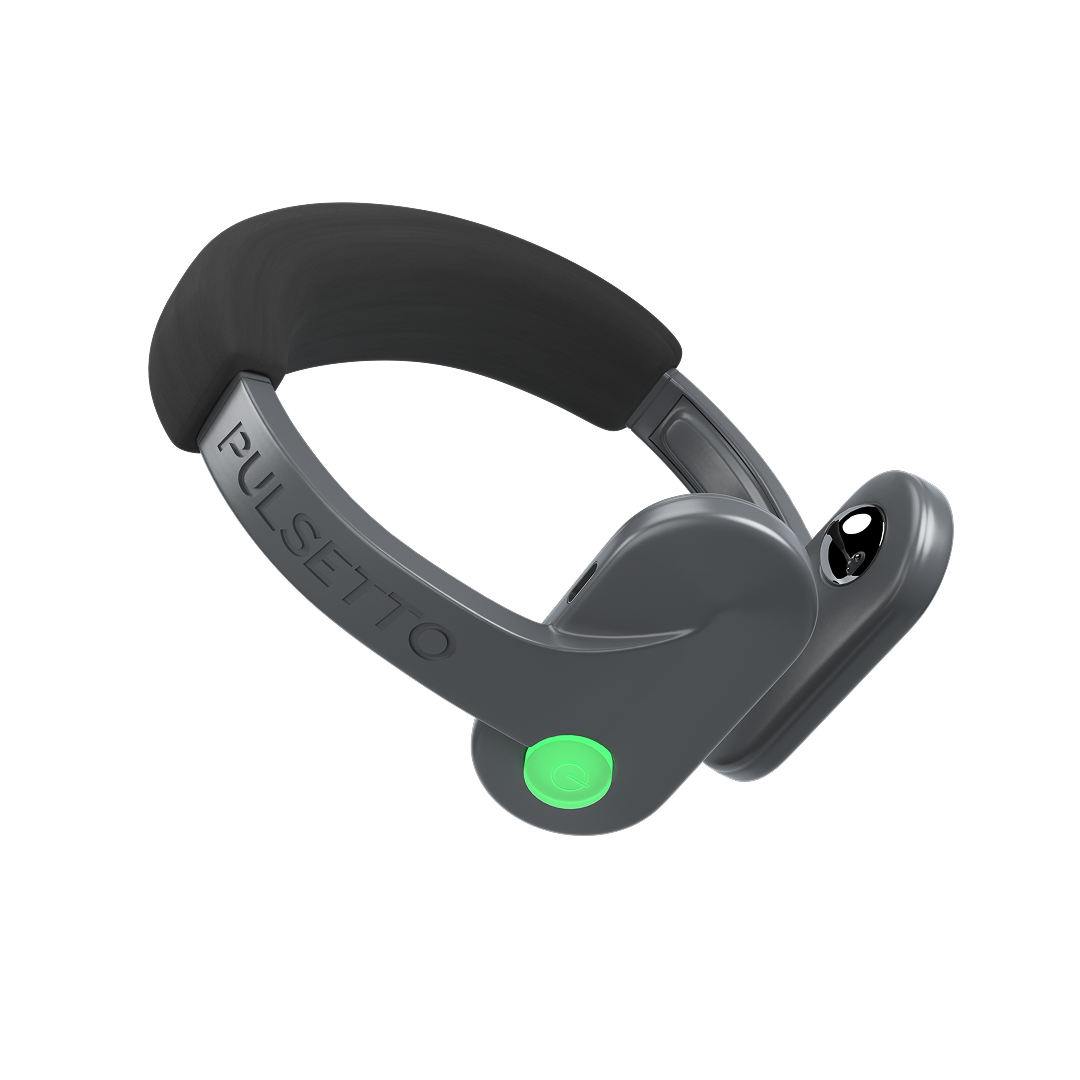
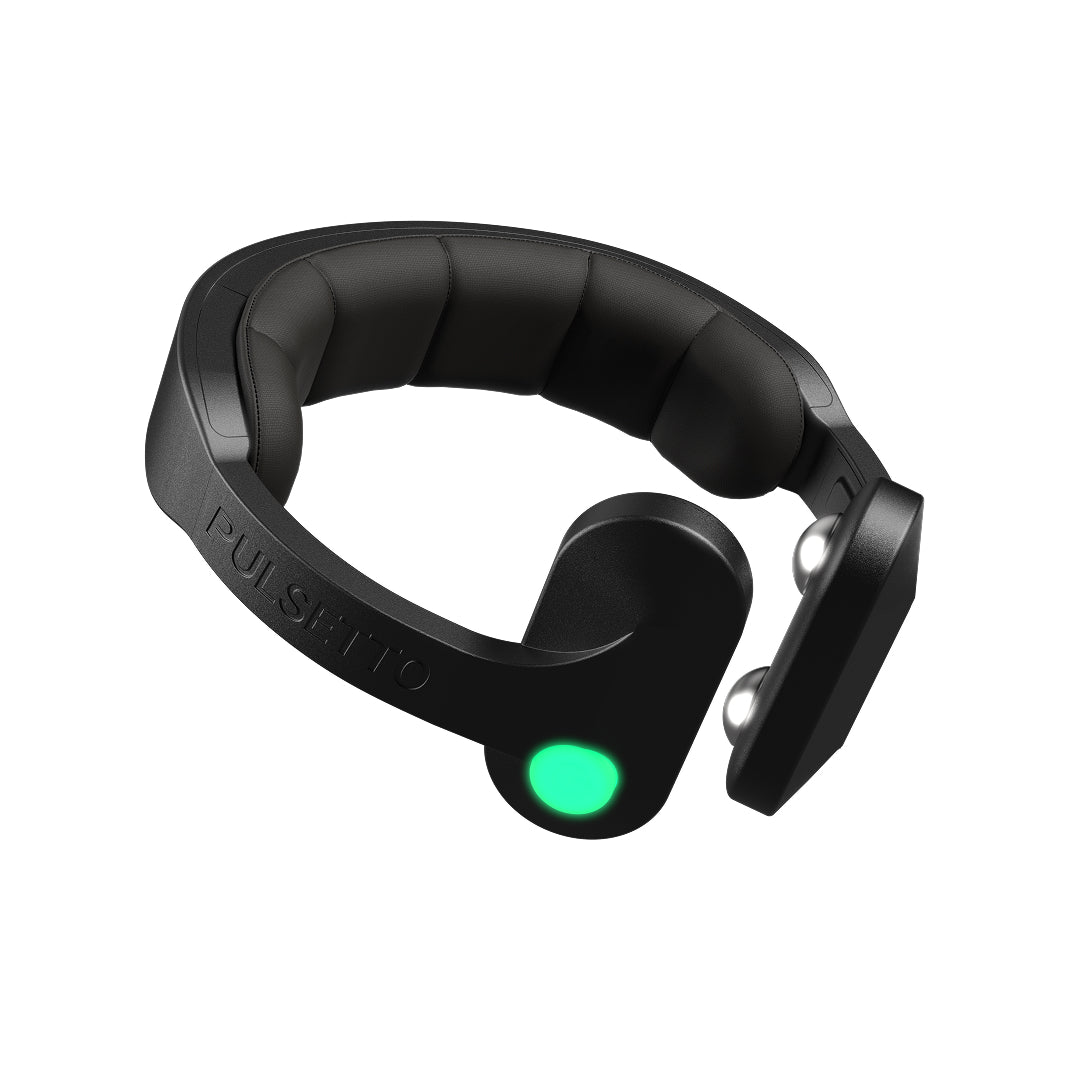
For readers comparing Nurosym vs CareMax and wishing for something in the middle, Pulsetto's neck-worn vagus nerve stimulator is worth a close look. It is a bilateral cervical non-invasive vagus nerve stimulator: a lightweight band you wear around the neck that delivers gentle stimulation to both sides, where branches of the vagus nerve run close to the surface.
A question shoppers ask constantly: is Pulsetto a TENS unit? No. Pulsetto is not a TENS unit and it is not a medical device. It is a purpose-built vagus nerve stimulator worn on the neck, engineered specifically for cervical stimulation rather than repurposed from general muscle-stimulation hardware.
Here is how Pulsetto slots between the two devices in this review:
-
Purpose-built, like Nurosym. It is engineered and tuned for vagus nerve stimulation, not a generic clip. That puts it on the right side of the TENS-vs-taVNS divide.
-
More affordable than Nurosym. The Lite is around $269 and the FIT is around $296, well below the Nurosym premium. If you are choosing between them, the Pulsetto FIT vs Pulsetto Lite breakdown covers the differences, and the Pulsetto FIT model is the newer option.
-
More validated and hands-free than a generic TENS clip. Sessions are about 4 minutes and hands-free, so you are not holding anything to your ear for half an hour. The free companion app includes guided programs for stress, sleep, and calm with no mandatory subscription.
-
CE certified and FCC certified, made in Lithuania. Pulsetto is a general wellness device designed to help you feel calmer, not a TENS unit and not a medical device.
You can read more about the science behind Pulsetto and its published research. In Pulsetto's own randomized open-label pilot study (n=40, 4 weeks), participants reported a 55.9% reduction in depressive symptoms (PHQ-9), a 45.3% reduction in anxiety symptoms (GAD-7), and a 41.0% improvement in sleep quality (PSQI). Bilateral stimulation reduced the chronic-stress biomarker hair cortisol by 47.5%, compared with 31.4% for unilateral stimulation. Those are general-wellness pilot findings on mood, anxiety, sleep, and stress, and you can browse verified customer reviews to see how people use it day to day.
Comparison table
|
Device
|
Type
|
How it works
|
Session
|
Price
|
App
|
Best-fit use case
|
|
Nurosym
|
Purpose-built auricular taVNS
|
Single-ear clip stimulating the ear branch of the vagus nerve
|
About 30 minutes
|
Around €699
|
App-free
|
An ear-clip device with one of the stronger evidence bases, premium budget
|
|
CareMax
|
Generic TENS-style ear clip
|
Microcurrent or TENS pulses via an ear clip, marketed for the vagus nerve
|
Varies
|
Well under $100
|
Varies
|
A very low-cost way to try ear-clip stimulation, limited device-specific research
|
|
Pulsetto
|
Purpose-built cervical vagus nerve stimulator
|
Bilateral electrical stimulation on both sides of the neck, hands-free band
|
About 4 minutes
|
Around $269 (Lite) / $296 (FIT)
|
Free app, no mandatory subscription
|
Purpose-built and hands-free calm support at a mid price
|
If you are still mapping the landscape, these roundups help: the best vagus nerve stimulation devices and the best nervous system regulation device.
How to get the most out of any vagus device
Whatever you choose, the device works best as part of a routine rather than a one-off. Pairing a session with slow breathing helps, since combining stimulation with deep breathing has been shown to modulate HRV [11]. You can also layer in simple habits to activate the parasympathetic nervous system and try a few calming techniques to soothe your nervous system between sessions. Consistency tends to matter more than the intensity of any single session.
Safety and contraindications
Non-invasive vagus nerve devices are designed to be gentle, but they are not for everyone, and some people should not use them. Pulsetto is intended for adults. Do not use a vagus nerve stimulator, or consult your doctor first, if any of the following apply to you:
-
You have a pacemaker.
-
You have any implanted electrical medical device.
-
You have epilepsy or a seizure disorder.
-
You are pregnant.
-
You have cardiac arrhythmia or a serious cardiovascular condition (consult a doctor first).
-
You have had recent neck or throat surgery (consult a doctor first).
-
You have a carotid artery condition.
Always keep stimulation to the recommended session length rather than running longer sessions in the hope of a stronger effect. For device-specific guidance, see the full list of contraindications for using Pulsetto.
Frequently asked questions
Is a TENS unit the same as a vagus nerve stimulator?
Not exactly. A TENS unit and a purpose-built vagus nerve stimulator both deliver mild electrical pulses, but they differ in electrode design, targeted placement on the correct branch of the nerve, the stimulation parameters that have been tested, and the amount of device-specific research behind them. A generic TENS clip can put current near the ear, but that is not the same as a device engineered and studied specifically for transcutaneous vagus nerve stimulation.
Is Nurosym or CareMax better?
Neither is universally better; it is a trade-off. Nurosym may be a good fit for people who want a purpose-built ear-clip taVNS device with one of the stronger evidence bases and can accept a premium price around €699. CareMax may be a good fit for people who want the lowest-cost entry point and understand that a generic TENS-style clip carries limited device-specific research. If you want purpose-built engineering without the top-tier price, a cervical device like Pulsetto sits in between.
Is Pulsetto a TENS unit?
No. Pulsetto is not a TENS unit and not a medical device. It is a purpose-built vagus nerve stimulator worn on the neck, engineered specifically for bilateral cervical stimulation. It is a general wellness device designed to help you feel calmer, with about 4-minute hands-free sessions and a free companion app.
What are the side effects of vagus nerve stimulators?
Non-invasive vagus nerve stimulation is generally well tolerated. A systematic review found the most common effect was minor local skin irritation, reported in around 18% of cases, along with occasional tingling or mild discomfort at the contact point [10]. TENS-type ear clips can similarly cause skin irritation at the contact point. Keeping to the recommended session length and stopping if irritation persists are the main precautions.
What is a cheaper alternative to Nurosym?
If you want purpose-built vagus nerve stimulation without the roughly €699 Nurosym price, Pulsetto is a mid-priced option at around $269 (Lite) or $296 (FIT), with a free app and no mandatory subscription. It is a neck-worn cervical device rather than an ear clip, and its sessions are shorter and hands-free. CareMax is cheaper still, but it is a generic TENS-style clip with limited device-specific research rather than a purpose-built taVNS device.
Scientific research
Pulsetto is a general wellness product and is not intended to diagnose, treat, cure, or prevent any disease or medical condition. The studies below were identified via the Consensus and PubMed databases and are indexed in PubMed.
[1] Critical Review of Transcutaneous Vagus Nerve Stimulation: Challenges for Translation to Clinical Practice (Yap et al., 2020, Frontiers in Neuroscience. PMID: 32410932)
[2] Stress and Heart Rate Variability: A Meta-Analysis and Review of the Literature (Kim et al., 2018, Psychiatry Investigation. PMID: 29486547)
[3] An Overview of Heart Rate Variability Metrics and Norms (Shaffer et al., 2017, Frontiers in Public Health. PMID: 29034226)
[4] Ear your heart: transcutaneous auricular vagus nerve stimulation on heart rate variability in healthy young participants (Forte et al., 2022, PeerJ. PMID: 36438582)
[5] The effect of transcutaneous auricular vagus nerve stimulation on HRV in healthy young people (Geng et al., 2022, PLoS ONE. PMID: 35143576)
[6] A systematic review of the effects of transcutaneous auricular vagus nerve stimulation on baroreflex sensitivity and heart rate variability in healthy subjects (Soltani et al., 2023, Clinical Autonomic Research. PMID: 37119426)
[7] Does transcutaneous auricular vagus nerve stimulation affect vagally mediated heart rate variability? A living and interactive Bayesian meta-analysis (Wolf et al., 2021, Psychophysiology. PMID: 34473846)
[8] Transcutaneous cervical vagal nerve stimulation reduces sympathetic responses to stress in posttraumatic stress disorder: A double-blind, randomized, sham-controlled trial (Gurel et al., 2020, Neurobiology of Stress. PMID: 33344717)
[9] Transcutaneous auricular Vagus Nerve Stimulation and Median Nerve Stimulation reduce acute stress in young healthy adults (Sanchez-Perez et al., 2023, Frontiers in Neuroscience. PMID: 37746156)
[10] Safety and tolerability of Transcutaneous Vagus Nerve stimulation in humans; a systematic review (Redgrave et al., 2018, Brain Stimulation. PMID: 30217648)
[11] Modulating Heart Rate Variability through Deep Breathing Exercises and Transcutaneous Auricular Vagus Nerve Stimulation (Jensen et al., 2022, Sensors. PMID: 36298234)