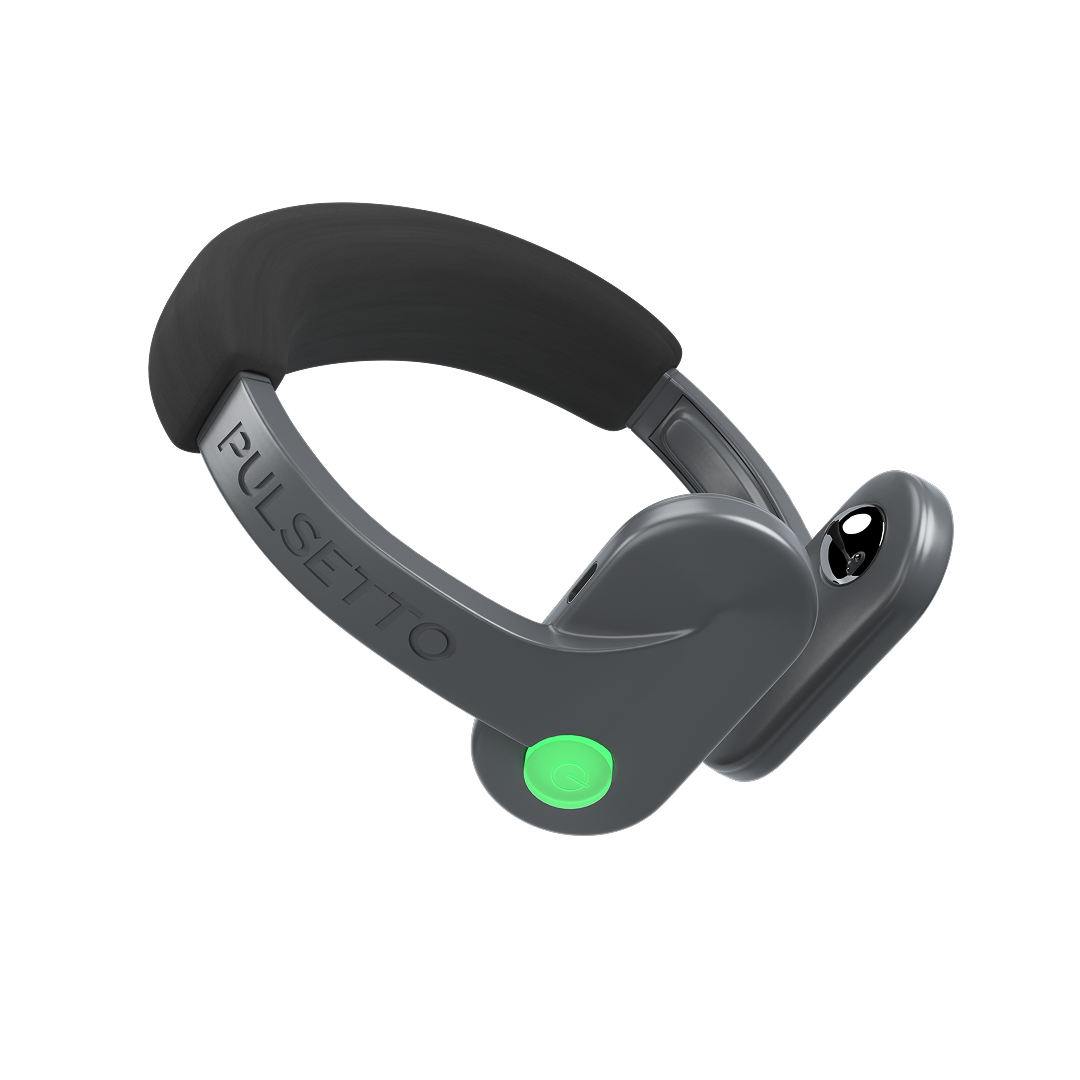
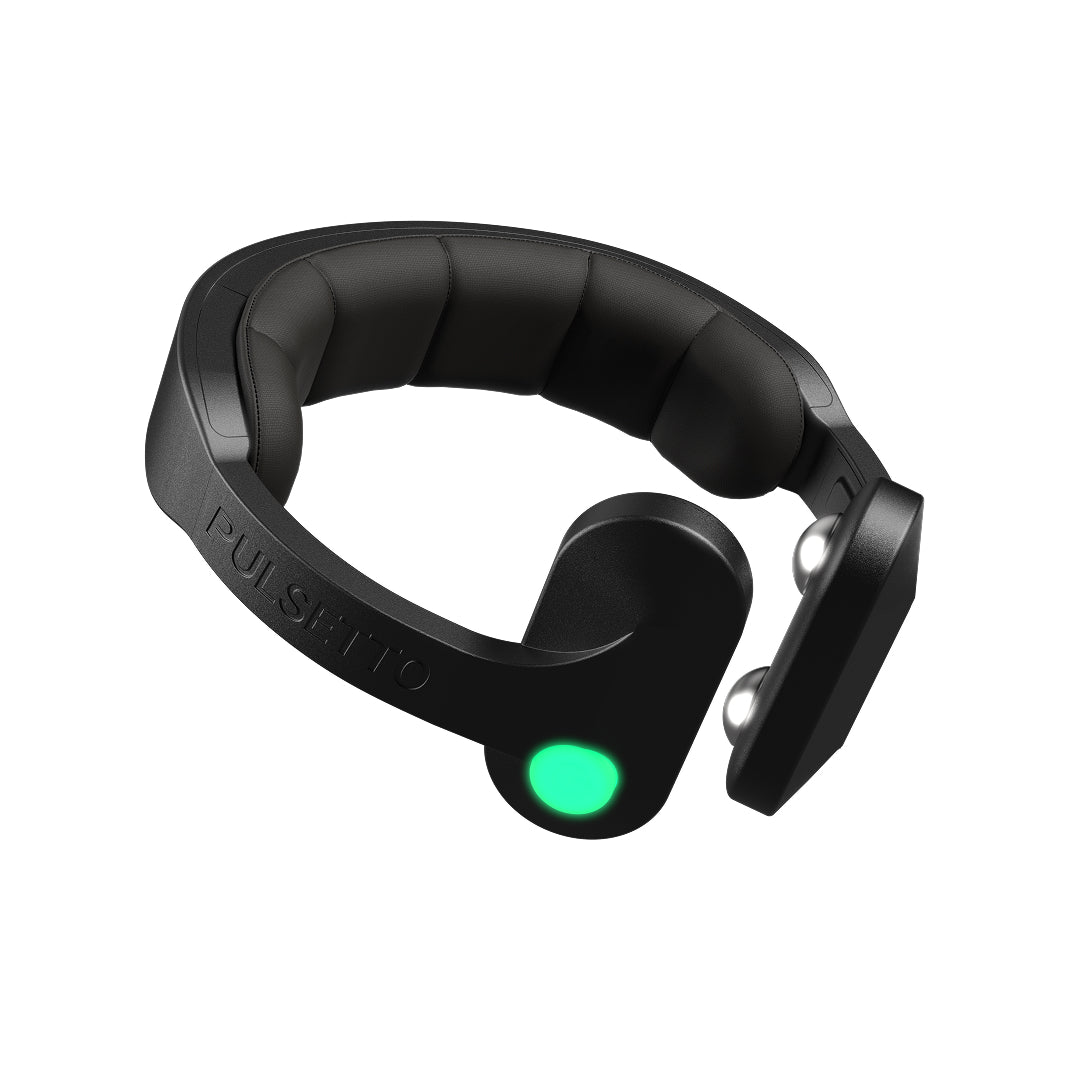
VNS for trauma — steady nerves, steadier days
Non-invasive cervical VNS engages gut–brain signals to reduce hyperarousal and support resilient daily functioning after trauma.
Trauma keeps the mind on edge
Trauma can leave the nervous system hypersensitive. Everyday triggers feel overwhelming, sleep is disrupted, and focus can suffer. Pulsetto offers a direct, non-invasive way to downshift the body’s alarm system.
You know these signs from lived experience:
How non-invasive VNS reshapes your stress
The vagus nerve supports safety signals
Its activity links body state to brain regulation, guiding the rest-and-digest response that helps you recover from stress.
Trauma elevates sympathetic tone
Chronic activation keeps the body on alert; stabilizing the nervous system helps restore balance and sleep patterns.
VNS training can calm the system
Brief, repeated stimulation strengthens the rest-reflex, helping the body return to a calm baseline after stress.
tVNS is a non-invasive route
External skin stimulation over the vagus region modulates neural activity without surgery or needles.
Trauma-related stress shifts, with calmer arousal
Pulsetto pilot program, 2024 — 4-week protocol
Users report a 42% drop in hypervigilant symptoms after 4 weeks of nightly sessions.
Trauma-related attention and focus improved by 39% in daily tasks after 4 weeks.
Sleep efficiency and restfulness rose 35% after four weeks of use.
Pulsetto reduces hyperarousal and restores
A 4-minute session signals the body to downshift, followed by a calmer baseline before bed.
Lowers arousal quickly
The 4-minute session dampens the nervous system, making the evenings calmer and easier to wind down.
Shifts you into rest mode
Vagal engagement moves you toward parasympathetic dominance, easing physical tension.
Reduces racing physiology
Heart rate and HRV respond in sessions, supporting steady breathing and quiet minds.
Quiet mind, clearer thoughts
With arousal down, intrusive thoughts lose volume and pace.
Trauma-focused use evolves in 8 weeks
Initial shifts happen quickly: heart rate slows, shoulders ease; full regulation builds with consistent use.
You feel the shift
Heart rate slows and shoulders loosen in the first session; you may sleep more easily tonight.
Sleep gets easier
By week 1, falling asleep is smoother and awakenings lessen; daytime calm grows.
Measurable change
Anxiety and sleep quality show clear downward trend as weeks pass; morning grogginess recedes.
Automatic calm
Vagal tone is reinforced; bedtime wind-down becomes automatic and durable.
Voices from users with trauma histories
“I felt on edge for years; after a month I notice daytime calm and sleep that finally stays with me.”
“Nighttime anxiety dropped; mornings feel fresher and more focused after 6 weeks.”
“I stopped waking up in panic. The 4-minute routine fits into my night—consistently.”
Trauma-focused VNS versus traditional approaches
Pulsetto tVNS
- Bilateral stimulation
- No drugs, no dependencies
- 4-minute daily sessions
- Clinical pilot data
- 30-day money-back guarantee
Sleep aids
- Prescription-based help
- Tolerance concerns
- Dependant relief only
- Short-term solution
Melatonin options
- Over-the-counter sleep aids
- Short-term relief only
- Doesn't address trauma-related arousal
- Varies by brand
Mindfulness apps
- No side effects
- Requires daily practice
- Hard to maintain during crises
- Easy to omit when tired
Ready to try a clinically-backed approach?
30-day money-back guarantee. No subscription. Ships worldwide in 3–7 days.
Related insights
Vagus Nerve Stimulator For PTSD
Explore non-invasive vagus nerve stimulation for PTSD with Pulsetto.
Vagus Nerve Stimulator For Stress
Calm the nervous system with non-invasive cervical VNS for stress. Pulsetto helps balance autonomic function and support daytime well-being.
Vagus Nerve Stimulator For Autism
Explore non-invasive cervical VNS with Pulsetto to support autonomic balance and daily function in autism. Safe, simple, science-guided.
Vagus Nerve Stimulator For Anxiety
Explore how non-invasive vagus nerve stimulation can reduce anxiety symptoms. Safe, simple device with guided sessions and evidence-backed care.
Vagus Nerve Stimulator For Pain
Non-invasive cervical VNS from Pulsetto targets pain pathways to reduce distress and support daily function with ready-to-use sessions.
Vagus Nerve Stimulator For Migraine
Explore non-invasive cervical vagus nerve stimulation for migraine. Pulsetto delivers targeted relief through quick 4-minute sessions.
Trauma-focused FAQs
Yes. The Pulsetto pilot shows reductions in trauma-related anxiety and sleep disturbances after 4 weeks.
Many users feel calmer within the first week; continued use strengthens daytime function and sleep quality.
Yes. The device has a favorable safety profile; avoid use with pacemakers or implanted devices.
Pulsetto complements therapy and medications; coordinate with your clinician for integrated care.
If sleep or mood hasn’t shifted after 30 days of daily use, return options are available.
One nightly session for 30–60 minutes is standard; the 4-minute session is designed to fit into any routine.
30 days to experience calmer nerves
If you don’t notice calmer arousal and better sleep after 30 days, we’ll refund you. No questions asked.
30-day money-back guarantee · Free shipping over $100 · Ships in 1–2 business days
Medical disclaimer: The contents of this page are for informational purposes only, not medical advice. Consult a healthcare professional before use, especially if you have a medical condition or are taking medication. Individual results may vary.