The 7 hidden reasons your stress resilience is low

None of these are about character. They're about what your body has been running on and what it's had to absorb, often for years before you noticed a problem.
1. You're running a sleep deficit your body never recovers from
Seven-ish hours a few nights a week doesn't register as a crisis, so it's easy to write off. But the hypothalamic-pituitary-adrenal (HPA) axis, the system that governs your cortisol response, becomes more reactive under partial sleep loss even when total sleep time looks "close enough" on paper. Poor sleep efficiency has been linked to exaggerated cortisol and blood pressure responses to stress, and the effect compounds across the week rather than resetting overnight [1].
The tricky part is that sleep debt rarely announces itself as sleepiness. It shows up instead as a shorter fuse, a slower bounce-back after conflict, plus a sense that ordinary hassles feel disproportionately loud.
2. Your vagal tone is low, so your nervous system's brake is weak
Vagal tone, usually estimated through heart rate variability (HRV), reflects how strongly your parasympathetic nervous system can pull your body back to baseline after activation. Low resting vagal tone has been tied to slower recovery across blood pressure, cortisol, plus inflammatory markers after a stress test [2]. The size of the initial stress response matters less than how long your body stays activated afterward.
3. Your allostatic load is maxed out from stress that never fully cleared
Allostatic load is the cumulative wear that chronic stress leaves on the cardiovascular, metabolic, immune, plus neuroendocrine systems. It's what happens when the body's adaptive machinery gets activated over and over without a full return to baseline in between. A large systematic review spanning 267 studies found that elevated allostatic load consistently predicts worse physical and mental health outcomes, independent of any single stressful event [3].
Practically, this means the reason today's stressor feels unmanageable might have very little to do with today. It might be the fifth thing this month landing on a system that never got to close out the first four.
4. You're under-supported, even if you're rarely alone
Social isolation and loneliness are related but distinct, and both independently affect your stress physiology. Adults with fewer close relationships show slower blood pressure recovery after acute stress and larger cortisol output over the day compared with well-supported peers, regardless of how objectively "busy" or surrounded by people they are [4]. A full calendar of surface-level interactions rarely gives your body the same physiological relief as time with someone you can actually decompress with.
5. Your blood sugar is swinging, and it's amplifying your cortisol response
Energy availability and stress hormones are more linked than most people realize. In controlled trials, drinking a glucose load before a stress test produced a measurably larger cortisol spike than a protein, fat, or water load, pointing to a real metabolic amplifier sitting underneath your emotional reaction [5]. Skipped meals, high-sugar snacking, plus erratic eating windows can all widen these swings, which means the "stress" some people feel by mid-afternoon is partly a blood sugar problem wearing a psychological costume.
6. Your body never gets the signal that the stressor is over
Humans are built to complete a stress cycle: activate, respond, then physically discharge the activation. Most modern stressors, a tense email, a passive-aggressive text, a traffic jam, don't offer a natural discharge point, so the sympathetic activation lingers. A recent scoping review synthesizing nearly 300 studies found that faster vagal recovery after a stressor is associated with better attentional control, more use of cognitive reappraisal, plus greater resilience, while slower recovery tracks with cardiovascular risk and depression [6]. If you don't have a deliberate way to close that loop, your body just carries the charge into the next stressor.
7. Your stress response was calibrated before you had any say in it
Early adversity can shape how the autonomic nervous system regulates itself later in life. A meta-analysis of vagal regulation research found that direct early adversity, such as maltreatment, is associated with lower baseline vagal activity in some populations, suggesting the nervous system's operating range can get set earlier than most people assume [7]. This one tends to land hardest, because it can feel like proof that low resilience is permanent. The research points elsewhere: baseline regulation is simply a starting point, and it responds to the same recovery practices as any other autonomic pattern.
What actually rebuilds resilience
Because these seven reasons are physiological, the most effective fixes are physiological too. Here’s a short list of what has real evidence behind it:
-
consistent sleep timing over sleep duration alone,
-
protein-anchored meals that flatten blood sugar swings,
-
real social contact instead of parallel screen time,
-
a daily practice that deliberately activates the parasympathetic system instead of waiting for it to happen on its own.
None of these require an overhaul. Most people see the biggest shift from picking one lever and working it consistently for a few weeks rather than trying to fix all seven reasons simultaneously.
Where active vagus nerve stimulation fits

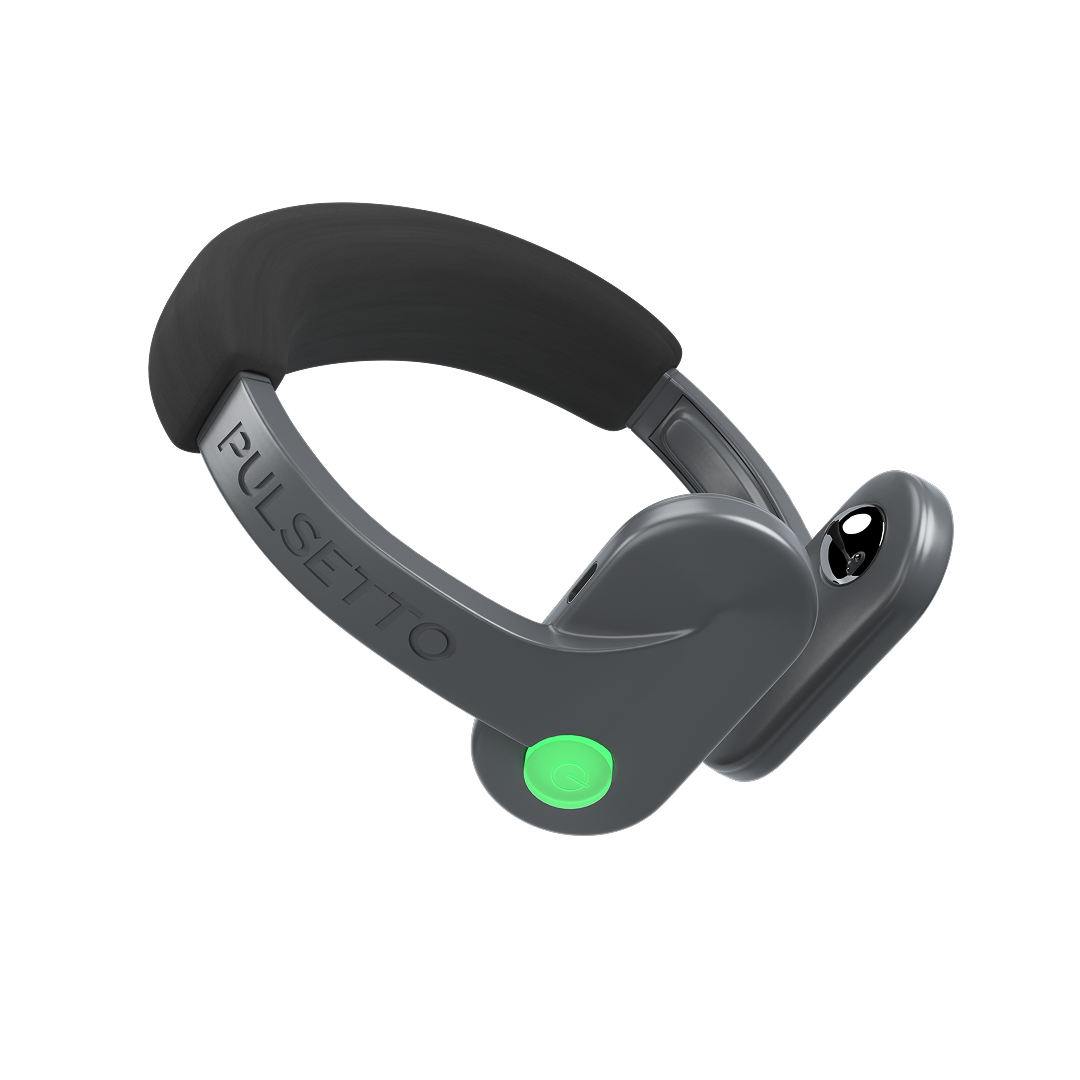
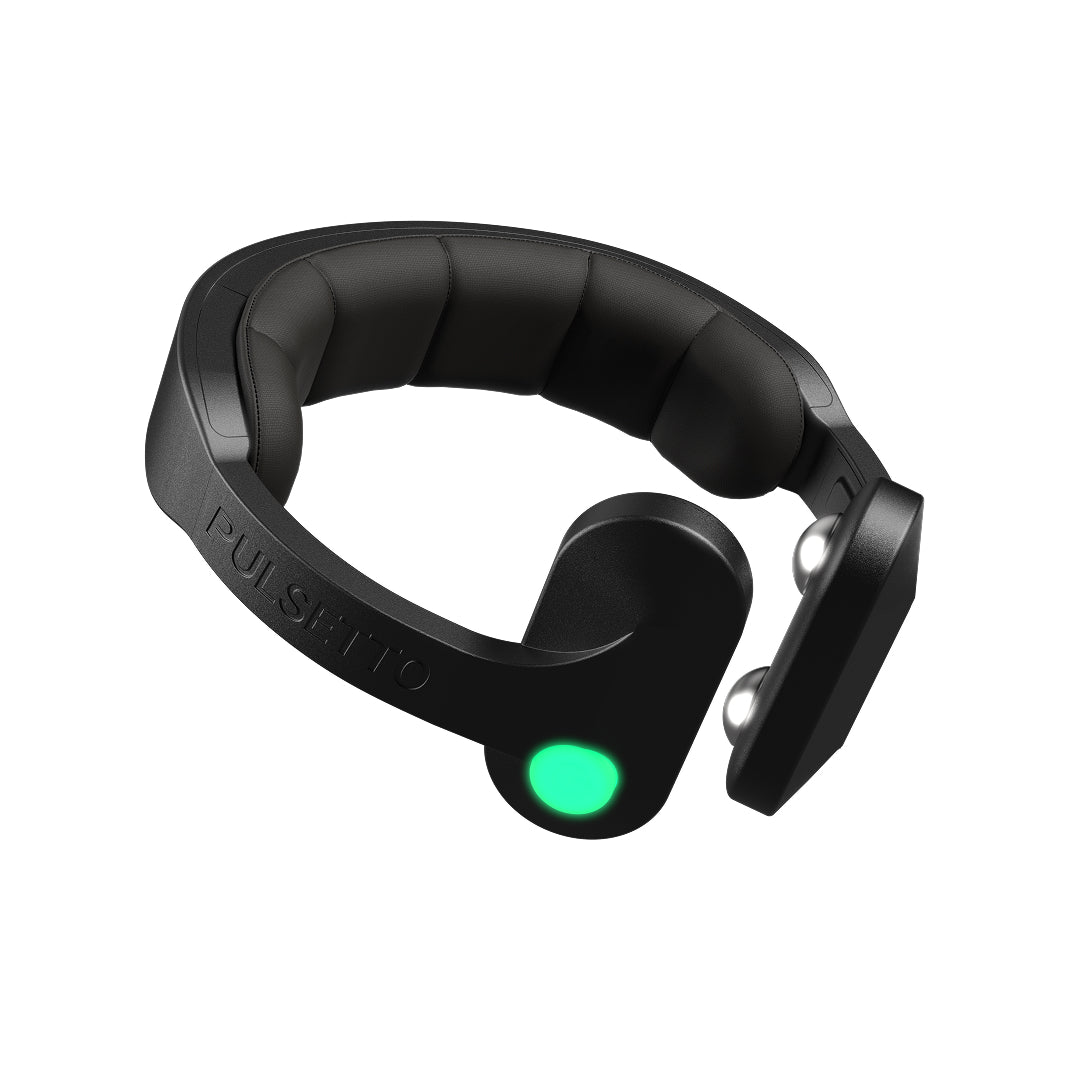
A vagus nerve stimulator is one of the more direct ways to address reasons 2, 3, and 6 on this list at once, because it targets the mechanism underneath all three: a parasympathetic system that isn't getting activated strongly or often enough on its own. Pulsetto delivers bilateral transcutaneous stimulation to the vagus nerve through the neck, aiming to trigger the same calming cascade your body would ideally reach on its own after a stressor clears.
A systematic review of transcutaneous auricular vagus nerve stimulation in healthy subjects found consistent improvements in heart rate variability and baroreflex sensitivity, both markers of a stronger parasympathetic brake [8]. In Pulsetto's own pilot study, users reported measurable reductions in perceived stress after regular use.
Real-world usage data from Pulsetto's in-app wellbeing check-ins adds a self-reported layer to that picture: 73% of users report lower stress after sessions, with an average drop of 23 to 26% and 45% experiencing a shift of 20 points or more on the in-app scale. These are self-reported figures from an observational dataset, useful as a real-world signal but distinct from evidence generated in a controlled clinical trial.
Pulsetto is priced at $269 for the Lite version and $296 for the FIT version, with a free lifetime app that includes guided programs covering stress, sleep, plus focus. It's registered as a general wellness device for everyday support, separate from treatment for a diagnosed medical condition. If symptoms are severe or persistent, care from a licensed provider should come first.
Most of the seven reasons above build slowly and quietly, which is exactly why they're easy to miss until stress resilience feels like it's simply gone. Fixing that starts with picking the one mechanism that's actually worn down instead of trying to patch all seven at once, and for a lot of people, that mechanism is an under-trained vagus nerve. Sleep, food, and real social contact rebuild the foundation over weeks, but a device that stimulates the vagus nerve directly gives that same system a faster, more consistent signal to relearn how to downshift.
If more than two or three of the reasons above sounded familiar, that under-trained nerve is worth addressing on its own terms. Try Pulsetto and see whether a few minutes a day changes how quickly you recover the next time stress actually shows up.
Frequently asked questions
Is low stress resilience permanent?
No. Most of the mechanisms behind low resilience, including vagal tone, allostatic load, plus sleep-driven cortisol reactivity, are measurably responsive to changes in behavior and, in some cases, targeted nervous system training. Even patterns shaped by early adversity have shown improvement with consistent intervention.
How long does it take to notice a difference?
Sleep and blood sugar changes tend to show up within one to two weeks. Vagal tone and allostatic load shift more slowly, often over several weeks to a few months of consistent practice, since they reflect accumulated wear rather than a single acute state.
Is Pulsetto FDA approved?
Pulsetto is registered as a general wellness device, which is the FDA category for products that don't make specific medical claims. It is CE certified for sale in the EU and follows applicable electrical safety standards. It is not a medical device and is not intended to diagnose, treat, cure, or prevent any disease.
Who shouldn't use a vagus nerve stimulator like Pulsetto?
People who are pregnant, have a pacemaker or other implanted electronic medical device, have a diagnosed seizure disorder, or have a known vagus nerve condition should talk to a doctor before using any vagus nerve stimulation device. The same applies to anyone currently being treated for a cardiac arrhythmia.
Which of these 7 reasons is the easiest to fix first?
Sleep debt and blood sugar swings usually respond fastest, since both can improve within days of a consistent schedule. Vagal tone and allostatic load take longer to shift but tend to produce the broadest improvement once they do, since nearly every other item on this list runs through the same nervous system pathway.
Scientific research
[1] Improving Sleep to Improve Stress Resilience (Lo Martire et al., 2024, Current Sleep Medicine Reports, 46 citations)
[2] Low vagal tone is associated with impaired post stress recovery of cardiovascular, endocrine, and immune markers(Weber et al., 2010, European Journal of Applied Physiology, 281 citations)
[3] Allostatic Load and Its Impact on Health: A Systematic Review (Guidi et al., 2020, Psychotherapy and Psychosomatics, 993 citations)
[4] Social Isolation and Stress-related Cardiovascular, Lipid, and Cortisol Responses (Grant et al., 2009, Annals of Behavioral Medicine, 258 citations)
[5] Glucose but Not Protein or Fat Load Amplifies the Cortisol Response to Psychosocial Stress (González-Bono et al., 2002, Hormones and Behavior, 127 citations)
[6] Cardiac vagal recovery following acute psychological stress in human adults: A scoping review (Roddick et al., 2025, Neuroscience and Biobehavioral Reviews, 10 citations)
[7] Childhood adversity and vagal regulation: A systematic review and meta-analysis (Wesarg et al., 2022, Neuroscience and Biobehavioral Reviews, 39 citations)
[8] A systematic review of the effects of transcutaneous auricular vagus nerve stimulation on baroreflex sensitivity and heart rate variability in healthy subjects (Soltani et al., 2023, Clinical Autonomic Research)