Why generic resilience advice underperforms for this audience

Most published resilience interventions are studied on people who can't leave their job even when it's actively harming them, groups like nurses and emergency physicians. The research is genuinely useful for that population, and it consistently finds the same thing: results are real but modest, and they depend heavily on how much control the person actually has over their own schedule.
That's the wrong starting assumption for a founder or an executive. The real issue is a role that produces near-constant context switching and decisions with financial or reputational consequences. Their schedule treats an open calendar slot as a resource to fill instead of a recovery window.
A lot of advice aimed at "reducing workplace stress" doesn't transfer as a result. Delegating more and setting firmer boundaries are sound advice that a founder running payroll next Tuesday can't always act on.
What does transfer is anything that changes how the nervous system itself handles the load, independent of whether the load shrinks. That's the resilience question this guide is built around.
What skipping resilience actually costs
The physical and psychological toll of unmanaged chronic stress is well documented, and it goes well past feeling worn out. A systematic review of 36 prospective studies found burnout significantly predicted a wide range of downstream consequences [1]:
-
Physical: cardiovascular disease, elevated cholesterol, type 2 diabetes, musculoskeletal pain
-
Psychological: insomnia, depressive symptoms, increased use of psychiatric medication
-
Occupational: reduced job satisfaction, absenteeism, disability claims
None of those outcomes are unique to any one profession. They show up wherever chronic, unrecovered stress accumulates long enough, which makes this a founder and executive problem as much as a healthcare-worker one.
The underlying pattern across all three categories is the same: the absence of adequate recovery between stressful episodes predicts these outcomes more reliably than the stress itself does. For someone running a company, that absence of recovery tends to be the default operating mode.
What the data on corporate executives shows
Corporate executives are one of the few high-performer populations with dedicated resilience research behind them. A study of nearly 2,000 corporate executives and business professionals measured resilience using a validated scale, then compared the highest-resilience group against the lowest.
The lower-resilience group had roughly four times the prevalence of diagnosed depression and almost three times the prevalence of diagnosed anxiety compared with the higher-resilience group. Higher resilience was independently associated with lower perceived stress and better overall well-being scores [2].
The relationship held even after adjusting for other individual differences, which is the part worth sitting with. This study held the job constant: every participant worked the same demanding executive role. Resilience was the variable that predicted the outcomes.
The founder-specific recovery problem
Founders face a version of this that's structurally different from a corporate executive's, even though both get grouped under "high performer." A 2025 study analyzing four surveys of French entrepreneurs compared their daily recovery experiences against previously published data on employees, across four dimensions:
-
Detachment from work
-
Relaxation
-
A sense of mastery
-
A sense of control
Entrepreneurs scored lower across all four dimensions than employees did, with psychological detachment from work showing the steepest gap [3].
The same research found that better daily recovery experiences were associated with higher well-being and lower burnout. Detachment specifically didn't move the needle for this group the way it does for employees, likely because a founder's identity is bound up in the business far more tightly than an employee's typically is.
This is a meaningful distinction for anyone building a resilience practice. Advice built around "switching off from work" assumes switching off is available and effective.
For a founder, the more reliable lever is relaxation and a sense of control over the moment. Full detachment from the business is rarely realistic.
Sleep debt: the hidden tax on high-stakes decisions

Founders and executives routinely treat sleep as the first thing to cut when the schedule gets tight, on the assumption that willpower and caffeine can cover the gap. The research on decision-making specifically says otherwise.
A controlled study using a reversal-learning task, where subjects had to update a decision based on new feedback, found that after two nights of total sleep deprivation, participants had significant difficulty adapting when the rules changed mid-task. Skin conductance measurements showed a blunted physiological response to feedback, meaning the brain registered that a decision had gone wrong but reacted to it with less signal than a well-rested brain would [4].
That specific failure mode, an error registering without updating the next decision, is the exact mechanism behind a founder doubling down on a strategy that's already failing, or an executive missing that a market has shifted underneath a plan that used to work. This is a measurable degradation in how the brain uses new information after a bad night, and it shows up well before someone feels impaired enough to notice.
HRV: the physiological signature of stress-tolerant performers
Heart rate variability, the beat-to-beat variation in time between heartbeats, has become one of the more reliable physiological markers for distinguishing people who handle high-stakes pressure well from people who don't.
A study of Special Operations Forces candidates measured HRV after a genuinely stressful selection event and found a pattern specific to the top performers: among elite candidates, greater parasympathetic activity after the stressful event correlated positively with expert-rated stress tolerance, a pattern that didn't appear in non-elite candidates [5]. Recovery speed after the stressor is what separated top performers from the rest, more than how calm they managed to stay during it.
That recovery capacity can be trained. A meta-analysis of 58 randomized studies on heart rate variability biofeedback found a consistent, small-to-moderate effect on reducing anxiety, depression, and anger, with some of the largest effect sizes appearing for athletic and performance-related outcomes [6]. The nervous system's ability to snap back after a stressful event responds to training, which is the entire premise behind building resilience deliberately instead of hoping it accumulates on its own.
Jonė Pukėnaitė, MD, Medical & Science Lead at Pulsetto: "High performers often assume resilience means staying composed during the stressful moment itself. What the HRV research actually points to is recovery speed afterward. What separates the founders and executives who hold up over years is how fast their parasympathetic system brings them back down after the spike, and that specific capacity can be trained on purpose."
Building blocks of a practical resilience routine
None of this requires overhauling a schedule that's already full. The building blocks that show up consistently across the research above are narrow and specific, standing apart from a wholesale lifestyle change.
|
Building block
|
What it protects
|
Time cost
|
|
Protected sleep window, even a short one
|
Feedback-based decision quality the next day
|
No added time; treat existing sleep as a floor to defend
|
|
A fixed recovery point after high-stakes events
|
The parasympathetic reset that predicts stress tolerance
|
A few minutes, placed deliberately after the event
|
|
Direct vagal tone training on a fixed schedule
|
Baseline HRV and recovery speed over weeks
|
A few minutes daily
|
|
A sense of control over at least one part of the day
|
Founder-specific recovery, where full detachment is unrealistic
|
A structural shift, no fixed minutes required
|
For founders specifically, Resilience Training for Busy Professionals: Desk Micro-Protocols breaks the recovery-point piece down into specific 60-to-90-second protocols tied to moments that already exist in a packed calendar: before a high-stakes meeting, after a hard conversation, at the end of the day, instead of asking for a new block of time.
Where active vagus nerve stimulation training fits

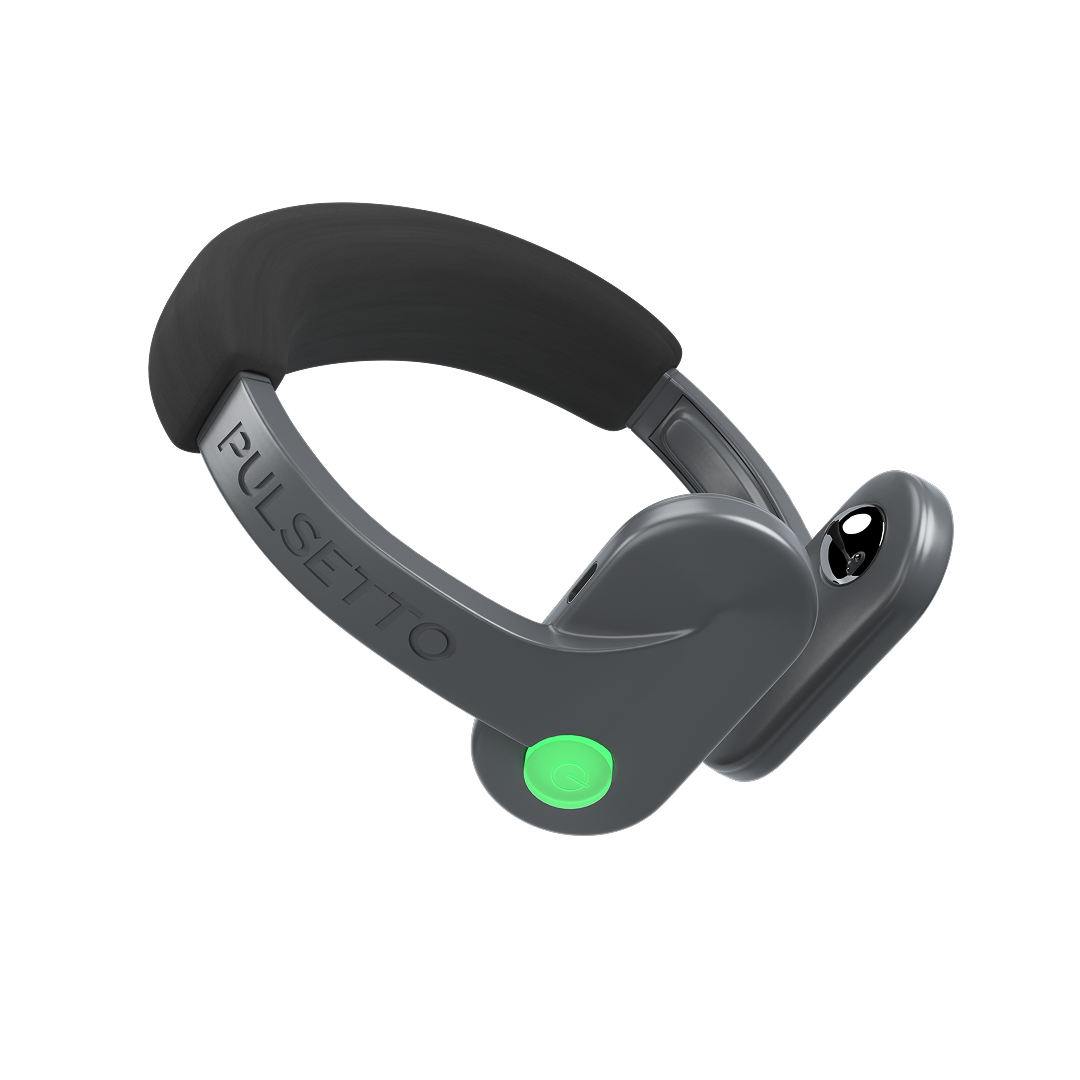
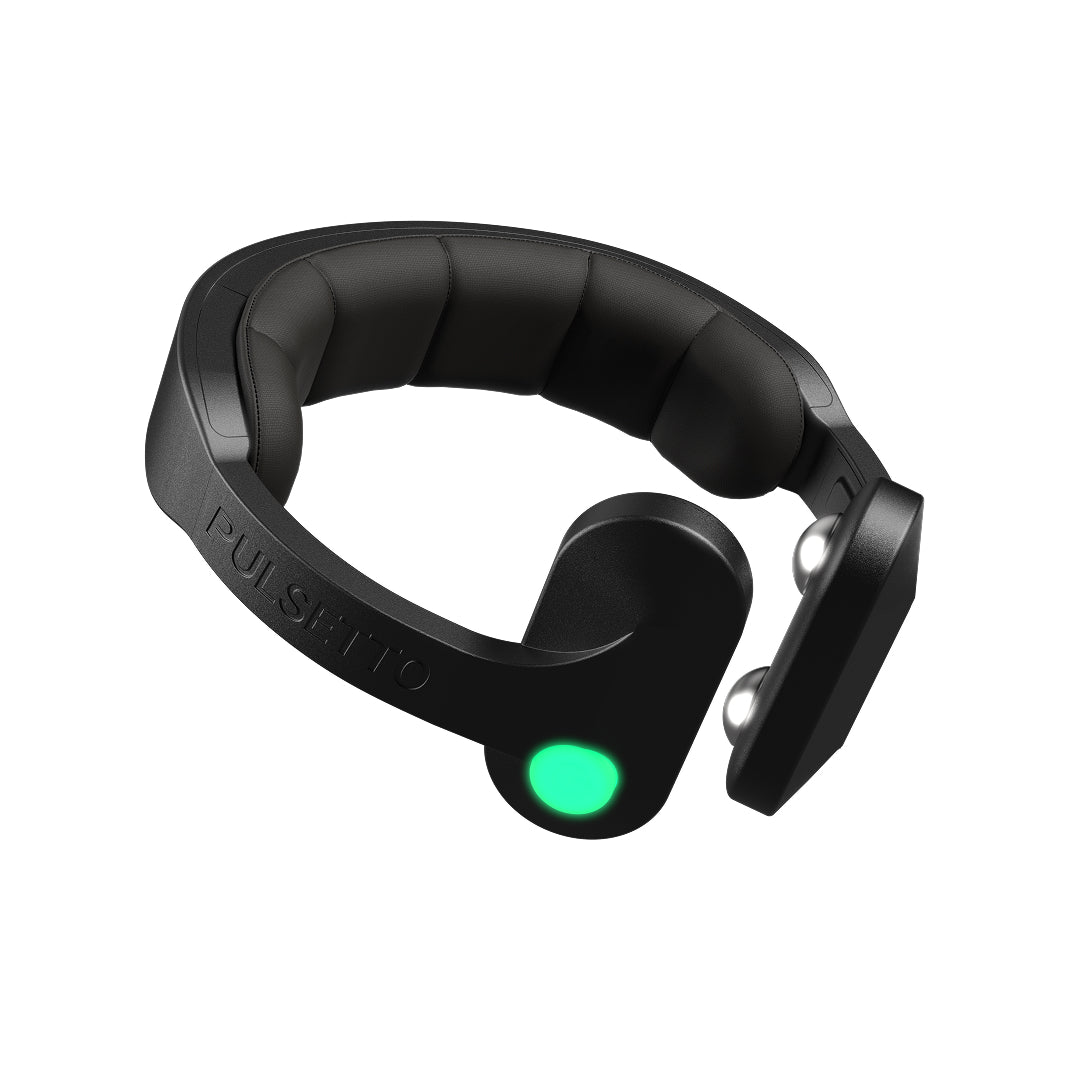
A vagus nerve stimulator is built specifically for the recovery-speed piece of this picture, training the parasympathetic side of the nervous system directly, on a fixed schedule, instead of waiting for it to strengthen through willpower or trial and error.
A systematic review of transcutaneous auricular vagus nerve stimulation in healthy subjects found consistent improvements in heart rate variability and baroreflex sensitivity, both markers of a stronger parasympathetic brake [7]. In Pulsetto's own pilot study, users reported measurable reductions in perceived stress after regular use.
Real-world usage data adds a self-reported layer on top of that. In Pulsetto's own in-app wellbeing check-ins, 73% of users reported lower stress, with the average reported reduction growing from 23% at their two-week check-in to 26% by the next one.
Pulsetto is priced at $269 for the Lite version and $296 for the FIT version, with a free lifetime app that includes guided programs for stress, sleep, plus focus. Sessions run about four minutes, short enough to fit before a board call or after a difficult one.
Disclaimer: Pulsetto is registered as a general wellness device for everyday support, separate from treatment for a diagnosed medical condition. Anyone dealing with severe or persistent symptoms should see a licensed provider first.
Resilience for this audience was never going to come from working less. It comes from a nervous system that resets faster between the moments that don't stop coming. Try Pulsetto and see whether four minutes before your next high-stakes day keeps you just as sharp on your third decision as your first.
Frequently asked questions
How is stress resilience different for founders than for salaried executives?
Both deal with a schedule that doesn't fully stop, but the recovery mechanics differ. Research on entrepreneurs found they score lower than employees on every measured recovery dimension.
Psychological detachment, the primary recovery strategy for most employees, doesn't predict better well-being for founders the way relaxation and a sense of control do. A founder's identity tends to be bound up in the business in a way that makes full detachment unrealistic, so the more effective lever is training recovery speed directly instead of trying to switch off.
How long before a founder or executive notices a measurable difference?
Most people training the vagus nerve directly or practicing consistent nervous system recovery notice a shift within four to eight weeks. This tracks with the broader pattern in resilience research: it's a capacity that builds gradually with consistent, moderate training, and it rarely resolves after a single session.
Can this replace executive coaching or therapy?
No. Vagus nerve stimulation and similar nervous system training address physiological recovery capacity. Executive coaching and therapy address the underlying strategy and workload problems that a device can't touch. High performers dealing with a genuinely unsustainable role need those structural changes first; a faster-recovering nervous system just helps them absorb what's left.
Is Pulsetto FDA approved?
Pulsetto is registered as a general wellness device, which is the FDA category for products that don't make specific medical claims. It is CE certified for sale in the EU and follows applicable electrical safety standards. It is not a medical device and is not intended to diagnose, treat, cure, or prevent any disease.
Who shouldn't use a vagus nerve stimulator like Pulsetto?
People who are pregnant, have a pacemaker or other implanted electronic medical device, have a diagnosed seizure disorder, or have a known vagus nerve condition should talk to a doctor before using any vagus nerve stimulation device. The same applies to anyone currently being treated for a cardiac arrhythmia.
Scientific research
[1] Physical, psychological and occupational consequences of job burnout: A systematic review of prospective studies(Salvagioni et al., 2017, PLoS ONE, 1322 citations)
[2] Is higher resilience predictive of lower stress and better mental health among corporate executives? (Kermott et al., 2019, PLoS ONE, 91 citations)
[3] Mental health of entrepreneurs and daily recovery experiences (Le Moal et al., 2025, Small Business Economics, 10 citations)
[4] Feedback Blunting: Total Sleep Deprivation Impairs Decision Making that Requires Updating Based on Feedback(Whitney et al., 2015, Sleep, 133 citations)
[5] Resting-state heart rate variability after stressful events as a measure of stress tolerance among elite performers(Miyatsu et al., 2023, Frontiers in Physiology, 13 citations)
[6] Heart Rate Variability Biofeedback Improves Emotional and Physical Health and Performance: A Systematic Review and Meta Analysis (Lehrer et al., 2020, Applied Psychophysiology and Biofeedback, 371 citations)
[7] A systematic review of the effects of transcutaneous auricular vagus nerve stimulation on baroreflex sensitivity and heart rate variability in healthy subjects (Soltani et al., 2023, Clinical Autonomic Research)