What "overactive" means in practice
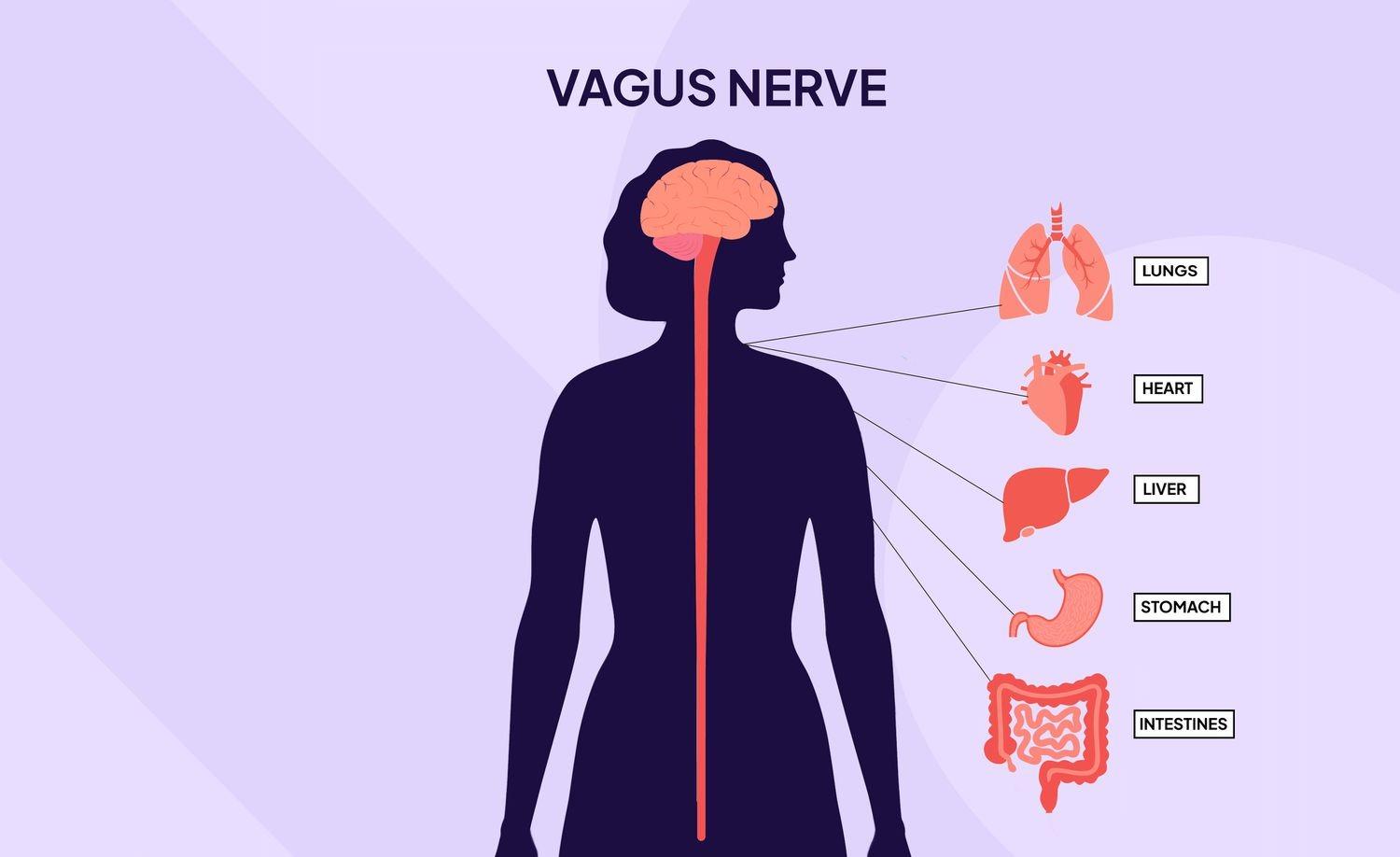
Source
In the research these episodes are called vasovagal or reflex syncope. The vagus nerve is only part of the mechanism. In a tilt-table study of 63 people, the 27 who went on to faint all had warning symptoms, and by the time those began their systolic blood pressure had already fallen from 105 to 74 mmHg on average. Heart rate had dropped in two of three. The authors attributed the pressure drop to the alerting (sympathetic) half of the nervous system backing off, and the slower heart rate probably to increased vagal activity [1].
So "overactive vagus nerve" describes a combined response in which the nerve slows the heart while the alerting side backs off, and the label points at only one half of it.
Recognizing an episode, in order
A typical episode has a before, a during and an after. The timings below come from a tilt-table study of 149 otherwise healthy people with recurrent unexplained fainting, in which the test provoked a faint under monitoring and the researchers recorded what came first [2].
|
Stage
|
What people reported
|
How early
|
|
Early warning
|
Headache, hot flashes, palpitations
|
More than 3 minutes before the faint
|
|
Closing in
|
Nausea, weakness, sweating, vertigo, discomfort in the upper abdomen
|
1 to 3 minutes before
|
|
Last moments
|
Blurred vision
|
The final minute
|
Participants recognized a warning more often during the test than before their real-life faints (96% against 79%), which suggests that warnings exist more often than they are noticed [2].
A series of 62 patients referred to a specialist center for unexplained fainting shows how the rest can look. In more than a third, episodes came on suddenly with no warning at all. Among those who did get a warning, 71% had autonomic symptoms, 27% had palpitations or breathlessness, and 21% had chest pain. Half the patients reported pallor during an episode, and 75% had aftereffects, most often severe fatigue. This group averaged about one episode a week, so it over-represents hard cases [3].
What sets it off
The same series asked what had provoked episodes. Eleven percent of patients could name no trigger. The most common ones were prolonged standing (37%), hot weather (27%) and lack of food (23%). One in five had an episode while sitting, and 5% while driving [3].
|
Trigger family
|
Examples
|
What the studies found
|
|
Posture and environment
|
Long periods of standing, heat, a skipped meal
|
The most common provocations in the 62-patient series [3]
|
|
Body functions
|
Passing urine or stool, coughing, swallowing, laughing, sneezing
|
Called situational syncope. It made up 4% of syncope patients in one clinic, and these patients more often had no warning and more injuries than people with the common faint [4]
|
The second row matters because the warning window is the useful part of an episode. When it is missing, the trigger itself is the main clue, and it is worth telling a clinician about.
A slow pulse is a different question
Many people reach this topic after a watch shows a low resting heart rate. Bradycardia is usually defined as a rate below 50 to 60 beats per minute, and a review of the topic notes that it can be a normal finding in young, athletic people. The same review says that symptoms are the critical part of the assessment and that treatment should rarely rest on a number alone [5].
Athletes often track resting heart rate and heart rate variability as recovery signals, so low numbers draw attention there too. In a study of 465 endurance athletes, 38% had a minimum heart rate of 40 or lower on a Holter monitor and 2% had 30 or lower. A quarter had pauses of 2 seconds or more. Neither the slow rates nor the pauses were linked to more adverse outcomes over 5.5 years [6].
The long-held explanation for athletic bradycardia is high vagal tone. The same paper notes that it is attributed to remodeling of the sinus node, the heart's natural pacemaker, or to increased vagal modulation, and its data suggest that fitness and genetic variation both contribute to sinus node function. A low rate is therefore a poor stand-in for an overactive nerve [6]. A slow pulse with no symptoms in a fit person is common. A slow pulse with dizziness, fainting or breathlessness is a reason to be checked, whatever the cause.
What to do at the first sign
Sit or lie down somewhere you cannot fall or strike anything, and stay down until the symptoms pass. Five percent of the patients in the 62-patient series had episodes while driving, so pull over at the first sign [3].
For people whose faints are the reflex kind and who feel a warning, muscle-tensing maneuvers have the best trial support. The PC-Trial randomized 223 patients with recurrent vasovagal fainting and recognizable warning symptoms. Those taught counterpressure maneuvers had fewer recurrences (31.6% against 50.9% over a mean of 14 months), a 39% relative risk reduction, with no adverse events reported [7]. In an earlier tilt study of 21 patients, leg crossing with muscle tensing for at least 30 seconds at the onset of an impending faint raised systolic pressure from 65 to 106 mmHg. The warning symptoms disappeared during the maneuver and nobody lost consciousness [8].
The benefit shrinks when the warning is short or absent. In a controlled study of people over 40 with severe reflex fainting (mean age 62, and nearly half had some episodes without a warning), 37% of those trained in the maneuvers fainted again against 53% of those who were not, a difference that was not statistically significant [9].
When to get it checked
Fainting is not always the reflex kind. A review of syncope guidance found that three major guidelines share a short list of high-risk features: heart failure, abnormal vital signs, fainting during exercise with little or no warning, a family history of sudden cardiac death, and an abnormal ECG. The same review notes that a history, an examination, standing and lying blood pressure and an ECG can identify the cause in up to half of patients [10].
Anyone who has fainted without an obvious cause should have that first workup, and it is worth doing again if the pattern changes. In the referral-clinic series, more than half of patients had been injured during an episode and 13% had broken a bone [3], so frequent episodes deserve attention even when the cause is benign. Fainting during exercise, fainting with chest pain or trouble breathing, a head injury from a fall, or confusion that does not clear need emergency care.
Where Pulsetto fits
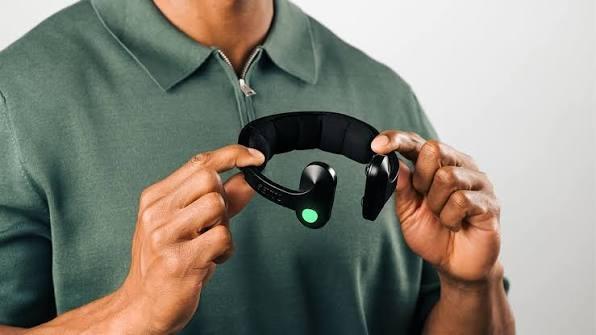
Pulsetto is a wireless, hands-free vagus nerve stimulator worn on the neck. With electrode gel on the contact points, it delivers gentle stimulation to both sides of the neck, and you run each session from the app. The vagus nerve carries signals to the brainstem, which uses them, among other inputs, to help set heart rate and the balance between alertness and rest. The 4-minute stress program is built to give that system a steady input, with the aim of everyday wellness: staying inside the range of arousal where stress feels manageable, which narrows with chronic stress and poor sleep.
In Pulsetto's own randomized, open-label pilot study (n=40, 4 weeks), hair cortisol, a marker of longer-term stress exposure, was significantly lower with two-sided stimulation and did not change significantly with one-sided stimulation.
It is a general wellness product. It does not diagnose or treat fainting, a slow heart rate or any other condition, and this topic calls for extra care. A vagus stimulator acts on the same system that produces these episodes, and a slow heart rate and brief heart stoppage have been described during the implantation of surgical vagus nerve stimulators [11]. Those are implanted medical devices and a different technology, but they are one reason that anyone who faints, has been told they have a slow heart rate, or has a cardiovascular condition should speak to a physician before using Pulsetto. Anyone with a pacemaker, an implantable device or epilepsy should not use it, and it should not be used during pregnancy unless a healthcare provider has cleared you.
Know your warning order before you need it
If you have fainted or come close, notice and name the order of your own signs, such as which one comes first and how long it gives you before a faint. Once a clinician has confirmed the faints are the reflex kind, practise the counterpressure move while seated, so it is automatic when the first sign shows. For the everyday side of the picture, a tense week or restless nights, see what Pulsetto offers once a clinician has seen anything related to your heart.
Overactive Vagus Nerve Symptoms FAQs
How common is fainting, and who gets it?
Common enough that most people know someone it has happened to. In a survey of 549 Dutch adults aged 35 to 60, the lifetime cumulative incidence of syncope was 35%, 41% in women against 28% in men. The first episode peaked around age 15, and the median number of episodes among people who had fainted was 2. Warm environments, pain, insufficient food, seeing blood or venipuncture, and emotion were the five most frequently mentioned triggers [12].
Is an overactive vagus nerve dangerous in the long run?
The faint itself carries little long-term risk, though the cause decides that. In the Framingham Heart Study, 7,814 participants were followed for an average of 17 years. Vasovagal syncope was not linked to an increased risk of cardiovascular illness or death, and the authors described its prognosis as benign. Cardiac syncope was different, with a hazard ratio of 2.01 for death from any cause [13]. That gap is the reason a first faint with no obvious cause is worth working up.
Will it keep happening?
For many people it does recur, though usually not often. In a Spanish referral unit that followed 589 patients with non-cardiac syncope for a median of 52 months, 41% of those diagnosed with vasovagal syncope had a recurrence. Recurrence was associated with older age, female sex and having had five or more earlier episodes [14].
Does drinking water help prevent a faint?
It has been tested, mostly in healthy volunteers and blood donors. In 22 healthy adults with no history of syncope, 8 developed presyncope in the first 30 minutes of a tilt test without water against 1 who had drunk 473 mL (16 oz) of water five minutes earlier [15]. A meta-analysis of blood donors found that water before donation likely reduces reactions, by about 2 fewer per 100 donors, with moderate-certainty evidence [16]. Neither source studied people with recurrent reflex faints in daily life, so a clinician can advise on fluids for you, particularly if you have a heart or kidney condition.
Who should not use Pulsetto?
Do not use Pulsetto if you have a pacemaker, an implantable medical device, or epilepsy, and do not use it while pregnant unless a healthcare provider has cleared you. Talk to a doctor first if you faint, have been told you have a slow heart rate, have a cardiovascular condition, have had recent neck or throat surgery or injury, or have carotid artery problems.
Scientific research
-
Haemodynamic changes early in prodromal symptoms of vasovagal syncope (Alboni et al., 2002, Europace)
-
Prevalence, timing, and haemodynamic correlates of prodromes in patients with vasovagal syncope induced by head-up tilt test (Guida et al., 2009, Europace)
-
Clinical characteristics of patients with vasovagal reactions presenting as unexplained syncope (Graham et al., 2001, Europace)
-
Clinical Characteristics and Outcome of Patients with Situational Syncope Compared to Patients with Vasovagal Syncope(Walsh et al., 2017, Pacing and Clinical Electrophysiology)
-
Evaluating and managing bradycardia (Sidhu et al., 2020, Trends in Cardiovascular Medicine)
-
Bradycardia in Athletes: Prevalence, Mechanisms, and Risks (D'Ambrosio et al., 2025, Circulation)
-
Effectiveness of physical counterpressure maneuvers in preventing vasovagal syncope: the Physical Counterpressure Manoeuvres Trial (PC-Trial) (van Dijk et al., 2006, Journal of the American College of Cardiology)
-
Management of vasovagal syncope: controlling or aborting faints by leg crossing and muscle tensing (Krediet et al., 2002, Circulation)
-
Physical counter-pressure manoeuvres in preventing syncopal recurrence in patients older than 40 years with recurrent neurally mediated syncope: a controlled study from the Third International Study on Syncope of Uncertain Etiology (ISSUE-3) (Tomaino et al., 2014, Europace)
-
Trauma and syncope: looking beyond the injury (Kavi et al., 2023, Trauma Surgery & Acute Care Open
-
Surgically implanted and non-invasive vagus nerve stimulation: a review of efficacy, safety and tolerability (Ben-Menachem et al., 2015, European Journal of Neurology)
-
Lifetime cumulative incidence of syncope in the general population: a study of 549 Dutch subjects aged 35-60 years(Ganzeboom et al., 2006, Journal of Cardiovascular Electrophysiology)
-
Incidence and prognosis of syncope (Soteriades et al., 2002, New England Journal of Medicine)
-
Long-term recurrences and mortality in patients with noncardiac syncope (Barón-Esquivias et al., 2021, Revista Española de Cardiología)
-
Water ingestion as prophylaxis against syncope (Lu et al., 2003, Circulation)
-
The efficacy and effectiveness of drinking interventions to reduce vasovagal reactions in blood donors: a systematic review and meta-analysis (van Remoortel et al., 2024, Vox Sanguinis)