What "stress fitness" actually means
Stress fitness isn't about eliminating stress or becoming unbothered by it. It's about capacity: how much stress a system can absorb, adapt to, and recover from before it starts causing damage instead of building resilience.
The concept borrows directly from physical fitness. A trained runner's cardiovascular system isn't stress-free; it's better equipped to handle the specific stress of running because it's been exposed to graded doses of that stress with recovery in between. Stress fitness proposes the same logic applies more broadly, to cellular stress, cognitive stress, and emotional stress alike.
The science behind it: hormesis
The formal name for this pattern is hormesis: a biphasic dose-response relationship where low-to-moderate doses of a stressor trigger a beneficial, adaptive response, while high doses cause damage. A 2024 review in Cell Metabolism describes hormesis as a phylogenetically conserved principle: cells and organ systems across the animal kingdom have evolved stress-responsive pathways that don't just help them survive a challenge, but prepare them to handle the next one more efficiently [1].

Source
Hormesis has been most intensively studied in physical exercise, but researchers have documented the same pattern across a wide range of other manageable stressors, including intermittent fasting, cognitive challenge, and controlled temperature exposure. A newer framework extends hormesis specifically into performance psychology, arguing that the same dose-response dynamics show up in motivation, confidence, skill acquisition, and cognitive performance under pressure, not just cellular biology [2].
The shape of the curve is the important part. It isn't "more stress is always better" or "all stress is bad." It's biphasic:
-
Too little stress: minimal adaptive stimulus, minimal fitness gain.
-
A manageable dose, with recovery: the system upregulates its own protective and adaptive machinery, coming back stronger than baseline.
-
Too much stress, or no recovery: the same pathways that would otherwise help become overwhelmed, and damage accumulates instead.
Where it breaks down: allostatic load
Hormesis only works in one direction of the curve. The other side has its own well-established name: allostatic load, the cumulative wear and tear that results when the body's stress-response systems are activated too often, too intensely, or never get to fully switch off. The concept was formalized in a landmark 1998 paper describing how the same neuroendocrine systems that let the body adapt effectively to a challenge can, when overstimulated or poorly regulated, actively contribute to disease over time [3].
This is the part a "just add more stress" reading of stress fitness misses. Allostatic load isn't a separate problem from the hormesis curve; it's what happens on the far side of it, when a stressor stops being a training stimulus and starts being a liability. The same racing heart and cortisol spike that sharpen focus in a manageable dose become corrosive when they never fully resolve.
Can you actually train it?
Psychology research on stress inoculation asks a more direct version of this question, and the answer is yes, within limits.
Stress inoculation training is built on a simple premise: mild, controllable stress exposure, early or repeated, builds coping resources that transfer to later, harder stressors. A review of the animal and human literature on this "inoculation" effect found that stress exposure which is mild in magnitude and controllable by the individual reliably promotes resilience to subsequent stressful episodes, functioning much like a vaccine trains the immune system against a pathogen [4].
The applied version of this research has been tested directly on performance under pressure. A meta-analysis covering 37 studies and more than 1,800 participants found that structured stress inoculation training reliably reduced performance anxiety, reduced state anxiety, and improved performance under stress across a range of occupational and clinical settings [5].
Two conditions show up consistently across this literature as the difference between training and harm:
-
The stressor has to be manageable. Overwhelming, uncontrollable stress doesn't build resilience; it produces the opposite.
-
Recovery has to happen between exposures. Repeated stress without recovery is the allostatic load pattern above, not stress inoculation.
Building your own stress fitness
None of this requires anything exotic. The same principles show up in ordinary habits:
-
Exercise regularly. It's the most studied hormetic stressor there is, and it's also the mechanism behind most of the "get moving to manage stress" advice you'll find elsewhere.
-
Take on manageable challenges on purpose. A hard conversation, a new skill, a demanding project. Each is a chance to practice the coping side of stress inoculation.
-
Match your response to the size of the stressor, rather than either avoiding it or overcorrecting.
-
Build in real recovery, every time. Without it, repeated stress becomes an allostatic load instead of stress fitness, no matter how manageable each individual dose was.
Where Pulsetto fits

Vagal tone, a measure of how strongly your vagus nerve exerts its calming influence on the heart, is closely tied to where your own line between adaptive stress and allostatic overload sits. A review connecting vagus nerve function to performance under pressure describes vagal-centered approaches, including direct vagus nerve stimulation, as a way to widen that window, improving executive functioning under pressure and mitigating the fatigue and burnout that come from overshooting it [6].
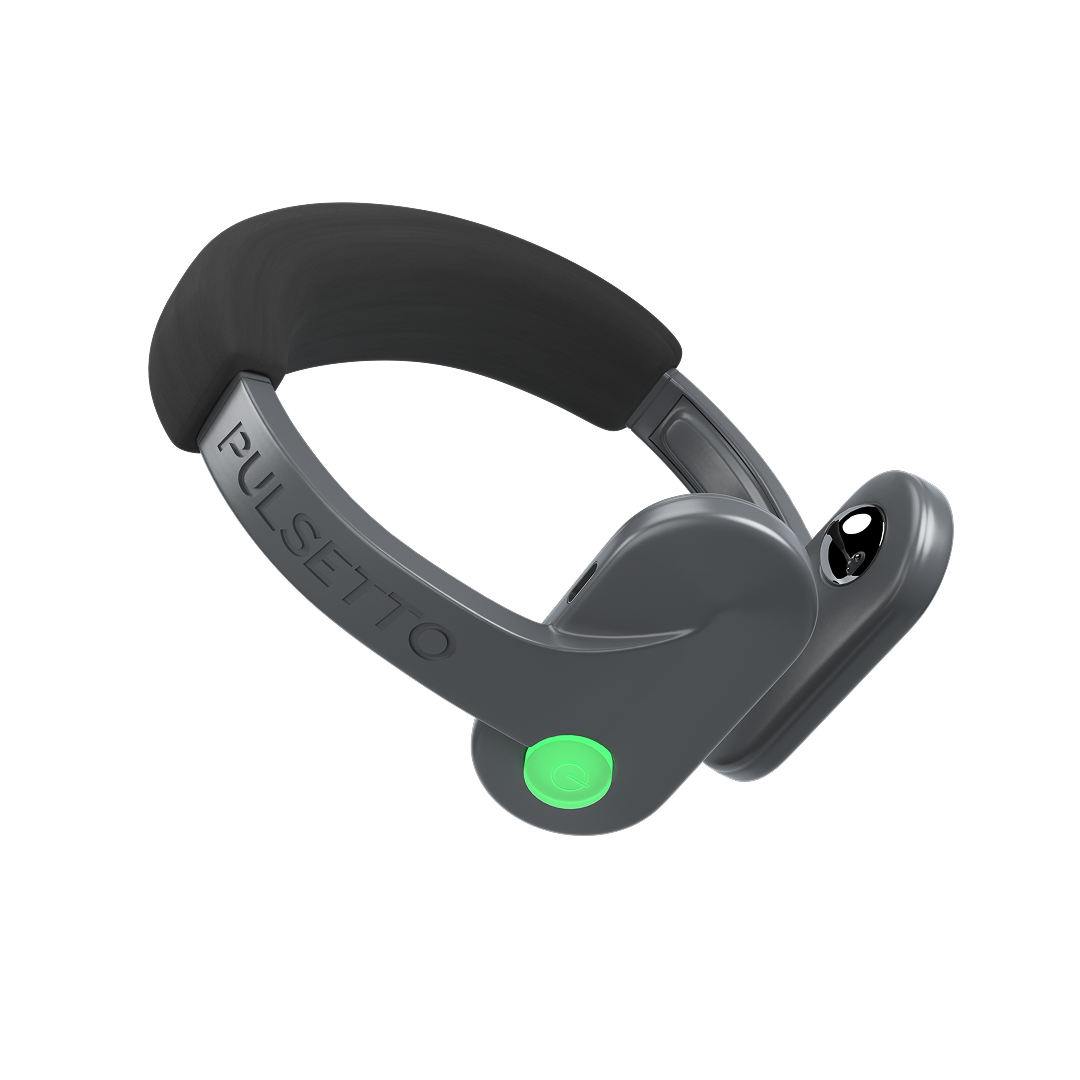
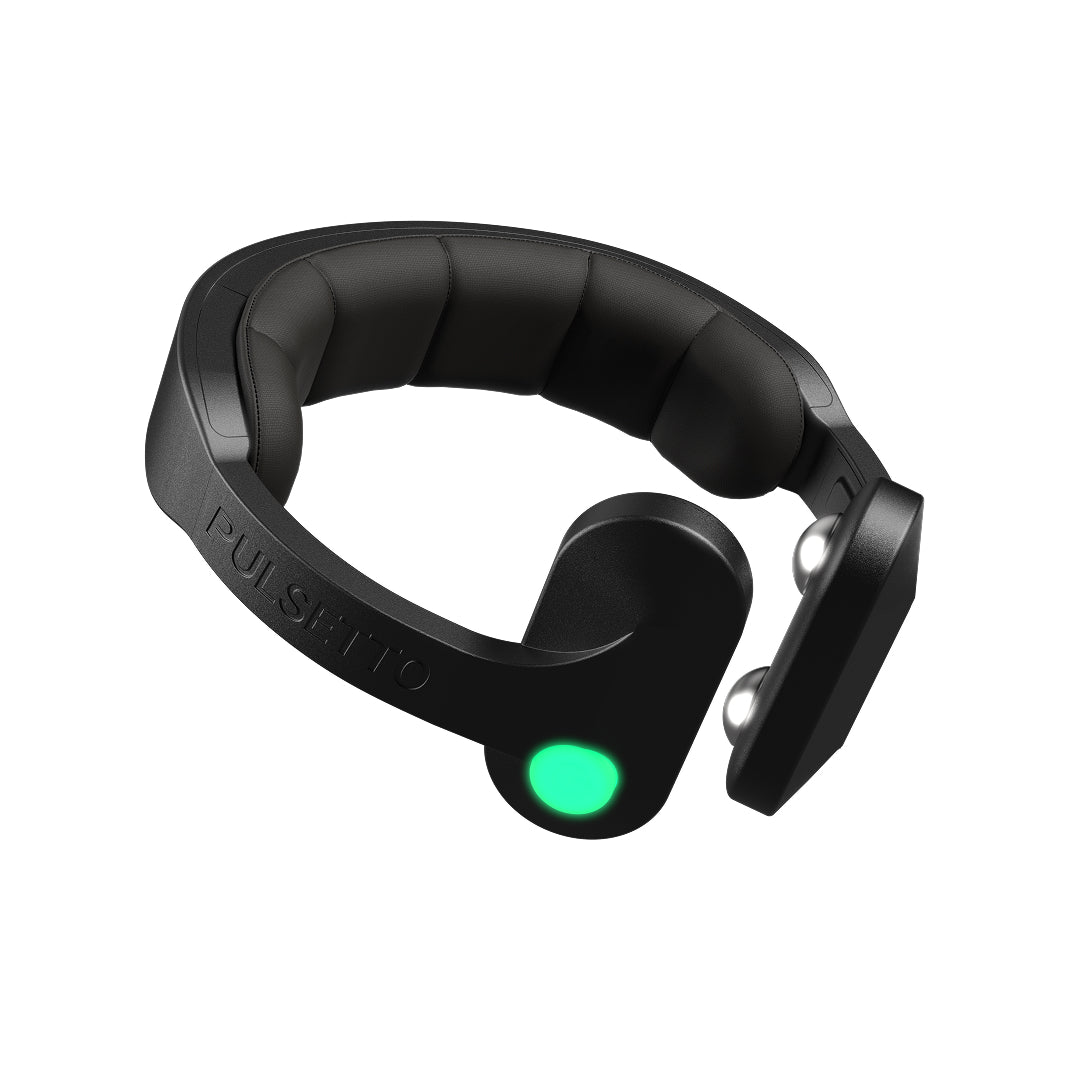
This is where a vagus nerve stimulator like Pulsetto fits into the stress fitness picture: not as the training stimulus itself, but as support for the recovery half of the equation. Pulsetto delivers bilateral cervical vagus nerve stimulation, both sides of the neck at once, in roughly 4-minute sessions.
In Pulsetto's own randomized, open-label pilot study (n=40, 4 weeks):
-
Bilateral stimulation produced a 47.5% reduction in hair cortisol, a biomarker of chronic stress exposure, over the study period.
-
In Pulsetto's own in-app wellbeing check-ins, 73% of users report lower stress and 70% report less burnout, with the average reported stress reduction growing from 23% at the two-week check-in to 26% by the next one.
A more reliable way to close out a stress response is what keeps manageable stress on the fitness-building side of the curve instead of letting it accumulate into an allostatic load.
How to do it: Pulsetto sits on the neck for about 4 minutes at a time, hands-free, so it fits after a workout, after a hard conversation, or at the end of a demanding day.
Disclaimer: It's a general wellness device, not FDA-cleared and not marketed to diagnose, treat, or cure any condition, and it supports the recovery side of stress fitness rather than replacing exercise, sleep, or the other fundamentals above.
When stress isn't building fitness
Not all stress is trainable, and the hormesis framing has limits. Stress that's chronic, uncontrollable, or tied to trauma doesn't behave like a manageable training dose, no matter how it's reframed. Signs that stress has moved past what these principles can address:
-
It's constant rather than tied to specific, resolvable situations
-
There's no real recovery window between episodes
-
It's accompanied by persistent anxiety, low mood, or disrupted sleep
If that sounds familiar, it's worth talking to a licensed healthcare provider rather than trying to train through it. Pulsetto is a general wellness product intended to support day-to-day stress regulation, not a treatment for anxiety disorders, depression, or other diagnosable conditions.
Try Pulsetto
Stress fitness is a real, evidence-backed idea, but it only works when the dose is manageable and the recovery is real. Most people already have the first half handled: work, relationships, and daily life supply no shortage of manageable stressors to adapt to. The recovery half is where things usually break down, not for lack of trying, but for lack of a reliable way to close the loop.
Try Pulsetto for four hands-free minutes after your next demanding stretch and see whether that recovery step gets easier to actually follow through on, so the stress you're already facing has a better chance of building fitness instead of load.
FAQ
Is stress fitness a real thing?
Yes. It's studied under the name hormesis: a well-documented biological pattern where manageable, recoverable stress triggers adaptive, protective responses, while stress that's too intense or constant causes harm instead. The same dose-response curve shows up in cellular biology, physical training, and psychological resilience research.
What is hormesis, exactly?
Hormesis describes a biphasic dose-response relationship: low-to-moderate doses of a stressor stimulate a beneficial, adaptive response, while high doses of the same stressor are damaging. Exercise is the most-studied example in humans, but the same pattern has been documented across intermittent fasting, cognitive challenge, and psychological stress inoculation.
How is stress fitness different from stress management?
Stress management usually focuses on lowering or coping with stress in the moment. Stress fitness is about capacity: deliberately building your ability to absorb and recover from stress over time, the way physical training builds cardiovascular capacity. The two work together rather than competing; managing an individual stressful moment well is part of what makes it a fitness-building dose instead of a damaging one.
Does exercise actually build stress fitness?
Yes, it's the most thoroughly studied example of hormesis in humans. A single bout of exercise is itself a controlled physical stressor, and the body's adaptive response to it, including changes that make future stress easier to handle, is the same underlying mechanism the broader stress fitness concept is built on.
Who should not use vagus nerve stimulation devices like Pulsetto?
Do not use if you have a pacemaker, an implantable medical device, epilepsy, or are pregnant. Consult a healthcare provider before use if you have cardiovascular conditions, recent neck or throat surgery, or carotid artery issues.
Pulsetto does not provide medical advice, diagnosis, or treatment, and it's intended to support general stress regulation, not to treat any diagnosed condition. Consult a qualified healthcare provider before starting use, especially if you have underlying medical conditions or are taking medications.
Scientific research
[1] The hormesis principle of neuroplasticity and neuroprotection (Mattson et al., 2024, Cell Metabolism, 55 citations)
[2] Adaptation to stressors: Hormesis as a framework for human performance (Hill et al., 2024, New Ideas in Psychology, 18 citations)
[3] Stress, Adaptation, and Disease: Allostasis and Allostatic Load (McEwen, 1998, Annals of the New York Academy of Sciences, 4,853 citations)
[4] Seeding Stress Resilience through Inoculation (Ashokan et al., 2016, Neural Plasticity, 65 citations)
[5] The effect of stress inoculation training on anxiety and performance (Saunders et al., 1996, Journal of Occupational Health Psychology, 278 citations)
[6] The vagus nerve: a cornerstone for mental health and performance optimization in recreation and elite sports (Lopez Blanco & Tyler, 2025, Frontiers in Psychology, 7 citations)