What "stress recovery" actually means
Your body's stress response runs through two connected systems: the fast-acting sympathetic nervous system, which floods you with adrenaline the instant something feels threatening, and the slower hypothalamic-pituitary-adrenal (HPA) axis, which releases cortisol over the following minutes to hours. Recovery isn't the absence of stress; it's how quickly those two systems return to baseline once the stressor is gone. Poor sleep and chronic overload leave the HPA axis primed to overreact to the next stressor, which is part of why some days a minor annoyance barely registers and other days it derails you for hours (more on that in method 7 below).
The vagus nerve is the main brake on this system. It's the longest cranial nerve in the body, running from the brainstem down through the neck and into most of your major organs, and it's the primary channel through which your parasympathetic ("rest and digest") response gets switched back on. Most of the methods below work by engaging the vagus nerve indirectly, through breath, temperature, or movement.
1. Slow your breathing down

Breathing at roughly five to seven breaths per minute, much slower than the resting average of twelve to twenty, is one of the best-studied ways to shift your body out of a stress state quickly. Slow, paced breathing increases vagally-mediated heart rate variability (a marker of parasympathetic activity) both during the practice and immediately afterward, and a large systematic review and meta-analysis covering more than 200 studies found this effect held consistently across acute sessions and longer training programs [1].
How to do it: inhale for about 4 seconds, exhale for 6, and keep the exhale longer than the inhale. The lengthened exhale is what drives most of the vagal effect. Five minutes is enough to register a measurable shift, and you don't need an app or a special posture, just a quiet minute and a place to sit.
2. Splash cold water on your face
Cold water against the face triggers the mammalian diving reflex, an old evolutionary reflex that slows the heart and shifts the body toward parasympathetic dominance almost instantly. A systematic review and meta-analysis of the diving response found that face immersion or cooling produced a moderate-to-large increase in cardiac vagal activity during exposure, with the effect strongest when the whole face, not just the forehead, makes contact with cold water [2].
How to do it: fill a bowl with cold water (around 50-60°F is enough; ice water isn't necessary) and hold your face in it for 15-30 seconds, or splash it repeatedly for the same duration. This is one of the fastest interventions on this list; the heart rate change starts within seconds. People with cardiac arrhythmias or cardiovascular conditions should check with a doctor before trying it, since the reflex can briefly stress the heart in vulnerable individuals.
3. Move your body

A single bout of exercise doesn't just burn off restlessness. It changes how your body responds to the next stressor. Research on exercise intensity found that a 30-minute bout of vigorous exercise measurably dampened the cortisol response to a subsequent psychosocial stress test, with faster recovery back to baseline cortisol compared to lighter exercise. A broader systematic review across 31 studies found that acute exercise reliably reduces blood pressure and cortisol reactivity to stress, with the size of the effect scaling with intensity [3].
How to do it: the evidence favors moderate-to-vigorous intensity over a gentle stroll, so get your heart rate up for 20-30 minutes if you can. If a stressful event is already scheduled (a presentation, a hard conversation), exercising beforehand appears to blunt the reaction; exercising afterward speeds the comedown.
4. Progressive muscle relaxation
Progressive muscle relaxation (PMR) means systematically tensing and then releasing each muscle group in the body, usually starting at the feet and working upward. It's one of the oldest relaxation techniques with a modern evidence base to match. A 2026 systematic review and meta-analysis of 31 randomized controlled trials covering more than 2,200 patients found PMR produced large, consistent reductions in anxiety alongside meaningful improvements in sleep quality [4].
How to do it: starting with your feet, tense each muscle group hard for about 5 seconds, then release and notice the contrast for 10-15 seconds before moving up to the next group (calves, thighs, stomach, hands, arms, shoulders, face). A full pass takes 10-15 minutes; even one full session measurably reduces state anxiety.
5. Practice mindfulness meditation

Mindfulness meditation has one of the deepest evidence bases of any technique on this list. A meta-analysis covering 45 randomized controlled trials with active control groups found that meditation practice reduced cortisol, blood pressure, heart rate, and inflammatory markers, with focused-attention styles of meditation showing the clearest cortisol effect [5]. Notably, the benefit shows up even in brief, app-guided sessions and doesn't require years of practice to register.
How to do it: ten minutes of focused-attention meditation, with attention anchored on the breath, a body scan, or a single point of focus, gently returning attention each time it wanders, is enough to see an effect in most of the studies behind this evidence base. Consistency matters more than session length; five short sessions a week outperform one long one.
6. Reach out to someone you trust
Stress recovery isn't only an individual project. Who's around you changes how your body handles it. In a placebo-controlled study, healthy men who had a supportive conversation with a close friend before a stress test showed significantly suppressed cortisol responses compared to those who faced the same stressor alone, an effect that held up even without any physical touch involved [6]. The mechanism appears to run partly through oxytocin, released during trusted social contact, which appears to dampen the same HPA-axis response that drives the cortisol spike.
How to do it: a five-minute call or in-person conversation with someone who feels safe, not necessarily about the stressor itself, appears to be enough to blunt the physiological response. This is worth remembering on days when the instinct is to isolate and push through alone.
7. Protect your sleep
Sleep is where a lot of stress recovery actually happens, and skipping it makes the whole system more reactive. A systematic review of the relationship between sleep and the HPA axis found that reduced sleep quality, not just short sleep duration, reliably heightened cortisol reactivity to the next day's stressors, meaning a single rough night can leave you more rattled by things that would normally roll off [7]. The relationship runs both directions: poor sleep makes stress recovery harder, and unresolved stress makes sleep worse, which is part of why this cycle is difficult to break from either side alone.
How to do it: protecting sleep quality, through a consistent wind-down routine, a dark and cool room, and limiting screens in the last 30 minutes, matters more here than chasing an exact number of hours. If a stressful day is unavoidable, treating that night's sleep as non-negotiable is one of the highest-leverage things you can do for the next day's resilience.
8. Try bilateral cervical vagus nerve stimulation

Most of the methods above work on the vagus nerve indirectly, through breath, temperature, movement, or the nervous system's own social-safety circuitry. Bilateral cervical vagus nerve stimulation (nVNS) engages it directly, delivering a small electrical current through the skin of the neck, where the vagus nerve runs close enough to the surface to reach non-invasively. A 2025 study comparing cervical to auricular (ear-based) stimulation found that cervical stimulation produced measurably larger increases in alpha wave brain activity and larger drops in systolic blood pressure, attributed to the cervical vagus nerve carrying substantially more of a specific nerve fiber type than the ear branch does [8].
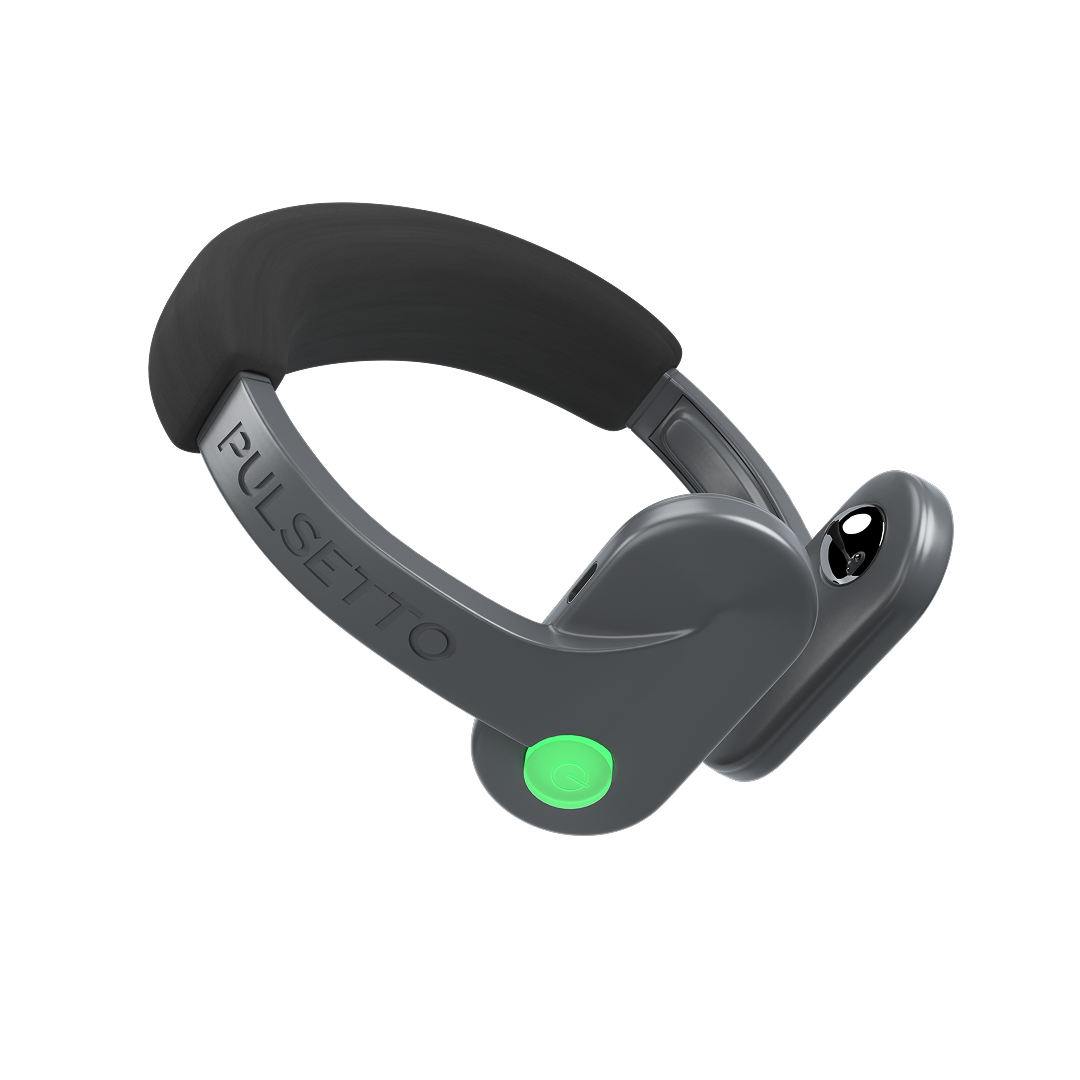
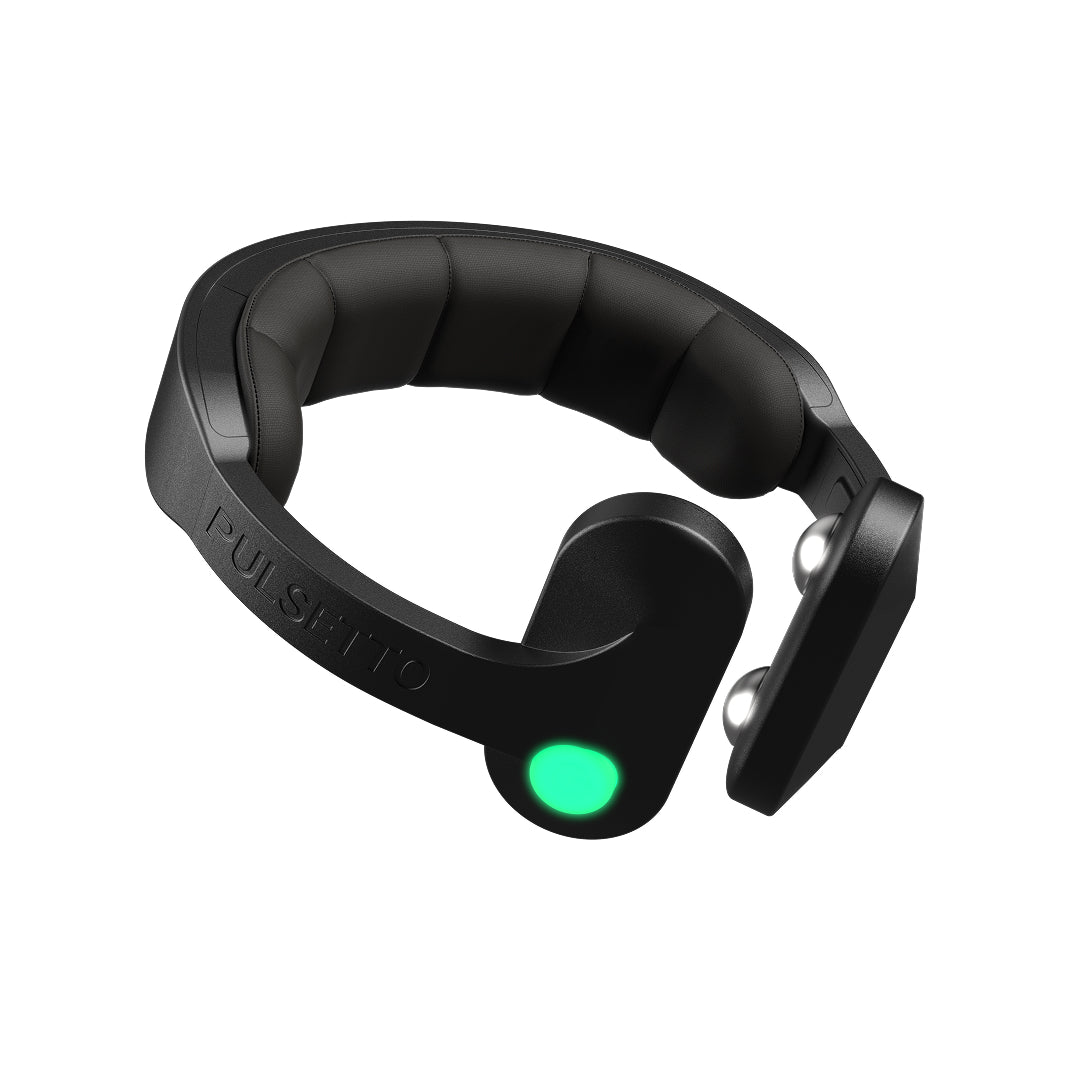
Pulsetto is a hands-free vagus nerve stimulator that delivers bilateral cervical stimulation, both sides of the neck at once, in roughly 4-minute sessions guided by an app. That's the main practical difference from the breathing and relaxation techniques above: there's no technique to learn, and it runs while you keep doing whatever else you're doing.
In Pulsetto's own randomized, open-label pilot study (n=40, 4 weeks), bilateral stimulation produced a 47.5% reduction in hair cortisol, a biomarker of chronic stress exposure, and a 45.3% reduction in self-reported anxiety symptoms (GAD-7), both larger than what the unilateral comparison group in the same study showed.
How to do it: Pulsetto sits on the neck for about 4 minutes at a time, hands-free, so it fits into a morning routine, a work break, or a wind-down before bed without requiring you to stop what you're doing. It's a general wellness device, not FDA-cleared and not marketed to diagnose, treat, or cure any condition. If you're looking for something with a longer independent research trail specifically, that trade-off is worth weighing against the convenience.
Try Pulsetto
Most of what actually speeds stress recovery comes down to giving your body a clear, physical off-switch, and the seven habits above all work, but they take a minute of active effort you have to remember to spend. What sets bilateral cervical vagus nerve stimulation apart from the rest of this list is that it delivers that same off-switch signal without asking you to change what you're already doing.
If you've tried paced breathing or cold water and liked the effect but want something that runs in the background of a busy day, that's the gap a hands-free wearable is built to close. Pulsetto takes the same nervous-system logic behind everything else on this list and makes it something you can wear for four minutes at your desk, on your commute, or before bed, no technique required, just time.
Try the Pulsetto vagus nerve stimulator, and see the difference yourself.
FAQ
How long does it take to recover from stress?
It depends heavily on the type and intensity of the stressor. A mild stressor with an active recovery technique (paced breathing, cold water) can resolve in minutes; cortisol from a more intense stressor typically takes 20-60 minutes to return toward baseline even under good conditions, and chronic, ongoing stress may never fully resolve without a change in circumstances or a dedicated recovery practice.
What's the fastest way to calm down at the moment?
Cold water on the face and slow paced breathing are the two fastest options on this list. Both can produce a measurable physiological shift within seconds to a couple of minutes, because both act directly on vagal tone rather than requiring a longer practice to build an effect.
Can vagus nerve stimulation actually help with stress recovery?
There's a real and growing evidence base on transcutaneous vagus nerve stimulation's effects on autonomic nervous system activity, and Pulsetto's own pilot study found meaningful reductions in self-reported stress and anxiety measures alongside cortisol biomarker changes. It's a general wellness product, not a medical treatment, and it works best alongside the fundamentals like sleep, movement, and social connection, not instead of them.
Who should not use vagus nerve stimulation devices like Pulsetto?
Who should NOT use Pulsetto: Do not use it if you have a pacemaker, implantable medical device, epilepsy, or are pregnant. Consult a healthcare provider before use if you have cardiovascular conditions, recent neck or throat surgery, or carotid artery issues. Pulsetto does not provide medical advice, diagnosis, or treatment. Consult a qualified healthcare provider before starting use, especially if you have underlying medical conditions or are taking medications.
Does exercise raise or lower cortisol?
Both, depending on timing. Exercise itself causes a temporary cortisol rise proportional to its intensity, which is a normal part of the physiological response to physical exertion. The stress-recovery benefit shows up afterward: a bout of moderate-to-vigorous exercise blunts the cortisol response to a stressor that follows it, which is why people who exercise regularly tend to show smaller cortisol spikes to everyday stressors over time.
Scientific research
Pulsetto is a general wellness product and is not intended to diagnose, treat, cure, or prevent any disease or medical condition. The claims above about specific techniques are drawn from the peer-reviewed research cited below; the claims about Pulsetto's own pilot study are attributed and described as pilot-scale, open-label data throughout.
[1] Effects of voluntary slow breathing on heart rate and heart rate variability: A systematic review and a meta-analysis(Laborde et al., 2022, Neuroscience and Biobehavioral Reviews, 233 citations)
[2] The diving response and cardiac vagal activity: A systematic review and meta-analysis (Ackermann et al., 2022, Psychophysiology, 26 citations)
[3] The effects of acute exercise on stress reactivity assessed via a multidimensional approach: a systematic review(Morava et al., 2024, Journal of Behavioral Medicine, 10 citations)
[4] Progressive muscle relaxation technique improves sleep quality and mental health: A systematic review and meta-analysis of randomized controlled trials (Donato et al., 2026, Journal of Psychosomatic Research, 2 citations)
[5] Mindfulness mediates the physiological markers of stress: Systematic review and meta-analysis (Pascoe et al., 2017, Journal of Psychiatric Research, 447 citations)
[6] Social support and oxytocin interact to suppress cortisol and subjective responses to psychosocial stress (Heinrichs et al., 2003, Biological Psychiatry, 1990 citations)
[7] The influence of sleep on human hypothalamic-pituitary-adrenal (HPA) axis reactivity: A systematic review (van Dalfsen & Markus, 2018, Sleep Medicine Reviews, 265 citations)
[8] Acute Transcutaneous Cervical but not Auricular Vagus Nerve Stimulation Increases Alpha Wave Brain Activity and Lowers Arterial Blood Pressure (Ahmed et al., 2025, American Journal of Physiology-Regulatory, Integrative and Comparative Physiology, 1 citation)