Compare the devices at a glance
|
Device
|
Mechanism
|
Session length
|
Hands-free
|
Price
|
Good fit for
|
|
Pulsetto
|
Bilateral cervical nVNS
|
~4 min
|
Yes
|
$269
|
Daily use without holding a device
|
|
Truvaga Plus
|
Unilateral cervical nVNS
|
~2 min
|
No
|
$499
|
Lower entry price, FDA-lineage tech
|
|
Hoolest VeRelief Prime
|
Unilateral cervical nVNS
|
1-5 min
|
No
|
$159
|
Budget handheld option
|
|
Nurosym
|
Auricular tVNS (ear)
|
~30 min
|
Partial
|
$825
|
Strongest published clinical evidence
|
|
Xen by Neuvana
|
Auricular tVNS (earbuds)
|
10-30 min
|
Yes
|
$359
|
Pairing stimulation with music
|
|
Apollo Neuro
|
Haptic vibration (wrist)
|
Minutes to 1 hr
|
Yes
|
$448
|
Skipping electrodes entirely
|
|
Sensate
|
Infrasonic vibration (chest)
|
10-30 min
|
No (lying down)
|
$299
|
A meditation-style wind-down ritual
|
Ready to see the hands-free option for yourself? Check out Pulsetto's vagus nerve stimulator before you compare the rest.
What actually calms your nervous system? The four mechanisms
Every device on this list is trying to do the same basic thing: shift your autonomic nervous system out of sympathetic "on alert" mode and toward parasympathetic "rest and recover" mode. They just go about it four different ways.
Cervical vagus nerve stimulation sends a small electrical current through the skin of the neck, where the vagus nerve sits closer to the surface than almost anywhere else in the body. Cervical stimulation can be delivered to one side of the neck (unilateral, like Truvaga and Hoolest) or both sides at once (bilateral, like Pulsetto). A 2025 study directly comparing bilateral cervical stimulation to auricular stimulation found that cervical stimulation produced measurably larger drops in systolic blood pressure and larger increases in alpha wave brain activity, attributed to the cervical vagus nerve carrying five to six times more of a specific nerve fiber type than the ear branch does [1].
Auricular vagus nerve stimulation targets a different access point: a small branch of the vagus nerve that surfaces in the ear, usually at the cymba conchae. Nurosym and Xen by Neuvana both use this route. A frequently cited 2014 study found that auricular stimulation increased heart rate variability and significantly reduced muscle sympathetic nerve activity in healthy adults, which is the kind of shift you'd want if your baseline is running sympathetic-heavy [2]. Separate research on stress specifically has found that auricular stimulation can blunt the usual cortisol spike that follows a mental stress test [3].
Haptic and vibrotactile stimulation, used by Apollo Neuro, doesn't touch the vagus nerve directly. It delivers patterned vibration through the skin, engaging the somatosensory system instead of an electrical pathway. A 2024 study on vibroacoustic stimulation found measurable increases in parasympathetic activity alongside reduced self-reported stress, using a mechanism that's real but indirect compared to electrical nVNS [4].
Infrasonic bone-conduction, Sensate's approach, is a variant on the same idea: low-frequency vibration delivered through the sternum while lying down, paired with audio.
None of these mechanisms is "fake." They sit at different points on a spectrum from direct nerve stimulation to indirect sensory input, and the practical differences that matter for daily use, like session length and whether you can use the device hands-free, often matter more than which mechanism is theoretically strongest.
1. Pulsetto - best for hands-free daily use

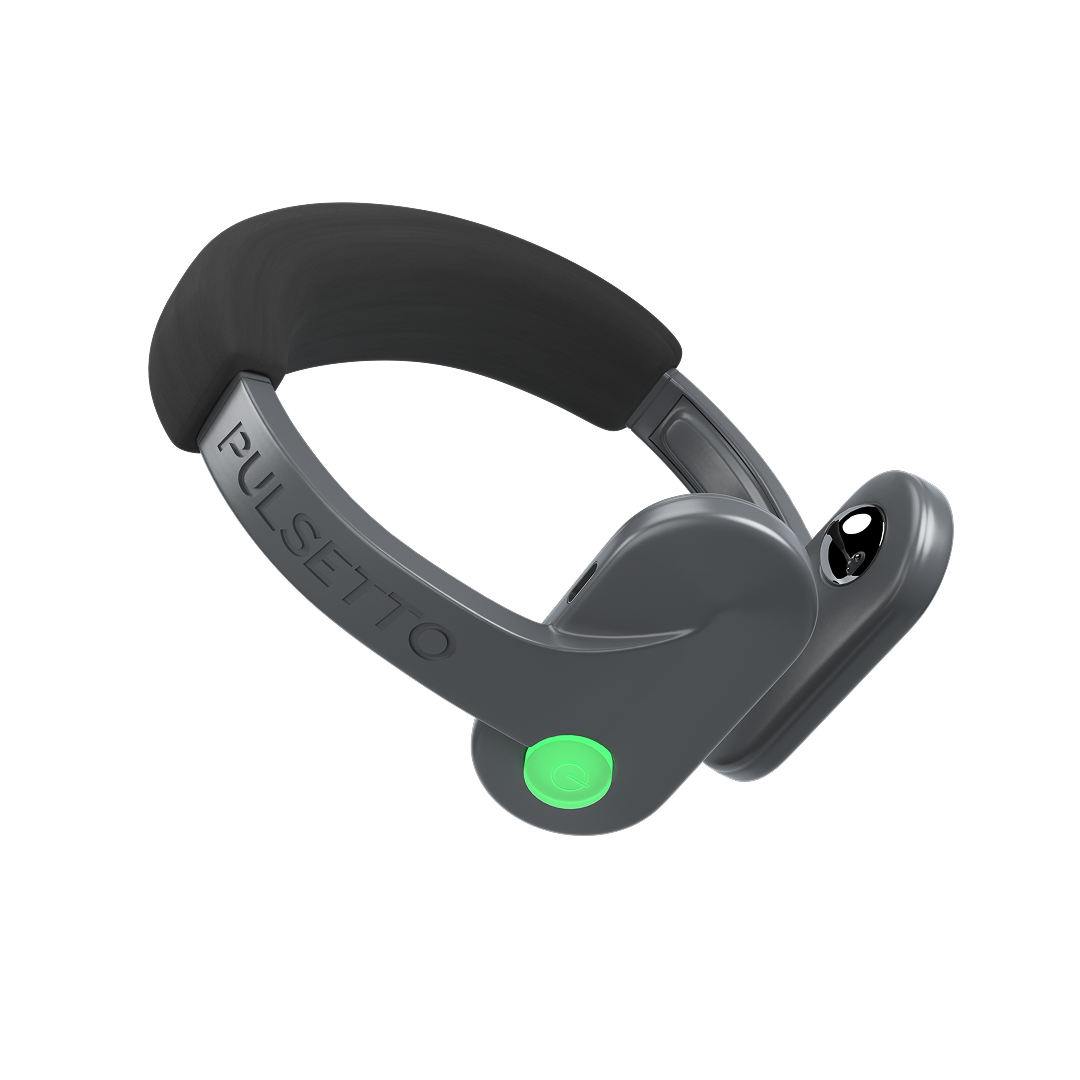
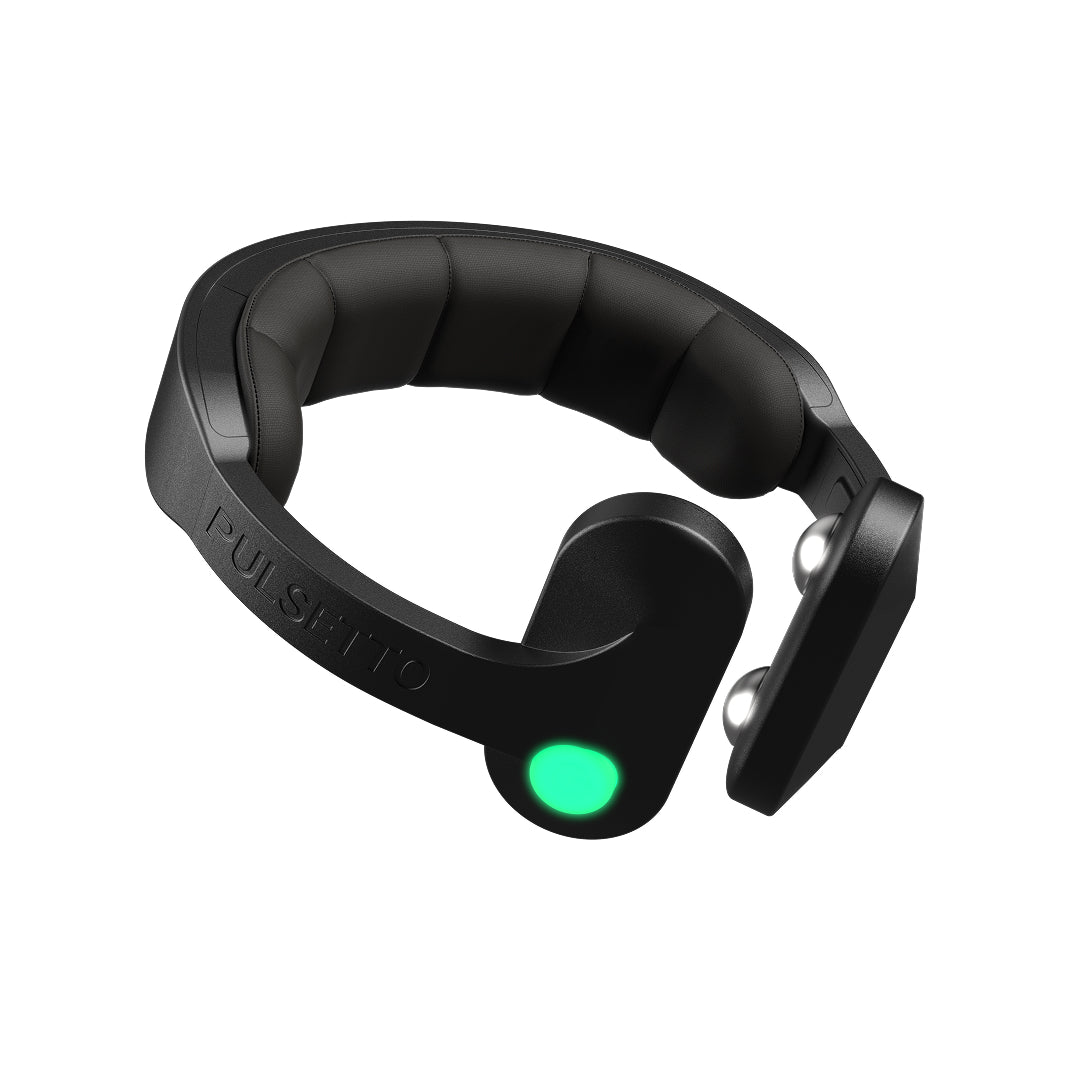
Pulsetto is a hands-free, bilateral cervical vagus nerve stimulator worn around the neck for roughly 4 minutes a session, guided by an app. Bilateral stimulation means both sides of the neck at once, which no other device on this list does; Truvaga, Hoolest, and the prescription-only gammaCore all stimulate one side.
That difference isn't cosmetic. In Pulsetto's own randomized, open-label pilot study (n=40, 4 weeks), bilateral stimulation produced a 45.3% reduction in anxiety symptoms (GAD-7) and a 47.5% drop in hair cortisol, a biomarker of chronic stress, both larger than what the unilateral group in the same study showed.
Separately, in Pulsetto's own in-app wellbeing check-ins (self-reported, not a controlled study), 73% of users report lower stress and 45% report a 20-point-or-larger drop, with the improvement typically holding or growing between their two-week and one-month check-ins.
The hands-free form factor is the other half of the pitch. Truvaga and Hoolest both require holding the device against your neck for the entire session, which rules out doing anything else while it runs. Pulsetto sits on the neck under light pressure, so you can work, read, or start winding down for bed without your hands tied up. The free lifetime app tier includes five stimulation programs (stress, sleep, focus, relieve, release) plus breathing exercises and sleep tracking; a paid Premium tier adds more programs, guided meditations, and affirmations.
Good fit for: anyone who wants a short daily session without holding a device, and who values bilateral stimulation and a free app tier over the single lowest possible price.
Disclaimer: Pulsetto is a vagus nerve stimulator and general wellness device. It is not FDA-cleared and isn't marketed to diagnose, treat, or cure any condition.
2. Truvaga Plus - lower price, FDA-lineage technology

Truvaga Plus is a handheld unilateral cervical stimulator from electroCore, the company behind the FDA-cleared gammaCore device for migraine and cluster headache. Truvaga itself is sold as a consumer wellness product, not a medical device, but it shares the underlying technology with a device that does have a real FDA clearance for those two specific conditions.
Sessions run about 2 minutes, and the base Truvaga 350 runs $325 (preloaded with 350 sessions), with Truvaga Plus at $499. You hold the device against the side of your neck for the full session, which is a real difference from Pulsetto's hands-free wear, and it stimulates one side of the neck rather than both.
Good fit for: readers who specifically want the electroCore/gammaCore technology lineage, don't mind holding a device for two minutes, and are comparing entry prices.
3. Hoolest VeRelief Prime - budget handheld option

VeRelief Prime is a small handheld cervical stimulator priced at $159, the least expensive device on this list. Sessions run 1 to 5 minutes depending on the program, and like Truvaga, it's held against the neck rather than worn hands-free. Hoolest's app ecosystem is smaller than Pulsetto's, and the company doesn't have a published clinical study of its own comparable in scope to Pulsetto's pilot.
Good fit for: readers prioritizing the lowest possible entry price who are comfortable holding the device during each short session.
4. Nurosym - strongest published clinical evidence, ear-applied

Nurosym clips onto the ear and stimulates the auricular branch of the vagus nerve rather than the cervical branch. It's the device with the deepest bench of published, independently-run research in this category, with the company citing collaborations across dozens of academic and clinical institutions. That evidence base is genuinely a strength.
The tradeoffs are real too. Sessions run around 30 minutes, versus 4 minutes for Pulsetto or 2 for Truvaga, and the price is $825, well above everything else on this list. The ear clip is also more visible in a work or social setting than a neck-worn or wrist-worn device.
Good fit for: readers who want the most extensively researched device available and don't mind a longer daily session and a higher price to get it.
5. Xen by Neuvana - auricular stimulation synced to music

Xen is an earbud-style device that delivers auricular vagus nerve stimulation synchronized to whatever you're listening to, priced around $359. It's hands-free once it's in, and the earbud form factor is familiar to anyone who already wears wireless earbuds daily. The tradeoff is that it's designed to run alongside music, so it doesn't work as a quick silent break at your desk the way a 4-minute neck session does, and its published evidence base is thinner than Nurosym's or Pulsetto's pilot data.
Good fit for: people who already build calm-down time around music and want the stimulation layered into that habit.
6. Apollo Neuro - vibration instead of electricity, worn on the wrist

Apollo Neuro is a wrist- or ankle-worn wearable that delivers patterned vibration ("Vibes") rather than electrical stimulation, engineered by a team with a neuroscience and psychiatry background. It runs $448 for the wearable bundled with a year of app access, and looks like an ordinary fitness band rather than a medical-adjacent device, which some readers specifically want.
Because it works through touch rather than direct nerve stimulation, it isn't accurately described as a vagus nerve stimulator, even though it targets similar outcomes: calm, focus, better sleep. If you specifically want electrical nVNS, this isn't that. If you want a discreet, no-gel, no-electrode wearable and you're open to a different mechanism, it's a legitimate option.
Good fit for: readers who want a wrist-worn wearable, don't want conductive gel or electrodes, and are open to a vibration-based mechanism instead of electrical stimulation.
7. Sensate - a lying-down ritual, not a desk-break device
![]()

Sensate is a smooth, stone-shaped device that rests on your sternum while you lie down, delivering low-frequency infrasonic vibration paired with audio through headphones, priced from $299. It's built around a 10-to-30-minute wind-down ritual rather than a quick session you can run at your desk, which makes it a poor fit if you're looking for something to use mid-workday but a reasonable fit if you want a meditation-adjacent bedtime routine. Its published evidence base is smaller than the other devices here.
Good fit for: readers building an evening wind-down ritual who want a lying-down, headphones-on experience rather than a short daytime session.
How to choose
Start with the mechanism, not price. If you specifically want vagus nerve stimulation, narrow to the five electrical devices (Pulsetto, Truvaga, Hoolest, Nurosym, Xen) and rule out Apollo Neuro and Sensate, which work through touch instead. If you're open to any mechanism that calms your nervous system, all seven are fair game, and the question becomes about fit rather than category. If you've already wondered whether devices like these do anything at all, we've looked at that question directly.
From there, weigh four practical factors against each other:
Session length and hands-free wear. A 4-minute hands-free session (Pulsetto) fits into a workday in a way a 30-minute session (Nurosym) or a lying-down ritual (Sensate) doesn't. If you're trying to build a daily habit, friction matters more than most people expect.
Evidence base versus your own timeline. Nurosym has the broadest published research. Pulsetto has its own controlled pilot study plus a growing academic trial pipeline. Apollo Neuro and Sensate have smaller evidence bases specific to their own mechanisms. None of this is disqualifying on its own, but it's worth knowing what you're weighing.
Regulatory status. None of these seven devices is FDA-cleared as a general wellness product, including Pulsetto. Truvaga and Hoolest's underlying cervical nVNS technology traces back to a device (gammaCore) that is FDA-cleared, but specifically for migraine and cluster headache treatment, under a doctor's care, not for general stress and calm. If FDA clearance for a specific medical condition is what you actually need, that's a conversation with a doctor about gammaCore, not a general wellness purchase.
Budget. Prices here run from $159 (Hoolest) to roughly $900 (Nurosym), a five-fold spread for the same broad goal. The lower end doesn't mean lower quality; it usually means a smaller feature set, a smaller app ecosystem, or a thinner evidence base, not a non-functional device.
Try Pulsetto
Across the seven devices here, the difference that actually predicts results isn't the spec sheet, it's whether you'll still be using the thing in a month. A strong mechanism you abandon after a week does less for your nervous system than a decent one you stick with, which is why friction matters as much as the underlying science. That's the case for Pulsetto: it's built to fit into a routine you already have instead of asking you to build a new one around it, which is the main reason it tops this list rather than a device with a longer research history or a lower price tag. If that's the kind of tool you're after, Pulsetto is worth trying for yourself, and if it turns out not to be the right fit, everything above should make it easier to figure out which of the other six is.
Try Pulsetto
FAQ
Are any of these devices FDA approved?
No device on this list, including Pulsetto, is FDA-approved or FDA-cleared as a general wellness product. Truvaga and Hoolest are built on cervical nVNS technology whose parent device, gammaCore, is FDA-cleared specifically for acute treatment of migraine pain and cluster headache in adults under medical supervision. That clearance doesn't extend to the consumer wellness versions or to general stress and calm claims.
Can I use one of these devices alongside therapy or medication?
These are general wellness devices, not medical treatments, and none of them is designed to replace therapy, medication, or a diagnosis from a licensed provider. If you're managing a diagnosed condition, talk to your provider before adding any new device to your routine, including any of the seven covered here.
Who shouldn't use vagus nerve stimulation devices?
The electrical devices on this list (Pulsetto, Truvaga, Hoolest, Nurosym, Xen) aren't recommended for people with a pacemaker or other implantable medical device, people with epilepsy, or people who are pregnant, since the safety of electrical stimulation hasn't been established for these groups. Outside of those groups, a 2018 systematic review of transcutaneous vagus nerve stimulation in humans found it generally safe and well tolerated, with the most common side effects being mild and localized to the stimulation site, like skin irritation [5]. If any of the contraindications above apply to you, a non-electrical option like Apollo Neuro or Sensate, or a conversation with your doctor first, is the safer path.
How fast do these devices actually work?
It varies by mechanism and by person. Acute studies on cervical, auricular, and vibrotactile stimulation all show measurable heart rate variability or nervous-system changes within a single session, as the mechanisms section above covers. Longer-term change, the kind reflected in Pulsetto's pilot study anxiety and cortisol numbers, was measured over a 4-week period, not a single use. Expect a felt difference within a session or two, and expect the more durable changes to take a few weeks of consistent use.
Is Pulsetto actually different from a handheld device like Truvaga or Hoolest?
Yes, on two specific points: Pulsetto stimulates both sides of the neck at once (bilateral) rather than one side, and it's worn hands-free instead of held against the neck for the session. Pulsetto's pilot study found bilateral stimulation outperformed unilateral stimulation on cortisol and cortisone reduction in the same trial. Whether that difference matters to you depends on whether you'd actually use a device you have to hold still for two minutes, versus one you can wear while doing something else.
Scientific research
[1] Acute Transcutaneous Cervical but not Auricular Vagus Nerve Stimulation Increases Alpha Wave Brain Activity and Lowers Arterial Blood Pressure (Ahmed et al., 2025, American Journal of Physiology-Regulatory, Integrative and Comparative Physiology, 1 citation)
[2] Non-invasive vagus nerve stimulation in healthy humans reduces sympathetic nerve activity (Clancy et al., 2014, Brain Stimulation, 488 citations)
[3] Transcutaneous auricular vagus nerve stimulation inhibits mental stress-induced cortisol release (Cuberos Paredes et al., 2025, Physiological Reports, 20 citations)
[4] Effects of Vibroacoustic Stimulation on Psychological, Physiological, and Cognitive Stress (Fooks et al., 2024, Sensors, 12 citations)
[5] Safety and tolerability of Transcutaneous Vagus Nerve stimulation in humans: a systematic review (Redgrave et al., 2018, Brain Stimulation, 279 citations)