Measuring stress is not the same question as measuring resilience

Most guides to measuring stress focus on catching stress in the moment: a cortisol spike, an elevated heart rate, a high score on a questionnaire taken today. That answers a narrower question than most people are actually asking.
A single measurement can tell you how stressed you are right now. Finding out how well you recover, and whether you're getting better or worse at handling pressure over months, takes repeating the same measurement and reading the pattern.
That distinction changes how much weight a given number deserves. A one-off Perceived Stress Scale score is a reasonable snapshot. A single 8 a.m. cortisol sample, treated the same way, turns out to be one of the least reliable measurements available, according to research on HPA-axis assessment methods covered later in this guide.
Resilience specifically, the capacity to recover and adapt, only becomes visible in the shape of a trend line.
Self-report scales: fast, validated, and limited to how you feel
The Perceived Stress Scale is the most widely used self-report stress measure in research: a short set of questions about how unpredictable and overwhelming your life has felt over the past month. It's quick to take and well-validated, but it measures perception. Two people under identical objective pressure can score very differently based on temperament and coping style.
For resilience specifically, the Connor-Davidson Resilience Scale (CD-RISC) is the instrument most researchers reach for. In its original validation study, the 25-item scale showed good psychometric properties across both community and clinical samples. Scores also rose as patients' clinical condition improved, which suggests resilience is something that moves rather than something fixed at birth [2].
The CD-RISC comes in three lengths. A head-to-head comparison in a group of spinal cord injury rehabilitation patients tested all three [3]:
-
25-item version: internal consistency of 0.90, the strongest of the three
-
10-item version: internal consistency of 0.86, and the only version that also showed good convergent validity
-
2-item version: internal consistency dropped to 0.66
Based on that evidence, the 10-item version is a reasonable default for tracking purposes rather than a full clinical workup. It offers the best combination of reliability and validity. That said, the comparison was done in one specific patient population and may not generalize to everyone.
A 2024 systematic review of CD-RISC research took a harder look at how well-tested the scale actually is [4]:
-
Structural validity (whether the questions cluster the way they're supposed to): generally strong
-
Responsiveness and criterion validity: flagged as weaker, with limited evidence
-
Test-retest reliability and cross-cultural adaptation: also flagged as thin
In plain terms: the CD-RISC is a solid starting point, but the research behind it hasn't fully settled whether a change in your score over three months reflects a real change in you or just measurement noise.
Heart rate variability: a decent signal that needs a decent method
Heart rate variability, the beat-to-beat variation in the time between heartbeats, is the physiological measure most commonly proposed as a resilience biomarker. It reflects how flexibly the autonomic nervous system shifts between stress response and recovery.
A 2023 scoping review of HRV-stress research found RMSSD, a measure of short-term variability tied to parasympathetic activity, was the metric most frequently linked to psychological stress. The same review concluded HRV is a valid measure of the stress response, but called for standardized stress-induction and assessment protocols, since study methods currently vary enough to make results hard to compare [5].
That inconsistency is part of why no single HRV number works as a universal resilience score. A comparison of proposed stress and resilience biomarkers recommended a layered approach instead of leaning on any one marker alone [6]:
-
Resting-state markers, assessed at a calm baseline: HRV and immune-cell activity
-
Reactivity markers, assessed during an actual stressor: cortisol and cardiovascular recovery
HRV tells you something real about your nervous system's flexibility. It tells you more when it's tracked over weeks under consistent conditions than when it's checked once and treated as a verdict.
Cortisol: the marker everyone knows about and few measure well
Cortisol has a reputation as the stress hormone, which is why salivary cortisol testing is the biomarker most people assume they should get. The catch: how and when you sample it changes what the result actually means.
Research comparing HPA-axis assessment methods across repeat visits ranked several sampling approaches by reliability [1]:
-
Full diurnal curve (multiple samples from waking to midnight): highest reliability
-
Cortisol awakening response or dexamethasone-suppressed cortisol: moderate reliability
-
Single 8 a.m. sample: lowest reliability, despite being the easiest test to collect
If a single morning cortisol reading is being sold to you as a resilience score, that's worth knowing before you put much weight on the number.
Methodological guidance on ambulatory cortisol testing points to specific reasons single samples go wrong [7]:
-
Inconsistent timing relative to waking
-
Poor compliance with the sampling schedule
-
Mishandled sample storage
Even a well-collected sample has a ceiling on what it can tell you. Salivary cortisol only indirectly reflects activity in the hypothalamic-pituitary-adrenal axis. Several regulatory steps and binding proteins sit between the hormone in your saliva and what's actually happening upstream, and that gap widens during an acute stress response, which is exactly when people are most curious about what their cortisol is doing [8].
None of this makes cortisol testing useless. It makes a single sample a much weaker tool than most people assume, and repeated, well-timed sampling a meaningfully better one.
Wearables: useful for pattern, not proof
Wearables such as WHOOP, Oura, Garmin, or Apple Watch mostly work the same way: continuous HRV and resting-heart-rate data, plus sleep tracking, run through a proprietary algorithm to estimate strain or recovery. Continuous measurement is a genuine advantage over an occasional lab test: it captures your normal range instead of one moment.
The limitation is transparency. The HRV research cited above already flagged that methods and assessment protocols vary widely across studies, and that same variability shows up when different device makers build their own scoring formulas on top of the same raw signal.
Two wearables measuring the same person on the same day can produce different "readiness" scores, because they're not scoring against the same baseline or using identical algorithms. That doesn't make wearable data worthless. The trend a single device shows you over your own history carries more weight than comparing your score to a friend's device, or treating any one day's number as diagnostic.
If you're weighing which wearable or device to pair with your own tracking, Pulsetto's rundown of devices for stress resilience covers the options in more depth.
Pulsetto's Stress Resilience Score: measuring the trend, not the moment

Given everything above, the most defensible way to measure stress resilience is to combine a repeated physiological signal with a way of tracking it over time. That's the gap Pulsetto's Stress Resilience Score was built to close.
Launched in May 2026 as part of Pulsetto's Premium membership, the Stress Resilience Score is an in-app feature that estimates how well your nervous system adapts to stress and recovers from it, tracked as a trend rather than a single-day reading. It draws on:
-
Heart rate variability
-
Sleep quality
-
Day-to-day stress patterns
-
Wearable data, for users who connect WHOOP, Oura, Garmin, or Apple Watch
-
How consistently you're using Pulsetto itself
It is a part of "Stress Fitness," treating resilience the way a fitness tracker treats cardiovascular fitness. It improves or declines based on consistent inputs, and you don't check it once and file it away.
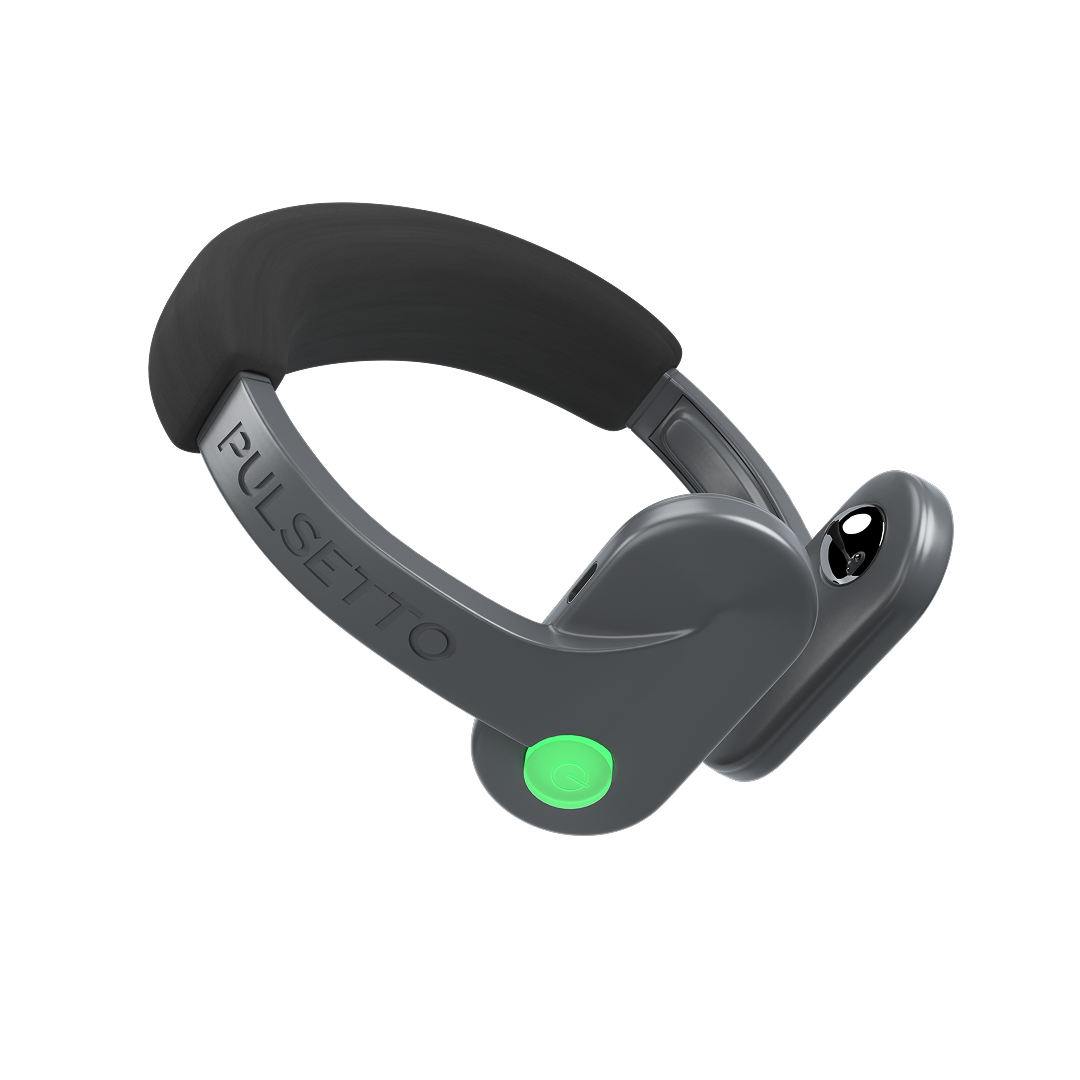
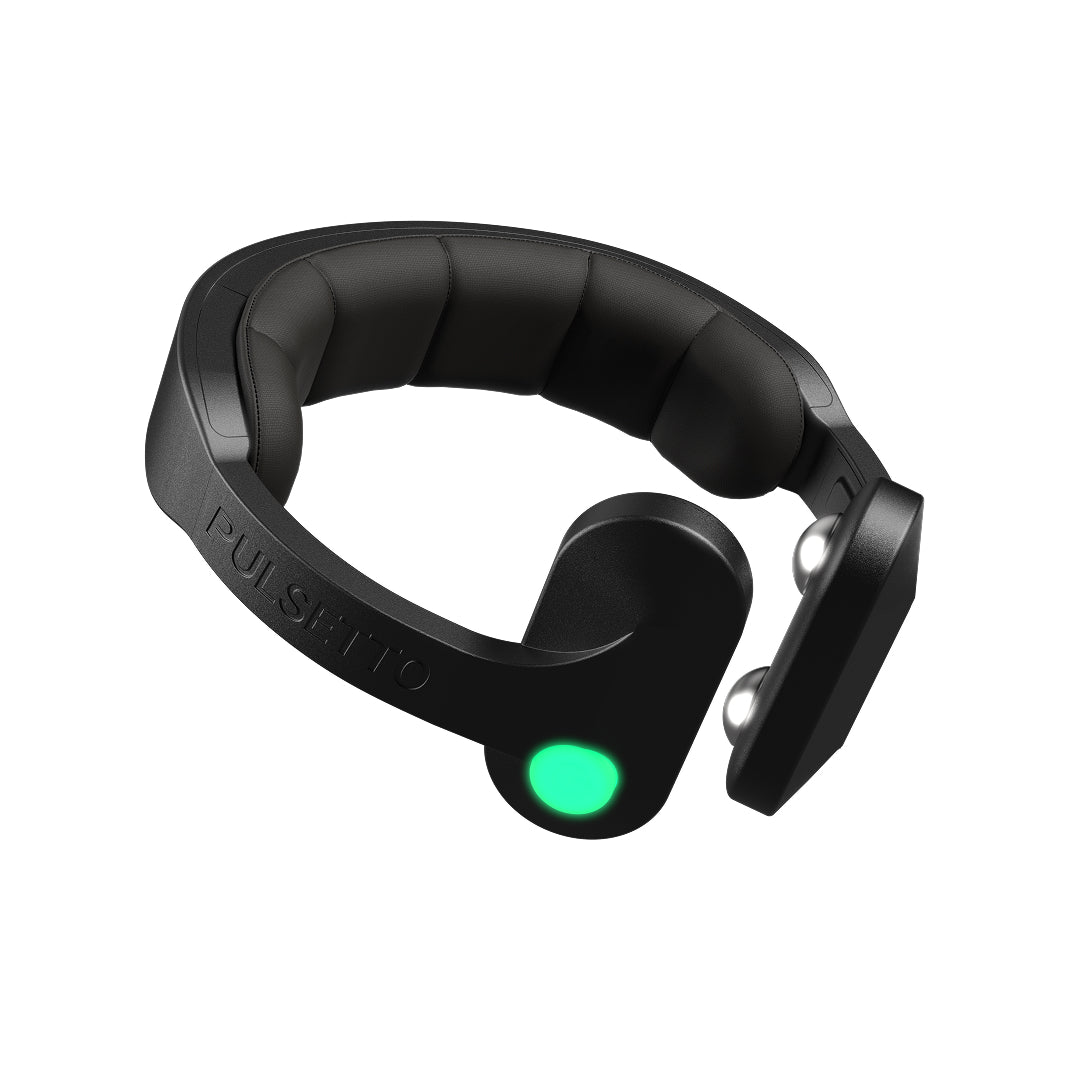
Most wearables today function like expensive thermometers for stress. They can tell you that you're overwhelmed, but they don't tell you what to do about it. Pairing a resilience trend with an actual intervention is meant to close that gap. Pulsetto's own bilateral vagus nerve stimulator is built around four-minute sessions specifically so that acting on what your data shows doesn't require rearranging your day.
In Pulsetto's own randomized, open-label pilot study (n=40), four weeks of use was associated with a 47.5% reduction in hair cortisol and a 63.2% reduction in hair cortisone in the bilateral-stimulation group, measured across the study period, not as a single before-and-after snapshot.
Talk to a doctor before treating a resilience score, from Pulsetto or any other source, as a substitute for medical evaluation if you're dealing with persistent or severe stress symptoms.
Try Pulsetto
Whatever you measure, a scale, a wearable, or a lab test, the number only matters once you act on it. Someone watching a low or declining resilience trend has a straightforward next question: what's actually available to change that line instead of only watching it move. That's a fair test to apply to any tool claiming to help, including Pulsetto's own.
A few minutes with a hands-free device that targets the vagus nerve, the same nerve most of the physiological measures above are indirectly reading, gives your nervous system something to respond to between the check-ins. Pair the sessions with whatever measurement you trust: a CD-RISC score every few weeks, a wearable's HRV trend, or Pulsetto's own Stress Resilience Score.
You'll have an actual answer the next time someone asks how resilient you are, instead of a guess. If that combination sounds worth testing on yourself, Pulsetto is a reasonable place to start.
FAQ
How do you measure stress resilience?
There's no single test. Researchers and practitioners combine self-report questionnaires like the CD-RISC, physiological biomarkers like heart rate variability and cortisol, and wearable or app-based tracking that follows those signals over weeks. The combination matters more than any individual tool: each one captures a different piece of the picture and carries its own blind spot.
How do I measure my stress fitness?
Stress fitness, the idea that your capacity to handle and recover from stress can be trained and tracked like physical fitness, is measured the same way physical fitness is: with a consistent metric checked repeatedly. HRV trends and sleep quality, tracked over weeks alongside self-reported stress levels, give you a fitness curve instead of a single data point. Pulsetto's Stress Resilience Score is built specifically around this framing, folding HRV and sleep together with day-to-day stress patterns into an ongoing trend.
How can I track my stress fitness progress over time?
Pick one or two measures you can repeat under similar conditions, a resilience questionnaire taken monthly, or a wearable's HRV trend, and check them on a fixed schedule. Consistency in timing matters more than which specific tool you choose. Research on cortisol testing found a single reading is far less reliable than samples collected on a regular schedule, and the same logic applies to most physiological tracking.
Is a wearable's recovery score the same as a resilience score?
Not exactly. Most wearables estimate daily readiness from HRV and heart rate, plus sleep data, using an algorithm specific to that device. That's useful for spotting your own patterns, but it isn't standardized across brands. A resilience score built explicitly to track adaptation over time answers a slightly different, and for this purpose more relevant, question than a daily readiness number does.
Who shouldn't use a vagus nerve stimulation device like Pulsetto?
Pulsetto is a general wellness product. It is not a medical device and it isn't right for everyone.
Do not use Pulsetto if:
Talk to a doctor before use if:
-
You have a cardiovascular condition
-
You've had recent neck or throat surgery
-
You have known carotid artery issues
Scientific research
[1] Reliability of hypothalamic-pituitary-adrenal axis assessment methods for use in population-based studies (Golden et al., 2011, European Journal of Epidemiology, 129 citations)
[2] Development of a new resilience scale: The Connor-Davidson Resilience Scale (CD-RISC) (Connor & Davidson, 2003, Depression and Anxiety, 11,497 citations)
[3] Measuring resilience with the Connor-Davidson Resilience Scale (CD-RISC): which version to choose? (Kuiper et al., 2019, Spinal Cord, 98 citations)
[4] Connor-Davidson Resilience Scale: a systematic review psychometrics properties using the COSMIN (Sharif-Nia et al., 2024, Annals of Medicine & Surgery, 22 citations)
[5] Heart Rate Variability for Evaluating Psychological Stress Changes in Healthy Adults: A Scoping Review (Immanuel et al., 2023, Neuropsychobiology, 154 citations)
[6] In the search for integrative biomarker of resilience to psychological stress (Walker et al., 2016, Neuroscience & Behavioral Reviews, 189 citations)
[7] Salivary cortisol in ambulatory assessment: some dos, some don'ts, and some open questions (Kudielka et al., 2012, Psychosomatic Medicine, 218 citations)
[8] Salivary cortisol as a biomarker in stress research (Hellhammer et al., 2009, Psychoneuroendocrinology, 1,885 citations)