What vagal tone actually measures
The vagus nerve is the longest cranial nerve in the body, running from the brainstem down through the neck and chest into the abdomen. It carries the bulk of the parasympathetic nervous system's signaling, the branch responsible for slowing the heart and helping the body recover once a stressor has passed, alongside its role in digestion.
Vagal tone refers to how active that parasympathetic signaling is. It's not measured directly in a doctor's office. Instead, researchers use heart rate variability, the beat-to-beat variation in time between heartbeats, as a proxy: higher HRV generally reflects stronger vagal influence on the heart.
It's easy to conflate that physiological signal with resilience itself. Vagal tone and HRV describe the physiological layer specifically, while resilience is the broader trait built from psychology and social support too. A vagus nerve stimulator can move the physiological layer. It can't do the rest of that work on its own.
How vagal tone connects to stress resilience
Resilience research has increasingly looked for an objective biomarker to replace self-report questionnaires, which are useful but easy to bias. HRV has become the leading candidate.
A review of eight studies on healthy adults found that higher vagally-mediated HRV, measured before and during stressful lab tasks, was associated with better cognitive resilience under self-control challenges and better modulation of cortisol and cardiovascular responses during emotional tasks [1].
A separate study on healthy young adults found that resting cardiac vagal tone was linked to stress resilience specifically through its effect on the hypothalamic-pituitary-adrenal (HPA) axis, the system that governs the body's cortisol response [2]. In a study of Army National Guard Special Forces personnel, HRV during stressful virtual training scenarios tracked with several established resilience factors, including emotional control and flexibility under pressure [3].
Jonė Pukėnaitė, MD, Medical & Science Lead at Pulsetto: "HRV works less like a mood score and more like an index of how much flexibility your autonomic nervous system has left to work with. Two people can report the same stress level and have very different vagal tone, and it's usually the person with more autonomic flexibility who recovers faster and makes clearer decisions the next time something goes wrong."
Why recovery speed matters more than baseline calm
A large scoping review covering 294 studies and more than 23,000 participants looked specifically at how vagally-mediated HRV recovers after an acute psychological stressor, instead of what it looks like at rest. Faster recovery was associated with greater resilience and stronger attentional control, while blunted recovery tracked with clinical depression and emotion dysregulation [4].
That distinction matters for anyone trying to self-assess. Feeling calm in a quiet room says very little about resilience on its own. What predicts it is how fast that same nervous system snaps back after a real spike, a missed deadline, a hard conversation, a near-miss on the highway.
For anyone who wants a more concrete read than "do I feel resilient," it helps to run through the measurable signs of good stress resilience, recovery speed included, rather than guessing.
Where polyvagal theory fits, and where the evidence runs thin
Most popular writing on the vagus nerve leans on polyvagal theory, developed by Stephen Porges, which proposes that the autonomic nervous system moves through a hierarchy of states: a socially engaged "ventral vagal" state, a mobilized fight-or-flight state, and a shutdown "dorsal vagal" state under extreme threat.
It's a genuinely useful framework for talking about safety, connection, and threat response in plain language. Porges' own 2025 review acknowledges that specific pieces of the theory, particularly the precise anatomical specificity of its claims and the interpretation of respiratory sinus arrhythmia, have drawn sustained methodological critique from other researchers [5].
That doesn't make the theory worthless. It means the theory works better as a narrative model for understanding why a racing heart in a meeting feels different from freezing during a threat than as a precise, settled account of vagal anatomy. The resilience claims worth building a routine around are the narrower, better-replicated ones: HRV recovery speed predicts resilience, and that recovery capacity responds to training. Those don't depend on resolving the anatomical debate first.
Can you actually train vagal tone?
Yes, with real caveats about how much and how fast. Building stress fitness and resilience works less like flipping a switch and more like conditioning, and three approaches show up most often in the research:
-
Paced breathing and HRV biofeedback. Slowing breathing to roughly six breaths per minute, often with real-time HRV feedback, is the most studied approach and shows small-to-moderate effects on stress, anxiety, and depressive symptoms across multiple trials.
-
Vagus nerve stimulation. Both cervical and auricular stimulation approaches have shown measurable increases in HRV in controlled studies, though results vary by stimulation site, dose, and individual baseline.
-
Cardiorespiratory exercise and structured recovery practices. Regular aerobic activity and dedicated recovery windows after high-stress periods both support higher resting vagal tone over time, though the effect builds over weeks rather than sessions.
None of these produce an overnight shift, and it's worth checking whether stress resilience devices actually work before assuming any single tool will do all the work. The evidence varies by device category, genuinely strong in some places and still thin in others.
|
Approach
|
What it targets
|
Typical time investment
|
|
Paced breathing / HRV biofeedback
|
Baroreflex sensitivity, real-time vagal activation
|
5-20 minutes per session
|
|
Vagus nerve stimulation
|
Direct vagal afferent activation, recovery speed
|
A few minutes daily
|
|
Cardiorespiratory exercise
|
Resting vagal tone over weeks
|
20-30 minutes, several times weekly
|
|
Structured recovery windows
|
Prevents chronic vagal suppression from stacked stressors
|
A few minutes after each high-stress event
|
Where active vagus nerve stimulation training fits

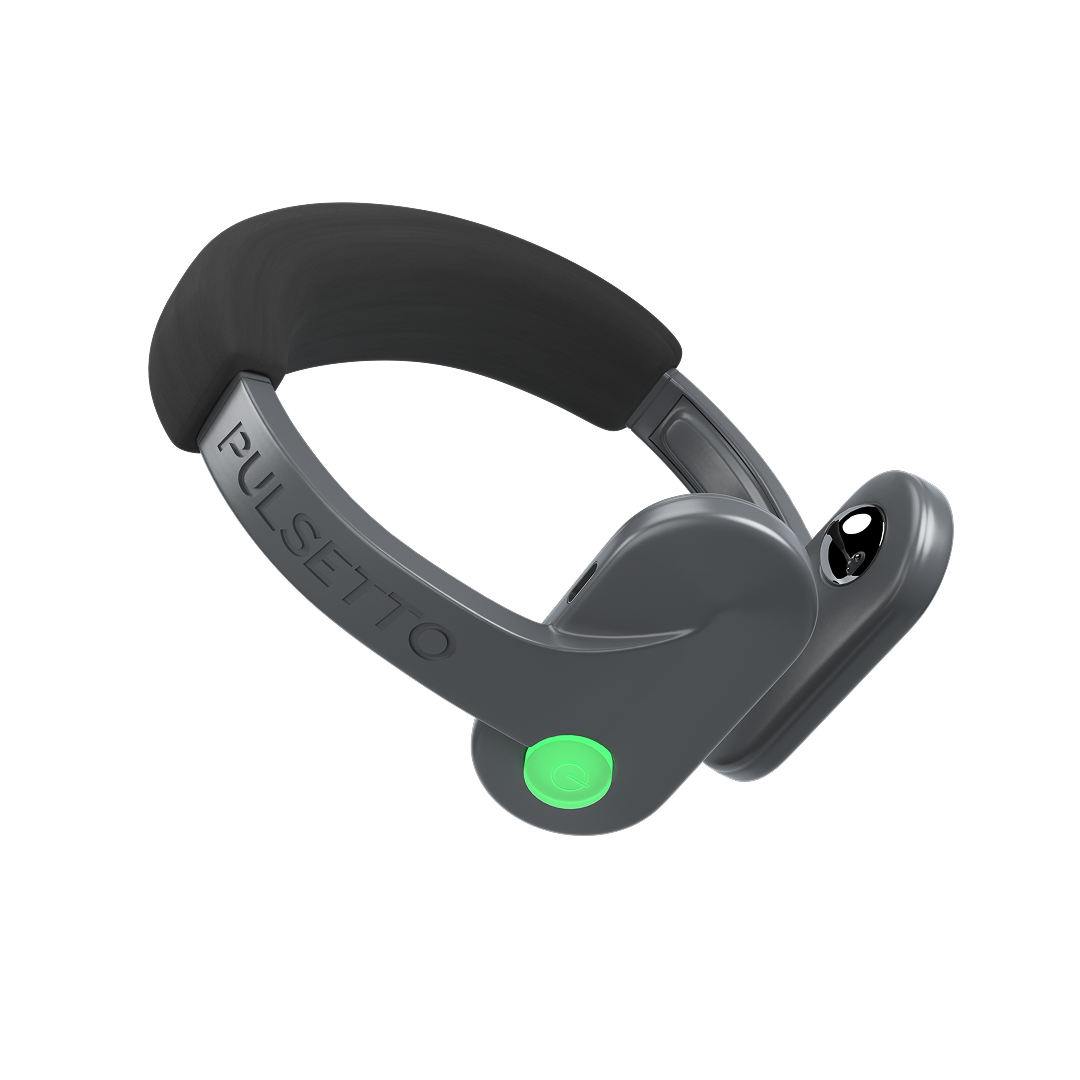
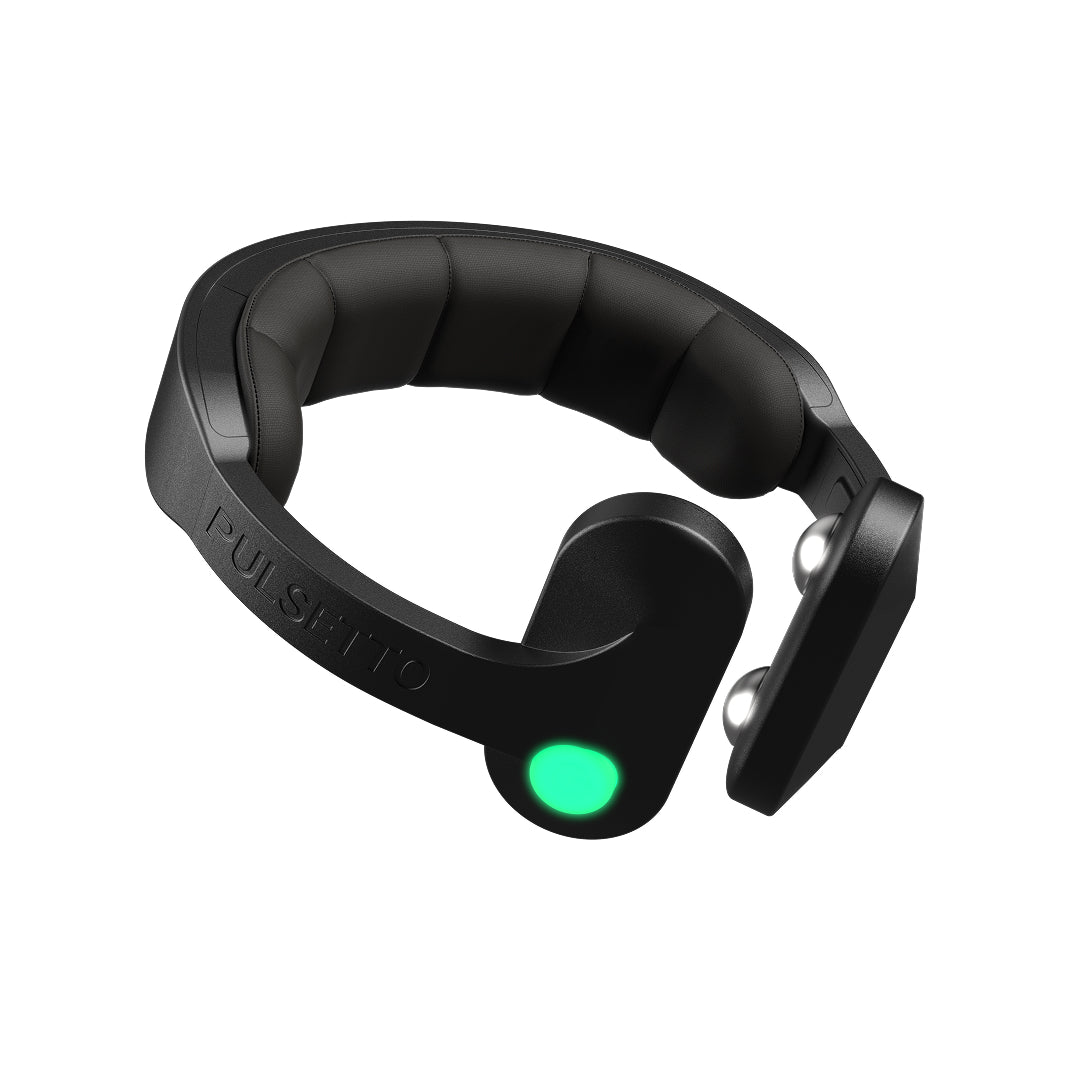
A vagus nerve stimulator is built specifically to activate the vagal pathway directly, on a fixed schedule, rather than relying on breathing discipline or waiting for fitness gains to show up weeks later.
A systematic review of transcutaneous auricular vagus nerve stimulation in healthy subjects found consistent improvements in heart rate variability and baroreflex sensitivity, both markers of stronger parasympathetic control [6]. In Pulsetto's own pilot study, users reported measurable reductions in perceived stress after regular use.
Real-world usage data adds a second, self-reported layer on top of that. In Pulsetto's own in-app wellbeing check-ins, 73% of users reported lower stress, with the average reported reduction growing from 23% at their two-week check-in to 26% by the next one. This is based on self-reported, in-app wellbeing check-ins from Pulsetto users who completed them, comparing each user to their own onboarding rating. It's not a clinical measurement or a controlled study, but it adds a useful real-world signal alongside the HRV research above.
Vagal tone is one input into resilience among several. Training it directly won't rewrite your workload or your relationships, but it does address the physiological half most people never actually train on purpose. Try Pulsetto and see whether a few minutes of deliberate vagal activation each day changes how fast you actually bounce back after a hard day, the part that's easy to overlook when you're only paying attention to how calm things feel in between.
Frequently asked questions
Is polyvagal theory scientifically proven?
Parts of it are well-supported, particularly the broad link between vagal activity and stress regulation. Other specific claims, especially around precise neuroanatomy, remain actively debated among researchers, including by Porges himself in his own recent reviews. Treat it as a useful explanatory framework rather than a fully settled model.
How do I know if my vagal tone is actually improving?
The clearest signal is recovery speed after a real stressor. How calm you feel in a quiet moment says comparatively little on its own; some people track recovery with a wearable HRV reading, while others notice it more practically, in how quickly they regain focus after a hard meeting or a bad night's sleep.
How long does it take to change vagal tone?
Most consistent training approaches show measurable shifts within four to eight weeks of regular use, regardless of which method you pick. Single sessions can produce short-term changes, but the resilience-relevant shift is a cumulative one.
Is Pulsetto FDA approved?
Pulsetto is registered as a general wellness device, which is the FDA category for products that don't make specific medical claims. It is CE certified for sale in the EU and follows applicable electrical safety standards. It is not a medical device and is not intended to diagnose, treat, cure, or prevent any disease.
Who shouldn't use a vagus nerve stimulator like Pulsetto?
People who are pregnant, have a pacemaker or other implanted electronic medical device, have a diagnosed seizure disorder, or have a known vagus nerve condition should talk to a doctor before using any vagus nerve stimulation device. The same applies to anyone currently being treated for a cardiac arrhythmia.
Scientific research
[1] Heart rate variability: Can it serve as a marker of mental health resilience? (Perna et al., 2020, Journal of Affective Disorders, 115 citations)
[2] Autonomic and hypothalamic-pituitary-adrenal stress resilience: Impact of cardiac vagal tone (Smeets, 2010, Biological Psychology, 86 citations)
[3] Heart Rate Variability as an Index of Resilience (An et al., 2020, Military Medicine, 77 citations)
[4] Cardiac vagal recovery following acute psychological stress in human adults: A scoping review (Roddick et al., 2025, Neuroscience and Biobehavioral Reviews, 10 citations)
[5] Polyvagal Theory: Current Status, Clinical Applications, and Future Directions (Porges, 2025, Clinical Neuropsychiatry, 26 citations)
[6] A systematic review of the effects of transcutaneous auricular vagus nerve stimulation on baroreflex sensitivity and heart rate variability in healthy subjects (Soltani et al., 2023, Clinical Autonomic Research, 39 citations)