What is vagus nerve stimulation?

Vagus nerve stimulation is any method that deliberately activates the vagus nerve to influence the nervous system. The classic clinical form is implanted VNS, a surgically placed device that a clinician programs and manages; it is a distinct medical therapy, not a consumer wellness product, and it sits outside the scope of anything you would buy for yourself. The category most people mean today is non-invasive vagus nerve stimulation (nVNS), which reaches the nerve through the skin with no surgery at all.
Non-invasive VNS splits into two access points. Auricular taVNS targets a branch of the vagus at the outer ear. Cervical nVNS targets the nerve where it runs through the neck. Both aim to send afferent signals upward without any implant. For a focused primer, see our explainer on non-invasive vagus nerve stimulation and the broader vagus nerve stimulation ultimate guide.
The three types compared
|
Type
|
How it works
|
Invasiveness
|
Who it is for
|
Example
|
|
Implanted VNS
|
Surgically placed electrode on the cervical vagus, programmed by a clinician
|
Surgical, permanent
|
A clinical population, managed entirely by a doctor
|
A clinician-managed implant
|
|
Auricular taVNS
|
Electrical stimulation at a vagal branch on the outer ear via a clip or earpiece
|
Non-invasive
|
People exploring ear-based wellness stimulation
|
Single-ear clip devices
|
|
Cervical nVNS
|
Electrical stimulation of the vagus through the skin of the neck
|
Non-invasive
|
People wanting hands-free, neck-based wellness sessions
|
A neck-worn general wellness wearable
|
How does vagus nerve stimulation work?
The working theory is that stimulation activates those afferent fibers, which relay to the nucleus tractus solitarius in the brainstem and onward to the locus coeruleus, a hub of the brain's noradrenergic (arousal-regulating) network [2]. Researchers can see acute, measurable signatures of this. In one controlled study, transcutaneous VNS produced pupil dilation and attenuated alpha oscillations in the brain, both consistent with engagement of these pathways [3]. In short, the signal starts at the skin, travels up the nerve, and nudges brain systems that help set your level of calm or alertness. Our overview of what vagus nerve stimulation is walks through this in plain language.
What non-invasive VNS is studied for
The honest summary is that the evidence base is young and mostly built on small studies, but it is growing and consistent in the domains people care about most. Here is where the research currently sits.
-
HRV and autonomic balance. Several studies and reviews have examined whether auricular taVNS shifts HRV toward parasympathetic dominance in healthy people, with a mix of positive and null findings across the literature [6][7][8][9]. Age appears to matter as a modifier of the effect [10].
-
Stress. Acute-stress work on cervical stimulation has quantified physiological biomarkers under psychological stress [11] and reported reduced sympathetic responses in a sham-controlled trial [12]. Auricular stimulation has also reduced acute stress in healthy young adults [13].
-
Sleep. Randomized and sham-controlled trials of auricular taVNS have reported improvements in sleep quality [14][15][16].
-
Mood and wellbeing. Early pilot and community-based trials have looked at affective symptoms and perceived stress [17][18], and HRV biofeedback research provides useful context on stress and anxiety outcomes [19].
None of this makes any consumer device a treatment. It does explain why relaxation, calm, HRV, and sleep quality are the outcomes wellness devices frame their sessions around.
How to stimulate and reset your vagus nerve at home
You do not need a device to engage your vagus nerve. Several everyday practices are thought to raise vagal activity, and they are the backbone of most "how to reset the vagus nerve" advice.
-
Slow diaphragmatic breathing with long exhales. Extending the out-breath is one of the most reliable ways to shift toward parasympathetic dominance.
-
Humming, chanting, or singing. The vagus connects to the muscles of the voice box, so vocal vibration is a simple daily nudge.
-
Gargling. Vigorously gargling water activates the same throat musculature.
-
Brief cold exposure. A cold splash to the face or a cool shower finish can trigger a calming parasympathetic response.
-
Gentle movement. Easy walking, stretching, and yoga support autonomic balance over time.
These pair naturally with device-based nVNS for people who want something more structured. If you would like a menu of practices, see our roundup of calming techniques to soothe your nervous system, our guide to activating the parasympathetic nervous system, and hands-on vagus nerve massage methods. For a structured routine, our nervous system reset strategies tie the habits together.
Safety and who should avoid nVNS devices
Non-invasive VNS has a reassuring tolerability record. A systematic review of 51 studies covering 1,322 subjects found the approach was generally well tolerated, with the most common effect being minor local skin irritation in around 18% of cases [20]. Two questions come up a lot. "Is it safe?" For most healthy adults using a general wellness device as directed, the profile is favorable, and you can read more on whether Pulsetto is safe. "Can it make anxiety worse?" Responses vary between individuals, so it is sensible to start gently, keep to the recommended session length, and stop if something feels off.
Some people should not use nVNS devices, or should speak with a doctor first. Do not use these devices if you have a pacemaker, or any implanted electrical medical device, or epilepsy or a seizure disorder, or if you are pregnant, or if you have a carotid artery condition. Consult your doctor first if you have cardiac arrhythmia or a serious cardiovascular condition, or if you have had recent neck or throat surgery. In all cases, keep stimulation to the recommended session length rather than extending it. Our full page on the contraindications of using Pulsetto covers this in detail.
Where Pulsetto fits

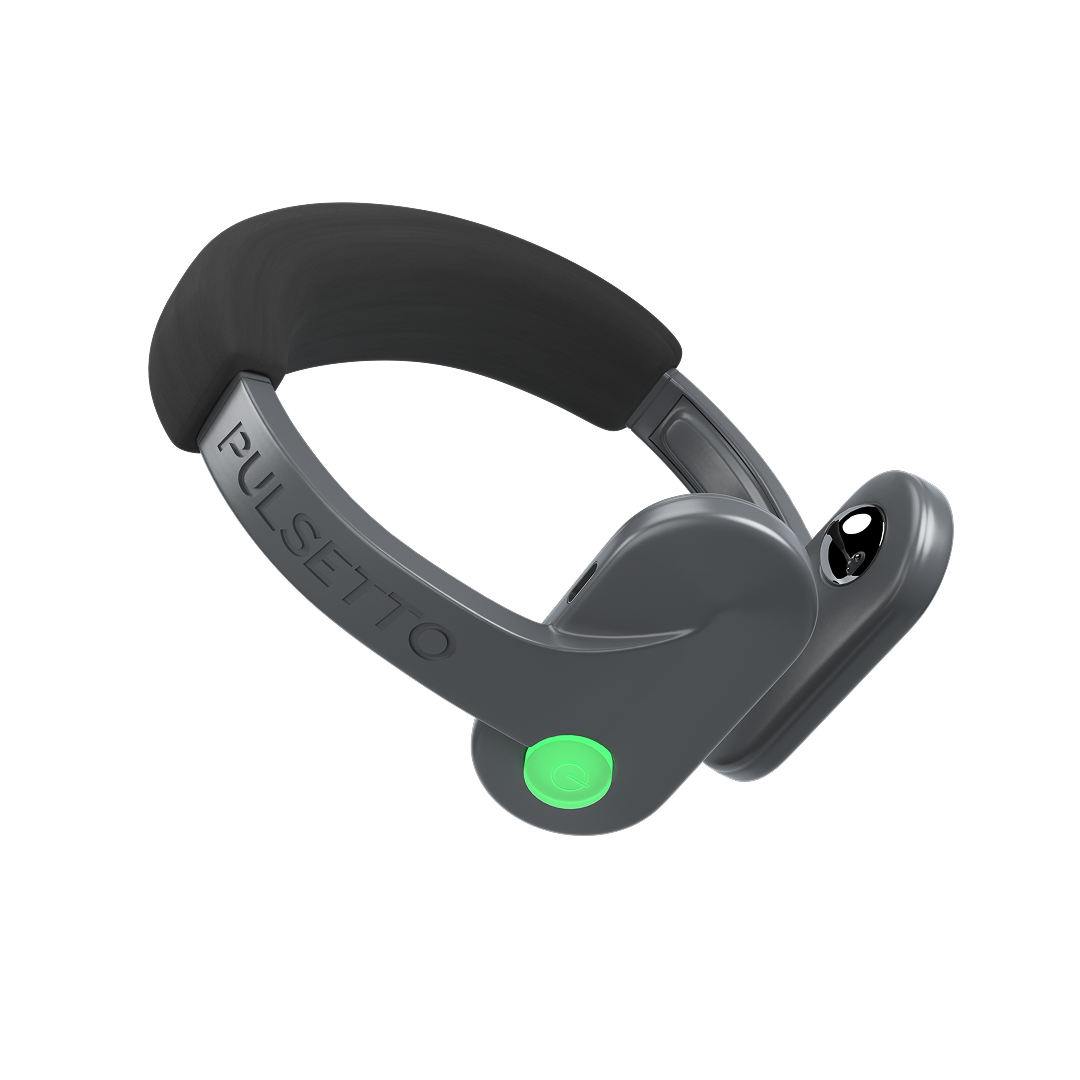
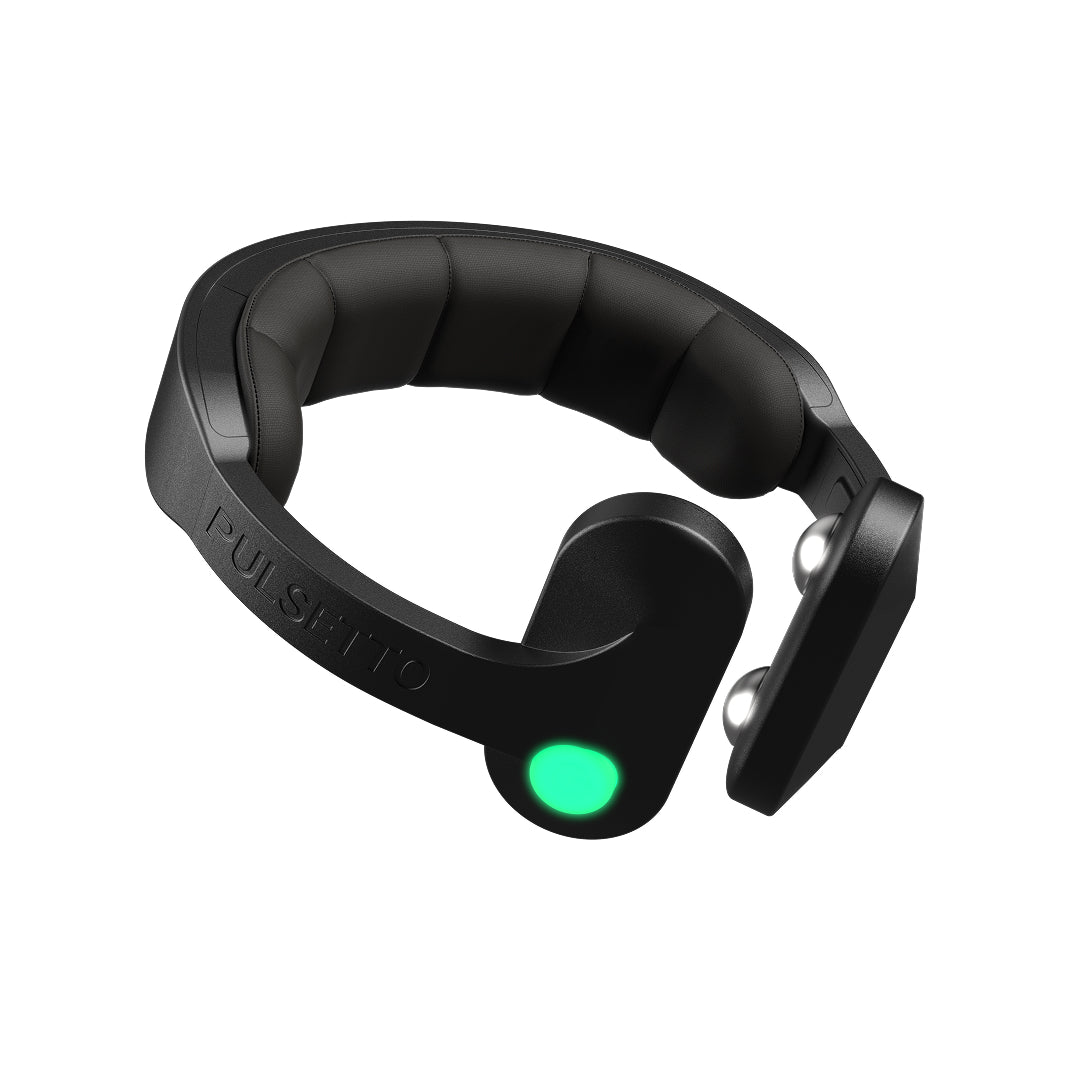
Pulsetto is a hands-free, bilateral cervical nVNS device sold as a general wellness product. Bilateral means it stimulates the vagus on both sides of the neck at once, and hands-free means you wear it around your neck rather than holding a wand. Sessions run about 4 minutes through a free companion app with guided programs, and there is no mandatory subscription. The device is CE certified and FCC certified, made in Lithuania, and is designed to help you feel calmer and support relaxation, better sleep quality, and a steadier stress response. It is not a TENS unit and not a medical device, and it makes no disease-treatment claims.
The Pulsetto Lite device is around $269 and the Pulsetto FIT model is around $296. To choose between them, our Pulsetto FIT vs Pulsetto Lite comparison breaks down the differences. In Pulsetto's own randomized open-label pilot study (n=40, 4 weeks), participants reported a 55.9% reduction in depressive symptoms (PHQ-9), a 45.3% reduction in anxiety symptoms (GAD-7), and a 41.0% improvement in sleep quality (PSQI). Bilateral stimulation reduced the chronic-stress biomarker hair cortisol by 47.5%, compared with 31.4% for unilateral stimulation. You can explore the science behind Pulsetto and its ongoing studies and trials for the wider context.
How does Pulsetto sit against other options? The market includes auricular clips such as Nurosym (single-ear, around €699, app-free), bilateral auricular units like Vagustim (around $390), music-synced earbuds like Neuvana Xen (around $449), the infrasonic chest device Sensate (vibration and sound rather than electrical, around $300), the haptic wrist wearable Apollo Neuro (around $349), handheld cervical wands such as Truvaga (around $199 to $499) and Hoolest, the prescription cervical gammaCore, and HRV biofeedback trainers like HeartMath Inner Balance (around $159 to $199), which measures and trains rather than stimulating electrically. Each may be a good fit for a particular use case; Pulsetto's angle is hands-free bilateral neck stimulation with short guided sessions. For side-by-side context, our roundups of the best vagus nerve stimulation devices and the best nervous system regulation device go further.
Frequently asked questions
What is vagus nerve stimulation?
Vagus nerve stimulation is any method that deliberately activates the vagus nerve to influence the nervous system. It ranges from clinician-managed implanted VNS to non-invasive approaches that reach the nerve through the skin at the ear or neck, with no surgery.
How does vagus nerve stimulation work?
Stimulation is thought to activate the vagus nerve's afferent (sensory) fibers, which relay to the brainstem and onward to arousal-regulating brain networks [2]. Controlled studies show acute physiological signatures such as pupil dilation and changes in brain alpha oscillations [3].
How can I stimulate my vagus nerve at home?
Everyday practices thought to raise vagal activity include slow diaphragmatic breathing with long exhales, humming or chanting, gargling, brief cold exposure, and gentle movement. A general wellness nVNS device can add a more structured session on top of these habits.
How do you reset the vagus nerve?
There is no literal reset switch, but the same daily practices, long-exhale breathing, vocal vibration, gargling, and cold exposure, are the core of most "reset" routines because they nudge the body toward its calming parasympathetic state.
Is non-invasive vagus nerve stimulation safe?
A systematic review of 51 studies and 1,322 subjects found non-invasive VNS was generally well tolerated, with minor local skin irritation the most common effect at around 18% [20]. It is not suitable for everyone; review the contraindications and consult a doctor if any apply to you.
Does vagus nerve stimulation really work?
The research is early and built largely on small studies, but findings on HRV, stress, and sleep quality are encouraging [6][12][14]. Consumer devices are framed as wellness tools that may support calm and relaxation, not as treatments for any condition.
Scientific research
Pulsetto is a general wellness product and is not intended to diagnose, treat, cure, or prevent any disease or medical condition. The studies below were identified via the Consensus and PubMed databases and are indexed in PubMed.
[1] Functional and chemical anatomy of the afferent vagal system00215-0) (Berthoud & Neuhuber, 2000, Autonomic Neuroscience. PMID: 11189015)
[2] Critical Review of Transcutaneous Vagus Nerve Stimulation: Challenges for Translation to Clinical Practice (Yap et al., 2020, Frontiers in Neuroscience. PMID: 32410932)
[3] Transcutaneous Vagus Nerve Stimulation in Humans Induces Pupil Dilation and Attenuates Alpha Oscillations (Sharon et al., 2020, Journal of Neuroscience. PMID: 33214317)
[4] An Overview of Heart Rate Variability Metrics and Norms (Shaffer et al., 2017, Frontiers in Public Health. PMID: 29034226)
[5] Stress and Heart Rate Variability: A Meta-Analysis and Review of the Literature (Kim et al., 2018, Psychiatry Investigation. PMID: 29486547)
[6] The effect of transcutaneous auricular vagus nerve stimulation on HRV in healthy young people (Geng et al., 2022, PLoS ONE. PMID: 35143576)
[7] Ear your heart: transcutaneous auricular vagus nerve stimulation on heart rate variability in healthy young participants (Forte et al., 2022, PeerJ. PMID: 36438582)
[8] A systematic review of the effects of transcutaneous auricular vagus nerve stimulation on baroreflex sensitivity and heart rate variability in healthy subjects (Soltani et al., 2023, Clinical Autonomic Research. PMID: 37119426)
[9] Does transcutaneous auricular vagus nerve stimulation affect vagally mediated heart rate variability? A living and interactive Bayesian meta-analysis (Wolf et al., 2021, Psychophysiology. PMID: 34473846)
[10] Age as an Effect Modifier of the Effects of taVNS on Heart Rate Variability in Healthy Subjects (Gianlorenco et al., 2024, Journal of Clinical Medicine. PMID: 39064307)
[11] Quantifying acute physiological biomarkers of transcutaneous cervical vagal nerve stimulation in the context of psychological stress (Gurel et al., 2019, Brain Stimulation. PMID: 31439323)
[12] Transcutaneous cervical vagal nerve stimulation reduces sympathetic responses to stress in posttraumatic stress disorder: A double-blind, randomized, sham-controlled trial (Gurel et al., 2020, Neurobiology of Stress. PMID: 33344717)
[13] Transcutaneous auricular Vagus Nerve Stimulation and Median Nerve Stimulation reduce acute stress in young healthy adults (Sanchez-Perez et al., 2023, Frontiers in Neuroscience. PMID: 37746156)
[14] Transcutaneous Auricular Vagus Nerve Stimulation for Chronic Insomnia Disorder: A Randomized Clinical Trial (Zhang et al., 2024, JAMA Network Open. PMID: 39680406)
[15] Transcutaneous Vagus Nerve Stimulation Could Improve the Effective Rate on the Quality of Sleep in the Treatment of Primary Insomnia: A Randomized Control Trial (Wu et al., 2022, Brain Sciences. PMID: 36291230)
[16] Transcutaneous auricular vagus nerve stimulation (taVNS) improves sleep quality in chronic insomnia disorder: A double-blind, randomized, sham-controlled trial (Yeom et al., 2025, Sleep Medicine. PMID: 40398066)
[17] Accelerated Transcutaneous Auricular Vagus Nerve Stimulation for Inpatient Depression and Anxiety: The iWAVE Open Label Pilot Trial (Austelle et al., 2025, Neuromodulation. PMID: 40117415)
[18] Effects of transcutaneous vagus nerve stimulation on subthreshold affective symptoms and perceived stress: a single-blinded randomized trial in community-dwelling adults (Jackowska et al., 2025, Biological Psychology. PMID: 41290087)
[19] The effect of heart rate variability biofeedback training on stress and anxiety: a meta-analysis (Goessl et al., 2017, Psychological Medicine. PMID: 28478782)
[20] Safety and tolerability of Transcutaneous Vagus Nerve stimulation in humans; a systematic review (Redgrave et al., 2018, Brain Stimulation. PMID: 30217648)