Eustress vs. distress at a glance
|
Signal
|
Eustress (good stress)
|
Distress (bad stress)
|
|
Duration
|
Short-term, resolves once the challenge ends
|
Lingers, often with no clear endpoint
|
|
How it feels
|
Motivating, exciting, focused
|
Overwhelming, draining, trapped
|
|
Body's initial response
|
Cortisol and adrenaline rise
|
Cortisol and adrenaline rise
|
|
Nervous system state
|
Sympathetic activation, followed by parasympathetic recovery
|
Sympathetic activation without full recovery
|
|
Recovery
|
Returns to baseline within minutes to hours
|
Stays in alert mode for days, weeks, or longer
|
|
Effect over time
|
Can build resilience and confidence
|
Linked to HPA-axis dysregulation and long-term health strain
|
What is eustress? (Good stress, defined)
Eustress is the scientific term for good stress: short-term pressure that feels exciting or motivating rather than threatening. It shows up when a challenge stretches your abilities without overwhelming them, like starting a new job or training for a race. Eustress triggers the same stress hormones as any stressor, but your body returns to baseline once the challenge passes.
The word comes from the Greek prefix eu-, meaning good, attached to "stress." Endocrinologist Hans Selye coined it decades after he first described the general stress response, once he realized his own research had lumped together two very different experiences under one word. That distinction matters, because eustress is not the absence of a stress response. Cortisol and adrenaline still rise when you're excited about a challenge. What separates eustress from a threat response is that the challenge feels within your capacity to handle, and your body knows it can stand down once it's over.
What is distress? (Bad stress, defined)

Distress is what most people mean when they say "stress" without qualifying it. It's the version that shows up when a demand exceeds the resources you feel you have to meet it, or when a stress response simply never gets the signal to switch off. A tight deadline you're prepared for can feel like eustress. The same deadline stacked on five others, with no clear end in sight, tips into distress.
So what actually separates the two, if the initial hormone surge looks identical? The deciding factor isn't the size of the stressor itself.
Eustress vs. distress: what actually makes the difference
What separates eustress from distress isn't how big the stressor is. It's whether your nervous system can shift out of alert mode once the demand ends. Eustress involves a brief sympathetic surge followed by parasympathetic recovery. Distress happens when that recovery doesn't happen, and your body stays in a heightened state long after the trigger has passed.
Part of this comes down to how you appraise the situation in the moment. Research on cognitive appraisal distinguishes between a "challenge" response, where you judge your resources as sufficient to meet a demand, and a "threat" response, where the demand outweighs what you feel you can bring to it. In one study of medical trainees running high-stress simulations, students who approached the scenario with a challenge mindset showed more regulated cardiovascular responses and scored better on clinical performance. Students who appraised the same scenario as a threat showed a measurable spike in cortisol and performed worse [1]. Same event, same stakes, different physiological outcome, driven by appraisal.
But appraisal is only half the picture. Underneath the psychology sits a physiological layer that's just as decisive: whether your autonomic nervous system actually completes its recovery cycle. One useful, measurable marker of this is heart rate variability, or HRV, the variation in time between your heartbeats. Higher HRV at rest and faster HRV recovery after a stressor are both associated with better resilience and more efficient emotional regulation [2]. Persistently low or slow-to-recover HRV, on the other hand, tracks with a nervous system that's staying in alert mode even after the trigger is gone.
That prolonged alert state has a name: chronic activation of the hypothalamic-pituitary-adrenal axis, or HPA axis, the system that governs how much cortisol your body releases and for how long. In acute stress, the HPA axis fires, cortisol rises, and then the system resets. Under chronic distress, that reset stops happening reliably. Cortisol stays elevated even as the original trigger has been rising, and over time this dysregulation is linked to a broad range of downstream health effects [3].
None of this means the literature has this fully solved. Cognitive appraisal, HRV, and HPA-axis research each capture a piece of what separates a stress response that resolves from one that doesn't, and researchers are still working out exactly how those pieces interact. What the evidence increasingly points to is straightforward enough to use: eustress and distress are less about the stressor and more about whether your nervous system gets the chance to complete its recovery cycle. If you want to see how Pulsetto approaches that recovery question directly, our clinical data on nervous system regulation walks through the research behind it.
Examples of eustress (good stress)
Eustress shows up anywhere a challenge feels exciting rather than threatening. A few common examples:
-
Starting a new job. The uncertainty is real, but it comes with anticipation, not dread.
-
Training for a race or a fitness goal. The physical stress is intentional, and recovery is built into the plan.
-
Planning a wedding or a big trip. Plenty of logistics, but the anticipation outweighs the friction.
-
A first date you're genuinely excited about. Nerves, but the good kind.
-
Public speaking you've prepared well for. The adrenaline sharpens focus instead of derailing it.
-
A challenging video game, sport, or puzzle. The difficulty is the point, and it resolves the moment you put it down.
What all of these share is a clear end point and a sense that you're equipped to meet the demand, even if it takes effort.
Examples of distress (bad stress)
Distress tends to share the opposite qualities: no clear end point, and a sense that your resources don't match the demand. Common examples:
-
Ongoing financial strain. There's no single moment of resolution, just accumulating pressure.
-
A toxic workplace. The stressor resets every day you show up.
-
Unresolved conflict with someone close to you. The tension doesn't get a chance to discharge.
-
Prolonged caregiving for a chronically ill family member. Real, sustained demand with limited recovery windows.
-
Extended job insecurity. The threat is ambient rather than a single event.
-
Back-to-back deadlines with no buffer between them. Each one might be manageable alone, but the nervous system never gets a break.
If you want practical ways to reduce anxiety symptoms when this kind of stress builds up, that's worth a closer look on its own.
How to tell which one you're experiencing
To tell eustress from distress, check two things: how you feel during the stressor, and how fast you recover after. Eustress feels like focused energy and fades within minutes to hours once it's over. Distress feels like dread or being trapped, and it lingers: racing thoughts, disrupted sleep, or physical tension that persists long after the event has passed.
A fast version of this self-check: during the stressor, do you feel keyed up but capable, or do you feel like you're barely holding on? After it passes, does your body actually settle within a few hours, or is it still with you the next morning, or the one after that?
Watch for these physical signals that a stress response hasn't resolved: sleep that stays disrupted well past the trigger, muscle tension that doesn't release even at rest, or irritability that outlasts whatever caused it in the first place. If you're consistently seeing these signs, it's worth looking into simple ways to activate your vagus nerve, which plays a direct role in signaling your body that it's safe to feel calm and return to a balanced state.
One caveat: this is a self-check, not a diagnosis. If distress isn't resolving on its own over time, that's worth bringing to a doctor or therapist rather than working through alone. For general reading on stress and how to cope with it day to day, the CDC's guidance on living with stress is a solid starting point.
How to shift distress back toward eustress
You can't eliminate stress, and trying to usually backfires. What actually helps is giving your nervous system what it needs to finish the recovery cycle it's already built to run, so a heightened state settles instead of becoming permanent. A few approaches with real evidence behind them:
Slow, paced breathing. Slowing your exhale relative to your inhale is one of the most well-studied ways to nudge your nervous system toward parasympathetic activation, and it shows up in HRV measurements within a single session [4].
Movement. Physical activity gives the stress response somewhere to go, which is part of why a stressor followed by a walk or a workout tends to resolve faster than one followed by sitting still.
Cold exposure or humming. Both are simple, low-effort ways some people use to stimulate the vagus nerve directly, alongside breathing and movement.
Non-invasive cervical vagus nerve stimulation, one of several ways to explore how the vagus nerve helps fight stress, is a hands-free option some people use specifically because it targets the vagus nerve without requiring you to change your posture or hold anything to your neck for the session. Research on transcutaneous cervical vagus nerve stimulation has found it reduces sympathetic arousal in response to acute stress, with effects that show up as measurable changes in heart rate and vascular tone [5]. Bilateral cervical stimulation, meaning both sides of the neck at once, has also shown more pronounced autonomic effects in controlled comparisons than stimulation delivered to a single side or through the ear [6].

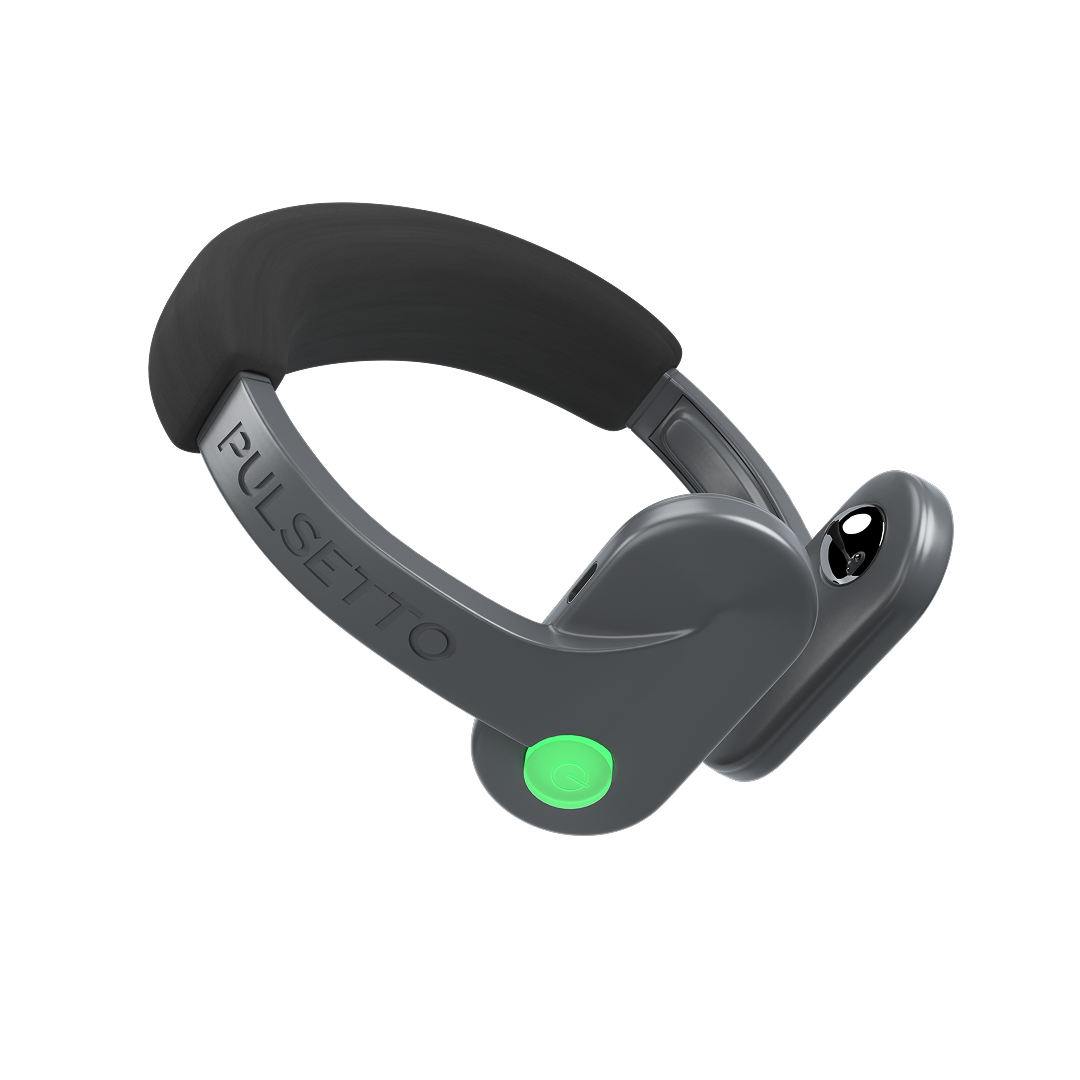
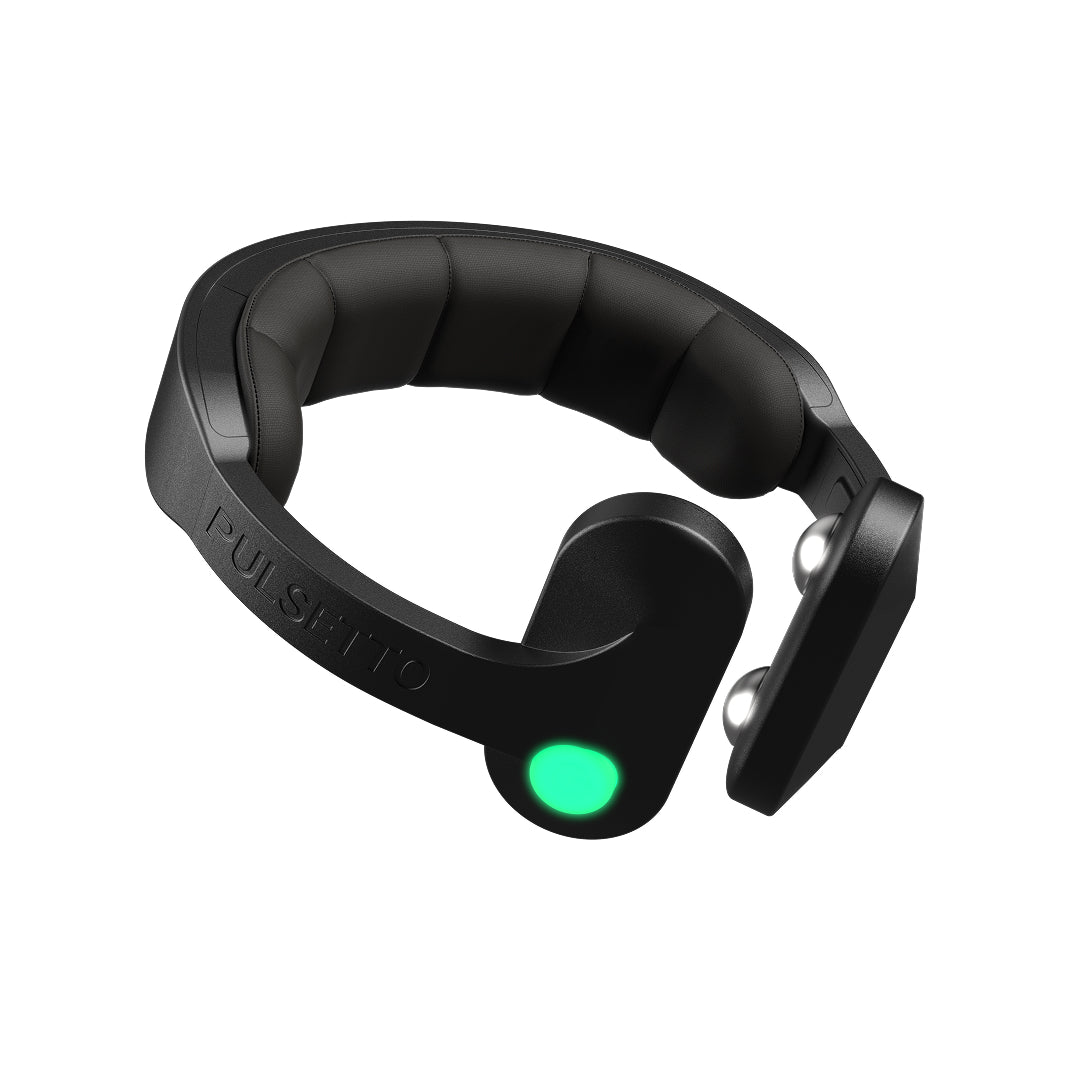
Pulsetto is one hands-free option built around gentle bilateral cervical stimulation, four-minute sessions, and app-guided programs. In Pulsetto's own randomized open-label pilot study (n=40, 4 weeks), participants using bilateral stimulation saw hair cortisol drop by 47.5% and GAD-7 anxiety scores fall by 45.3%, alongside improvements in sleep quality. It's one tool among several here, not a replacement for the basics: breathing, movement, and giving your body permission to actually recover.
Pulsetto is a general wellness product and is not intended to diagnose, treat, cure, or prevent any disease or medical condition. If you want to see what a session looks like, Pulsetto Lite and FIT are both hands-free devices designed for exactly this kind of nervous-system support, and real Pulsetto reviews cover how people are actually using it.
Eustress vs. Distress FAQs
Is some stress good for you, or can too much of it tip into distress?
Yes, in moderate, recoverable doses. But eustress has a ceiling. Stack enough good-stress events back to back, a demanding new role plus a wedding plus a big move, and even challenges you'd normally handle well can outpace your recovery capacity. At that point the label flips from eustress to distress, not because the events changed, but because your nervous system ran out of room to reset between them.
Is there a stress that's neither good nor bad?
Some researchers use a third term, neustress, for stress that's neutral: a stimulus that triggers a stress response without carrying an obvious positive or negative charge, like the low-grade activation of hearing a phone buzz before you know who's calling. It's a less commonly used category than eustress and distress, but it's a reminder that not every stress response needs to sort neatly into "good" or "bad" to be real.
Does the same stressor feel like eustress or distress for everyone?
No. The same event, a job interview, a flight delay, a family gathering, can register as eustress for one person and distress for another, depending on past experience with similar situations, how much bandwidth they have left that day, and even how much sleep they got the night before. "Is this good stress or bad stress" doesn't have one universal answer. It depends on the person answering it as much as the event itself.
Is workplace stress more often eustress or distress?
It depends heavily on structure, not job title. A demanding project with a realistic deadline and real autonomy over how you tackle it tends to sit in eustress territory. The same workload with no control over pacing, unclear expectations, or zero recovery time between sprints tends to slide into distress, even when the tasks themselves aren't any harder. The common thread isn't how much work there is. It's how much say you have in doing it.
Is vagus nerve stimulation safe for managing stress?
For most healthy adults, non-invasive vagus nerve stimulation is well-tolerated. It's not recommended for people with pacemakers or other implantable medical devices, epilepsy, or during pregnancy. Check with a doctor first if any of these apply to you. Pulsetto is a general wellness product and is not intended to diagnose, treat, cure, or prevent any disease or medical condition. See our FAQ for more on how Pulsetto works.
Scientific research
The information in this article references the following peer-reviewed studies on cognitive appraisal, autonomic regulation, and vagus nerve stimulation. Pulsetto is a general wellness device and is not intended to diagnose, treat, cure, or prevent any disease or medical condition.
[1] Threat and challenge: cognitive appraisal and stress responses in simulated trauma resuscitations (Harvey et al., 2010, Medical Education, 195 citations)
[2] Heart rate variability: Can it serve as a marker of mental health resilience? (Perna et al., 2020, Journal of Affective Disorders, 114 citations)
[3] The human stress response (Russell & Lightman, 2019, Nature Reviews Endocrinology, 716 citations)
[4] Breathe better, live better: the science of slow breathing and heart rate variability (Giorgi et al., 2025, Acta Neurologica Belgica, 16 citations)
[5] Transcutaneous cervical vagal nerve stimulation reduces sympathetic responses to stress in posttraumatic stress disorder (Gurel et al., 2020, Neurobiology of Stress, 60 citations)
[6] Acute Transcutaneous Cervical but not Auricular Vagus Nerve Stimulation Increases Alpha Wave Brain Activity and Lowers Arterial Blood Pressure (Ahmed et al., 2025, American Journal of Physiology, 1 citation)